
Politics
Much Ado About BRIC(S)* _Where do Nigeria Fits in?_ ~Oti Joe ASHIA

*Much Ado About BRIC(S)*
_Where do Nigeria Fits in?_
~Oti Joe ASHIA
BRIC(S)– A few days ago, Mbotab Guibaldi, my Cameroonian friend, who is a research fellow at the World Bank Centre, Ofrima, invited me for a tea party which we later altered to a cocktail.
We then entered into a conversation on a variety of topical issues bothering majorly on political developments in Africa viz-a-viz the performances of African leaders that may have necessitated the resurgence of juntas, thinkering of seizing power from democratically elected governments in their various countries.
He tried to convince me that Leadership in Africa has failed hence the uprising.
He opined that with the Russian- Yevgeny Prigozhin’s Wagner group already emerging to support the Sahel Nations to help oust their democratically elected governments in those countries, he is suggesting that the way to go now is for African States especially Nigeria to start contemplating joining the BRIC(S).
He said Nigeria should be careful else there may be a coup d’etat waiting to happen.
On Nigerian Government’s recent policies, I tried to convince him on what may have prompted current government’s decisions which were of course long overdue and that three months (1/16th) on a scale of 4 years is too short a time to rate whether a government has performed or not, or whether its policies were pro-people or not.
There were aspects were we both shared similar views.
However, on BRIC(S), it was one discussion I was not too excited.
Before I go into my reason, I think a background may help.
The term BRIC is an acronym for (Brazil Russia, India and China) and was originally developed in the context of foreign investment strategies. It was introduced in the 2001 publication, ‘Building Better Global Economic BRICs’ by then-chairman of Goldman Sachs Asset Management, Jim O’Neill; it was coined by Roopa Purushothaman, who was a research assistant in the original report.
South Africa only joined in 2010 making the original membership to adjust the acronym to accommodate her – the reason it was changed from BRIC to BRICS or BRICK (the ‘K’ of which I am still thinking).
Regardless of the goal and objectives of this group, I was concerned if Mbotab actually understood that BRICS stood for BRAZIL RUSSIA, INDIA CHINA AND SOUTH AFRICA, a group of five nations that came together to forge a common front economically and politically.
Well agreed, the sole aim of most if not all relationships is for mutual benefits.
So why should a country like Nigeria, the largest and most populous black Nation, the most abundantly blessed Nation in terms of human and natural resources, join BRICS which is just a coinage of her existing membership?
It is instructive to note that the war between Russia and Ukraine that has left millions either death, injured and/or displaced has been on issues of Interests and rivalry on choice of association. And the key actor in this emerging marriage (BRICS), the Russian President, Vladimir Putin did not attend the three-day summit in person, as he faces an arrest warrant for war crimes in Ukraine issued by the international criminal court,
This has placed a huge burden on the bloc whose most inducing goal is to provide alternative Economic governance to the US dominance at the global stage.
On the other hand, South Africa has always proven to be Nigeria’s rivals economically, socially and ‘traditionally’ if you may like evident in the constant sanctions placed on Nigerian firms or vice versa and the xernophobic attacks on Nigerians in that country.
So why should Nigeria be so excited to join a club with South Africa and Russia as part of her Membership?
I do not think it is in our best interest of our corporate existence.
To butress my points I took him through a list of European countries who are doing perfectly well but are not EU Members.
In fact, some are progressing smoothly as ‘stand alone nations, yet, they are about a tenth of the size of Nigeria in both land mass and population.
The ones that caught my attention the most were Norway, Switzerland, France, Germany, Serbia, Belarus, etc.
Fortunately, these are among the best economies in the world.
My submission was that Nigeria do not need to be a member of any club, union, association, etc to develop.
We have all it takes to be a great nation.
Nigerians and her Leaders know what we need to develop.
It is not Grants.
It is not Aids.
It is not Loans.
It is not Donations.
It is not Goodwill.
What Nigeria needs is purposeful leadership and patriotism.
The Corruption that has eaten so deep into the fabric of an average Nigerian subconscious requires proper surgery.
We can be member Nation to the best performing blocs around the globe but if the main ingredients of growing economies ‘good governance and purposeful or qualitative leadership’ is missing, it will be as good as we were not even a member in the first instance because it will still be like what Robert Kyozaki termed *Rabbit Race* in his ‘Rich Dad, Poor Dad’
And like the proverbial *Rotten tooth*, _… until it is pulled out, the mouth must continue to chew with caution…_
Thank God the world is already heading to Artificial Intelligence- AI.
We have the resources to procure these Technologies to help develop our abundant natural resources and reset the country.
If Nigeria needs a mutual association to jump start her economy to enable her play in the global league, there is Germany with the Technology, Norway with the managerial expertise, Switzerland that has printed all our currencies including keeping the ones that has been stollen and laundered.
In my submission, I told him that Nigeria joining BRICS is like a student who would copy in an exam hall including the Name and Registration Number of his/her benefactor without knowing the implication.
Nigeria cannot be so enthusiastic to be identified with a country like Russia whose Leader has inflicted much pain on her neighbors Ukraine on mere diplomatic Interests when back home, Nigerian have continued to prevail on her President HE Sen Asiwaju Bola Ahmed TINUBU not to go to war with Niger over the military interference with the democratically elected government of that country?
With the potential admission of six new Nations including Egypt, Ethiopia, Argentina, Iran, Saudi Arabia and UAE into its ranks after their recent three-day 15th annual summit in South Africa, and even more in coming years, what will be the faith of this much talked about acronym BRICS?
*_©2023_The_Pen_Lieutenant_*
Port Harcourt






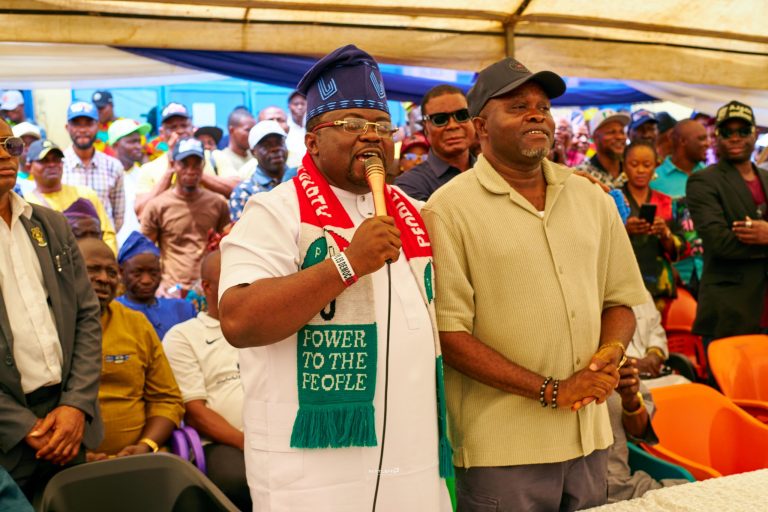
Oyo 2027: Ajadi Says PDP Will Retain Power
…..Tasks PMS To Remain United, Peaceful
A leading People’s Democratic Party (PDP) governorship aspirant in Oyo State, Ambassador Olufemi Ajadi Oguntoyinbo, has urged the people of Oyo State to remain steadfast, saying they will continue to enjoy good governance because the PDP will produce the next governor in the 2027 general elections.
Ajadi, who made this known while addressing transport unions under the Park Management System (PMS) at their headquarters, New Garage, Ibadan, on Tuesday, urged the park managers to remain united and maintain the love and peace currently prevalent among them.
According to him, “My advice to the Park Managers and the commercial drivers in Oyo State is that they should continue the love and peaceful attitudes. They should remain united. They should not ‘scattelegs’.
“Don’t let anybody deceive you, remain steadfast. Let me assure you that our party, the PDP, will produce the next governor come 2027,” Ajadi said.
He said he came to the PMS headquarters to meet with transporters and park managers to inform them of his aspiration to serve the people of Oyo State as governor come 2027.
“Today I joined my people, the park managers in Oyo State, to familiarize myself with them and inform them of my intention to serve the people of Oyo State as the next governor by the Grace of God.”
On the plans for the transporters, Ajadi said he first wants to change the look of the City Cabs, which will be done in collaboration with the Park Management System.
He also plans to increase the number of Mass Transit buses and make them available in all locations of the State.
He said the Mass Transit buses will operate in partnership with the Park Managers.
Ajadi, who commended Governor Makinde on the newly established bus terminals in the State, said his government will ensure adequate usage of the facilities.age of the facilities.
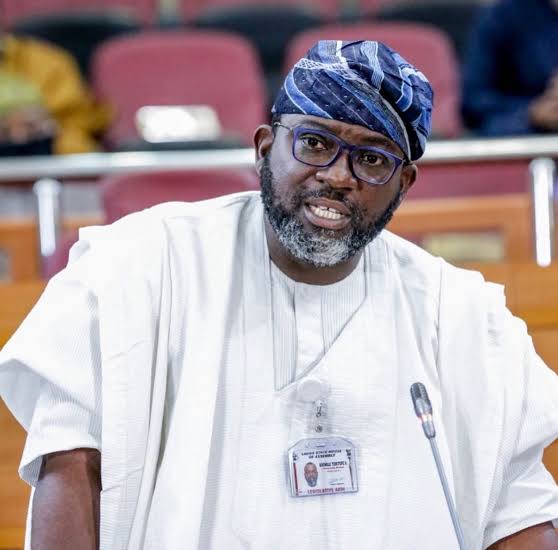
Why Ifako-Ijaiye’s Voice Is Louder At The Lagos Assembly: The Jah Factor
By Ibukun Simon
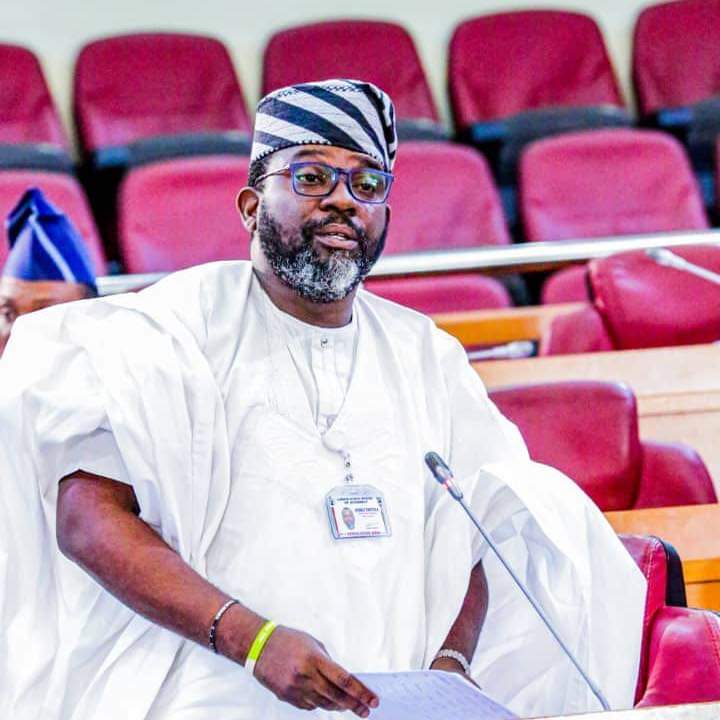
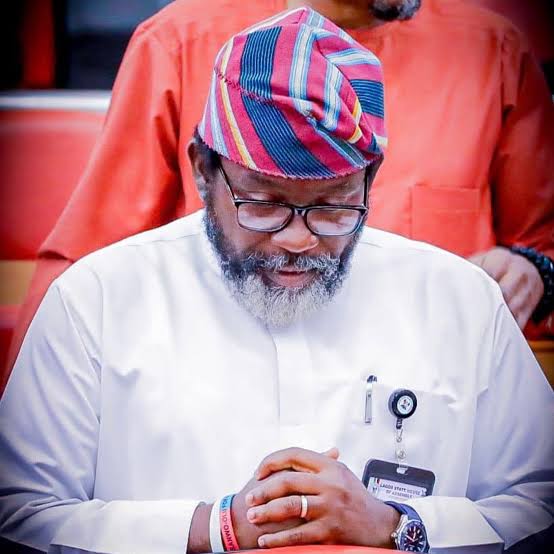
In legislative politics, not all representatives are created equal. Some merely occupy seats; others shape conversations, influence outcomes, and leave visible footprints in the lives of their people. Since 2019, Ifako-Ijaiye Constituency I has belonged firmly to the latter category, thanks to the emergence of Hon. Adewale Temitope Adedeji, fondly known as JAH, as its representative in the Lagos State House of Assembly.
As a journalist who has covered proceedings of the Lagos Assembly consistently since 2015, I have witnessed first-hand how representation can either fade into the normal routine or rise into relevance. The entry of Hon. Adedeji into the Assembly marked a clear turning point—not only for Ifako-Ijaiye, but for the quality of debate, advocacy, and people-focused legislation within the House.
On the floor of the Assembly, Hon. Adedeji stands out as one of the lawmakers journalists naturally gravitate towards. His interventions during plenary sessions are deliberate, articulate, and deeply rooted in public interest and knowledge. In the 40-member House, he is widely regarded as one of the top five lawmakers whose contributions command attention, not because of theatrics, but due to his clarity of thought, persuasive delivery, and uncommon mastery of issues. When JAH speaks, the chamber listens—and the press takes notes.
This strength of presence is crucial in a legislative environment where influence matters. In parliamentary practice, experience translates to authority. The Lagos State House of Assembly, like many legislatures, places significant weight on ranking members—lawmakers whose sustained service enhances their ability to push motions, influence committee outcomes, and attract development to their constituencies. Returning Hon. Adedeji to the House in 2027 would therefore mean strengthening Ifako-Ijaiye’s bargaining power and ensuring its concerns are not just heard, but prioritized.
Beyond the chambers, the impact of Hon. Adedeji’s representation is visible across the constituency. In terms of infrastructural development, several road construction and rehabilitation projects have been attracted to Ifako-Ijaiye under his watch, improving accessibility, boosting local businesses, and easing daily movement for residents. These are practical dividends of democracy that speak louder than campaign slogans.
Equally significant is his focus on human development and social inclusion. Since assuming office in 2019, Hon. Adedeji has facilitated job opportunities, empowered the less privileged, and consistently supported students through the distribution of JAMB and GCE forms, helping to remove financial barriers to education. These interventions reflect the impact of a representative who understands that development must touch both infrastructure and people.
What further distinguishes Hon. Adedeji is his constant engagement with constituents. Through consultations, town-hall interactions, and accessibility, he has maintained a relationship that goes beyond election cycles. This closeness has fostered trust and ensured that governance remains responsive to grassroots realities.
As Lagos continues to grow and legislative responsibilities become more demanding, constituencies like Ifako-Ijaiye cannot afford experimental representation. They require lawmakers who understand the system, command respect within it, and can translate legislative influence into real benefits for the people.
From the Assembly floor to the streets of Ifako-Ijaiye, the record since 2019 is clear: effective representation works—and Hon. Adewale Temitope Adedeji has delivered it.
Ibukun writes from Ifako-Ijaiye.
Politics
Lack of Understanding or Legitimate Concern? Otti’s Defence of Tinubu’s Tax Reform Sparks National Debate
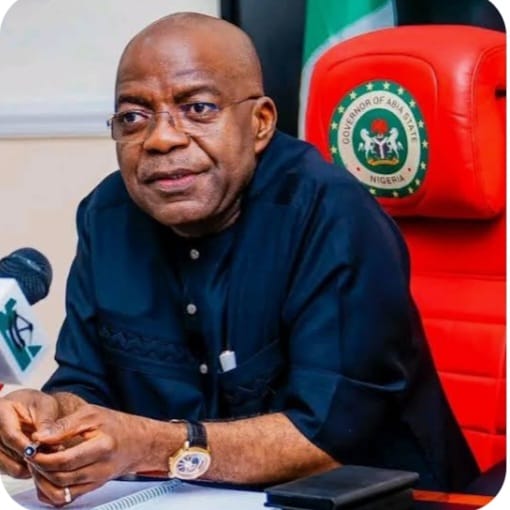
Lack of Understanding or Legitimate Concern? Otti’s Defence of Tinubu’s Tax Reform Sparks National Debate
By George Omagbemi Sylvester | SaharaWeeklyNG
“Abia Governor Alex Otti argues critics misunderstand the overhaul of Nigeria’s tax laws, but the controversy reveals deeper anxieties about governance, transparency and economic strain.”
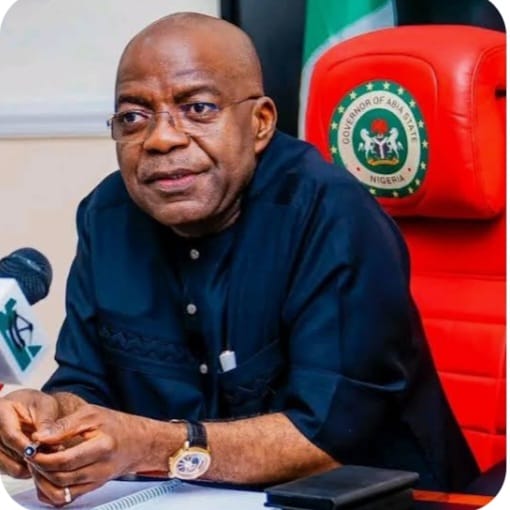
When Abia State Governor Alex Otti publicly defended President Bola Ahmed Tinubu’s newly enacted tax reform laws on February 13, 2026, he did more than just push back at critics, he threw the spotlight back on a fulcrum issue dividing Nigeria’s political and economic classes. Otti’s assertion that Nigerians attacking the tax policy “lack understanding” crystallises a broader fracture in public discourse over fiscal policy, governance and the future of the Nigerian economy.
The comments from Governor Otti came amid an intensifying national conversation over sweeping tax reforms signed into law in June 2025, designed to modernise Nigeria’s tax architecture and expand revenue mobilisation. These reforms (long in the making and championed by a Presidential Fiscal Policy and Tax Reforms Committee chaired by Prof. Taiwo Oyedele) mark the most far‑reaching overhaul of federal tax laws in decades. They include restructuring the Federal Inland Revenue Service into the National Revenue Service (NRS), establishing a Tax Appeal Tribunal and Ombudsman Office, and unifying revenue collection frameworks to improve transparency and efficiency.
Governor Otti’s praise for the new legislation resonated with elements of his own fiscal thinking. Drawing on economic positions he articulated nearly a decade ago, he argued that key principles now entrenched in the law reflect sound fiscal reasoning and long‑standing proposals to strengthen Nigeria’s economic foundations. “Almost 10 years ago, I wrote about the fiscal side of things,” Otti said. “When I read the new tax reform law, I saw many of those arguments reflected in it. I thank Prof. Oyedele. When people attack him, they don’t understand.”
Yet, while Otti’s intervention was meant to de‑escalate public criticism, it instead exposed how complex and emotionally charged the issue of taxation has become in Nigeria. Critics, both inside and outside government, argue that the reforms have not been adequately explained to citizens and that many fear the measures will aggravate hardship amid already high costs of living. One prominent voice of dissent, fiscal policy analyst Aborisade, warned that without transparency and clear communication on how tax revenues will be collected and returned to the people, “these reforms risk becoming deeply unpopular.” Critics also highlight that any tax increase implemented without demonstrable improvements in public services could fuel resentment and mistrust in governance.
That mistrust is not abstract. For years, Nigeria has struggled with weak tax compliance, low revenue‑to‑GDP ratios compared with other emerging economies, and public scepticism over how government revenues are utilised. Many Nigerians remember episodes where policy changes were not accompanied by visible improvements in infrastructure, healthcare or power delivery, reinforcing the belief among skeptics that new taxes equate to greater burden with little reward.
For supporters like Otti and others in government policy circles, the reforms represent a long‑overdue attempt to widen the tax net and reduce Nigeria’s chronic dependence on volatile oil revenues. Advocates argue that a modernised tax system can enhance domestic revenue mobilisation, reduce fiscal deficits, and create a more resilient economy. They point out that reforms provide exemptions and reliefs for low‑income earners and small businesses and are aimed at building a fairer, more transparent system for all stakeholders.
Still, bridging the gap between these competing narratives is challenging. Opposition voices contend that even well‑designed tax policy may fail if the state lacks the capacity to implement it equitably or if the public’s confidence in leadership remains weak. “Without accountability and clear benefits for their contributions, any tax reform risks becoming deeply unpopular,” Aborisade emphasised, warning that heavy taxation without trust can fracture the social contract.
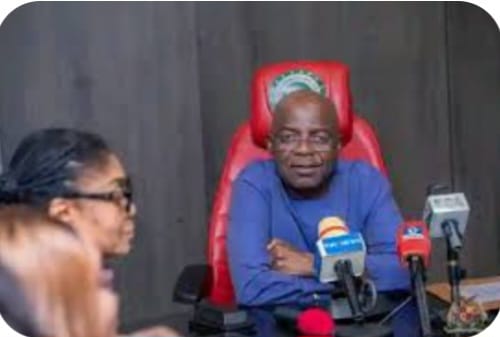
The debate over Tinubu’s tax reform illustrates a deeper truth about contemporary Nigeria: that economic policy no longer exists in a vacuum but is deeply intertwined with public sentiment, political legitimacy, and social cohesion. As one respected economist put it, “Taxation is not just a fiscal tool, it is a trust‑building exercise between the state and its citizens.” When that trust is fragile, even technically sound reforms can be seen as punitive rather than constructive.
Analysts suggest that meaningful public engagement (including sustained information campaigns, transparent revenue utilisation reporting and constructive dialogue with civil society) is essential to soothe anxieties and build confidence in the new system. Without this, what began as an effort to stabilise public finances could widen political and social divides.
In defending the tax reforms, Governor Otti has framed the challenge as one of comprehension rather than critique. But the controversy unfolding across Nigeria is not simply about misunderstanding; it underscores a profound gap between policy design and public perception. For a reform of this magnitude to succeed, Nigerians must be assured not only of its economic merits, but also of its fairness, transparency and tangible impact on everyday lives.
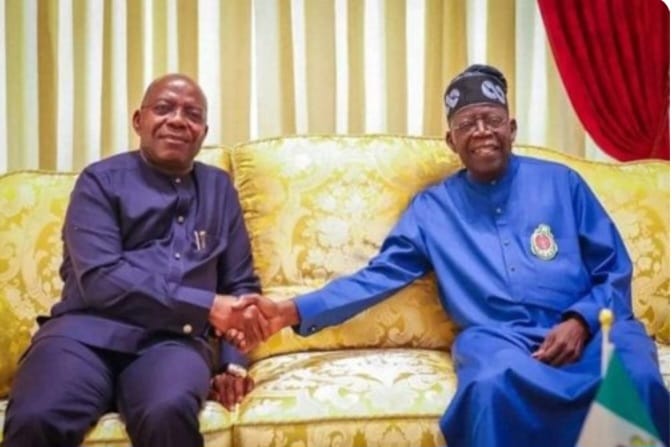
As the implementation phase continues through 2026 and beyond, the Tinubu administration, state governments and economic stakeholders face the critical task of translating legislative change into broader public trust – a task as difficult as any technical reform the tax laws themselves seek to achieve.


-
 celebrity radar - gossips6 months ago
Why Babangida’s Hilltop Home Became Nigeria’s Political “Mecca”
-

 society6 months ago
Power is a Loan, Not a Possession: The Sacred Duty of Planting People
-
 news6 months ago
THE APPOINTMENT OF WASIU AYINDE BY THE FEDERAL GOVERNMENT AS AN AMBASSADOR SOUNDS EMBARRASSING
-

 Business6 months ago
Batsumi Travel CEO Lisa Sebogodi Wins Prestigious Africa Travel 100 Women Award