
Politics
Nigeria 2027: Reject the Crumbs, Demand Your Future

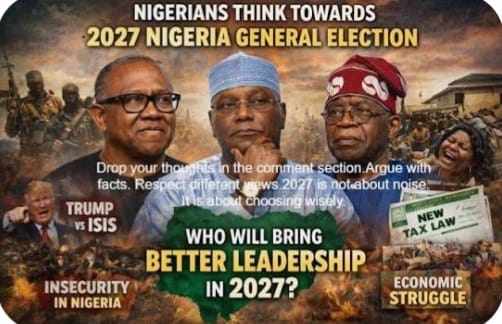
Nigeria 2027: Reject the Crumbs, Demand Your Future.
By George Omagbemi Sylvester | Published by SaharaWeeklyNG.com
“Why Nigerians Must Reject Short-Term Handouts and Demand Leaders Who Deliver Security, Dignity and a Future Beyond Crumbs.”
As Nigeria approaches the official campaign season for the 2027 general elections, a critical question confronts every citizen: WHAT WILL YOUR VOTE MEAN FOR THE NEXT FOUR YEARS OF YOUR LIFE? In a nation where political theatrics often overshadow the real struggles of everyday Nigerians, it is crucial that we pause, reflect and make deliberate choices. This is not merely a question of party loyalty, ethnicity, or charisma; it is a question of survival, dignity and the future of generations yet unborn.
The Limits of Symbolic Politics. Over the years, Nigerian politics has become synonymous with symbolic handouts and ephemeral gestures. Face caps, branded T-shirts, sacks of rice, litres of cooking oil and yards of Ankara have replaced substantive governance. Let us be candid: NO T-shirt can shield a family from insecurity, NO rice can fill an empty stomach for a year, let alone four. NO Ankara cloth can clothe the poverty that has become a permanent companion to millions of citizens. These tokens, though momentarily satisfying, are political distractions though a short-term sop designed to obscure long-term neglect.

Professor Adebayo Adedeji, a distinguished Nigerian economist, once emphasized, “Governments that measure their impact by the number of handouts they distribute have failed to grasp the essence of development. True leadership provides opportunity, security and empowerment, not temporary appeasements.”
The Cost of Compromised Choices. Many Nigerians, in the throes of economic hardship, are offered cash (sometimes N10,000, N20,000, or even a motorcycle) in exchange for loyalty at the polls. Yet, if we calculate the real cost, a one-time gift pales in comparison to the 4-year consequences of misgovernance. The average Nigerian household is already struggling under an inflation rate that, according to the National Bureau of Statistics, has consistently hovered above 20% in essential commodities. Housing, healthcare and education costs are rising exponentially. How can N10,000 adequately compensate for four years of stagnation, insecurity and mismanagement?
It is imperative to ask: how much do these politicians give their own children every month? If a child of privilege enjoys the luxury of quality education, access to healthcare and global exposure, while the masses are offered crumbs, it is a stark reflection of misplaced priorities and structural inequity.
Your Vote, Your Power. Many Nigerians feel powerless, believing their vote is meaningless in a system dominated by elite interests and entrenched political godfathers. This is a dangerous misconception. Democracy is not a spectator sport; it demands engagement, critical thinking and courage. By voting thoughtfully, Nigerians can disrupt cycles of corruption, favoritism and misrule.
Dr. Joe Obi, a political analyst at the University of Lagos, asserts: “Every citizen holds within their vote the power to redefine governance. It is the only legitimate instrument through which ordinary Nigerians can challenge systemic injustice.”
Your vote is not a mere expression of party loyalty, but it is a statement of self-worth, civic responsibility, and national dignity. It communicates that you refuse to be placated with temporary gestures while your rights, opportunities and security are compromised.
Reject Ethnic Politics. Nigeria’s political history is littered with examples of ethnic manipulation. Politicians routinely exploit identity to divide citizens, ensuring that loyalty to a tribe supersedes accountability to the nation. The suffering does not discriminate between Yoruba, Hausa, Igbo or Itsekiri. It is a Nigerian problem and any solution must be inclusive.

Dr. Chukwuma Soludo, former Governor of the Central Bank of Nigeria, notes: “Ethnicity as a political tool has been used to justify mediocrity, nepotism and the diversion of national resources. Progress demands leaders who rise above parochial loyalties.”
Voters must therefore scrutinize candidates for competence, integrity and a proven commitment to national development, rather than succumb to manipulative ethnic narratives.
The Illusion of Campaign Visits. Politicians are adept at cultivating appearances. During campaign season, they traverse states, meet constituents and promise sweeping reforms. Yet, the cycle is predictable: once elections are over, they vanish, leaving behind unfulfilled promises and neglected communities. The responsibility lies with voters to demand accountable leaders who prioritize sustainable policy over performative displays.
Character Over Charisma. Electoral decisions must hinge on the character, competence and integrity of candidates rather than their charisma, celebrity status, or financial clout. Leadership in Nigeria requires vision, discipline and a commitment to the welfare of all citizens. A leader who cannot guarantee security, economic opportunity, or social justice is a liability, regardless of party affiliation.
Professor Amina Jibril, a governance expert, emphasizes: “Leadership is a moral contract with society. When politicians exploit desperation, they violate that contract. Citizens must hold leaders accountable by demanding transparency and ethical governance.”
Local Votes, Global Implications. It is easy to think of elections as local exercises. In reality, the consequences reverberate far beyond municipal boundaries. Policy decisions made in Abuja influence international trade, security, investment and diplomatic relations. A mismanaged economy, for instance, not only impoverishes citizens but diminishes Nigeria’s credibility on the global stage. Investors, international organizations and diaspora Nigerians watch carefully. Poor leadership affects everyone, irrespective of geography.

Reject the Culture of Political Thuggery. Across the country, youths are often lured into serving as political enforcers, thugs or foot soldiers, risking their lives for candidates whose children live safely abroad. This form of exploitation is both morally reprehensible and strategically self-destructive. The children of politicians enjoy education, health care and freedom and why should ordinary youths risk life and limb for political elites who prioritize their own luxury over national progress?
The Nobel Laureate Wole Soyinka once warned: “A society that trades its youth for political expedience is a society that forfeits its future.” Wise citizens recognize the value of life and reject such coercion.
The Long-Term Vision. Nigeria’s path to sustainable development lies in rejecting short-term appeasement and embracing long-term vision. Citizens must vote for candidates committed to security, education, healthcare, infrastructure and transparent governance. Campaign promises are not merely slogans and they are a blueprint for the next four years. Every Nigerian deserves leaders who will convert these promises into actionable, measurable outcomes.
The International Crisis Group reports that nations that prioritize inclusive governance, anti-corruption measures and citizen engagement consistently achieve better social and economic indicators. Nigeria cannot afford to be left behind.
Final Reflection: Your Future is Non-Negotiable. The 2027 elections present a defining moment. Your vote is not a commodity, it is a declaration of your worth, your voice and your future. Reject temporary handouts, symbolic gestures and manipulative ethnic politics. Demand accountability, character and sustainable policy. The power resides in your hands and the consequences of apathy are profound.
Remember: life is too precious to be mortgaged for crumbs. Do not vote for the same cycle of poverty, insecurity and mediocrity. Vote with wisdom, courage and foresight. Engage, scrutinize and insist on leaders who honor the trust placed in them. Nigeria deserves nothing less than citizens who recognize their power, demand their rights and refuse to settle for less.
Be wise. Be thoughtful. Be relentless in your pursuit of a better Nigeria. The nation’s future depends on your choices.





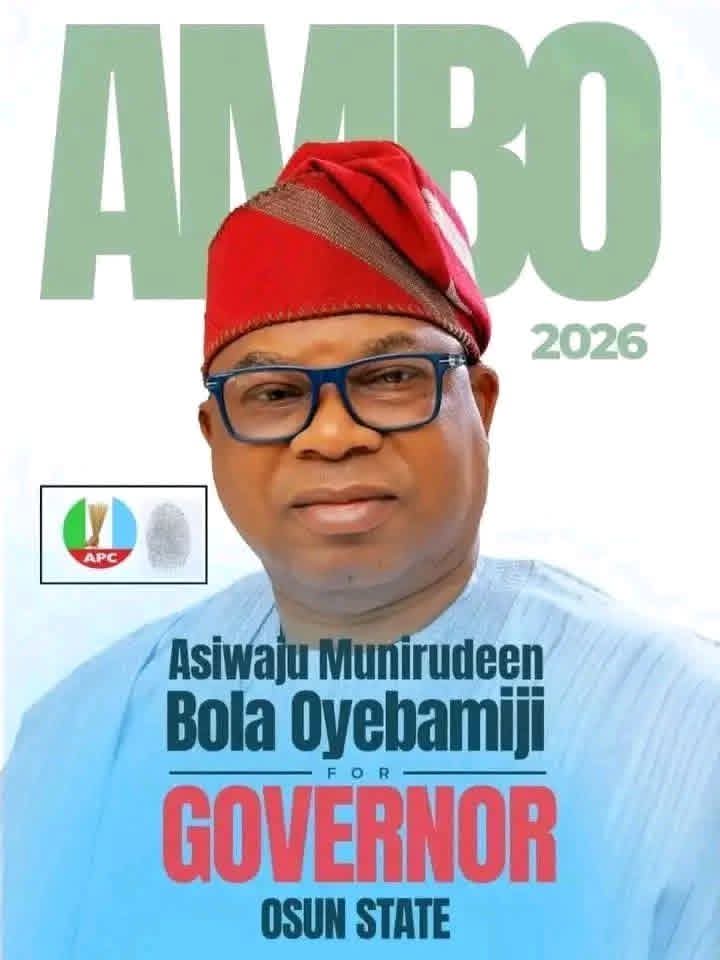
AMBO and the Osun Governorship Race: Assessing the Man, the Politics and the Vision
As political activities gather momentum ahead of the 2026 Osun State governorship election, a public affairs commentator, Oluseyi Olonade, has described the emergence of Asiwaju Munirudeen Bola Oyebamiji, popularly known as AMBO, as a significant development in the state’s political landscape.
In an article titled “Oyebamiji: The Man, The Politics and The Aspiration,” Olonade argued that the All Progressives Congress governorship hopeful possesses the character, experience and vision needed to reposition Osun State for sustainable growth.
According to the writer, Oyebamiji’s appeal stems from his extensive background in the banking sector, where he spent nearly three decades working with institutions including Wema Bank, Trans International Bank, Spring Bank and Enterprise Bank.
A native of Ikire in Irewole Local Government Area, Oyebamiji was described as a technocrat whose experience in corporate governance, finance and risk management has shaped his approach to public administration.
The article noted that his public service journey gained prominence in 2012 when he was appointed to oversee the then Osun State Investment Company Limited. Under his leadership, the organisation was reportedly restructured and transformed into Omoluabi Holdings Limited.
The writer further highlighted Oyebamiji’s tenure as Commissioner for Finance under successive APC administrations, where he was credited with managing the state’s finances during challenging economic periods.
Olonade also referenced Oyebamiji’s appointment as Managing Director of the National Inland Waterways Authority, describing it as further evidence of his administrative and leadership capabilities.
The article contrasted Oyebamiji’s governance philosophy with that of the current administration in Osun State, arguing that the APC aspirant favours institutional reforms, economic diversification and fiscal discipline.

According to the writer, Oyebamiji’s proposed agenda includes strengthening transparency in government spending, expanding internally generated revenue, attracting private-sector investments and promoting industrial and agricultural development.
The article also highlighted youth empowerment, entrepreneurship development and digital skills acquisition as key components of his vision for the state.
Olonade concluded that the forthcoming governorship election would present voters with a choice between different approaches to governance, expressing confidence that Oyebamiji’s experience and developmental agenda make him a strong contender in the race.
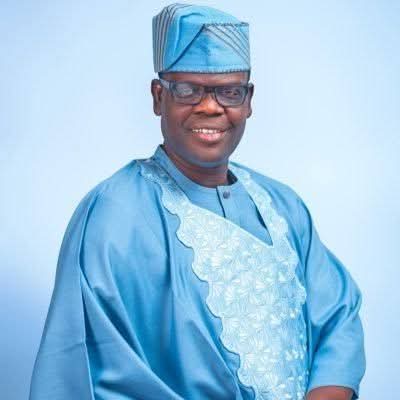
*Oselu Tiwa nTiwa Endorses Oriyomi Hamzat for Oyo Governorship*
A sociopolitical support group in Oyo State, Oselu Tiwa nTiwa, has declared its support for Alhaji Oriyomi Hamzat as the authentic governorship candidate of the Accord Party ahead of the forthcoming governorship election in the state.
The group made its position known in a statement jointly signed by its President, Mr. Adewale Oluwaseyi and Secretary, Alh. Adebayo Oyewole, on Thursday, describing Hamzat as a grassroots figure with strong connection to the people and a track record of humanitarian interventions across Oyo State.

According to the group, the endorsement followed what it described as careful observation of Hamzat’s leadership qualities, compassion and dedication to the welfare of ordinary citizens.
“Oriyomi Hamzat has consistently demonstrated empathy, courage and selfless commitment to humanity. Through his numerous interventions in the lives of ordinary citizens, he has become a symbol of hope to many families and communities,” the statement read.
Oselu Tiwa nTiwa also appealed to the national leadership of the Accord Party to prioritise the long-term future and electoral growth of the party in its decision-making process.
The group noted that Hamzat’s candidacy presents an opportunity for the party to strengthen its grassroots support base and expand its political relevance across Oyo State.
“We respectfully appeal to the National Leadership of the Accord Party to look beyond immediate political calculations and consider the bigger picture, the future growth, stability and electoral success of the party in Oyo State and beyond,” the statement added.
The group further expressed confidence in the leadership of the party, saying it believes the party’s national officers and stakeholders would take decisions that reflect fairness, inclusiveness and the collective interest of members.
While calling on party loyalists to remain calm and united, Oselu Tiwa nTiwa said continued consultations among stakeholders would help strengthen the Accord Party ahead of the election.
Signed:
Alh. Adebayo Oyewole,
Secretary.
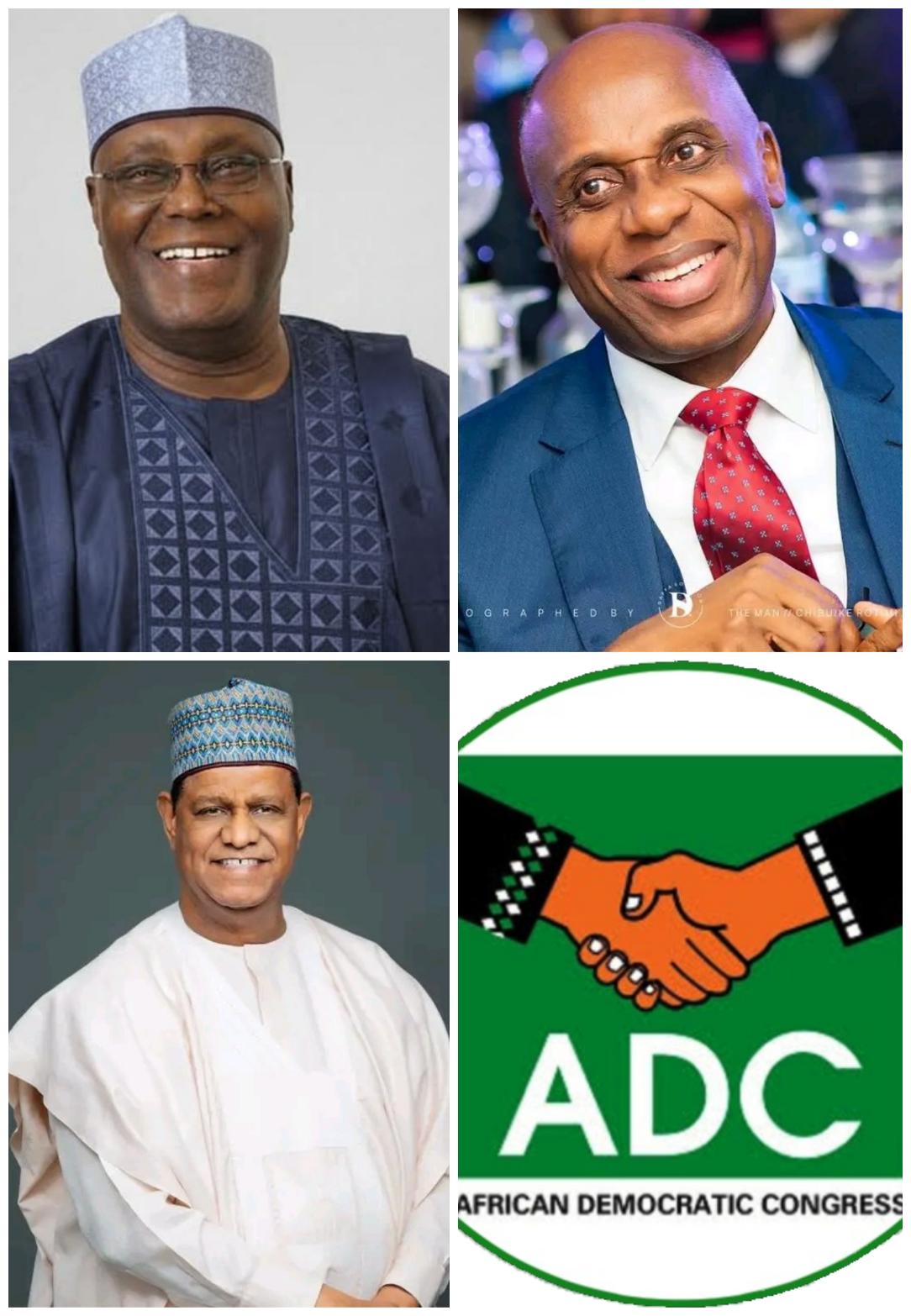
Atiku Set To Clinch ADC Presidential Ticket, Leads Amaechi, Hayatu-Deen In 34 States
Former Vice President of Nigeria and frontline presidential aspirant of the African Democratic Congress (ADC), Atiku Abubakar, is projected to emerge winner of the party’s presidential primaries, according to impeccable sources in Abuja.
The primaries, conducted across over 8,000 wards in the 36 states of the federation and the Federal Capital Territory, reportedly placed Atiku far ahead of his closest rivals — former Rivers State Governor, Rotimi Amaechi, and former Chairman of the Nigerian Economic Summit Group, Mohammed Hayatu-Deen.

Highly placed party insiders disclosed that Atiku is currently leading in 34 states, including the FCT, after securing dominance across the 19 Northern states, the five South-East states, and the six South-West states, while also maintaining a strong showing in at least three states in the South-South geopolitical zone.
The sources added that the outcome reflects what they described as “an overwhelming nationwide acceptance” of the former vice president within the opposition party ahead of the 2027 general election.
Meanwhile, the ADC leadership has invited members of the press to the official announcement of the final collated results scheduled for 11:00 a.m. on Tuesday, May 26, 2026, in Abuja.
The declaration of results is expected to be broadcast live on ARISE Television and two other major television stations, while also being livestreamed on the party’s official social media platforms on X and Facebook.
Speaking ahead of the announcement, the founding National Chairman of the ADC, Chief Ralph Nwosu, said the decision to televise the exercise live was aimed at promoting transparency and democratic accountability.
“We want millions of Nigerians at home and in the Diaspora to witness democracy in action,” Nwosu said.
He further revealed that the party leadership would encourage all three presidential aspirants to publicly embrace a peace accord and commit themselves to working together in unity for the party’s success.
According to him, the move is necessary to strengthen internal cohesion and position the ADC for victory in the presidential election scheduled for January 16, 2027.
Details later.


- Joint Statement by the World Health Organization (WHO) and Food and Agriculture Organization of the United Nations (FAO) in South Africa on World Food Safety Day 2026: From burden to solutions – safe food everywhere June 7, 2026
- Liberia: President Boakai Oversees Signing of US$125 Million in World Bank Financing Agreements for Digital Connectivity, Renewable Energy, and Road Infrastructure June 7, 2026
- President Mahama explores Belarus’ agro-industrial hub; seeks partnerships to boost Ghana’s food security June 7, 2026
- National Insurance Corporation of Eritrea (NICE): Shareholders’ Annual Regular Meeting June 6, 2026
- World Cup accredited journalists raise concerns over unfair United States (US) visa restrictions, International Sports Press Association (AIPS) calls on FIFA to intervene June 6, 2026
- Ghana: President Mahama arrives in Belarus, lays wreath at Victory Monument June 6, 2026
- Liberia: President Boakai Advances Clean Energy Agenda; Dedicates 20-Megawatt Solar Power Plant at Mount Coffee June 6, 2026
- African Union (AU) Commission Chairperson mourns Passing of the Former Angola Minister of Foreign Affairs June 6, 2026
- Economic Community of West African States (ECOWAS) Welcomes Students on an Educational Visit to Its Headquarters June 6, 2026
- Seychelles: President Patrick Herminie attended Official Opening of Rise and Shine Day Care Centre at Mont Fleuri June 6, 2026
- Joint Statement by the World Health Organization (WHO) and Food and Agriculture Organization of the United Nations (FAO) in South Africa on World Food Safety Day 2026: From burden to solutions – safe food everywhere June 7, 2026
- Liberia: President Boakai Oversees Signing of US$125 Million in World Bank Financing Agreements for Digital Connectivity, Renewable Energy, and Road Infrastructure June 7, 2026
- President Mahama explores Belarus’ agro-industrial hub; seeks partnerships to boost Ghana’s food security June 7, 2026
- National Insurance Corporation of Eritrea (NICE): Shareholders’ Annual Regular Meeting June 6, 2026
- World Cup accredited journalists raise concerns over unfair United States (US) visa restrictions, International Sports Press Association (AIPS) calls on FIFA to intervene June 6, 2026
- Ghana: President Mahama arrives in Belarus, lays wreath at Victory Monument June 6, 2026
- Liberia: President Boakai Advances Clean Energy Agenda; Dedicates 20-Megawatt Solar Power Plant at Mount Coffee June 6, 2026
-

 news6 months ago
WHO REALLY OWNS MONIEPOINT? The $290 Million Deal That Sold Nigeria’s Top Fintech to Foreign Interests
-

 society1 month ago
SOCIAL MEDIA IS NOT A BATTLEFIELD COMMAND – WHY THE NIGERIAN ARMY’S ACTION AGAINST JUSTICE CRACK IS A NATIONAL SECURITY IMPERATIVE
-

 celebrity radar - gossips4 months ago
Dr. Chris Okafor Returns with Power and Fire of the Spirit -Mounts Grace Nation Altar with Fresh Anointing and Restoration Grace on February 1, 2026
-

 celebrity radar - gossips6 months ago
Prophet Kingsley Aitafo Releases 2026 Prophecy: ‘Nigeria Will Rise, but the World Must Prepare for Turbulence’