
society
Ogun Kicks Off GRA Regeneration Scheme, Sets To Create Modern Cities In Abeokuta, Ijebu-Ode, Others

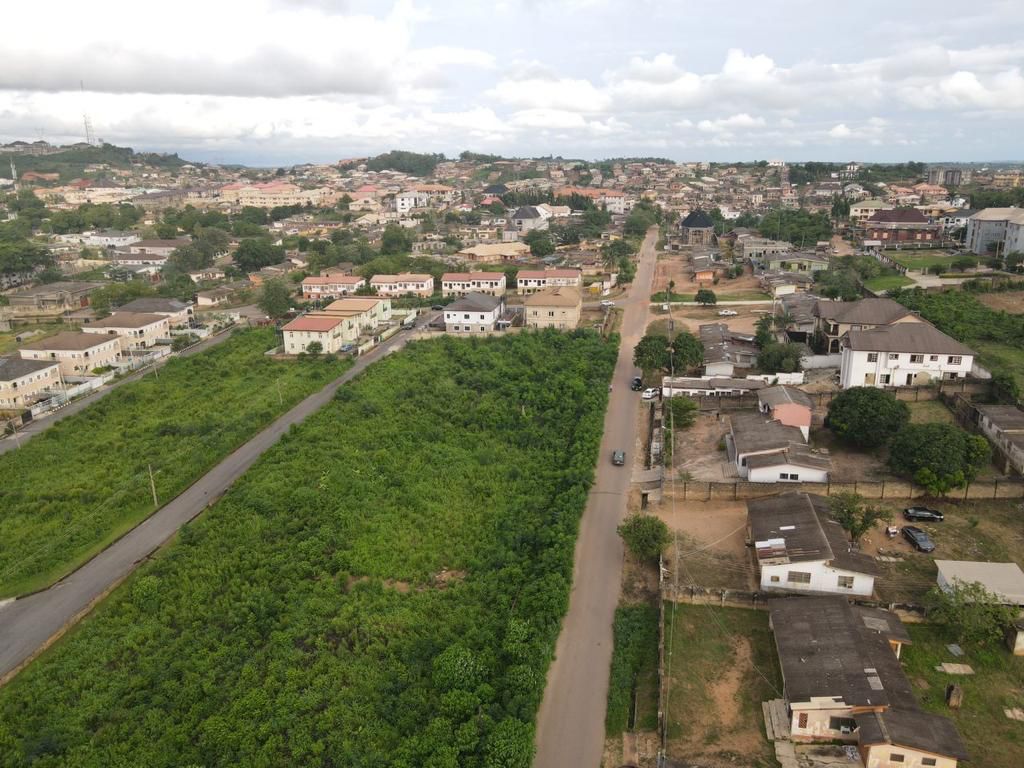
Ogun Kicks Off GRA Regeneration Scheme, Sets To Create Modern Cities In Abeokuta, Ijebu-Ode, Others
The Ogun State government has unveiled a Regeneration Programme aimed at the transformation of some dilapidated structures within the state’s Government Reservation Areas (GRA).
Tagged “Ogun State GRA Regeneration Programme”, the project is meant to create “Smart Cities” with the construction of modern housing units on over 100 hectares of land, valued at billions of Naira in Abeokuta, Ijebu-Ode, Ota, amongst other areas.
The Regeneration Programme, according to the Commissioner for Housing, Jagunmolu Jamiu Akande Omoniyi, was the idea of the administration of Governor Dapo Abiodun to rebuild the GRAs, starting with Ibara GRA.
Speaking to reporters after an inspection tour of the Ibara housing project, Omoniyi said the main objective of the regeneration plan was to restructure the affected areas to make them environmentally friendly through the Public-Private-Partnership (PPP) scheme.
He noted that the scheme is parts of the present administration’s efforts to alter the rapidly degenerating environment by a deliberate adjustment of the existing city areas to meet the current and future needs of urban life.
It is also intended to replace the obsolete and dilapidated buildings that share the characteristics of slum areas with the general framework of an overall plan for modern city development, he added.
Apart from Ibara, the scheme will also be extended to Idi Aba (annex of the Government Technical College, which sits on about 7 hectares of land), also in the Abeokuta metropolis.
Omoniyi said: “We are here on the directive of the governor to kick-start the regeneration programme of Ibara GRA and the government housing units at Idi Aba, Abeokuta. We have gone around, and we saw that the occupants of these houses have heeded the vacation notice. Now, we are ready to commence the demolition of the old and dilapidated structures and begin planning to build smart cities within the Abeokuta metropolis. For clarification purposes, GRA Ibara does not belong to the civil and public servants in the state.
“At the inception of the creation of Ogun State in 1976, this location provided shelter for the civil servants of Ogun extraction who were coming back from the defunct Western Region. But, we realized that this prime location was being under utilized. That is why the incumbent administration of Governor Dapo Abiodun in the state summoned the political will to reinvent and redevelop this place to harness its potential for the benefit of the Ogun people, and to create values for the decaying assets of the state government.
“Numerically, the Idi Aba housing scheme is sitting on 7.5 hectares of land, while GRA Ibara is sitting on nothing less than 30 hectares of land. And we believe that as we move on with this project, we will discover some hidden or encroached portions of the land.
“Within Abeokuta alone, we are talking about 40 hectares of land to play with. There are similar schemes in Igbeba in Ijebu Ode, Ota, and Ilaro. For now, we are starting with Abeokuta. Then, we will move to other locations where we have the state government’s assets being wasted away.
“Meanwhile, Mr. Governor, out of his magnanimity and empathy, has directed me to prioritize the requests of the civil servants in the allocation of houses in this regeneration programme. Don’t forget that some of them have benefitted from other housing schemes such as Kobape, Kemta, Ilaro, and so on, that this present government has done.
“For those who missed out on those ones, I have the directive of the governor to absorb them immediately in this new scheme. We have a wide range of opportunities such as rent-to-own; outright purchase, and mortgage through Gateway Mortgage Bank.
“The practice before now was for civil servants to live here and get evacuated after retirement. But, this new scheme will allow for mortgages, and the houses can be paid for while still in service. What we are going to do here, which is a common patrimony of the Ogun State people, will cut across all the cadres of income level.
“We will accommodate everyone – commercial, residential, and institutional. We are creating smart cities where people will live, work, and play. We are creating a total ecosystem to ensure that everything you need to make a decent living is found inside of our GRA.”
According to the Commissioner, the urban regeneration scheme is expected to have between 4 and 5 bedrooms of different sizes, which are to be complemented with world-class infrastructural facilities.
The Ibara scheme, he said, is to be redeveloped into 500 housing units, while Idi-Aba is to have 100 units.
Omoniyi, accompanied on the visit by the Head of Service (HoS), Mr Peter Kolawole Fagbohun, and the General Manager, Ogun State Housing Corporation, Mr Wale Ojo, noted that on the directive of the governor, civil servants at different income levels are to be considered in the new scheme.
He noted that a wide range of opportunities such as rent-to-own, outright purchase, and mortgage have been put in place to make public servants benefit from the new scheme.
He noted that the programme would focus on local content by engaging artisans, suppliers and developers within the state, just as it did with Kobape Housing Scheme, Kemta Housing Scheme, Prince Court Estate and other similar housing projects, with about 20,000 direct and indirect jobs expected to be created.






Tinubu Abroad, Nigeria in Chaos: The Spectacle of Elite Excess
By George Omagbemi Sylvester
“Government officials queue to bid him farewell as he departs, only to rush ahead and line up again to welcome him at his destination; a stark display of misaligned priorities in Nigerian leadership.”
Wednesday, March18, 2026
In a spectacle that has plunged Nigeria’s political class into fresh ignominy, a long line of federal ministers, governors, senators and political hangers‑on queued outside a London hotel this week to welcome President Bola Ahmed Tinubu, GCFR upon his arrival in the United Kingdom for a two‑day state visit.
Not only did these government officials send off Mr. Tinubu as he departed Nigeria (a ritual in itself excessive given the scale of pressing national crises) they rushed ahead to London to line the halls of his hotel, applauding and greeting him like conquering heroes arriving on foreign shores. This is how Nigeria’s elites now comport themselves while millions of citizens endure ever‑deepening hardship.
A Travesty of Priorities
Tinubu’s visit to the UK, hosted by King Charles III and Queen Camilla, is officially billed as an effort to deepen trade relations, attract investment and strengthen bilateral cooperation between Britain and Africa’s most populous nation. While those diplomatic objectives in theory could benefit Nigeria, the optics of an entire political class fawning over a president abroad are unbearably grim against the backdrop of domestic suffering.
According to recent economic analysis, despite macroeconomic adjustments such as ending fuel subsidies and floating the naira, more than 60% of Nigerians still live in poverty and daily hardships are rampant. Security remains a grave concern with violence and banditry destabilising large swathes of the country. Instead of addressing these crises with urgency, Nigeria’s leadership appears fascinated with photo‑ops overseas.
“A System of Self‑Centred Elites”
Critics within Nigeria have not minced words. Political observers describe the spectacle as a display of self‑centred politics divorced from the realities facing ordinary citizens. One observer on social platforms summed up the broader sentiment: “Tinubu represents a system of self‑centred elites (elite consensus over popular will) and this is exactly the performative politics that lines like these embody.”
Dr. Godfrey Mwakikagile, a respected African scholar on post‑colonial governance, has long warned that bad leadership and lack of accountability are Africa’s greatest challenges. “Power in many African states is too centralised and concentrated in the hands of elites who use it to perpetuate themselves at the expense of the public good,” Mwakikagile recently argued; a critique that resonates all the more when ministers fly abroad not to pursue tangible policy but to line up like admirers.
The Cost of Foreign Pageantry
This isn’t the first time Tinubu’s foreign engagements have attracted scrutiny. His administration’s frequent travels (often with large entourages) have drawn criticism for prioritising optics over outcomes, especially when Nigeria’s economy contracts and its people struggle with food inflation and insecurity.
Former presidential candidate Peter Obi has been among the most vocal domestic critics of these priorities, noting that Tinubu’s extensive foreign travel (including to the UK) distracts from urgent national needs and has become a “matter of grave concern.” Obi insists that such actions reveal a leadership more interested in global visibility than domestic wellbeing.
Nigeria Jagajaga!
The phrase “Nigeria jagajaga” (loosely translated as Nigeria being in disarray) has never felt more apt. A nation where ministers greet presidents in plush foreign suites while citizens queue for food and services is a country deeply out of balance.
Instead of being welcomed like dignitaries abroad, ministers and governors should be at home addressing the root causes of Nigeria’s struggles: insecurity that displaces communities and kills livelihoods, an economy that leaves the majority impoverished despite reforms, and the persistent failings of governance that erode public trust.
What Nigerians Deserve
President Tinubu and his entourage should be judged not by the number of ministers who lined up to greet him in London, but by the lives changed back in Nigeria.
As scholars like Mwakikagile and critics like Obi remind us, political leadership must be accountable and grounded in service, not spectacle. Nigeria’s leaders owe the people more than applause at international hotels; they owe them safety, economic opportunity, and genuine progress.
If this nation is ever to break free from the cycle of “jagajaga,” then those in power must demonstrate sincerity, not pageantry; action, not admiration. The lines outside a London hotel are not a testament to leadership; they are a testament to where Nigeria’s priorities have tragically come to rest.


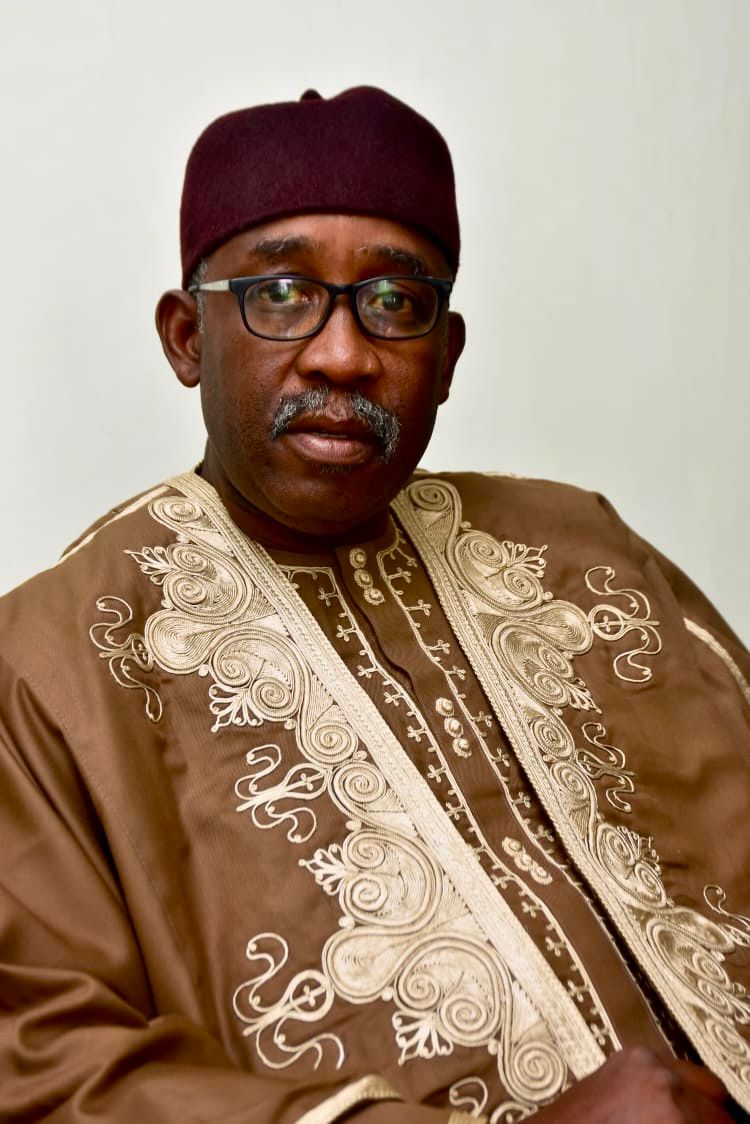
GENERAL BULAMA BIU MOURNS VICTIMS OF BORNO ATTACKS, CALLS FOR UNITY AND VIGILANCE**
In a solemn and heartfelt message, Major General Abdulmalik Bulama Biu (Rtd), mni, the Sarkin Yakin Biu, has expressed profound grief over the recent tragic incidents of bomb explosions in Maiduguri and renewed violent attacks in several communities across Borno State.
This was contained in a statement he personally signed and made available to the press.
The retired senior military officer described the assaults which affected areas including Ngoshe, Mandiragirau, Ajiri, and Buratai as “cruel and most barbaric,” particularly as they occurred during a period of deep religious observance for many residents. General Biu extended his condolences to His Excellency, Professor Babagana Umara Zulum, the Executive Governor of Borno State, the people of the state, and especially the immediate families of the victims.
“These unfortunate attacks have painfully led to the loss of innocent lives and destruction of properties, a painful reminder of the challenges we continue to face as a people,” he stated.
General Biu prayed that Almighty Allah grants the deceased eternal rest (Jannatul Firdaus) and grants the injured a speedy recovery. He also commended the bravery and swift response of security agencies and emergency responders, acknowledging their tireless efforts to protect lives and restore peace in the state.
Addressing the resilient people of Borno, including elders, community leaders, associations, and the vibrant youth, General Biu urged steadfastness, unity, and increased vigilance. “Let us once again rejig our commitment and ensure we overcome this development. We have done it in time past, we can still do it now together,” he emphasized.
He further called on citizens not to allow “these cowardly acts to break our spirit or weaken our collective resolve to achieve lasting peace and stability.”
In strong terms, General Biu declared his solidarity with Governor Zulum, the state government, stakeholders, and all well-meaning citizens in condemning the attacks. He concluded his message with a prayer: “May Allah (SWT) bring lasting peace to Borno State and the entire nation.”
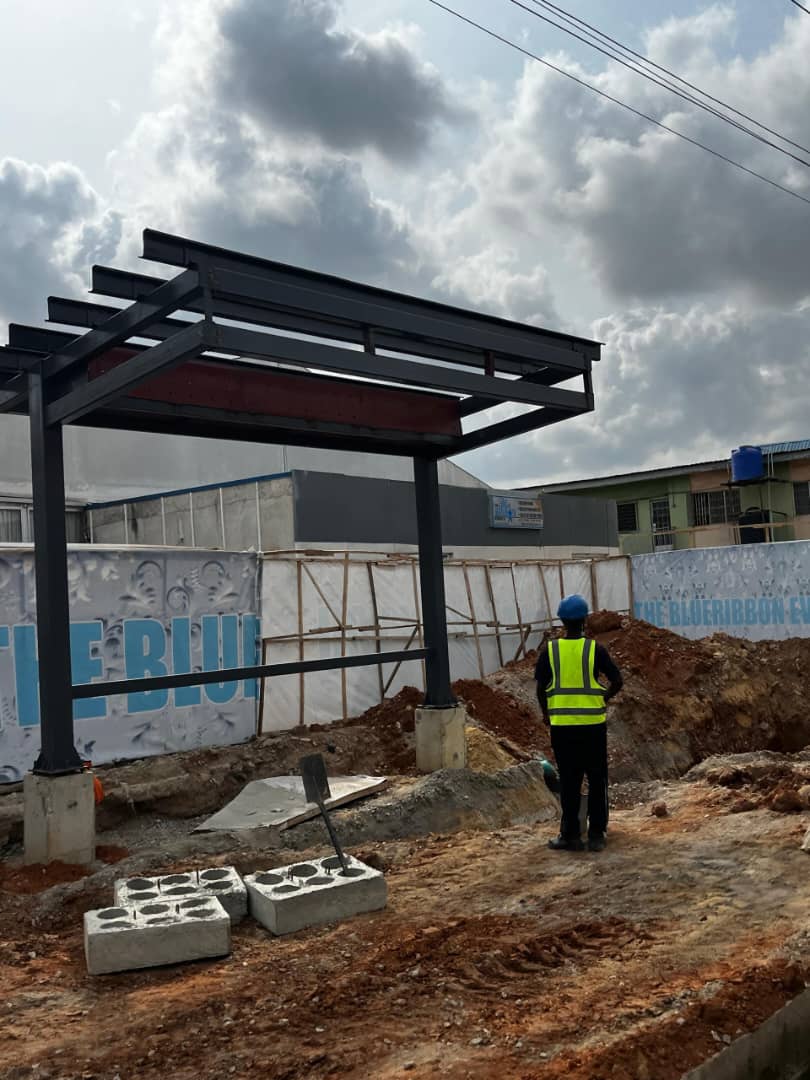
Temitope Adewale: Heralding New Era of Infrastructure Development in Ifako-Ijaiye
Residents of Ifako-Ijaiye Local Government Area are witnessing a new phase of infrastructural transformation as key transportation projects begin to reshape mobility and economic activity within the constituency. At the heart of this development is the ongoing rehabilitation and resurfacing of Iju Road, alongside the introduction of the Quality Bus Corridor (QBC) along the Iju–Agege-Abule-Egba transport route.
The projects represent a strategic step toward improving road infrastructure, strengthening public transport systems, and enhancing connectivity across several communities within the local government area; this is a total shift from the norm previously known.
For decades, Iju Road has served as one of the most important road networks connecting Iju-Ishaga, Abule-Egba, Agege, Agbado and adjoining communities leading to neighbouring Ogun State. The road plays a crucial role in the daily movement of residents, goods, commercial operators, and commuters traveling to other parts of Lagos.
However, years of heavy usage and increasing population growth placed significant pressure on the road infrastructure, making rehabilitation necessary. The ongoing project focuses on total resurfacing of the entire stretch of the road, strengthening its structure, and improving drainage to ensure long-term durability.
Beyond restoring the road surface, the rehabilitation effort is expected to significantly improve traffic flow, reduce travel time, and enhance the overall commuting experience for thousands of residents who depend on the route daily.
In addition to the road project is the introduction of the Quality Bus Corridor initiative along the Iju–Abule-Egba axis. The project forms part of Lagos State’s broader effort to modernise urban transportation and improve the efficiency of public transit across the state.
The QBC model is designed to enhance bus operations along major transport routes by upgrading road infrastructure, improving traffic management systems, and providing better facilities for commuters.
Under the initiative, several improvements are expected along the corridor, including upgraded bus stops which are already underway, improved pedestrian walkways, traffic signal optimisation, and enhanced safety measures for road users.
These upgrades are aimed at making bus transportation faster, more reliable, and more comfortable for commuters while also reducing congestion along one of the busiest corridors in the area.
The Iju–Abule-Egba corridor serves as a major transportation link for communities across Ifako-Ijaiye and neighbouring areas. With the introduction of the QBC system and the rehabilitation of Iju Road, residents are expected to benefit from improved connectivity and more efficient access to key commercial and residential districts.
Improved road infrastructure also plays an important role in facilitating economic activities, as easier transportation enables smoother movement of goods and services across communities.
For traders, transport operators, and small business owners, better road conditions translate into reduced vehicle maintenance costs, shorter travel times, and improved productivity which is the desire of all citizens. This project will surely reduce costs of energy spent on travel time, improve lifespan through less traffic, reduce carbon emission and help achieve better health for all.
The ongoing infrastructural improvements in Ifako-Ijaiye have become a reality through the legislative advocacy and productive engagement with relevant government agencies by Hon. Adewale Temitope Adedeji, OON, member representing Ifako-Ijaiye Constituency I in the Lagos State House of Assembly, Hon. Temitope Adewale, who is also the Chairman,House Committee on Transportation has been instrumental in facilitating groundbreaking infrastructural projects to Ifako-Ijaiye Constituency 01, all in bid to improve the social outlook and transform the economic landscape of the area.
Through continuous engagement with government authorities and stakeholders, the projects have gained the support required to address longstanding transportation challenges affecting different parts of the constituency, giving residents the joy for free movements at will.
His advocacy has contributed to ensuring that Ifako-Ijaiye remains part of the broader infrastructure development agenda aimed at transforming Lagos into a modern and well-connected megacity.
Infrastructure development remains a key driver of urban growth, and the ongoing projects within Ifako-Ijaiye reflect a broader commitment to building resilient and efficient transport systems across Lagos State.
By combining road rehabilitation with modern public transport initiatives such as the Quality Bus Corridor, the state government is laying the groundwork for a more sustainable and integrated transportation network.
For residents of Ifako-Ijaiye, the transformation of Iju Road and the introduction of the QBC initiative represent more than just road construction—they signal progress toward improved mobility, stronger local economies, and a better quality of life.
As work continues along the corridor, many residents remain optimistic that these infrastructural improvements will usher in a new era of development for the local government area.


-

 society6 months ago
Religion: Africa’s Oldest Weapon of Enslavement and the Forgotten Truth
-

 news3 months ago
WHO REALLY OWNS MONIEPOINT? The $290 Million Deal That Sold Nigeria’s Top Fintech to Foreign Interests
-

 society6 months ago
“You Are Never Without Help” – Pastor Gebhardt Berndt Inspires Hope Through Empower Church (Video)
-

 society7 months ago
Who is Chief Kestin Pondi? Niger Delta’s “People’s Chief” Winning Hearts With Hundreds of Millions in Generosity