
society
HISTORY OF DOGONDAJI TOWN AND THE ESTABLISHMENT OF FULANI RULE By Alhaji Muazu Alhaji

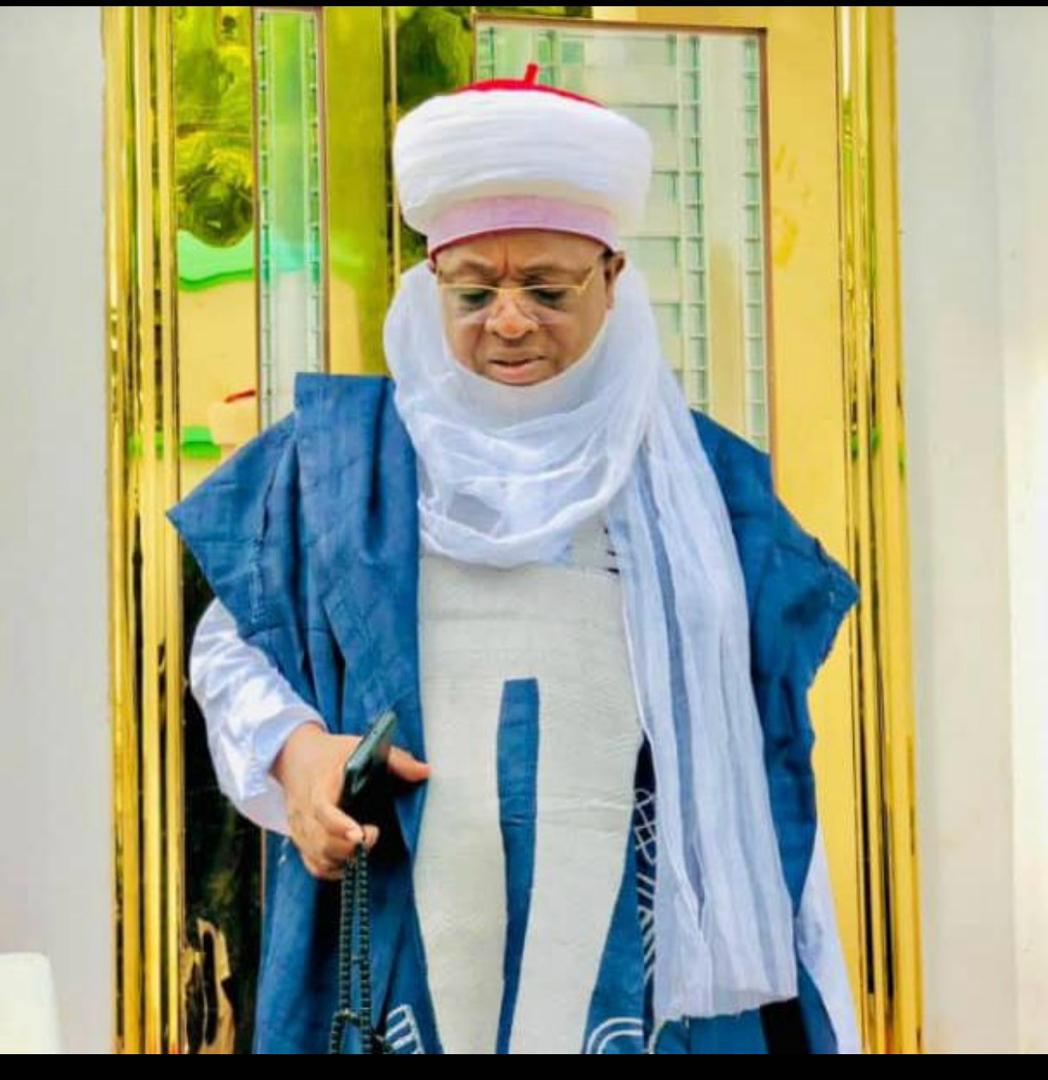
HISTORY OF DOGONDAJI TOWN AND THE ESTABLISHMENT OF FULANI RULE
By
Alhaji Muazu Alhaji
All praise is due to Allah,the Lord of the world. Peace and Blessings of Allah be upon the best of
creatures, Prophet Muhammad (PBUH) his household and companions. Peace be upon the believers.
I am extremely delighted at having the opportunity to write something on the history of Dogondaji.
The Genesis of Dogondaji Town can be traced to a group of people called DANGARAWA, who
migrated out of Argungu in Kebbi State. These people established SALAH as their first town and it is
from SALAH that the present-day DOGONDAJI originated. The time of their migration from Argungu
to Salah was not clear.
DANGARAWA:The town of DogonDaji got its Origin from from a group of people called Dangarawa
who migrated out of Argungu in Kebbi State. One of the warriors of the king of argungu named Mai
Kubbi, married the daughter of the King whose name is “Gara”. They latergave birth to a child who
was named Dan gara(Son of Gara), Hence the name Dangarawa.
SALAH: This is the biggest and most populous settlement of all the villages in the present day
Dogondaji District. Salah is situated about 6 Kilometeres north-east of Dogondaji. It was in later
years that Dogondaji outshone Salah in almost all facets of life due to factors like the administrative
supremacy of Dogondaji as the seat of Sarkin Yamma and over a period of time, the Fulani
Reformers came to outnumber the original inhabitants and by their population came to assiduously
wrenchpower from the Dangarawa. The original settlers of Salah came to the place under the
leadership of a man called Dangara Maikubbi.
Therefore, the establishment of salah is always credited to Dangara Maikubbi Obviously a great
farmer, he took the pains of clearing a vast farmland at a place about 6 Kilometers from salah. He
named the farm DOGONDAJI, depicting that it wasa far away place from his original residence. That
farm Dogondaji possessed by Dangara Maikubbi became in later years the present-day Dogondaji
town.
He had the farm walled up and the original walls were said tohave stood for a very long period of
time before their total collapse over the years. A particular section of the original wall of Dogondaji
farm that surrounded the southern part of the town-Dangarawa quarters-survived the longest.
Dangara Maikubbi was still at Salah, but farming at North their beasts and asked for permission from
himto settle and rear their animals in his farm-Dogondaji.Dangara Maikubbi acceded to their
request and the Tuaregs were said to have settled and lived on the farm for about 40 years.
Gradually, with their settlement,many people joined the them at the farm and soon Dogondaji
became populated.
When Dangara Maikubbi finally died at Salah, the mantle of leadership of the Dangarawa fell upon
his brother called Gani. The reign of Dangara Gani coincided with a period whenSheikh Usman
Danfodio left his brother Abdullahi, at Gwandu and was on his way, in company of his followers
(Disciples) including his son Muhammad Bello, to Sifawa when words reached Dangara Gani that the
revered Sheikh and his followers were to pass through his domain enroute to Sifawa. It occurred to
Dangara Gani to ambush Sheikh Usman and his men near a stream along the route that the Sheikh
and his men were expected to follow. Dangara Gani instructed his men to take up position on tall
trees so that the other party on approaching salah could be sighted from afar and the news passed
to him. When the Sheikh’s party was sighted, Dangara gani gave orders that they be attacked. As
soon as the Sheikh realized what they were about to encounter, he too instructed his disciples on
what to do in order to out-maneuver the men of Dangara Gani. The organization of Sheikh’s party was such that when warriors of Dangara Gani saw them, they became frightened and lost their
composure and resolve.
Soon, there was a debacleon Dangara Gani’s side. They fled southwards away from the town of
Salah, to a village in Tambawal District called Bagasakka. The place where Sheikh Usman succeeded
in hoodwinking the Dangara is to date called “ MARUDA”.
With Dangara Gani’s flight, SheikhUsman passed very close to Salah on his way to Sifawa but did not
enter the town. He instead, encamped under a “Baure” tree in a place near one village called
Gangumma that was about 2 kilometers away from Salah. There, the sheikh ordered his son
MuhammadBello to stay behind at Salah.So Muhammad Bello complied with his father’s wish and
entered Salah. He assumed the leadership of the town for the former leader Dangara Gani had fled
to where they were known to have gone.
The Sheikh on his part, proceededwith his journey of about 55 Kilometers from Dogondaji to Sifawa,
while Muhammad Bello lived in Salah for about 7 years. During the said period, he built a Jum’at
mosque and a royal house. The mosque which Muhammad Bello built continued to serve as Jum’at
mosque up to today with some modifications by the people of Salah over the years. The royal house
built by Muhammad Bello is to date the lodge of Sarkin Yamman Dogondaji, whenever he visits
Salah. In that house, two great Sultans were born; Sultan Aliyu Babba and Sultan Aliyu Karami.
Indeed, it was in Dogondaji and its environs that three Sultans were born, thus;
1. Sultan Aliyu Babba, who ruled between 1842-1859. He was the fourth Sultan and he
ruled for 17 years.
2. Sultan Aliyu Karami, who ruled between 1866-1867. He was the sixth Sultan and ruled for a
year. All these two Sultans were born in the royal house built by their father, Sultan
Muhammad Bello.
3. The eighteenth sultan whodescended from Mallam Buhari, son of Sheikh Usman Danfodio,
was born in 1926 in Dogondaji royal house. He is, ofcourse, Sultan Alhaji Dr. Ibrahim Dasuki,
son of Sarkin Yamma Haliru, son of Mallam Mallam Bara’u, son of Mallam Buhari, son of
Sheikh Usman Danfodio(RLA). Sultan Alhaji Dr. Ibrahim Dasuki, the 18thSultan, succeeded his
brother Sultan Abubakar III, the 17thSultan who descended from the Sultan Muhammad
Bello lineage.
In retrospect, Muhammad Bello lived in Salah for about 7 years, wherein those two sultans were
born. He was still in Salah when Dangara Gani came back to formally renounce his earlier rebellion
against Muhammad Bello and his father. He was pardoned but asked to go with his men and settle
at Dogondaji, which was the farm initially developed by his late brother Dangara Maikubbi. The
settlement of Dangara Gani and some of the Dangarawa with him marked the beginning of the
settlement of Dangarawa at the present-day Dogondaji town. Dangara gani was therefore the first “
Habe” ruler of Dogondaji.
Later, Muhammad Bello left Salah for Sokoto. On his departure, he bestowed the leadership of Salah
to a Fulani man from among his father’s disciples, aman who came to join the Sheikh from a village
named Masama in Gwandu area. The man was called Danyarba, who thereforere became the first
Fulani man to be made the District Head of Salah with the title of ‘Magajin Salah’. The title of
Magajin Salah is, to date, in the house of Danyarba. Below is the supposedly hierarchical order of
village Heads of Salah.
SALAH-VILLAGE HEADS
Magajin Salah Danyarba
1. Magajin Salah Aliyu
2. Magajin Salah Aliyu
3. Magajin Salah Abdu Walijo
4. Magajin Salah Bube sarkin lafia
5. Magajin Salah Buhari
6. Magajin Salah Isah
7. Magajin Salah Garbai
8. Magajin Salah Buhari Mijimbuu
9. Magajin Salah Gabdo
10.Magajin Salah Modibbo Abdullahi
11.Magajin SalahAhmadu (1920-1951 =31 years)
12.Magajin Salah Muhammad Bello (1951-1988 = 37 years)
13.Magajin Salah Nata’ala (1988)
14.Magajin Salah Ahmadu Maccido
When Muhammad Bello departed Salah and still under the leadership to Danyarba, the Dangarawa
were still under the leadership of Dangara Gani at Dogondaji. Years later, so many people ranging
from Hausa’s, Bugaje’s, Kanuri’s to Fulanis joined the Dangarawa at Dogondaji. The Hausa language
came to assimilate all other languages and flourished as the major language.
Around the same period, Mallam Abdullahi Bara’u (the grandfather of the 18thSultan) was at
Tambawal with his father Mallam Buhari, son of Shehu Usman Danfodio. Mallam Abdullahi Bara’u
ruled Tambawal after his elder brother Umaru Buhari for three years as Sarkin Tambawal. After
three years, he abdicated in favor of his elder brother, Mallam Umaru Buhari. With his abdication,
Mallam Abdullahi Bara’u left Tambawal and journeyed across the land to Kontagora and its environs.
At kontagora, he waged several reformatory wars and consequently conquered the town of Rijau
and prior to that, had conquered on his way, many towns in Gummi area, like the village of Falam
Tsibiri. He waged all those wars in his zeal to follow in the footsteps of his grandfather, Sheikh
Usman Danfodio and perfect the religion of Islam. With his victory over Rijau, he settled there up to
the period when Ahmadu Atiku became the Sultan of Sokoto. Sultan Ahmadu Atiku(the fifth Sultan
from 1859-1866) demanded that Abdullaghi Bara’u should return to Sokoto and live with him.
Mallam Abdullahi Bara’u returned to Sokoto , after sometime, Sultan Ahmadu Atiku asked Abdullahi
Bara’u to go back to Dogondaji near his father’s domain, Tambawal. Sultan Ahmadu Atiku, therefore
entrusted Bara’u to Dangara Gani.
Mallam Abdullahi Bara’u lived at Dogondaji with Dangara Gani up to the time when the latter died.
After Dangara Gani’s death, he was succeeded by Dangara Dandammu. When Dangara Dandammu
settled as the leader in Dogondaji, he divided the land of Dogondaji into two and gave one half to
Mallam Abdullahi Bara’u and retaining the other half to himself. Mallam Abdullahi Bara’u therefore
built a Jum’at mosque, a royal house and brought more scholars to Dogondaji in order to help him
propagate the religion furtherwithin the town and its vicinity, as well as serve as ideal role models of
Islamic ways of life. They lived like that in harmony up to when Dangara Dandammu died. On his
death, Mallam Bara’u merged the two divisions of Dogondaji into one solid town under his
leadership. That period marked the beginning of Fulani exclusive leadership at Dogondaji.
Henceforth, the position of Dangara ceased to be that of a paramount ruler, but that of a Head of Dangarawa, within the town of Dogondaji. The Dangarawa continuedto have farmlands both at
Dogondaji and Samma.
With the merger of the two divisions of Dogondaji, Mallam Abdullahi Bara’u assumed the title of
Sarkin Yamma. As a paramount ruler, he waged more wars and conquered a village called Falan
Tsibiri. He later established two towns, Madara and Tongonmere. Besides the establishment of these
two towns, he continued with his reformation wars in other towns.
Mallam Abdullahi Bara’ureigned for 13 years and died in 1879. Before his death, many traditional
Islamic Schools were established for promoting Islamic awareness and culture in the people and
strengthening their religious beliefs.
After Mallam Abdullahi Bara’u, his eldest son, Mallam Ibrahim Bara’u succeeded him in 1879. He too
was like his father, especially in respect to boosting and consolidating the religion of Islam. He was a
great warrior and left many legacies at his death. He bequeathed about 90 slaves, 72 guns and 90
horses. Sarkin Yamma Ibrahim died after 9 years in office in 1888. May Allah grant him eternal rest,
Ameen.
After the demise of Mallamn Ibrahim, the mantle of leadership went to his younger brother
Muhammad Mashayabo, who ascended the throne in 1888. A great warrior indeed who took great
delight in riding horses and whose dexterity with horses was said to be legendary. He had ventured
out on wars a number of times. In his time, the British colonialists invaded and conquered Sokoto in
1903, when Sultan Attahiru Ahmadu was on the throne. The Eid-el-Kabir of that year was celebrated
on Wednesday and on the following Friday, after Jum’at prayers, the Sultan mounted his horse,
wearing a coat of chain-mail and wielding in his hands his sword and shield. Together with his men,
he passed the night at Giginya. The Emir of Zamfara, Abdullahi also came withhis forces to back the
Sultan and camped at Marmaron Tawaye.
The British, on their part, camped at Jaredi. On Saturday, the British were said to have fired some
spluttering shots at the Sultan’s party at Farfaru. The next day, Sunday, the two forces met in what
can be called a gruesome encounter. In that battle, Sa’iUmaru, and one of the retainers were killed.
So also was the son of Ahmadu Rufa;I who was the Head of Takatuku town;Jabbi the son of
Abubakar, son of A hmadun Rufa’I, son of Sheikh Usman DanFodio and a member of other people.
The battle reached a high momentum to such an extent that the Emir of Zamfara, Abdullahi left
Marmaron Tawaye and came to where the sultan was. Between them, a decision was reached to the
effect that they should migrate. So they set off. Initially, they had had wanted to pass through the
gate of Atiku, but the gate proved impossible due to much congestion caused by the large gathering
of warriors. They therefore made a detour and passed by the city and through the gates of
Taramniya and Rini.
The Sultan, in company of men like Khadi Abdullahi, son of Liman; Muhammadu of the House of
Kade, grandson of Mustafa, son of MallamMaiyaki;sons of the Sultan Ahmadu;Maigandi;Bunu and
host of others took a road leading to a place called Fakon Idi on their way to Rara. They stopped over
at Gandi. From Gandi, they went eastwards, but leaving behind some nobles who did not proceed
with the sultan. The party which the sultan left at Gandi were with the Vizier Buhari. On the Sultans
departure, the Vizier advisedthe others to proceed and follow the Sultan but making it clear to them
that he, on his own understanding did not think that the conditions necessitating a migration were
fulfilled. The nobles supported his view and told him that they would rather stay with him.
Vizier Buhari, together with some of the men with him trooped to a nearby village called Dinawa and
settled there. But Marafa Muhammad Maiturare and Shehu Sarkin Yamman Kware, on their own part together with some men proceededto Maidaji and stayed there. Then the rest of the men
scattered to other villages in groups. After a while, the british summoned those groups back to
Sokoto, and they all acquiesced and went back. Initially, Sarkin Gobir of Isa wanted the British to
install him as the new Sultan, but the British, instead formed a Council of king-makers andvested in it
the responsibility of selecting a worthy candidate. Sarkin Gobir who earlier sought the position from
the British, did not emerge, insteadthe Galadima of Sokoto, Shaihu told the british that they had
chosen Attahiru, son of Aliyu who should be installed as the Sultan. Galadima Shaihu explained
further that Attahiru, son of Aliyu, had in fact been selected in the past, but due to some reasons his
selection was not ratified. Therefore, the British ratified the selection of Attahiru, son of Aliyu on the
following conditions:
1. Henceforth, no slave trading would be allowed in theland and there would be no more
cutting off of the hands of any thief, and in whatever town the British settled they would be
supplied with (a) Flour, (b) Eggs, (c) Chickens, which they would accept and pay for. In a nutshell, that was how Sokoto was subdued by the British in 1903.
Back to the subject of our discussion the Sarkin Yamma Muhammad Mashayabo, in whose tenure at
Dogondaji, Sokoto was subjugated, held port in Dogondaji for 16 years and left as legacies, many
horses and slaves. He died in 1904. May Allah grant him eternal rest, Ameen.
On the demise of Sasrkin Yamma Muhammad, his younger brother, Aliyu Haido succeeded him. He
ascended the throne at Dogondaji at the age of 41 years. He became Sarkin Yamma after the the
British had conquered Sokoto.there was not much activity during his tenure as Sarkin Yamma. He
died at the the age of 45 having ruled from 1904-1909. May Allahgrant him eternal rest, Ameen.
Sarkin Yamma Aliyu Haido was succeeded by his younger brother Mallam Haliru Bara’u in 1909.it is
crucial to note that all the aforementioned “Sarakunan Yamma” were the sons of Mallam Abdullahi
Bara’u. Mallam Haliru Bara’u ascended the throne as sarkin Yamma 6 years after Sokoto was
conquered by the British forces. His period as Sarkin Yamma was marked by great occurrences.
Many significant events happened in the history of Dogondaji during his reign. For it was in his time
that Dogondaji witnessed an expansion in terms of its landmass by acquiring new villages into its
fold. First, was the expansion of the town of Dogondaji when “Ruggar Gari” was annexed to the
Dogondaji proper. Then,came the acquisition of about 7 other towns –Ruggar Shauda, Kaurar
Samna, Gambu, Bancho, Doliyo, Siringo and Kalgon Magaji. Salah town got its share of this expansion
by getting Jinju annexed to it. Prior to thattime, all villages now acquired by Dogondaji were under
Gwandu.
It was also in his time that the first motorable road from Sokoto to Jega was constructed with the
road passing by Dogondajitown from the northern side. He has been in office for 10years.
Then came the establishment of Dogondaji Elementary School in 1925, when Sarkin Yamma was in
his 16thyear in office. Mallam Altine Kilgoriwas the foundation Head teacher of the Elementary
school, coupled with the high degree of cooperation, it enjoyed from the nobility, as well as the
commoners, the school gained greater fame in the area. Another famous teacher who did a lot for
the school was Mallam AbdurRa’ufu Sokoto, who was a gifted and diligent teacher. His total
commitment culminated into getting a flag for recognition for the school. Across the said flag were
written the words; THE PEOPLE PEOLE OF DOGONDAJI GOT ME BY DINT OF GREAT EFFORT.
All those developments happened in the time of Sarkin Yamman Dogondaji, Mallam Haliru Bara’u.
Dormitories were built in the school’s compound to provide lodging for some of the students who came from far places. For instance, the late Sheikh Abubakar Muhammad Gummi came from
Gummi;Mallam Mairugga, son of Dan Galadiman Maradu, came from Tambawal and some others
from Kebbi. At the end of Sarkin Yamma Haliru Bara’u’s 27 years in office, the mantle of leadership
passed on to the grandsons of Mallam Abdullahi Bara’u and his tradition has continued to date.
From among the grandsons of Mallam Abdullahi Bara’u, the first to become Sarkin Yamma was
Mallam AbdulKadiri Maccido. He was a son to the elder brother of the late ASarkin Yamma Mallam
Haliru Bara’u. He was only destined to rule for a year.
Mallam Muhammafd Mahe then succeeded his late brother, Mallam AbdulKadiri Maccido as Sarkin
Yamma in 1937 equivalent to 1358 A.H. With this, he became the second grandson of Mallam
AbdullahiBara’u to ascend to the position of Sarkin Yamma. In his time, the town of Dogondaji was
further expanded at the eastern, western, and northern sides. The town was planned in a such a way
that all streets were widened and a road was constructed that started at the extreme eastern side of
the town, cutting through the town and ending at the extreme western side. A similar road was
constructed to link the southern and northern sides of the town. Concrete wells were also constructed in 1937 at the school, Ruga quarters of the town and the well of Magajin Gari.
A Government department for Agriculture was also built at the eastern side of Dogondaji town. Bulls
were also brought and sold to the people, which marked the beginning of the use of Bulls in
ploughing farmlands. Then a Veterinary Clinic was also built at a place called Asarara, near Barkeji.
Asarara was initially a station reserved for the nomadic Fulanis, with facilities for existence, thanks to
the efforts and foresight of late Alhaji Alhaji Dogondaji, the Sarkin Shanu of Sokoto, son of Haliru
Bara’u, the 5thSarkin Yamma of Dogondaji. Then came the Dogondaji town Dispensary, a construction company (NDR) was also established
about2 kilometers. East of the town. The company constructed the Sokoto-Jega road. As a result of
the establishment of that company, many young men of Dogondaji origin were trained as Drivers,
Mechanics and welders. It was in the time of Sarkin Yamma Muhammad Mahe that a Government
Teachers’ college was established and its name was later changed to Abdullahi Bara’u Secondary
school. The school was built near a small town –Rugar Shauda which which was then about ½
kilometer away from Dogondaji but is now more or less considered as in Dogondaji proper. In 1966,
on the orders of the late Sardauna, Alhaji Sir Ahmadu Bello, a borehole pump was installed.
In the time of Sarkin Yamma Muhammad Mahe, the people of Dogondaji, through community
labour, were able to construct a road from Dogondaji, passing through Salah to Sanyinnar Daji-the
length of which was 15 kilometers. Lodgings were also built in Dogondaji and other villages solely to
cater for Tourists’ needs.
Sarkin Yamma Muhammad Mahe ruled Dogondaji for 38 years i.e from1937-1975. He died on
Tuesday February 4th 1975, after a protracted illness. May Allah grant him eternal rest, Ameen.
After Sarkin Yamma Muhammad Mahe, then his younger brother Mallam Haliru Ummarun Bara’u,
who had been brother turbaned as Dangaladiman Barkeji by Sarkin Yamma Haliru Bara’u after the
demise of his father, was turbaned as the new Sarkin Yamma. He was the third among the grandsons
of Mallam Bara’u,who held the title of Sarkin Yamma. Mallam Haliru Ummarun Bara’u was turbaned
Sarkin Yamman Dogondaji on Friday, May 16th, 1976. During his tenure in office, Dogondajiwas
developed further in terms of its geographical spread. He also expanded and modernized three royal
houses by the erection a duplex, provision of additional royal courts and entrance doors.
Sarkin Yamma Haliru Ummarun was a man who enjoyed immense respect from his subjects as a
result of his simplicity, approachability and administrative competence. He showed keen concern in whatever interested the people of Dogondaji. He encouraged the promotion of Traditional sporting
activities like Boxing, wrestling, “Sharo” e.t.c. he was famous for his interest in horses and gorgeous
dressing. It was due to his virtues that Mallam Yusuf A. Muhammad Dogondaji composed a poem in
his honor wherein he said;
1. I am seeking (help) from God
2. For the sake of Salutation(to Prophet) and prayers
3. For this poem I am preparing for you (Sarkin Yamma)
1. I send salutation to our Prophet
2. Mustapha (S.A.W) our leader
3. Whoever asks from him, he gets e.t.c
Sarkin Yamma Haliru Ummarun Bara’u died around 10 o’clock in the morning on Monday, December
20th,1977. May Allah grant him eternal rest, Ameen.
At the death of Haliru Ummarun Bara’u, his younger brother Alhaji Aliyu Haliru Bara’u got elevated
from his position as Makaman Sokoto, to the position of Sarkin Yamman Dogondaji in 1978.
It was in his time that mud buildings gave way to modern concrete ones, especially in the royal
house. He lived with his family in the modern building alongside the traditional one that was
adjacent to the new one. It was also during his tenure that the electrification project of Dogondaji by
the Rural Electrification Board(R.E.B) was started. The town market got many more shops. A well, to
which was fitted a pressure pump and connected to a very big water reservoir was dug. It was
second of its kind for the first one was constructed in 1966 by Sardauna Sir Ahmadu Bello. Taps,
which got their supply from the reservoir, were constructed at thye Dispensary and at the town’s
police station, which was situated east of the town’s market. Police were also deployedto Dogondaji
under an Inspector.
Just like his predecessors, Sarkin Yamma Alhaji Aliyu Haliru did a lot to promote religion. He
encouraged the formation and strengthening of some Islamic Societies. Throughout the land, Imams
and Islamic Scholars of thetraditional schools were made to undergo refresher courses in the
science of the Holy Qur’an. Islamic societies like the Jama’atul Nasril Islam and Fityanul Islam were
established for the propagation of Islam. A General Hospital was also built in his time atthe north
western side of the town and the Jum’at mosque was modernized, near the former mosque which
was situated very close to the royal house built by Mallam Abdullahi Bara’u. For after Mallam
Abdullahi Bara’u, his son, Mallam Ibrahim built a new royalhouse which to date serves as the
Dogondaji royal house.
Among the hobbies of Sarkin Yamma Aliyu Haliru Bara’u was horse-riding, for he was used to riding
horses since his childhood. He too dressed in a gorgeous way. Ultimately, Sarkin Yamma Alhaji Aliyiu
Bara’u ruled for 11 years and died in the night around 8.00pm on a Friday in 1988 after a few days
illness. May Allah give him eternal repose, Ameen. Yusuf A. Muhammad Dogondaji composed a
poem condoling all for the great loss. The poem has about 130 stanzas.
It started thus;
1. We are beseeching you oh Allah
2. We have sent our salutations to the prophet
3. Forgive (him) Sarkin Yamma.
Likewise during his turbanning as Sarkin Yamma, Alhaji Adamu wrote a poem on that occasion,
wherein he brought all the rulers of Dogondaji in hierarchical order , from Mallam Bara’u to Alhaji
Haliru Bara’u
BRIEF ACCOUNT ON THE LOCATION OF MAUSOLEUMS OF ALL THE AFOREMENTIONED
SARAKUNAN YAMMA.
1. Mallam Abdullahi Bara’u was buried in his royal house and immediately after the first royal
court, he died in 1879.
2. Mallam Ibrahim Bara’u was buried next to his father (the first Sarkin Yamma) at Dogondaji.
He ided in 1888.
3. Mallam Bara;u was buried ina ahouse in Sokoto city. He died in 1904.
4. Aliyu Haido was buried in the royal house built by his elder brother , Mallam Ibrahim. The
grave is the the North-Easternside of the house, near some Balanites aegyptiaca trees. He
died in 1909.
5. Mallam Haliru Bara’u was buriedin a house he moved to, just before his death in Airan
Quarters. He died in 19433.
All the above were Mallam Bara’u’s sons and below are 4 of his grandsons in the order in which they
ruled.
6. M. AbdulKadir Maccido, son of Ibrahim, was buried in the royal house built by his father
near the grave of his father’s younger brother, Aliyu Haido, by the Balanites aegyptiaca
trees. He died in 1937.
7. Mallam Muhammad Mahe was buried in the royal house built by Ibrahim. His grave is at the
southern part of the house . he died in 1975.
8. Mallam Halirun Bara’u was buried at the tomb of Shehu Usman DanFodio at Sokoto by the
side of his grandfather Mallam Buhari son of Shehu. He died in 1977.
9. Mallam Aliyu Halirun Bara’u was buried in the royal house built by Ibrahim Bara’u. He lies
next to his brither Mallam Muhammad Mahe. He died in 1988.
10.All the aforementioned four were grandsons of Mallam Bara’u. May Allah grant them all
eternal rest, Ameen.
SARKIN YAMMAN DOGONDAJI ALHAJI SHEHU UMARU
Sarkin Yamman Dogondaji Alhaji Aliyu Halirun Bara’u was succeeded by his younger , Alhaji Shehu
Umarun Bara’u, who was turbaned on Friday August 12th, 1988 at about 10 O’clock in the morning.
From the time he ascended the the throne up to date, Dogondaji has witnessed some changes and
developments, thus:
a. In his time, the Rural Electrification Station of Dogondaji was connected to the national Grid.
The rural electrification was initiated by Alhaji Mu’azu Alhaji and it connected Dogondaji,
Tambawal and Gwandu with a Sub-station at Malisa.
b. The Dogondaji General Hospital, which was built in the time of Sarkin Yamma Alhaji Aliyu
Halirun Bara’u was formallyopened in his time. The Hospital was built through the influence
of Alhaji Mu’azu Alhaji(a son to the elder brother of Sarkin Yamma Alhaji HaliruBara’u)
when he was the Secretary, Sokoto State Health Services Management Board (HSMB)
c. In his time, the Dogondaji town market was further expanded at both the eastern and
northern parts.
d. In his time, a motor park was also built, east of the town’s market and shops adorned the
northern side of the motor park. The local Government acquired many plots, including some part of the royal farmlands for the purpose of further expansion of the town and this was at
the western section of the town. It was also in his time that the name of the Government
Teachers’ College was changed to Abdullahi Bara’u Secondary School. There were many
more similar changes.
SARKIN YAMMAN DOGONDAJI NASIRU SHEHU UMAR
After the death of his Father and by the will of God Almighty, his son Alhaji Nasiru Shehu Umar was
appointed as the New Sarkin Yamman DogonDajimaking him the eleventh king on the throne and
as the first ever king from the Great Grand children of Abdullahi Bara’u, son of Buhari, son of Usman
Danfodiyo, after the death of his parent and grandparent.
Alhaji Muhammad Nasiru, the son of Shehu Umar, the son of Dangaladima Umar, the son of Bara’u,
the son of Buhari, the son of Usman Danfodio was appointed the king as Sarkin Yamman DogonDaji
on the 9/12/2017 and is still the serving king till date.
It was during his time that the palace gate was rebuilt, that is, the royal house. It is decorated with
modern furnitures and chairs. There has been a lot of progress and he is still trying to emphasize
religion such as heading the commissioning of some mosques around the villages of Dogondaji and
appointing imams for them.
May God bless the king and guide him in all his future affairs, also give him the ability to do justice
and stick to the truth as his parents and ancestors did. Ameen.
DOGONDAJI DISTRICT
The Dogondaji District shares common borders with yaboat the east (about 1 kilometer) and about
16 kilometers at the north-east, it shares a common boundary with the district of Ardon Sanyinna. In
the north, it shares borders with Gwandu, as well as , in the south. In the south, it shares borders
with Tambawal, as well as Gummi. Then, in the south-east, it borders the district of Sarkin Burmin
Jabo. This can be analyzed thus:
a. At the east, it borders with yabo district (1km)
b. At the south-east, it borders with jabo district (10 km)
c. At the south, it shares border with Gummi (20km)
d. At the south-west it has common borders with Tambawal
e. At the west, it shares borders with Gwandu (2 km)
f. At the north-west, it borders gwandu (5 km)
g. At the north, it shares borders with Gwandu (1/2 km)
These are the Districts that share common borders with Dogondaji.
NAMES OF FULANI RULES PERIOD DURATION
1. Mallam Abdullahi Bara’u 1866-1879 13 years
2. Ibrahim Bara’u 1879-1888 9 years
3. Muhammad Bara’u 1888-1904 16 years
4. Aliyu Haido Bara’u 1904-1909 5 years
5. Halirun Bara’u 1909-1936 27 years
6. AbdulKadir Maccido Ibrahim 1936-1937 1 year
7. Muhammad Mahe 1937-1975 38 years
8. Haliru Ummarun Bara’u 1975-1977 2 years
9. Aliyu Halirun Bara’u 1978-1988 10 years
10.Usman Ummarun Bara’u 1988-Date
NAMES OF HABE RULERS-DANGARA (TOWN/ DISTRICT HEADS)
Before the advent of Fulanio rule in Dogondaji, two Habe rulers with the title of Dangara, have ruled
Dogondaji and they are;
1. Dangara Maikubbi who ruled at Salah
2. Dangara Gani, who succeeded Maikubbi who migrated to Dogondaji. With his death, power
shifted to Fulani rulers
NAMES OF THOSE WHO HELD THE TITLE OF DANGARA (AS A WARD HEAD) IN DOGONDAJI
1. Dangara Maikubbi, who lived at Salah as a village head
2. Dangara Gani, who lived first at Salah and later at Dogondaji as a Village Head
3. Dangara Dandammu Ward Head of Dogondaji Town
4. Dangara Dammakunga, Ward Head of Dogondaji Town
5. Dangara Dankaboyi, Ward Head of Dogondaji Town
6. Dangara Dantikara, Ward Head of Dogondaji Town
7. Dangara Barawarka, Ward Head of Dogondaji Town
8. Dangara Mayaki, Ward Head of Dogondaji Town
9. Dangara Masallaci, Ward Head of Dogondaji Town
10.Dangara Ango, Ward Head of Dogondaji Town
11.Dangara Dodo, Ward Head of Dogondaji Town
12.Dangara Aliyu, Ward Head of Dogondaji Town
13.Dangara Ummarun Aliyu, Ward Head of Dogondaji Town
14.Dangara Abdullahi Muhammad, Ward Head of Dogondaji Town
VILLAGES IN DOGONDAJI DISTRICT
DOGONDAJI
Ruggar Shauda
Kaurar Samma
Siringo
Magayi
Baban Idi
Gidan Hankurau
Illela Birni
Bancho
Kere U/Fako
Ruggar Kaya
Sonsoni
Gidan Icce
Masaurari
Mana
Adarare
IMPORTANT/ PARAMOUNT VILLAGE HEADS
1. DangaladimaBarkeji
2. Sardaunan Dogondaji
3. Magajin Salah
4. Dikko Nabaguda
5. Dikkon Gambu
6. Bancho
7. Shabrar Hakimi
8. Sabawa
VILLAGES AND THEIR HEADS BEFORE THE CREATION OF THE MAIN DISTRICT
1. DogonDaji –Galadima
2. Barkeji –Dangaladima
3. Salah –Magajin Salah
4. Nabaguda –Dikkon Nabaguda
5. Sabawa –Zarga/Magaji
6. Gambu-Dikko
7. Bancho -Dikko
This historical report written by Alhaji Muazu Alhaji is proudly sponsored by Alhaji Dr. Abbas A. Waziri(Chairman Resident Capital Group)





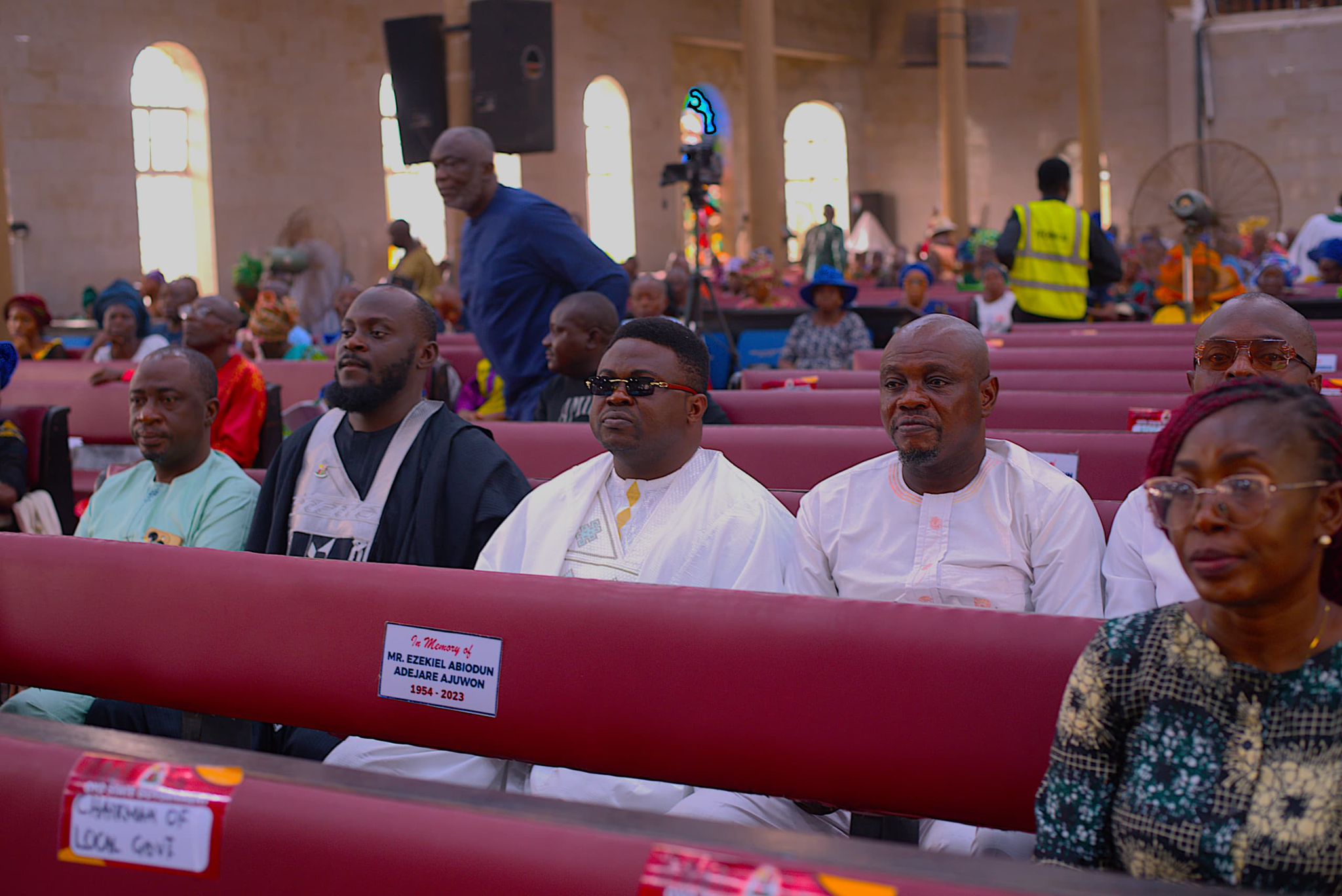
Ajadi, Peter Obi, Adeleke, Others Join Makinde at Oyo@50 Thanksgiving Service
The leading gubernatorial aspirant of the Peoples Democratic Party (PDP) in Oyo State, Ambassador Olufemi Ajadi Oguntoyinbo, on Sunday joined Governor Seyi Makinde, former Anambra State Governor and 2023 Labour Party presidential candidate, Mr Peter Obi, the wife of the Osun State Governor, Chief (Mrs) Titilola Adeleke, and other eminent dignitaries at a Thanksgiving Service marking the seventh day of activities commemorating the 50th anniversary of Oyo State.
The service, held at the Cathedral of St. Peter’s, Aremo, Ibadan, drew a large congregation of worshippers, political leaders, traditional rulers, and stakeholders across the state and beyond, underscoring the significance of the golden jubilee celebration.
Speaking with journalists on the sidelines of the event, Ambassador Ajadi congratulated Governor Makinde, former Governor and Olubadan of Ibadanland, Oba Rashidi Adewolu Ladoja, and other stakeholders for steering the state to its historic milestone, describing the anniversary as a moment for reflection, gratitude, and renewed commitment to progress.
Oyo State at 50 is not just a celebration of years; it is a celebration of the strength, resilience and enduring spirit of our people,” Ajadi said. “I congratulate His Excellency, Engineer Seyi Makinde, Oba Rashidi Adewolu Ladoja and all stakeholders for sustaining the legacy of excellence, unity and progress that the Pacesetter State represents.”
He praised the people of the state for their resilience over the decades. He acknowledged the collective efforts of past and present leaders who have contributed to Oyo State’s political stability, economic growth and rich cultural heritage since its creation in 1976.
Ajadi, an entrepreneur and philanthropist, noted that the golden jubilee provides an opportunity for both leaders and citizens to critically assess the journey so far and recommit themselves to building a more inclusive and prosperous future.
“As we celebrate this golden anniversary, we must reflect on where we are coming from, where we are today and where we want to be,” he said. “Oyo State has produced great leaders, intellectuals, professionals and cultural icons.
He also commended the state government for designing a commemorative programme that blends intellectual engagement with the celebration of excellence, stressing that such initiatives help preserve history while inspiring younger generations.
Earlier, Governor Makinde, while addressing the congregation, said that although his tenure would end in May 2027, the team with which he has delivered good governance remains intact and prepared to continue the state’s development trajectory in different capacities.
The governor, who read the second Bible lesson from Matthew 5:1–12, attributed his emergence as governor in 2019 after eight years of political contest to divine grace, describing his administration as a “new beginning” for Oyo State.
“I was the eighth civilian governor of Oyo State, and in the Bible, the number eight signifies a new beginning,” Makinde said. “God has been merciful to us, and we will continue to govern in accordance with His will and guidance for the people of Oyo State.”
He assured residents of continuity in governance, emphasising that while he would exit office at the end of his tenure, members of his team would remain committed to serving the state.
“We have a team that is still intact. It is only Seyi Makinde that will go out; the members of the team are there to continue the work for the people of Oyo State,” he stated.
In a goodwill message, former Anambra State Governor and Labour Party presidential candidate in the 2023 general elections, Mr Peter Obi, lauded Makinde’s leadership style and the transformation witnessed in the state under his administration.
Oyo State is a city of knowledge and a city of hope,” Obi said. “I thank Governor Makinde for faithfully serving the people. Nigeria is not a poor country, but a poorly governed one, and what we are seeing in Oyo State is an example of using public resources for public good.”
Dignitaries at the event included the wife of the governor, Her Excellency Engr Tamunominini Olufunke Makinde; wife of the Osun State Governor, Chief (Mrs) Titilola Adeleke; former First Lady of Oyo State, Chief (Mrs) Mutiat Ladoja; Chief Judge of Oyo State, Hon. Justice Iyabo Yerima; Secretary to the State Government, Prof. Musibau Babatunde; and several other government officials, traditional rulers and political leaders.
society
UKA Announces Appointment of Hon AMB Asari St-Hill Bahamas/atlantian as Chief of Staff to Reigning Monarch Emperor Solomon Winning
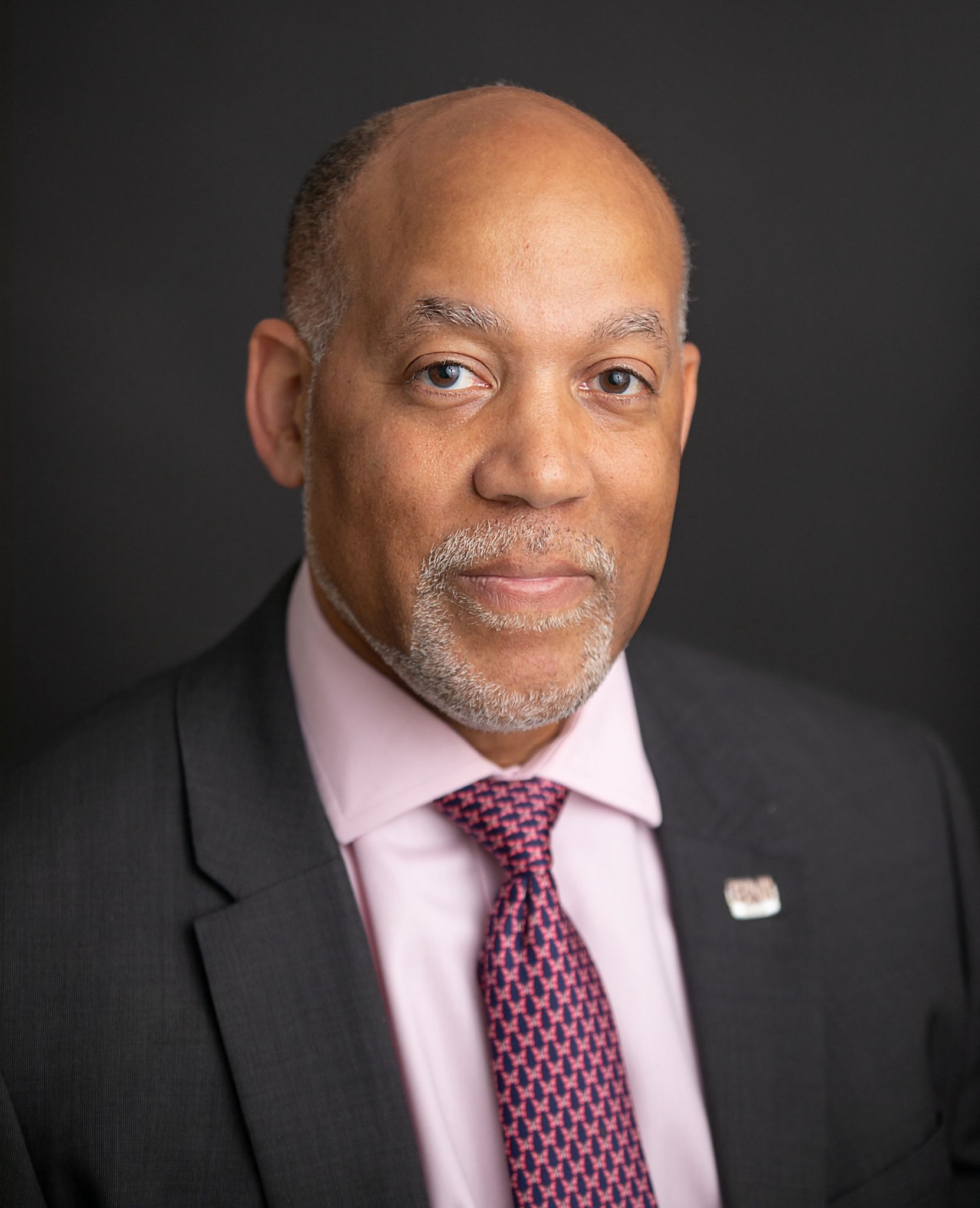
UKA Announces Appointment of Hon AMB Asari St-Hill Bahamas/atlantian as Chief of Staff to Reigning Monarch Emperor Solomon Winning
The United Kingdom of Atlantis (UKA) proudly announces the appointment of *Honorable Ambassador Asari St-Hill, A Bahamas/atlantian* as *Chief of Staff* to the Reigning Monarch, *Emperor Solomon Winning*. The official appointment ceremony was conducted on February 1st, 2026, and marked with the presentation of an Appointment Certificate (UKA 001 -1/2026).
Key Details of the Appointment
– *Hon AMB Asari St-Hill, A Bahamas/Atlantian* has been entrusted with the prestigious role of Chief of Staff, to serve the Reigning Monarch under the UKA GLOBAL ADMINISTRATOR TO UKA ROYAL THRONE of Emperor Solomon Winning, the sovereign of the United Kingdom of Atlantis.
– The appointment signifies a strategic enhancement of the monarch’s administrative and operational capabilities, aligning with the empire’s vision of efficient governance and global humanitarian leadership.
– The certificate of appointment bears the *Royal Seal of the Empire* and the endorsement of *EMP Noblis Solomon Winning*, affirming the legitimacy and authority of the designation.
Role of the Chief of Staff…👇
The Chief of Staff will be responsible for:
1. Managing the day-to-day operations of the monarch’s office.
.2. Act as Principal Aid to the Reigning Monarch and coordinates activities of staff.
3. Serves as one of the confidence to the Reigning Monarch.
4. Organised Reigning monarch appointment, meetings and engagement.
5. Review, vet documents, speaches, correspondence intended for The Reghning Monarch.
6. The Chief of Staff shall work and take instructions from the Global Administrator to the Throne in order to strengthen the entire administration of the Reigning Monarch in order to position UKA as the largest Empire in modern history.
Emperor Nobiliis Solomon Winning is the transformative leader of the United Kingdom of Atlantis, driving innovative projects in finance, humanitarian efforts, and global development. His reign focuses on merging traditional monarchical values with modern technological advancements, exemplified by initiatives like the ATC digital currency.
The United Kingdom of Atlantis (UKA) is a sovereign entity dedicated to fostering global unity, humanitarian progress, and financial innovation. It operates under a regal framework that blends imperial tradition with futuristic economic strategies, including asset-backed digital currencies and sustainable development programs.
_”The appointment of Hon AMB Asari St-Hill as Chief of Staff strengthens our administrative excellence and underscores our commitment to visionary leadership.”_
— *Emperor Solomon Winning*
The United Kingdom of Atlantis looks forward to achieving new milestones in governance and global impact under the stewardship of Emperor Solomon Winning and his esteemed Chief of Staff, Hon AMB Asari St-Hill.
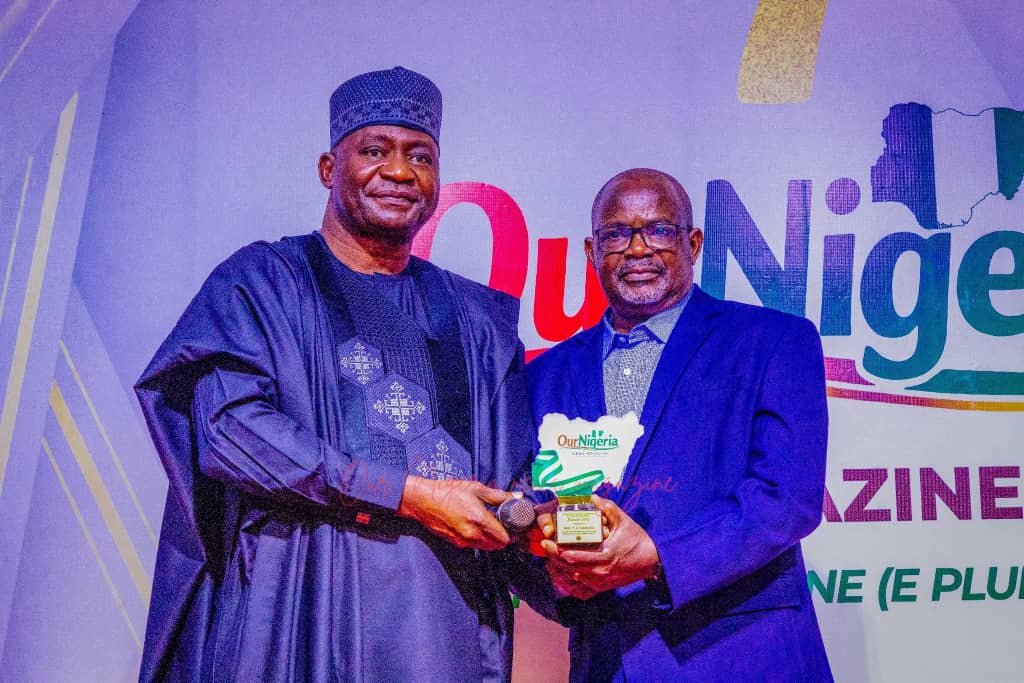
Gen CG Musa Support Group Celebrates Grand Patron as 2025 Man of the Year
The Gen CG Musa Support Group has extended its warmest congratulations to its Grand Patron, His Excellency Gen. Christopher Gwabin Musa OFR (Rtd), the Honourable Minister of Defence, following his prestigious designation as the 2025 Man of the Year by OurNigeria News Magazine.
In a statement released to the press and signed by the Director General of the Support Group, Ibrahim Dahiru Danfulani, the Sadaukin Garkuwan Keffi/Betara Biu, the group hailed the recognition as a fitting tribute to a leader of exceptional character and accomplishment.
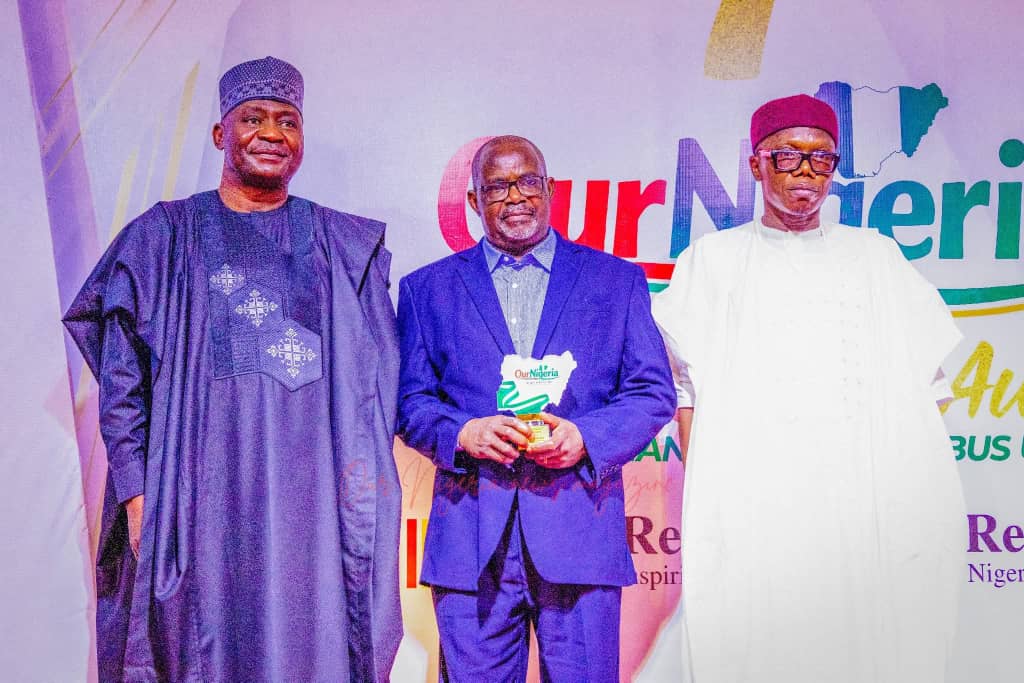
The statement illuminated the distinction of the award, emphasizing that it transcends the formal titles of “General” and “Minister.” It celebrated the core of the man himself—a leader renowned for his profound humility, incredible kindness, and genuine respect for all individuals. “People see the legacy and the title,” the statement noted, “but some of us are lucky to know the man behind it.”
The Support Group underscored that this accolade is a direct acknowledgment of the Minister’s exemplary personal conduct. It is an award not merely for the office he holds, but for the consistent humility he carries into every room and every interaction, a quality that has defined his leadership both in and out of uniform.
The honour also serves as a powerful validation of General Musa’s distinguished and unblemished track record of service to the nation. His decades of dedicated service within the military, which culminated in his ascension to the pinnacle as the Chief of Defence Staff prior to his retirement, are cited as the foundational pillars of his esteemed reputation.
The Gen CG Musa Support Group expressed profound gratitude to OurNigeria News Magazine for its discerning choice, noting that the award serves as a significant source of encouragement for the Honourable Minister. It reaffirms the nation’s appreciation for leadership that blends strength with compassion, strategic vision with unwavering integrity, and lofty achievement with grounded humanity.
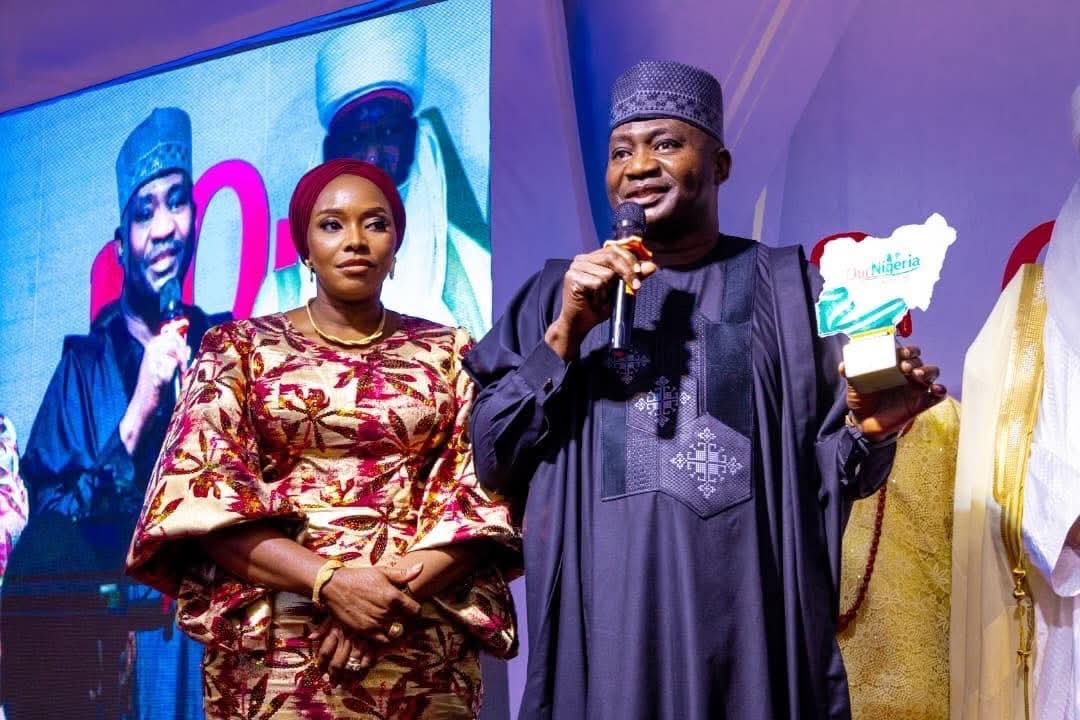
This recognition solidifies General Christopher Gwabin Musa’s status not only as a defender of the nation but as a paragon of virtuous leadership, whose influence and example continue to inspire confidence and respect across Nigeria.
About the Gen CG Musa Support Group:
The Gen CG Musa Support Group is a collective dedicated to promoting the ideals and supporting the leadership of His Excellency Asiwaju Bola Ahmed Tinubu GCFR and His Excellency Gen. Christopher Gwabin Musa, celebrating their service and contributions to national peace, security, and unity.


-

 celebrity radar - gossips6 months ago
Why Babangida’s Hilltop Home Became Nigeria’s Political “Mecca”
-

 society6 months ago
Power is a Loan, Not a Possession: The Sacred Duty of Planting People
-

 Business6 months ago
Batsumi Travel CEO Lisa Sebogodi Wins Prestigious Africa Travel 100 Women Award
-

 news6 months ago
THE APPOINTMENT OF WASIU AYINDE BY THE FEDERAL GOVERNMENT AS AN AMBASSADOR SOUNDS EMBARRASSING