
society
Nigeria’s 2024 budget: A milestone as capital expenditure exceeds recurrent for the first time since 1999

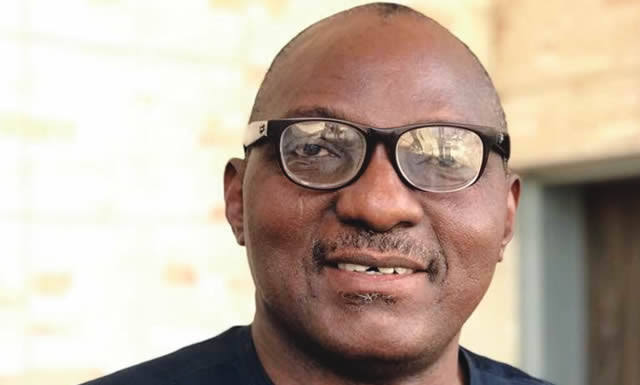
Nigeria’s 2024 budget: A milestone as capital expenditure exceeds recurrent for the first time since 1999
The Independent Media and Policy Initiative IMPI has hailed the federal government for allocating more funds to capital expenditure than recurrent in the budget for the first time in the current democratic dispensation.
It said in statement signed by its Chairman Niyi Akinsiju that the decision to buck a 24- year trend with the 2024 budget is a reflection of the government’s sincerity to drive real economic growth.
According to the policy think tank, there is a lot of positives to derive from a N28.7trillion spending plan that seeks to correct years of budget imbalance between capital and recurrent expenditures.
IMPI said: “From an analytical point of view, a budget with higher capital expenditure than recurrent is not only a driver of economic growth, it also impacts individual citizen’s quality and way of life.
“In this regard, we concur with the 2019 submission of the Nigerian Institute of Social and Economic Research (NISER) that the only way to bring about a meaningful influence on the economy is to monitor and evaluate funds that are specially intended for capital expenditure and capital projects.
“It would, however, appear that the disequilibrium between capital and recurrent expenditures has been eventually corrected. For the first time in the current democratic dispensation, the 2024 budget, which is the first in the tenure of the President Bola Tinubu administration, has more funds allocated to capital expenditure than recurrent.
“The budget of N28.777 trillion for the 2024 fiscal year has a recurrent expenditure of N8.7 trillion with N9.9 trillion allocated to capital expenditure.
“Granted that what was passed by the National Assembly was N1.28trillion more than the original N27.5 trillion spending plan, there are indeed good signs and prospects for a budget that is to be financed through a non-debt revenue of N19.6 trillion and a deficit of about N9.18 trillion.
“This is something to build on for an administration that has, since assuming office, embraced economic reforms that are not only courageous in the face of historical resistance to their implementation but are also expected to yield long term transformative benefits to Nigerians”
The policy think tank also lamented how previous administrations had failed to capitalize on two oil booms to boost infrastructural development in the country through higher capital votes.
“Between 2006 and 2013, the national economy grew at an average of between 6 and 8 percent according to World Bank figures yet the increased revenue was channeled into feeding public servants. The recurrent expenditures in those years were always bigger than allocation for capital expenditure.
“Nigeria’s recurrent expenditures which include spending on personnel expenses such as wages and pensions as well as overhead costs and service wide votes have regularly consumed over 65% of total budgets and a huge chunk of revenue.
“We consider it even more depressing that despite the incongruent budgetary imbalance, the country has, since 2009, been recording yearly budget deficits that average N3.3trn in recent years aggravated by oil price volatility and post-COVID economic debilitations in recent years.
“Budget Office data show that between 2011 and 2021, the Federal Government of Nigeria spent N29.3 trillion on (non-debt) recurrent expenditure while it earned N33.2 trillion revenue during this period. This means that what went into capital projects was extremely negligible,” It added.
IMPI is however hopeful that cost cutting measures approved by President Tinubu will ensure that more funds are freed for capital component of the budget
It said: “In addition to this is the decision to implement the 12 year-old Stephen Oronsaye’s report on public sector reforms which is expected to reduce cost of governance by at least N2 trillion even as the federal government is set to increase minimum wage. The challenge ahead lies in ensuring a better budget implementation in a country with a record of poor budget performance.
“We, however, feel sanguine over the prospect of attaining a 100 percent implementation of the capital expenditure aspect of the 2024 federal government budget premised on freed revenue from the civil service reforms to be channeled into funding capital projects for the good of the larger percentage of Nigerians.”
POLICY STATEMENT 09 ISSUED BY INDEPENDENT MEDIA AND POLICY INITIATIVE (IMPI)
FG Sets Fiscal Milestone First Time In Over 20 Years As Capital Expenditure Exceeds Recurrent
We have observed that for the first time in over two decades, capital expenditure funds are higher than allocations to recurrent. By the nation’s annual budget precedence, this is remarkable considering the age-long national aspiration to engineer a budget that is perceived as a true capital expenditure fiscal instrument.
A recurrent budget, as had been the character of the annual national budget, fiscally dots and panders to the needs and emoluments of federal government personnel aggregated in the cadre of public servants. The very few that, by providence, most of the time, find themselves in this privileged cadre always take the major chunk of government spending while capital expenditure, that aspect of federal government spending that provides for the general needs of the larger public through infrastructure and related facilities, is irreverently placed in the back burner of fiscal consideration.
This captures the capital-recurrent fiscal imbalances in the national budget in virtually all of Nigeria’s budgets since the 1990s without any form of change to its underpinnings after the return to democratic rule in 1999.
Nothing has changed as funds allocated to recurrent expenditure in more than 540 government agencies have, until recently, been more than what is set aside for infrastructural development.
Our study of national budget documents of the last 24 years, between 1999 and 2023, reveals a disconcertingly progressive climb in government expenses on public servants at the expense of projects in critical sectors of the economy. We consider this a purely consumption phenomenon, expenditures which do not result in the creation or acquisition of fixed assets (new or second-hand) for national use.
This phenomenon which dates back to the 1980s became more obvious at the outset of this current democratic dispensation in 1999.
According to statistics from the Central Bank of Nigeria (CBN), the recurrent expenditure in the last full year of military rule, 1998, was N178.10 billion. It, however, skyrocketed to N449.6billion in the first year of the then President Olusegun Obasanjo. This rise in cost of governance could be attributed to the infusion of the National Assembly into governance and since then it has maintained an upward swing.
We recall that when former President Obasanjo was beginning his second term, recurrent expenditure had moved closer to the N1trillion mark at N984.3billion in the 2003 budget while capital expenditure was less than N400billion.
More than 20 years later, the federal government still persists, seemingly helplessly, in spending more on public servants than providing for the larger majority of the Nigerian people. This translates to near non- existent capital formation in those years leading to aggravated deficit in infrastructural facilities. Now, the country has grown into a behemoth of more than 200 million people with a below par infrastructure availability. This is in spite of two oil booms between 2006 and 2013 recorded by the economy.
To put this in proper context, Nigeria has witnessed two crude oil engendered revenue boom, not by any conscientious policy conceptualisation or deployment but, rather, by providence. Oil price increased in the global market place and it reflected in our national revenue earnings. This has been the nature of prosperity in the country; increase in prices of crude oil leading to more earnings, not in consequence of deliberate policy development and application.
Between 2006 and 2013, the national economy grew at an average of between 6 and 8 percent according to World Bank figures yet the increased revenue was channeled into feeding public servants. The recurrent expenditure in those years was always bigger than allocation for capital expenditure.
Nigeria’s recurrent expenditure which includes spending on personnel expenses such as wages and pensions as well as overhead costs and service wide votes have regularly consumed over 65% of total budgets and a huge chunk of revenue.
We consider it even more depressing that despite the incongruent budgetary misbalance, the country has, since 2009, been recording yearly budget deficits that average N3.3trn in recent years on the back of oil price volatility and post-COVID economic debilitations. Budget Office data shows that between 2011 and 2021, the Federal Government of Nigeria spent N29.3 trillion on (non-debt) recurrent expenditure while it earned N33.2 trillion as revenue during this period. This means that what went into capital projects was extremely negligible.
From an analyst’s point of view, a budget with higher capital expenditure than recurrent is not only a driver of economic growth, it also impacts individual citizen’s quality and way of life. In this regard, we concur with the 2019 submission of the Nigerian Institute of Social and Economic Research (NISER) that the only way to bring about a meaningful influence on the economy is to monitor and evaluate funds that are specially intended for capital expenditure and capital projects.
It would, however, appear that the disequilibrium between capital and recurrent expenditures has been eventually corrected. For the first time in the current democratic dispensation, the 2024 budget, which is the first in the tenure of the President Bola Tinubu administration, has more funds allocated to capital expenditure than recurrent. The budget of N28.777 trillion for the 2024 fiscal year has a recurrent expenditure of N8.7 trillion with N9.9 trillion allocated to capital expenditure.
Granted that what was passed by the National Assembly was N1.28trillion more than the original N27.5 trillion spending plan, there are indeed good signs and prospects for a budget that is to be financed through a non-debt revenue of N19.6 trillion and a deficit of about N9.18 trillion.
This is something to build on for an administration that has, since assuming office, embraced economic reforms that are not only courageous in the face of historical resistance to their implementation but are also expected to yield long term transformative benefits to Nigerians.
In addition to this is the decision to implement the 12 year-old Stephen Oronsaye’s report on public sector reforms which is expected to reduce cost of governance by at least N2 trillion even as the federal government is set to increase minimum wage. The challenge ahead lies in ensuring a better budget implementation in a country with a record of poor budget performance.
We, however, feel sanguine over the prospect of attaining a 100 percent implementation of the capital expenditure aspect of the 2024 federal government budget premised on freed revenue from the civil service reforms to be channeled into funding capital projects for the good of the larger percentage of Nigerians.
Signed
Chief Niyi Akinsiju, Cifian
Chairman,
Independent Media and Policy Initiative (IMPI)
March 11, 2024.



FRSC@ 38: SHEHU MOHAMMED STEERING NIGERIA’S ROAD SAFETY REVOLUTION TO GREATER HEIGHTS
By Deputy Corps Marshal Bisi Kazeem (Rtd) fsi, MNIM, anipr
When Mallam Shehu Mohammed assumed leadership as Corps Marshal of the Federal Road Safety Corps (FRSC), he inherited not just an institution with history, but a national mandate that touches every family, every highway, and every community in Nigeria. At 38 years, the Corps stands tall as Africa’s model road safety agency, and under his stewardship, that legacy is not merely preserved, it is being boldly redefined.
Nigeria’s highways were once synonymous with fear. Before 1988, the World Health Organisation ranked Nigeria among the most dangerous countries in the world to drive. It was a troubling indictment that demanded courage and clarity of purpose. The establishment of the FRSC under Decree No. 45 of 1988 laid the foundation for reform. But sustaining and advancing that reform across decades requires visionary leadership, the kind now exemplified by Mallam Shehu Mohammed.
Today, under his command, the Corps is consolidating its position as one of the most technologically advanced and operationally efficient law enforcement institutions in Nigeria. With renewed strategic focus, the present leadership has deepened the Safe Systems Approach built on people, processes, and technology, ensuring that safety interventions are not reactive, but preventive and intelligence-driven.
One of the defining hallmarks of his administration is accelerated digital transformation. Within six months, over 3,000 personnel were trained to strengthen operational competence and technological adaptability. More than 95 per cent of the Corps’ administrative and operational processes are automated, supported by over 30 web-based applications that enhance traffic governance nationwide. From the National Crash Reporting Information System (NACRIS) to the upgraded e-ticketing platform, innovation is no longer optional; it is institutional culture.
Emergency response under the current Corps Marshal has become faster and more coordinated, with nationwide response time reduced dramatically from 50 minutes to 15 minutes. The 122 toll-free emergency line and 24-hour National Call Centre continue to serve as lifelines for distressed road users, reflecting a leadership that understands that every second counts.
Strategic stakeholder engagement has equally flourished. Safe corridor initiatives have been strengthened, collaboration with transport unions intensified, and enforcement around articulated vehicles tightened. The result is a significant reduction in tanker-related crashes, a development that speaks to deliberate policy direction and disciplined implementation.
Under Mallam Shehu Mohammed’s leadership, data has become a central pillar of enforcement and planning. Through strengthened collaboration with the National Identity Management Commission, the National Bureau of Statistics, and the Nigeria Customs Service, the Corps has advanced harmonized data systems that support evidence-based interventions. Transparent weekly crash trend reporting now guides targeted deployment and corrective strategies.
Nigeria’s standing on the global stage has also been reinforced. The country remains an active participant in the renewed UN Decade of Action for Road Safety (2021–2030) and continues alignment with international road safety conventions. These achievements build on the solid foundation laid by past leaders from Olu Agunloye and General Haladu Hannaniya to Chief Osita Chidoka, Dr. Boboye Oyeyemi, and Dauda Ali Biu, but under the present Corps Marshal, the momentum has unmistakably intensified.
Operationally, the Corps’ footprint now spans 12 Zonal Commands, 37 Sector Commands, over 300 Unit Commands, over 700 Station Offices, 59 Zebra Emergency Ambulance Points, and presence in all 774 Local Government Areas of Nigeria. Yet beyond physical structures lies a stronger institutional spirit, one driven by discipline, professionalism, and accountability.
From a nation once ranked among the most unsafe for motorists to a continental pacesetter in road safety management, Nigeria’s transformation story is inseparable from the strength of its leadership. At 38 years, FRSC is not simply celebrating longevity; it is celebrating purposeful stewardship.
Mallam Shehu Mohammed represents a generation of reform-minded leadership committed to smarter mobility systems, data-driven enforcement, and people-centered safety administration.
His tenure reflects continuity with courage sustaining the Corps’ proud legacy while boldly steering it toward greater innovation and measurable impact.
The road ahead is demanding. But under his steady command, Nigeria’s highways are safer, its systems smarter, and its future brighter.
Fashion/Lifestyle
Introducing “Atupaglowco” : Where Fragrance Meets Feeling; The Story of Our Beginning

Introducing “Atupaglowco”: Where Fragrance Meets Feeling; The Story of Our Beginning
Every great journey begins with a sense of anticipation. For us, it began with a simple belief that a space should do more than exist, it should speak comfort and glow.
In a world filled with noise, stress, and endless motion, we realized something powerful. Fragrance can transform not just rooms, but moods. A familiar scent can calm anxiety. A warm aroma can turn a house into a home. A gentle glow can bring peace after a long day. This realization gave birth to “Atupaglowco.”
Atupaglowco was not created to sell diffusers, room sprays, or candles. It was created to create experiences. To create moments. To create atmospheres where people can breathe, reflect, and feel whole again.
The name itself represents more than a brand. It represents warmth. It represents light. It represents presence. We remember the early days, the planning, the testing of scents, the moments of doubt, and the moments of excitement. Each candle poured was a step of faith. Each fragrance blended was a piece of our vision coming to life. We weren’t just building products; we were building something meaningful.
Our diffusers were designed to quietly fill spaces with elegance.
Our room sprays were crafted to instantly refresh and revive environments. Our candles were made to bring calm, beauty, and a soft glow into everyday life.
Atupaglowco was born from passion, patience, and purpose. This launch is not just the start of a business. It is the start of a movement to help people create spaces they love. Spaces that inspire rest. Spaces that inspire joy. Spaces that glow.
We believe fragrance is personal. We believe glow is emotional. We believe every space deserves both.
Today, we proudly introduce Atupaglowco to the world.
This is only the beginning.
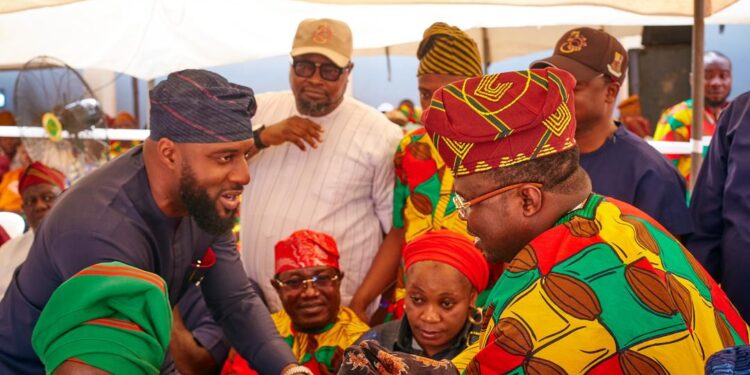
Ajadi Hails Oyo Speaker Ogundoyin at 39, Describes Him as Beacon of Purposeful Leadership
A leading governorship aspirant of the Peoples Democratic Party (PDP) in Oyo State, Ambassador Olufemi Ajadi Oguntoyinbo, has congratulated the Speaker of the Oyo State House of Assembly, Rt. Hon. Adebo Edward Ogundoyin, on the occasion of his 39th birthday, describing him as “a symbol of resilience, maturity and purposeful leadership in Nigeria’s democratic journey.”
In a congratulatory message made available to journalists on Tuesday, Ajadi praised Ogundoyin’s steady rise in public service, noting that his emergence as Speaker at a relatively young age reflects the possibilities of responsible youth leadership when combined with discipline, vision and service.
“Rt. Hon. Ogundoyin’s leadership has shown that age is not a barrier to excellence,” Ajadi said. “At 39, he stands tall as one of the most impactful Speakers in Oyo State’s history—calm, inclusive and deeply committed to democratic ideals.”
Ogundoyin, who represents Ibarapa East State Constituency under the Peoples Democratic Party, has served as Speaker since 2019 and was re-elected to lead the 10th Assembly in June 2023. His tenure has been marked by legislative stability, improved executive–legislative relations and youth-inclusive governance.
Ajadi commended the Speaker for fostering unity within the Assembly and prioritising laws that strengthen grassroots development across Oyo State. “His humility, accessibility and focus on people-oriented legislation have earned him respect beyond party lines,” he said. “He exemplifies the kind of leadership Oyo State needs—one anchored on service, accountability and progress.”
The governorship aspirant further described Ogundoyin as a rallying point for young Nigerians aspiring to public office. “In a country searching for credible leaders, Ogundoyin’s story offers hope,” Ajadi added. “He has shown that when young leaders are trusted with responsibility, they can deliver stability and results.”
Ajadi wished the Speaker many more years of good health, wisdom and greater service to Oyo State and Nigeria at large, praying that his leadership journey continues to inspire a new generation of public servants.
Ogundoyin, one of the youngest Speakers in Nigeria, has continued to attract goodwill messages from political leaders, civil society actors and constituents, as Oyo State marks another year in the life of a lawmaker widely regarded as a steady hand in the state’s legislative affairs.


-

 celebrity radar - gossips6 months ago
Why Babangida’s Hilltop Home Became Nigeria’s Political “Mecca”
-

 society6 months ago
Power is a Loan, Not a Possession: The Sacred Duty of Planting People
-

 news6 months ago
THE APPOINTMENT OF WASIU AYINDE BY THE FEDERAL GOVERNMENT AS AN AMBASSADOR SOUNDS EMBARRASSING
-

 Business6 months ago
Batsumi Travel CEO Lisa Sebogodi Wins Prestigious Africa Travel 100 Women Award