
celebrity radar - gossips
Beyond The Ayeni Name…Will Adaobi Alagwu Save Her Child From Future Disgrace?

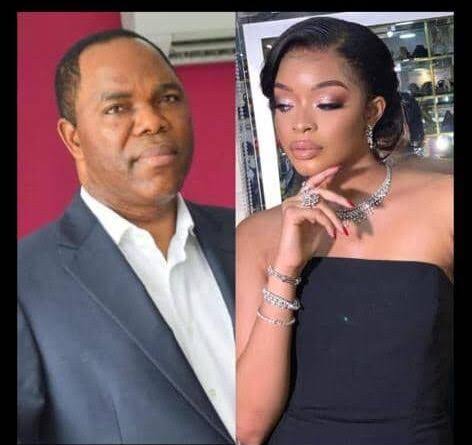
Beyond The Ayeni Name…Will Adaobi Alagwu Save Her Child From Future Disgrace?
– How A Mother’s Greed May Ruin Her Daughter’s Life (Video)
By Ifeanyi Okonkwo
There is a virtue, Adaobi Alagwu probably presumes, in being brazen, thus her inclination to place on parade her infant child, Omarosa’s murky roots. Only a mother afflicted by insolence and lack of shame would soullessly jeopardise her daughter’s self-esteem by forcing the paternity of an unwilling father on her.
In the wake of billionaire magnate, Tunde Ayeni’s decisive rebuttal of Alagwu’s claim that he is the father of her child, more posers have been raised concerning paternity fraud.
A recent post by a social media commentator condemned Ayeni’s bid to stop Alagwu from using his name for her daughter, arguing that he would fail in his bid. He said, “Anybody can bear any name he or she likes, provided you’re not impersonating anyone. A female child cannot be said to be impersonating Mr Ayeni simply by having the same surname with him.” Whilst this position might be convenient for people who might have a jaundiced perspective to the enormity of the implications of such a rejection as AdaObi and her daughter have faced, the question to ask is who in their right senses would keep a name that will be a constant reminder of their mistakes and humiliation. If AdaObi had as much any sense of self-worth would she have insisted on acceptance as she has for her daughter from a man so unwilling and so detesting of her that he’s willing to go to any lengths in proving his disapproval and rejection of them both?
Why is it okay to force an unwilling man to take responsibility for a child that was forced on him when all accountability should be with the 31-year-old single lady who out of greed jeopardized her future to keep an unwanted pregnancy for a married man?
It would be recalled that Tunde Ayeni wrote the Nigerian Immigration Service (NIS), recently, asking it to void any international passport presented by his estranged girlfriend and Abuja lawyer, Adaobi Alagwu and her child, bearing his name.
Declaring any such document illegitimate, Ayeni, speaking through his lawyer, Dele Adesina (SAN) established that Alagwu’s daughter isn’t entitled to the use of his name on her travel document as he has no familial relationship with her.
Ayeni disclosed this by copying the NIS a “Cease and Desist” legal notice he sent to Alagwu entitled, “Withdrawal of Consent for Use of the Family Name ‘Ayeni’ With Respect To Your Daughter Omarosa.”
Ayeni’s recent step was informed by Alagwu’s adoption of his name on her daughter’s international passport even after a DNA test had established that she wasn’t Ayeni’s child. His letter to the NIS follows the recent arrest and detention of Alagwu for trespassing on and breaking into his private property in Abuja.
The duo has been entangled in a battle of wits that has seen Ayeni issue multiple press statements to refute claims of paternity of Alagwu’s child.
In her desperation to get hooked on the billionaire magnate and former bank chief, Alagwu fabricated a plot to get pregnant by him and, so doing, implant herself and her child as beneficiaries of his estate.
Alagwu, a trained attorney, was misled by the belief that she had the upper hand on Ayeni. She thought she had him by the balls.
Like all frantic liars, she thought she had gained a victory over Ayeni simply by claiming that she was pregnant for him and her baby girl belonged to him (but she was mistaken).
Her adoption of his name for her daughter, Omarosa has been dismissed as a last-ditch resort as she struggles to hold on to her ex-billionaire boyfriend who was until recently her benefactor and family’s meal ticket.
To underscore how bad the menace of such desperate girls is, a cursory look at her company website reveals the same address as the one from which she was humiliatingly ejected by Ayeni.
Pundits aver that if she had truly been gainfully employed as she claimed – since she fell out with Ayeni – her company address ought to have changed both online and offline.
Her so-called company website has no meaningful indicator of how business clients could reach her. There are no markers on the website detailing or establishing her presence as the administrator or CEO of a thriving enterprise, contrary to her claims.
What this translates to is that she (Alagwu) has no viable source of livelihood and has always been completely dependent on Ayeni.
Only a woman bereft of self-respect and shame would carry on so, without a care in the world about how badly her lack of a decent livelihood rubs off on her.
As Alagwu deploys every wile and weapon in her arsenal to fight her way into Ayeni’s household, not a few people have advised her to desist from what is a wild goose chase. But she is undeterred.
If she won’t care what becomes of her name, at least she ought to be concerned about the implications of her actions for her innocent daughter, Omarosa.
If anything, Alagwu must be wary of mortgaging her daughter’s interest in her frantic bid to settle scores with her estranged lover, Ayeni. Even if she enjoys the inalienable right to adopt any name of her choice, including Tunde Ayeni’s, for her daughter, the onus rests on her to listen to the voice of reason and embrace moral rectitude by protecting her daughter from certain ignominy and shame of answering to the name of a man who publicly rejected her.
And to those goading her into believing in her lies that he paid her bride price and his wife is the architect of this rejection, it is unimaginable how twisted they are in their thinking. Hanging on to the last straws of desperation, they look away from the obvious display of rejection from Mr Ayeni, a man married for 30 years and experienced in the ways of life enough to convince his wife and friends he will go to any length to erase Adaobis existence.
If it wasn’t his making why didn’t he publish a disclaimer? The man wants Alagwu to feel the full weight of his rejection by placing his wife in front of him and arming her with the authority to denigrate Alagwu and make her face the folly of bringing nothing to the table except a fair complexion in comparison to his established wife.
How does she think her daughter would feel when she grows up and finds out that her mother had forced upon her, the name of a man who went to great measures to denounce her?
It’s about time Alagwu embraced caution and silenced her ego, lest she becomes a sad, cautionary tale. For most of history, one essential, immutable difference between men and women was that men could hide the fact that they had created a child and women could not. Pregnancy and childbirth showed the world who the mother was; paternity could only be assumed.
New parents are often told how much their babies look like the father. The research on whether most do or do not is ambiguous, but the fancy persists, in part because, consciously or unconsciously, people think that emphasising the resemblance will set a man’s mind at ease, thus fortifying the paternal bond.
Fortunately for Ayeni, he refused to be misled by such a wanton appeal to sentimentality. As Nara Milanich, a professor of history at Barnard College, writes in her solidly researched and enlightening new book, “Paternity: The Elusive Quest for the Father” (Harvard), a “common metaphor invoked by nineteenth-century jurists was that Nature had concealed fatherhood by an impenetrable veil.”
Thanks to science, the DNA test to be precise, Tunde Ayeni was able to penetrate that mythical veil to establish the convoluted plots of his estranged girlfriend, Alagwu’s paternity fraud.
Until recently, that veil was often a source of frustration, leading to domestic doubts and irresolvable courtroom conflicts. Literature gives us many a husband driven half-mad by the suspicion that his child is not the fruit of his loins, as is King Leontes, in “The Winter’s Tale,” and women who deceive their husbands on this score, like the wife in Maupassant’s story “Useless Beauty,” who tells her husband that one of their seven children isn’t his, but won’t say which.
Paternal unknowability, however, was also enormously useful. Many legal traditions around the world, including the Anglo-American one, adhered to the marital presumption of legitimacy at least until the twentieth century: a child born to a married woman was considered to be the biological progeny of her husband. (A child born to an unmarried woman was, Milanich writes, “historically deemed a filius nullius, a child of nobody.”) Milanich tells the story of a man named Remo Cipolli, who, in 1945, sued his wife, Quinta Orsini, for adultery, and sought to deny paternity, after she gave birth to an infant who appeared to be black. Cipolli and his wife, who were both white Italians, lived in a small town near Pisa, where several African-American soldiers had been stationed at the end of the Second World War.
The case became notorious—the baby was known as “the little Moor of Pisa.” In the end, although a civil court found Orsini guilty of adultery, it also concluded that her husband, Cipolli, was legally the baby’s father.
Thanks to science, Ayeni would experience no such embarrassment and heartache through paternity fraud.
In all of these, the fate of one human element hangs in the balance, that of Alagwu’s innocent young daughter. And her salvation, interestingly lies in Alagwu’s hands. Will Adaobi Alagwu quit barking up the wrong tree? Will she desist from her wild goose pursuit and so doing save her innocent daughter from immediate and future disgrace?








‘I Never Indicted Egbetokun’ — Jesam Michael Rebuts Sowore’s Allegations
Abuja — Businessman Jesam Michael has strongly refuted claims attributed to him in a recent report by activist and publisher Omoyele Sowore, describing the publication as false, misleading, and a total misrepresentation of his statements.
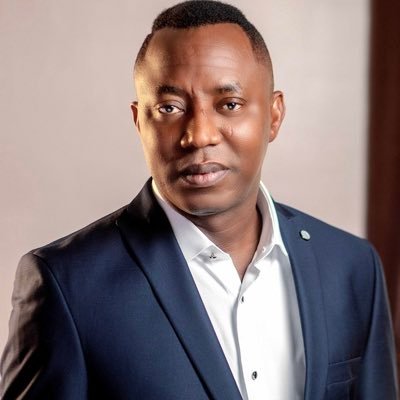
In an exclusive chat on Saturday, Michael denied ever making the allegations credited to him by Sowore concerning the Inspector-General of Police (IGP), Kayode Egbetokun, while both men were reportedly inmates at the Kuje Correctional Centre in October 2025.
Sowore, in a widely circulated account, claimed that Michael had alleged receiving operational support from senior police officers, including the provision of office space within the Nigeria Police Force Headquarters, police protection, and the use of officers to detain individuals connected to a purported Ponzi scheme. The report further alleged financial inducements involving senior police officers.
However, Michael dismissed the account as “entirely fabricated.”
“I never made those statements to Omoyele Sowore or to anyone else,” Michael said. “At no point did I accuse the Inspector-General of Police or any senior police officer of providing me with offices, police units, or protection. The claims attributed to me are false and malicious. I only met him briefly when he came to greet Nnamdi Kanu’s younger brother whom I share a block with here and there is no way we could have sat down to discuss such fabricated stories ”
Michael specifically rejected claims suggesting that he supported or “served” police officers, insisting that he never stated that he had any police unit at his disposal or that law enforcement personnel acted on his instructions.
“I never said I supported police officers or had officers working for me. That allegation did not come from me,” he said.
He also denied claims that his properties were shared among senior police officers, describing the allegation as baseless and untrue.
“At no time did I say that my properties were shared among police officers or anyone else,” Michael stated.
Additionally, Michael categorically refuted allegations credited to him that a retired Deputy Inspector-General of Police, Dasuki Galandanchi, collected ₦250 million or played any role in silencing victims.
“I never mentioned DIG Dasuki Galandanchi, nor did I accuse him or anyone else of collecting money. That statement was never mine,” he said.
Michael further alleged that Sowore, through intermediaries, had previously attempted to persuade him to publicly indict the IGP in exchange for media backing—an offer he said he firmly rejected.
“I was approached repeatedly through a lawyer called Marshall, allegedly acting on Sowore’s behalf, asking that I make statements against the IGP so an article could be published. I refused, and I believe this publication is retaliation for that refusal,” he stated.
According to Michael, he declined to entertain the lawyer again after the initial contact, insisting that he would not be used to advance any personal or political agenda.
Sowore had earlier narrated his detention following the #FreeNnamdiKanuNow protest, alleging harassment by police officers and accusing the IGP of acting unlawfully in office. His report cited conversations he claimed to have had with Michael during their time in custody as further evidence of alleged corruption within the Nigeria Police Force.
Michael, however, maintained that any legal issues surrounding him are already before the appropriate authorities and are being handled by the Economic and Financial Crimes Commission (EFCC).
“My case is before the law. I have not, and will not, make reckless allegations against individuals or institutions to gain favour or sympathy,” he said.
As of the time of filing this report, the Nigeria Police Force has not issued an official response to either Sowore’s allegations or Michael’s rebuttal.
The development adds a new layer to the ongoing public controversy surrounding Sowore’s claims against the police hierarchy, with Michael’s denial raising questions about the accuracy of statements attributed to private individuals in politically sensitive narratives.
Jesam Michael’s business challenges are currently being addressed at the federal high court as well as FCT high court Jabi. He is very confident that justice will surely be done at the end of the day.
Joining Sowore in his pursuit of cheap blackmail against the IGP, other senior police officers or anyone else has never and will never be a part of Jesam Michael.
To say the least, Jesam Michael is totally disgusted by the stories falsely peddled by Sowore and wishes to totally dissociate him self from the false and malicious stories told by Sowore.
Sowore should please look for another willing tool to use not Jesam Michael.
celebrity radar - gossips
When Power Meets Privilege: Controversy Trails the Rise of NNPC Gas Czar Lekan Ogunleye
When Power Meets Privilege: Controversy Trails the Rise of NNPC Gas Czar Lekan Ogunleye
Among many of Abraham Lincoln’s popular saying is that “If you want to test a man’s character, give him power.” This saying suggests power and affluence reveals a person’s true nature rather than changing it.
The saying might rightly describe one of NNPC limited eggheads, Lekan Ogunleye, who is the Executive Vice President, Gas, Power & New Energy.
It’s a matter of stating the obvious saying that the former Deputy Managing Director of Nigeria LNG Limited is a brilliant chap. He’s been equipped with significant industry experience in various aspects of the gas value chain, he was made the Managing Director and Chief Executive Officer of Gas Aggregation Company Nigeria Limited (GACN),a firm set up by Federal Government of Nigeria to implement the Nigerian Gas Master Plan and manage domestic supply of gas.
But with all of these achievements, many alleged that a thorn in the flesh that lives with Mr Ogunleye is his fondness for the other gender. Sources close to him alleged that he invests millions in satisfying his cravings to invite them from around the world in different sizes and shapes on regular basis.
Information gathered has it that like many of his class, he has a permanent suite in a luxurious hotel on Lagos Island where he entertains them, it was alleged that his arrangements even provides luxurious treatment for them even when he’s not in town. A recent case of such was when he travelled to UAE during last year December with his family, sources close to him alleged that while he was away, ladies invited from Indonesia and Rwanda were receiving royal treatment in this permanent suite which cost over half a million Naira per night.
The sources also alleged that he’s known to relish his fetish practices with two ladies at the a time, and to watch them play with themselves before joining in the fun.
While his personal life may not be that important, how he was able to sustain such an expensive lifestyle, was scrutinize and it was alleged that he regularly receives kickbacks from NNPC vendors and contractors, especially the foreign partners who have been awarded contracts worth millions of dollars through his assistance.
Some of his close allies alleged that power that his privileged office brought was responsible for his insatiable desires for the opposite sex a situation that led to the collapse of his first marriage before he remarried a few years ago.
In other to establish the true state of things, a query was sent to him especially about the allegation of financial irregularities and the abuse of power and privileges for personal enrichment, the query was left unanswered after more than two weeks even when receipt was confirmed.nleye
celebrity radar - gossips
Pomp, Prestige and Purpose: Dr. Mutiu Adewale Badmus Crowned Otunba Alayeluwa Onimolete of Molete, Ogbomoso
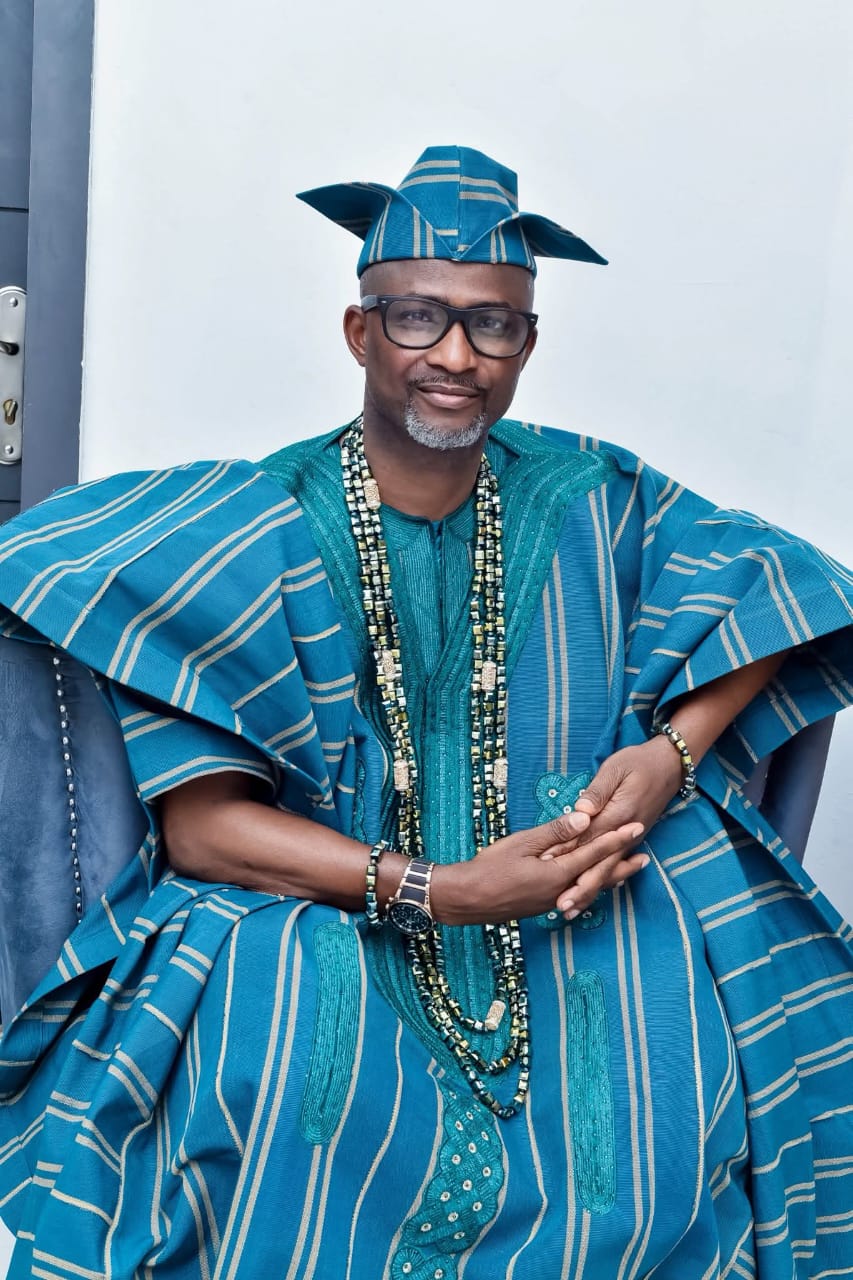
Pomp, Prestige and Purpose: Dr. Mutiu Adewale Badmus Crowned Otunba Alayeluwa Onimolete of Molete, Ogbomoso
Last Sunday was etched in gold in the annals of Molete, Ogbomoso, as the ancient town came alive in colour, culture, and celebration for the conferment of a prestigious chieftaincy title on the erudite entrepreneur and man of many parts, Dr. Mutiu Adewale Badmus.
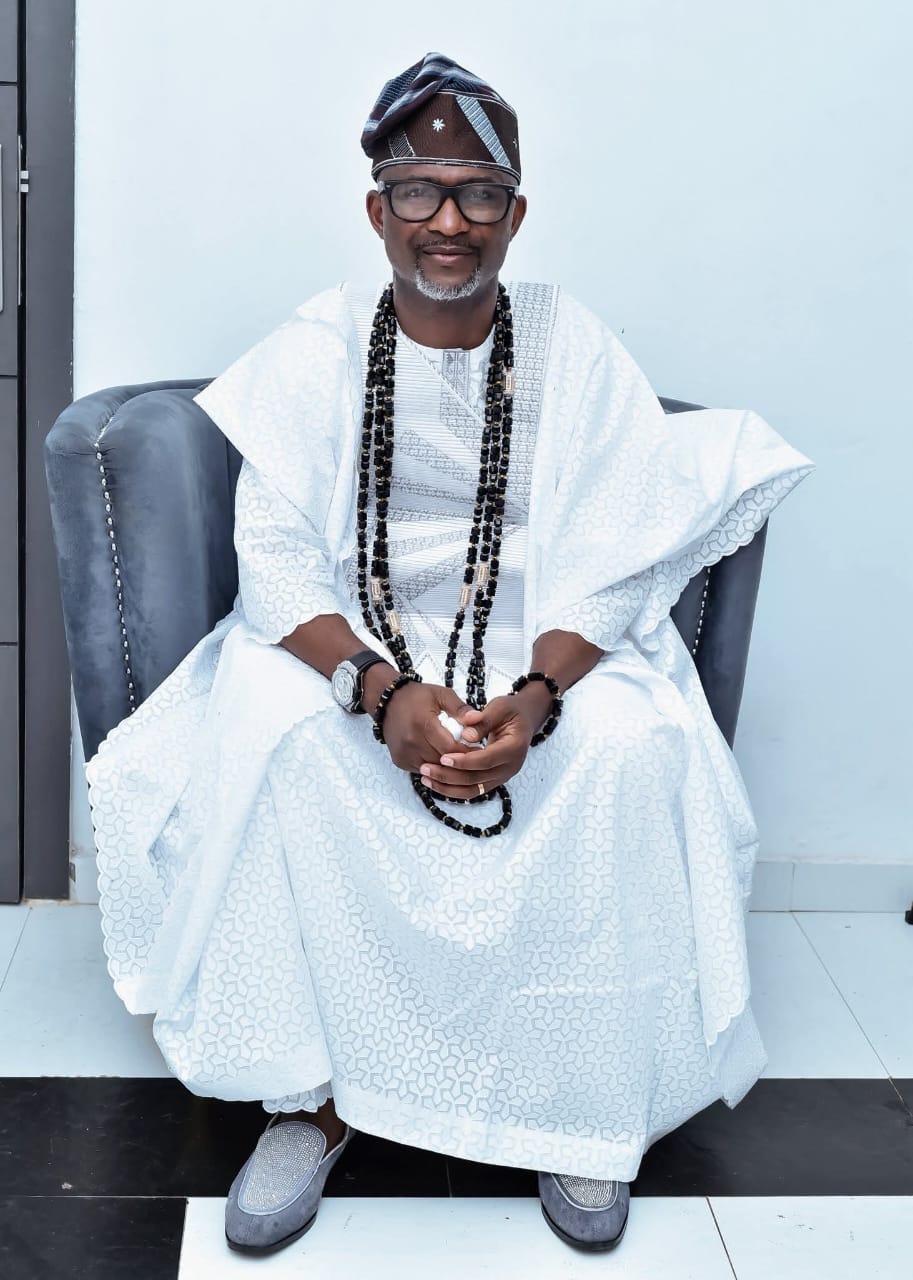
In a ceremony steeped in tradition and grandeur, Dr. Badmus was formally installed as the Otunba Alayeluwa Onimolete of Molete, Ogbomoso, drawing an impressive gathering of crème de la crème from across the social, business, and cultural strata of society.
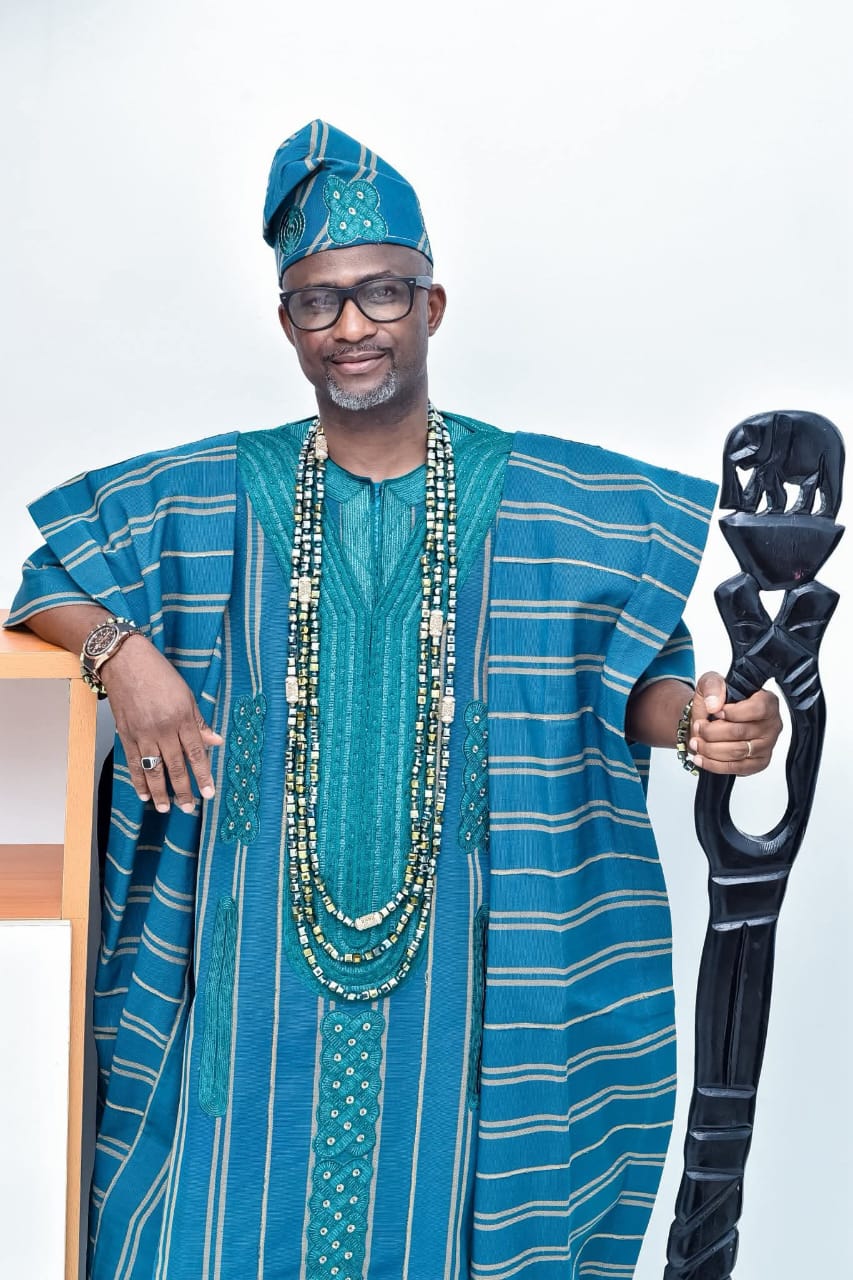
The atmosphere was one of pride, reverence, and collective joy as dignitaries, community leaders, friends, and well-wishers thronged the historic town to witness the landmark event.
The honour, bestowed in recognition of his outstanding contributions to societal development and humanity at large, reflects Dr. Badmus’ enduring commitment to service, excellence, and community upliftment. As the Chief Executive Officer of Al-Hatyq Travel and Tours Limited, he has distinguished himself not only as a successful business leader but also as a compassionate humanitarian whose impact transcends commerce.
The colourful ceremony showcased the rich cultural heritage of Ogbomoso, with traditional rites, music, and pageantry underscoring the significance of the occasion. For many in attendance, the conferment was more than a title—it was a celebration of character, legacy, and a life devoted to meaningful service.
As Dr. Mutiu Adewale Badmus assumes his new role as Otunba Alayeluwa Onimolete, expectations are high that his wisdom, vision, and passion for humanity will continue to inspire progress and unity within Molete, Ogbomoso, and beyond.


-

 celebrity radar - gossips6 months ago
Why Babangida’s Hilltop Home Became Nigeria’s Political “Mecca”
-

 society6 months ago
Power is a Loan, Not a Possession: The Sacred Duty of Planting People
-

 news6 months ago
THE APPOINTMENT OF WASIU AYINDE BY THE FEDERAL GOVERNMENT AS AN AMBASSADOR SOUNDS EMBARRASSING
-

 Business6 months ago
Batsumi Travel CEO Lisa Sebogodi Wins Prestigious Africa Travel 100 Women Award