
Education
From F9 parallel in WASSCE to first class in OAU, UNILAG don shares…

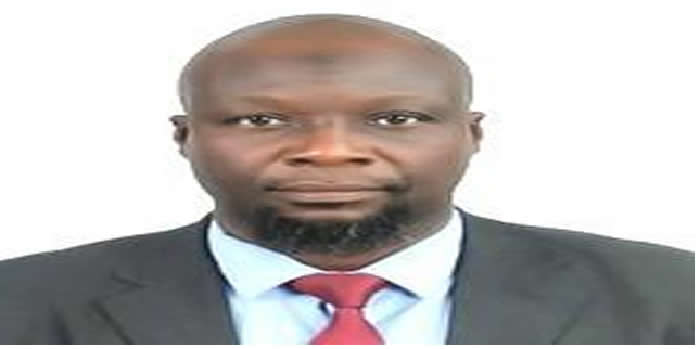
From F9 parallel in WASSCE to first class in OAU, UNILAG don shares…
Dr Adewale Tiamiyu, a lecturer in the Department of European Languages and Integration Studies at the University of Lagos, shares his remarkable educational journey from humble beginnings to academic success in this interview with IMOLEAYO OYEDEYI
How did you feel when you had an ‘F9 parallel’ in your O’level exam?
That was in 1987. I felt it was over and it was not possible to go back to school. But I still tried. At that time, it was my social life that affected me. I used to be a break dancer. I also marched for my school: Adelagun Memorial Grammar School in Ibadan, Oyo State. But at the end of it all, I went to check my result and it was F9 parallel. So I lost hope. Though I later sat for the GCE exam, it wasn’t successful, because I did not have the English language. I tried the examination twice and I had E8 in the language. So I abandoned education in 1990. Between 1990 to 1995, I was in Cote d’Ivoire as a meat seller. So I travelled out of the country. However, I returned in 1995 to Lagos and registered for GCE lessons. At the same time, I worked as a primary school teacher in Surulere. So I prepared to go back to school between 1995 and 1997. I made my GCE in 1996 and got admitted into Obafemi Awolowo University, Ile Ife in 1997.
However, was it only the break dancing and extracurricular activities that made you fail the ‘level examinations?
No. That was not the only issue. Then, I was too social and had about 18 girlfriends in almost all Ibadan schools. In those days, we always went to different schools for inter-house sports and I would want to have at least one girlfriend in any school we visited. I am talking of the 80s now. So, I think it was my social life. It was later in life that I understood that I was not a dullard since I had a First Class in OAU years later. I used to think I was a dullard, but my academic achievement in Ife made me believe I was not. I was just not serious during my secondary school days.
What was the reaction of your parents to your O’level result at that time, did they also give up on your education?
They were disappointed that I had an F9 parallel in my O’level. But when I did GCE in 1988, I had credits in four subjects, excluding English. So I did GCE again and kept on having E. So I tried, but I couldn’t make the full five credits. And I never wanted to go to a polytechnic anyway. Assuming I wanted to do that, I could have combined my results. But I never wanted to go. I remember that after my first attempt, it was one of my girlfriends who taught me Mathematics, which made me pass the subject in the second examination, GCE. But I never had credits in English. And when I couldn’t get admission to the university, I wasn’t comfortable in my area anymore. So, I had to travel out of the country.
But why Cote D’IVoire?
I wanted to go to the United States from a French country. This was because most of my mates who didn’t make their results back then had travelled to Holland and other foreign countries just to take away that shame of not passing O’level. You know we were big guys in those days. And all our girlfriends had all gone to the universities because they made their results. So psychologically we were disturbed. We just felt the only option available for us was to go abroad and look for money. So that was why we travelled out. I had intended to go to the USA from Cote d’Ivoire. But when I got to Abidjan, I was disappointed with what I saw. I regretted travelling out. And even now, the phobia is still in me as I don’t want to travel out. Even if they are calling me in the same USA now, I already have that phobia that I don’t want to go and suffer anywhere in the world.
Do you know where some of the bright students in your secondary days are right now?
One of them is in my Faculty. We are both lecturing there. Though he is my senior now at the university, he used to be my classmate in secondary school. He went to the University of Ibadan and graduated in 1993. But I got admitted in 1997. However, having a First Class in Ife made it easy for me to start my lecturing career immediately as I was retained as a lecturer in my department between 2003 and 2005. So I think my First Class made up for the F9 issues I had in my secondary school. And now, I am even much more educated than some of those who came out with better results during my O’level days. I am a Ph.D holder now. But some of them don’t have a PhD. Each time they see me, they wonder how I made it. But I always say, it is never over until it is over. Life is a race anyway. This means if you are still alive, you can become anything. I am a goal-getter and I don’t think anything is possible.
What about your other friends who had the same poor O’level results at the time like you, where are they now and is there anyone among them who was able to overcome that setback?
None were able to overcome that setback of poor O’level results. There is even one at the University of Lagos where I work currently. He is a bricklayer. He never furthered his education after that experience. He is doing the bricklaying job at the university. In my set at the secondary school, we were about 600. And three of us from the same secondary school and class currently work in UNILAG. One is an Associate Professor. I am a lecturer and the third man is a bricklayer. The first man is my senior because I couldn’t catch up with those who had gone ahead of me. But the third person is still a bricklayer as we speak here in UNILAG. Though we still talk, he is not always comfortable around me, because he is not happy seeing me as a Dr, while he is a bricklayer. But I wanted to encourage him because I don’t believe anything is possible. I believe that if he can dream it, it is possible. I could remember that when I was doing my master’s programme at UNILAG. I used to trek from Ikotun to the university. I trekked more than 20 times to go for my studies that year. So I am the type that doesn’t give up on something.
What do you think often goes on in the mind of your secondary school classmate who is now a bricklayer each time he sees you?
Well, I think one of them will be the age factor. I am 54 years old now. But when I made my decision to go back to school in 1995, I was 26 years of age. I left Cote d’Ivoire as a meat seller with the determination to go back to school. So I decided at the right time and I got admission at the age of 29. I eventually graduated at the age of 32. So it was still possible for me to catch up with those who had gone far ahead of me. But if you tell my secondary school classmate who is now a bricklayer to go back to school now that he is also over 50 years of age, he won’t want to do that. This is because he is married with children now. It is too late now for him unless his children will send him to school. I remembered the story of a woman who got admission at the age of 64 to OAU to study law and she graduated at the age of 70. So it is not over until it is over. Life is just like a football match, once the referee has not blown the whistle, you can’t say this is who will win the match.
You went to Cote d’Ivoire intending to travel to the United States from there, so, how did you end up as a meat seller in that country?
When I got there, they asked me if I had an O’level result. I said I didn’t have one. They said that hadn’t been that I had an O’level result, I would have been employed to teach English in the primary school. It was at that time I learnt that if you went to secondary school and didn’t have an O’level result, you remained illiterate. For me, it was very difficult to get abroad from the French country especially when I had no evidence that I attended a secondary school. So the people in Abidjan then asked me which handwork I learnt. Then, I told them I didn’t learn any work. So that was why they got me a meat-selling job. I would go around the market with the meat in my tray to sell to people. That was in the Northern part of Cote d’Ivoire. Initially, I didn’t want to do it. But my maternal uncle, whom I stayed with, stopped feeding me at some point. He said he couldn’t be feeding someone that was not ready to work. So I had to accept the job.
But when you got to Ivory Coast and got disappointed, why didn’t you return to Nigeria?
It was not possible to return because I had no fares to do that. So I had to work. More so, before leaving Nigeria, I had promised my girlfriend that I would come back to take her to the United States. So that shame of failing to make it to the United States caught me. That was why I decided to stay back in the French country to work and gather money. I invested the money in the business of selling rice, potatoes, and onions but the business collapsed. So I had to come back to Nigeria in 1995 to pursue education. I took that decision because I discovered that if one does not go to school or has money, one can’t belong to any serious class in society. And since I had pursued money and couldn’t get it, I felt the only way left for me to have class in life was to go back to school. That was why I got back and started reading the Oxford English textbook for primary four, five, and six classes. I also read a lot in Cote d’Ivoire and that allowed me to master all the basics that I lost in the English language.
How correct is the claim that you once worked as a Septic tank evacuator?
That was when I returned to Lagos from Cote d’Ivoire. When I came back to Nigeria in 1995, I stayed with my uncle in the Aguda area in Surulere, Lagos. And evacuating septic tanks is what my uncle did then for a living. So one day, I asked him to give me money to buy books for my GCE lessons and he told me that I had to join him in the work. I said I was not interested. He then said he couldn’t give me any money if I was not ready to join him to do the work. That was why I agreed to do the work with him. But whenever we got any job then, he would give me only £1 out of the £10 he charged. Yet, I was the one that would enter the septic tank. But I still managed to do it for two years before I got admission in 1997. It was the money I made during those two years that I used to buy the books I needed for my pre-university education preparations. As God would have it, I eventually got admission to OAU to study the French-German language.
culled from PUNCHNG





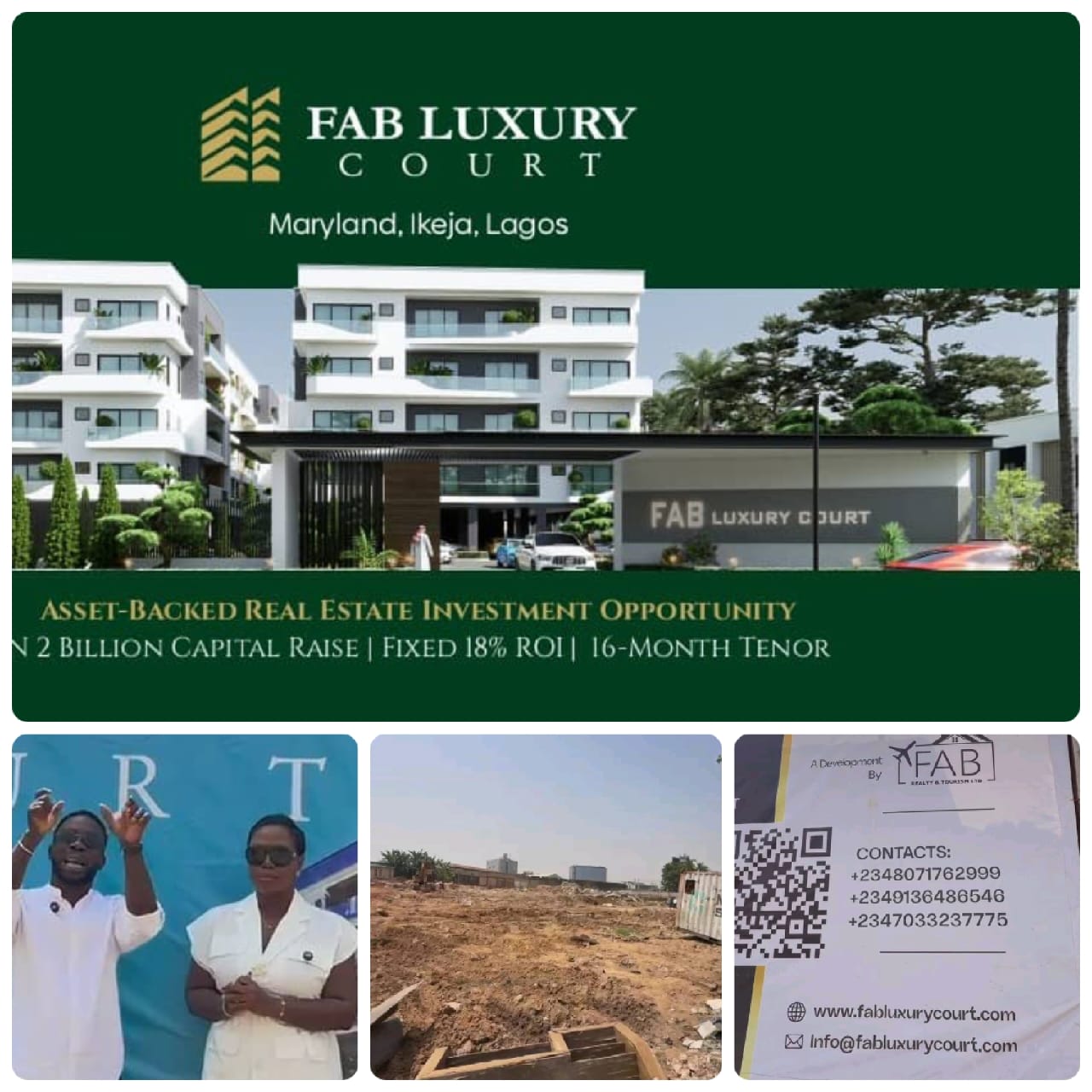
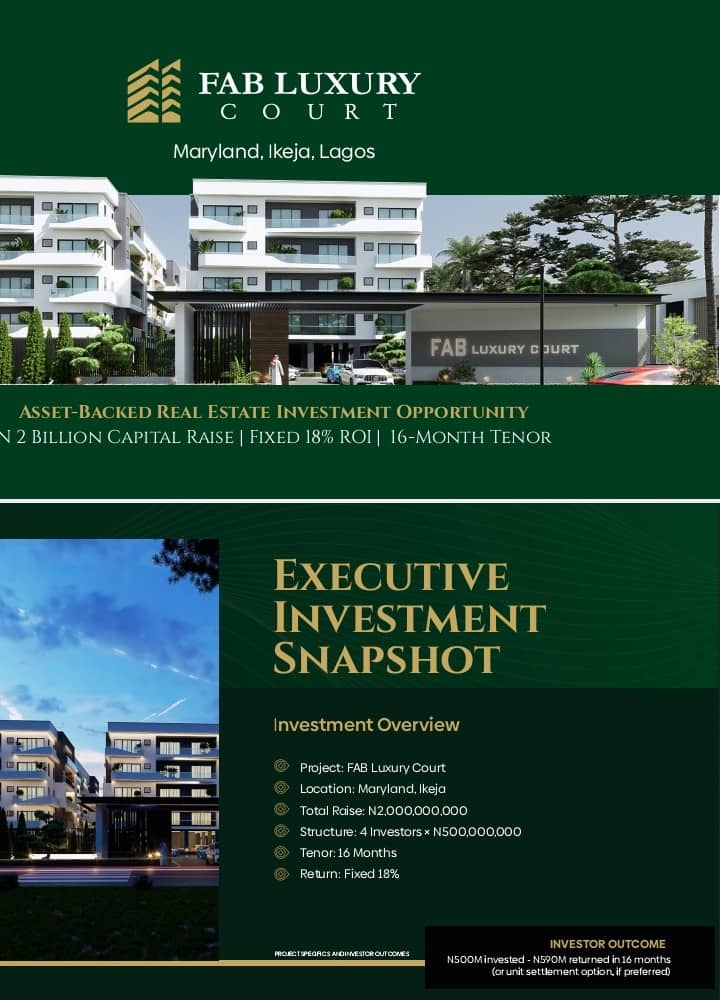
FAB Luxury Court Sets A Rare Benchmark For Excellence In Africa
~By Oluwaseun Fabiyi
Fab Luxury Court distinguishes itself as the premier choice for reliable investors and proactive developers in Nigeria and Africa.While numerous real estate entities operate within the country, Fab Luxury Court stands out for its exceptional honesty and integrity, delivering on the promises showcased on its social media page to distinguished customers globally.
As of now, no investors, whether domestic or international, have expressed regret over investing in or partnering with Fab Luxury Court. The company’s commitment to accessibility, accountability, and transparent financial reviews sets it apart from its contemporaries, rendering it a prized asset among its extensive clientele worldwide. Thousands of customers continue to patronize Fab Luxury Court due to its impeccable integrity and visionary approach.
*Why is Fab Luxury Court a worthwhile investment that warrants prompt consideration rather than hesitation?*
Fab Luxury Court’s security measures are exemplary and deserving of commendation, providing investors with capital protection through a robust structured framework, transparent reporting, and comprehensive legal documentation, thereby guaranteeing outstanding and secure returns.
Fab Luxury Court has further cemented its position as a leading developer and real estate powerhouse in Nigeria and Africa, currently managing several high-end estates in Maryland, Ikeja, Lagos and its surrounding areas.Fab Luxury Court demonstrates its unwavering commitment to excellence in Nigeria’s real estate sector through its best-selling estates in Ikeja.
Undoubtedly, partnering with and patronizing Fab Luxury Court will significantly contribute to securing your future; as you plan to associate with them in 2027, we encourage you to maintain a positive outlook and unwavering confidence in your future wealth.

Edukate Africa holds summit to tackle funding barrier in education
By Ifeoma Ikem
Edukate Africa, an edu-fintech platform is set to host the Disrupt Education Summit Africa (Disrupt ED) aimed at tackling funding barriers, skills gaps and curriculum mismatch in Nigeria’s education system.
The Director of Edukate Africa, Francis Omorojie who disclosed this to newsmen explained that the initiative was driven by the high rate of school dropouts linked largely to financial constraints, particularly at the higher institution
Omorojie said the summit scheduled for January 29 at the University of Lagos will bring together government officials, universities, financial institutions, private sector players and philanthropies to rethink education financing and prepare young Nigerians for the realities of today’s digital workforce.
He said that more than 50 percent of students who drop out of higher institutions do so because they cannot afford tuition and related costs, a situation he described as a major contributor to unemployment, brain drain and irregular migration.
“Africa’s youthful population could either become an economic advantage or a liability, depending on how well education and talent development are managed.
“Education is a fundamental need, but financial exclusion has continued to shut out many promising young people. When students drop out, it feeds unemployment and social instability.
“Our mission is to build innovative and sustainable financial models that keep young Africans in school and help them become productive,” he said.
He noted that Edukate Africa is deploying blended financing solutions that include tuition guarantees, technology driven scholarship platforms, gig and remote work opportunities for students, and partnerships with universities and philanthropies to establish endowment and alumni funds.
He said that the platform pays tuition directly to institutions after verifying students’ admission and academic records, ensuring transparency and accountability for donors.
“The summit would focus on aligning education with the fast changing nature of work, driven by digital transformation, artificial intelligence and emerging technologies as any university curricula are lagging behind workplace realities, leaving graduates ill prepared for employment.
“There is a clear disconnect between what students are taught and what employers need. This summit will create a roundtable where government, academia and the private sector can agree on the skills required for today’s economy and how to integrate them into learning.
“It will also examine education financing models, including how banks and financial institutions can design student friendly funding products, and how existing initiatives such as the Nigeria Education Loan Fund can be strengthened and scaled.’’
Omorojie added that Edukate Africa would use the summit to launch the CommUniversity Endowment Fund, a community led investment fund designed to generate sustainable returns that will be used to sponsor vulnerable students and support young entrepreneurs.
Unlike traditional grant models, he said the fund would invest in revenue generating businesses, with dividends channeled into education support and seed funding for student led startups.
He said the initiative would also promote innovation through activities such as Pitch My Dissertation, Africathon and inter university debates, encouraging students to turn academic research into commercial solutions and job creating ventures.
According to him, over 1,000 students and recent graduates are expected at the summit, with a partners’ pavilion providing employers and organisations direct access to top talent.
He added that Edukate Africa has already supported students in Nigeria, the United Kingdom and Uganda to complete their education, in some cases with relatively small amounts that made the difference between graduation and dropping out.
He said that the ultimate goal is to move beyond access to education and ensure that young people graduate with relevant skills, funding support and pathways into employment or entrepreneurship, thereby contributing meaningfully to Nigeria’s economic development.
Also speaking, Tosin Adebisi, Co-Founder of Edukate Africa said the Disrupt ED Summit was designed as a disruptive and transformative convergence that would move beyond familiar conversations to practical collaboration.
Adebisi said the summit was built around a new framework called Communiversity, which seeks to integrate universities, policymakers, industry, the third sector and students into a single ecosystem.
“Rather than everyone working in silos, Communiversity brings together policymakers, universities, industry and civil society, with students at the centre, to address access to education, the future of work and Africa’s competitiveness.
“Communiversity model would leverage alumni networks, high net worth individuals and diaspora support to unlock sustainable funding for universities.
“The summit is being organised in partnership with the University of Lagos and the University of Birmingham, with support from the Federal Ministry of Education.’’
The dignitaries that would grace the occasion include, Minister of Education, Dr Tunji Alausa; the Provost and Vice Principal of the University of Birmingham, Professor Nick, the Chief Operating Officer of Semicolon Africa, Ms Ashley Immanuel; and the Chief Executive Officer of Sterling One Foundation, Mrs Olapeju Ibikwe
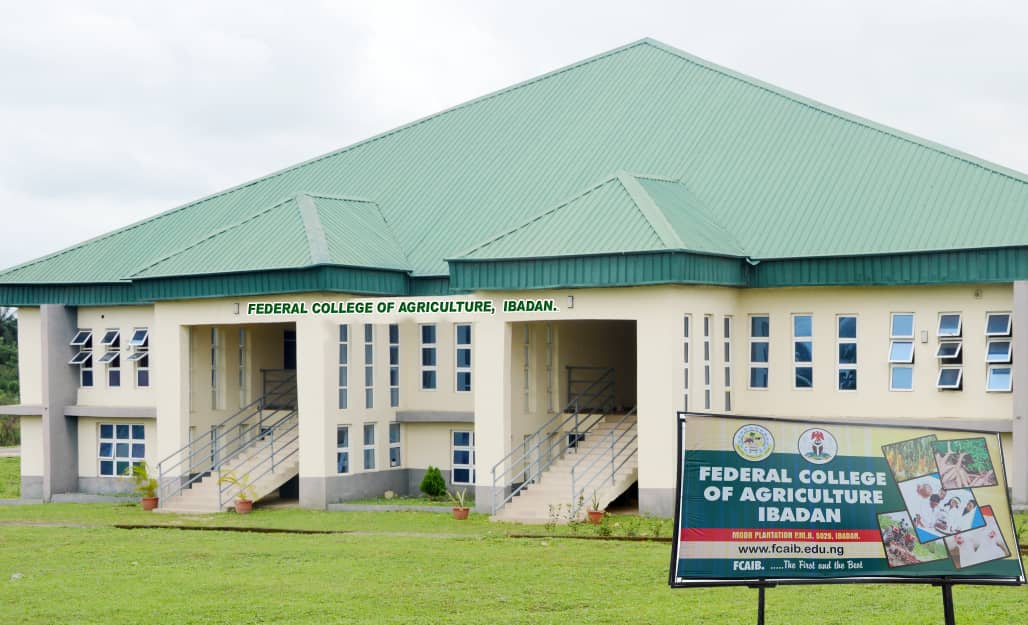
FCAIB is set to launch degree programmes in partnership with FUNAAB
IBADAN, OYO STATE, NIGERIA – In a groundbreaking move, the Federal University of Agriculture, Abeokuta (FUNAAB) has given the green light for the introduction of two innovative degree programmes at the Federal College of Agriculture, Ibadan (FCAIB), set to kick off in the 2025/2026 academic session.
According to an official release e-signed and made available to the media by Mrs. Wilson Oyekemi, Head of the Public Relations Unit of the institution, the newly approved programmes are B.Sc. (Home Science and Management) and B.Agric. (Agricultural Science).
As stated, the next academic session will witness the official commencement of both degree programmes, which constitutes a major breakthrough in the College’s academic development.
Established in 1921, the Federal College of Agriculture, Ibadan (FCAIB), originally known as the School of Agriculture, proudly stands as Nigeria’s and West Africa’s first agricultural institution, with a long and storied history.
The College’s roots trace further back to 1899, when Moor Plantation, Ibadan was established as a model farm to promote rubber cultivation and general agricultural improvement.
By 1905, the station evolved into an experimental research centre, focusing primarily on cotton production and other key agricultural studies.
The formal establishment of the School of Agriculture in 1921 marked the beginning of structured agricultural education in Nigeria.
Following the regionalization of education in 1954, the school relocated to its present site – where it has since grown into a formidable centre of agricultural learning and innovation.
Over the past century, the Federal College of Agriculture, Ibadan, has consistently upheld its mission of contributing to Nigeria’s agricultural development through qualitative education, skills acquisition, and the production of middle-level manpower for the agricultural sector.
The institution remains committed to empowering students with practical, hands-on skills and modern knowledge tailored to meet the evolving needs of agribusiness and food production in the 21st century.
Becoming Nigeria’s Premier Agricultural Institution, FCAIB envisions becoming the foremost agricultural education institution in Nigeria’s tertiary education system – a vision strengthened by its continued academic expansion and infastructural growth.
With over 100 years of continuous service, the Federal College of Agriculture, Ibadan has built a strong reputation as a leader in agricultural education, training, and research across the subregion.
The College currently offers a wide range of National Diploma (ND) and Higher National Diploma (HND) programmes across several disciplines, including:
National Diploma Programmes:
– Agricultural and Bio-Environmental Engineering Technology
– Agricultural Technology
– Home and Rural Economics
– Horticultural Technology
– Cooperative Economics and Management
– Science Laboratory Technology (SLT)
– Computer Science
– Food Technology
– Office Management Technology
– Library and information Science
– Multimedia Technology
– Organic Agricultural Technology
Higher National Diploma Programmes:
– Agricultural and Bio-Environmental Engineering Technology (Farm Power/Post-Harvest Technology/Soil & Water options)
– Agricultural Extension and Management
– Animal Production Technology
– Crop Production Technology
– Horticultural Technology
– Agribusiness Management
– Pest Management Technology
– Science Laboratory Technology (Microbiology Option)
These programmes are designed to blend theory with practical field experience, ensuring graduates are job-ready and self-reliant in the agricultural sector.
Beyond academic instruction, FCAIB maintains a strong emphasis on research and development, particularly in areas that directly impact food production and sustainable agricultural practices.
Recent infrastructural developments at the institution included the establishment of a Meteorological Centre, a Garri Processing Plant and an Oil Palm Processing Unit, all aimed at enhancing research, student training, and community impact.
The 9th and current Provost who doubled as the 28th Head of the 105 year-old Federal College of Agriculture, Ibadan, Prof. Jonathan Jeremiah Atungwu, a distinguished Nigerian academic Professor of Plant Nematology and an expert in Organic Agriculture and Biopesticides development with
research focus on non-chemical crop protection options, remained a focused and visionary leader.
He is Certified locally and internationally with enviable credentials, some of which include but not limited to:
– Over 100 publications in reputable outlets
– Expertise in Organic Agriculture and Biopesticides development.
– A team player with demonstrated leadership skills and experience in various capacities: Past Dean (COLPLANT) in FUNAAB and LASU, President of several professional societies.
– Membership and leadership in international and local organizations, such as ISOFAR, ISPP, NSPP, NISOP, ADAN and many more.
Prof. Atungwu is a renowned mentor for the upcoming agricultural scientists, teachers, agropreneurs, and youths.
He is happily married, and blessed with pleasant, hardworking, and disciplined children.


-

 celebrity radar - gossips6 months ago
Why Babangida’s Hilltop Home Became Nigeria’s Political “Mecca”
-

 society5 months ago
Power is a Loan, Not a Possession: The Sacred Duty of Planting People
-

 Business6 months ago
Batsumi Travel CEO Lisa Sebogodi Wins Prestigious Africa Travel 100 Women Award
-

 news6 months ago
THE APPOINTMENT OF WASIU AYINDE BY THE FEDERAL GOVERNMENT AS AN AMBASSADOR SOUNDS EMBARRASSING