
society
Did You Approve Boarding Fee Hike In Technical Schools, Delta Parents Ask Governor Oborevwori


Did You Approve Boarding Fee Hike In Technical Schools, Delta Parents Ask Governor Oborevwori
Parents of students in Delta State-owned Technical schools are seeking to verify if Governor Sheriff Oborevwori is aware of a recent hike in boarding fees from ₦85,000 to ₦250,000 per term.
The parents said that they are asking in view of the fact that there is no justification for the sharp hike, especially when Federal Government Colleges, some private schools as well as the Delta State-owned model secondary schools charge far less.
They also highlighted their concerns, citing the financial hardship that the hike has thrown them into.
In an open appeal, the parents asked the governor to clarify whether the fee increase was approved by his office or implemented by the Ministry of Technical Education without his consent. They also pointed out that the state owned government model secondary schools and colleges charge N60,000 while some private schools in the state capital, Asaba, charge ₦150,000, while similar schools in Lagos charge around ₦100,000 as boarding fees.
“We are struggling to understand why the state technical schools are demanding such a high amount. Federal Government Colleges charge ₦85,000 and even the State Government Model schools like Nana Government College Ughelli and others charge N60,000. We are even surprised that the best private schools in Asaba charge less than what is now being asked of us,” said a concerned parent.
A teacher from Ofagbe Technical School, speaking anonymously, expressed concern over recent fee increases imposed by the Ministry of Technical Education. He noted that the annual fee for junior and senior classes rose from N1,850 to N3,400, along with an additional compulsory N15,000 for medical and administrative charges. He also noted that prents are struggling to meet these new financial demands, leading many to withdraw their children from the school.
The teacher lamented that this situation disproportionately affects poorer families, who are already facing economic hardships. He added that although Delta State is supposed to provide free education in line with the Universal Basic Education Commission (UBEC) guidelines, the recent fee hikes contradict this promise, even as students are forced to pay for textbooks and medical services.
According to him, the unfortunate situation has led to a decline in enrolment numbers as families opt for other public secondary schools with lower fees, which range from N1,700 to N2,700. The teacher emphasized that the current educational policies seem to cater more to the middle class, risking a crisis in the educational sector.
Master Ochuko Favour, a young boy who recently completed his primary education, shared his disappointment at being unable to pursue his dream of attending technical school due to the financial burden. He revealed that he will settle for a local government secondary school. His plight highlights the systemic barriers that many students face in accessing education.
Also, a recent circular from the Ministry of Technical Education, dated September 17, 2024, has sparked concern over increased levies for students in government technical schools. While some fees align with those approved for public secondary schools, many stakeholders are questioning specific charges, particularly for students in JSS 1-3 and Pre-Vocational classes. These include a N2,000 administrative charge, a N3,000 medical fee introduced last academic year, a termly sports levy, and the mandatory purchase of Mathematics and English textbooks solely from the school.
Parents and stakeholders argue that these fees contravene the Compulsory, Free Universal Basic Education Act of 2004, which exempts students in the Basic Education Cohort from paying for government-provided services. They maintain that there is a pressing need for the state government to clarify the rationale behind these fees, as many view them as disguised tuition charges.
The situation is particularly concerning given that other states are actively working to improve their technical education systems and increase enrolment. The community is calling on the Delta State government to investigate the Ministry of Technical Education’s policies, suggesting that these changes may disproportionately burden low-income families and contradict the broader educational goals of the administration. The perception is that the ministry is prioritizing revenue collection over the needs of students and the community, which could undermine the vision for equitable education in the state.
A parent of a female student who gained admission to the school has decided to reject the offer in favor of a public model secondary school in Warri with boarding facilities. She cited lower fees and essential amenities as key reasons for her choice. Concerned about her child’s safety and the lack of basic facilities like electricity and water, she questioned why she should pay N250,000 for boarding when the school’s resources seemed inadequate. She expressed frustration over the Ministry’s failure to ensure the schools are functioning properly despite significant investments in its infrastructure.
Beyond the financial burden, the parents also raised concerns about the deplorable conditions of some of the technical schools. Reports from various institutions in the state reveal overcrowded classrooms, lack of electricity, and facilities and in some of the new model technical schools workshops and laboratories are now being converted into makeshift classrooms without adequate furniture. Parents who visited the schools said there was no official available to address their concerns.
“The classrooms are overcrowded, and there’s no light. Our children are not getting the education they deserve despite the high fees. When we visited to clarify the situation, there was no one to speak with us,” lamented Mr. Joseph Ighotegwolor, a concerned parent.
The parents also questioned why the Ministry of Technical Education continues to admit new students despite the existing lack of space and facilities to accommodate them. They urged the governor to intervene, fearing that the Ministry are more focused on increasing revenue than providing quality education as the Ministry of Basic and Secondary Education is not left out in this revenue drive by conducting supplementary entrance examination into the state model schools whereas most of the classrooms in the schools are already overcrowded.
Adding to their concerns, the parents highlighted a policy that forces students in the various technical schools who fail their promotion examination to leave the school without giving them the opportunity to repeat the classes. Many see this as an unfair practice, particularly in an environment that is not conducive to learning.
“Instead of helping students improve, they are asked to leave if they fail their exams. This is not right. These are young students who deserve support, not expulsion,” said Mrs. Amaka Udeh, a parent from Effurun.
The parents called on Governor Oborevwori to urgently investigate the fee increase, address the challenges affecting the technical schools, while ensuring their children receive a quality education.
Meanwhile, the recent policy change by the Ministry of Technical Education mandating entrance exams for all technical schools, including the six conventional ones, has created significant barriers for prospective students. Previously, these conventional schools accepted students without an entrance exam, making them accessible to a broader demographic.
With the entrance exam requirement, many students, especially those from lower-income backgrounds who struggle with funding, are unable to compete for admission. This situation has forced them to continue in regular public secondary schools, potentially limiting their vocational training opportunities and future career prospects.
Advising the government, the parents noted that adressing this issue may require revisiting the admissions policy to ensure that all students have equitable access to technical education, possibly by providing financial support for exam preparation and related costs or by reinstating more inclusive admission criteria for conventional schools.





UKA Gears Up for Final ATC Exchangeability Test Run as June Preparations Begin.
May 30, 2026 – As the month of June gathers momentum, the *United Kingdom of Atlantis, UKA*, a sovereign nation has unveiled a series of vital guidelines and preparatory packages to ensure citizens and stakeholders run the *ATC Exchangeability* process effectively.
In an official update, the *President of Atlantic Crown Limited, Empress of Attica Empire UKA*, confirmed that the *Final Test Run of ATC Exchangeability* is scheduled for the month of June 2026. The exercise marks a key phase ahead of the *Official Exchangeability Window, set to run from July 2026 to February 2027*.
### Key Highlights from the Presidential Briefing
1. *Final Test Run – June 2026*
The test run is designed to validate systems, procedures, and user readiness before full activation. Citizens, partners, and designated participants are urged to follow all official advisories released by UKA authorities during this period.
2. *Official Exchangeability Period*
Following the successful completion of the June test run, the Official Exchangeability will commence in july 2026 and we are Expecting Full Exchange ability between July Ending, 2026 to February 2026.
UKA stated that detailed schedules, eligibility requirements, and step-by-step instructions will be communicated progressively through verified UKA channels.
3. *Benefiting Packages for June*
In line with UKA’s commitment to citizen empowerment, the month of June will feature “benefiting packages” aimed at education, preparation, and seamless onboarding. These packages are intended to equip the people of UKA with the knowledge and tools needed for effective participation.
4. *Commitment to Transparency*
Addressing the nation, the Empress of Attica Empire UKA emphasized:
_“Final Test Run of ATC Comes up in The Month of June, As We Prepare For The Official Exchangeability, Between July 2026 To Feb 2027. All Information Will Be Communicated.”_
UKA reaffirmed that only information released through official UKA platforms should be regarded as authoritative.
The United Kingdom of Atlantis is encouraging all citizens, representatives, and interested parties to remain alert to official communications, attend designated orientation sessions, and avoid unofficial sources. UKA’s dedication to order, clarity, and the collective benefit of its people as the nation moves into this significant phase.
For updates, advisories, and participation guidelines, citizens are advised to monitor official UKA communication channels.
United Kingdom of Atlantis, UKA, is a sovereign nation, committed to national development, citizen welfare, and structured economic participation through initiatives such as ATC Exchangeability.
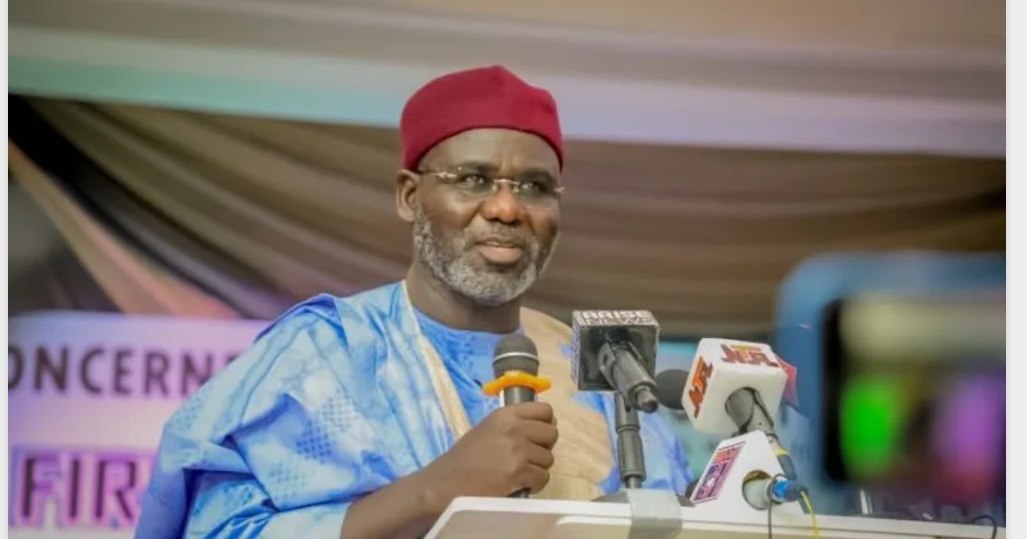
Three Years On, General Buratai Hails Tinubu’s Economic, Security Achievements
Former Chief of Army Staff, Lt. Gen. Tukur Buratai (retd.), has commended President Bola Ahmed Tinubu for what he described as bold economic reforms and improved security efforts as the President marks three years in office.
In a goodwill message on Thursday to commemorate Tinubu’s third anniversary as President and Commander-in-Chief of the Armed Forces, Buratai said the administration had taken courageous decisions that would leave a lasting impact on Nigeria’s development.

According to him, President Tinubu broke a long-standing cycle that had hindered national growth by removing fuel subsidy and implementing foreign exchange reforms aimed at stabilising the naira and strengthening the economy.
He noted that the reforms were beginning to yield positive results, citing the global acceptance of Nigerian debit cards, the gradual revival of local refineries, access to student loans, and ongoing road and infrastructure projects across the country.
“The FCT Administration has also recorded remarkable progress, completing major road projects that remained unfinished for over 16 years,” Buratai stated.
The former army chief also praised the administration’s security efforts, saying renewed military offensives against insurgents, terrorists and bandits had led to notable successes across various parts of the country.
He specifically lauded recent joint operations involving Nigerian and United States forces against Boko Haram and ISWAP in the North-East, as well as intensified counter-banditry operations in the North-West.
“We have seen notorious ISWAP commanders being neutralised. I congratulate the Commander-in-Chief, the Minister of Defence, the Chief of Defence Staff, the Service Chiefs, the Inspector-General of Police and heads of intelligence agencies for their efforts,” he said.
Buratai, however, acknowledged that challenges remained, stressing the need for more aggressive military operations and intelligence-driven strategies in the coming year.
While urging Nigerians to remain hopeful, he said celebrating the President’s achievements did not amount to ignoring the difficulties facing the nation.
“Because you truly care, you have shown the courage to trade short-term comfort for long-term hope. Nigerians need your reassurances, and that is why we remain optimistic and full of confidence,” he added.
The retired military officer reaffirmed his support for the Tinubu administration and expressed confidence that the foundation being laid by the government would deliver a brighter future for the country.
He also prayed for God’s guidance, wisdom, strength and good health for the President as he continues to lead Nigeria.
NUT Raises Alarm Over Continued Captivity of Abducted Oyo Pupils, Teachers
The Nigeria Union of Teachers has expressed deep concern over the continued captivity of pupils and teachers abducted during an attack on schools in the Ahoro-Esinle and Yawota communities in Oriire Local Government Area of Oyo State.
In a statement issued on Saturday, the Oyo State wing of the union described the situation as increasingly distressing, particularly following the emergence of a video allegedly released by the abductors showing the victims pleading for their freedom.
The union said the footage had heightened fears over the welfare of the abducted pupils and teachers, describing their ordeal as heartbreaking and unacceptable.

According to the NUT, no child or teacher deserves to be subjected to such traumatic experiences, adding that the prolonged captivity of the victims has continued to inflict psychological pain on their families, colleagues and the wider education community.
The union called on the Federal Government, Oyo State Government and relevant security agencies to intensify efforts towards securing the immediate and safe release of the victims.
“This is not a moment for hesitation. It is a moment for coordinated, intelligence-driven efforts to ensure the immediate and safe release of all abducted pupils and teachers,” the statement read.
While acknowledging ongoing interventions by security agencies and government authorities, the union stressed that time was of the essence, warning that every additional day in captivity deepens the trauma suffered by the victims.
The NUT urged security operatives to strengthen surveillance, improve community intelligence gathering and deploy all necessary operational and diplomatic measures to facilitate the rescue of the abductees.
It also appealed to traditional rulers, community leaders and residents to support rescue efforts by providing credible information that could assist security agencies.
“The safety of our children and teachers must remain a collective priority,” the union stated.
Reaffirming its support for the families of the victims, the NUT pledged continued solidarity and prayers while advocating safer learning environments across the country.
The statement was jointly signed by the Chairman of the Oyo State NUT, Comrade Hassan Ajibola Fatai, and the Secretary, Comrade Salami Olukayode.


- Afreximbank Deepens Commitment to Economic Progress in The Bahamas June 1, 2026
- African Electric Vehicle (EV) platform Spiro raises $215M in equity to scale electric mobility and energy infrastructure across Africa June 1, 2026
- Africa Centres for Disease Control and Prevention (Africa CDC) Statement on Attacks Against Health Facilities During the Bundibugyo Virus Disease Response in the Democratic Republic of the Congo June 1, 2026
- Putting consumers at the centre of Africa’s dairy transformation June 1, 2026
- International Rescue Committee (IRC) warns Democratic Republic of the Congo (DRC) Ebola outbreak likely far larger than official figures suggest June 1, 2026
- South Africa: Portfolio Committee on Health Marks National Cancer Survivor Day and Reaffirms Importance of Early Detection and Public Awareness June 1, 2026
- Rwanda’s RSSB Tigers Crowned 2026 Basketball Africa League Champions June 1, 2026
- Uganda: Appointments Committee Begins Vetting of Ministerial Nominees June 1, 2026
- Sudan braces for worsening child malnutrition as pre-harvest season starts June 1, 2026
- Etu Energias Strengthens Angolan Footprint, Returns to Angola Oil & Gas (AOG) 2026 as Champion Sponsor June 1, 2026
- Afreximbank Deepens Commitment to Economic Progress in The Bahamas June 1, 2026
- African Electric Vehicle (EV) platform Spiro raises $215M in equity to scale electric mobility and energy infrastructure across Africa June 1, 2026
- Africa Centres for Disease Control and Prevention (Africa CDC) Statement on Attacks Against Health Facilities During the Bundibugyo Virus Disease Response in the Democratic Republic of the Congo June 1, 2026
- Putting consumers at the centre of Africa’s dairy transformation June 1, 2026
- International Rescue Committee (IRC) warns Democratic Republic of the Congo (DRC) Ebola outbreak likely far larger than official figures suggest June 1, 2026
- South Africa: Portfolio Committee on Health Marks National Cancer Survivor Day and Reaffirms Importance of Early Detection and Public Awareness June 1, 2026
- Rwanda’s RSSB Tigers Crowned 2026 Basketball Africa League Champions June 1, 2026
-

 news6 months ago
WHO REALLY OWNS MONIEPOINT? The $290 Million Deal That Sold Nigeria’s Top Fintech to Foreign Interests
-

 society4 weeks ago
SOCIAL MEDIA IS NOT A BATTLEFIELD COMMAND – WHY THE NIGERIAN ARMY’S ACTION AGAINST JUSTICE CRACK IS A NATIONAL SECURITY IMPERATIVE
-

 celebrity radar - gossips4 months ago
Dr. Chris Okafor Returns with Power and Fire of the Spirit -Mounts Grace Nation Altar with Fresh Anointing and Restoration Grace on February 1, 2026
-

 celebrity radar - gossips6 months ago
Prophet Kingsley Aitafo Releases 2026 Prophecy: ‘Nigeria Will Rise, but the World Must Prepare for Turbulence’