
society
Understanding the hullabaloo behind call for Matawalle’s probe* By Toby Prince


*Understanding the hullabaloo behind call for Matawalle’s probe*
By Toby Prince
“Must we always kill our best?” This poignant question, credited to the late Ken Saro Wiwa, resonates deeply in the current political climate of Nigeria, particularly in the case of Bello Matawalle, the Minister of State for Defence. Matawalle, a former governor known for his vocal advocacy for the common masses, now finds himself at the center of a probe by the Economic and Financial Crimes Commission (EFCC). One can’t help but resonate with Wiwa’s sentiments.
There seems to be an orchestrated campaign to undermine Matawalle’s efforts and derail him from his ministerial duties. It is a lamentable situation where those who are keen on disrupting peace and progress are hell-bent on pulling down those who strive to uphold them. This probe, however, appears to be less about justice and more about political manoeuvring. This move reeks of desperation and hatred, as it is clear that the petitioners are hell-bent on punishing Matawalle for his hardened support for this administration and his unrelenting efforts to combat banditry in Zamfara and other parts of the country.
It is crucial to recognise that Matawalle’s vocal stance against insecurity and his determination to protect the lives and properties of Nigerians have made him a thorn in the flesh of those who benefit from the status quo. His commitment to this administration and his unapologetic support for Asiwaju Bola Ahmed Tinubu have earned him the ire of those who seek to undermine the government’s efforts.
Matawalle’s tenure as the governor of Zamfara State from 2019 to 2023 was marked by his relentless efforts to curb banditry and uplift the common masses. His persistence in getting support to combat banditry in the state was frustrated by powerful personalities that traded gains gotten from the continuity of insecurity. His dedication was such that he was ready to lose his immunity for the sake of the people. Now, as the Minister of State for Defence, he continues to serve with the same zeal and commitment. Yet, his detractors seem hell-bent on tarnishing his reputation and derailing his efforts.
The EFCC’s probe into an alleged N70bn fraud during Matawalle’s tenure as governor is a classic example of this. The allegations, based on phantom contract awards and diversion of funds, were brought forth by the Tinubu Youth and Women Network. This group, led by Aliyu Yunusa, has been vocal in its demand for a swift investigation. However, one must question the motives behind this sudden urgency. It is no secret that Matawalle is a vocal and proud supporter of Asiwaju Bola Ahmed Tinubu. His unwavering support for the administration has earned him many admirers, but it has also made him a target for those who oppose the administration.
The hurriedly packaged petition against Matawalle seems to be a thinly veiled attempt to punish him for his political affiliations. They have failed to take into account the rigorous process of investigation that a probe entails. But one must ask, is this probe truly about ensuring justice, or is it a tool being used to silence a vocal supporter of the administration? The timing and circumstances surrounding the probe raise serious doubts about its legitimacy.
However, the EFCC’s response to the protesters, calling for a thorough investigation, is a welcome development. It is essential to ensure that any probe is thorough, impartial, and free from political interference. Matawalle’s innocence or guilt must be established through a fair and transparent process, rather than relying on unsubstantiated allegations and malicious petitions.
In a deep cross-examination of precedent occurrences leading to the vile protest, one can undoubtedly conclude that the call for Matawalle’s probe is nothing but a witch-hunt, orchestrated by forces that seek to discredit and silence him. This action is a disservice to a man who has dedicated his life to serving the people. More of a classic case of shooting the messenger, as Matawalle’s efforts to address the root causes of insecurity have exposed the complicity of some powerful individuals and groups. The petitioners, hiding behind the cloak of anonymity, are attempting to divert attention from the real issues, and creating a distraction from the progress being made in the fight against insecurity. This is a blatant attempt to discredit his efforts and undermine his contributions.
In light of this, we must revisit and reaffirm our commitment to the fundamental principles of justice and fairness, which are the very cornerstones of our society. Every individual, including Matawale, is inherently entitled to the inviolable presumption of innocence until proven guilty, a sacrosanct right that must be upheld at all costs. We must resist the temptation to rush to judgment based on unsubstantiated allegations and instead allow the due process of law to unfold unhindered, permitting the truth to emerge organically. While the allegations of corruption are grave and warrant a thorough investigation, they must not be exploited as a political weapon to settle scores or silence dissenting voices. Matawale’s detractors, in their zeal to discredit him, have failed to recognise his unyielding resilience and unwavering dedication to his duties. Despite the allegations and the ongoing investigation, Matawalle continues to serve with unrelenting passion, remaining steadfast in his role as the Minister of State for Defence and persisting in his advocacy for the welfare of the common masses, a testament to his unshakeable commitment to the greater good.
Matawalle’s achievements as a former governor and his current efforts as Minister of State for Defence speak volumes about his dedication to the Nigerian people. His commitment to transparency and accountability has earned him the respect and admiration of many. It is, therefore, ludicrous to suggest that he is suddenly unfit for office or that he has become corrupt overnight.
In conclusion, the probe against Bello Matawalle appears to be more of a political vendetta than a genuine pursuit of justice. A handy work of political jobbers, whose unpatriotic pursuit is only based on selfish reasons and self-aggrandizement. It is a clear example of how political rivalries can overshadow the true purpose of institutions like the EFCC. Instead of being used as a tool for justice, the EFCC is being used as a weapon in a political battle. This is not only unjust to Matawalle but also undermines the credibility of the EFCC. The EFCC would do well to prove this obvious narrative wrong.
Matawalle’s probe is nothing but a desperate attempt to discredit a vocal and effective leader. This is nothing short of a witch-hunt, rather than a genuine desire for accountability. We must not allow the forces of hatred and desperation to succeed in their efforts to undermine the progress being made in the fight against insecurity. Matawalle’s commitment to Nigeria and its people is unwavering, and we must stand with him against those who seek to destroy our country.
As we ponder on Ken Saro Wiwa’s question, “Must we always kill our best?” we must also ask ourselves, “Must we always let political rivalries overshadow the pursuit of justice?” The answer, undoubtedly, should be a resounding “No.” Let us transcend the mundane and divisive realm of petty politics, and instead, unite in our support for those selfless individuals who are tirelessly dedicating themselves to the noble pursuit of our nation’s advancement.
***Prince is a communication expert based in Abuja.








society
Stakeholders Seek Urgent Reforms to Tackle Youth Unemployment at disrupTED EduKate Africa Summit

Stakeholders Seek Urgent Reforms to Tackle Youth Unemployment at disrupTED EduKate Africa Summit
By Ifeoma Ikem
Stakeholders in Nigeria’s education sector have called for urgent and scalable solutions to address the rising rate of youth unemployment, stressing the need for strengthened technical education and increased collaboration with the private sector to bridge existing skills gaps.
The call was made at the disrupTED EduKate Africa Summit 2026, a one-day leadership forum held at the University of Lagos, where participants examined the growing disconnect between education outcomes and labour market demands.
The summit brought together education leaders, private sector operators and development advocates to promote adaptive learning, practical skills acquisition and innovative financing models for Africa’s education sector.
Experts at the summit strongly advocated increased investment in technical and vocational education, noting that training programmes must reflect current industry realities and evolving labour market needs.
Speakers emphasised that Nigeria’s education system, particularly at the tertiary level, must urgently shift from certificate-driven learning to skills-based and experiential education aligned with global best practices.
Among the speakers were Deby Okoh, Regional Manager at Brunel University of London; Ashley Immanuel, Chief Operating Officer of Semicolon; Olapeju Ibekwe, Chief Executive Officer of Sterling One Foundation; and education advocate, Adetomi Soyinka.
The speakers highlighted the importance of continuous learning, teacher retraining and comprehensive curriculum reform to meet the demands of an increasingly technology-driven global economy.
They stressed that apprenticeship programmes, internships and hands-on training should be fully integrated into academic curricula, noting that over-reliance on theoretical qualifications has widened the employability gap among graduates.
In his remarks, Mr Tosin Adebisi, Director of EduKate Africa and convener of the summit, said the event was designed to challenge what he described as the education sector’s rigid attachment to outdated methods.
Adebisi said innovation must remain central to education reform, adding that stakeholders must rethink teaching methods, learning processes and approaches to solving challenges such as access to education, financing and employability.
He expressed confidence that sustainable solutions could be achieved through strong collaboration across education, private sector and development institutions.
Adebisi, alongside co-Director Mr Francis Omorojie, said the summit aimed at connecting stakeholders working across sectors to close existing skills and opportunity gaps for young people.
The summit also urged parents and educators to promote lifelong learning, critical thinking and adaptability among young people, stressing that education systems must evolve in line with global economic trends.
No fewer than 200 students from the University of Lagos, Lagos State University, Ojo, and other institutions participated in the summit, which was initially expected to host the Minister of Education, Dr Tunji Alausa.
In a welcome address, Prof. Olufemi Oloyede of the University of Lagos emphasised the need to shape young minds through innovation and positive thinking, noting that Africa’s development depends on the strategic use of its human and natural resources, as well as a shift towards creativity and innovation among youths.

Turning Point: Dr. Chris Okafor Resumes with Fresh Fire of the Spirit
-Steps onto the Grace Nation Pulpit After a Month-Long Honeymoon Retreat with Renewed Supernatural Power
By Sunday Adeyemi
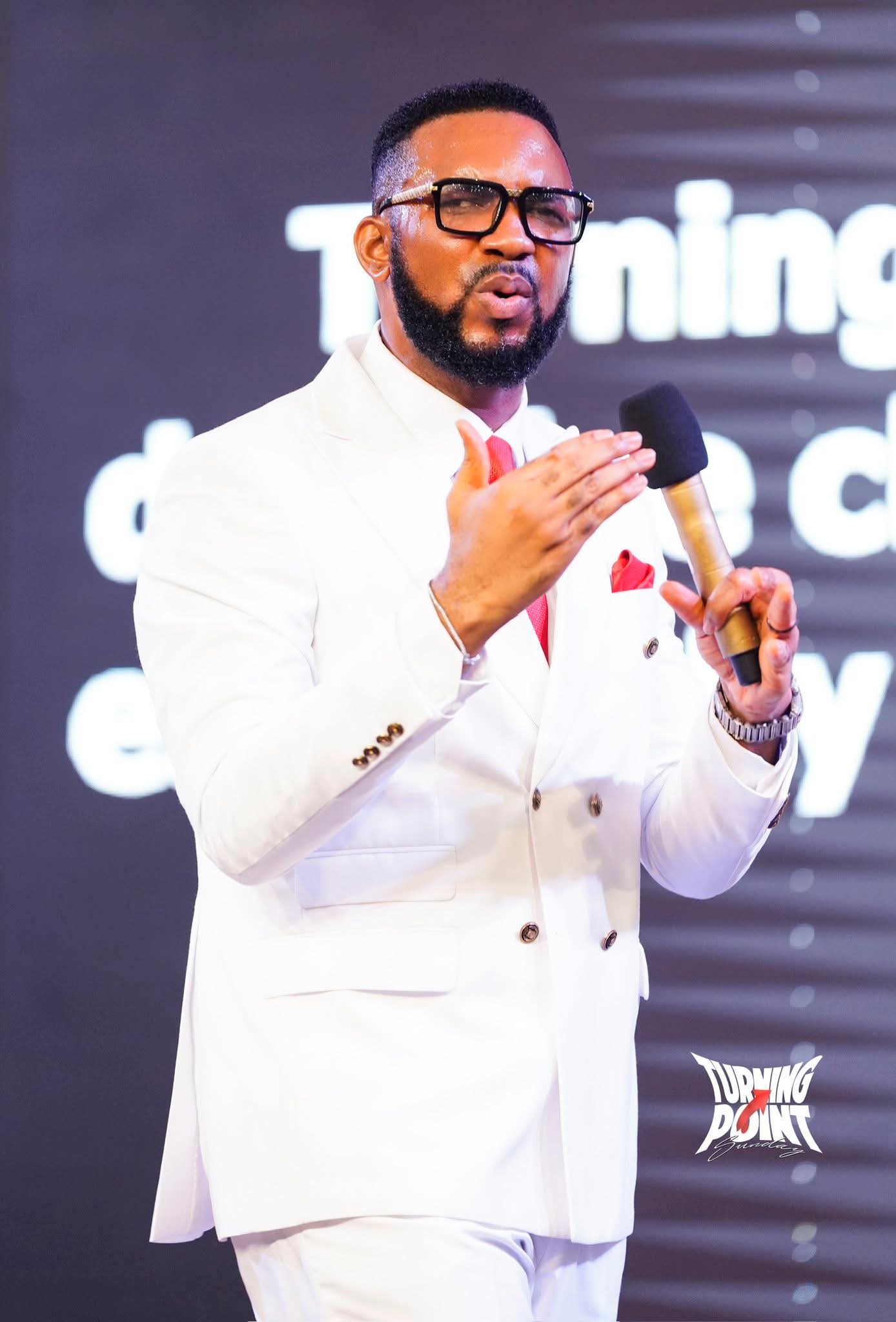
The much-anticipated February 1, 2026 “Turning Point” service of Grace Nation has come and gone, but its impact remains deeply etched in the hearts of Grace Nation citizens across the world. The significance of the day was unmistakable—it marked the official return of the Generational Prophet of God and Senior Pastor of Grace Nation Global, Dr. Chris Okafor, to active ministerial duty as the Set Man of the commission.
The date was particularly symbolic, as Dr. Okafor had taken close to one month away from the pulpit following his wedding late last year. The period served not only as a honeymoon but also as a season of rest, reflection, and intimate fellowship with God in preparation for a greater spiritual assignment ahead.
The atmosphere at Grace Nation was electric as the Generational Prophet and his wife were received with a heroic welcome, accompanied by prophetic praise, joyful dancing, and fervent prayers. It was a celebration of return, renewal, and readiness.
In his opening remarks, Dr. Chris Okafor declared that he had returned to fully pursue the mandate God entrusted to him—winning souls for the Kingdom of God. He issued a strong warning to the kingdom of darkness, stating that light and darkness cannot coexist. According to him, the season ahead would witness intensified spiritual engagement, as the Kingdom of God advances and the forces of darkness lose ground.
“This time,” the Generational Prophet affirmed, “it will be total displacement of darkness, as the light of God shines brighter than ever.”
The Message: Turning Point
Delivering a powerful sermon titled “Turning Point,” Dr. Okafor explained that a turning point is defined as a moment when a decisive and beneficial change occurs in a situation. He emphasized that such moments are often preceded by battles.
According to him, battles do not necessarily arise because one is doing wrong, but because God desires to reveal His power and teach vital lessons through them. Every genuine battle, he noted, carries divine involvement and purpose.
Addressing the question “Why must I fight a battle?” Dr. Okafor explained that individuals who carry extraordinary grace often encounter greater challenges. “When you carry what others do not carry,” he said, “the battles that come your way are usually bigger.”
Characteristics of a Turning Point
The Generational Prophet highlighted that when a person is firmly rooted in God, no storm can uproot them. A strong spiritual foundation ensures that no battle can shake one’s destiny. He explained that prayer does not eliminate battles, but preparation through prayer guarantees victory on the evil day.
“Battles push you into your turning point when you are rooted in the Spirit,” he stated, adding that a prayerful life is essential for sustained victory and elevation.
A Supernatural Service
The Turning Point service witnessed an extraordinary move of the Holy Spirit in a fresh dimension. Deliverance, healings, miracles, restoration, and diverse testimonies filled the atmosphere as worshippers encountered the power of God during the Sunday service.
In a related development, Dr. Chris Okafor officially commissioned the ultra-modern church restaurant, Fourthman Foodies, dedicating it to God for the benefit and use of Grace Nation citizens worldwide.
The February 1 service has since been described by many as a defining moment—one that signals a new spiritual season for Grace Nation Global. https://www.facebook.com/share/v/1B2Eh6B6wo/
Sunday Adeyemi is a Lagos-based journalist and society writer. He writes from Lagos.


Adron Homes Hails Ondo State at 50, Celebrates Legacy of Excellence
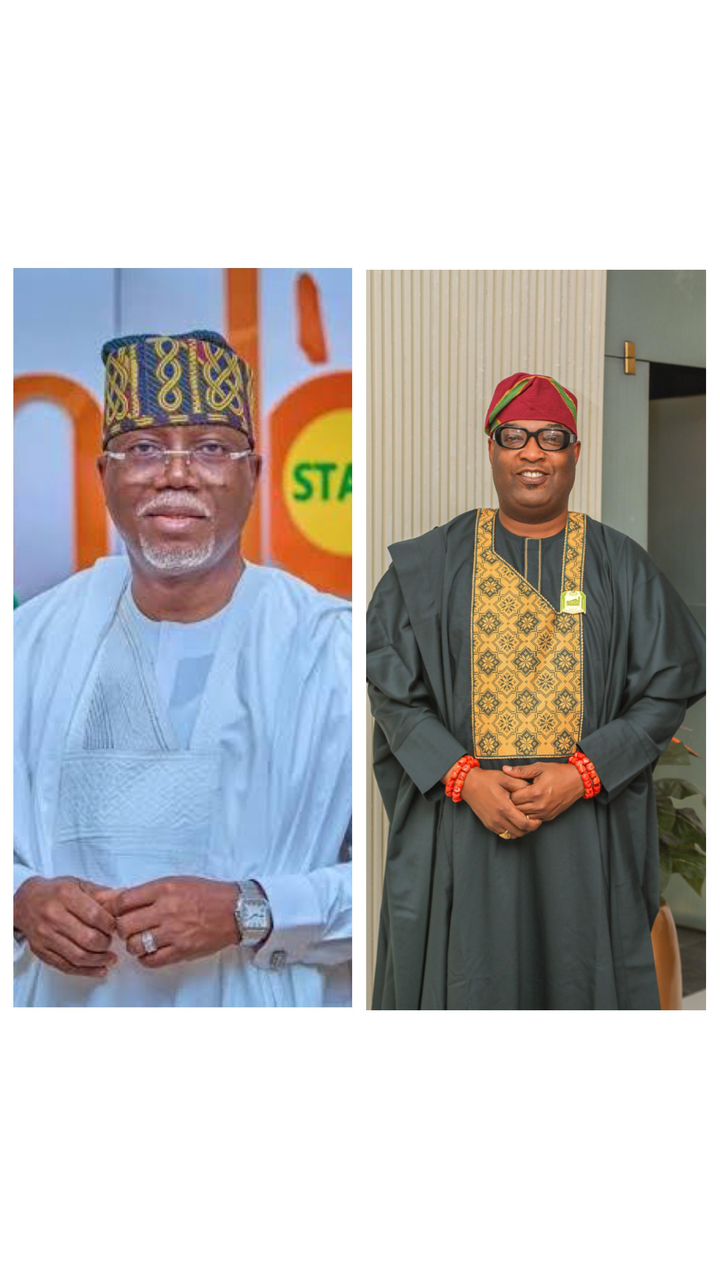
The Chairman, Board of Directors, Management, and staff of Adron Group have congratulated the Government and people of Ondo State on the celebration of its 50th anniversary, describing the milestone as a significant chapter in Nigeria’s federal history and a testament to visionary leadership, resilience, and purposeful development.
In a goodwill message issued to commemorate the Golden Jubilee, Adron Group noted that since its creation in 1976, Ondo State has consistently distinguished itself as a centre of honour, intellect, and enterprise. Fondly referred to as The Sunshine State, the state has produced generations of outstanding professionals, administrators, and national leaders whose contributions continue to shape Nigeria’s socio-economic and political development.
According to the company, the strength of Ondo State lies not only in its rich cultural heritage and intellectual depth, but also in the values of integrity, diligence, and excellence that define its people. These qualities, Adron noted, have remained the bedrock of the state’s enduring relevance and national impact over the past five decades.
Adron Group further commended the state’s renewed drive in recent years towards infrastructure development, economic diversification, industrial growth, and youth empowerment, describing these initiatives as indicators of a forward-looking, inclusive development agenda anchored in sustainability and long-term prosperity.
“As a corporate organisation committed to nation-building and sustainable development, Adron Group recognises Ondo State as a strategic partner in progress,” the statement read. “We commend His Excellency, Lucky Orimisan Aiyedatiwa, Executive Governor of Ondo State, and the leadership of the state at all levels for their dedication to public service and their commitment to the advancement of the people.”
As Ondo State marks its Golden Jubilee, Adron Group joined millions of well-wishers in celebrating a legacy of excellence, strength of character, and promise, while expressing optimism that the next fifty years will usher in greater milestones in economic vitality, social advancement, innovation, and enduring peace.
The company concluded by wishing the Government and people of Ondo State continued progress and prosperity, adding that the Sunshine State remains well-positioned to shine even brighter in the years ahead.


-

 celebrity radar - gossips6 months ago
Why Babangida’s Hilltop Home Became Nigeria’s Political “Mecca”
-

 society6 months ago
Power is a Loan, Not a Possession: The Sacred Duty of Planting People
-

 Business6 months ago
Batsumi Travel CEO Lisa Sebogodi Wins Prestigious Africa Travel 100 Women Award
-

 news6 months ago
THE APPOINTMENT OF WASIU AYINDE BY THE FEDERAL GOVERNMENT AS AN AMBASSADOR SOUNDS EMBARRASSING