
Politics
Probing Rivers Ugly Past* By Simon Peter


In examining the realm of governance and public resource management, one would agree that, accountability is a sacrosanct principle that serves as the bedrock of trust between the government and its citizens. However, in Rivers State, Nigeria, this fundamental principle appears to be under assault, as a plethora of allegations ranging from misconduct to malfeasance swirl around the former governor, Mr. Wike. The people of Rivers State have endured immense suffering under Wike’s leadership, and it is now incumbent upon Governor Sim Fubara to take swift and decisive action to investigate these egregious wrongdoings, hold perpetrators accountable, and deliver long-overdue justice to the victims. By doing so, Governor Fubara can begin to restore the trust that has been eroded and ensure that the principles of accountability and good governance are upheld in Rivers State.
The burning question on many minds is, “When will Governor Fubara probe Wike?”
The tenure of Mr. Wike as the governor of Rivers State was marked by a plethora of controversies and allegations of corruption, which have left an indelible stain on his legacy. One of the most egregious accusations leveled against him is the perpetration of inflated contracts, wherein contracts awarded during his tenure were allegedly grossly overpriced, resulting in a significant depletion of the state’s resources. If these allegations are substantiated, it would constitute a brazen betrayal of public trust, a flagrant violation of the principles of transparency and accountability, and a egregious abuse of power.
Moreover, Mr. Wike stands accused of leaving the state in a financially precarious situation, wherein the state’s debt profile skyrocketed under his leadership, plunging the state into a financial crisis. This has had a devastating impact on the state’s ability to fund critical infrastructure and social services, thereby exacerbating the suffering of the citizens of Rivers State and imperiling their welfare.
Among the multitude of allegations levied against Mr. Wike, the most heinous and egregious is the forceful expropriation of private property, a transgression that has left a trail of disillusionment and suffering in its wake. According to a report, the women of the Oginigba community in Rivers State, driven by desperation and a sense of injustice, staged a protest against the brazen seizure of their ancestral land, perpetrated by Mr. Wike through the instrumentality of the state government machinery. This egregious act, if proven, constitutes a flagrant violation of the rights of these women, a gross abuse of power, and a stark testament to Wike’s disdain for the rule of law and the fundamental rights of citizens. The forced takeover of private land, a blatant manifestation of Wike’s authoritarian proclivities, has left an indelible stain on his legacy, and its repercussions continue to reverberate, causing untold suffering and hardship for the affected individuals.
The evidence of Wike’s plundering of Rivers State’s wealth is manifest in his extensive portfolio of properties, including the Hypercity building in Ikoku, a multifaceted complex on Rumuomasi by old Aba road, which serves as a hub for esteemed brands like SHOPRITE, Cinema film House, Electronica, and others, as well as the Signature hotel in G.R.A, a former residence on William Jumbo street in Old GRA, Trans Amadi by BEWAC, AFP Plaza by Stadium, site for hospital by stadium road, and his current residence by Ada George. All these assets in Port Harcourt alone.
These few properties in Port Harcourt, traceable to Mr. Wike, are merely the tip of the iceberg. It is mind-boggling to contemplate the numerous properties scattered across various cities in Rivers State, not to mention the staggering hundreds of properties spread across different states in Nigeria, all allegedly linked to Mr. Wike’s name. The putrid stench of corruption wafting from his property acquisitions and takeovers demands a thorough investigation by the EFCC. Meanwhile, the people of Rivers State were languishing in excruciating poverty, while Wike was shamelessly amassing a vast empire of properties through illicit means, all at the expense of the state’s financial well-being.
In light of these grave allegations, it is absolutely essential that Governor Fubara takes swift and decisive action to investigate Mr. Wike’s tenure, ensuring a thorough and transparent probe that uncovers the truth behind the myriad accusations. The citizens of Rivers State have a rightful expectation to be informed about the veracity of these allegations, and to witness the delivery of justice and the recovery of misappropriated public resources, should these allegations be substantiated.
The consequences of Wike’s alleged malfeasance are nothing short of catastrophic, leaving the state mired in debt and stifling its development. The egregious inflation of contracts has resulted in a egregious depletion of the state’s resources, while the forceful takeover of private property has wreaked havoc on countless lives and livelihoods. Therefore, Governor Fubara must demonstrate unwavering resolve in reversing this damage, ensuring that those responsible are held accountable and brought to book, thereby restoring the trust and confidence of the citizens in the government.
Governor Fubara has a unique and auspicious opportunity to tangibly demonstrate his unwavering commitment to the principles of accountability, good governance, and the rule of law. By initiating a comprehensive and exhaustive investigation, he can ensure that Mr. Wike is held accountable for his alleged actions, thereby sending a powerful message that no individual is above the law. This probe, if conducted in a fair, transparent, and unbiased manner, will not only restore public trust and confidence in the government but also serve as a testament to Governor Fubara’s dedication to upholding the highest standards of governance. Furthermore, the investigation provides a chance to recover misappropriated funds and assets, which can then be reinvested in the development and progress of Rivers State.
However, it is crucial that this probe adheres to the highest standards of fairness, transparency, and due process, avoiding any semblance of a witch-hunt or political vendetta. Instead, it must be guided by an unwavering commitment to truth, justice, and the rule of law, thereby ensuring its credibility, legitimacy, and ultimate success.
The investigation into Wike’s alleged malfeasance is egregiously belated, and Governor Fubara’s prompt intervention is imperative to rectify this egregious oversight. The necessity for a thorough probe cannot be overstated, as it is indispensable for uncovering the truth, holding accountable those who have perpetrated wrongdoing, and restoring the public’s faith in the government. The people of Rivers State deserve a leadership that is transparent, accountable, and prioritizes their well-being and the development of the state, and Governor Fubara must demonstrate his commitment to these principles by initiating a comprehensive investigation into Wike’s tenure.
The gravity of the allegations against the former governor necessitates swift action, and the people of Rivers State demand nothing less than a thorough and transparent investigation that culminates in justice being served. By fulfilling this duty, Governor Fubara will not only be upholding the sacrosanct principle of accountability but also restoring the people’s trust in the government, thereby paving the way for a brighter future for Rivers State.
It is solely through the conduit of a meticulous and uncompromising investigation that the truth can be unearthed, justice can be administered, and the trajectory towards a future marked by prosperity and equity for the people of Rivers State can be firmly established. This imperative underscores the urgent need for a thorough probe into Mr. Wike’s tenure, rendering the present moment the most opportune and propitious time to initiate such an inquiry, thereby ensuring that the quest for accountability, truth, and justice is not perpetually relegated to the realm of the forgotten, but rather assumes its rightful position at the forefront of the state’s agenda.
Peter writing from Ikwere, Port Harcourt.




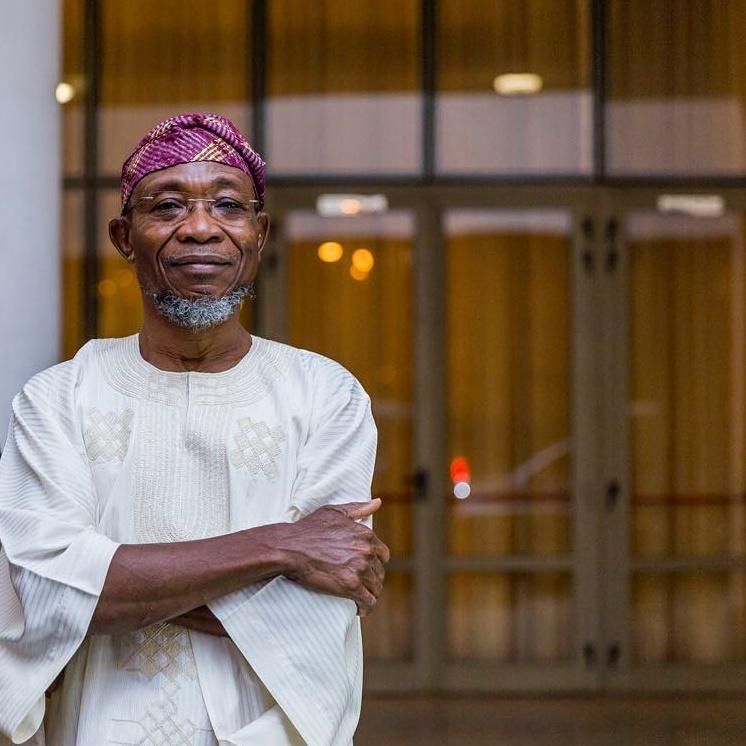
ADC Unstoppable, Like the Sun — Aregbesola Declares at 8th National Convention
ABUJA — Former Osun State Governor and chieftain of the African Democratic Congress (ADC), Rauf Aregbesola, has declared that the party remains “unstoppable,” likening its rise to the inevitability of the sun, despite what he described as attempts by the ruling establishment to weaken opposition forces.
Speaking at the ADC’s 8th National Convention, Aregbesola said the party’s existence is rooted in the will of Nigerians and protected by the constitution, insisting that no political pressure or institutional interference could halt its progress.
“Just as no power can stop the sun from rising, so can the ADC not be stopped,” he told delegates.
Blasts Political System, Accuses Ruling Forces of Undermining Democracy
The ADC leader accused the ruling All Progressives Congress (APC) and the Independent National Electoral Commission (INEC) of actions he described as anti-democratic, alleging efforts to frustrate opposition parties ahead of the 2027 elections.
He criticized what he termed the normalization of political “criminality,” arguing that recent political realignments and electoral practices undermine democratic integrity.
According to him, ADC does not owe its existence to any individual or institution but to Nigerians “tired of deceit and mismanagement.”
Harsh Assessment of Economy, Security, and Governance
Aregbesola painted a grim picture of the nation’s condition, citing economic decline, rising inflation, and worsening living standards.
He noted that the naira’s depreciation from about ₦700 to ₦1,400 per dollar reflects what he described as poor economic management, while fuel prices have surged significantly, making daily life difficult for citizens.
On security, he described the current situation as one of the worst in Nigeria’s history, raising concerns about increasing violence and what he called a lack of empathy from leadership in responding to national tragedies.
ADC Positions Itself as Nigeria’s “Rescue Mission”
The former minister said the ADC has, within months, transformed into a major opposition force, claiming it now represents the “hope of the Nigerian people.”
He outlined the party’s rapid structural expansion, ongoing membership drive, and efforts to build alliances with other opposition groups including the Peoples Democratic Party (PDP), Labour Party (LP), Social Democratic Party (SDP), and New Nigeria Peoples Party (NNPP).
Aregbesola emphasized that the party is preparing to challenge the APC in the 2027 general elections through what he described as a “united opposition front.”
Defends Party Leadership Changes, Convention Legitimacy
Providing details of internal restructuring, Aregbesola said the emergence of new leadership, including David Mark as caretaker national chairman, followed due constitutional process and was duly communicated to INEC.
He argued that the commission’s refusal to monitor the convention violates provisions of the Electoral Act, insisting that ADC fulfilled all legal requirements.
Alleges Persecution of Opposition Figures
The ADC leader further accused the government of using state institutions such as anti-corruption agencies and security services to intimidate opposition politicians.
He cited cases involving figures like Nasir El-Rufai and Aminu Tambuwal, describing the trend as a dangerous signal for democracy.
Calls for United Front Ahead of 2027
Aregbesola concluded with a rallying call for Nigerians to support the ADC’s mission to restore “freedom, security, and prosperity,” warning against political apathy.
“A democracy without opposition is an autocracy,” he said, urging citizens to reject what he termed any attempt at political “coronation.”
Closing Note
The convention, themed “So that Nigeria will work for Freedom, Security and Prosperity,” brought together party delegates and stakeholders, marking a significant step in ADC’s preparations for the 2027 elections.
Politics
CONGRATULATORY MESSAGE TO APC CONSENSUS GOVERNORSHIP CANDIDATE, SENATOR SOLOMON OLAMILEKAN ADEOLA YAYI
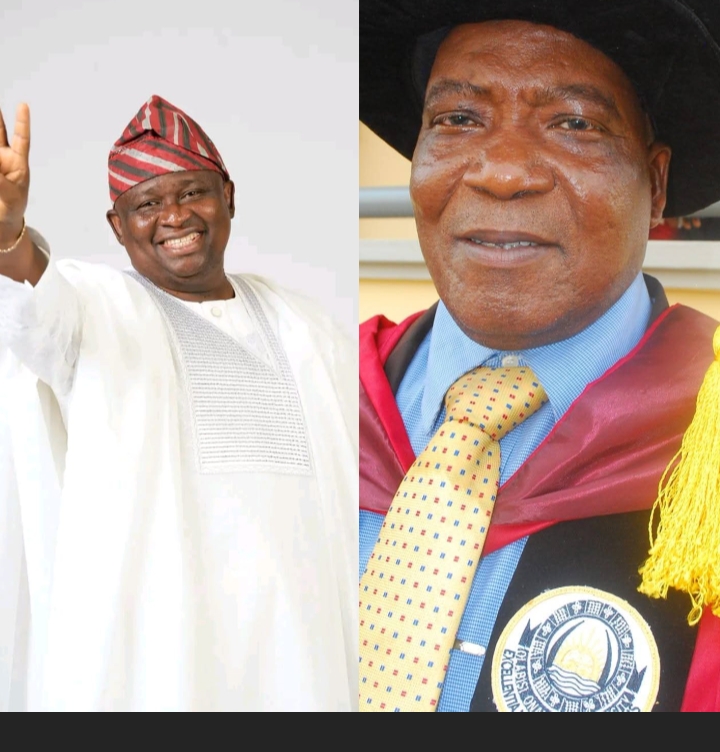
CONGRATULATORY MESSAGE TO APC CONSENSUS GOVERNORSHIP CANDIDATE, SENATOR SOLOMON OLAMILEKAN ADEOLA YAYI*
On behalf of our Grand Patron, Dr. Tunde Osinowo (Pepperito Jnr.), we leaders and Members of Ogun East for Yayi heartily congratulate Senator Solomon Olamilekan Adeola (Yayi) for being the consensus Governorship candidate of our party, APC, in the 2027 election.
This is marvelous and indeed great in the sight of God.
Without mincing words, the choice of Yayi by the party stakeholders is the best and the most surest assurance to coast the Party to victory at the general elections come February, 2027.
We commend the maturity, dispositions and spirit of sportsmanship with which all the Gubernatorial aspirants embraced the decision and extended hands of fellowship to Senator Solomon Olamilekan Adeola Yayi, the Gubernatorial Hopeful.
We beseech God to grant Yayi and all of us, leaders, followers and supporters, the enablements to see him duly elected as Governor of Ogun State at the general election in Jesus mighty name.
We congratulate the incoming Governor of Ogun State and our Excellency in waiting, Yayi.
This is Yayi O’clock.
Praise God!
Mo yo fun e, mo yo fun ra mi.
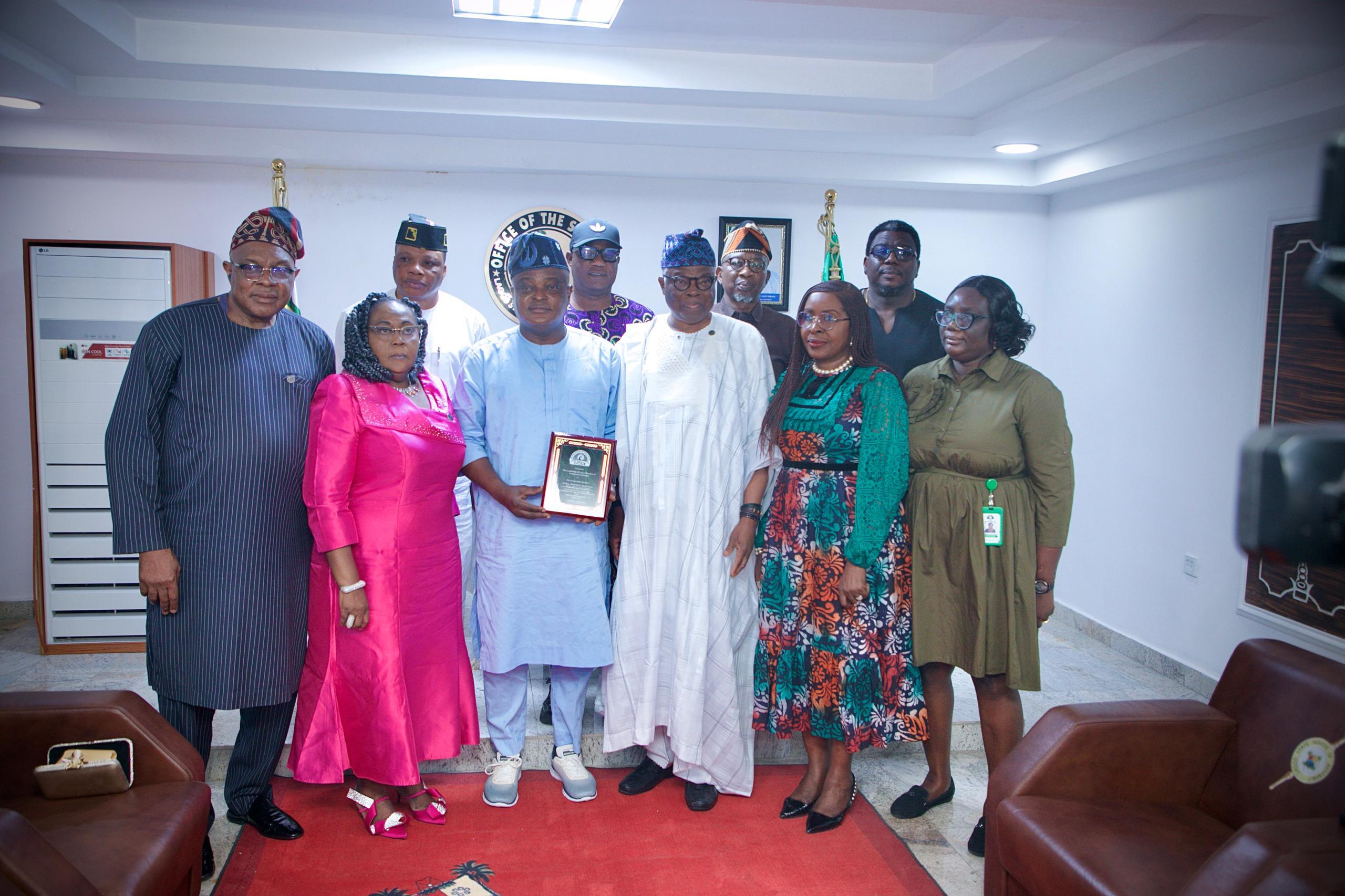
Lagos Remains Center of Nigeria’s Economy, Says Obasa
The Speaker of the Lagos State House of Assembly, Rt. Hon. Mudashiru Ajayi Obasa, has reaffirmed Lagos as the heartbeat of Nigeria’s economy, stressing that despite Abuja being the Federal Capital Territory, Lagos continues to drive the nation’s economic strength.
Obasa made this declaration on Thursday, April 16, when he received the new leadership of the Lagos Chamber of Commerce and Industry (LCCI), led by its President, Engr. Leye Kupoluyi, during a courtesy visit to the Assembly.
The Speaker emphasized that Lagos remains the best destination for investment in Nigeria, citing landmark legislations such as the Public Private Partnership Law, the Employment Trust Fund Law, and the Lagos State Lottery Law as evidence of the Assembly’s commitment to creating a business-friendly environment. He noted that these laws were designed to support entrepreneurs, attract investors, and sustain Lagos’s position as the economic hub of the country.
“Lagos is the center of Nigeria’s economy. We have always been pro-business and pro-people, and our laws reflect this commitment. Lagos is strategically placed to be the leading light of Africa, geographically, economically, and otherwise,” Obasa stated.
Earlier, Engr. Kupoluyi appreciated the Assembly’s initiatives and called for stronger collaboration between the legislature and the business community. He urged the House to continue enacting policies that would ease business operations and foster economic growth in the state.
The LCCI delegation included Chief Varkey Verghese, MFR (Hon. Life Vice President), Sir Ladi Smith (Vice President), Princess Layo Bakare-Okeowo (Vice President), Dr. Chinyere Almona, FCA (Director General), Dr. Sunnie Omeiza-Michael (Director, Research & Advocacy), and Mrs. Akintunde Temitope (Director, International).
Members of the House present were Hon. Stephen Ogundipe, Hon. Oladele Ajomale, Hon. Jubril AbdulKareem and Hon. Bonu Solomon and Hon. Ajayi. Also in attendance was Clerk of the House Mr. Lekan Onafeko, alongside aides to the Speaker.
The meeting underscored the shared vision of both institutions to position Lagos not only as Nigeria’s economic powerhouse but also as a continental leader in commerce and development.


- Small Enterprise Development and Finance Agency (SEDFA) backs Africa’s next generation of digital businesses at Converge Africa 2026 April 17, 2026
- Enlit Africa 2026: The business of power and the value of compounding impact April 17, 2026
- African Development Bank, The European Stability Mechanism (ESM) sign Memorandum of Understanding to enhance cooperation April 16, 2026
- Seeing the Unseen – How Canon is Protecting East Africa’s Coral Reefs April 16, 2026
- Sintana Listing Signals New Era for Local Ownership in Namibia’s Oil and Gas Sector April 16, 2026
- The crisis in the Middle East could cost Africa 0.2 percent in economic growth in 2026 April 16, 2026
- Namibia International Energy Conference (NIEC) 2026: Namibia Fast-Tracks Oil Law Reform as President Nandi-Ndaitwah Pushes Amendment Bill Ahead of First Oil April 16, 2026
- Africa’s Energy Wealth: Why Good Governance Must Power a Just Transition (By Sola Adebawo) April 16, 2026
- Emirates and Wesgro sign Memorandum of Understanding (MoU) to Stimulate Inbound Tourism to the Western Cape April 16, 2026
- Banco Sol’s Angola Oil & Gas (AOG) 2026 Sponsorship Affirms Drive to Finance Angolan Service Companies April 16, 2026
- Small Enterprise Development and Finance Agency (SEDFA) backs Africa’s next generation of digital businesses at Converge Africa 2026 April 17, 2026
- Enlit Africa 2026: The business of power and the value of compounding impact April 17, 2026
- African Development Bank, The European Stability Mechanism (ESM) sign Memorandum of Understanding to enhance cooperation April 16, 2026
- Seeing the Unseen – How Canon is Protecting East Africa’s Coral Reefs April 16, 2026
- Sintana Listing Signals New Era for Local Ownership in Namibia’s Oil and Gas Sector April 16, 2026
- The crisis in the Middle East could cost Africa 0.2 percent in economic growth in 2026 April 16, 2026
- Namibia International Energy Conference (NIEC) 2026: Namibia Fast-Tracks Oil Law Reform as President Nandi-Ndaitwah Pushes Amendment Bill Ahead of First Oil April 16, 2026
-

 news4 months ago
WHO REALLY OWNS MONIEPOINT? The $290 Million Deal That Sold Nigeria’s Top Fintech to Foreign Interests
-

 celebrity radar - gossips3 months ago
Dr. Chris Okafor Returns with Power and Fire of the Spirit -Mounts Grace Nation Altar with Fresh Anointing and Restoration Grace on February 1, 2026
-

 celebrity radar - gossips6 months ago
End of an Era: Nigeria Mourns Evangelist Dr. Uma Ukpai, 80
-

 celebrity radar - gossips4 months ago
Prophet Kingsley Aitafo Releases 2026 Prophecy: ‘Nigeria Will Rise, but the World Must Prepare for Turbulence’