
society
Supreme Court’s validation of EFCC, others, we have been vindicated’ – Oladele


Supreme Court’s validation of EFCC, others, we have been vindicated’ – Oladele
The former Chairman of the House of Representatives Committee on Financial Crimes, Hon. Kayode Oladele, has lauded the recent Supreme Court judgement dismissing the suit filed by 19 states of the federation challenging the establishment and prosecutorial powers of key anti-corruption agencies of the federal government; the Economic and Financial Crimes Commission, (EFCC), Independent Corrupt Practices and Other related Offenses Commission (ICPC) and the Nigerian Financial Intelligence Unit, (NFIU).
The 19 states, led by Kogi State had approached the Apex Court in Nigeria to seek judicial interpretation and judgement on the existence and prosecutorial authority of the anti-corruption agencies in the states stating that a UN Convention against corruption had led to the EFCC Establishment Act and that in enacting this law in 2004, the provision of Section 12 of the Nigerian Constitution was not followed.
However, in a landmark judgment delivered on Friday, November 15, 2024 by a seven-member panel, led by Uwani Abba-Aji, the Supreme Court ruled that the laws establishing the EFCC and other anti-graft agencies were validly enacted by the National Assembly within its legislative competence. The Court, while striking out the case for lack of merit, pronounced as “selfish” the motives of the state governments challenging the establishment of the anti-graft agencies.
In a statement, Oladele stated that the decision of the Supreme Court is a “vindication of our position that Nigeria operates a co-operative federalism as opposed to dual federalism and under the co-operative federalism as practiced in Nigeria, some agencies like the EFCC, ICPC and NFIU are common agencies for both the Federal and State Government and such, the EFCC is qualified as any other authority to institute criminal proceedings under section 174(1)(b) and section 211(1)(b) of the 1999 Constitution of the Federal Republic of Nigeria (as amended)”.
Oladele also believed that, the decision is another bold step towards enhancing the operational capacities of the anti-graft agencies in Nigeria. It has finally put to rest the desperation by some powerful forces to truncate the federal government’s efforts in fighting and taming the monster of corruption in the country and I have no doubt in my mind that the judgement will further enhance and strengthen the operational capacity of our anti graft agencies”.
“By this judgement, the investigative and prosecutorial powers of EFCC and ICPC over crimes committed at both the states and federal levels have been affirmed and our arguments have been sustained by the Supreme Court”, Oladele added.
It could be recalled that both Mr. Femi Falana, SAN and Hon. Kayode Oladele had locked horns in recent times with and the former President of the Nigerian Bar Association (NBA), Mr. Olisa Agbakoba SAN over the constitutionality of the EFCC. While Mr. Agbakoba had argued in a letter to the National Assembly that
the EFCC was unconstitutionally established as “the powers under which it was established go beyond the powers of the National Assembly” and therefore, should be abolished; both Falana and Oladele had posited that the view expressed by Agbakoba “did not have any legal backing and therefore unsupportable in law and practice, but mere sophistry”.




Lagos Island LG Appoints Adeyeri as Chief Press Secretary
The Lagos Island Local Government has announced the appointment of Mr. Olabode Adeyeri as the Chief Press Secretary to the Executive Chairman, Hon. Taiwo Ajibade Oyekan.
The appointment, which takes effect from April 1, 2026, was approved by the Executive Chairman as part of ongoing efforts to strengthen the local government’s communication framework, enhance transparency, and improve the dissemination of policies and programmes to the public.
Speaking on the appointment, Oyekan said the decision reflects the administration’s commitment to effective governance through strategic communication.
“The appointment of Mr. Adeyeri is a deliberate step towards strengthening our engagement with the public and ensuring that our policies and programmes are communicated clearly and effectively,” he said.
He added that the new Chief Press Secretary brings valuable experience that will enhance the administration’s media relations.
“We are confident that his wealth of experience in journalism and communications will further improve transparency and deepen public trust in our administration,” Oyekan stated.
Mr. Adeyeri, a seasoned journalist, writer, and communications professional, brings extensive experience in media practice and public engagement to his new role.
He holds a Bachelor of Science degree from Olabisi Onabanjo University and a Master’s degree from the University of Lagos. Between 2011 and 2018, he worked with Globacom Nigeria Limited, where he served as Corporate Support Executive and Glo 1 Business Support Executive.
Adeyeri is the Founder and Chief Executive Officer of Citizen Communications Network, a position he has held since 2010. He is also the Publisher of Citizen Magazine and Citizen NewsNG.
Described as a prolific journalist and community development enthusiast, Adeyeri is widely regarded as a result-driven professional and committed scholar, with a passion for advancing progressive ideals and contributing meaningfully to societal development.
Reiterating confidence in the appointment, the chairman noted:
“We believe Mr. Adeyeri will play a key role in projecting the vision of this administration and strengthening the bridge between the government and the people.”
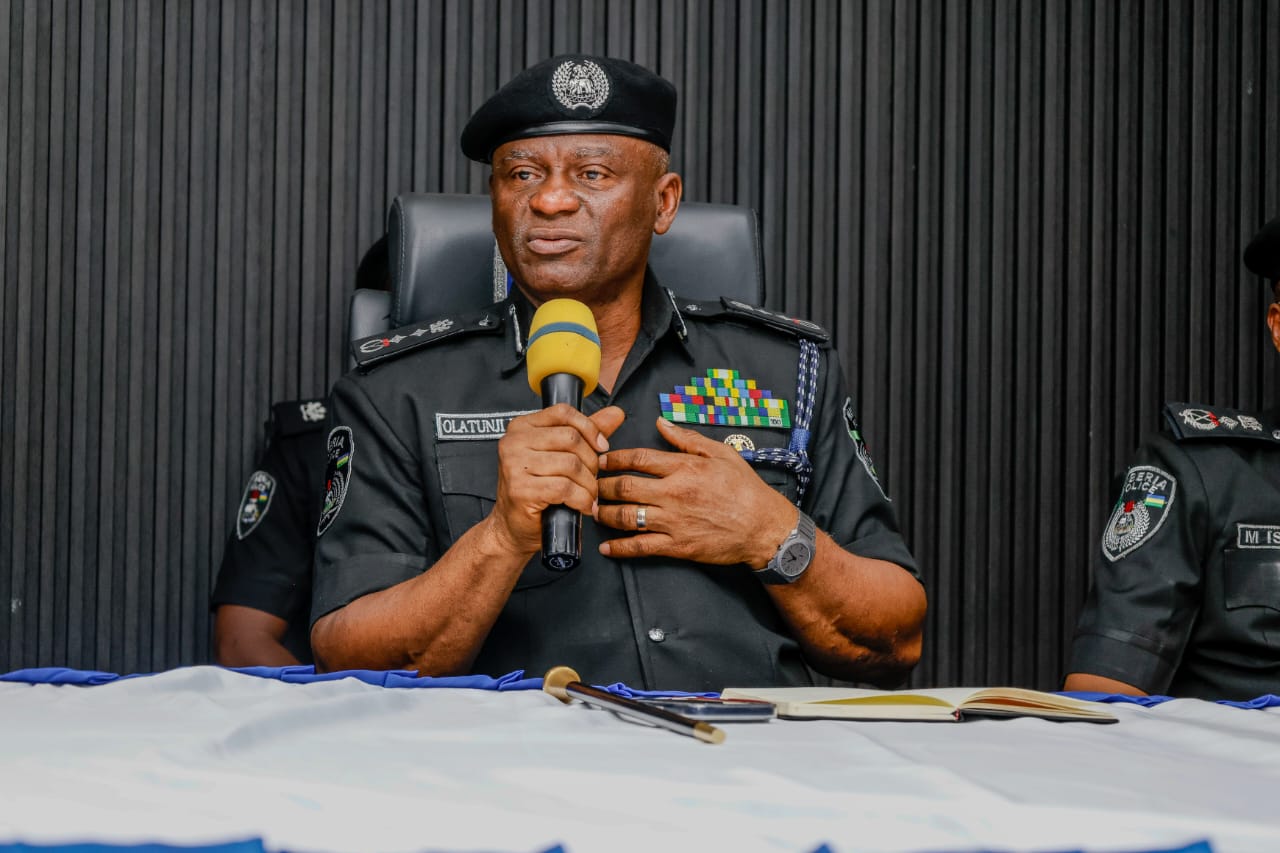
What An Officer Told Me About IGP Olatunji Disu
Written by Adeniran Bamisaye
Years ago, while driving in Lagos, a police officer stopped me. There was nothing unusual about it. He asked for my vehicle particulars, and I handed them over, perhaps not in the most cheerful manner at first. But somewhere between the routine and the silence, a conversation began.
I asked him about his work, just casually, and then I mentioned a name, Olatunji Disu. At the time, he was not the Inspector General yet; I believe he was still a Commissioner of Police. But the moment I mentioned the name, something changed in the officer’s expression.
“Ah! That man…” he said, almost cutting himself short.
Curious, I asked what he meant.
What followed stayed with me. He told me that when he served under Mr. Disu in Owo, Ondo State, there was one thing he could never forget: you could not work with him and be hungry. Not because of charity or handouts, but because he genuinely cared about the welfare of the officers under his command. Then he added something that struck me deeply, that he could confidently say this was a leader who cared.
That immediately reminded me of something a mentor once told me, that you can measure a leader by how much they care about the welfare of their people. That day, on the roadside, in a conversation I did not plan to have, I heard a testimony, not from a podium or a press release, but from someone who had experienced that leadership up close.
When he was eventually appointed Inspector General of Police, one theme stood out clearly: welfare. And I believed it, not because it sounded good, but because I had already heard the evidence. Beyond words, actions began to follow, and what stood out was not just the actions themselves, but the speed with which they came. In a system where delay is often the norm, responsiveness becomes a language of its own.
One of the earliest signals was symbolic yet powerful: the decision to organise a proper pulling out parade for his predecessor, something that had not happened in about sixteen years. Institutions are not only built on systems; they are sustained by memory, respect, and continuity, and that moment quietly restored all three.
Beyond symbolism, there were more structural signals. There has been a renewed push for accountability, with a visible willingness to ensure that erring officers are not shielded but disciplined. There has also been a reawakening of channels like the Complaint Response Unit, CRU, reinforcing the idea that citizens should not feel voiceless in their encounters with the police. Alongside this is a clear direction toward modernisation, strengthening investigative capacity, embracing technology, and repositioning policing to be more intelligence led than force driven.


Aside from these developments, there has also been public conversation around the legality of tenure, particularly in light of existing age and compulsory retirement provisions within the service. However, the Police Act 2020 introduced a defining shift. Section 7 subsection 6 provides that the Inspector General of Police shall hold office for a term of four years, establishing a fixed tenure framework that differs from the traditional retirement structure.
In many ways, this reflects an attempt to balance institutional continuity with leadership stability. And while such interpretations may continue to generate debate, what often matters most is not just the legal framework itself, but how the time it creates is used. In this instance, the focus has remained less on tenure and more on direction, how leadership translates time in office into action, presence, and measurable signals of change.
Beyond these structural efforts, there has also been a pattern of presence. In moments of crisis, leadership has not remained distant. From visits to places like Jos and Kwara following incidents of violence, there has been a visible effort to show up, not just as a figurehead, but as a steadying presence in difficult times. In a country where communities often feel abandoned in the aftermath of tragedy, such gestures carry weight. They signal attention, urgency, and a willingness to engage realities on the ground rather than from afar. Sometimes, presence itself becomes a form of reassurance, both to officers on duty and to citizens watching closely.
Then came a moment that, for me, brought everything into perspective. I watched him oversee the disbursement of funds to families of fallen officers, and as I did, something unexpected happened: I found myself emotional. Yes, the funds were not his personally, but leadership is not just about ownership; it is about priority. He could have delayed it or treated it as routine, but he did not, and that mattered.
I watched widows and families step forward, each carrying a weight that words cannot fully capture. One woman, in particular, struggled to receive her cheque, not because it was heavy, but because she was overwhelmed with emotion. That moment said more than any speech ever could. It was a reminder that beyond the uniform, beyond the structure, beyond the system, there are people, and in that moment, they were seen.
Perhaps this is where the conversation about reform truly begins. This year’s National Police Day, held on April 7, 2026, at Eagle Square, Abuja, carried a theme that feels less like a slogan and more like a direction: “Community Partnership: Building Trust.” When placed alongside these actions, welfare, accountability, institutional respect, responsiveness, and presence, it begins to feel less like ambition and more like alignment.
Trust is not declared; it is built slowly and consistently. When an officer feels cared for, he carries himself differently. When he feels seen, he is more likely to see others. When accountability becomes real internally, credibility begins to form externally. What we may be witnessing is not just administrative change, but the early signs of a cultural shift, the kind that cannot be forced, only lived.
In the end, the relationship between the police and the people will not be repaired by announcements. It will be rebuilt through moments, moments like a roadside conversation, moments when residents feel safe in their communities, and moments when they spot police officers. Moments where leadership moves from position to presence. And perhaps that is where real reform begins, not when it is declared, but when it is felt.
Adeniran Bamisaye writes from Lagos, Nigeria.
Twitter and Instagram: @NiranBamisaye

Police Deploy Extra Security To JAMB Centres, Dismiss Rumours Of Threats
The Nigeria Police Force has deployed additional security personnel to examination centres nationwide ahead of the Joint Admissions and Matriculation Board (JAMB) examinations scheduled to begin on April 16, 2026, while dismissing recent rumours of safety threats at certain centres in a North Central state as “unfounded” and “without basis.”
In a statement issued on Tuesday, the Force acknowledged public concerns regarding the safety of candidates but emphasised that it does not act on unverified information. Nevertheless, the police said the concerns had been noted, particularly as they relate to the education and future of young Nigerians.
“Extra security has been deployed at examination centres nationwide, both overtly and covertly, to prevent any untoward incidents,” the Force Public Relations Officer, DCP Anthony Okon Placid, said in the statement. Measures include routine patrols, perimeter checks, and rapid response teams stationed at strategic locations.
The police said they are collaborating closely with other security agencies to monitor and address potential threats effectively, warning that any individual or group attempting to disrupt the examination process will be swiftly identified and prosecuted.
Candidates have been encouraged to arrive early at their centres, adhere to examination regulations, and report any suspicious activities or persons to on-site security personnel. The public was advised to disregard unverified information circulating on social media and to rely solely on official updates from JAMB and the Nigeria Police Force.
“The Force remains committed to maintaining peace, security, and public confidence in all national activities, including the JAMB examinations,” the statement added.


- President receives Bishop of Port Victoria, reinforces State–Church collaboration on social priorities April 15, 2026
- World Bank Group’s International Finance Corporation (IFC) and Citi Sign Borrowing Facility to Expand Local Currency Financing in South Africa April 15, 2026
- Uganda: Manufacturers, traders ask gov’t to stay tax increases April 15, 2026
- Eritrea: Sports and educational week in Assab sub-zone April 15, 2026
- Cabo Verde Shapes Africa’s Health Future at High-Level World Health Organization (WHO) Regional Consultation April 15, 2026
- Critical Minerals Africa Group to Speak at Invest in African Energy Forum in Paris April 14, 2026
- Talentz MEDIA Announces Strategic Partnership with Ghanaian Artist Kwaku Cenima to Launch “Emotional Scene” April 14, 2026
- South African Local Government Association (SALGA) and The Global Trust Project announce municipal pilot under new three-year Memorandum of Understanding (MoU) April 14, 2026
- TotalEnergies Strikes New Oil Discovery Offshore Congo Amid National Drive Toward 500,000 barrels per day (BPD) April 14, 2026
- Africa Finance Corporation (AFC) Delivers Côte d’Ivoire’s First Project Finance Green Bond for Landmark Solar Plant April 14, 2026
- President receives Bishop of Port Victoria, reinforces State–Church collaboration on social priorities April 15, 2026
- World Bank Group’s International Finance Corporation (IFC) and Citi Sign Borrowing Facility to Expand Local Currency Financing in South Africa April 15, 2026
- Uganda: Manufacturers, traders ask gov’t to stay tax increases April 15, 2026
- Eritrea: Sports and educational week in Assab sub-zone April 15, 2026
- Cabo Verde Shapes Africa’s Health Future at High-Level World Health Organization (WHO) Regional Consultation April 15, 2026
- Critical Minerals Africa Group to Speak at Invest in African Energy Forum in Paris April 14, 2026
- Talentz MEDIA Announces Strategic Partnership with Ghanaian Artist Kwaku Cenima to Launch “Emotional Scene” April 14, 2026
-

 news4 months ago
WHO REALLY OWNS MONIEPOINT? The $290 Million Deal That Sold Nigeria’s Top Fintech to Foreign Interests
-

 celebrity radar - gossips3 months ago
Dr. Chris Okafor Returns with Power and Fire of the Spirit -Mounts Grace Nation Altar with Fresh Anointing and Restoration Grace on February 1, 2026
-

 celebrity radar - gossips4 months ago
Prophet Kingsley Aitafo Releases 2026 Prophecy: ‘Nigeria Will Rise, but the World Must Prepare for Turbulence’
-

 celebrity radar - gossips6 months ago
End of an Era: Nigeria Mourns Evangelist Dr. Uma Ukpai, 80