
society
Lakurawa: FG plans more troops as sect spreads in North West


Lakurawa: FG plans more troops as sect spreads in North West
As part of efforts to combat the Lakurawa sect, the Federal Government will deploy more military personnel and formations in the states where the terrorists operate.
The sect, which operates in North West states Sokoto and Kebbi, has moved into Niger State in North Central Nigeria, as well as Kaduna State.
The Sokoto State Government asserted that it was concerned about the lives and property of its people, noting that security topped its nine-point agenda.
The Special Adviser on Security Matters to Governor Ahmad Aliyu, Col Ahmed Usman (retd.), said the Federal Government promised to deploy more security operatives in the state to tackle the sect that attacked Mera village, Kebbi State, leaving 17 residents dead November 8.
The terrorist group also rustled dozens of cattle in the community as the village vigilante fought back killing two members of the group during an exchange of fire.
Usman said, “If you can remember, the Minister of State for Defence during his working visit to Sokoto had disclosed the kind of pressure mounted on the Federal Government by the state government on the need to come to their aid.
“And the Federal Government has promised to establish more military formations and deploy more personnel and equipment to Sokoto State.
“On our part, the state government has provided the facility for the air component of operation ‘Fansan Yamma.’ Now, we don’t need to wait for fighter jets from Katsina in case of any emergency or air support.”
He added, “So, there has been investment in security infrastructure, including establishing more security outposts (Forward Operation Bases) and upgrading surveillance systems in key locations.
“The Sokoto State government has strengthened partnerships with federal security agencies to ensure a coordinated approach to tackling security challenges.
“Similarly, the government has launched public awareness campaigns with the support of the United Nations Development Programme and other local NGOs to educate citizens on security issues and encourage them to report suspicious activities.”
Speaking further, the governor’s aide explained that the current administration had been providing logistics support to the security agencies, assuring that Lakurawa “will soon be a thing of the past.”
Usman stated, “We provided tens of operational vehicles, including motorcycles, to security agencies and restored their allowances. In addition to other measures, we created the state-owned security outfit, which we called Sokoto State Community Guards, and they were equipped.
“Their role is to support the conventional security agencies in intelligence gathering, among others. The state government has inaugurated a security community under the leadership of the Deputy Governor of the state.
“The committee comprises security agencies, traditional and religious leaders, among other stakeholders in security. In fact, even the latest news about the Lakurawa was broken by the deputy governor while receiving members of the National Defence College in the state.”
The special adviser further explained that the state government also set up programmes to empower youths to discourage their involvement in crime and violence or being recruited by the Lakurawa.
He added, “The government has set up a conflict resolution mechanism to address disputes before they escalate into violence, promoting peace in communities just as it has been mediating between farmers and herdsmen to reduce conflicts over lands and resources, which can lead to insecurity.
“There has been massive investment in social welfare aimed at alleviating poverty, which is often the root cause of insecurity. And we hold regular security meetings with stakeholders to assess the security situation and develop strategies for improvement.”
The Minister of Defence, Muhammad Abubakar, assured citizens and residents of Sokoto and Kebbi states of the readiness of the armed forces to crush Lakurawa and other terrorist groups.
The minister gave the assurance in Sokoto as the Lakurawa sect reportedly extended its tentacles to Niger and Kaduna from its former hideouts in Kebbi and Sokoto States.
Following the November 8 attack on Mera, the Defence Headquarters deployed more troops in the area to dislodge the terror group which was said to have occupied the area for over six years.
A report said the group was dislodged from its hideout and several cattle recovered.
Speaking while inspecting the facilities of the air component of Operation ‘Fansan Yamma’ in Sokoto, the defence minister disclosed that the military had taken a decisive decision against Lakurawa.
He noted, “You heard it from the chairman of the Local Government Area attacked by the Lakurawa in Kebbi State, testifying to the heavy presence of troops in the area.
“The Lakurawa was sent away from the area. This is a result of the resilience and dedication of our security operatives. You are aware of the successes recorded by our air force, they bombarded some of the hideouts of the bandits and the bandits are now on the run.”
However, the Senate a few weeks ago raised the alarm that the militants had moved into Niger, Kaduna and other North-Central states, sparking fear among the people.
Worried by the activities of the terrorist group, the northern states have decided to unite against the Lakurawa in a clear move to contain its spread and operations.
The Niger State Commissioner for Homeland Security, Mohammed Bello, said the affected states were working together with the Federal Government to eliminate the terrorist cell.
“You know how we do in Nigeria. Sometimes, we neglect things until they become real problems, they can become complicated. For the first time, more than two or three states are putting resources together to see that things are being done to eradicate the problem.
“I assure you that the problems will become a thing of the past in a few days. In a few days, the people in Kaduna, Zamfara are putting heads together; by the grace of God, things will become clearer very soon,” Bello said.
“The issue with the bandits is that when they are under pressure in one state, they run to another state because there is no clear-cut demarcation of these states we are talking about.”
Also speaking on what the Kebbi State Government was doing to complement the Federal Government’s efforts, the Special Adviser on Communication and Strategy, Abdullahi Zuru, said the state government was supporting troops drafted to the area with logistics.
“We are procuring vehicles that will help them with mobility. You know the troops drafted here were brought to help us deal with the Lakurawa, but the state government is discussing with the Chief of Defence Staff on how to make them stay permanently in the areas to avoid any reoccurrence.
“We are also assisting the local vigilante with operational vehicles and other logistics to help them gather timely and accurate information for the troops.
“The role they played last time during Lakurawa’s attack on the Mera community cannot be overemphasised. They tried their best hence they need to be encouraged to do better than before.”



You Against Crime Founder Tayo Folorunsho Praises Winners of Abuja Schools Festival.
Abuja, Nigeria – The maiden edition of the You Against Crime – Schools Festival 2026 Grand Finale has concluded, marking a significant milestone in youth engagement and crime prevention efforts across the Federal Capital Territory (FCT).
The event, held at the University of Abuja, brought together 78 secondary schools from the six Area Councils of Abuja, with the top six schools competing in the Grand Finale.
*Winners Emerge*
Tudunwada School, Bwari took the top spot, followed closely by The Golden Crest Royal in second place, and Government Secondary School, Kuje in third.
*CULTURE, THE CURE FOR CRIME*
The festival’s theme, “Culture, The Cure for Crime,” highlighted the importance of values, identity, mentorship, and positive engagement in preventing crime and shaping responsible citizenship among young people.
*DISTINGUISHED GUEST SPEAKERS*
Auwal Musa Rafsanjani, Chairman, Amnesty International, praised the initiative, saying, “This festival is a beacon of hope for our young people, promoting values and principles that can shape a brighter future for Nigeria.”
Aisha Mohammed, Head of Enlightenment & Re-orientation, Economic and Financial Crimes Commission, emphasized the importance of mentorship, stating, “Empowering young people with the right guidance and opportunities is key to preventing crime and building a stronger nation.”
*PARTNERSHIP AND SUPPORT*
The 2026 Grand Finale Edition was proudly sponsored by Civicx Technology Ltd Int’l, reinforcing a shared commitment to youth empowerment and crime prevention through cultural reorientation and innovation.
Tayo Folorunsho, Host & Founder, You Against Crime International, addressing the media and appealed to government agencies to support initiatives like this, targeting young minds early.
You Against Crime International is a movement advocating cultural change as a long-term solution to crime. The organization remains committed to advancing youth development, civic responsibility, and nation-building across Nigeria.



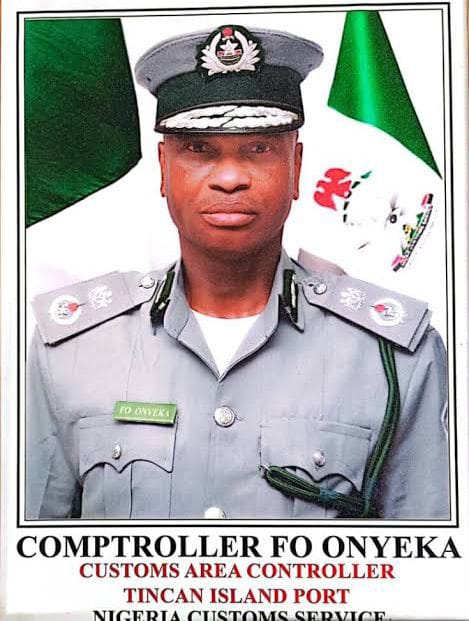
TICP Customs Launches Paperless Regime, Warns Against False Declarations
The Customs Area Controller of Tin Can Island Port Command of the Nigeria Customs Service (NCS), Comptroller Frank Onyeka, has launched a roadmap for the full implementation of a paperless regime at the command.
Onyeka disclosed this during a press briefing in Lagos, stating that the command was fully prepared for seamless digital operations ahead of the nationwide rollout scheduled for the second quarter of the year.
He described the engagement as the first in a series of consultations aimed at sensitising stakeholders on the strategies, operational framework and expectations under the new regime.
The controller commended the media for its constructive reportage since his assumption of office and sought continued collaboration to ensure the success of the initiative.
Presenting the command’s performance report, Onyeka said the Tin Can Island Command generated ₦609 billion in revenue in 2025, describing it as the highest in the history of the command.
He added that revenue collection rose from ₦116 billion recorded in January of the previous year to ₦145 billion in the corresponding period last month, representing an increase of over ₦29.9 billion.
Onyeka stated that his vision was to make the command known for trade efficiency, explaining that under the paperless regime, containers would be released without physical contact between Customs officers and clearing agents, provided declarations were accurate.
He credited the Comptroller-General of Customs, Bashir Adewale Adeniyi, for providing the leadership and strategic direction driving modernisation efforts across Customs formations nationwide.
The controller urged stakeholders to avoid false declarations and engage directly with the command to resolve concerns, emphasising that transparency and dialogue were essential to achieving efficient port operations.
He assured that consignments with clear scanning results and proper documentation would be released promptly, while those flagged by the risk management system would undergo physical examination, adding that the command would continue to collaborate with other agencies to reduce cargo dwell time and enhance port efficiency.

Love on Display: Katie Price and Lee Put On a Public Show of Affection
By George Omagbemi Sylvester | Published by SaharaWeeklyNG
British media personality Katie Price is once again at the center of tabloid and public attention after being photographed poolside with her new husband, Lee, in a display of affection that quickly circulated across entertainment platforms. The images, reportedly taken during a recent leisure outing at a private resort location in the United Kingdom, show the couple embracing and kissing beside a swimming pool, with Lee prominently displaying a tattoo tribute dedicated to Price.
The photographs, which surfaced in mid-February 2026 through British tabloid outlets, depict the couple appearing relaxed and affectionate. Lee, whose full name has been reported in sections of the UK press but who largely maintains a lower public profile compared to his wife, lifted his arm to reveal a visible tattoo said to be in honor of Price and a gesture widely interpreted as a public affirmation of their relationship.
What happened was straightforward but symbolically charged: a public display of affection between newlyweds, amplified by Price’s longstanding celebrity status. Where it happened (poolside at what sources describe as a private holiday setting) underscores the blending of personal life and public spectacle that has long defined Price’s media journey. During a recent February getaway placed it squarely within ongoing tabloid interest surrounding her latest marriage. Price, 47 and her new husband Lee, whose visible tribute tattoo became the focal point of the moment.
Celebrity culture scholars argue that public figures such as Price operate within a media ecosystem where visibility sustains relevance. “Modern celebrity is performative intimacy,” explains Professor Graeme Turner, a media and cultural studies scholar known for his work on celebrity culture. “Public displays of affection are not merely private acts; they are communicative gestures that reinforce brand identity and narrative continuity.” In Price’s case, her romantic relationships have long been interwoven with her public persona.
Price first rose to prominence in the late 1990s under the glamour model moniker “Jordan,” before transitioning into reality television, publishing and business ventures. Her personal life (including previous marriages and high-profile relationships) has frequently generated headlines in the British press. This latest marriage continues that pattern of intense scrutiny.
The tattoo tribute displayed by Lee is particularly significant in celebrity symbolism. Body art dedicated to a partner is often perceived as a declaration of permanence. Dr. Chris Rojek, emeritus professor of sociology and an authority on fame and public identity, has observed that “celebrity relationships are sustained as much through symbolic reinforcement as through private commitment. Visible tokens (rings, tattoos, coordinated appearances) function as public assurances.” In this case, the tattoo serves not merely as personal expression but as a visual narrative device in an already highly mediated relationship.
How the moment unfolded (casually but conspicuously) reflects the dynamics of contemporary celebrity coverage. Photographs were reportedly captured either by paparazzi stationed nearby or shared through controlled media access, a common practice in the British entertainment industry. Within hours, the images were republished by multiple outlets, accompanied by commentary on Price’s relationship history and ongoing legal and financial challenges, issues that have previously placed her under intense public scrutiny.
Despite recurring controversy throughout her career, Price remains a resilient media figure. Communications analyst Mark Borkowski has previously remarked in interviews that “Katie Price understands publicity better than most. Whether by design or instinct, she maintains a feedback loop with the press that keeps her culturally visible.” The poolside photographs appear to fit squarely within that established pattern of managed exposure and reactive media amplification.
Critically, there is no indication of misconduct, public disturbance or controversy tied directly to the poolside display itself. It was, by all verified accounts, a consensual and celebratory expression of affection between married adults. The wider attention it has generated speaks less to the act and more to the individuals involved; particularly Price’s enduring position within British popular culture.
For global audiences, the episode illustrates a broader truth about contemporary fame: private milestones often become public commodities. The marriage of Katie Price and Lee (and the symbolic tattoo that now marks it) has become another chapter in a life lived persistently under the camera’s gaze.
As celebrity culture continues to blur boundaries between intimacy and publicity, moments like this poolside embrace are no longer trivial snapshots. They are narrative events, reinforcing identity, commitment and brand continuity in equal measure.


-

 celebrity radar - gossips6 months ago
Why Babangida’s Hilltop Home Became Nigeria’s Political “Mecca”
-

 society6 months ago
Power is a Loan, Not a Possession: The Sacred Duty of Planting People
-

 news6 months ago
THE APPOINTMENT OF WASIU AYINDE BY THE FEDERAL GOVERNMENT AS AN AMBASSADOR SOUNDS EMBARRASSING
-

 society5 months ago
Religion: Africa’s Oldest Weapon of Enslavement and the Forgotten Truth