
celebrity radar - gossips
The Ripple Effect of Apostle Joshua Selman: A Beacon of Faith and Transformation By Femi Oyewale

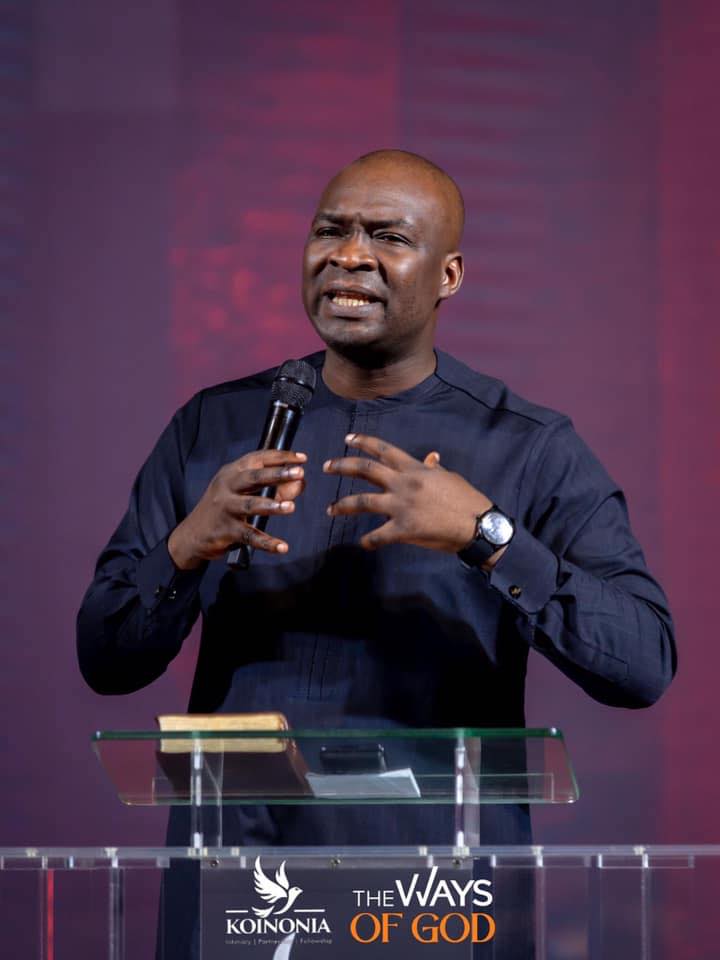
The Ripple Effect of Apostle Joshua Selman: A Beacon of Faith and Transformation
By Femi Oyewale
“We ministers have undoubtedly failed to connect and apply Christianity to the practical everyday problems of the average man. In this, we have failed to follow in Christ’s footsteps. For the religion which He taught and revealed in His own life and ministry was an intensely practical and down-to-earth affair.” —Peter Marshall
In a world searching for meaning, one name resonates powerfully within Christian circles and beyond: Apostle Joshua Selman. Known for his deep spiritual insight, humility, and unwavering commitment to spreading the Gospel, Selman has become a household name in Nigeria and an influential voice worldwide. Through his ministry, Koinonia, he has transformed countless lives, ignited faith, and reshaped perspectives on Christian living.

The Man Behind the Message
Born on June 25, 1980, in Zaria, Kaduna State, Nigeria, Apostle Selman’s journey into ministry began early. While studying at Ahmadu Bello University, he felt the undeniable call to serve God through teaching, worship, and discipleship. His passion for God’s Word and ability to simplify complex spiritual truths have since become hallmarks of his ministry.
In 2011, Selman founded Eternity Network International (ENI), commonly referred to as Koinonia, a weekly gathering aimed at creating a platform for the demonstration of God’s power and the transformation of lives. Since then, Koinonia has grown exponentially, with centers in Zaria, Abuja, and online platforms reaching millions globally.

Transforming Lives Through Koinonia
Koinonia is more than just a church; it’s a movement. Selman’s messages emphasize intimacy with God, understanding spiritual principles, and living out faith practically. Through series like The Law of Encounter, The Ministry of Prayer, and Kingdom Economics, Selman has empowered individuals to grow spiritually, emotionally, and financially.
Testimonials abound of individuals who’ve experienced healing, breakthrough, and transformation after encountering his teachings. From restored marriages to financial breakthroughs and spiritual revival, Selman’s impact transcends the pulpit, resonating deeply in everyday life.

The Impact Beyond Borders
Apostle Selman’s influence extends far beyond Nigeria. His teachings, available online through YouTube, podcasts, and social media, have reached millions across Africa, Europe, and the Americas. Events like the Koinonia Global Conferences have drawn attendees from diverse nations, all eager to experience the tangible presence of God.
Selman’s emphasis on the universality of God’s love and the practicality of faith has made his message accessible to people of various cultural and socio-economic backgrounds. His approach—rooted in humility and authenticity—has earned him respect across denominational lines.

A Legacy of Mentorship
Beyond his public ministry, Apostle Selman is committed to raising a new generation of leaders. Many young pastors, worship leaders, and entrepreneurs attribute their growth and success to his mentorship. By fostering a culture of excellence and intentionality, Selman has ensured that his influence will ripple through generations.
Philanthropy and Social Impact
Selman’s ministry is also marked by a commitment to social responsibility. Through ENI, he supports community development projects, provides scholarships, and assists the less privileged. This holistic approach to ministry—addressing both spiritual and physical needs—has endeared him to many.

Looking Ahead
As Apostle Joshua Selman continues to expand his ministry, the future holds immense promise. With plans for more global outreach and deeper engagement with pressing societal issues, his work remains a testament to the transformative power of faith and dedication.
In a time when the world grapples with uncertainty, Selman’s unwavering message of hope and redemption offers a beacon of light. His life and ministry exemplify the profound impact one person can have when guided by purpose and divine direction.




celebrity radar - gossips
From Friendship to Tragedy: IBB Recounts Executing Childhood Friend Mamman Vatsa

From Friendship to Tragedy: IBB Recounts Executing Childhood Friend Mamman Vatsa
By George Omagbemi Sylvester
“When Loyalty Clashes with Duty; IBB Reflects on Betrayal, Heartbreak and the Heavy Burden of Leadership”
In his recently published autobiography, A Journey of Service, former Nigerian military ruler Ibrahim Badamosi Babangida has opened up about the heart-wrenching decision to execute his childhood friend, General Mamman Vatsa, following a failed coup plot in 1986.
Released on February 20, 2025, Babangida’s memoir provides an unprecedented glimpse into the emotional struggle of balancing personal loyalty with national security. He recalls first hearing rumors of a coup allegedly involving Vatsa, which he initially dismissed as the result of jealousy or political rivalry. However, further investigations and consultations with senior officers (including Generals Nasko, Garba Duba, and Wushishi) uncovered evidence that Vatsa had provided funds to other officers to further the coup plan.
The plot, Babangida recounts, involved bombing Lagos’ Eko Bridge, disrupting Air Force operations, and targeting the presidential aircraft, actions that threatened the stability of the nation. Vatsa had attempted to explain his financial involvement as a contribution to a farming project, but Babangida said the evidence from covert investigations was undeniable.
Reflecting on his personal anguish, Babangida admitted, “I experienced a profound personal sense of betrayal. They had orchestrated a violent coup that threatened to shroud the nation in darkness. I faced an impossible choice: save a friend’s life or safeguard the future of my country.” Despite their shared youth and years of friendship in Minna, Babangida prioritized national stability over personal grief.
Vatsa’s execution in March 1986, alongside other coup plotters, left a deep personal void for Babangida, who described the loss as both “a personal tragedy” and a necessary step to protect Nigeria. He emphasized that the unity of the armed forces and the nation’s survival outweighed private sorrow, insisting that the rule of law and the demands of national security must take precedence over friendship.
The former military ruler also highlighted later attempts to politicize the incident, stating that some officers were displeased with Vatsa’s appointment as Minister of the Federal Capital Territory due to lingering perceptions about past coups. Nonetheless, Babangida maintained he had always sought to honor their friendship, accommodating Vatsa’s personality and character wherever possible. “I stayed loyal to our friendship and went above and beyond to accommodate his excesses and boisterous behavior,” he wrote.
Scholars and historians reviewing Babangida’s account note that the execution of a childhood friend underscores the extraordinary pressures faced by leaders during periods of national crisis, highlighting the intersection of personal ethics and state responsibilities. Dr. Chukwuemeka Okeke, a Nigerian historian, commented, “IBB’s narrative shows the stark reality of leadership in times of upheaval. Personal relationships, even lifelong friendships, can be overshadowed by national imperatives.”
Babangida’s account provides a rare, candid exploration of the emotional burden borne by leaders forced to make life-and-death decisions. The memoir paints Vatsa not only as a friend but also as a symbol of the painful sacrifices that leadership demands, illustrating the complexities of governance in a nation fraught with political instability and internal dissent.
Ultimately, A Journey of Service chronicles a delicate balance: the tension between human attachment and the responsibility to safeguard a nation. The story of Vatsa’s execution is a stark reminder that the path of leadership is often laden with moral dilemmas and irrevocable decisions, where loyalty to country may exact the ultimate personal cost.
Babangida’s revelation adds a deeply human dimension to historical events that have long been analyzed in military and political textbooks, shedding light on the emotional and ethical struggles of one of Nigeria’s most influential military rulers.


Published on Wednesday, March 18, 2026.
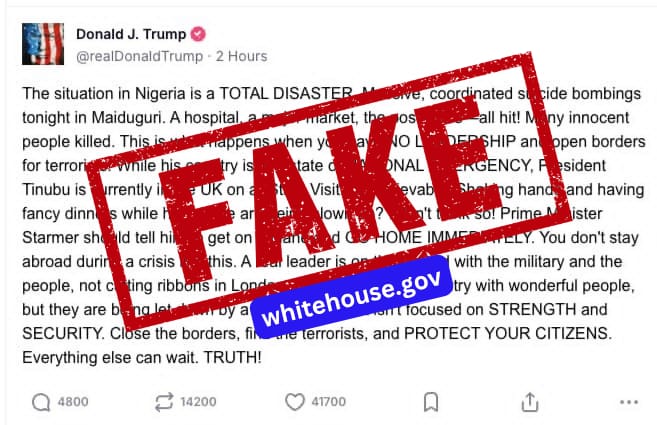
FACT CHECK: Viral “Trump Post” Blasting Tinubu Over Maiduguri Bombings is Fake
LAGOS — A viral image circulating on social media, purportedly showing a post by former U.S. President Donald Trump criticizing Nigeria’s President Bola Ahmed Tinubu, has been confirmed as false and digitally manipulated.

https://www.stanbicibtcbank.com/nigeriabank/personal/products-and-services/all-loans/stanbic-ibtc-mreif-home-loans
The image, which appeared online late Monday, March 16, 2026, claimed to be a post from Trump’s Truth Social account reacting to a deadly wave of bombings in Maiduguri. While the attacks themselves are real, the alleged international rebuke is entirely fabricated.
Hoax Exposed
The fake post alleged that Trump described Nigeria’s situation as a “TOTAL DISASTER” and criticized Tinubu for being on a “State Visit” to the United Kingdom during a supposed “STATE OF NATIONAL EMERGENCY.”
However, multiple inconsistencies quickly exposed the claim:
Timeline Discrepancy: The post referenced events occurring while Tinubu was already abroad. In reality, the President only departed Abuja for London on Tuesday, March 17—hours after the image began trending.
Design Errors: Analysts identified a suspicious “whitehouse.gov” button embedded in the image—an element not present on the Truth Social platform.
No Verifiable Source: A thorough review of Trump’s official social media accounts and global media reports shows no record of such a statement.
Tinubu’s UK Visit Continues
Despite the security situation at home, the Presidency has confirmed that Tinubu’s scheduled state visit to the United Kingdom will proceed.
The Nigerian leader is expected to be received by King Charles III at Windsor Castle on Wednesday, March 18. The visit marks a notable diplomatic engagement between Nigeria and the UK.
The widely shared “Trump post” is a deliberate misinformation attempt, exploiting a real national tragedy to spread false political narratives. Authorities and media observers continue to urge the public to verify information before sharing.
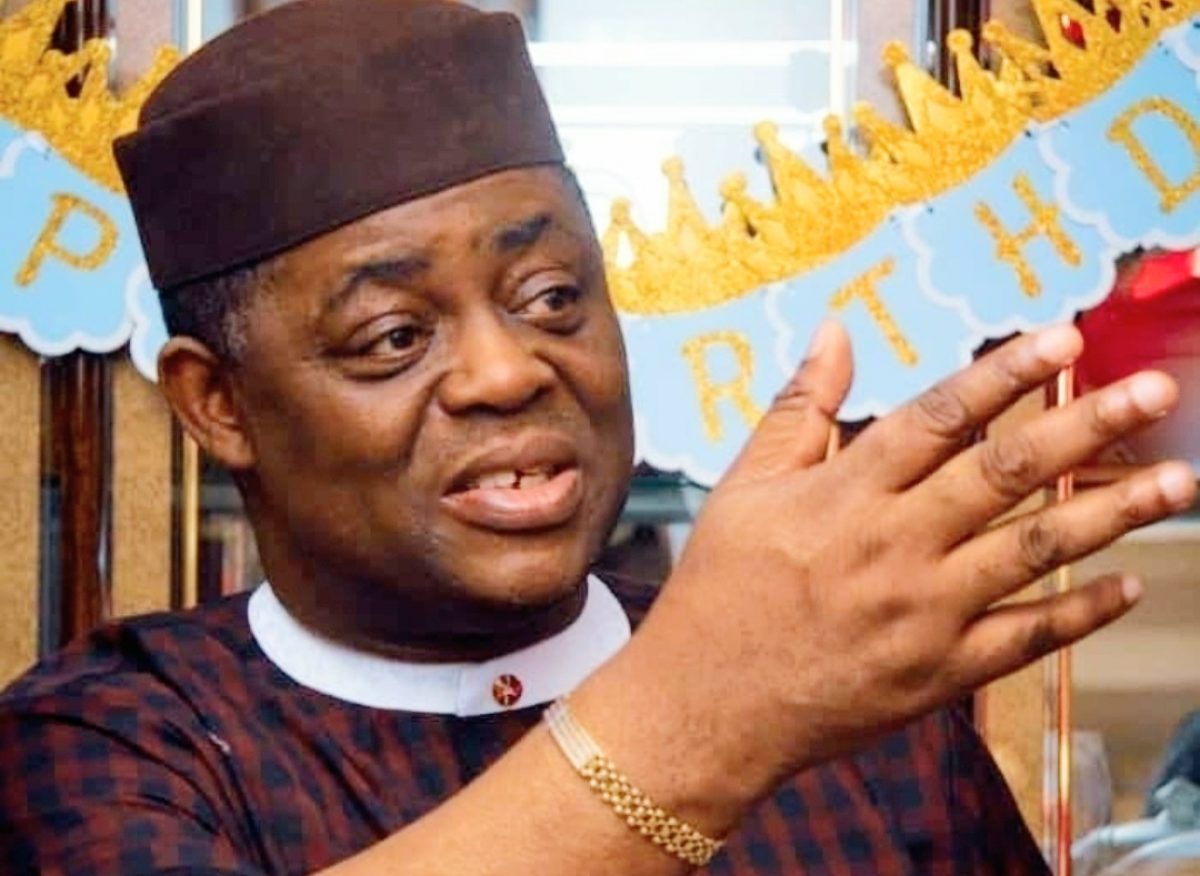
TO MY BROTHER BOBBY DEE by Chief Femi Fani-Kayode
For my brother Bobby Dee (Chief Dele Momodu) to compare President Tinubu to General Sani Abacha and claim that he is a dictator suggests that he is suffering from a degenerating and worrisome level of cognitive dissonance.
I love Dele and God knows I have immense respect for him but he sounded drained, tired and broken and spoke little sense yesterday in his interview with Seun Okinbaloye of Channels TV.
May I humbly suggest to him to try and take a break from politics and political commentary for a while, get his breath back and attempt to overhaul his intellectual engine?
Not only was he uncharitable and disrespectful to the President, the Vice President, the Ministers, the Senators and the newly-appointed Ambassadors, many of whom have far more experience than him in governance and Government, on that programme but he also insulted the collective intelligence of the Nigerian people.
He and his associates in the ADC should focus more on trying to build up their depleted ranks and form a strong opposition that we can look forward to engaging in the field of battle for the 2027 election rather than continously obsesse and talk about what our President and our party is doing.
The ADC cannot even be described as a sinking ship but rather as a badly patched up inflatable plastic life boat that has not even managed to find its bearing or leave the harbour.
It has no engine, no sails, no oars, no captain, no crew, no navigational equipment, no muscle, no firepower, no war chest, no destination and worse of all it is made of rubber and not steel.
How can such an ill-prepared contraption even float let alone do battle?
It cannot possibly survive the rough seas and harsh winds of Nigerian politics because it lacks gravitas, focus, character, intelligence, discipline and strength.
It needs to be built up, better schooled, better trained, better equipped, better educated and better prepared before it can enter the field and before we can even begin to regard it as an opposition party.
Right now it can only be described as a haven and pitiful gathering of vacuous, shallow, intellectual frauds and political renegades who lack foresight and who have no direction.
The fact that they have failed to take off is not Tinubu’s fault, it is theirs.
The fact that political leaders and the Nigerian people are flocking to APC in droves is not only because our President and Vice President are doing well but also because they view the ADC as nothing but a collection of disingenious, desperate and recycled political losers, who are addicted to power, who offer no credible alternative to governance and who, like the three blind mice, are running around in circles, chasing each other’s long, mangy and wrinkled tails with no where to go.
Watching my brother Dele trying to speak for them is pitiful and is even more disconcerting than his assertion that Tinubu will regret his decisions and will be deserted by everyone around him.
The Bible says “who is he that sayeth a thing and it cometh to pass when the Lord God of Hosts has commanded it not?”
Dele should listen to the Holy Spirit instead of to the pagan murmurings, strange whispers, demonic divinations and conjuring projections of the Prophets of Baal and the Witch of Endor.
To be sure Tinubu started well, he is doing well and he will, by the grace of God, end well with no regrets in 2031.
Anything short of that is the counsel of the ungodly and the manifestation and delusions of a diseased and demonised mind.
I appeal to my brother Dele: leave the ranks of the forces of darkness and join us.
You are far too good for the company you are keep.
Your presence in the ranks of the ADC is like that of a gentle, beautiful, well bred, well fed and well manicured flamingo trapped in a sea of ugly, cruel, loud, angry, starving, cackling and relentless crows and vultures.
It does not befit you.
(Chief Femi Fani-Kayode, the author of this essay) is an Ambassador Designate of the Federal Republic of Nigeria, a former Minister of Aviation, a former Minister of Culture and Tourism, the Sadaukin Shinkafi, the Wakilin Doka Potiskum, the Otunba of Joga Orile, the Aare Ajagunle of Otun Ekiti and a Legal Practioner)


-

 society6 months ago
Religion: Africa’s Oldest Weapon of Enslavement and the Forgotten Truth
-

 news3 months ago
WHO REALLY OWNS MONIEPOINT? The $290 Million Deal That Sold Nigeria’s Top Fintech to Foreign Interests
-

 society6 months ago
“You Are Never Without Help” – Pastor Gebhardt Berndt Inspires Hope Through Empower Church (Video)
-

 society7 months ago
Who is Chief Kestin Pondi? Niger Delta’s “People’s Chief” Winning Hearts With Hundreds of Millions in Generosity