
society
TRIBALISM, Nigeria’s Greatest Nightmare: How Do We Solve This Problem?

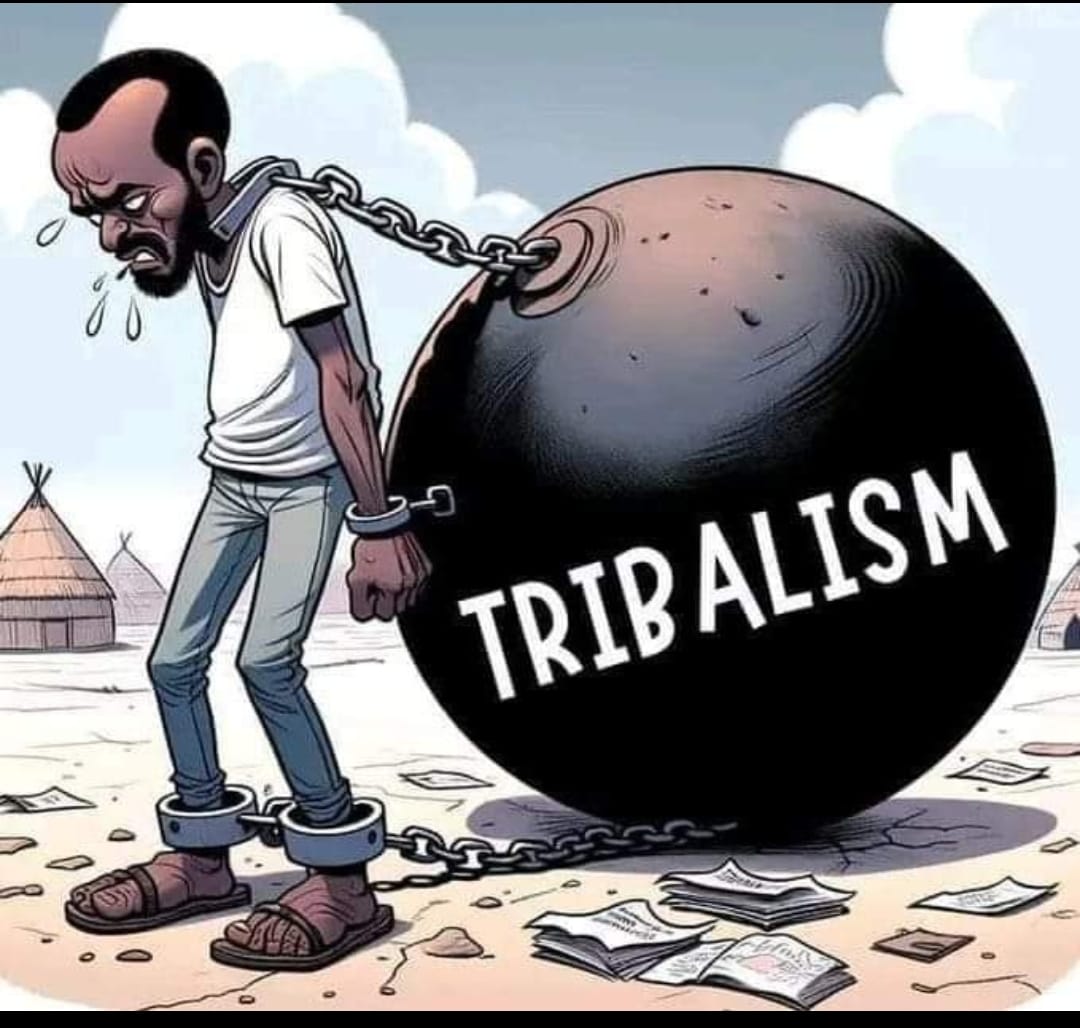
TRIBALISM, Nigeria’s Greatest Nightmare: How Do We Solve This Problem?
By George Omagbemi
Sylvester
Nigeria as a nation with over 250 ethnic groups, each with its unique language, culture, and heritage. But what should be our strength has tragically become our greatest nightmare—TRIBALISM. This menace has held us back for decades, poisoning our politics, education, economy, and social harmony. If we are to survive as a nation, TRIBALISM must be confronted head-on, uprooted from our systems, and buried with no RESURRECTION.
As AY the comedian once said, “In Nigeria, we don’t just fill forms with name and age. We add tribe as if it’s a requirement for kidney transplant.” That’s how deep the problem is—we’ve institutionalized tribal identity even in spaces that should be neutral.
The Historical Roots of TRIBALISM
The origin of TRIBALISM in Nigeria can be traced to the colonial era, particularly British indirect rule. Colonial administrators divided Nigerians along ethnic lines to maintain control. Lord Lugard’s amalgamation of the Northern and Southern protectorates in 1914 was a POLITICAL MARRIAGE without LOVE. The British prioritized ethnic identity over national unity, setting the stage for post-independence rivalry.
After independence in 1960, political power became a game of ethnic arithmetic. The Hausa-Fulani dominated the North, the Yoruba the West, and the Igbo the East. The first coup in 1966 and the bloody Biafran War (1967–1970) were clear signs that ETHNIC NATIONALISM had overtaken Nigerian unity.
Let’s fast forward to 2025, and TRIBALISM has become an even more dangerous cancer, now deeply embedded in government appointments, school admissions, employment opportunities, and public policy. Instead of competing based on competence, Nigerians are reduced to their tribal labels.
The Cost of TRIBALISM
TRIBALISM is not just an emotional or ideological issue—it has very real consequences.
Political Stagnation: Nigerian elections are often not about ideologies but ethnic affiliations. Candidates exploit tribal sentiments to win votes. Buhari’s presidency (2015–2023), for instance, was widely criticized for being skewed towards the North, with key appointments dominated by Hausa-Fulani Muslims. This breeds resentment and further divides the nation.
Economic Sabotage:
When people are hired based on tribal identity instead of competence, mediocrity becomes the order of the day. According to Transparency International (2024 report), Nigeria ranks 145 out of 180 in corruption perception. This is not surprising when “my brother” is given a contract he can’t execute, while the qualified applicant is sidelined because of his *“strange”* name.
Security Breakdown:
The distrust among ethnic groups has paralyzed our security apparatus. When herders and farmers clash, or when terrorists attack villages, the response is filtered through ethnic lenses. Instead of confronting criminals, we end up defending “our people.”
Education and Employment Inequality:
The Federal Character principle, intended to promote fairness, has turned into an ethnic quota system that lowers standards and deepens division. A student from Zamfara state needs a ridiculously low score to enter Unity Schools, while one from Delta state needs nearly 100%. This is injustice disguised as inclusion.
Gordons once joked, “Na tribe dey determine who go chop the national cake. But we dey watch like say na movie. Nollywood no do reach this one!” Sadly, it’s true—TRIBALISM has turned governance into a tribal buffet.
How TRIBALISM Manifests Today
In everyday life, TRIBALISM appears in subtle and overt forms:
Job interviews where the panel whispers, “Where is he from?”
Marriages that collapse because “our daughter cannot marry an Igbo/Hausa or Yoruba man.”
Social media wars between Yoruba, Igbo, and Hausa youths fighting imaginary battles.
Businesses losing clients because “we no dey patronize dem people.”
I Go Dye nailed it when he said, “In Nigeria, even poverty get tribe. Poor man go say, ‘Na because I be Tiv, dem no give me loan.’” That’s how bad it is—we tribalize suffering.
Solutions: Ending the Nightmare
Solving TRIBALISM requires deliberate, multi-pronged action. It won’t vanish overnight, but sustained effort can dismantle its grip on our nation.
1. Massive Civic Education
We must teach Nigerians from a young age that they are Nigerians first before being Igbo, Hausa, Yoruba, Itsekiri or Ijaw. The National Orientation Agency should be revived and empowered to promote national identity, not just on Independence Day, but every day. Curriculum in schools must include national history that emphasizes unity, diversity, and patriotism.
2. Merit-Based Governance
Appointments, scholarships, and promotions must be based on competence, not ethnicity. Nigeria needs leaders with the political will to abandon ethnic favoritism. President Bola Tinubu’s administration must lead by example. If a Tiv man is the best candidate for Chief of Army Staff, appoint him. Let results speak louder than names.
3. Inter-tribal Marriage Incentives
The government should consider giving tax reliefs or housing benefits to couples in inter-ethnic marriages. It sounds radical, but it could work. Blended families reduce ethnic hate and promote national integration. One day, your child may ask, “What’s tribe?” and that would be victory.
4. Ethnicity-Blind Technology Systems
Let’s remove ethnicity from our forms—admission, employment, census, and contracts. With technology, we can create blind recruitment systems that focus on skills, not surnames. Nigeria must build a system where origin doesn’t matter, only ability.
5. Media and Entertainment Responsibility
Celebrities and influencers must stop reinforcing tribal stereotypes. Nollywood and comedians should use their platforms to mock TRIBALISM, not promote it. Humor is a powerful tool—comedians like AY, Gordons, and I Go Dye should keep using satire to expose the absurdity of ethnic bias.
6. True Federalism
Nigeria must restructure into a true federation where regions have autonomy. This reduces the scramble for central power and allows ethnic groups to develop at their own pace without stepping on each other. Restructuring is not a threat to unity; it’s a path to sustainable peace.
7. Punish Hate Speech and Tribal Incitement
The government must prosecute those who spread hate and tribal division. Social media influencers, religious leaders, and politicians who incite ethnic hatred must face consequences. Freedom of speech does not mean freedom to incite violence.
A Time to Heal.
Nigeria cannot afford another decade of tribal politics, tribal appointments, and tribal hate. If we continue on this path, the nation will implode—not because of external enemies, but because of our internal divisions.
Let us choose UNITY over DIVISION, merit over MEDIOCRITY, and PATRIOTISM over PARTISANSHIP. Let us raise a new generation of Nigerians who don’t ask, “Where are you from?” but instead, “What can you do for your country?”
As I Go Dye would say, “No be tribe go save us—na common sense, hard work, and love for country.”
Until we bury TRIBALISM, Nigeria will remain in chains.



Ajiran Youth Protest Over Deaths of Two Residents, Demand Justice
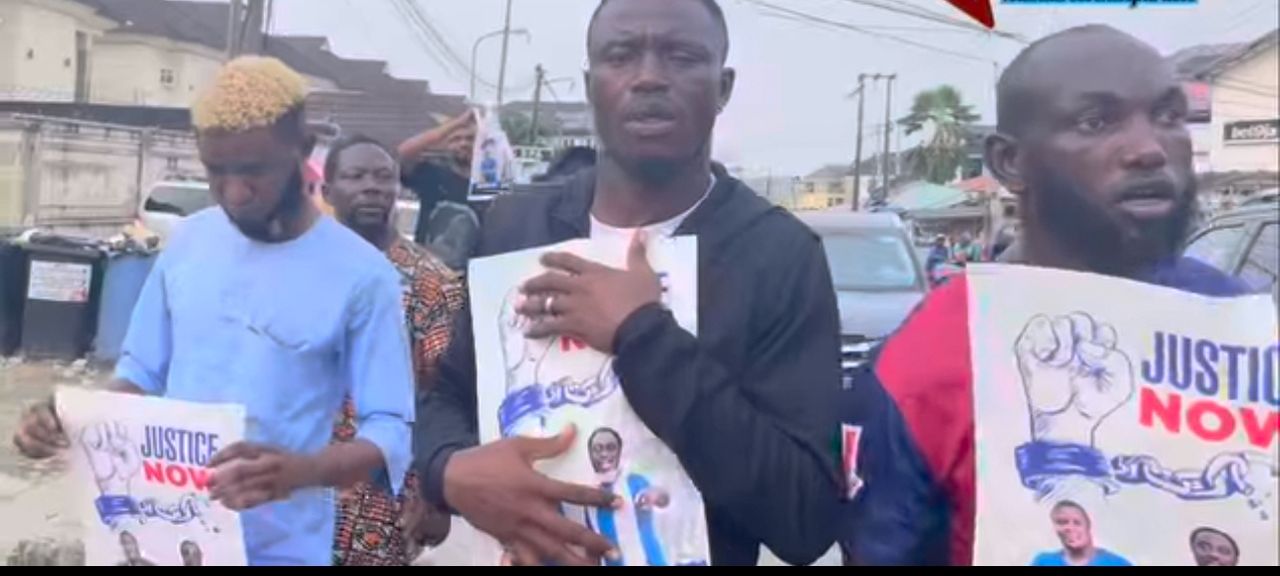
The Ajiran community of Lagos State erupted in a powerful protest on Tuesday as local youths took to the streets to express their grief and anger over the tragic murders of Prince Ademola Akintoye and Sherrif Agboworin. The demonstration follows the recent decision to reopen the murder case, an investigation that has already led to the arrest of over nine suspects in connection with the heinous crimes committed more than a year ago.
Carrying vibrant banners and poignant posters featuring the faces of the deceased, the protesters marched through the heart of their community while singing somber dirges to honor their memory. With chants of unity and justice ringing in the air, they called on both the Lagos State Government and the Lagos State Police Command to ensure that those responsible are swiftly and decisively brought to justice.
The youth leaders emphasized that peace and normalcy will remain elusive in Ajiran until all those complicit in the killings are held accountable. They articulated that true justice is the only way to restore tranquility and honor the lives of Akintoye and Agboworin, whom they described as innocent victims of a grave injustice.
Speaking on behalf of the demonstrators, youth leader Mr. Kehinde Oladele urged law enforcement to conduct a thorough and fair investigation. He asserted that every individual involved including the nine arrested suspects must face the full extent of the law. Especially Hammed Tajudeen, the principal suspect mentioned by others in custody, whom they believe should not escape scrutiny.
“The reopening of this case after more than a year is a critical first step towards achieving justice and fairness for our brothers,” Oladele said. “We urge the police to get to the root of the matter. Those mentioned during the investigation, especially Hammed Tajudeen, should not be spared.”
The atmosphere in the community grew increasingly tense last week following speculation that prominent businessman Aare Bashir Olawale Fakorede was implicated in the unrest. The speculation appeared to stem from his alleged influence on the reopening of the murder investigation. This misunderstanding escalated when a group of protesters targeted his filling station in Ikate, vandalizing his properties and disrupting business operations in the gas station based on the false assumption that Fakorede was behind the police’s renewed inquiries.
In response to the rising tensions and misinformation, Fakorede’s spokesperson, Ola Muhammed, issued a comprehensive statement denying any connection between Fakorede and the unrest. The spokesperson emphasized that rumors suggesting the businessman orchestrated the revival of the murder case were completely unfounded.
“I feel it is crucial to clarify, for the sake of transparency and historical accuracy, that this entire ordeal is in no way related to me,” Fakorede stated. “I am also very interested to see that the culprits are brought to book. I categorically affirm that I have never been involved in any business dealings with Mr. Hammed Tajudeen.”
Fakorede further elaborated that the recent protests which led to the destruction of his property were reportedly instigated by Tajudeen and others who seem determined to manipulate the narrative and cast suspicion upon him. Fakorede expressed his own strong commitment to uncovering the truth surrounding the deaths.
As the police investigation progresses, it has become increasingly apparent that all accusing fingers are pointing to Hammed Tajudeen who is currently evading capture, adding another layer of complexity and urgency to the ongoing situation. Community members have questioned why he remains at large instead of submitting himself to the police for questioning if he is truly innocent of the allegations against him.
Community leaders are now emphasizing the need for dialogue to address the root causes of the unrest and work toward restoring harmony within Ajiran, even as the demand for justice remains at the forefront of public consciousness.
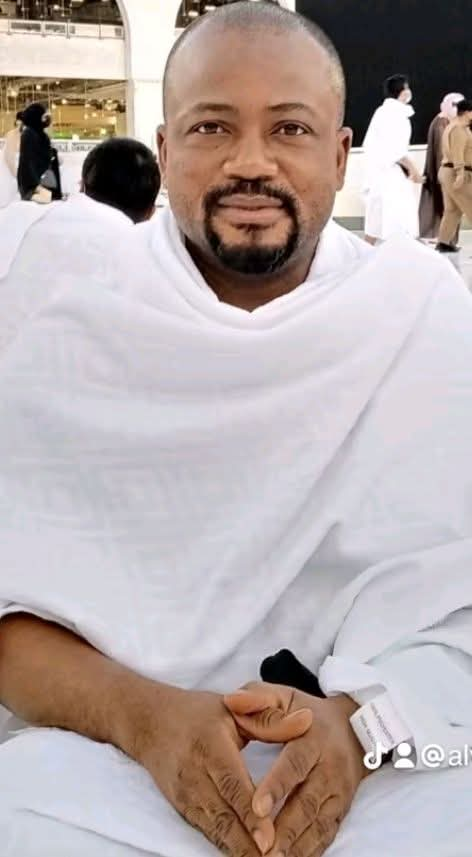
Ramadan: Al-Yusuff International Travels and Tours Boss Greets Muslims
As the holy month of Ramadan begins across the globe, the Chief Executive Officer of Al-Yusuff International Travels and Tours Limited, Dr. Abdulmajeed Oladele, has extended his heartfelt greetings to Muslims worldwide.
In his message, the respected business mogul expressed gratitude to Almighty Allah for the privilege of witnessing this year’s sacred month.
“We glorify Allah for granting us the grace and opportunity to witness this year’s month of blessings. Ramadan is a sacred and special month for all Muslims, a month greater than many others, filled with piety, mercy, and abundant blessings.
I congratulate all Muslims across the world. Let us faithfully observe the requirements of Ramadan. May Allah (SWT) grant our heart’s desires and make this period easy and rewarding for us all.”
Dr. Oladele urged Muslims to embrace the spiritual significance of Ramadan through devotion, charity, self-discipline, and prayers for peace and prosperity.
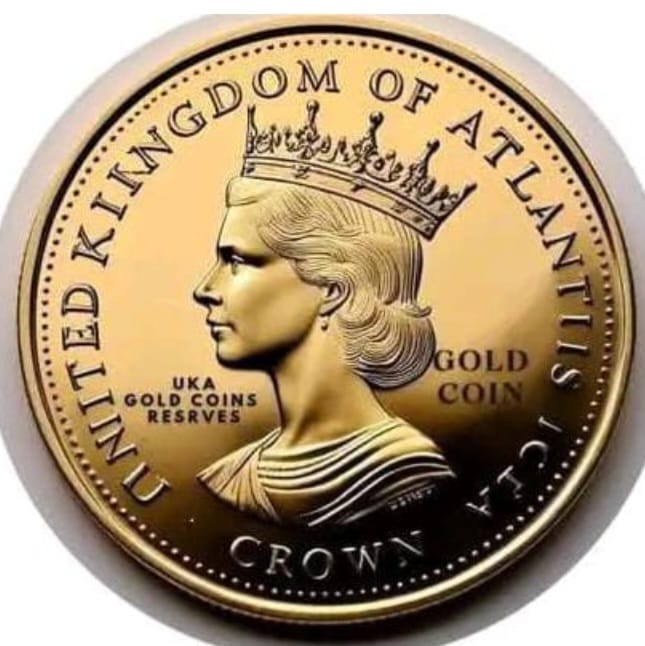
UKA UNVEILS THREE-TIER ATC PLATFORM AS MONARCH ANNOUNCES $10BN GOLD-BACKED MILESTONE
Emperor Nobilis Prof Solomon Winning declares global recognition of ATC ecosystem, urges citizens and partners to embrace unified digital, crypto and gold-backed financial structure
The Reigning Monarch of the United Kingdom of Atlantis (UKA), Emperor Nobilis Prof Solomon Winning, has formally announced what he described as a historic milestone in the financial evolution of the Atlantis nation and empire worldwide, the consolidation and global recognition of the ATC financial ecosystem backed by a $10 billion gold reserve.
In a voice message released from the Office of the Throne, the Monarch expressed gratitude to God and to citizens and partners across the globe for what he termed a “defining achievement” in the journey of the United Kingdom of Atlantis.
According to him, the ATC asset structure, supported by a $10 billion gold-backed certificate, has now been positioned among the world’s leading capitalisation financial platforms, ranking number 12 globally.
“We appreciate God for the milestone achieved of our 10 billion gold-backed certificate of ATC assets. We are delighted to inform our esteemed citizens, partners, viewers and friends all over the world that ATC has come to stay,” the Monarch declared.
Three Distinct but Interconnected ATC Platforms
Emperor Winning explained that the UKA Government and the Atlantis nation have officially released three integrated ATC platforms to the general public. He emphasised that while each platform serves a distinct purpose, they are structured to interact seamlessly for effective management, business transactions and global trading operations.
1.ATC Digital (Government Platform)
The first platform, known as ATC Digital, is the official government-backed digital transaction system. It is designed to facilitate digital financial operations within the UKA ecosystem and serve as the administrative and transactional backbone of the nation’s digital economy.
The Monarch described it as the formally recognised digital framework governed directly by the government under the Throne.
ATC Gold Version (Business and Trade Platform). The second platform, referred to as the ATC Gold Version, is primarily tailored for business trade, commercial exchange and transactional fluidity. It is structured to enhance business-to-business engagement, exchangeability and broader economic interaction.
“This version is mainly for business trade, business exchange and commercial transactions,” he clarified.
ATC Crown Coin (Crypto and Visitor Platform)
The third platform, known as the ATC Crown Coin, represents the Atlantis Crown Coin and is linked to what the monarch described as the Atlantean Bank Gold structure. This version operates as a crypto and digital hybrid, including visitor engagement capabilities and broader exchange functions.
(atlantisgoldbank.org
The Digital/Cryto currency Version
Atlantian Crown Gold (E-ATC) https://share.google/a7Jns9VtrMKCZ6Prk
The E-ATC purely for Trading and Exchang
Atlantean Crown (ATC) – The Future of Digital Currency https://share.google/1EhdkkDBFvBLLgfR1
The Digital version for Government
We also Have DEOS INTERNATIONAL Bank (DIB)
And ATCB)
The Monarch indicated that all three platforms are interconnected to ensure efficiency, transparency and global recognition.
“Please do not be confused. The United Kingdom of Atlantis has three major versions of ATC. Two are crypto-based, one is digital; one is also a hybrid of crypto and digital. All three interact together for effective management and effective business transactions.”
Global Recognition and Expansion Vision
Emperor Winning further asserted that the ATC ecosystem is already recognised internationally and positioned within the global financial framework. “Our platforms are presently recognised in the whole world,” he said, while encouraging existing holders of ATC assets to remain confident in the system.
He congratulated all ATC holders and reiterated the Throne’s commitment to strengthening the ecosystem’s credibility, usability and cross-platform functionality.
A Strategic Financial Architecture
Observers say the three-tier structure reflects an attempt by the United Kingdom of Atlantis to create a multi-layered financial architecture combining government-regulated digital systems, crypto-based trade platforms and gold-backed reserve credibility.
By integrating digital governance with cryptocurrency and gold certification, the UKA appears to be positioning ATC as both a sovereign-backed asset and a tradable global instrument.
As the UKA advances its financial ambitions, the monarch’s message signals a push for adoption, participation and global engagement with the ATC ecosystem.
“If you are a holder of ATC, congratulations to you from the Throne. God bless you,” the monarch concluded.
The development marks another significant chapter in the evolving digital and gold-backed finance narrative emerging from the United Kingdom of Atlantis.


-

 celebrity radar - gossips6 months ago
Why Babangida’s Hilltop Home Became Nigeria’s Political “Mecca”
-

 society6 months ago
Power is a Loan, Not a Possession: The Sacred Duty of Planting People
-

 news6 months ago
THE APPOINTMENT OF WASIU AYINDE BY THE FEDERAL GOVERNMENT AS AN AMBASSADOR SOUNDS EMBARRASSING
-
 society5 months ago
Religion: Africa’s Oldest Weapon of Enslavement and the Forgotten Truth