
society
My plans for my people…. Professor Muhammad

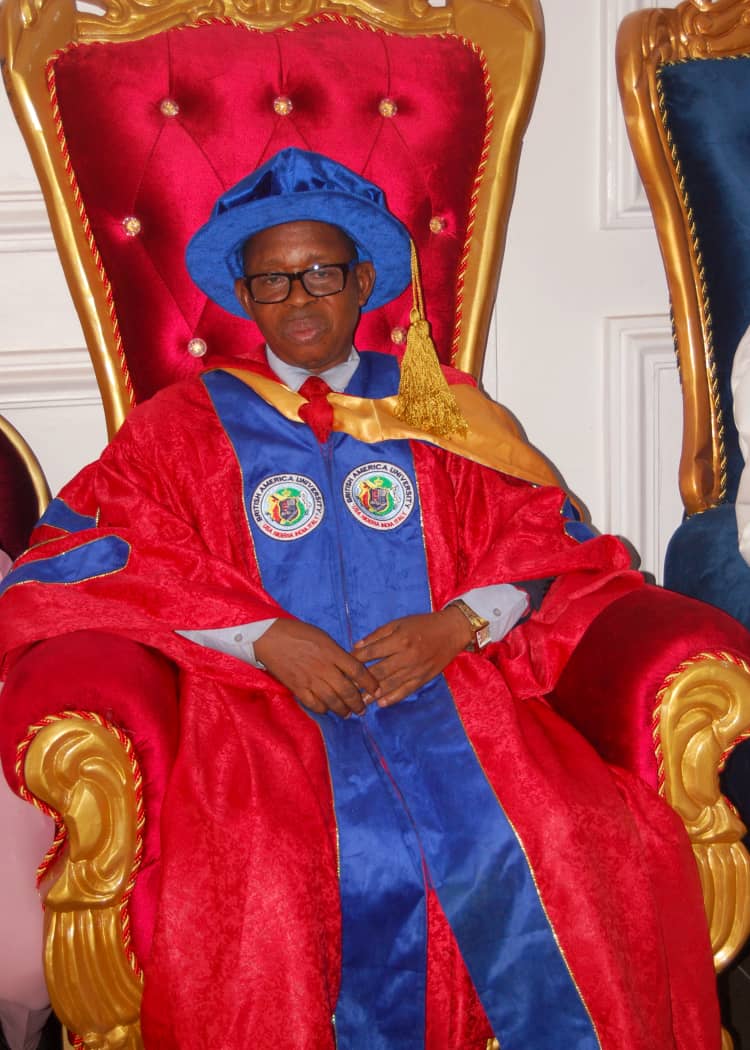
My plans for my people…. Professor Muhammad
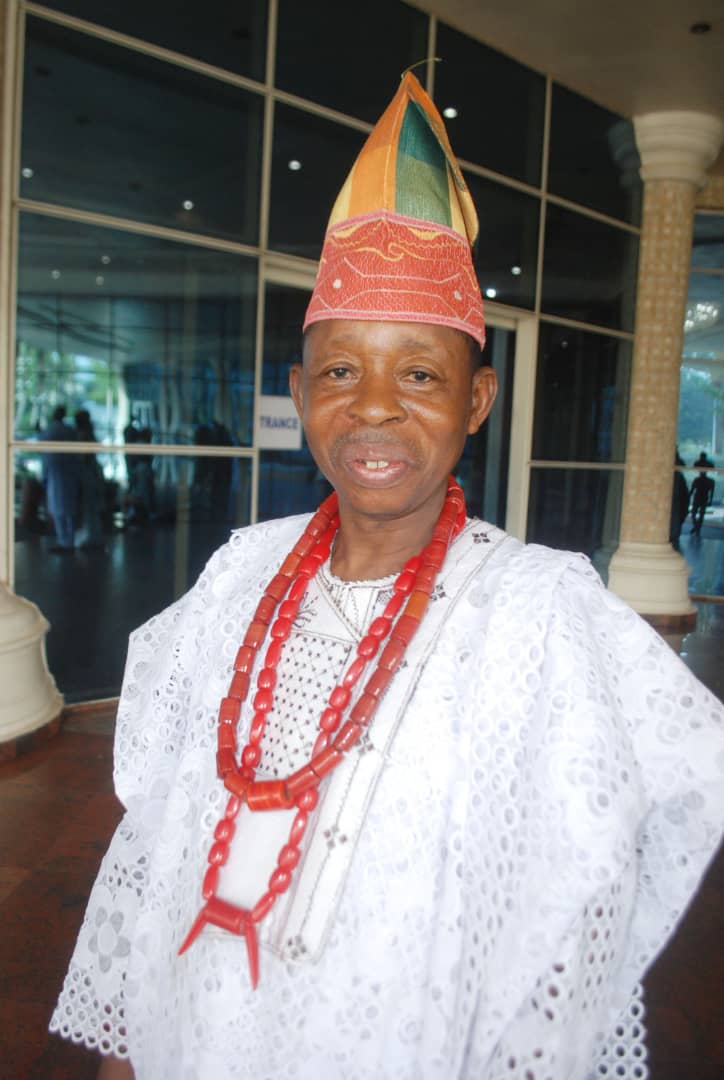
Omolaja Professor Muhammad Omolaja is the president of the Yoruba Elders Union (YEU) which covers the entire Yoruba race in Nigeria and abroad. He is also a prominent member of the Yoruba Council of Elders (YCE) which is another socio-cultural association of Yoruba Leaders. Professor Omolaja’s socio-cultural engagements go beyond the Yoruba Land as his network cuts across the entire north and south of Nigeria and beyond. For instance, he is the Ike Mba 1 of Africa and one of the National Patrons of the Nzuka Nd’Imo Organisation (NNIO) worldwide among other connections.The professor in this exclusive interview explained in details his mission and vision for his constituency and beyond if he gets the nod under the platform of the Social Democratic party (SDP) as a prominent member of the Party.
Excerpts:
Humbly introduce yourself, Sir.
I am Prof. Muhammad Ayinla Omolaja (MAO) – The Ike Mba 1 of Africa – from the Obe Royal family of Emado Quarters, Ayetoro City, Yewa North Local Government Area of Ogun State.
What’s that position you are virying for and under what party?
Actually, this question is immature as (a) INEC has not issued out guidelines on the 2027 general election, and (b) I have been aspiring and contesting consistently for various positions under various Parties from 2007 up to date. I came out for positions including Federal House of Representatives (under the PDP), Senate (under the ANPP and DPA), Governorship (under the APC), up to the Presidency (under the ADP) in 2023 general election. This means that definitely, I will come out again in 2027 by the special grace of the Almighty God. However, I am still consulting. The decision as to which position I will contest for will be a joint one with my political colleagues and associates when the time comes. I am presently a strong member of the Social Democratic Party (SDP), which means I will be contesting under the platform of the great Party.
Are you coming under consensus or you are solely voted for?
For now, there is no information on this.What are your chances going by the fact that it’s APC that is ruling?
Definitely, Nigerians, including me, have suffered more than enough hardship of various magnitudes under the APC and PDP administrations over the years! We are now wiser! What we need now is a complete change of guards in the political arena, and the only Party that can do that as at now is the Social Democratic Party being the only Party that is settled. Other Parties in opposition are presently faced with one crisis or the other ranging from factionalism, court cases, unnecessary rivalry, hatred and jealousy, to mention but a few. Therefore, anybody that will contest for a position under the SDP in 2027 has a very high probability of winning the election.
If eventually you emerged as the party’s candidate, do you see yourself winning the general election?
For a person to win a general election, irrespective of the post, he or she must be someone that is popular and acceptable to the majority of the people within his or her domain; that is, his constituency. This depends on many factors including his upbringing, family background, education background, community participation or contributions to the community, his political activism, leadership quality, and of course, his financial stability to mention but a few. In all these criteria, I think I am up to the task!
What’s your plan for your constituency?
My plan for the great people of my constituency may be summarized as “To let the masses live in all ramifications! This depends on the post I will contest for, but my mission in governance includes adequate food supply, uninterrupted power supply, adequate security of life and property, quality education, youths and women empowerment, good intergovernmental relations, appropriate civil service reforms, fiscal and monetary policies, adequate reforms in the traditional settings, industrialization, as well as taking care of the elderly; the old people in our communities, and so on.
Is there any team you put on ground that make you believe you can win the election?
Yes! There are many. One of them is the National Liberation Patriots (NLP) of which I am the founder and National Chairman. It has membership in all the 36 States of the federation and the Federal Capital Territory. The national political group parades the best quality of politicians that can be found anywhere in the world as members based on their level of political exposure and activism. The second group is the Omolaja Solidarity Forum (OSF). The OSF also spreads to the entire Nigeria covering all the six geopolitical regions of the country. This is followed by the Coalition for Sustenance of Democracy (CSD) which is also a national political association. Again, I am one of the National Patrons of Nzuko Nd’Imo Organisation (NNIO) Worldwide apart from being the Ike Mba 1 of Africa. Finally, I am the President of the Yoruba Elders Union (YEU) which covers the entire Yoruba race in Nigeria and abroad! I am also a prominent member of the Yoruba Council of Elders (YCE). With all these socio-cultural and political associations, and many more, on ground, I believe I can win election into any political office in Nigeria.
What is your message to the people concerning your ambition?
My message to the good people of our great nation is that the job of recovering, restoring and developing our much-cherished damaged country, Nigeria, is a task for all of us individually and collectively irrespective of our tribes or ethnicity, religions or our places of birth. We should forget about our differences in diversity and team up as one indivisible Nigerian family to recall our country back to life through the power of ballot papers during the forthcoming 2027 general election








Ajiran Youth Protest Over Deaths of Two Residents, Demand Justice
The Ajiran community of Lagos State erupted in a powerful protest on Tuesday as local youths took to the streets to express their grief and anger over the tragic murders of Prince Ademola Akintoye and Sherrif Agboworin. The demonstration follows the recent decision to reopen the murder case, an investigation that has already led to the arrest of over nine suspects in connection with the heinous crimes committed more than a year ago.
Carrying vibrant banners and poignant posters featuring the faces of the deceased, the protesters marched through the heart of their community while singing somber dirges to honor their memory. With chants of unity and justice ringing in the air, they called on both the Lagos State Government and the Lagos State Police Command to ensure that those responsible are swiftly and decisively brought to justice.
The youth leaders emphasized that peace and normalcy will remain elusive in Ajiran until all those complicit in the killings are held accountable. They articulated that true justice is the only way to restore tranquility and honor the lives of Akintoye and Agboworin, whom they described as innocent victims of a grave injustice.
Speaking on behalf of the demonstrators, youth leader Mr. Kehinde Oladele urged law enforcement to conduct a thorough and fair investigation. He asserted that every individual involved including the nine arrested suspects must face the full extent of the law. Especially Hammed Tajudeen, the principal suspect mentioned by others in custody, whom they believe should not escape scrutiny.
“The reopening of this case after more than a year is a critical first step towards achieving justice and fairness for our brothers,” Oladele said. “We urge the police to get to the root of the matter. Those mentioned during the investigation, especially Hammed Tajudeen, should not be spared.”

The atmosphere in the community grew increasingly tense last week following speculation that prominent businessman Aare Bashir Olawale Fakorede was implicated in the unrest. The speculation appeared to stem from his alleged influence on the reopening of the murder investigation. This misunderstanding escalated when a group of protesters targeted his filling station in Ikate, vandalizing his properties and disrupting business operations in the gas station based on the false assumption that Fakorede was behind the police’s renewed inquiries.
In response to the rising tensions and misinformation, Fakorede’s spokesperson, Ola Muhammed, issued a comprehensive statement denying any connection between Fakorede and the unrest. The spokesperson emphasized that rumors suggesting the businessman orchestrated the revival of the murder case were completely unfounded.
“I feel it is crucial to clarify, for the sake of transparency and historical accuracy, that this entire ordeal is in no way related to me,” Fakorede stated. “I am also very interested to see that the culprits are brought to book. I categorically affirm that I have never been involved in any business dealings with Mr. Hammed Tajudeen.”
Fakorede further elaborated that the recent protests which led to the destruction of his property were reportedly instigated by Tajudeen and others who seem determined to manipulate the narrative and cast suspicion upon him. Fakorede expressed his own strong commitment to uncovering the truth surrounding the deaths.
As the police investigation progresses, it has become increasingly apparent that all accusing fingers are pointing to Hammed Tajudeen who is currently evading capture, adding another layer of complexity and urgency to the ongoing situation. Community members have questioned why he remains at large instead of submitting himself to the police for questioning if he is truly innocent of the allegations against him.
Community leaders are now emphasizing the need for dialogue to address the root causes of the unrest and work toward restoring harmony within Ajiran, even as the demand for justice remains at the forefront of public consciousness.
Ramadan: Al-Yusuff International Travels and Tours Boss Greets Muslims
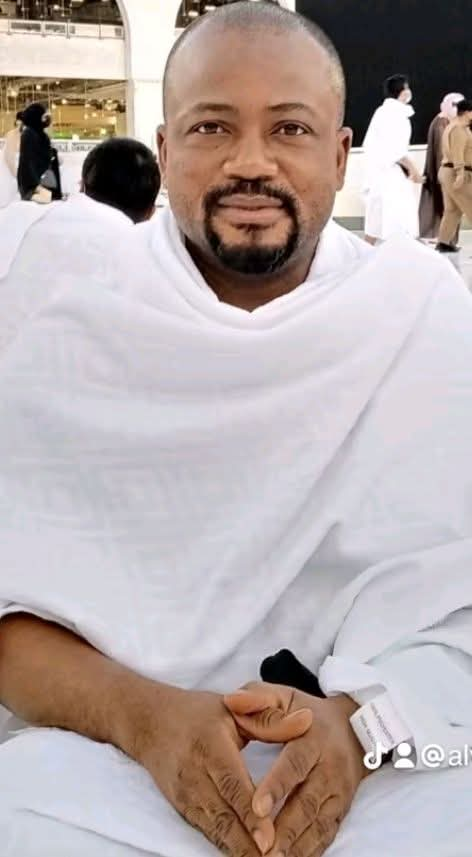
As the holy month of Ramadan begins across the globe, the Chief Executive Officer of Al-Yusuff International Travels and Tours Limited, Dr. Abdulmajeed Oladele, has extended his heartfelt greetings to Muslims worldwide.
In his message, the respected business mogul expressed gratitude to Almighty Allah for the privilege of witnessing this year’s sacred month.
“We glorify Allah for granting us the grace and opportunity to witness this year’s month of blessings. Ramadan is a sacred and special month for all Muslims, a month greater than many others, filled with piety, mercy, and abundant blessings.
I congratulate all Muslims across the world. Let us faithfully observe the requirements of Ramadan. May Allah (SWT) grant our heart’s desires and make this period easy and rewarding for us all.”
Dr. Oladele urged Muslims to embrace the spiritual significance of Ramadan through devotion, charity, self-discipline, and prayers for peace and prosperity.
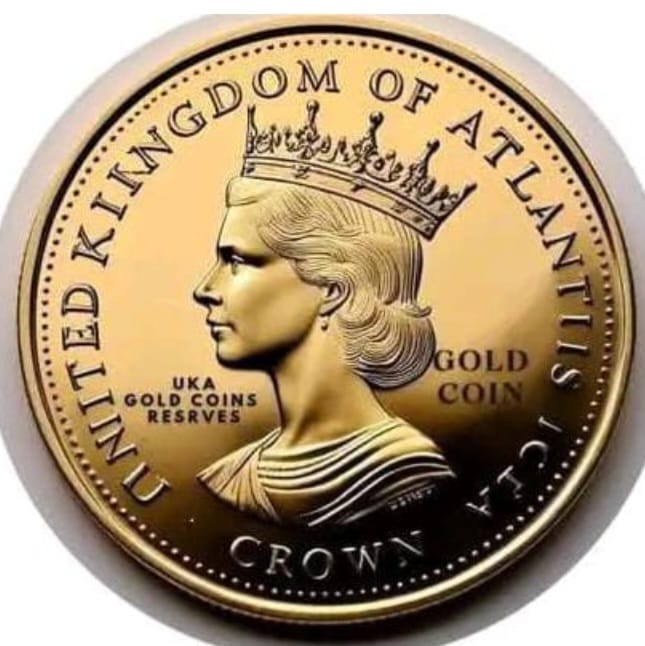
UKA UNVEILS THREE-TIER ATC PLATFORM AS MONARCH ANNOUNCES $10BN GOLD-BACKED MILESTONE
Emperor Nobilis Prof Solomon Winning declares global recognition of ATC ecosystem, urges citizens and partners to embrace unified digital, crypto and gold-backed financial structure
The Reigning Monarch of the United Kingdom of Atlantis (UKA), Emperor Nobilis Prof Solomon Winning, has formally announced what he described as a historic milestone in the financial evolution of the Atlantis nation and empire worldwide, the consolidation and global recognition of the ATC financial ecosystem backed by a $10 billion gold reserve.
In a voice message released from the Office of the Throne, the Monarch expressed gratitude to God and to citizens and partners across the globe for what he termed a “defining achievement” in the journey of the United Kingdom of Atlantis.
According to him, the ATC asset structure, supported by a $10 billion gold-backed certificate, has now been positioned among the world’s leading capitalisation financial platforms, ranking number 12 globally.
“We appreciate God for the milestone achieved of our 10 billion gold-backed certificate of ATC assets. We are delighted to inform our esteemed citizens, partners, viewers and friends all over the world that ATC has come to stay,” the Monarch declared.
Three Distinct but Interconnected ATC Platforms
Emperor Winning explained that the UKA Government and the Atlantis nation have officially released three integrated ATC platforms to the general public. He emphasised that while each platform serves a distinct purpose, they are structured to interact seamlessly for effective management, business transactions and global trading operations.
1.ATC Digital (Government Platform)
The first platform, known as ATC Digital, is the official government-backed digital transaction system. It is designed to facilitate digital financial operations within the UKA ecosystem and serve as the administrative and transactional backbone of the nation’s digital economy.
The Monarch described it as the formally recognised digital framework governed directly by the government under the Throne.
ATC Gold Version (Business and Trade Platform). The second platform, referred to as the ATC Gold Version, is primarily tailored for business trade, commercial exchange and transactional fluidity. It is structured to enhance business-to-business engagement, exchangeability and broader economic interaction.
“This version is mainly for business trade, business exchange and commercial transactions,” he clarified.
ATC Crown Coin (Crypto and Visitor Platform)
The third platform, known as the ATC Crown Coin, represents the Atlantis Crown Coin and is linked to what the monarch described as the Atlantean Bank Gold structure. This version operates as a crypto and digital hybrid, including visitor engagement capabilities and broader exchange functions.
(atlantisgoldbank.org
The Digital/Cryto currency Version
Atlantian Crown Gold (E-ATC) https://share.google/a7Jns9VtrMKCZ6Prk
The E-ATC purely for Trading and Exchang
Atlantean Crown (ATC) – The Future of Digital Currency https://share.google/1EhdkkDBFvBLLgfR1
The Digital version for Government
We also Have DEOS INTERNATIONAL Bank (DIB)
And ATCB)
The Monarch indicated that all three platforms are interconnected to ensure efficiency, transparency and global recognition.
“Please do not be confused. The United Kingdom of Atlantis has three major versions of ATC. Two are crypto-based, one is digital; one is also a hybrid of crypto and digital. All three interact together for effective management and effective business transactions.”
Global Recognition and Expansion Vision
Emperor Winning further asserted that the ATC ecosystem is already recognised internationally and positioned within the global financial framework. “Our platforms are presently recognised in the whole world,” he said, while encouraging existing holders of ATC assets to remain confident in the system.
He congratulated all ATC holders and reiterated the Throne’s commitment to strengthening the ecosystem’s credibility, usability and cross-platform functionality.
A Strategic Financial Architecture
Observers say the three-tier structure reflects an attempt by the United Kingdom of Atlantis to create a multi-layered financial architecture combining government-regulated digital systems, crypto-based trade platforms and gold-backed reserve credibility.
By integrating digital governance with cryptocurrency and gold certification, the UKA appears to be positioning ATC as both a sovereign-backed asset and a tradable global instrument.
As the UKA advances its financial ambitions, the monarch’s message signals a push for adoption, participation and global engagement with the ATC ecosystem.
“If you are a holder of ATC, congratulations to you from the Throne. God bless you,” the monarch concluded.
The development marks another significant chapter in the evolving digital and gold-backed finance narrative emerging from the United Kingdom of Atlantis.


-
 celebrity radar - gossips6 months ago
Why Babangida’s Hilltop Home Became Nigeria’s Political “Mecca”
-

 society6 months ago
Power is a Loan, Not a Possession: The Sacred Duty of Planting People
-
 news6 months ago
THE APPOINTMENT OF WASIU AYINDE BY THE FEDERAL GOVERNMENT AS AN AMBASSADOR SOUNDS EMBARRASSING
-
 society5 months ago
Religion: Africa’s Oldest Weapon of Enslavement and the Forgotten Truth