
society
Africa’s Liberation: Echoes of Mugabe and Gaddafi in the Struggle for True Independence


Africa’s Liberation: Echoes of Mugabe and Gaddafi in the Struggle for True Independence
By George O. Sylvester
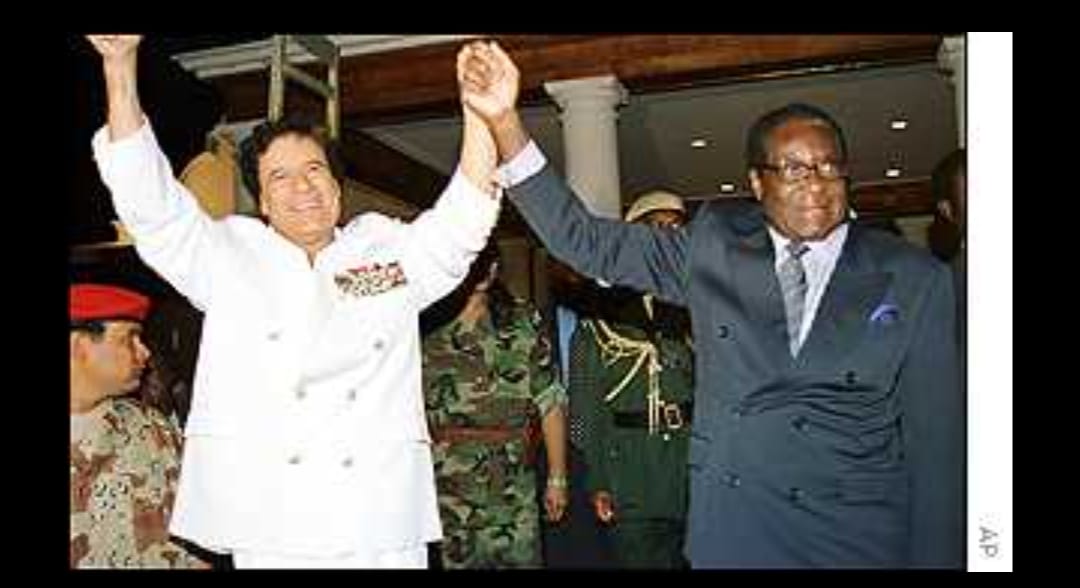
When we speak of Africa’s liberation, it’s tempting to confine it to the end of colonial rule, the departure of European governors and the hoisting of new national flags. To revolutionary thinkers like Zimbabwe’s Robert Mugabe and Libya’s Muammar Gaddafi, true liberation was never just political. It was and remains a matter of economic sovereignty, cultural pride and continental unity.
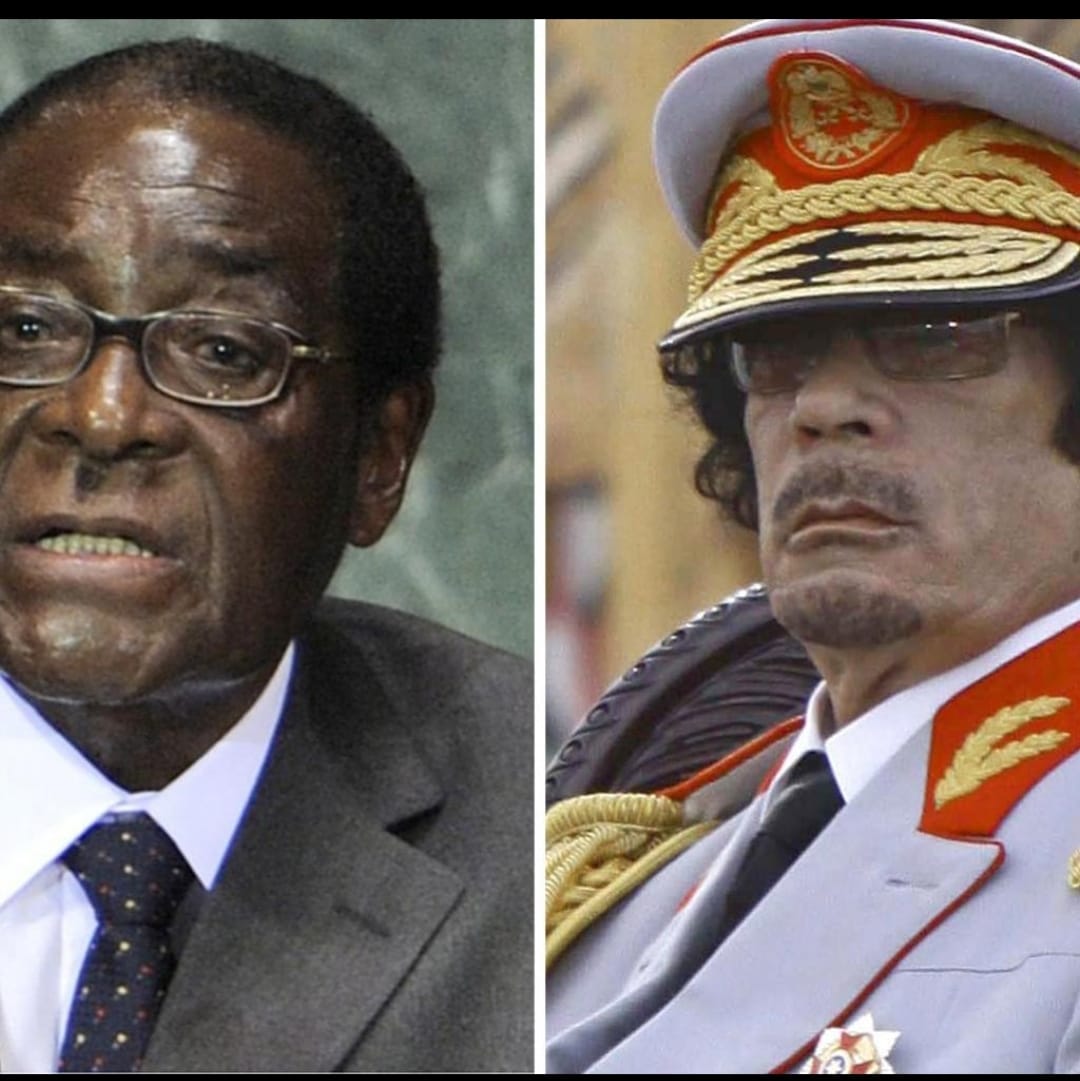
Both men were controversial, even authoritarian. Yet history cannot erase the ideological fire they ignited across Africa. Their speeches, their actions however imperfect continue to provoke debate, inspire movements and remind us that the promise of African freedom is far from fulfilled.
The Colonial Inheritance
European colonization was not merely a conquest of land; it was a calculated dismembering of identity. From the 1884 Berlin Conference to the post-World War II independence movements, colonial powers carved up Africa with little regard for indigenous cultures or long-term development. They imposed foreign languages, looted resources and left behind borders that would later become fault lines of ethnic and political conflict.
By the 1960s, most African nations had achieved formal independence. But beneath the surface, colonial structures remained intact. Economies were still dependent on raw material exports. Local industries were weak or non-existent. Debt became a new mechanism of control. And Western governments and corporations continued to wield disproportionate influence.
It was in this neo-colonial reality that Mugabe and Gaddafi emerged not just as national leaders, but as ideologues of African renaissance.
Mugabe: “The Land is Ours”
Robert Mugabe led Zimbabwe to independence in 1980 after a bloody guerrilla war against Ian Smith’s white minority regime in what was then Southern Rhodesia. An eloquent intellectual and a veteran freedom fighter, Mugabe initially championed reconciliation and development. But by the early 2000s, his focus shifted toward radical land reform.
His justification was unapologetic:
“The land is ours. It is not European. And we have taken it. We have given it to the rightful people of Zimbabwe.”
Mugabe saw the ownership of land as central to the liberation struggle. For decades, white settlers had monopolized Zimbabwe’s most fertile land, while Black Africans remained tenants in their own country. The decision to expropriate white-owned farms, often without compensation, was seen by the West as a violation of property rights. For Mugabe, it was a long-overdue act of justice.
While critics blame these policies for Zimbabwe’s economic collapse and hyperinflation, Mugabe’s defenders argue that he did what few African leaders dared to do, challenge the post-colonial order and reclaim national resources.
As he once stated:
“We are not Europeans. We have not asked for any inch of Europe. So let Europe leave us alone.”
To Mugabe, African independence meant nothing without control over land and resources. His legacy is a warning and a lesson: economic liberation cannot be separated from political freedom.
Gaddafi: “African Unity is the Only Solution”
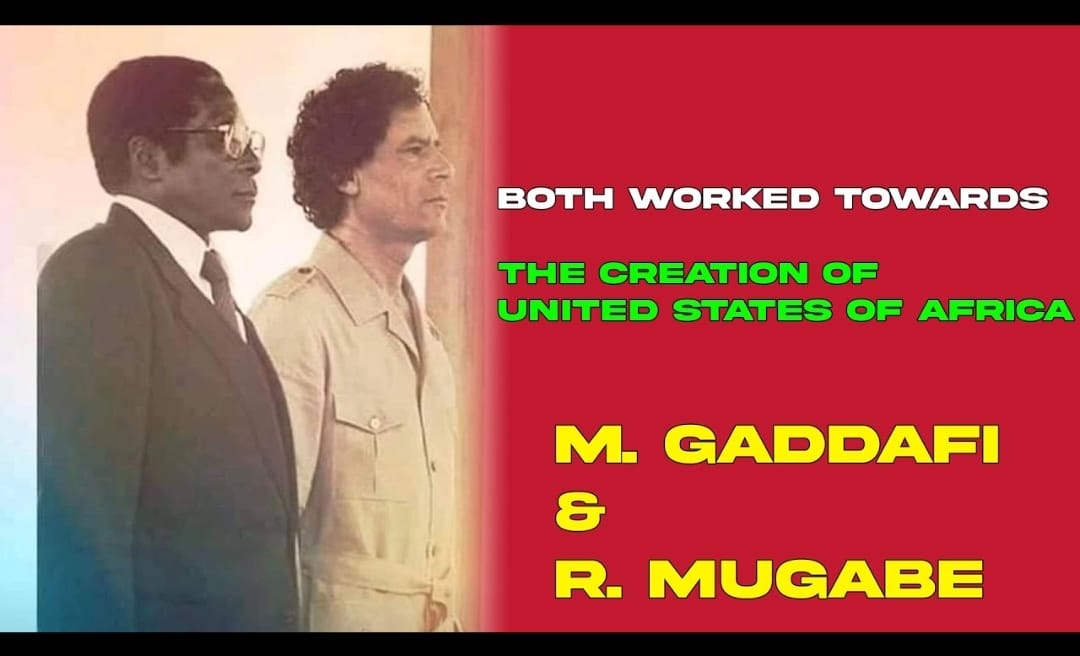
While Mugabe fought colonial remnants at home, Muammar Gaddafi envisioned a continent freed through unification. After seizing power in Libya in 1969, Gaddafi used his country’s oil wealth to pursue a Pan-African dream. He funded liberation movements across the continent, supported the African National Congress during apartheid and pushed tirelessly for a United States of Africa.
He famously said:
“The Black race shall prevail throughout the world, because it is the most oppressed and dispossessed. Our unity is our weapon.”
Gaddafi advocated for a single African government, army, currency and passport. He argued that only a unified Africa could resist foreign manipulation and control its own destiny. At the African Union summit in 2009, he thundered:
“Africa must unite now or perish. The time for petty nationalism is over. We must speak with one voice to protect our interests.”
Under his leadership, Libya became one of the most developed countries in Africa with free healthcare, free education and the highest Human Development Index on the continent. He proposed an African central bank and monetary fund as alternatives to the IMF and World Bank, which he viewed as instruments of Western neocolonialism.
But Gaddafi’s ambitions made him enemies. His death in 2011 following a NATO bombing campaign and a Western-backed uprising was a stark reminder of how foreign powers still shape Africa’s destiny. Before his fall, he warned African leaders:
“They will create chaos, they will divide you and you will cry for the return of Gaddafi.”
Today, Libya is a fractured state, a shadow of the once ambitious vision he pursued.
Beyond Borders and Ballots
Mugabe and Gaddafi were far from perfect. Mugabe grew increasingly autocratic, suppressing dissent and clinging to power well into old age. Gaddafi ruled Libya with an iron grip, brooking no opposition and building a cult of personality. Their authoritarianism deserves scrutiny.
Yet their core message endures: Africa is not truly free.
Not when multinational corporations extract billions from African soil while local communities remain impoverished.
Not when international lenders dictate economic policies that prioritize debt repayment over development.
Not when culture, history, and identity are diluted by imported values and education systems.
Their critique of neocolonialism remains disturbingly relevant. And their call for African unity, economic Self-determination and cultural revival has yet to be fully answered.
Today’s Betrayal of Revolutionary Ideals
In the 21st century, the ideological clarity of Mugabe and Gaddafi has been replaced by a politics of compromise and dependence. African leaders host elaborate investment forums for former colonial powers, sign away mineral rights to foreign corporations, and implement IMF-led austerity programs.
China’s growing influence in Africa is lauded as an alternative to Western control. Yet, many of these “partnerships” mirror colonial dynamics, resources flow out, while debt and dependency grow.
Meanwhile, Africa’s youth are restless. Unemployment, poverty and lack of opportunity drive many to seek life elsewhere. Migration has become a silent vote of no confidence in African governments.
As Mugabe once observed:
“Africa is not poor. It is just poorly managed.”
The Road Ahead: Real Liberation
Africa’s liberation remains a work in progress. The continent must return to the foundational truths expressed, however imperfectly; by Mugabe and Gaddafi.
1. Economic Sovereignty: African nations must control and process their own resources. Dependency on raw exports and foreign capital is unsustainable.
2. Pan-African Unity: Regional integration must move from rhetoric to reality. Shared infrastructure, trade, currency, and defense mechanisms are vital.
3. Cultural Renaissance: The decolonization of the African mind must accompany the decolonization of the economy. Language, history, and values matter.
4. Youth Empowerment: Africa’s future lies in its youth. Education, entrepreneurship, and civic leadership must be prioritized.
As Gaddafi declared:
“You may kill me, but my ideas will not die.”
Indeed, they have not. The dream of a free, united, and dignified Africa is still alive waiting for bold, visionary leadership to carry it forward. The torch lit by Mugabe and Gaddafi now lies in the hands of a new generation.
Will they pick it up?





Ramadan: Al-Yusuff International Travels and Tours Boss Greets Muslims
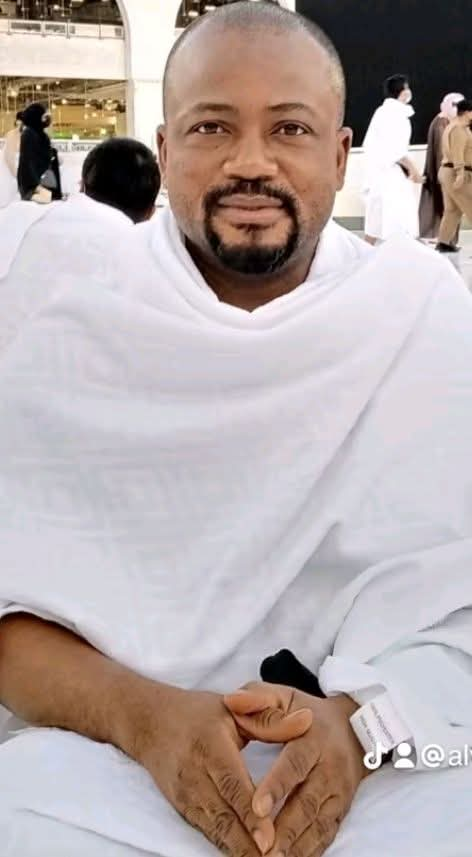
As the holy month of Ramadan begins across the globe, the Chief Executive Officer of Al-Yusuff International Travels and Tours Limited, Dr. Abdulmajeed Oladele, has extended his heartfelt greetings to Muslims worldwide.
In his message, the respected business mogul expressed gratitude to Almighty Allah for the privilege of witnessing this year’s sacred month.
“We glorify Allah for granting us the grace and opportunity to witness this year’s month of blessings. Ramadan is a sacred and special month for all Muslims, a month greater than many others, filled with piety, mercy, and abundant blessings.
I congratulate all Muslims across the world. Let us faithfully observe the requirements of Ramadan. May Allah (SWT) grant our heart’s desires and make this period easy and rewarding for us all.”
Dr. Oladele urged Muslims to embrace the spiritual significance of Ramadan through devotion, charity, self-discipline, and prayers for peace and prosperity.
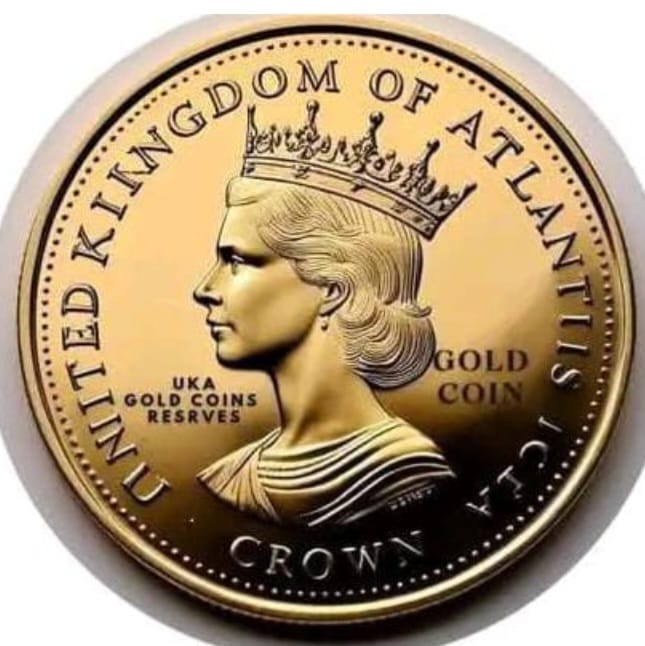
UKA UNVEILS THREE-TIER ATC PLATFORM AS MONARCH ANNOUNCES $10BN GOLD-BACKED MILESTONE
Emperor Nobilis Prof Solomon Winning declares global recognition of ATC ecosystem, urges citizens and partners to embrace unified digital, crypto and gold-backed financial structure
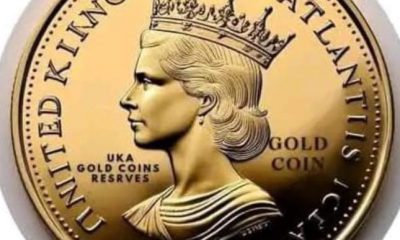
The Reigning Monarch of the United Kingdom of Atlantis (UKA), Emperor Nobilis Prof Solomon Winning, has formally announced what he described as a historic milestone in the financial evolution of the Atlantis nation and empire worldwide, the consolidation and global recognition of the ATC financial ecosystem backed by a $10 billion gold reserve.
In a voice message released from the Office of the Throne, the Monarch expressed gratitude to God and to citizens and partners across the globe for what he termed a “defining achievement” in the journey of the United Kingdom of Atlantis.
According to him, the ATC asset structure, supported by a $10 billion gold-backed certificate, has now been positioned among the world’s leading capitalisation financial platforms, ranking number 12 globally.
“We appreciate God for the milestone achieved of our 10 billion gold-backed certificate of ATC assets. We are delighted to inform our esteemed citizens, partners, viewers and friends all over the world that ATC has come to stay,” the Monarch declared.
Three Distinct but Interconnected ATC Platforms
Emperor Winning explained that the UKA Government and the Atlantis nation have officially released three integrated ATC platforms to the general public. He emphasised that while each platform serves a distinct purpose, they are structured to interact seamlessly for effective management, business transactions and global trading operations.
1.ATC Digital (Government Platform)
The first platform, known as ATC Digital, is the official government-backed digital transaction system. It is designed to facilitate digital financial operations within the UKA ecosystem and serve as the administrative and transactional backbone of the nation’s digital economy.
The Monarch described it as the formally recognised digital framework governed directly by the government under the Throne.
ATC Gold Version (Business and Trade Platform). The second platform, referred to as the ATC Gold Version, is primarily tailored for business trade, commercial exchange and transactional fluidity. It is structured to enhance business-to-business engagement, exchangeability and broader economic interaction.
“This version is mainly for business trade, business exchange and commercial transactions,” he clarified.
ATC Crown Coin (Crypto and Visitor Platform)
The third platform, known as the ATC Crown Coin, represents the Atlantis Crown Coin and is linked to what the monarch described as the Atlantean Bank Gold structure. This version operates as a crypto and digital hybrid, including visitor engagement capabilities and broader exchange functions.
(atlantisgoldbank.org
The Digital/Cryto currency Version
Atlantian Crown Gold (E-ATC) https://share.google/a7Jns9VtrMKCZ6Prk
The E-ATC purely for Trading and Exchang
Atlantean Crown (ATC) – The Future of Digital Currency https://share.google/1EhdkkDBFvBLLgfR1
The Digital version for Government
We also Have DEOS INTERNATIONAL Bank (DIB)
And ATCB)
The Monarch indicated that all three platforms are interconnected to ensure efficiency, transparency and global recognition.
“Please do not be confused. The United Kingdom of Atlantis has three major versions of ATC. Two are crypto-based, one is digital; one is also a hybrid of crypto and digital. All three interact together for effective management and effective business transactions.”
Global Recognition and Expansion Vision
Emperor Winning further asserted that the ATC ecosystem is already recognised internationally and positioned within the global financial framework. “Our platforms are presently recognised in the whole world,” he said, while encouraging existing holders of ATC assets to remain confident in the system.
He congratulated all ATC holders and reiterated the Throne’s commitment to strengthening the ecosystem’s credibility, usability and cross-platform functionality.
A Strategic Financial Architecture
Observers say the three-tier structure reflects an attempt by the United Kingdom of Atlantis to create a multi-layered financial architecture combining government-regulated digital systems, crypto-based trade platforms and gold-backed reserve credibility.
By integrating digital governance with cryptocurrency and gold certification, the UKA appears to be positioning ATC as both a sovereign-backed asset and a tradable global instrument.
As the UKA advances its financial ambitions, the monarch’s message signals a push for adoption, participation and global engagement with the ATC ecosystem.
“If you are a holder of ATC, congratulations to you from the Throne. God bless you,” the monarch concluded.
The development marks another significant chapter in the evolving digital and gold-backed finance narrative emerging from the United Kingdom of Atlantis.
FRSC@ 38: SHEHU MOHAMMED STEERING NIGERIA’S ROAD SAFETY REVOLUTION TO GREATER HEIGHTS
By Deputy Corps Marshal Bisi Kazeem (Rtd) fsi, MNIM, anipr
When Mallam Shehu Mohammed assumed leadership as Corps Marshal of the Federal Road Safety Corps (FRSC), he inherited not just an institution with history, but a national mandate that touches every family, every highway, and every community in Nigeria. At 38 years, the Corps stands tall as Africa’s model road safety agency, and under his stewardship, that legacy is not merely preserved, it is being boldly redefined.
Nigeria’s highways were once synonymous with fear. Before 1988, the World Health Organisation ranked Nigeria among the most dangerous countries in the world to drive. It was a troubling indictment that demanded courage and clarity of purpose. The establishment of the FRSC under Decree No. 45 of 1988 laid the foundation for reform. But sustaining and advancing that reform across decades requires visionary leadership, the kind now exemplified by Mallam Shehu Mohammed.
Today, under his command, the Corps is consolidating its position as one of the most technologically advanced and operationally efficient law enforcement institutions in Nigeria. With renewed strategic focus, the present leadership has deepened the Safe Systems Approach built on people, processes, and technology, ensuring that safety interventions are not reactive, but preventive and intelligence-driven.
One of the defining hallmarks of his administration is accelerated digital transformation. Within six months, over 3,000 personnel were trained to strengthen operational competence and technological adaptability. More than 95 per cent of the Corps’ administrative and operational processes are automated, supported by over 30 web-based applications that enhance traffic governance nationwide. From the National Crash Reporting Information System (NACRIS) to the upgraded e-ticketing platform, innovation is no longer optional; it is institutional culture.
Emergency response under the current Corps Marshal has become faster and more coordinated, with nationwide response time reduced dramatically from 50 minutes to 15 minutes. The 122 toll-free emergency line and 24-hour National Call Centre continue to serve as lifelines for distressed road users, reflecting a leadership that understands that every second counts.
Strategic stakeholder engagement has equally flourished. Safe corridor initiatives have been strengthened, collaboration with transport unions intensified, and enforcement around articulated vehicles tightened. The result is a significant reduction in tanker-related crashes, a development that speaks to deliberate policy direction and disciplined implementation.
Under Mallam Shehu Mohammed’s leadership, data has become a central pillar of enforcement and planning. Through strengthened collaboration with the National Identity Management Commission, the National Bureau of Statistics, and the Nigeria Customs Service, the Corps has advanced harmonized data systems that support evidence-based interventions. Transparent weekly crash trend reporting now guides targeted deployment and corrective strategies.
Nigeria’s standing on the global stage has also been reinforced. The country remains an active participant in the renewed UN Decade of Action for Road Safety (2021–2030) and continues alignment with international road safety conventions. These achievements build on the solid foundation laid by past leaders from Olu Agunloye and General Haladu Hannaniya to Chief Osita Chidoka, Dr. Boboye Oyeyemi, and Dauda Ali Biu, but under the present Corps Marshal, the momentum has unmistakably intensified.
Operationally, the Corps’ footprint now spans 12 Zonal Commands, 37 Sector Commands, over 300 Unit Commands, over 700 Station Offices, 59 Zebra Emergency Ambulance Points, and presence in all 774 Local Government Areas of Nigeria. Yet beyond physical structures lies a stronger institutional spirit, one driven by discipline, professionalism, and accountability.
From a nation once ranked among the most unsafe for motorists to a continental pacesetter in road safety management, Nigeria’s transformation story is inseparable from the strength of its leadership. At 38 years, FRSC is not simply celebrating longevity; it is celebrating purposeful stewardship.
Mallam Shehu Mohammed represents a generation of reform-minded leadership committed to smarter mobility systems, data-driven enforcement, and people-centered safety administration.
His tenure reflects continuity with courage sustaining the Corps’ proud legacy while boldly steering it toward greater innovation and measurable impact.
The road ahead is demanding. But under his steady command, Nigeria’s highways are safer, its systems smarter, and its future brighter.


-
 celebrity radar - gossips6 months ago
Why Babangida’s Hilltop Home Became Nigeria’s Political “Mecca”
-

 society6 months ago
Power is a Loan, Not a Possession: The Sacred Duty of Planting People
-
 news6 months ago
THE APPOINTMENT OF WASIU AYINDE BY THE FEDERAL GOVERNMENT AS AN AMBASSADOR SOUNDS EMBARRASSING
-
 society5 months ago
Religion: Africa’s Oldest Weapon of Enslavement and the Forgotten Truth