
society
Building Bridges in Africa, Not Walls: A Path to Stronger Systems and Stable Currencies

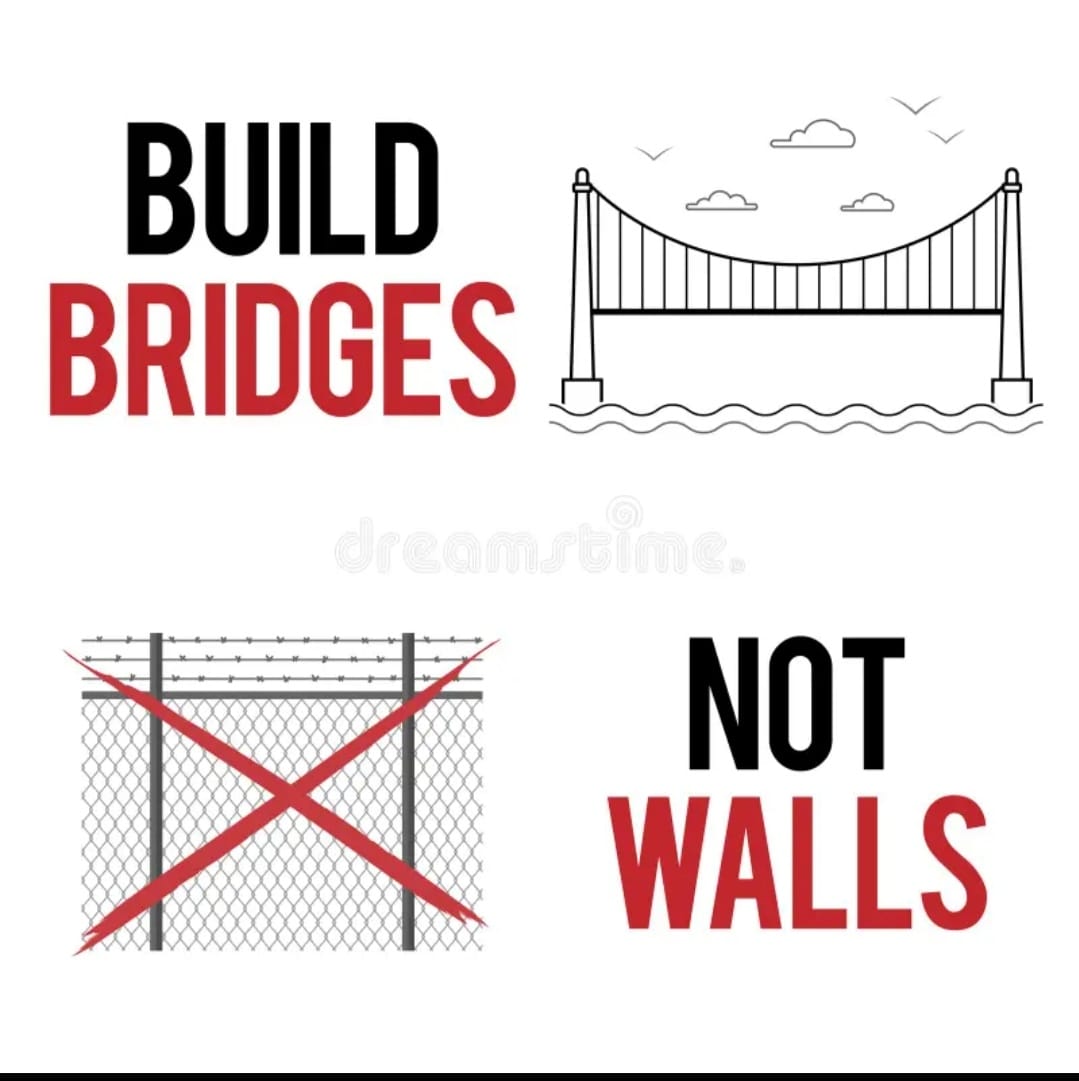
Building Bridges in Africa, Not Walls: A Path to Stronger Systems and Stable Currencies
By George Omagbemi Sylvester | For Sahara Weekly Nigeria
Across the vast and culturally rich continent of Africa, the future hangs delicately on one critical choice: DO WE BUILD BRIDGES THAT UNITE US OR WALLS THAT DIVIDE? At a time when the global economy is transforming through cooperation, trade integration and digital innovation, Africa must reject the retrogressive politics of xenophobia, protectionism and border hostility. The African Union’s agenda for 2063 and the creation of the African Continental Free Trade Area (AfCFTA) are powerful testaments to this path. Yet, for these ambitions to translate into transformative realities, African nations must discard internal divisions, political bigotry and economic selfishness.
Let it be said without apology; BUILDING FENCES BETWEEN AFRICAN COUNTRIES, CLOSING BORDERS TO NEIGHBORS AND CRIMINALIZING MIGRATION WITHIN OUR OWN CONTINENT ARE ACTS OF BETRAYAL TO THE PAN-AFRICAN DREAM. Instead, building economic, diplomatic, cultural and technological bridges is not only morally right but strategically essential for strengthening African systems and stabilizing our weakened currencies.
The Cost of Building Walls: Economic Isolation and Currency Devaluation
When South Africa shuts down its borders to Zimbabwean, Nigerian, or Malawian workers under the guise of protecting local jobs or when xenophobic rhetoric is normalized in political campaigns, it is not just human rights that are violated (it is economic logic that is INSULTED. African ECONOMIES are not COMPETITORS) they are interdependent allies. The idea that foreign African workers “STEAL JOBS” is not backed by empirical data. In fact, research by the African Centre for Migration & Society (ACMS) at the
University of the Witwatersrand finds that immigrant communities in South Africa are more likely to create informal employment
opportunities and pay
taxes than they are to take jobs from locals.
Moreover, protectionist policies and internal border closures inhibit
the very trade and free movement of labor that could stabilize local
currencies. As it stands, 41 of Africa’s 54 countries are facing exchange rate volatility,
many of them severely weakened against the
U.S. dollar. Nigeria’s naira, Ghana’s cedi and the South African rand have all been depreciating at alarming rates, partly because of dependency on imports, low regional trade and political instability.
According to the World Bank, intra-African trade accounts for only 17% of total African exports, compared to 59% in Asia and 68% in Europe. Why? Because instead of facilitating trade routes and visa-free movement, many African states still erect bureaucratic walls that delay commerce and undermine regional trust.
Bridges Bring Growth: Economic and Systemic Strength
The African Continental Free Trade Area (AfCFTA), launched in January 2021, is one of the boldest attempts to reverse this failure. With 54 signatories and a potential combined GDP of $3.4 trillion, it aims to boost intra-African trade by 52% by 2030, according to the United Nations Economic Commission for Africa(UNECA). But treaties alone are not enough; we need the political will to honor them.
A study by McKinsey & Company reports that full AfCFTA implementation could lift 30 million Africans out of extreme poverty and increase the income of the continent by $450 billion by 2035. That is the POWER of BUILDING BRIDGES. It means creating policies that make it easier for a Nigerian startup to scale operations in Rwanda, or for a Ghanaian cocoa producer to collaborate with a Kenyan packaging company.
It means embracing regional banking integration, as seen with Ecobank and UBA, which now operate in multiple African countries. Cross-border investments like Dangote’s cement factories in Tanzania, Senegal and Ethiopia provide regional stability and job creation. It also means strengthening institutions such as Africa Export-Import Bank (Afreximbank), which are pioneering innovative ways to reduce dependency on the dollar and encourage intra-African transactions in local currencies.
Human Rights Activists Speak: Reject Xenophobia, Embrace Unity
Modern human rights leaders have been vocal about the need for Africa to unite not divide. Dr. Arikana Chihombori-Quao, former African Union Ambassador to the United States warned, “The colonizers left but their walls remain. Until we remove the mental borders between us, we are not free.”
In the same vein, Kumi Naidoo, former Secretary-General of Amnesty International and ex-Executive Director of Greenpeace International declared:
“Our liberation is incomplete if Africans are still seen as foreigners in Africa. We must fight xenophobia with the same urgency as we fight colonialism. An injury to one African is an injury to all.”
These words are not sentimental they are strategic. Africa will not rise through insular nationalism but through continental solidarity. The struggle of African migrants in Libya, the discrimination faced by Congolese in Angola or the systemic scapegoating of Nigerians in South Africa are not isolated injustices, they are structural cracks in the foundation of African unity.
Borderlessness: A Continental Vision from Nkrumah to the AU
The notion of an open Africa is not new. Kwame Nkrumah, Ghana’s first president prophetically stated:
“The independence of Ghana is meaningless unless it is linked up with the total liberation of Africa.”
He understood that no African nation can stand alone. It is this Pan-African ideology that inspired regional blocs like ECOWAS, SADC and EAC. Today, their survival depends on how quickly they move from paper protocols to tangible integration.
Take ECOWAS for example, it has already adopted a passport that enables visa-free movement among 15 West African countries. But enforcement remains patchy. Political leaders must now match rhetoric with action; tearing down remaining bureaucratic barriers and harmonizing trade laws.
Currency Stability Through Regional Unity
A stronger African currency system is within reach but only through integration. The West African Monetary Zone (WAMZ) has been flirting with a common currency, the ECO for over a decade. Though delayed by inflation targets and political mistrust, the goal remains valid. A unified monetary policy could curb reliance on the dollar, improve trade balance and shield economies from external shocks.
As Ngozi Okonjo-Iweala, Director-General of the WTO, pointed out:
“Trade is the lifeline of development, but it thrives on trust, infrastructure and policy coherence. Africa needs to invest in all three.”
By building digital and financial bridges; like the Pan-African Payment and Settlement System (PAPSS). Africa can conduct trade in LOCAL CURRENCIES and reduce dollar scarcity that weakens exchange rates.
The Youth Factor: A Continental Renaissance Waiting to Happen
Africa has the world’s youngest population with over 60% of its 1.4 billion people under the age of 25. They are more digitally connected, culturally aware and entrepreneurial than any generation before. But their future is suffocated by closed borders, restrictive visa regimes and petty nationalism.
Young Africans don’t want to be labeled “foreigners” for speaking Swahili in Malawi or Yoruba in Ghana. They want a unified digital economy where a developer in Rwanda can work remotely for a fintech firm in Lagos. They want scholarships that don’t discriminate by passport and airlines that fly from Gaborone to Yaoundé without four stopovers in Europe.
Unity or Decline: The Decision Ahead. A Call to Conscience and Strategy
Africa must make a choice…build bridges or perish behind walls. The time has come for African leaders to stop playing to xenophobic fears and start
cultivating a Pan-African vision rooted in mutual respect, open borders, economic integration and shared progress.
Fences may provide temporary political capital, but they offer no solution to poverty, currency collapse or youth unemployment. Only bridges (economic, social and cultural) will carry us across this divide.
Let the words of the late Wangari Maathai, Kenyan Nobel laureate and environmentalist guide our hearts:
“You cannot protect the environment unless you empower people, you inform them and you help them understand that these resources are their own.”
Likewise, you cannot protect African sovereignty without uniting Africans.
The walls must fall and the bridges must rise.





society
Opinion: Doris Ogala should refrain from mentioning Dr. Chris Okafor’s name given his marital status.

Opinion: Doris Ogala should refrain from mentioning Dr. Chris Okafor’s name given his marital status.
…He is not accountable for your predicament; kindly address your case file.
Meta Facebook should take immediate action to sanitize its platform of individuals like Doris who are spreading malicious content, and Doris should be careful when referencing Lagos-based well-known Pastor Dr. Chris Okafor in connection to her faded career
Doris Ogala should be aware that the Generational Prophet is now in a fulfilling marriage with his spouse, and her recent troubles are exclusively attributed to the ancestral curse that has been a persistent issue since her previous union, which her current husband had not yet discovered.

When a grown up woman lack wisdom and good parental upbringing what should be expected from such woman is exactly what Doris Ogala portraying as human beings that fabricated lies against a true man of God and go scout-free so, no one is expected to sympathized with the faded-away actress known as Doris Ogala and she must dearly pay for her evil manipulation as nemesis hunting her back.
It’s prudent for Doris Ogala, or those close to her, to be aware of the potential risks associated with her claims regarding Dr. Chris Okafor, a married man. Without proper justification, such actions could lead to severe repercussions. The challenges she faces might be linked to her actions, and a genuine change might mitigate her situation.
Consider how the spouse of the person you’re criticizing online might feel when you address them so informally. Don’t you think she’s capable of facing you? While she may not respond to provocations, it’s advisable not to provoke further
I am taking this opportunity to advise Doris Ogala to reconsider her actions and prioritize her career by refraining from mentioning the name of a man who does not reciprocate her interest. It would also be prudent for Doris Ogala to reflect on her age and compare it with the age of the person she is so ardently pursuing and to respect the sanctity of his home, which would invite divine blessings and a peaceful life of her own if she dedicates her life to Christ, potentially reversing any adverse fate that may be looming over her.
Sincerely dedicating your life to Christ and amending your behavior can lead to divine mercy and a stable living arrangement; in my considered opinion, reforming one’s ways can yield compassion.
John Linus writes from Onitsha
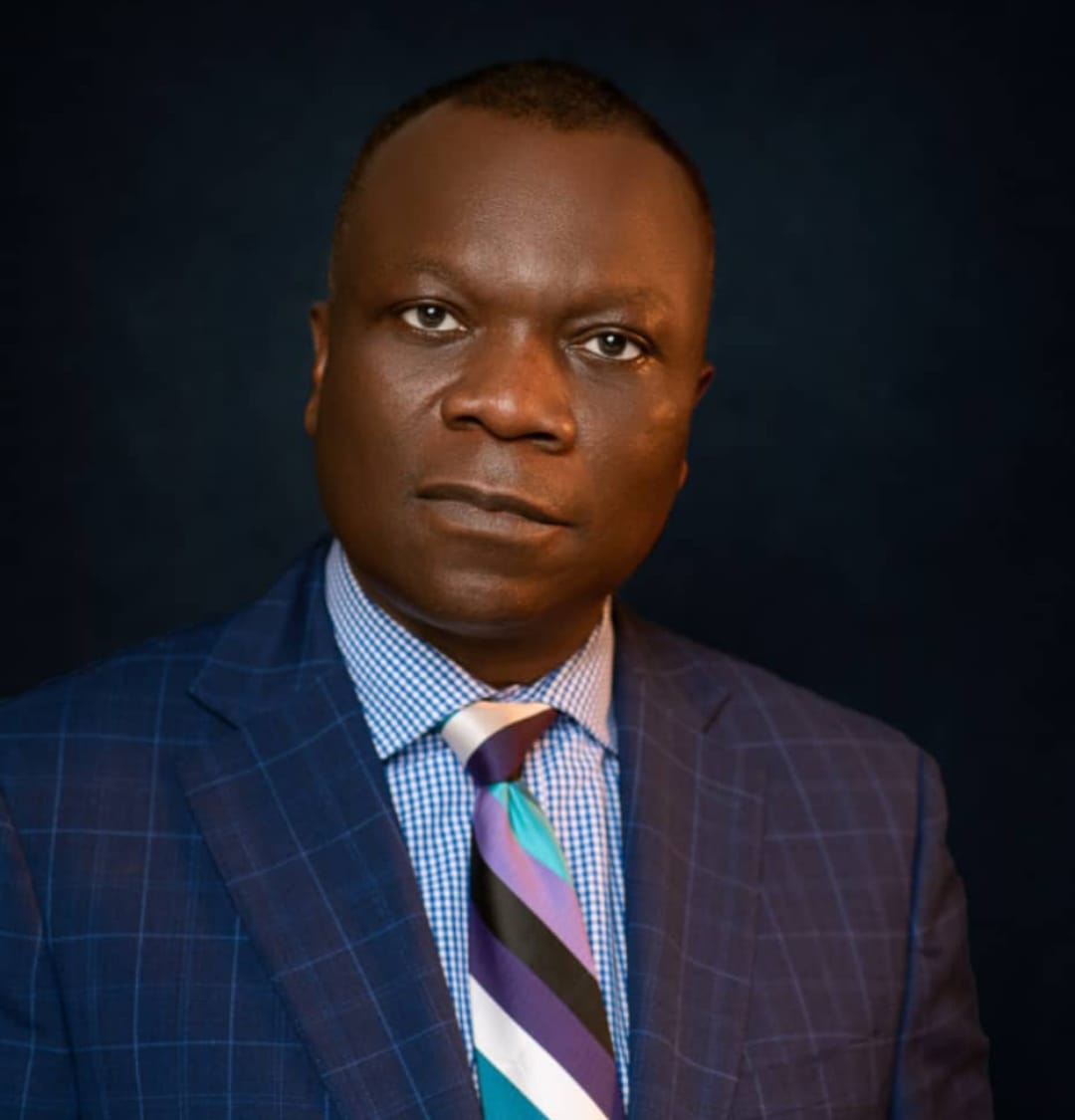
Banwo Identifies Structural Challenges Limiting Opposition
Public commentator Dr. Ope Banwo has identified key structural and strategic challenges limiting the effectiveness of opposition parties in Nigeria.
In a statement released from his base in America, Banwo outlined several factors, including internal divisions, weak grassroots presence, and lack of clear policy alternatives, as major obstacles facing opposition groups.
“One of the biggest issues is fragmentation. There are too many interests and not enough coordination,” he said.
He noted that multiple presidential ambitions within opposition ranks could make it difficult to build consensus around a single candidate.
Banwo also emphasised the importance of grassroots political structures, stating that electoral success in Nigeria depends heavily on local-level organisation.
“Elections are not won on social media. They are won through presence and coordination at the community level,” he explained.
Another concern raised by Banwo is what he described as inconsistent messaging from opposition parties, which he said could make it difficult for voters to identify a clear alternative to the current administration.
“Criticism alone is not enough. Voters want to see a defined direction and credible leadership,” he added.
He further pointed to the challenges of funding and long-term planning, noting that successful political campaigns require sustained investment and discipline.
According to him, defeating an incumbent government demands a high level of coordination, including strong alliances and a unified national strategy.
Banwo, however, suggested that there remains an opportunity for opposition parties to reposition themselves if they address these challenges early.
He stressed the need for compromise among political leaders, urging them to prioritise collective goals over individual ambitions.
“If there is unity, structure, and clarity of purpose, the political landscape can still change,” he said.
He concluded that the strength of any democracy depends on the presence of a viable opposition capable of offering credible alternatives to voters
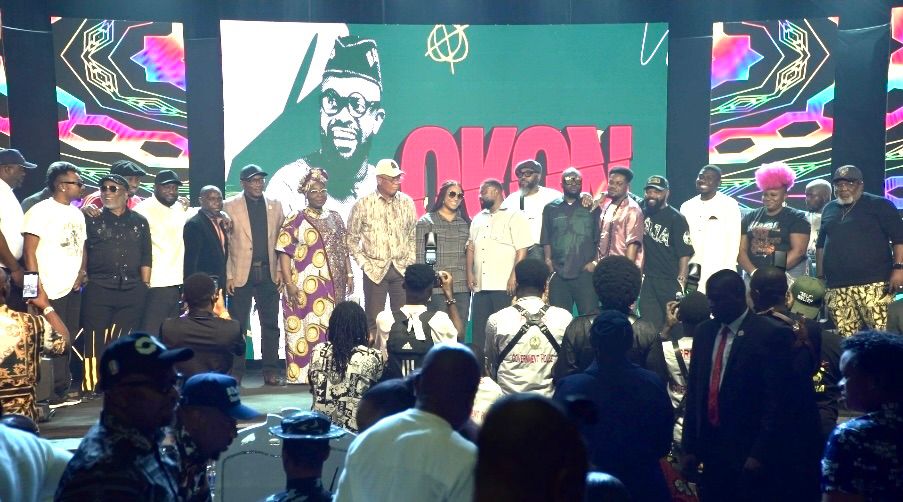
koloman’s: Daddy @pastorumoeno we’re still waiting for your benevolence sir
@igosave @okonlagos @nedu_official @yawnaija @deehumorous @senatorcomedian @akwaibomstategovt


- African Development Bank, The European Stability Mechanism (ESM) sign Memorandum of Understanding to enhance cooperation April 16, 2026
- Seeing the Unseen – How Canon is Protecting East Africa’s Coral Reefs April 16, 2026
- Sintana Listing Signals New Era for Local Ownership in Namibia’s Oil and Gas Sector April 16, 2026
- The crisis in the Middle East could cost Africa 0.2 percent in economic growth in 2026 April 16, 2026
- Namibia International Energy Conference (NIEC) 2026: Namibia Fast-Tracks Oil Law Reform as President Nandi-Ndaitwah Pushes Amendment Bill Ahead of First Oil April 16, 2026
- Africa’s Energy Wealth: Why Good Governance Must Power a Just Transition (By Sola Adebawo) April 16, 2026
- Emirates and Wesgro sign Memorandum of Understanding (MoU) to Stimulate Inbound Tourism to the Western Cape April 16, 2026
- Banco Sol’s Angola Oil & Gas (AOG) 2026 Sponsorship Affirms Drive to Finance Angolan Service Companies April 16, 2026
- Uganda Development Corporation (UDC) to take 82% of Trade ministry budget April 16, 2026
- Merck Foundation marks ‘World Art Day’ through their Film, Song, Media and Fashion Awards 2026 in partnership with Africa’s First Ladies to raise awareness about social & health issues April 15, 2026
- African Development Bank, The European Stability Mechanism (ESM) sign Memorandum of Understanding to enhance cooperation April 16, 2026
- Seeing the Unseen – How Canon is Protecting East Africa’s Coral Reefs April 16, 2026
- Sintana Listing Signals New Era for Local Ownership in Namibia’s Oil and Gas Sector April 16, 2026
- The crisis in the Middle East could cost Africa 0.2 percent in economic growth in 2026 April 16, 2026
- Namibia International Energy Conference (NIEC) 2026: Namibia Fast-Tracks Oil Law Reform as President Nandi-Ndaitwah Pushes Amendment Bill Ahead of First Oil April 16, 2026
- Africa’s Energy Wealth: Why Good Governance Must Power a Just Transition (By Sola Adebawo) April 16, 2026
- Emirates and Wesgro sign Memorandum of Understanding (MoU) to Stimulate Inbound Tourism to the Western Cape April 16, 2026
-

 news4 months ago
WHO REALLY OWNS MONIEPOINT? The $290 Million Deal That Sold Nigeria’s Top Fintech to Foreign Interests
-

 celebrity radar - gossips3 months ago
Dr. Chris Okafor Returns with Power and Fire of the Spirit -Mounts Grace Nation Altar with Fresh Anointing and Restoration Grace on February 1, 2026
-

 celebrity radar - gossips4 months ago
Prophet Kingsley Aitafo Releases 2026 Prophecy: ‘Nigeria Will Rise, but the World Must Prepare for Turbulence’
-

 celebrity radar - gossips6 months ago
End of an Era: Nigeria Mourns Evangelist Dr. Uma Ukpai, 80