
society
The Power of Generosity: A Universal Gift That Transforms Lives.


The Power of Generosity: A Universal Gift That Transforms Lives.
By George Omagbemi Sylvester | Published by saharaweeklyng.com
” _No one has ever become poor by giving._” ~ Anne Frank
” _We make a living by what we get. We make a life by what we give_.” ~ Winston Churchill
In a world defined by ambition, materialism, and social inequality, one virtue continues to shine through as a beacon of hope, humanity, and healing, which is generosity. Whether you are rich or poor, young or old, educated or unlearned, generosity is not only possible; it is essential. Everyone can experience the joy and blessing of giving because everyone has something to give. If you have much, share your wealth; if you have little, give of your heart.

Generosity is not limited to financial endowments or grand philanthropic gestures. In fact, some of the most profound acts of giving come from those who possess very little. The single mother offering her last meal to a hungry neighbour, the teenager sacrificing time to tutor a struggling classmate, or the jobless man who still manages to share words of encouragement and love. These are all demonstrations of generosity with the heart ~ perhaps the purest form of giving.
Understanding Generosity: A Universal Human Virtue
Generosity is deeply embedded in every religion, culture, and philosophy. In Christianity, Jesus Christ taught, “ _It is more blessed to give than to receive” (Acts 20:35)_. Islam preaches _Zakat_, one of its five pillars, which mandates Muslims to give to the poor. Hinduism promotes “ _dāna_” the act of charity, as a vital spiritual duty. African traditional beliefs emphasize communal living, mutual help, and shared responsibility. In all these ideologies, giving is not optional, it is essential.
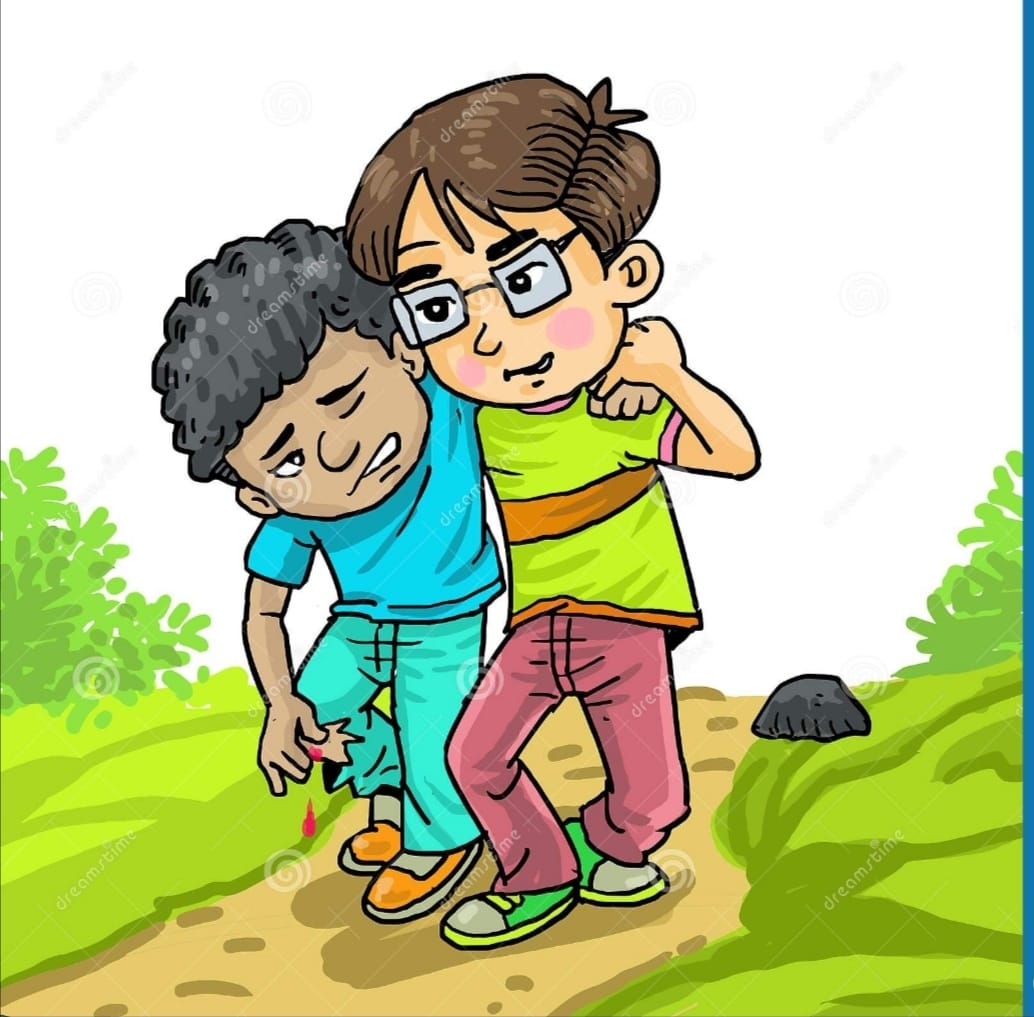
Despite the diversity of backgrounds and beliefs, the truth remains: humans are wired to be generous. According to a 2006 study published in the Proceedings of the National Academy of Sciences (PNAS), scientists discovered that acts of generosity trigger activity in the brain’s reward center, the same area stimulated by food, sex, and drugs. This means that giving doesn’t just benefit the receiver; it genuinely makes the giver happier and healthier.
The Science of Giving: Proven Benefits
Generosity has been proven to improve physical health, mental well-being, and life satisfaction. A 2013 study by the University of Zurich found that people who made a pledge to be more generous experienced greater happiness and had lower levels of stress and depression.
In another widely cited research conducted at Harvard Business School, it was found that individuals who spent money on others rather than themselves reported greater personal fulfillment and happiness. The science is clear: generosity enriches the giver as much, if not more, than the receiver.
In terms of societal impact, generosity leads to stronger communities, reduced crime rates, and greater social trust. Countries and regions with high levels of charitable giving tend to have healthier democracies, stronger civic engagement, and better public well-being.
The Myth of Scarcity
A major reason many hesitate to give is the myth of scarcity; the belief that we don’t have enough. This dangerous mindset traps individuals into hoarding wealth, love, knowledge, or time, believing that giving will leave them with less. But the opposite is often true. As Maya Angelou aptly put it, “ _When we give cheerfully and accept gratefully, everyone is blessed_.”
When you give, you invite others to do the same. Generosity is contagious. One act of kindness often sets off a chain reaction that can ripple across communities, countries, and even generations.
Consider the story of Feeding America, one of the largest hunger-relief organizations in the United States. It began from one man’s idea (John van Hengel) who saw grocery stores discarding edible food and sought to redistribute it to those in need. That single act of insight and compassion has today led to millions of meals served annually across the country.
In Nigeria, Tony Elumelu, a billionaire and philanthropist, is transforming Africa’s entrepreneurial landscape through the Tony Elumelu Foundation. His $100 million commitment to young African entrepreneurs is not just an act of giving but an investment in the future of the continent. That’s the power of generosity; turning a seed into a harvest.
Giving Without Money: The Gift of the Heart
Many people wrongly assume that generosity requires deep pockets. But you don’t need billions to make a difference. You can give your time, empathy, skills, or simply your attention. In today’s distracted world, listening to someone in pain can be more valuable than money.
In South Africa’s townships, community leaders run after-school tutoring programs with no pay, just passion. In rural India, retired schoolteachers volunteer to teach girls denied education. In war-torn Gaza, doctors from around the world offer free medical services in makeshift hospitals. These are not billionaires; they are ordinary people with extraordinary hearts.
Mother Teresa once said, “ _Not all of us can do great things. But we can do small things with great love_.” That is the very essence of giving from the heart.
Obstacles to Generosity: Greed, Fear, and Indifference
Despite its benefits, generosity is not always easy. Modern capitalism encourages competition over collaboration and materialism has conditioned many to measure success by accumulation rather than contribution. Greed, fear of lack, and social indifference are major barriers.
When a society becomes driven by “ _what’s in it for me_” rather than “ _what can I do for others,_” the consequences are visible: widening inequality, broken communities, and moral bankruptcy. Africa is rich in resources but suffers from poverty largely because those in power often take more than they give.
We must fight this culture of selfishness with intentional generosity. Not just charity, but equity. Not just handouts, but empowerment. Not just feeling good, but doing good.
Building a Culture of Generosity
To build a truly generous world, we must teach it from the grassroots. Schools must incorporate empathy and community service into their curriculum. Parents must model giving in their homes. Religious leaders must preach not just about receiving miracles but about being someone’s miracle.
Governments must make it easier to donate and support charitable acts through tax incentives, public recognition, and collaboration with NGOs. Companies must adopt corporate social responsibility not as a PR stunt but as a fundamental value.
The Heart of the Matter:
In a world torn by war, inequality, hate, and selfish ambition, generosity is not just a virtue; it is a revolution. The kind of revolution that does not require bloodshed but touches the soul; not a change in government, but a change in the heart.
The question is not how much you have but how much you’re willing to share. If you have wealth, use it to lift others. If you have wisdom, use it to guide others. If you have only your voice, use it to speak kindness. If you have only your hands, use them to help someone up.
Give because you can. Give because the world needs it. Give because in giving, we discover our highest selves.
As the great South African leader Tata Nelson Mandela once said, _“What counts in life is not the mere fact that we have lived. It is what difference we have made to the lives of others_.”
Let us not live for ourselves alone. Let us live for impact, for purpose, and for others; through the divine, healing, and transformational power of generosity.
Written by: George Omagbemi Sylvester
Published by: SaharaWeeklyNG.com
For publication, quotes, or inquiries, contact: [email protected]



FRSC@ 38: SHEHU MOHAMMED STEERING NIGERIA’S ROAD SAFETY REVOLUTION TO GREATER HEIGHTS
By Deputy Corps Marshal Bisi Kazeem (Rtd) fsi, MNIM, anipr
When Mallam Shehu Mohammed assumed leadership as Corps Marshal of the Federal Road Safety Corps (FRSC), he inherited not just an institution with history, but a national mandate that touches every family, every highway, and every community in Nigeria. At 38 years, the Corps stands tall as Africa’s model road safety agency, and under his stewardship, that legacy is not merely preserved, it is being boldly redefined.
Nigeria’s highways were once synonymous with fear. Before 1988, the World Health Organisation ranked Nigeria among the most dangerous countries in the world to drive. It was a troubling indictment that demanded courage and clarity of purpose. The establishment of the FRSC under Decree No. 45 of 1988 laid the foundation for reform. But sustaining and advancing that reform across decades requires visionary leadership, the kind now exemplified by Mallam Shehu Mohammed.
Today, under his command, the Corps is consolidating its position as one of the most technologically advanced and operationally efficient law enforcement institutions in Nigeria. With renewed strategic focus, the present leadership has deepened the Safe Systems Approach built on people, processes, and technology, ensuring that safety interventions are not reactive, but preventive and intelligence-driven.
One of the defining hallmarks of his administration is accelerated digital transformation. Within six months, over 3,000 personnel were trained to strengthen operational competence and technological adaptability. More than 95 per cent of the Corps’ administrative and operational processes are automated, supported by over 30 web-based applications that enhance traffic governance nationwide. From the National Crash Reporting Information System (NACRIS) to the upgraded e-ticketing platform, innovation is no longer optional; it is institutional culture.
Emergency response under the current Corps Marshal has become faster and more coordinated, with nationwide response time reduced dramatically from 50 minutes to 15 minutes. The 122 toll-free emergency line and 24-hour National Call Centre continue to serve as lifelines for distressed road users, reflecting a leadership that understands that every second counts.
Strategic stakeholder engagement has equally flourished. Safe corridor initiatives have been strengthened, collaboration with transport unions intensified, and enforcement around articulated vehicles tightened. The result is a significant reduction in tanker-related crashes, a development that speaks to deliberate policy direction and disciplined implementation.
Under Mallam Shehu Mohammed’s leadership, data has become a central pillar of enforcement and planning. Through strengthened collaboration with the National Identity Management Commission, the National Bureau of Statistics, and the Nigeria Customs Service, the Corps has advanced harmonized data systems that support evidence-based interventions. Transparent weekly crash trend reporting now guides targeted deployment and corrective strategies.
Nigeria’s standing on the global stage has also been reinforced. The country remains an active participant in the renewed UN Decade of Action for Road Safety (2021–2030) and continues alignment with international road safety conventions. These achievements build on the solid foundation laid by past leaders from Olu Agunloye and General Haladu Hannaniya to Chief Osita Chidoka, Dr. Boboye Oyeyemi, and Dauda Ali Biu, but under the present Corps Marshal, the momentum has unmistakably intensified.
Operationally, the Corps’ footprint now spans 12 Zonal Commands, 37 Sector Commands, over 300 Unit Commands, over 700 Station Offices, 59 Zebra Emergency Ambulance Points, and presence in all 774 Local Government Areas of Nigeria. Yet beyond physical structures lies a stronger institutional spirit, one driven by discipline, professionalism, and accountability.
From a nation once ranked among the most unsafe for motorists to a continental pacesetter in road safety management, Nigeria’s transformation story is inseparable from the strength of its leadership. At 38 years, FRSC is not simply celebrating longevity; it is celebrating purposeful stewardship.
Mallam Shehu Mohammed represents a generation of reform-minded leadership committed to smarter mobility systems, data-driven enforcement, and people-centered safety administration.
His tenure reflects continuity with courage sustaining the Corps’ proud legacy while boldly steering it toward greater innovation and measurable impact.
The road ahead is demanding. But under his steady command, Nigeria’s highways are safer, its systems smarter, and its future brighter.
Fashion/Lifestyle
Introducing “Atupaglowco” : Where Fragrance Meets Feeling; The Story of Our Beginning

Introducing “Atupaglowco”: Where Fragrance Meets Feeling; The Story of Our Beginning
Every great journey begins with a sense of anticipation. For us, it began with a simple belief that a space should do more than exist, it should speak comfort and glow.
In a world filled with noise, stress, and endless motion, we realized something powerful. Fragrance can transform not just rooms, but moods. A familiar scent can calm anxiety. A warm aroma can turn a house into a home. A gentle glow can bring peace after a long day. This realization gave birth to “Atupaglowco.”
Atupaglowco was not created to sell diffusers, room sprays, or candles. It was created to create experiences. To create moments. To create atmospheres where people can breathe, reflect, and feel whole again.
The name itself represents more than a brand. It represents warmth. It represents light. It represents presence. We remember the early days, the planning, the testing of scents, the moments of doubt, and the moments of excitement. Each candle poured was a step of faith. Each fragrance blended was a piece of our vision coming to life. We weren’t just building products; we were building something meaningful.
Our diffusers were designed to quietly fill spaces with elegance.
Our room sprays were crafted to instantly refresh and revive environments. Our candles were made to bring calm, beauty, and a soft glow into everyday life.
Atupaglowco was born from passion, patience, and purpose. This launch is not just the start of a business. It is the start of a movement to help people create spaces they love. Spaces that inspire rest. Spaces that inspire joy. Spaces that glow.
We believe fragrance is personal. We believe glow is emotional. We believe every space deserves both.
Today, we proudly introduce Atupaglowco to the world.
This is only the beginning.

Ajadi Hails Oyo Speaker Ogundoyin at 39, Describes Him as Beacon of Purposeful Leadership
A leading governorship aspirant of the Peoples Democratic Party (PDP) in Oyo State, Ambassador Olufemi Ajadi Oguntoyinbo, has congratulated the Speaker of the Oyo State House of Assembly, Rt. Hon. Adebo Edward Ogundoyin, on the occasion of his 39th birthday, describing him as “a symbol of resilience, maturity and purposeful leadership in Nigeria’s democratic journey.”
In a congratulatory message made available to journalists on Tuesday, Ajadi praised Ogundoyin’s steady rise in public service, noting that his emergence as Speaker at a relatively young age reflects the possibilities of responsible youth leadership when combined with discipline, vision and service.
“Rt. Hon. Ogundoyin’s leadership has shown that age is not a barrier to excellence,” Ajadi said. “At 39, he stands tall as one of the most impactful Speakers in Oyo State’s history—calm, inclusive and deeply committed to democratic ideals.”
Ogundoyin, who represents Ibarapa East State Constituency under the Peoples Democratic Party, has served as Speaker since 2019 and was re-elected to lead the 10th Assembly in June 2023. His tenure has been marked by legislative stability, improved executive–legislative relations and youth-inclusive governance.
Ajadi commended the Speaker for fostering unity within the Assembly and prioritising laws that strengthen grassroots development across Oyo State. “His humility, accessibility and focus on people-oriented legislation have earned him respect beyond party lines,” he said. “He exemplifies the kind of leadership Oyo State needs—one anchored on service, accountability and progress.”
The governorship aspirant further described Ogundoyin as a rallying point for young Nigerians aspiring to public office. “In a country searching for credible leaders, Ogundoyin’s story offers hope,” Ajadi added. “He has shown that when young leaders are trusted with responsibility, they can deliver stability and results.”
Ajadi wished the Speaker many more years of good health, wisdom and greater service to Oyo State and Nigeria at large, praying that his leadership journey continues to inspire a new generation of public servants.
Ogundoyin, one of the youngest Speakers in Nigeria, has continued to attract goodwill messages from political leaders, civil society actors and constituents, as Oyo State marks another year in the life of a lawmaker widely regarded as a steady hand in the state’s legislative affairs.


-

 celebrity radar - gossips6 months ago
Why Babangida’s Hilltop Home Became Nigeria’s Political “Mecca”
-

 society6 months ago
Power is a Loan, Not a Possession: The Sacred Duty of Planting People
-

 news6 months ago
THE APPOINTMENT OF WASIU AYINDE BY THE FEDERAL GOVERNMENT AS AN AMBASSADOR SOUNDS EMBARRASSING
-
 society5 months ago
Religion: Africa’s Oldest Weapon of Enslavement and the Forgotten Truth