
society
Integrity, Wealth and the Soul of a Nation: The Forgotten Foundations of Greatness

Integrity, Wealth and the Soul of a Nation: The Forgotten Foundations of Greatness.
By George Omagbemi Sylvester | Published by SaharaWeeklyNG.com
“ _Integrity is doing the right thing, even when no one is watching._”~ C.S. Lewis
In a world driven by profit margins, political expediency and instant gratification, the word integrity often feels like an old relic, too noble to survive in today’s cut-throat arena of ambition. Yet it remains the cornerstone of enduring greatness, whether in personal development, societal transformation or national leadership.
Today, many seek shortcuts to success, fame without sacrifice and wealth without wisdom; but history, both ancient and modern, teaches us a profound truth: the best way to get something good out of what we’re doing is to put something good into it. Input determines output. Character shapes legacy. And in every era, integrity has been the defining thread that stitched together the fabrics of genuine progress.
The Moral Wealth of Integrity
Integrity is not merely a virtue, it is an investment. It is not only about abstaining from wrongdoing, but also about consistently choosing what is right, even when the cost is high and even when nobody is watching. And in a society increasingly seduced by visibility and viral validation, this virtue becomes the ultimate test of who we are when the lights go off.
Renowned South African Anglican bishop and anti-apartheid hero Archbishop Desmond Tutu, one of Africa’s 100 Most Reputable individuals, once declared:
“ _If you are neutral in situations of injustice, you have chosen the side of the oppressor_.”
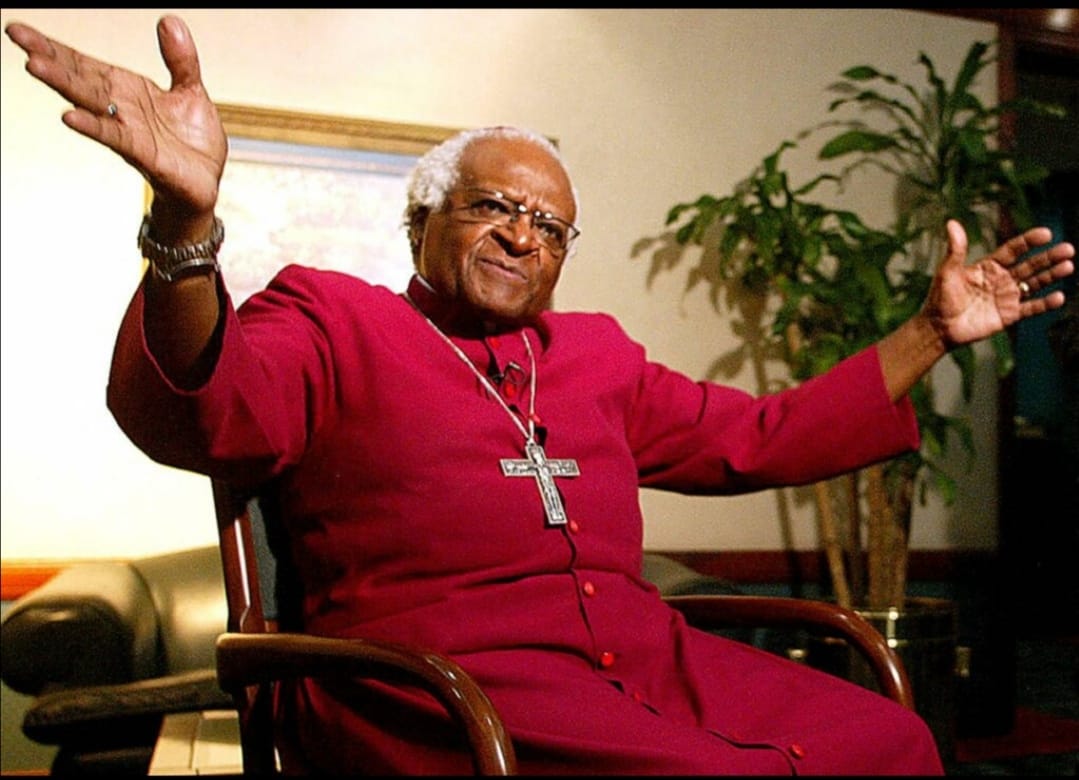
This encapsulates the very essence of integrity not only doing good, but refusing to stand idle in the face of evil. Integrity is not passive; it is power harnessed for the good of all.
Olu of Warri: A Royal Symbol of Integrity
Among the most admired integrity-driven leaders in Africa today is His Imperial Majesty, Ogiame Atuwatse III CFR, the Olu of Warri Kingdom. As a traditional ruler, his leadership is distinguished not only by cultural reverence but by moral courage, diplomatic insight and a fierce commitment to the welfare of his people.
Under his reign, the Itsekiri Nation has witnessed a rebirth of purpose and pride. His Majesty emphasizes servant leadership, youth empowerment, education and philanthropy; qualities that reflect a monarch who leads by moral compass rather than by royal privilege. His interventions in diaspora relations, healthcare missions and education scholarships are clear examples of a ruler putting good into the system, without expectation of applause.
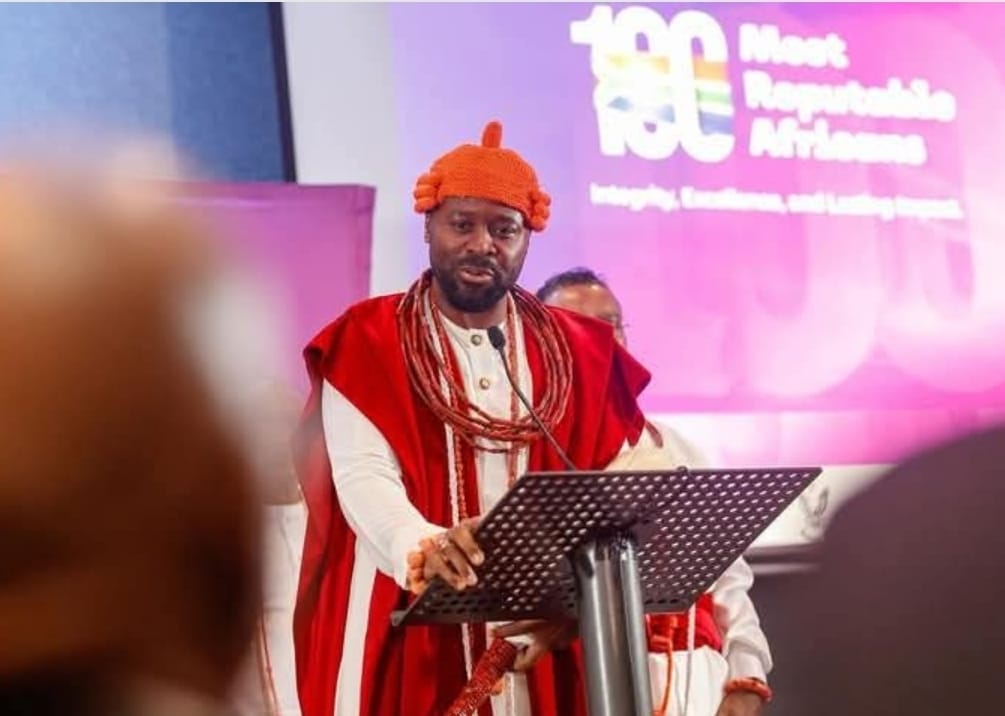
The Olu’s mantra is simple yet revolutionary: “ _The true wealth of a kingdom is the wellness of its people._” This is integrity made manifest in leadership. This is royalty not for conquest or glory, but for nation-building and human dignity.
Money, Morality and the Mind
As the quote says, “Our mind is always where our money lies.” There is a chilling truth to this. Where we invest our time, our energy and our resources reveals what we truly value. In today’s Nigeria (and across many African societies) there is an almost idolatrous worship of wealth; but in chasing money, we have often neglected morality.
There is no denying that money is important. American entrepreneur Zig Ziglar once quipped, “ _Money isn’t everything, but it ranks right up there with oxygen_.” Indeed, money builds schools, equips hospitals, funds innovation and powers dreams. But it is not and must never be, the compass of our collective soul. When the pursuit of money becomes a replacement for the pursuit of values, a nation is on the path to moral bankruptcy.
In the words of Dr. Mo Ibrahim, billionaire philanthropist and another standout among Africa’s 100 Most Reputable,
“ _It is not enough to have a good economy. We need good governance, good institutions and above all, good hearts_.”
This call to integrity (of heart and of systems) must echo louder than ever.
The Virtue Barometer: Society’s Moral Pulse
The barometer of a society’s virtue lies not in its GDP or skyscrapers, but in how it treats its most vulnerable, how it selects its leaders and how it responds to injustice. We must ask ourselves: HOW DID WE NORMALIZE CORRUPTION AND CALL IT CONNECTION? HOW DID WE GLORIFY THEFT AND CALL IT SMARTNESS? And HOW DID WE SHAME HONESTY AND CALL IT FOOLISHNESS?
The answer lies in the slow but steady erosion of integrity as a societal value, but it’s not too late to restore it. Across the continent, beacons of light still shine.
From NGOZI OKONJO-IWEALA, WTO Director-General and former Nigerian Finance Minister, whose record of accountability has inspired millions…
To STRIVE MASIYIWA, Zimbabwean billionaire and philanthropist whose foundation has empowered over 250,000 African youth…
To ELLEN JOHNSON SIRLEAF, Africa’s first elected female president, who rebuilt Liberia from the ashes of war with transparency and justice at her core…
These leaders prove that honesty and leadership are not mutually exclusive.
Integrity in the Face of Adversity
In fact, integrity is most meaningful when tested. During Nigeria’s most turbulent political years, individuals like OBY EZEKWESILI (former education minister and founder of #BringBackOurGirls) risked everything to speak truth to power. That is integrity in action; when truth is costly, but still told.
When nations compromise their principles for political gain or economic advantage, they may thrive temporarily; but they ultimately rot from within. Like a beautifully decorated coffin, such a society may look attractive on the outside but is empty and decaying on the inside.
A Call to Leaders, Youth and the Diaspora
We must call on our leaders not just traditional rulers or politicians but pastors, teachers, business executives, artists and influencers to become ambassadors of integrity. Africa’s youth, both home and abroad, must rewrite the narrative: SUCCESS SHOULD NO LONGER BE MEASURED BY WHAT YOU POSSESS BUT BY WHAT YOU STAND FOR.
Youths in the diaspora have a special role. Exposed to global systems of transparency and accountability, they must act as moral mirrors to reflect and correct the loopholes back home; not just criticize from afar, but build bridges of reform and mentorship.
The Road Ahead: Restoration Through Integrity
As a people, we must remember: “ _What you do speaks so loudly, I cannot hear what you say_.” These words by Ralph Waldo Emerson remind us that our actions (not our slogans) define us.
To build a new Nigeria, and by extension a new Africa, we must:
Raise LEADERS with CHARACTER more than CHARISMA.
Build SYSTEMS that punish CORRUPTION rather than EXCUSE it.
Celebrate HONESTY even when it’s INCONVENIENT.
Educate our CHILDREN to VALUE TRUTH over TREND.
Support INTEGRITY-DRIVEN leaders like OGIAME ATUWATSE III and others ACROSS the CONTINENT.
In Final Thought
Integrity may not trend on social media, but it trends in HEAVEN (a land beyond). It may not earn applause in a corrupt system, but it builds empires that last. The road to lasting prosperity is paved not just with infrastructure and investment; but with INTEGRITY.
Let us invest in it. Let us defend it. Let us live it. For it is only in doing right (even when no one is watching) that we will secure the future generations are praying for.
Written by George Omagbemi Sylvester
Published by SaharaWeeklyNG.com






FRSC@ 38: SHEHU MOHAMMED STEERING NIGERIA’S ROAD SAFETY REVOLUTION TO GREATER HEIGHTS
By Deputy Corps Marshal Bisi Kazeem (Rtd) fsi, MNIM, anipr
When Mallam Shehu Mohammed assumed leadership as Corps Marshal of the Federal Road Safety Corps (FRSC), he inherited not just an institution with history, but a national mandate that touches every family, every highway, and every community in Nigeria. At 38 years, the Corps stands tall as Africa’s model road safety agency, and under his stewardship, that legacy is not merely preserved, it is being boldly redefined.
Nigeria’s highways were once synonymous with fear. Before 1988, the World Health Organisation ranked Nigeria among the most dangerous countries in the world to drive. It was a troubling indictment that demanded courage and clarity of purpose. The establishment of the FRSC under Decree No. 45 of 1988 laid the foundation for reform. But sustaining and advancing that reform across decades requires visionary leadership, the kind now exemplified by Mallam Shehu Mohammed.
Today, under his command, the Corps is consolidating its position as one of the most technologically advanced and operationally efficient law enforcement institutions in Nigeria. With renewed strategic focus, the present leadership has deepened the Safe Systems Approach built on people, processes, and technology, ensuring that safety interventions are not reactive, but preventive and intelligence-driven.
One of the defining hallmarks of his administration is accelerated digital transformation. Within six months, over 3,000 personnel were trained to strengthen operational competence and technological adaptability. More than 95 per cent of the Corps’ administrative and operational processes are automated, supported by over 30 web-based applications that enhance traffic governance nationwide. From the National Crash Reporting Information System (NACRIS) to the upgraded e-ticketing platform, innovation is no longer optional; it is institutional culture.
Emergency response under the current Corps Marshal has become faster and more coordinated, with nationwide response time reduced dramatically from 50 minutes to 15 minutes. The 122 toll-free emergency line and 24-hour National Call Centre continue to serve as lifelines for distressed road users, reflecting a leadership that understands that every second counts.
Strategic stakeholder engagement has equally flourished. Safe corridor initiatives have been strengthened, collaboration with transport unions intensified, and enforcement around articulated vehicles tightened. The result is a significant reduction in tanker-related crashes, a development that speaks to deliberate policy direction and disciplined implementation.
Under Mallam Shehu Mohammed’s leadership, data has become a central pillar of enforcement and planning. Through strengthened collaboration with the National Identity Management Commission, the National Bureau of Statistics, and the Nigeria Customs Service, the Corps has advanced harmonized data systems that support evidence-based interventions. Transparent weekly crash trend reporting now guides targeted deployment and corrective strategies.
Nigeria’s standing on the global stage has also been reinforced. The country remains an active participant in the renewed UN Decade of Action for Road Safety (2021–2030) and continues alignment with international road safety conventions. These achievements build on the solid foundation laid by past leaders from Olu Agunloye and General Haladu Hannaniya to Chief Osita Chidoka, Dr. Boboye Oyeyemi, and Dauda Ali Biu, but under the present Corps Marshal, the momentum has unmistakably intensified.
Operationally, the Corps’ footprint now spans 12 Zonal Commands, 37 Sector Commands, over 300 Unit Commands, over 700 Station Offices, 59 Zebra Emergency Ambulance Points, and presence in all 774 Local Government Areas of Nigeria. Yet beyond physical structures lies a stronger institutional spirit, one driven by discipline, professionalism, and accountability.
From a nation once ranked among the most unsafe for motorists to a continental pacesetter in road safety management, Nigeria’s transformation story is inseparable from the strength of its leadership. At 38 years, FRSC is not simply celebrating longevity; it is celebrating purposeful stewardship.
Mallam Shehu Mohammed represents a generation of reform-minded leadership committed to smarter mobility systems, data-driven enforcement, and people-centered safety administration.
His tenure reflects continuity with courage sustaining the Corps’ proud legacy while boldly steering it toward greater innovation and measurable impact.
The road ahead is demanding. But under his steady command, Nigeria’s highways are safer, its systems smarter, and its future brighter.
Fashion/Lifestyle
Introducing “Atupaglowco” : Where Fragrance Meets Feeling; The Story of Our Beginning
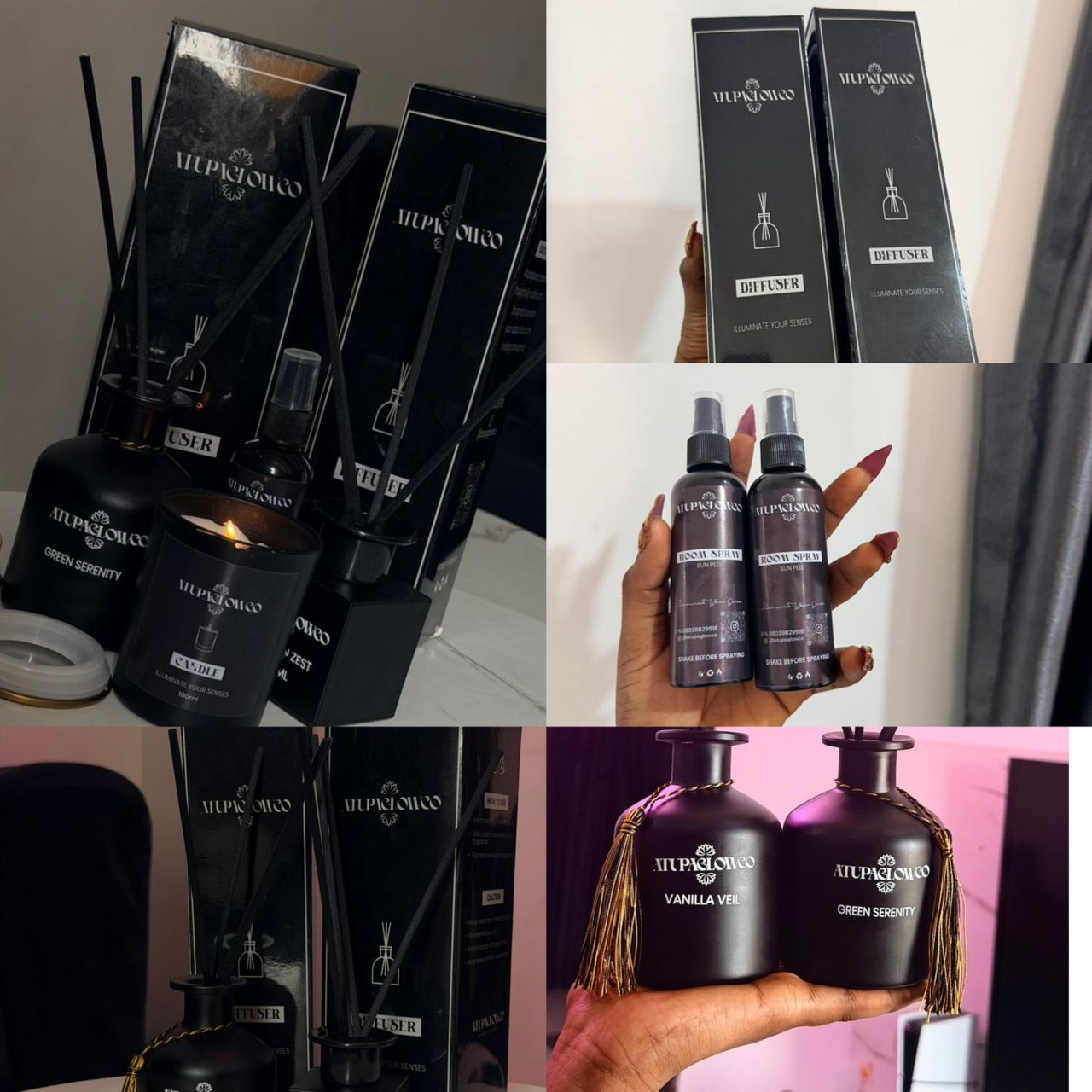
Introducing “Atupaglowco”: Where Fragrance Meets Feeling; The Story of Our Beginning
Every great journey begins with a sense of anticipation. For us, it began with a simple belief that a space should do more than exist, it should speak comfort and glow.
In a world filled with noise, stress, and endless motion, we realized something powerful. Fragrance can transform not just rooms, but moods. A familiar scent can calm anxiety. A warm aroma can turn a house into a home. A gentle glow can bring peace after a long day. This realization gave birth to “Atupaglowco.”
Atupaglowco was not created to sell diffusers, room sprays, or candles. It was created to create experiences. To create moments. To create atmospheres where people can breathe, reflect, and feel whole again.
The name itself represents more than a brand. It represents warmth. It represents light. It represents presence. We remember the early days, the planning, the testing of scents, the moments of doubt, and the moments of excitement. Each candle poured was a step of faith. Each fragrance blended was a piece of our vision coming to life. We weren’t just building products; we were building something meaningful.
Our diffusers were designed to quietly fill spaces with elegance.
Our room sprays were crafted to instantly refresh and revive environments. Our candles were made to bring calm, beauty, and a soft glow into everyday life.
Atupaglowco was born from passion, patience, and purpose. This launch is not just the start of a business. It is the start of a movement to help people create spaces they love. Spaces that inspire rest. Spaces that inspire joy. Spaces that glow.
We believe fragrance is personal. We believe glow is emotional. We believe every space deserves both.
Today, we proudly introduce Atupaglowco to the world.
This is only the beginning.
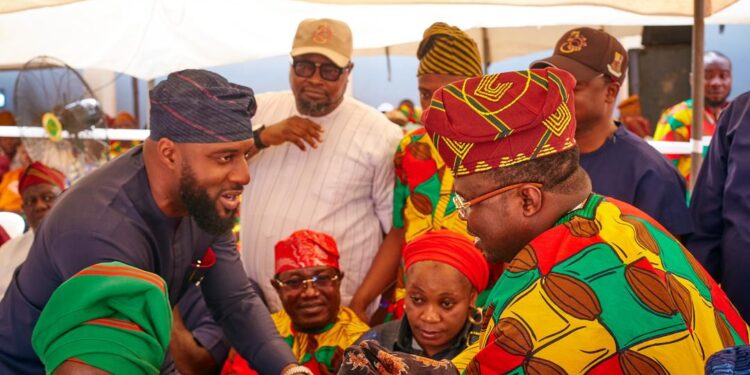
Ajadi Hails Oyo Speaker Ogundoyin at 39, Describes Him as Beacon of Purposeful Leadership
A leading governorship aspirant of the Peoples Democratic Party (PDP) in Oyo State, Ambassador Olufemi Ajadi Oguntoyinbo, has congratulated the Speaker of the Oyo State House of Assembly, Rt. Hon. Adebo Edward Ogundoyin, on the occasion of his 39th birthday, describing him as “a symbol of resilience, maturity and purposeful leadership in Nigeria’s democratic journey.”
In a congratulatory message made available to journalists on Tuesday, Ajadi praised Ogundoyin’s steady rise in public service, noting that his emergence as Speaker at a relatively young age reflects the possibilities of responsible youth leadership when combined with discipline, vision and service.
“Rt. Hon. Ogundoyin’s leadership has shown that age is not a barrier to excellence,” Ajadi said. “At 39, he stands tall as one of the most impactful Speakers in Oyo State’s history—calm, inclusive and deeply committed to democratic ideals.”
Ogundoyin, who represents Ibarapa East State Constituency under the Peoples Democratic Party, has served as Speaker since 2019 and was re-elected to lead the 10th Assembly in June 2023. His tenure has been marked by legislative stability, improved executive–legislative relations and youth-inclusive governance.
Ajadi commended the Speaker for fostering unity within the Assembly and prioritising laws that strengthen grassroots development across Oyo State. “His humility, accessibility and focus on people-oriented legislation have earned him respect beyond party lines,” he said. “He exemplifies the kind of leadership Oyo State needs—one anchored on service, accountability and progress.”
The governorship aspirant further described Ogundoyin as a rallying point for young Nigerians aspiring to public office. “In a country searching for credible leaders, Ogundoyin’s story offers hope,” Ajadi added. “He has shown that when young leaders are trusted with responsibility, they can deliver stability and results.”
Ajadi wished the Speaker many more years of good health, wisdom and greater service to Oyo State and Nigeria at large, praying that his leadership journey continues to inspire a new generation of public servants.
Ogundoyin, one of the youngest Speakers in Nigeria, has continued to attract goodwill messages from political leaders, civil society actors and constituents, as Oyo State marks another year in the life of a lawmaker widely regarded as a steady hand in the state’s legislative affairs.


-

 celebrity radar - gossips6 months ago
Why Babangida’s Hilltop Home Became Nigeria’s Political “Mecca”
-

 society6 months ago
Power is a Loan, Not a Possession: The Sacred Duty of Planting People
-

 news6 months ago
THE APPOINTMENT OF WASIU AYINDE BY THE FEDERAL GOVERNMENT AS AN AMBASSADOR SOUNDS EMBARRASSING
-
 society5 months ago
Religion: Africa’s Oldest Weapon of Enslavement and the Forgotten Truth