
Politics
The Death of Democracy in Rivers State: Tinubu’s Authoritarian Grip Tightens Nigeria’s Political Noose

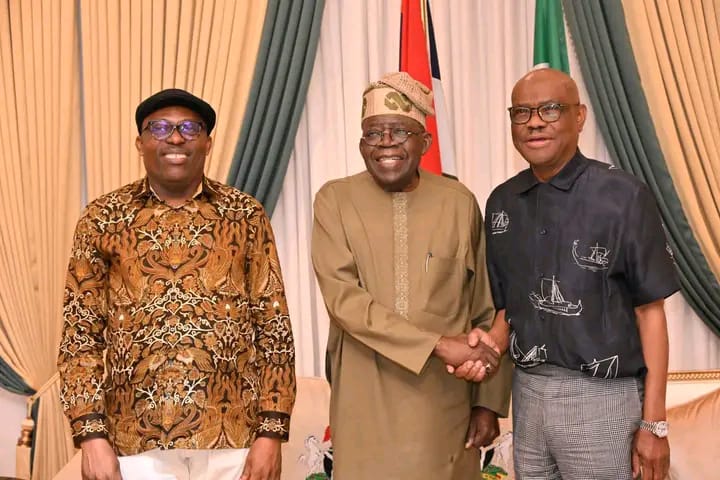
The Death of Democracy in Rivers State: Tinubu’s Authoritarian Grip Tightens Nigeria’s Political Noose.
By George Omagbemi Sylvester | Published by SaharaWeeklyNG.com
When history recounts the dark days of Nigeria’s democratic backsliding, the current political tragedy unfolding in Rivers State will undoubtedly occupy a damning chapter. What began as a local political tussle between Governor Siminalayi Fubara and his estranged godfather (Nyesom Wike), has spiraled into a national scandal of executive overreach and blatant disregard for the rule of law; an institutional coup orchestrated and endorsed by President Bola Ahmed Tinubu and his All Progressives Congress (APC)-led administration.

This latest travesty reached its zenith on Thursday night at the Presidential Villa, Abuja, where President Tinubu presided over what many have called a “CIVILIAN COUP NEGOTIATION ” After months of turmoil that saw Rivers State plunged into a constitutional crisis (culminating in a near-state-of-emergency declaration in March 2025), Tinubu announced the conditional reinstatement of Governor Siminalayi Fubara; let us be clear: THIS WAS NOT RECONCILIATION. This was SUBJUGATION. This was the BURIAL CEREMONY of DEMOCRACY under the guise of PRESIDENTIAL INTERVENTION.
The Conditions of Reinstatement: Democracy on a Leash
According to credible reports, Fubara’s so-called reinstatement came with four DRACONIAN conditions, crafted not to stabilize Rivers State, but to neuter its DEMOCRATICALLY elected leader:

A.) Surrender of control over the state’s LEGISLATIVE and JUDICIAL functions.
B.) Reinstatement of pro-WIKE LAWMAKERS who previously resigned or defected.
C.) Submission to a JOINT GOVERNANCE FRAMEWORK dictated from Abuja.
D.) Renunciation of independent DECISION-MAKING AUTHORITY on POLITICAL APPOINTMENTS and policy direction.
What kind of democracy is this where a sitting governor, elected by the people, is subjected to the whims of political overlords operating outside CONSTITUTIONAL FRAMEWORKS?
This is nothing short of political blackmail and a dangerous precedent that may soon be replicated across other states where governors dare to challenge the federal hegemon.
Wike, the Godfather-In-Chief
At the heart of this travesty lies Nyesom Wike, the Minister of the Federal Capital Territory and de facto overlord of Rivers politics. Wike, who once postured as a defender of democratic principles during his tenure as governor, has now evolved (or rather devolved) into the very embodiment of political tyranny. His fallout with Fubara, whom he handpicked and installed, laid bare the sinister underbelly of Nigeria’s godfatherism problem.

What followed was a brazen campaign of sabotage: Rivers State lawmakers loyal to Wike resigned en masse to cripple the legislature, the judiciary was infiltrated and state institutions were weaponized to torment Governor Fubara into submission.
And rather than intervene as a neutral arbiter, President Tinubu threw the full weight of the federal government behind Wike, proving once again that loyalty to Tinubu trumps constitutional order.
Tinubu’s Authoritarian Blueprint: The Akpabio Revelation
Senate President Godswill Akpabio’s chilling prophecy hangs like a shadow over this national disaster. Speaking earlier this year, Akpabio declared… “By the time Tinubu finishes with Nigeria, nobody will recognize the country again.”
Now we understand what he meant. Under Tinubu’s leadership, Nigeria is fast becoming unrecognizable not because of TRANSFORMATION, but because of REGRESSION.
The pattern is as clear as daylight:
A.) Dismantling of state autonomy
B.) Federal intimidation of opposition governors and lawmakers
C.) Judicial manipulation and electoral interference
D.) Unabashed tolerance for political thuggery and legislative impunity
In Rivers, Tinubu didn’t just mediate a CONFLICT, he masterminded a hostile takeover. The governor now functions more like a federal puppet than the chief executive of a federating unit. If this is Tinubu’s idea of reform, then Nigeria is in grave peril.
A Constitution Trampled
It is important to emphasize that no section of the Nigerian Constitution grants the president the power to impose political terms on a sitting state governor. Section 5(2) of the Constitution vests executive powers in governors, while Section 11(4) outlines the rare and extreme conditions under which the federal government may assume control of a state and conditions that were never legally satisfied in Rivers State.
Therefore, the presidential “AGREEMENT” compelling Fubara to accept humiliating terms under threat of emergency rule is not only UNDEMOCRATIC, it is UNCONSTITUTIONAL.
Where were the so-called constitutional lawyers and human rights defenders? Where was the National Assembly that is supposed to act as a check on executive excess? They stood by in silence & complicit, cowardly or co-opted.
Nigerians React: Outrage and Resistance
Prominent civil society voices have not remained silent.
Femi Falana (SAN) decried the “imposition of unconstitutional demands on a governor elected by the people,” warning that “executive tyranny will soon consume the very institutions enabling it.”
Also former Anambra State Governor Peter Obi, in a social media post, called the agreement “a betrayal of democracy and a dangerous intrusion into the federal character of our republic.”
Activist Aisha Yesufu tweeted, “What Tinubu did in Rivers is political rape. The people’s votes have been hijacked by a few men in Aso Rock.”
Even former Nigerian President Olusegun Obasanjo lamented during a separate national forum: “What we are doing now is neither democracy nor federalism. It is civil rule stained with impunity and disregard for institutions.”
The Implications: A Blueprint for Federal Despotism
The tragedy of Rivers State is not isolated. It is a warning shot to the rest of the country. If a sitting governor can be bullied into submission, what stops the federal government from replicating this in other opposition states?
Today it is Fubara. Tomorrow it could be any state governor who refuses to bend the knee to the Tinubu cabal. The message is clear: “Disobey Abuja at your peril.”
This is not governance. This is conquest.
Judgment Day for Democracy: A Country in Chains
Nigeria is not just facing an economic crisis. We are facing a moral and constitutional crisis. A situation where elections no longer guarantee leadership and political godfathers dictate the fate of millions from air-conditioned war rooms.
This isn’t the democracy we welcomed in 1999. This is a hybrid dictatorship, one foot in civilian attire and the other knee-deep in autocracy.
As we head towards the 2027 general elections, Nigerians must remember that silence in the face of tyranny is complicity. We must call this what it is: a DEMOCRATIC ASSASSINATION in Rivers State, executed with the precision of executive manipulation and godfatherism.
As Gani Fawehinmi once declared, “The tree of democracy must be watered with the blood of patriots; through resistance, sacrifice and in truth.”
If we do not rise now, there may be no recognizable Nigeria left to save.

Written by George Omagbemi Sylvester | Published by SaharaWeeklyNG.com




Politics
Top Reps Aspirant, Abudu-Balogun Assures Constituents of Inclusive, Progressive Representation
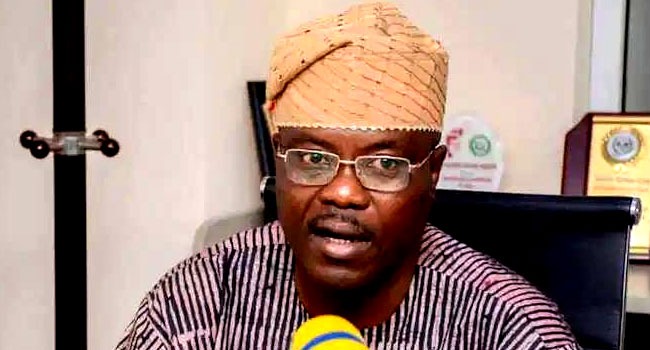
Top Reps Aspirant, Abudu-Balogun Assures Constituents of Inclusive, Progressive Representation
It is an incontrovertible fact that Watersiders should GET IT RIGHT this time around by overwhelmingly support this distinguished Watersider, Hon. Abudu-Balogun to emerge as the Candidate of APC for the Federal House of Representative in the 2027 elections.
Apart from being a respected politician among the creme-de-la-creme professionals in politics in Ogun State, and undoubtedly a prominent grassroots politician of Waterside extraction, Hon. Abudu-Balogun has seen it all in National politics that will be of great benefits to the Federal Constituency if eventually elected.
Hmmm! With the emergence of the distinguished Senator Solomon Adeola (Yayi) as the consensus Governorship candidate of APC in Ogun State, Waterside agitation for enduring developmental projects and its realisation like Deep Sea Port, assumption of Oil producing LGA via Eba Oil deposits, sustainable Electricity Supply would be a walk-over. This anaysis is predicated upon a scientifically established empirical evidence that Hon Abudu-Balogun is a sustainable Bridge between this Federal Constituency and the Powers that be at Federal level.
He has the competence, he posseses the Capacity, he has the cognate political experience, he has fortified the developmental blueprint, he has worked tirelessly, and earned the link to facilitate the expected developmental projects to this Federal Constituency.
Above all, Hon Abudu-Balogun has concluded political and economic arrangements to galvanise support in all respects from the main actors at the National and sub-national levels in the country for the tasks ahead.
TENI NI TENI. This is the time TIME FOR “ACTION” in the realisation of the enduring Developmental Agenda (that has been eluding us from time immemorial) for the entire Federal Constituency, particularly, our dear Ogun Waterside LGA.
Distinguished Watersiders, particularly, the comrade professional politicians and the astute Professionals in politics, please factcheck this. Hon Abudu-Balogun is a very popular and honoured politician in Ijebu-North LGA, he is cherished and respected professional in politics in Ijebu-East LGA, he is a consistently consistent rare breed politician in Waterside who has the interest of Waterside development at heart.
ACTION needs our support, he needs our endorsement at this political turning point of our dear LGA, the Wealth Side of Ogun State.
Iwe teni, iwe teni, iwe teni o.
Ajuse ri Dede Eni o.
Happy Sunday to us all.
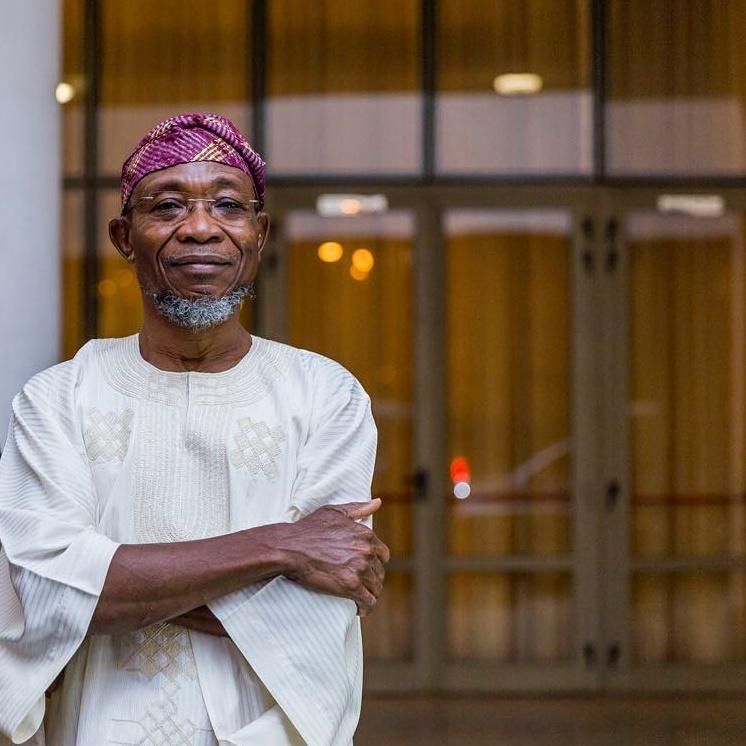
ADC Unstoppable, Like the Sun — Aregbesola Declares at 8th National Convention
ABUJA — Former Osun State Governor and chieftain of the African Democratic Congress (ADC), Rauf Aregbesola, has declared that the party remains “unstoppable,” likening its rise to the inevitability of the sun, despite what he described as attempts by the ruling establishment to weaken opposition forces.
Speaking at the ADC’s 8th National Convention, Aregbesola said the party’s existence is rooted in the will of Nigerians and protected by the constitution, insisting that no political pressure or institutional interference could halt its progress.
“Just as no power can stop the sun from rising, so can the ADC not be stopped,” he told delegates.
Blasts Political System, Accuses Ruling Forces of Undermining Democracy
The ADC leader accused the ruling All Progressives Congress (APC) and the Independent National Electoral Commission (INEC) of actions he described as anti-democratic, alleging efforts to frustrate opposition parties ahead of the 2027 elections.
He criticized what he termed the normalization of political “criminality,” arguing that recent political realignments and electoral practices undermine democratic integrity.
According to him, ADC does not owe its existence to any individual or institution but to Nigerians “tired of deceit and mismanagement.”
Harsh Assessment of Economy, Security, and Governance
Aregbesola painted a grim picture of the nation’s condition, citing economic decline, rising inflation, and worsening living standards.
He noted that the naira’s depreciation from about ₦700 to ₦1,400 per dollar reflects what he described as poor economic management, while fuel prices have surged significantly, making daily life difficult for citizens.
On security, he described the current situation as one of the worst in Nigeria’s history, raising concerns about increasing violence and what he called a lack of empathy from leadership in responding to national tragedies.
ADC Positions Itself as Nigeria’s “Rescue Mission”
The former minister said the ADC has, within months, transformed into a major opposition force, claiming it now represents the “hope of the Nigerian people.”
He outlined the party’s rapid structural expansion, ongoing membership drive, and efforts to build alliances with other opposition groups including the Peoples Democratic Party (PDP), Labour Party (LP), Social Democratic Party (SDP), and New Nigeria Peoples Party (NNPP).
Aregbesola emphasized that the party is preparing to challenge the APC in the 2027 general elections through what he described as a “united opposition front.”
Defends Party Leadership Changes, Convention Legitimacy
Providing details of internal restructuring, Aregbesola said the emergence of new leadership, including David Mark as caretaker national chairman, followed due constitutional process and was duly communicated to INEC.
He argued that the commission’s refusal to monitor the convention violates provisions of the Electoral Act, insisting that ADC fulfilled all legal requirements.
Alleges Persecution of Opposition Figures
The ADC leader further accused the government of using state institutions such as anti-corruption agencies and security services to intimidate opposition politicians.
He cited cases involving figures like Nasir El-Rufai and Aminu Tambuwal, describing the trend as a dangerous signal for democracy.
Calls for United Front Ahead of 2027
Aregbesola concluded with a rallying call for Nigerians to support the ADC’s mission to restore “freedom, security, and prosperity,” warning against political apathy.
“A democracy without opposition is an autocracy,” he said, urging citizens to reject what he termed any attempt at political “coronation.”
Closing Note
The convention, themed “So that Nigeria will work for Freedom, Security and Prosperity,” brought together party delegates and stakeholders, marking a significant step in ADC’s preparations for the 2027 elections.
Politics
CONGRATULATORY MESSAGE TO APC CONSENSUS GOVERNORSHIP CANDIDATE, SENATOR SOLOMON OLAMILEKAN ADEOLA YAYI
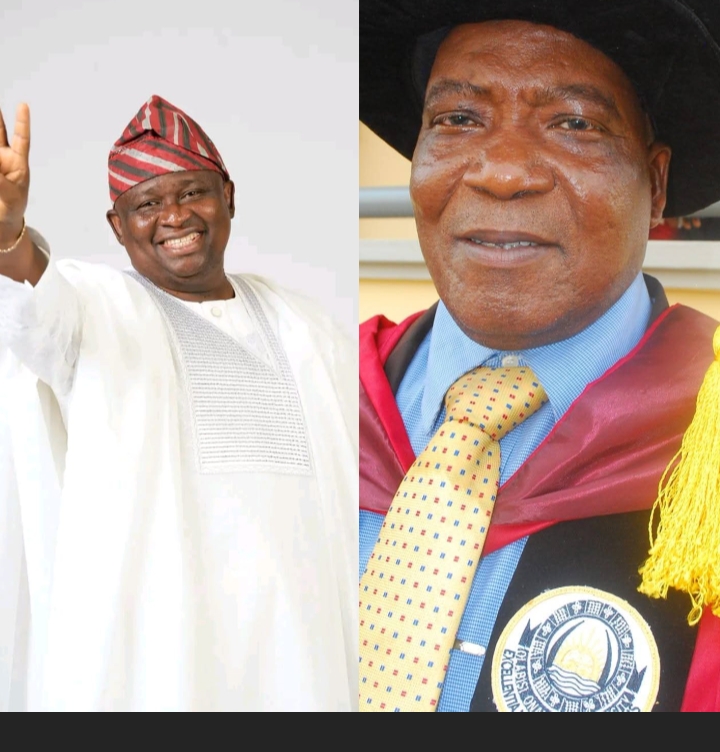
CONGRATULATORY MESSAGE TO APC CONSENSUS GOVERNORSHIP CANDIDATE, SENATOR SOLOMON OLAMILEKAN ADEOLA YAYI*
On behalf of our Grand Patron, Dr. Tunde Osinowo (Pepperito Jnr.), we leaders and Members of Ogun East for Yayi heartily congratulate Senator Solomon Olamilekan Adeola (Yayi) for being the consensus Governorship candidate of our party, APC, in the 2027 election.
This is marvelous and indeed great in the sight of God.
Without mincing words, the choice of Yayi by the party stakeholders is the best and the most surest assurance to coast the Party to victory at the general elections come February, 2027.
We commend the maturity, dispositions and spirit of sportsmanship with which all the Gubernatorial aspirants embraced the decision and extended hands of fellowship to Senator Solomon Olamilekan Adeola Yayi, the Gubernatorial Hopeful.
We beseech God to grant Yayi and all of us, leaders, followers and supporters, the enablements to see him duly elected as Governor of Ogun State at the general election in Jesus mighty name.
We congratulate the incoming Governor of Ogun State and our Excellency in waiting, Yayi.
This is Yayi O’clock.
Praise God!
Mo yo fun e, mo yo fun ra mi.


- Papyrus Global Partners Talentz MEDIA to Expand Strategic Media and Communications Reach in Africa April 19, 2026
- Ghana: 24-hour economy markets designed to stimulate economic growth - Mahama April 19, 2026
- Ghana: Ignore the mischief, tricycles for the Free Primary Healthcare are not ambulances April 19, 2026
- From Frontline Voices to National Impact: Strengthening Health Systems in The Gambia April 19, 2026
- Seychelles: Upcoming Working Visits of the President, Dr Patrick Herminie, to Russia and Abu Dhabi April 18, 2026
- Seychelles and China sign development cooperation agreement supporting national development priorities April 18, 2026
- Merck Foundation and Kenya First Lady mark a Landmark Moment for Supporting Girl Education with their "Educating Linda" Program at Kenya State House April 17, 2026
- Uganda - Shs46bn Idle Funds for Science Ministry leave Members of Parliament (MPs) furious April 17, 2026
- Ambassador of Belarus D.Krasouski meets State Minister on Agricultural Investment and Input Supply Development Sector of Ethiopia April 17, 2026
- Germany Discusses Strengthening Cooperation and its United Nations (UN) Security Council Bid with Seychelles April 17, 2026
- Papyrus Global Partners Talentz MEDIA to Expand Strategic Media and Communications Reach in Africa April 19, 2026
- Ghana: 24-hour economy markets designed to stimulate economic growth - Mahama April 19, 2026
- Ghana: Ignore the mischief, tricycles for the Free Primary Healthcare are not ambulances April 19, 2026
- From Frontline Voices to National Impact: Strengthening Health Systems in The Gambia April 19, 2026
- Seychelles: Upcoming Working Visits of the President, Dr Patrick Herminie, to Russia and Abu Dhabi April 18, 2026
- Seychelles and China sign development cooperation agreement supporting national development priorities April 18, 2026
- Merck Foundation and Kenya First Lady mark a Landmark Moment for Supporting Girl Education with their "Educating Linda" Program at Kenya State House April 17, 2026
-

 news4 months ago
WHO REALLY OWNS MONIEPOINT? The $290 Million Deal That Sold Nigeria’s Top Fintech to Foreign Interests
-

 celebrity radar - gossips3 months ago
Dr. Chris Okafor Returns with Power and Fire of the Spirit -Mounts Grace Nation Altar with Fresh Anointing and Restoration Grace on February 1, 2026
-

 celebrity radar - gossips6 months ago
End of an Era: Nigeria Mourns Evangelist Dr. Uma Ukpai, 80
-

 celebrity radar - gossips4 months ago
Prophet Kingsley Aitafo Releases 2026 Prophecy: ‘Nigeria Will Rise, but the World Must Prepare for Turbulence’