
celebrity radar - gossips
Why Babangida’s Hilltop Home Became Nigeria’s Political “Mecca”

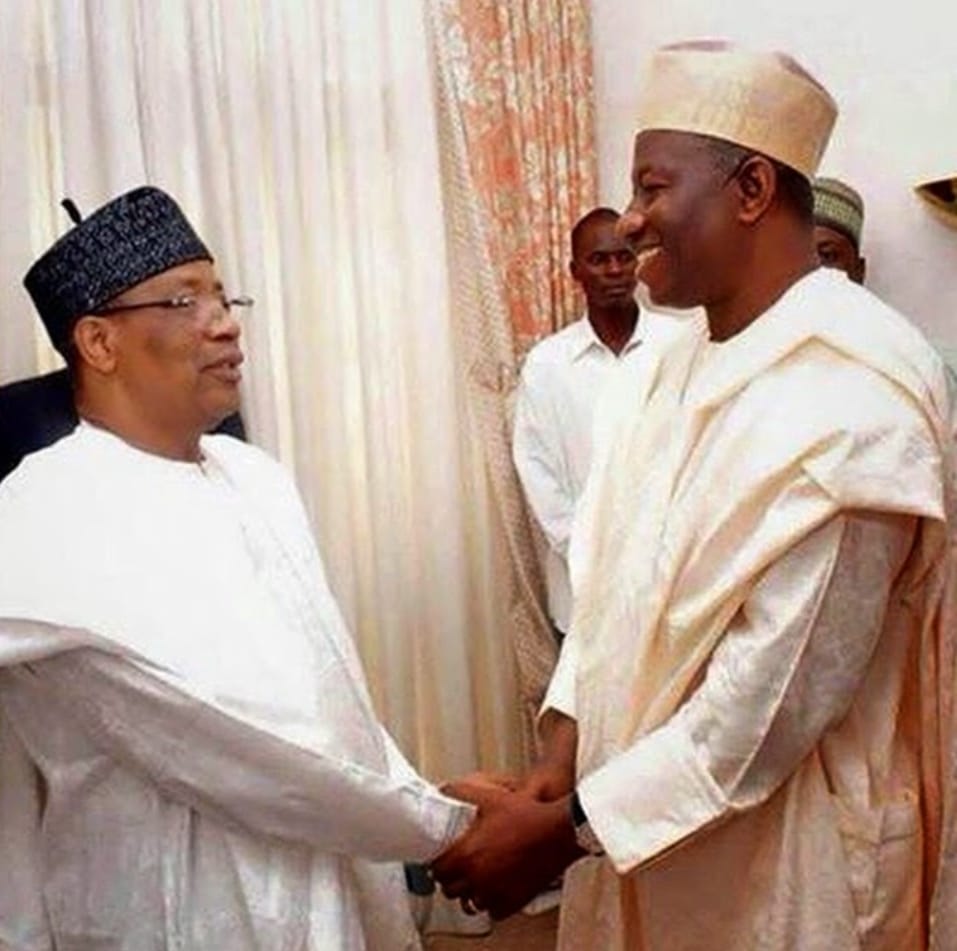
Why Babangida’s Hilltop Home Became Nigeria’s Political “Mecca”.
By George Omagbemi Sylvester | Published by SaharaWeeklyNG.com
Former President Goodluck Jonathan’s birthday visit to Gen. Ibrahim Badamasi Babangida (IBB) in Minna (where he hailed the octogenarian as a patriotic leader committed to national unity) was more than a courtesy call. It was a reminder of a peculiar constant in Nigerian politics: the steady pilgrimage of power-seekers, bridge-builders and crisis-managers to the Hilltop mansion. Jonathan’s own words captured it bluntly: IBB’s residence “is like a Mecca of sorts” because of the former military president’s enduring relevance and perceived nation-first posture.

Babangida turned 84 on 17 August 2025. That alone invites reflection on a career that has shaped Nigeria’s political architecture for four decades; admired by some for audacious statecraft, condemned by others for controversies that still shadow the republic. Born on 17 August 1941 in Minna, he ruled as military president from 1985 to 1993, presiding over transformative and turbulent chapters: the relocation of the national capital to Abuja in 1991; the creation of political institutions for a long, complex transition; economic liberalisation that cut both ways; and the fateful annulment of the 12 June 1993 election. Each of these choices helps explain why the Hilltop remains a magnet for Nigerians who need counsel, cover or calibration.
A house built on influence; why the visits never stop.

Let’s start with the obvious: access. Nigeria’s political class prizes proximity to the men and women who can open doors, soften opposition, broker peace and read the hidden currents. In that calculus, IBB’s network is unmatched. He cultivated a reputation for “political engineering,” the reason the press christened him “Maradona” (for deft dribbling through complexity) and “Evil Genius” (for the strategic cunning his critics decried). Whether one embraces or rejects those labels, they reflect a reality: Babangida is still the place where many politicians go to test ideas, seek endorsements or secure introductions. Even the mainstream press has described him as a consultant of sorts to desperate or ambitious politicians, an uncomfortable description that nevertheless underlines his gravitational pull.
Though it isn’t only political tact that draws visitors; it’s statecraft with lasting fingerprints. Moving the seat of government from Lagos to Abuja in December 1991 was not a cosmetic relocation, it re-centred the federation and signaled a symbolic neutrality in a country fractured by regional suspicion. Abuja’s founding logic (GEOGRAPHIC CENTRALITY and ETHNIC NEUTRALITY) continues to stabilise the national imagination. This is part of the reason many leaders, across party lines, still defer to IBB: he didn’t just rule; he rearranged the map of power.

Then there’s the regional dimension. Under his watch, Nigeria led the creation and deployment of ECOMOG in 1990 to staunch Liberia’s bloody civil war, a bold move that announced Abuja as a regional security anchor. The intervention was imperfect, contested and costly, but it helped define West Africa’s collective security posture and Nigeria’s leadership brand. When neighboring states now face crises, the memory of that precedent still echoes in diplomatic corridors and Babangida’s counsel retains currency among those who remember how decisions were made.
Jonathan’s praise and the unity argument.
Jonathan’s tribute (stressing Babangida’s non-sectional outlook and commitment to unity) goes to the heart of the Hilltop mystique. For a multi-ethnic federation straining under distrust, figures who can speak across divides are prized. Jonathan’s point wasn’t nostalgia; it was a live assessment of a man many still call when Nigeria’s seams fray. That’s why the parade to Minna continues: the anxious, the ambitious and the statesmanlike alike seek an elder who can convene rivals and cool temperatures.
The unresolved shadow: June 12 and the ethics of influence.

No honest appraisal can skip the hardest chapter: the annulment of the 12 June 1993 election (judged widely as free and fair) was a rupture that delegitimised the transition and scarred Nigeria’s democratic journey. Political scientist Larry Diamond has repeatedly identified June 12 as a prime example of how authoritarian reversals corrode democratic legitimacy and public trust. His larger warning (“few developments are more destructive to the legitimacy of new democracies than blatant and pervasive political corruption”) captures the moral crater that followed the annulment and the years of drift that ensued. Those wounds are part of the Babangida legacy too and they complicate the reverence that a steady stream of visitors displays.
Max Siollun, a leading historian of Nigeria’s military era, has observed (provocatively) that the military’s “greatest contribution” to democracy may have been to rule “long and badly enough” that Nigerians lost appetite for soldiers in power. It’s a stinging line, yet it helps explain the paradox of IBB’s status: the same system he personified taught Nigeria costly lessons that hardened its democratic reflexes. Today’s generation visits the Hilltop not to revive militarism but to harvest hard-won insights about managing a fragile federation.
What sustains the pilgrimage.
1) Institutional memory: Nigeria’s politics often suffers amnesia. Babangida offers a living archive of security crises navigated, regional diplomacy attempted, volatile markets tempered and power-sharing experiments designed. Whether one applauds or condemns specific choices, the muscle memory of governing a complex federation is rare and urgently sought.
2) Convening power: In a season of polarisation, the ability to sit warring factions in the same room is not small capital. Babangida’s imprimatur remains a safe invitation card few refuse it, fewer ignore it. That convening power explains why movements, parties and would-be presidents keep filing up the long driveway. Recent delegations have explicitly cast their courtesy calls in the language of unity, loyalty and patriotism ahead of pivotal elections.
3) Signals to the base: Visiting Minna telegraphs seriousness to party structures and funders. It says: “I have sought counsel where history meets experience.” In Nigeria’s coded political theatre, that signal still matters. Outlets have reported for years that many aspirants treat the Hilltop as an obligatory stop an unflattering reality, perhaps, but a revealing one.
4) The man and the myth: The mansion itself, with its opulence and aura, has become a set piece in Nigeria’s story of power, admired by some, resented by others, but always discussed. The myth feeds the pilgrimage; the pilgrimage feeds the myth.
The balance sheet at 84.
To treat Babangida solely as a sage is to forget the costs of his era; to treat him only as a villain is to ignore the architecture that still holds parts of Nigeria together. Abuja’s relocation stands as a stabilising bet that paid off. ECOMOG, for all its flaws, seeded a habit of regional responsibility. Conversely, June 12 remains a national cautionary tale about elite manipulation, civilian marginalisation and the brittleness of transitions managed from above. These are not contradictory truths; they are the double helix of Babangida’s place in Nigerian memory.
Jonathan’s homage tried to distill the better angel of IBB’s record: MENTORSHIP, BRIDGE-BUILDING and a POSTURE that (at least in his telling) RESISTS SECTIONAL ISM. “That is why today, his house is like a Mecca of sorts,” he said, praying that the GENERAL continues to “mentor the younger ones.” Whether one agrees with the full sentiment, it accurately describes the lived politics of Nigeria today: Minna remains a checkpoint on the road to relevance.
The scholar’s verdict and a citizen’s challenge.
If Diamond warns about legitimacy and Siollun warns about the perils of soldier-politics, what should Nigerians demand from the Hilltop effect? Three things.
First, use influence to open space, not close it. Counsel should tilt toward rules, institutions and credible elections not kingmaking for its own sake. The lesson of 1993 is that subverting a valid vote haunts a nation for decades.
Second, mentor for unity, but insist on accountability. Unity cannot be a euphemism for silence. A truly patriotic elder statesman sets a high bar for conduct and condemns the shortcuts that tempt new actors in old ways. Diamond’s admonition on corruption is not an abstraction; it’s a roadmap for rebuilding trust.
Third, convert nostalgia into institutional memory. If Babangida’s house is a classroom, then Nigeria should capture, publish and debate its lessons in the open: on peace operations (what worked, what failed), on capital relocation (how to plan at scale), and on transitions (how not to repeat 1993). Only then does the pilgrimage serve the republic rather than personalities.
At 84, Ibrahim Babangida remains a paradox that Nigeria cannot ignore: a man whose legacy straddles NATION-BUILDING and NATION-BRUISING, whose doors remain open to those seeking power and those seeking peace. Jonathan’s visit (and his striking “Mecca” metaphor) reveals a simple, stubborn fact: in a country still searching for steady hands, the Hilltop’s shadow is long. The task before Nigeria is to ensure that the shadow points toward a brighter constitutional daybreak, where influence is finally subordinated to institutions and where mentorship hardens into norms that no single mansion can monopolise. That is the only pilgrimage worth making.





celebrity radar - gossips
SHOCKER IN ENTERTAINMENT INDUSTRY: Jaiye Kuti & Pasuma Take Love to the Next Level

SHOCKER IN ENTERTAINMENT INDUSTRY: Jaiye Kuti & Pasuma Take Love to the Next Level
What started as mere whispers in entertainment circles has now exploded into a full-blown headline story shaking both Nollywood and the Fuji music scene!
After weeks of speculation, multiple insider sources have finally confirmed that veteran actress Jaiye Kuti and Fuji icon Wasiu Alabi Pasuma are set to take their relationship to the next level — MARRIAGE!
The duo, who have long been linked in what many dismissed as mere friendship or industry camaraderie, are now reportedly preparing for a private but glamorous wedding ceremony that promises to be one of the most talked-about celebrity unions of the year.
For months, social media has buzzed with sightings, subtle hints, and cryptic posts suggesting a deeper bond between the two stars. While both camps maintained silence, insiders now reveal that the relationship has been years in the making — far from the sudden development many assumed.
As expected, the news has sparked mixed reactions across Nigeria’s entertainment landscape:
Some fans are thrilled, calling it a “perfect blend of class and culture.”
Others remain skeptical, questioning whether this is love or a strategic publicity move.
A section of observers insist, “In Nigeria’s entertainment industry, anything is possible!”
If confirmed officially, this union could mark the coming together of two powerful brands:
A respected Nollywood figure known for her elegance and strong screen presence
A Fuji legend with decades of musical dominance and loyal fan base
Together, they could redefine celebrity partnerships in Nigeria.
Will there be an official announcement?
Are wedding preparations already underway?
Or is there more to this story than meets the eye?
One thing is certain — all eyes are now on Jaiye Kuti and Wasiu Alabi Pasuma.
Stay tuned… because this story is far from over!
celebrity radar - gossips
Opposition Smearing INEC Chairman Out of Desperation — Ajulo Declares Tinubu’s Victory Inevitable
Opposition Smearing INEC Chairman Out of Desperation — Ajulo Declares Tinubu’s Victory Inevitable
ABUJA — The Ondo State Attorney-General and Commissioner for Justice, Kayode Ajulo (SAN), has accused opposition elements of orchestrating a calculated smear campaign against the Chairman of the Independent National Electoral Commission (INEC), Joash Amupitan (SAN), insisting that such actions stem from their acceptance of imminent electoral defeat.
In a strongly worded press statement issued on Sunday, Ajulo argued that the opposition has abandoned genuine political engagement and has instead resorted to “the politics of discredit,” targeting the electoral umpire in a bid to undermine public confidence.
According to him, the attacks on the INEC chairman are deliberate attempts to weaken the credibility of the electoral process ahead of the next presidential election, which he claimed has already been “decisively won” by President Bola Ahmed Tinubu.
“The opposition knows the battle is lost. What they now implement is not resistance, but the politics of discredit,” Ajulo stated.
He described Prof. Amupitan as a “steadfast guardian of Nigeria’s democratic process,” warning that efforts to discredit him would ultimately fail as Nigerians “see through the smoke.”
Ajulo further anchored his argument on Nigeria’s political history, recalling a period when the Peoples Democratic Party (PDP) dominated the political landscape with a majority of state governors, while Tinubu, then leading the Alliance for Democracy (AD), controlled only Lagos State.
He said the political evolution that led to the rise of the All Progressives Congress (APC) and its current dominance across many states reflects what he described as “a profound feat of strategy, resilience, and leadership.”
The attorney-general also noted that, unlike previous political realignments, the APC under Tinubu has not experienced defections of governors, but has instead attracted members from opposition parties.
He maintained that the current wave of criticism against INEC leadership is rooted in fear of electoral loss rather than legitimate concerns about the commission’s integrity.
Ajulo concluded by urging Nigerians to remain vigilant and resist attempts to erode trust in democratic institutions, emphasizing that “the mandate of the people will stand.”
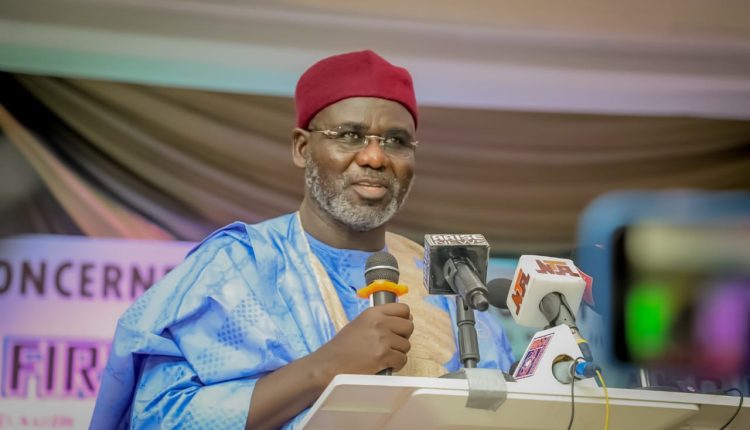
BURATAI URGES ECOWAS UNITY, CALLS FOR RETURN OF SAHEL STATES AT VON FORUM
ABUJA – In a powerful appeal for regional stability, former Chief of Army Staff, Lt. Gen. TY Buratai (rtd), has called on ECOWAS and the African Union (AU) to prioritize the return of the Association of Sahel States (AES) to ensure the survival of West African integration.
Speaking Thursday at the Voice of Nigeria (VON) Forum 2026 in Abuja, Buratai warned that the region’s progress could become a “mirage” without the inclusion of Mali, Burkina Faso, and Niger Republic.
A Legacy of Sacrifice

Buratai highlighted Nigeria’s historic role as the “unshakable anchor” of the sub-region. He pointed to Nigeria’s decades of leadership in ECOMOG missions across Liberia, Sierra Leone, The Gambia, and Guinea-Bissau as evidence of the nation’s commitment.
”Nigeria has sacrificed and invested in blood, treasure, and diplomacy to defend democracy,” Buratai stated. “Our stability is inseparable from the security of our neighbours.”
The Path to Unity
The General urged ECOWAS to deepen its engagement with the African Union to bridge the current diplomatic rift with the AES nations. He emphasized that the collective security of West Africa depends on a unified front, noting that democracy and regional safety are “two sides of the same coin.”
”The unity of ECOWAS cannot be complete without Mali, Burkina Faso, and Niger Republic. Without unity, progress in the region may be a mirage,” Buratai cautioned.
Celebrating 51 Years of VON
The forum also served as a celebration of Voice of Nigeria’s 51st anniversary. Buratai lauded the broadcaster as a “Nigerian voice with an African heart,” praising its professionalism and pan-African vision.
He paid tribute to veteran journalists, including the late Mohammed Okorejor and retired director Ben Shamang, while commending the current Director General for revitalizing the agency.
The retired General concluded his message with a call to strengthen regional institutions, urging leaders to honor the legacy of ECOWAS through renewed cooperation and institutional integrity.


- Senegal Rewrites the Rules of its Hydrocarbon Boom as Minister Birame Soulèye Diop Heads to African Energy Week 2026 in October April 13, 2026
- bp Bets Big on Namibia’s Deepwater Frontier with New Offshore Blocks April 13, 2026
- Merck Foundation declared Gabon First Lady as Ambassador of “More than a Mother” to build healthcare capacity, break infertility stigma, and support girl education April 13, 2026
- Changpeng Zhao (CZ) Releases Freedom of Money, a Memoir Reflecting on the Rise of Crypto and the Story Behind Binance April 13, 2026
- South Africa: Select Committee to Undertake Oversight to Municipalities in the Free State, North West and Gauteng April 13, 2026
- Africa Data Centres partners with Oni-Tel to enhance data centre connectivity in South Africa April 13, 2026
- Seychelles: 9th Indian Ocean Conference – Minister Barry Faure conducts bilateral meetings on the margins of the Indian Ocean Conference April 13, 2026
- Complete Professional Fighters League (PFL) Africa: Pretoria Results and Photos - Nkosi Ndebele defeats Michele Clemente in a bantamweight classic shootout in the main event April 12, 2026
- Seychelles Backs United Arab Emirates (UAE) Statement, Calls for De-escalation and Respect for International Law April 11, 2026
- TotalEnergies’ Africa Senior Vice President (SVP) Mike Sangster to Spotlight Expanding Project Pipeline at Paris Forum April 11, 2026
- Senegal Rewrites the Rules of its Hydrocarbon Boom as Minister Birame Soulèye Diop Heads to African Energy Week 2026 in October April 13, 2026
- bp Bets Big on Namibia’s Deepwater Frontier with New Offshore Blocks April 13, 2026
- Merck Foundation declared Gabon First Lady as Ambassador of “More than a Mother” to build healthcare capacity, break infertility stigma, and support girl education April 13, 2026
- Changpeng Zhao (CZ) Releases Freedom of Money, a Memoir Reflecting on the Rise of Crypto and the Story Behind Binance April 13, 2026
- South Africa: Select Committee to Undertake Oversight to Municipalities in the Free State, North West and Gauteng April 13, 2026
- Africa Data Centres partners with Oni-Tel to enhance data centre connectivity in South Africa April 13, 2026
- Seychelles: 9th Indian Ocean Conference – Minister Barry Faure conducts bilateral meetings on the margins of the Indian Ocean Conference April 13, 2026
-

 news4 months ago
WHO REALLY OWNS MONIEPOINT? The $290 Million Deal That Sold Nigeria’s Top Fintech to Foreign Interests
-

 celebrity radar - gossips3 months ago
Dr. Chris Okafor Returns with Power and Fire of the Spirit -Mounts Grace Nation Altar with Fresh Anointing and Restoration Grace on February 1, 2026
-

 celebrity radar - gossips4 months ago
Prophet Kingsley Aitafo Releases 2026 Prophecy: ‘Nigeria Will Rise, but the World Must Prepare for Turbulence’
-

 celebrity radar - gossips6 months ago
End of an Era: Nigeria Mourns Evangelist Dr. Uma Ukpai, 80