
society
The Power Behind Every Success and Failure: Cause and Effect


The Power Behind Every Success and Failure: Cause and Effect.
By George Omagbemi Sylvester — published by SaharaWeeklyNG.com
Cause and effect is not a soft, spiritual hunch. It is the hard backbone of reality. From the motion of galaxies to the choices we make at breakfast, actions precipitate consequences. That chain (sometimes linear, sometimes tangled) governs physical phenomena and human experience alike. To understand it is to gain leverage over the world; to ignore it is to surrender to confusion, superstition and avoidable failure.
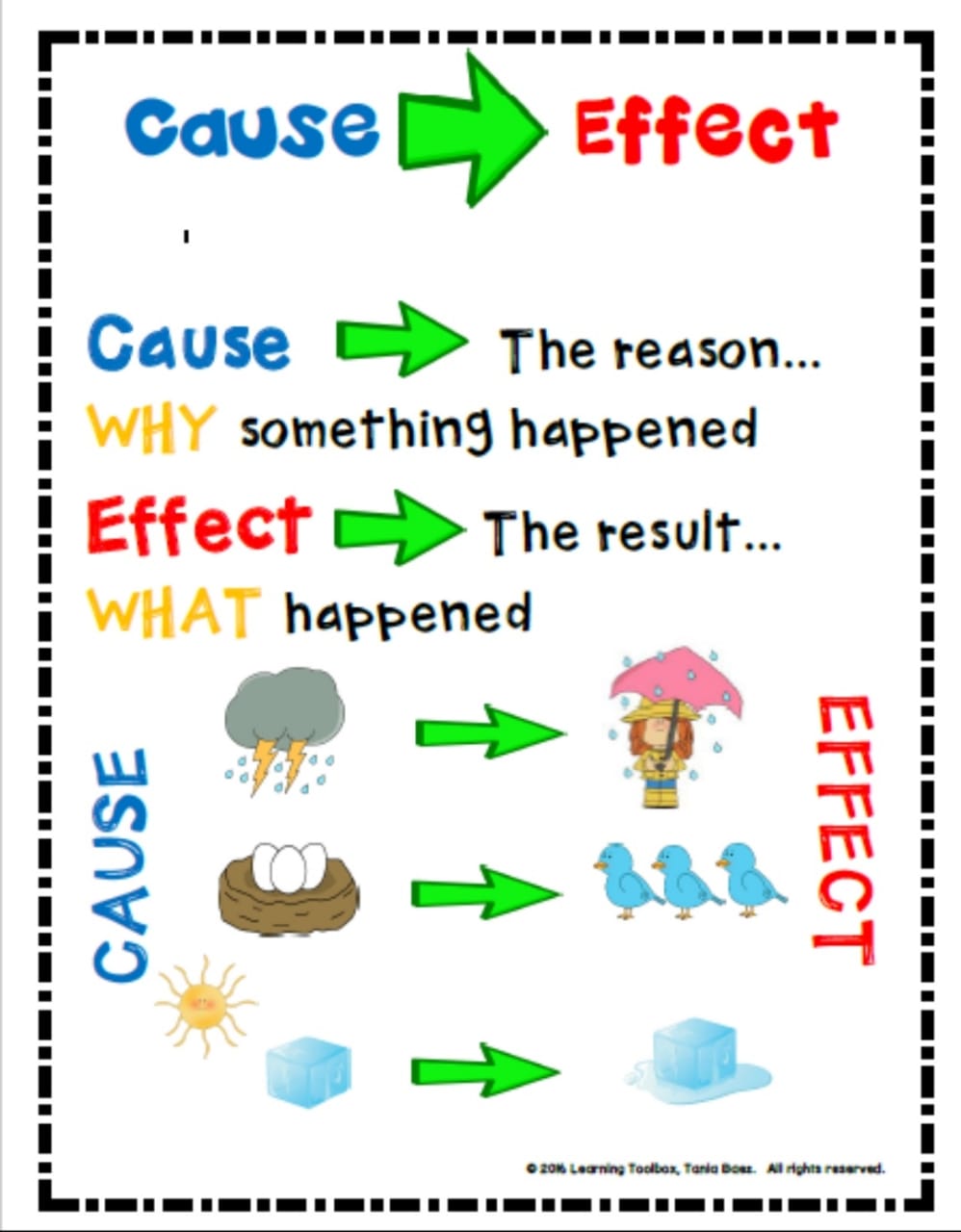
The Physics: Where Causality Wears a Lab Coat. In physics, causality is the basic expectation that effects follow causes in an orderly sequence. Newton’s mechanics capture this clearly. His third law (“for every action there is an equal and opposite reaction”) does not merely describe colliding billiard balls; it codifies the reciprocity of interactions. Push the world and it pushes back with measurable, predictable force. That symmetry undergirds engineering, aerospace and even the feel of the ground beneath your feet.
Thermodynamics adds a crucial texture: direction. The second law tells us entropy tends to increase in a closed system. In plainer language, heat flows from hot to cold; eggs scramble but do not un-scramble by themselves. This “ARROW of TIME” is the macroscopic fingerprint of CAUSE-AND-EFFECT: we can distinguish past from future because the causal chain drives systems toward more dispersed, less ordered states unless we invest energy to reverse local disorder. Every refrigerator, air-conditioner and vaccine cold chain is a deliberate intervention against entropy’s drift.

Quantum mechanics complicates (but does not erase) this picture. At microscopic scales, we exchange deterministic prediction for probabilistic causation. We cannot predict exactly when a radioactive atom will decay, but the statistical laws are astonishingly precise. Even here, causes constrain effects, just with probability distributions instead of certainty. Einstein bristled at this fuzziness (“God does not play dice with the universe,” he famously remarked) but experiment after experiment confirms that probabilistic rules are still rules. The dice are loaded by the laws of nature.
The Philosophy: Making Sense of the Chain. Philosophers have wrestled with causation for centuries because it underwrites explanation itself. Aristotle mapped “FOUR CAUSES” material (what something is made of), formal (its form or pattern), efficient (the immediate trigger) and final (its purpose). Modern science largely trades in efficient causes: this force produced that acceleration; this pathogen triggered that fever.

David Hume, the great skeptic, warned that we never see causation directly; we see constant conjunctions and infer that one event makes another follow. “All events seem entirely loose and separate,” he wrote, insisting that necessity is a mental overlay on repeated patterns. Hume’s challenge matters because it humbles us: causal belief must be earned by evidence, not asserted by habit.
Bertrand Russell went further, provocatively declaring that “the law of causality is a relic of a bygone age.” What he meant (often misread) was not that causes do not exist, but that simplistic, single-line causal talk can fail in modern physics. That is a warning label against lazy thinking, not a license to deny causal structure. The right response is not abandonment, but refinement.
That refinement is exactly what contemporary researchers have delivered. Computer scientist Judea Pearl and colleagues formalized causal reasoning with graphical models and counterfactuals, giving us tools to move beyond mere correlation. Their message is simple and devastating to sloppy analysis: if you cannot say what would have happened if not for a given action, you do not understand the cause.

The Human Domain: Decisions, Systems and Consequences. If physics supplies CAUSE-AND-EFFECT with equations, everyday life supplies it with stakes. Actions and policies generate ripples; intended and unintended. In personal finance, spend more than you earn and debt compounds; invest regularly and returns compound. In public health, vaccination rates cause measurable shifts in disease prevalence. In education, hours of deliberate practice, quality of instruction and mentorship produce predictable distributions of skill.
Real life also features feedback loops, delays and hidden variables that make causality look messy. Consider traffic congestion: adding road capacity can initially relieve delays (short-term effect) but later induce more driving (long-term effect), landing us back in gridlock. Or economic policy: slash interest rates and you stimulate borrowing and growth; leave them low for too long and you may sow asset bubbles. Causes often arrive bundled and effects unfold on multiple clocks.
This is where causal thinking earns its keep. It forces us to ask:
What is the mechanism?
What time scale am I measuring?
What counterfactual am I comparing against?
What confounders might be fooling me?
“CORRELATION is not CAUSATION” is more than a slogan; it is a public-safety announcement for the mind. Ice cream sales rise with drownings, but neither causes the other; warm weather causes both. Without causal discipline, we will fall for mirages; superstitions in folk clothing or statistics in academic clothing.
Freedom, Responsibility, and the Myth of Inevitability. A common misreading of causality is fatalism: if everything has a cause, then nothing could be otherwise. Stephen Hawking skewered this posture with dry wit: people who say everything is predetermined still look before crossing the road. We behave as though our choices matter because they do. Causality does not erase agency; it explains it. Our brains are pattern-learning engines, exquisitely tuned to forecast consequences and choose actions accordingly. Habits are causal devices we install in ourselves.
At scale, the same logic governs institutions. Accountability is applied causality: trace an outcome back through decisions, incentives and failures, then re-engineer the system. Good governance is not about rhetoric; it is about pinpointing levers that predictably change results. Bad governance blurs causes with excuses and swaps evidence for slogans.
Evidence, Not Incantation: How to Think Causally. To move from slogans to substance, adopt the scientist’s discipline:
Define the intervention. What exactly is the action whose effect you care about? Vagueness kills causal inference.
Specify the counterfactual. Compared to what? Yesterday? A different policy? No intervention at all?
Measure on the right timeline. Short-run effects can conflict with long-run effects; report both.
Control confounders. If you can’t randomize, adjust intelligently: match groups, use instrumental variables or analyze natural experiments.
Seek mechanisms. Numbers persuade, mechanisms explain. How does A produce B?
Replicate. One study is a hint; converging evidence is a case.
These are not just academic niceties. They are the difference between policies that save lives and policies that waste money; between businesses that grow and businesses that guess.
The Moral of the Chain: Power With Responsibility. Causality confers power. If we can map the levers that move outcomes, we can design better cities, craft smarter regulations and build more resilient businesses. Power without humility invites catastrophe. Complex systems bite back. Interventions in healthcare, energy or education must be piloted, monitored and corrected. The goal is not perfect prediction, that belongs to Laplace’s mythical demon, an intelligence that knows every particle’s position and could thereby foresee the entire future. The goal is useful prediction: ENOUGH UNDERSTANDING to tilt probabilities in our favor.
We do this every day. Seat belts reduce fatalities. Smoking cessation lowers cancer risk. Early childhood education improves lifetime outcomes. These are not miracles; they are examples of measured causes yielding reliable effects. Progress is the patient accumulation of such levers.
Quotable Anchors for the Mind. A few concise lines, properly used, sharpen our causal instincts:
Isaac Newton: For every action, there is an equal and opposite reaction. That’s reciprocity made law.
Albert Einstein: “God does not play dice with the universe.” A dissent that keeps us honest about the limits of randomness.
David Hume: We infer necessary connection from repeated patterns; we must not mistake habit for proof.
Stephen Hawking: Even those who preach predestination look before crossing the street, agency lives within causality.
Judea Pearl (paraphrased): Without counterfactuals and models, we cannot speak meaningfully about causes.
Bertrand Russell: Beware simplistic causal talk; modern science demands precision.
Each quote, trimmed to its essence, points the same way: understand the chain or be dragged by it.
Closing Argument: Master the Chain, Don’t Be Chained by It. The law of cause and effect is the world’s operating system. It is not a metaphysical garnish but the main course. Physics gives it equations; philosophy gives it clarity; data science gives it tools; and everyday life gives it consequences. When we act with causal literacy (naming mechanisms, testing interventions, measuring timeliness) we become responsible authors of our outcomes.
Leave nothing to luck that you can assign to law. Name your levers. Test your assumptions. Demand the counterfactual. Then PULL, MEASURE and ADJUST. That is how rockets reach orbit, hospitals cut mortality, startups escape gravity and citizens bend history toward justice. The chain is unbreakable; but in your hands, it is also steerable.








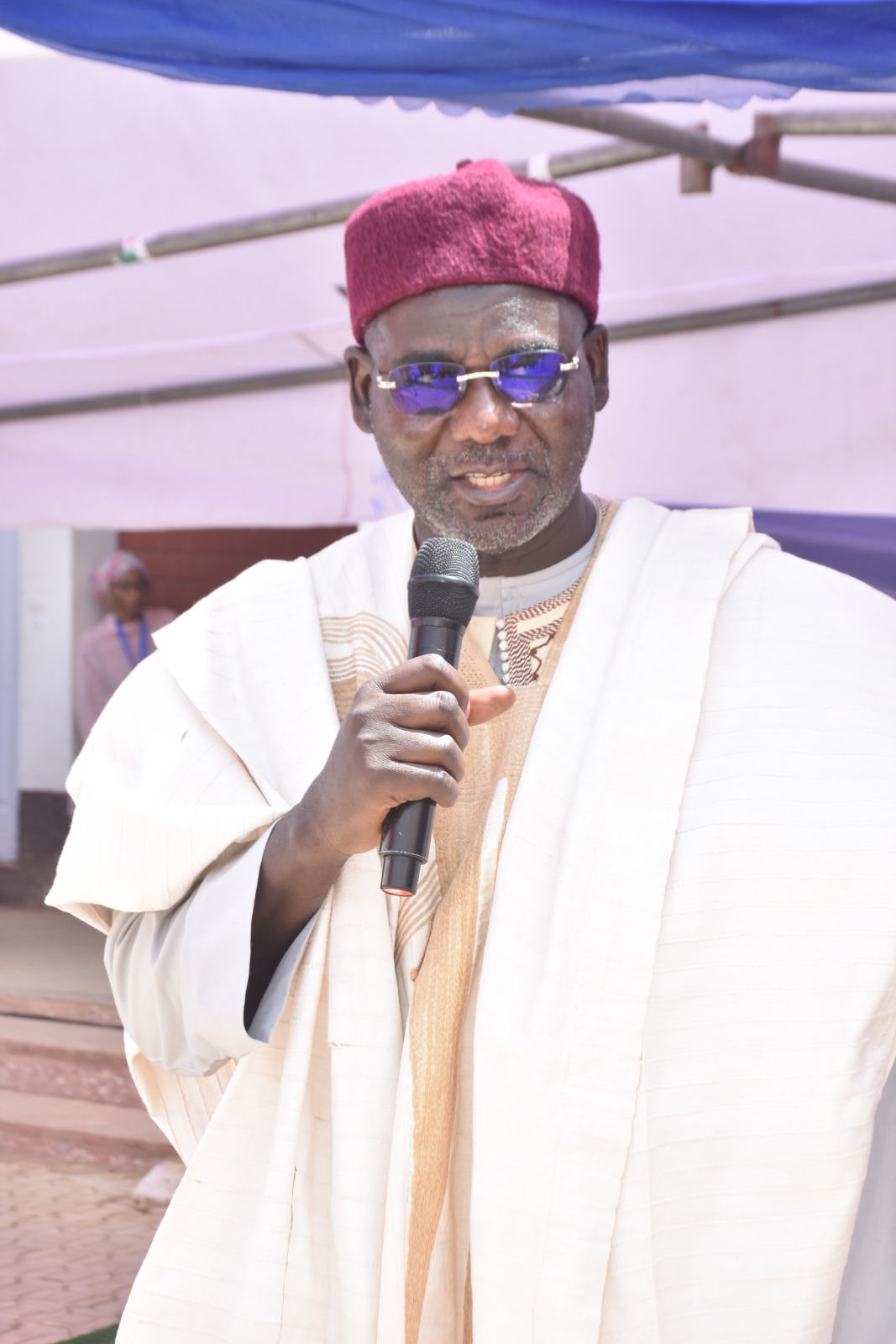
TY BURATAI HUMANITY CARE FOUNDATION CONDOLES WITH BIU EMIRATE OVER TRAGIC ATTACK
In a profound expression of sorrow, the TY Buratai Humanity Care Foundation has extended its heartfelt condolences to the families of the victims and the entire people of Biu Emirate, Borno State, following the recent tragic attack attributed to Boko Haram. This devastating assault, which occurred at a work site in northeastern Nigeria, claimed the lives of dozens, including brave soldiers committed to protecting the nation.
In a statement released to the press and signed by the Chairman of the foundation, Ibrahim Dahiru Danfulani Sadaukin Garkuwan Keffi/Betara Biu, the Grand Patron of the Foundation, His Excellency Amb. Lt. Gen. Tukur Yusufu Buratai CFR (Rtd), former Chief of Army Staff, described the incident as “one too many senseless, barbaric, and ruthless displays of inhumanity.” His Excellency emphasized the heartbreaking impact of such attacks on innocent, hardworking citizens striving to make a positive difference in their communities.
The Grand Patron praised the swift and decisive response of military personnel during this critical time, underscoring their brave commitment to safeguarding the nation. He called upon them to maintain this momentum, commending their courage and sacrifice in the face of adversity. “May Almighty Allah forgive their souls and grant them Aljannah Firdouse,” he remarked, encouraging the nation to honor their spirit of sacrifice as they rally together to rebuild and restore hope across the region.
In his statement, Gen. Buratai highlighted the importance of collective action in overcoming the challenges posed by insecurity, urging concerned citizens to increase their efforts in fostering a virile community that future generations can cherish. “Together, we can surmount these troubles,” he asserted, calling on all patriotic leaders and citizens to unite in the fight against violence and insecurity.

The TY Buratai Humanity Care Foundation remains committed to supporting initiatives that promote peace, security, unity, and prosperity. As the foundation extends its condolences to the bereaved, it also calls upon all segments of society to collaborate in creating a better and safer future. May Allah guide and protect the nation and lead it toward enduring peace. Amen.
society
Rt Hon Treasure Edwin Inyang Appointed Secretary General to the Government of UKA (Worldwide)

Rt Hon Treasure Edwin Inyang Appointed Secretary General to the Government of UKA (Worldwide)*
January 29, 2026 – A prestigious appointment has been announced in the reign of Emperor Solomon Wining 1st, recognizing Rt Hon Treasure Edwin Inyang as the *Secretary General to the Government of UKA (Worldwide)*. The official certificate, designated STE.001-1 E, was presented to Rt Hon Inyang during a ceremonial investiture.
As Secretary General, Rt Hon Treasure Edwin Inyang will *monitor and coordinate* the implementation of government policies and programmes, serve as an advisory institution to the Government, drive policy formulation, harmonization, and implementation, and oversee the activities of ministries, agencies, and departments.
The appointment was proclaimed by *Emperor Prof. Dr. Solomon Wining*, Emperor of the United Kingdom of Atlantics and Empire Worldwide, and co-signed by *Empress Prof. Dr. Sriwan Kingjun*, Empress of Attica Empire, under the auspices of the 5 Billions Humanitarian Projects Incorporated.
The ceremony underscores the commitment to strengthening governance and humanitarian initiatives within the UKA (Worldwide) jurisdiction, effective immediately in the reign of Emperor Solomon Wining 1st.

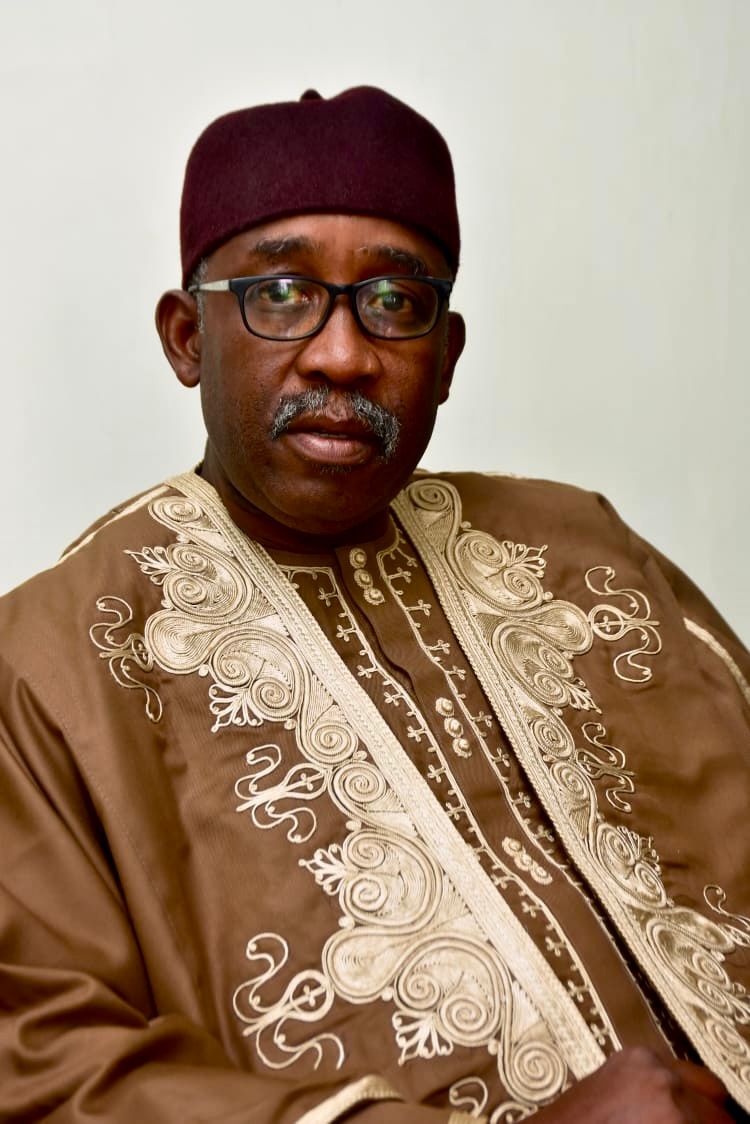
GENERAL BULAMA BIU MOURNS BOKO HARAM VICTIMS, CALLS FOR UNITY AND RENEWED EFFORTS FOR PEACE
In a solemn message of condolence and resolve, Major General Abdulmalik Bulama Biu mni (Rtd), the Sarkin Yakin of Biu Emirate, has expressed profound grief over a recent deadly attack by Boko Haram insurgents on citizens at a work site. The attack, which resulted in the loss of innocent lives, has been condemned as a senseless and barbaric act of inhumanity.
The revered traditional and military leader extended his heartfelt sympathies to the bereaved families, the entire people of Biu Emirate, Borno State, and all patriotic Nigerians affected by the tragedy. He described the victims as “innocent, peaceful, hardworking and committed citizens,” whose lives were tragically cut short.
General Biu lamented that the assault represents “one too many” such ruthless attacks, occurring at a time when communities are already engaged in immense personal and collective sacrifices to support government efforts in rebuilding devastated infrastructure and restoring hope.
In his statement, he offered prayers for the departed, saying, “May Almighty Allah forgive their souls and grant them Aljannan Firdaus.” He further urged the living to be encouraged by and uphold the spirit of sacrifice demonstrated by the victims.
Emphasizing the need for collective action, the retired Major General called on all citizens to redouble their efforts in building a virile community that future generations can be proud of. He specifically commended the “silent efforts” of some patriotic leaders working behind the scenes to end the security menace and encouraged all well-meaning Nigerians to join the cause for a better society.
“Together we can surmount the troubles,” he asserted, concluding with a prayer for divine intervention: “May Allah guide and protect us, free us from this terrible situation and restore an enduring peace, security, unity and prosperity. Amin.”
The statement serves as both a poignant tribute to the fallen and a clarion call for national solidarity in the face of persistent security challenges.


-

 celebrity radar - gossips6 months ago
Why Babangida’s Hilltop Home Became Nigeria’s Political “Mecca”
-

 society6 months ago
Power is a Loan, Not a Possession: The Sacred Duty of Planting People
-

 Business6 months ago
Batsumi Travel CEO Lisa Sebogodi Wins Prestigious Africa Travel 100 Women Award
-

 news6 months ago
THE APPOINTMENT OF WASIU AYINDE BY THE FEDERAL GOVERNMENT AS AN AMBASSADOR SOUNDS EMBARRASSING