society
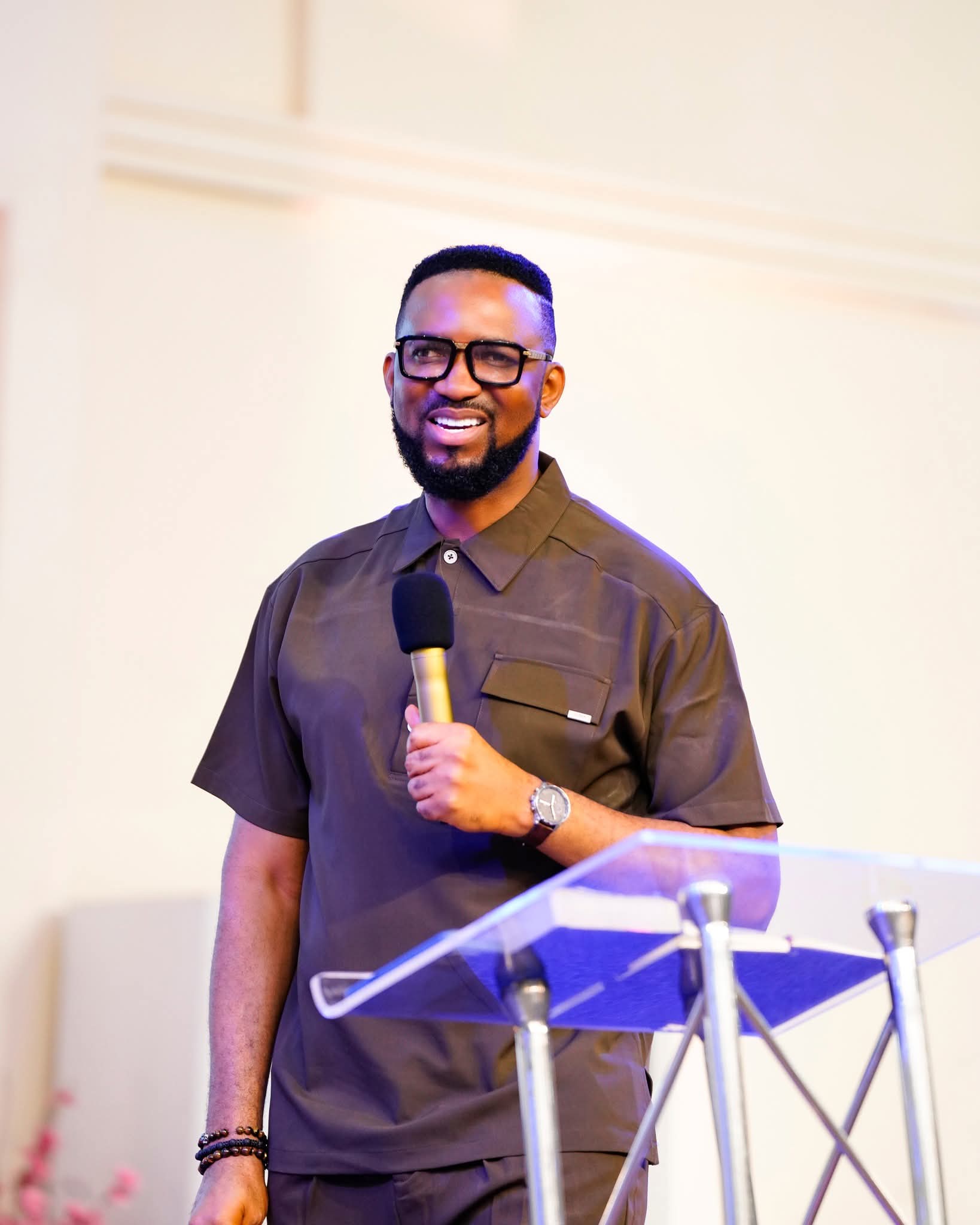
Grace Nation PHDS : The Consequences of Wrong Foundation Reflects Negatively on Generations – Dr Chris Okafor
….. Until you get the Light you cannot chase out Darkness ..Okafor
…One Night With The Kings Comes up 29th August 2025
If the foundation is faulty and Wrong what can the generation yet unborn do? It will crumbles and will not stand the test of time.
This was the key point highlighted at the Grace Nation Midweek Service (PHDS)Prophecy, Healing, Deliverance and Solutions service held at the International Headquarters of Grace Nation world-wide in Ojodu Berger Lagos Nigeria.
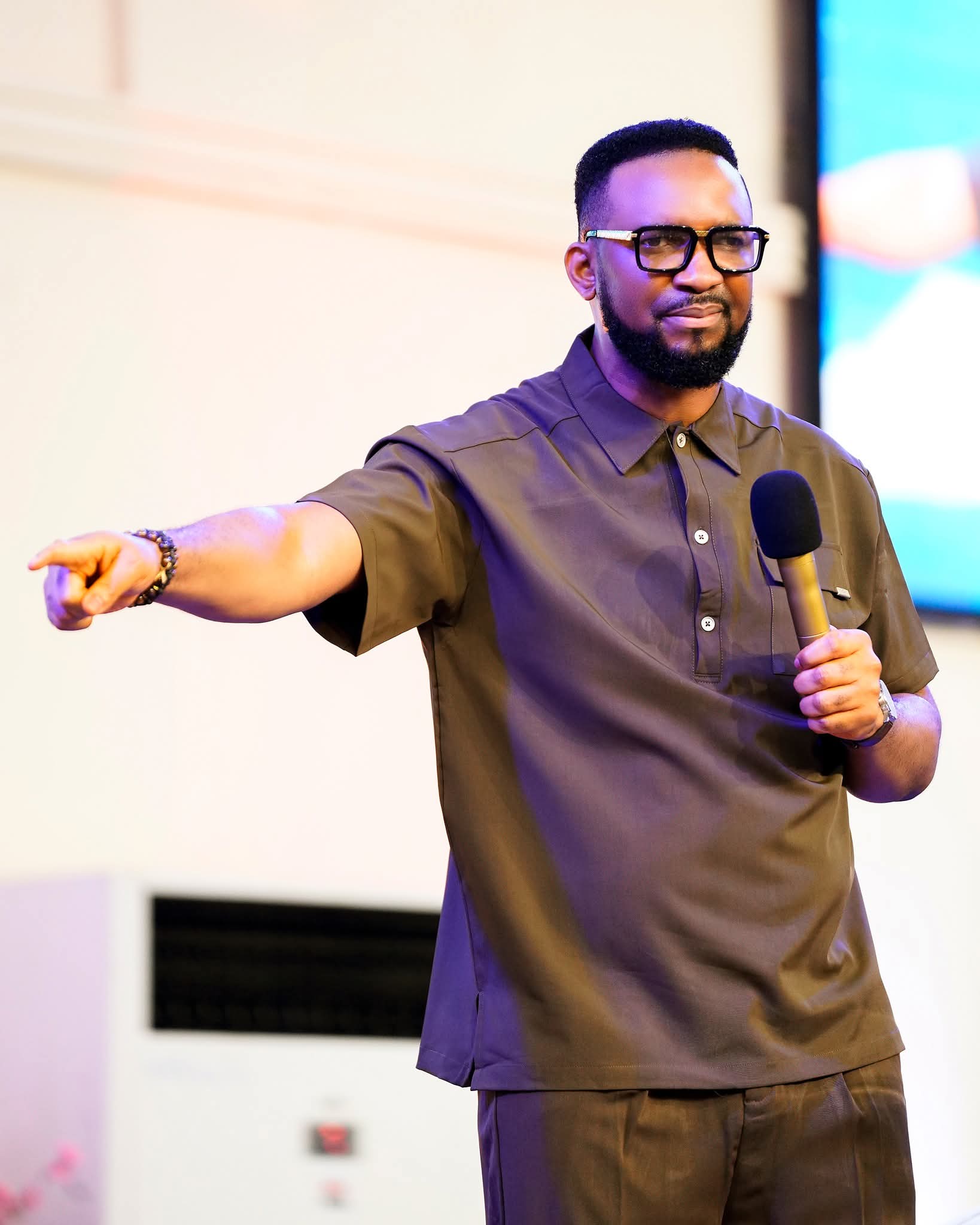
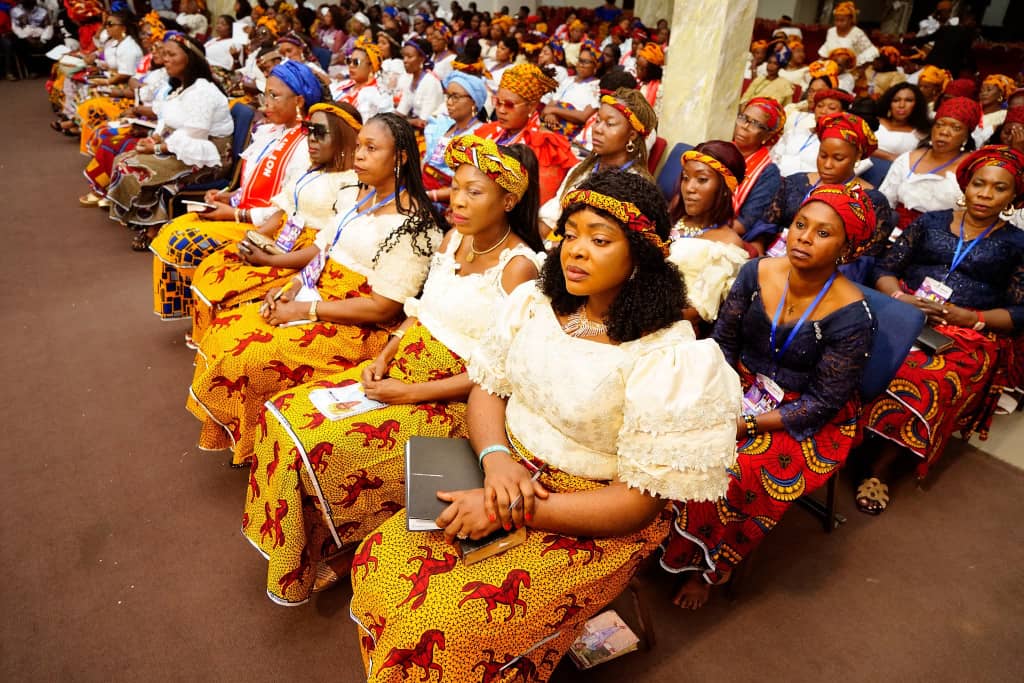
The midweek service which also was part of the One- week long International Congress of the Liberation women of Zion, The Women Congress was well attended by Representatives of Liberation women of Zion in a branches across the Globe with various programs lined up for the year 2025 Women Convention.
Speaking on the Subject which the Generational Prophet of God Dr Chris Okafor has been dealing with for some time now, Transgenerational Curses with a special focus on “Inherited Battles”, The Generational Prophet said inherited Battles can sometimes be.linked to, as a result of a faulty foundation, Many fore-fathers sinned and are no more the children suffered from this, he also noted that because of the ignorance of this generation and even yet unborn, they continue in same pattern, until such battles are broken.
The Popular Lagos Prophet also remarked that if such inherited Battles are not handled very well, the consequences of such foundations will be enormous and will definitely affect all the up-springs from Generations to Generations
If one is under an inherited Battles, he or she can be Annoited and still be destroyed therefore you need wisdom to acknowledge how to tackle the foundational Curses.
The Generational Prophet of God Dr Chris Okafor however maintained that until you get the Light to chase out Darkness and when you understand the misery of the blessing the Lord has giving you through your commitment to the vineyard then you will breakout from the inherited Battles in your father’s house.
On how to deal with and breakout from the inherited Battles of your father’s house, The Generational Prophet said the devil can mess you up if you fail to understand the Principles of covenant, he said you need Covenant with Elohim to be set free, you must understand how to enforce convenat with your commitment, offering ,tithe and sacrifice to breakout and destroyed Foundational curses in your life.
The Midweek PHDS service was climaxed with Prophecy,Miracles, Deliverance, Restoration, Healing and Solutions all to the Glory of God.
Meanwhile the Annual flagship conference of Grace Nation tagged One Night With the kings come up on 29th August 2025 at the international Headquarters of Grace Nation Global, The program which has recorded tremendous testimonies since inception will begin by 8pm Nigeria Time, on Friday 29th August 2025.Faithful outside Nigeria can hook up with the conference through Liberation TV and all other Grace Nation online handles.
Politics
From Brazil, Capital Market Stakeholders Tell Firms to Bet on Tinubu’s Nigeria
~ Brasília, Brazil
On the sidelines of President Bola Ahmed Tinubu’s state visit to Brazil yesterday, a delegation of Nigerian capital market stakeholders met with the President and pledged support for his reforms while urging more companies to embrace the Nigerian Exchange (NGX).
Nonso Okpala, Group Managing Director of VFD Group, who joined the meeting, described NGX as the backbone of the economy and pointed to his company’s listing two years ago as proof of the market’s potential to transform businesses.
“Two years ago, when we got listed, most people were not betting on Nigeria or the capital market. We saw the vision, we keyed into it. That vision has been accelerated by the President’s policies. Our business has grown significantly and we are investing even more in the Nigerian economy,” Okpala said.
He commended the administration’s reforms, including the unification of exchange rates and new tax policies, as bold steps that have boosted market confidence and strengthened the investment climate.
“What we are saying is that other companies should take a cue and bet on the Nigerian economy by getting listed. That is the true way of democratizing wealth and creating value for everybody,” he added.
The meeting in Brazil added a capital market perspective to Tinubu’s state visit, which has already produced agreements in trade, aviation, finance, science, and diplomacy. Observers note that the engagement shows how the President is linking international diplomacy with domestic market confidence.
Okpala closed on a hopeful note.
“The best is yet to come for the Nigerian economy. We will continue to diversify and invest strongly, backed by the vision of this administration.”
society
As Komolafe Is Crafting Nigeria’s Oil Renaissance With Visionary Finesse
By Sharon Iwodi
Engr. Gbenga Olu Komolafe’s appointment as the pioneer Chief Executive of the Nigerian Upstream Petroleum Regulatory Commission (NUPRC) in October 2021 was met with widespread approval, proof of his distinguished career marked by professionalism and innovation. His ascent to this pivotal role was no fluke, built on a foundation of exemplary service in various capacities, including General Manager, Special Duties, Group General Manager, Crude Oil Marketing Division, and Executive Director (Commercial) at the Pipeline and Petroleum Marketing Company (PPMC).
Komolafe’s track record of transformative leadership in these roles positioned him as the ideal candidate to steer Nigeria’s upstream petroleum sector into a new era. He’s brought a multidisciplinary expertise to the NUPRC, holding two master’s degrees from the University of Ibadan in Industrial and Production Engineering and Industrial and Labour Relations, alongside a master’s in Social Sciences and a degree in Law from the University of Warwick. This diverse academic background, complemented by his extensive industry experience, has enabled him to navigate complex challenges with remarkable adaptability, making him a dynamic leader capable of driving systemic change in a sector critical to Nigeria’s economy.
Upon assuming office, shortly after the landmark Petroleum Industry Act (PIA) of 2021, Komolafe faced the formidable task of establishing the NUPRC as a robust regulatory body. This required a complete paradigm shift from the discretionary and loosely governed practices of the past. Under his leadership, the NUPRC has undergone sweeping reforms, positioning Nigeria’s upstream petroleum sector as a model of regulatory excellence.
Komolafe’s tenure is credited with upholding industry laws, institutionalising transparency, and ensuring regulatory clarity, earning the commission accolades as a leading regulator in Africa. Leveraging his engineering acumen and legal expertise, Komolafe has not only applied technical solutions but also ensured the PIA’s legal framework is effectively implemented to achieve the commission’s mandate.
His vision has redefined the NUPRC’s mission, introducing 21st-century regulatory standards through a comprehensive overhaul of internal processes. This has cultivated a culture of accountability and efficiency across the commission’s operations. A cornerstone of his leadership is consistent stakeholder engagement, with transparency as a non-negotiable principle. Unlike the opaque practices of the past, Komolafe’s NUPRC insists on openness, fairness, and inclusivity in all industry dealings.
Despite inheriting the staff and entrenched institutional culture of the defunct Department of Petroleum Resources, Komolafe has introduced groundbreaking innovations that have reshaped the upstream sector. One of his flagship achievements is the implementation of electronic tracking for petroleum product distribution across Nigeria, enhancing oversight and curbing inefficiencies.
Additionally, his leadership addressed a critical gap in the industry by establishing structural engineering assessment facilities, a long-overdue function that has bolstered safety and compliance. Two standout reforms—the Nigerian Upstream Petroleum Measurement Regulations and the Advanced Cargo Declaration Regulation—have revolutionised the sector. These policies have digitised and streamlined cargo loading and discharge processes, from terminals to receiving ports, significantly improving transparency and traceability.
By addressing longstanding gaps in monitoring and accountability, these regulations have curtailed excesses and restored confidence in the industry, making it more predictable and attractive to investors. Komolafe’s commitment to honesty and integrity has been a driving force behind these reforms, fostering an environment that supports businesses and attracts foreign investment. His efforts have stabilised Nigeria’s upstream petroleum industry, creating a predictable framework that encourages sustainable growth.
Industry stakeholders have praised his ability to balance regulatory rigour with economic enablement, positioning Nigeria as a competitive player in global energy markets. Known for his humility and unassuming lifestyle, Komolafe shuns the spotlight, letting the results of his work speak for themselves. His ingenuity and dedication are legendary among industry watchers, yet he remains grounded, a trait that endears him to colleagues and stakeholders alike.
Beyond his professional achievements, Komolafe’s personal investment in community development is evident in initiatives like skills training programs for youth and support for local businesses in his home state, further amplifying his impact. Engr. Gbenga Olu Komolafe’s legacy at the NUPRC is one of reforms, not rhetoric. His transformative leadership has not only elevated the upstream petroleum sector but also set a benchmark for regulatory excellence in Africa.
As Nigeria continues to reap the benefits of his vision, Komolafe’s contributions will resonate for years, cementing his place as a trailblazer in the nation’s energy landscape.
Iwodi is a public affairs analyst based in London.
society
Tinubu’s Two Trips, One Question: What’s Really Happening in Brazil?
By George Omagbemi Sylvester | saharaweeklyng.com
President Bola Ahmed Tinubu’s two recent visits to Brazil within roughly two months have set off a political and economic firestorm in Nigeria. To supporters the excursions are hard-nosed “ECONOMIC DIPLOMACY”; to critics they are ostentatious displays of presidential jet-setting while Nigeria grapples with inflation, insecurity and service collapse. The more useful question isn’t optics alone, it is this: what is really happening in Brazil that makes it a magnet for Tinubu’s attention and what can (or will) Nigeria realistically extract from that attraction?
Short answer: Brazil under President Luiz Inácio Lula da Silva is consciously retooling itself as a pivot of Global South cooperation an agribusiness and energy powerhouse with manufacturing niches (notably aerospace through Embraer) and it is actively courting African partners. For a RESOURCE-RICH but UNDER-INVESTED Nigeria, that posture offers both opportunity and danger. The opportunities are concrete; the danger is that headline diplomacy outpaces implementation.
Brazil’s strategic posture in 2025: rebuilding influence and industrial reach.
Since returning to office, President Lula has driven a foreign-policy agenda that emphasises South–South cooperation: deeper ties with Africa, stronger engagement inside BRICS and an overt push to translate Brazil’s agricultural, industrial and energy strengths into exportable partnerships. This is not mere rhetoric. Brasília has hosted Brazil–Africa dialogues on food security and rural development and Lula has publicly framed agricultural technology as a way to “REPAY” historical ties with Africa, offering technology transfer rather than charity. That strategic posture made Brazil a logical and attractive partner for Nigeria at precisely the moment Tinubu sought high-level, visible wins.
Serviços e Informações do Brasil
Agência Brasil.
Concretely, Brazil’s economy is still a heavyweight in Latin America. Multilateral assessments show Brazil’s growth has been robust in recent years but faces moderation and structural headwinds in 2025 (inflationary pressures, tighter monetary policy and risks from a more uncertain global trade environment. In short: Brazil is powerful, but prudent) keen to export expertise and investment, yet protective about where and how it places capital. International institutions such as the IMF and OECD have warned that Brazil’s growth will moderate in 2025/26 even as it retains significant capacity for outward investment and technology transfer.
What Tinubu found (and loudly promised): MoUs, aviation links and Petrobras talk.
Tinubu’s state visit produced tangible announcements: a package of memoranda of understanding spanning trade, energy, aviation, science and finance; Brazil-backed commitments to expanded aviation links (Embraer interest and an Air Peace Lagos–São Paulo route); and a highly publicised promise that Petrobras could be encouraged to resume operations in Nigeria. Lula welcomed stronger NIGERIA–BRAZIL ties and spoke of productive integration and shared opportunity; messaging tailor-made for a Nigerian presidency hungry for wins. But the key fact remains that the most headline-grabbing claim (Petrobras’s return) was framed as political encouragement, not an executed, binding corporate contract. Petrobras itself declined to comment publicly at the time.
Why the Petrobras line matters and why caution is required.
The possibility of Brazil’s Petrobras returning to Nigeria is catalytic in political rhetoric: it conjures jobs, technology transfer and a revival of deepwater investment. For a president who must demonstrate immediate economic traction, a Petrobras comeback is a potent symbol. Yet corporate returns are not switched on by presidential handshakes alone. Oil majors and national companies weight decisions on political risk, contractual clarity, regulatory stability, local content rules and security conditions. Tinubu and Lula can unlock conversations and remove diplomatic friction, but they cannot singlehandedly compel Petrobras to write cheques. Investors demand signed contracts, due diligence and assurance that host-country institutions can protect multi-year, capital-intensive projects. Sahara, in reporting the exchanges, rightly stressed that discussions were encouraging but that concrete outcomes remain uncertain.
The upside: skill transfer, aviation and agricultural gains are real possibilities.
Not everything is smoke and mirrors. Brazil’s agribusiness model (mechanisation, seed technology, fertiliser logistics and large-scale cattle/ranching systems) is a genuine transfer vector for Nigeria. If Nigerian ministries and private partners secure clear, enforceable agreements with Brazilian firms, the payoff could be large: improved yields, lower food import bills and a nascent export capacity. Similarly, Embraer’s interest in a Nigerian service centre and direct Lagos–São Paulo flights would boost connectivity, reduce aircraft downtime costs and expand business ties. These are realistic, implementable outcomes, but they require contracts, finance and local capacity-building, not merely press releases.
The downside: optics, implementation gaps and the risk of diplomatic theater.
The principal danger is the classic one: diplomacy that substitutes for governance. Nigeria’s fiscal and institutional problems (currency volatility, security liabilities in the Niger Delta and the wider country, regulatory uncertainty) are the very problems that can blunt foreign investment. A pattern of state visits followed by slow or invisible implementation risks turning valuable diplomatic capital into cynical theatre. That’s not hyperbole: history is littered with MoUs that never became projects. The public frustration (“where are the jobs?”) has political consequences and feeds opposition narratives that the presidency is more interested in selfies than service delivery. Sahara and other reporting outlets flagged this gulf between announcement and deliverable.
What Nigerians should demand and what Brazil should ensure.
If these Brazil trips are to be judged a success, both governments must move beyond photo-ops into forensic implementation:
Full transparency on every MoU: precise timelines, financing sources, implementation leads and measurable KPIs. No ministry balkanisation; one coordinating office with public dashboards.
Local-content and jobs clauses: Brazilian firms must be contractually required to hire/train Nigerians, source input locally where feasible and partner with Nigerian firms.
Security and regulatory guarantees: investors need credible enforcement frameworks. Abuja must neutralise political risk and present bankable project templates, especially in oil & gas.
Quarterly public progress reports: diplomatic success is earned in execution, not tweets.
Final verdict: promising, not miraculous.
Tinubu’s double visit to Brazil has put a spotlight on a wider geopolitical shift: Brazil is actively courting African partners and positioning itself as a provider of technology, industrial capacity and diplomatic heft outside the Western axis. For Nigeria this is a golden window, but one that closes fast if Brasília and Abuja do not convert warm words into legally binding, transparent projects that deliver employment and industrial capacity. The visits were not, by themselves, a panacea. They were an opening act. The real test will be in boardrooms, ports, service centres and rural fields and in the hard ledger of jobs and factories that Nigerians can see.
If President Tinubu was seeking a story of strategic outreach, he got it. If he was seeking instant, deliverable transformation, he did not at least not yet. The responsibility now sits squarely with both governments: translate diplomacy into contracts and contracts into visible lives changed. Anything less would be expensive ceremony; everything more would be strategic statecraft.
-
society6 months agoRamadan Relief: Matawalle Distributes Over ₦1 Billion to Support 2.5 Million Zamfara Residents
-
Politics2 months agoNigeria Is Not His Estate: Wike’s 2,000‑Hectare Scandal Must Shake Us Awake
-
society5 months agoBroken Promises and Broken Backs: The ₦70,000 Minimum Wage Law and the Betrayal of Nigerian Workers
-
society4 months agoOGUN INVESTS OVER ₦2.25 BILLION TO BOOST AQUACULTURE