
society
2027: Angry Lawmakers Plan Major Showdown With President Tinubu Over Constituency Projects Funding

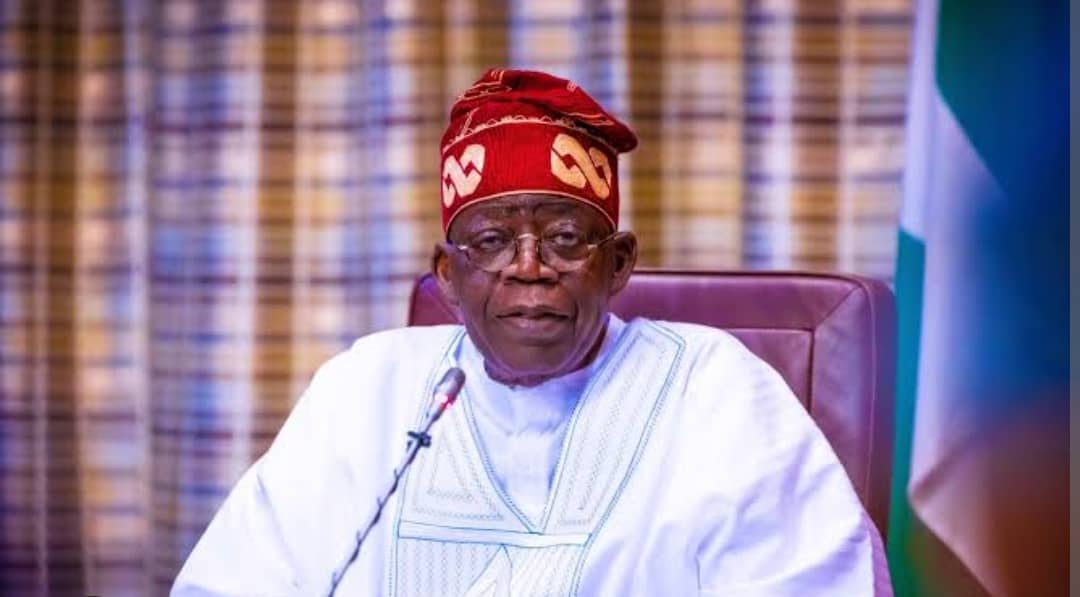
2027: Angry Lawmakers Plan Major Showdown With President Tinubu Over Constituency Projects Funding
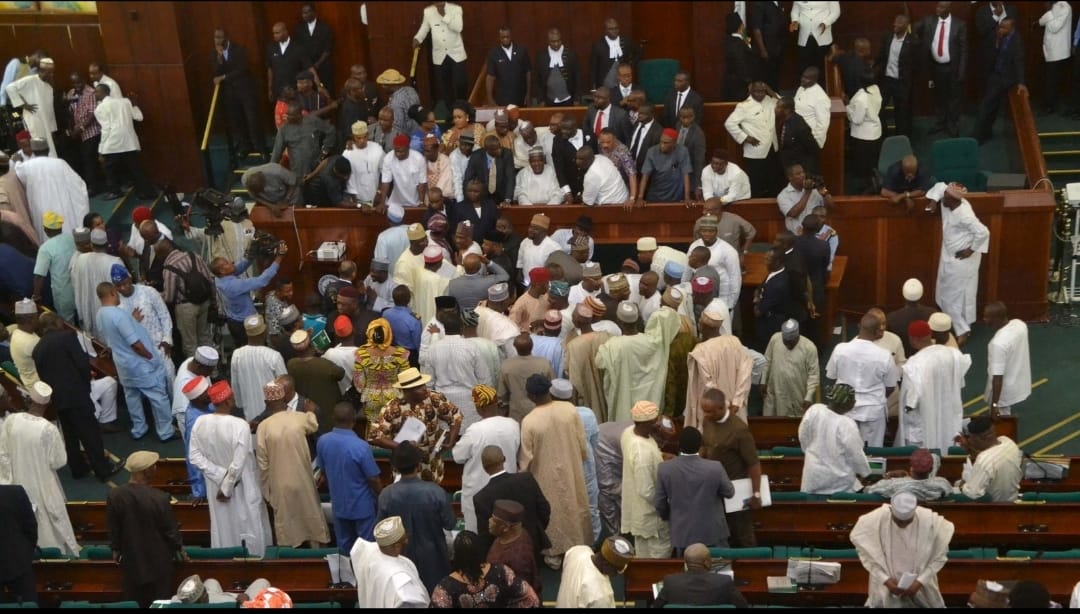
Some angry Nigerian Senators and Members of the House of Representatives are planning a major showdown against President Bola Ahmed Tinubu and his executive, upon resumption from the recess, over non-servicing of their constituency projects.
Rising from separate meetings in Abuja Tuesday night, the Lawmakers appear to have concluded arrangements to mobilize their colleagues who are equally piqued by the activities of the executive, to put the President on his toes.
The meeting for the Senators was said to have been held in a private residence of a ranking northern APC Senator, while the Reps were hosted by a Member of the opposition from the South. Lawmakers from both opposition parties and the ruling All Progressives Congress (APC) were said to be in attendance.
Top on the agenda of the meetings, according to different sources, was the non funding of constituency projects nominated by the Lawmakers in the 2024 and 2025 budgets; the only two appropriation exercise they were opportune to participate.
In line with the culture of maintaining a January – December budget circle inherited from the past administration, President Tinubu is expected to present the 2026 Appropriation Bill to the joint session of the National Assembly, anytime soon.
But that should not be expected, as the federal government is still struggling with the performance of the 2024 budget and has not started implementing the 2025 appropriation yet, even as the fiscal year enters the last quarter.
The Lawmakers, most of whom are warming up for 2027 elections, were said to be sufficiently angry by the way some of their constituents received them during this period of long vacation. Some who are in the ruling party, lamented during the meetings, that they were fast losing the supports of their constituents to new aspirants, over what they called “fake promises”.
“Imagine promising the people of our commitments to facilitate one or two projects to their wards in the 2025 budget, and with barely 3 months to the end of the year, nothing to show for it; whereas, the same projects are captured in the 2025 budget, but someone, somewhere, has refused to mobilize contractors to commence work. I wonder what I will be promising them in the 2026 budget, knowing fully well that they will still tag it fake promises”.
The Lawmakers frowned at the inability of the executive to pay contractors who had since completed projects captured in the 2024 appropriation, saying, that singular inaction from the executive has greatly hampered developments in their various constituencies and pitched their constituents and once loyal supporters against them, even as they brace up for 2027 general elections.
A top source privy to the Reps secret meeting, hinted that some Members have been drafted from various political parties and regions, to mobilize those in their blocs to make sure that, “no executive bill from the President will pass through the parliament again”.
A Senator from the South who was also at the meeting, described the President’s economic policies as “rhetorics” and have the tendencies of causing one’s misfortune in the next election, if urgent steps are not taken by individual contestants.
“Going by what we saw in these few weeks of our recess, I will just advise anyone seeking reelection, especially those my friends in the APC, to step up their games, if need be, go and take loans and prosecute your own election. Don’t go about campaigning for someone whose economic policies are as rhetorics as they are. His policies are already causing great set back for developments in the country, don’t go and incur the wrat of the people the more, by insisting your party must win at the center. Just carry your own cross and leave the people to decide”, he added.
Our Correspondent also gathered that Lawmakers from both secret meetings vowed to withdraw any further support for the President ahead of his 2027 campaigns, adding that, such would amount to insulting the collective sensibility of their constituents, who are already disgruntled.
Majority of the Lawmakers were said to have specifically blamed the Minister of Finance, Dr. Wale Edun and the Accountant-General of the Federation (AGoF), Mr. Samsudeen Babatunde Ogunjimi, for the non performance of the 2024 and 2025 budgets.
y
The Lawmakers, according to different sources, also regretted passing the Tax Reforms Bills, as well as other major executive bills that came through at both chambers; with some Senators vowing to stampede screening and confirmation of executive nominees, as they resume from long vacation on Tuesday, 23rd September, 2025.
Meanwhile, a group, Coalition for Equity and Accountability in Public Finance (CEAPF) had in a statement on Wednesday, demanded the immediate resignation of Finance Minister, Edun and the AGoF, Ogunjimi, accusing them of “failing to pay contractors for projects duly captured in the 2024 budget and fully executed by local firms”.
In the statement signed by its President, Comrade Segun Daramola, and Secretary-General, Comrade Isaac Idachaba, the coalition said it would formally approach the National Assembly and “lobby lawmakers across party lines to pass a vote of no confidence on the two officials if they refuse to vacate their offices voluntarily”.


society
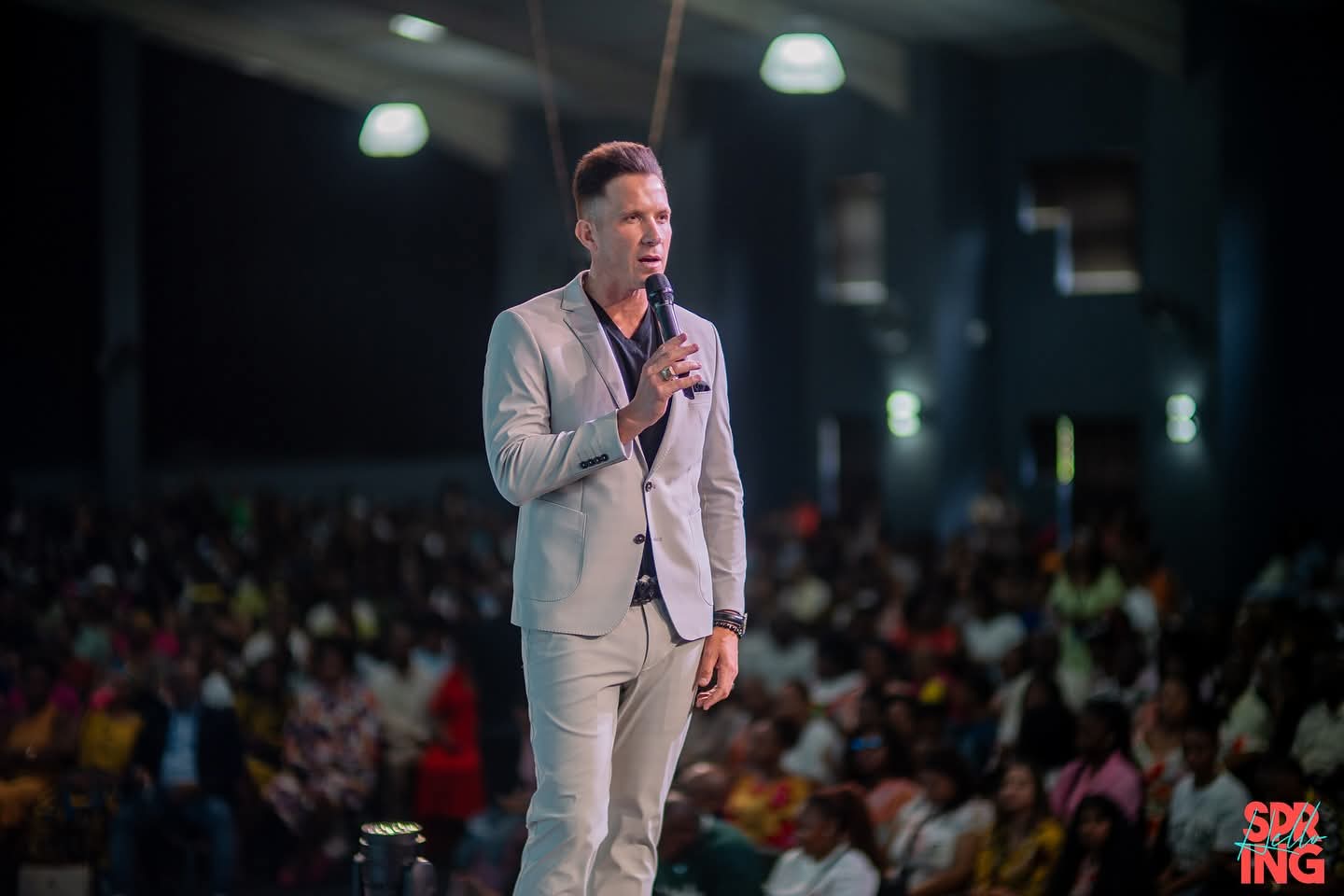
“You Are Never Without Help” – Pastor Gebhardt Berndt Inspires Hope Through Empower Church (Video)
“You Are Never Without Help” – Pastor Gebhardt Berndt Inspires Hope Through Empower Church (Video)
By FEMI OYEWALE


The Lootocracy: Why Nigeria Bleeds Despite Its Riches.
By George Omagbemi Sylvester | Published by SaharaWeeklyNG.com
“From SENATORS padding budgets to GOVERNORS hoarding salaries, from MINISTERS stealing oil money to ORDINARY NIGERIANS demanding bribes – CORRUPTION is not just in government, it is in the people. Nigeria’s curse is not resources, but the greed that runs through POWER and SOCIETY.”

The Grand Theft Called Governance. Nigeria, the so-called “GIANT of AFRICA,” sits on vast oil reserves, fertile land and an energetic population of over 220 million. Yet it remains one of the poverty capitals of the world. Why? Because the wealth of the nation has been consistently looted, not only by PRESIDENT’S and MILITARY RULERS, but by SENATORS, MINISTERS, GOVERNORS, LOCAL GOVERNMENT CHAIRMEN and tragically, by ORDINARY CITIZENS who participate in the culture of corruption.
According to the Nigeria Extractive Industries Transparency Initiative (NEITI), over $582 billion in oil revenue has disappeared through corruption and mismanagement since independence in 1960. This figure is almost double Nigeria’s current GDP. While nations like the UAE and Qatar used oil wealth to build futuristic cities, Nigeria’s leaders turned oil into a curse, looting it to build mansions in Dubai, buy apartments in London and stash billions in Swiss accounts.
As Thomas Sankara, the revolutionary leader of Burkina Faso, once said: “A soldier without any political education is a potential criminal.” In Nigeria, leaders without moral education became criminals in power.
PRESIDENT’S and HEADS of STATE: The Original Looters. It would be hypocritical to discuss looting without mentioning Nigeria’s presidents and military rulers. General Sani Abacha, who ruled from 1993 to 1998, looted an estimated $5 billion, part of which is still being repatriated from Switzerland and the U.S. today. His name remains a global synonym for kleptocracy.
Olusegun Obasanjo’s civilian regime (1999–2007), though hailed for debt relief, was dogged by corruption in privatization deals. Power sector contracts worth $16 billion vanished with little to show in electricity supply.
Goodluck Jonathan’s administration (2010–2015) witnessed unprecedented oil theft, with former Central Bank Governor Sanusi Lamido Sanusi alleging that $20 billion was missing from NNPC accounts.
Even today, Bola Ahmed Tinubu, Nigeria’s current president, is frequently accused by opposition and civil groups of building a vast political and financial empire on questionable sources, echoing the pattern of looting entrenched in Nigerian politics.
As Chinua Achebe declared in The Trouble with Nigeria: “The trouble with Nigeria is simply and squarely a failure of leadership.”
SENATORS: Millionaires in Robes. Nigeria’s National Assembly is one of the most expensive in the world. According to a 2018 report by The Economist, each Nigerian senator earns over $450,000 annually in salaries and allowances, in a country where the minimum wage is less than Us$50 (₦30,000/₦70,000, though in some states). Beyond their bloated pay, senators pad budgets, demand kickbacks for constituency projects and sometimes pocket funds for projects that never exist.
In 2020, an investigation revealed that billions allocated to “CONSTITUENCY PROJECTS” across Nigeria had either been abandoned or poorly executed. Roads that were supposed to be built remain death traps, health centers remain uncompleted and water boreholes remain dry; yet the money was collected.
Nelson Mandela once said: “Overcoming poverty is not a gesture of charity, it is an act of justice. It is the protection of a fundamental human right.” Nigerian senators, instead of fighting poverty, have institutionalized injustice.
MINISTERS and Oil Barons: The Big Thieves. No sector has been looted like Nigeria’s oil industry. Under Diezani Alison-Madueke, petroleum minister during Jonathan’s administration, billions vanished through shady oil deals. The U.S. Department of Justice seized over $144 million in assets linked to her alleged corruption, including luxury homes and jewelry.
Oil subsidies have also been a cash cow for thieves. In 2012, a government probe revealed that ₦1.7 trillion ($10 billion) was fraudulently claimed by fuel importers and government officials. Instead of subsidizing fuel for the masses, the scheme became a pipeline of wealth into private pockets.
GOVERNORS: Lords of the States. State governors, often referred to as “EMPERORS in AGBADA,” control billions in federal allocations. Many treat their states as personal estates. Former Delta State Governor James Ibori was convicted in the UK in 2012 for laundering over $250 million. In 2021, the British government returned £4.2 million of his loot.
In Plateau State, former Governor Joshua Dariye was jailed for embezzling ₦1.1 billion meant for ecological projects. Former Taraba Governor Jolly Nyame was convicted for diverting ₦1.6 billion of state funds. The list goes on.
Meanwhile, ordinary workers in these states often go months without salaries, pensioners die waiting for payments and infrastructure collapses.
LOCAL GOVERNMENT: The Forgotten Looters. At the grassroots, local government Chairmen (who should be closest to the people) often act as petty kings. Federal allocations to LGAs run into billions annually, but most Nigerians can hardly point to functioning primary schools, healthcare centers or roads built by their local governments. Instead, the funds vanish into private accounts, with no accountability.
The People’s Complicity. It is easy to point fingers at leaders, but ordinary Nigerians are also complicit. Police officers DEMAND ₦1000 bribes on the highways. Civil servants INFLATE contracts. Market women ADD “extra charges” to customers. Parents pay to SECURE jobs for their children. When corruption becomes a way of life, leadership simply reflects the people.
As Plato warned centuries ago: “The price good men pay for indifference to public affairs is to be ruled by evil men.” Nigerians who normalize corruption are silently paving the way for more looters in power.
The Cost of Looting. The consequences of looting are everywhere. Nigeria has over 133 million people living in multidimensional poverty, according to the National Bureau of Statistics (2022). Roads are death traps, hospitals lack equipment and universities go on endless strikes. The country, once an agricultural powerhouse, now imports basic food items.
Every billion stolen is a hospital unbuilt, a school unfunded, a road unrepaired and a job lost. Looting is not an abstract crime; it kills, slowly but surely.
Nigeria’s Looting in Numbers
$582 Billion – Oil revenue lost to corruption since 1960 (NEITI).
133 Million Nigerians – Living in multidimensional poverty (NBS, 2022).
$450,000/year – What each senator earns in salaries and allowances (The Economist).
$5 Billion – Looted by General Sani Abacha alone (World Bank/DOJ).
₦1.7 Trillion ($10 Billion) – Fuel subsidy fraud uncovered in 2012.
$16 Billion – Power sector funds under Obasanjo’s watch, with little result.
£250 Million – James Ibori’s stolen wealth laundered abroad (UK conviction).
₦30,000/₦70,000 (less than $50) – Nigeria’s minimum monthly wage.
“Every billion stolen is a hospital unbuilt, a school unfunded, a road unrepaired and a job lost.”
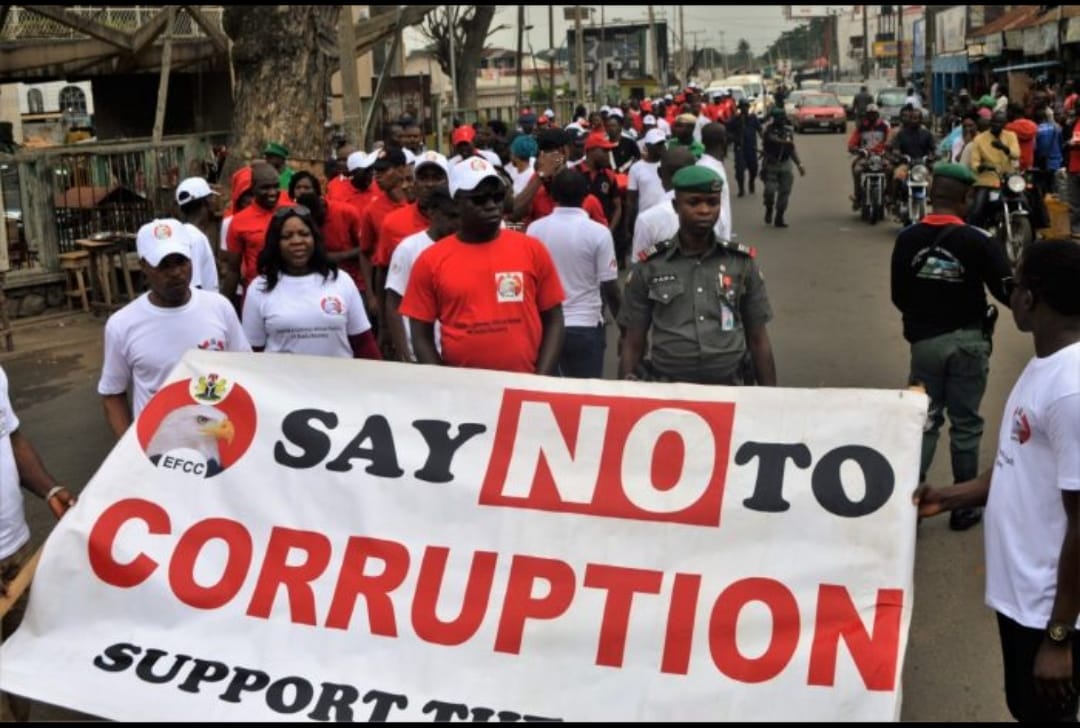
A Call to Reckoning. Nigeria cannot continue like this. As Ngozi Okonjo-Iweala, Director-General of the World Trade Organization, once said: “Corruption is the single biggest obstacle to Nigeria’s development.” Until looters (from presidents to LG chairmen, from senators to citizens) are punished and systemic reforms are enforced, Nigeria will remain trapped in underdevelopment.
The people must also rise. Protests like #EndSARS showed that Nigerians can mobilize against injustice. Anger must now move beyond hashtags. Citizens must demand accountability at every level, vote out corrupt politicians and refuse to normalize bribery in daily life.
The Way Forward: Nigeria needs a rebirth. A rebirth where OIL WEALTH builds industries, not foreign mansions. Where SENATORS legislate for the people, not for their pockets. Where GOVERNORS become servants, not emperors. Where LOCAL GOVERNMENTS bring development, not decay. Where CITIZENS reject corruption in all its forms.
The looting of Nigeria’s wealth is not just a failure of government; it is a betrayal by an entire system. The time has come to end this betrayal.

society
ONDO STATE GOVERNMENT REAFFIRMS COMMITMENT TO QUALITY HEALTHCARE, CLARIFIES STATUS OF IGBARA-OKE GENERAL HOSPITAL.

ONDO STATE GOVERNMENT REAFFIRMS COMMITMENT TO QUALITY HEALTHCARE, CLARIFIES STATUS OF IGBARA-OKE GENERAL HOSPITAL.
The Ondo State Government has reaffirmed its commitment to delivering quality healthcare services across the state, clarifying recent reports about the condition of Igbara-Oke General Hospital in Ifedore Local Government Area.
Commissioner for Health, Dr. Banji Ajaka, in a statement noted that contrary to claims of abandonment and inadequate staffing, the hospital is fully functional and adequately manned with a diverse workforce of 138 personnel spanning various critical departments.
According to him, the hospital currently has seven doctors, three optometrists; two dental officers (with one seconded to the Dental Headquarters); 27 nurses including the Head Nurse Supervisor; as well as seven pharmacy technicians, seven laboratory scientists, and eight laboratory technicians and lots more.
Dr. Ajaka emphasized that the facility is also powered by solar energy supported by an inverter system, ensuring sustainable electricity supply to reduce downtime in service delivery. He added that the state government has been consistently investing in human resources, infrastructure, and medical equipment across its secondary health facilities, including Igbara-Oke.
He reassured residents of Ifedore and its environs that pregnant women and other patients have access to skilled healthcare professionals and that the government remains committed to further strengthening services at the hospital.
“The Governor Lucky Aiyedatiwa-led administration places high premium on the health and wellbeing of our people. Igbara-Oke General Hospital is not a symbol of neglect, but a working healthcare facility staffed with competent personnel who are daily serving the needs of our citizens. We will continue to improve infrastructure and service delivery in line with our vision for a healthier Ondo State,” Dr. Ajaka said.
The Commissioner, however, acknowledged that like many public health institutions nationwide, there are areas requiring improvement, and assured that the ministry is addressing them through ongoing reforms and partnerships.


-
 society7 months ago
Ramadan Relief: Matawalle Distributes Over ₦1 Billion to Support 2.5 Million Zamfara Residents
-
 Politics3 months ago
Nigeria Is Not His Estate: Wike’s 2,000‑Hectare Scandal Must Shake Us Awake
-
 society6 months ago
Broken Promises and Broken Backs: The ₦70,000 Minimum Wage Law and the Betrayal of Nigerian Workers
-
 society4 months ago
OGUN INVESTS OVER ₦2.25 BILLION TO BOOST AQUACULTURE