
society
ZAILANI ABSOLUTE CARE FOUNDATION URGES MAMADI TO CEASE BLACKMAIL


ZAILANI ABSOLUTE CARE FOUNDATION URGES MAMADI TO CEASE BLACKMAIL, VOWS UNWAVERING SUPPORT FOR ZAILANI AND CONTINUITY UNDER TINUBU, UBA SANI
In a strongly worded press briefing at the Skill Acquisition Centre, Mando, the Zailani Absolute Care Foundation today publicly rebuked Hon. Abubakar Muhammad Mamadi for what it described as attempts to “blackmail” Governor Mallam Uba Sani, while restating its full-throated support for Rt. Hon. Yusuf Ibrahim Zailani (FCNA) as the preferred candidate for the Kaduna Central Senatorial seat in 2027.
Read and signed by Tasiu Musa, chairman of the foundation, the statement praised Governor Uba Sani as “a true democrat” who, the group said, “will never endorse a candidate” but rather allows the people to decide. The foundation further lauded President Asiwaju Bola Ahmed Tinubu and Governor Uba Sani, declaring that all elective seats in Kaduna APC remain open except for the president and governor whom the group says enjoy the endorsement of “patriotic, good people of Kaduna State.”
Hailing Zailani’s political pedigree, the foundation said the former lawmaker has demonstrated resilience and a sustained commitment to public service. “Zailani’s record of service dates back to 2007,” the statement noted, pointing to his long tenure in the Kaduna State House of Assembly representing Igabi West as proof of his capacity, effectiveness and deep-rooted connection to the people of Igabi Local Government.
The foundation urged Zailani not to withdraw from the senatorial contest and warned of political consequences if he steps aside. “Zailani must not back down,” the statement said. “Should Rt. Hon. Zailani step aside from the contest, we will withhold our support and will actively oppose any future political ambitions he may pursue.” The group framed its stance as an insistence on protecting the interests and representation of Igabi people at the National Assembly.
In a direct message to Hon. Abubakar Muhammad Mamadi, the foundation reminded him of a past episode in which, the group says, Mamadi persuaded Zailani to contest a senatorial seat against his initial reluctance an intervention allegedly made in the presence of Igabi elders and critical stakeholders. The foundation used the reminder to challenge Mamadi’s current posture and to urge him to desist from attacks on the governor.
Calling on local stakeholders to unite, the foundation appealed to politicians, traditional leaders, opinion formers and elites of Igabi Local Government to rally behind Zailani. “Supporting Zailani is not merely a personal endorsement; it is a vote for the progress and future of Igabi as a whole,” the statement read.
The group also commended Governor Uba Sani for his pledge to ensure a level playing field in APC primaries, urging him and party authorities to guarantee fairness, transparency and a credible process that will allow the best candidate to emerge.

Signed by Tasiu Musa, the foundation’s communiqué closed with an exhortation to Zailani to remain “brave, steadfast and committed” to the contest, assuring that “Igabi stands ready to mobilize and defend its interests.”
The party and the individuals named in the foundation’s statement did not immediately respond to requests for comment.









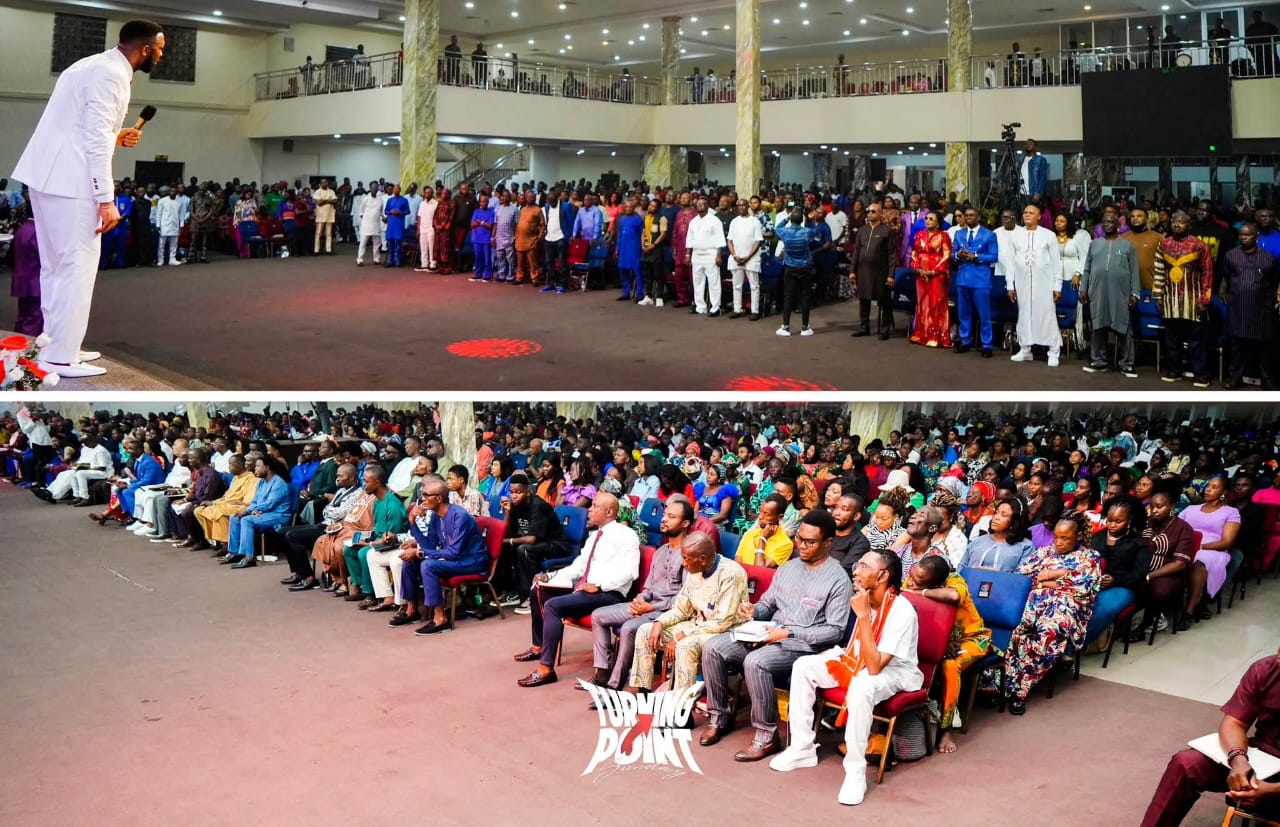
Turning Point: Dr. Chris Okafor Resumes with Fresh Fire of the Spirit
-Steps onto the Grace Nation Pulpit After a Month-Long Honeymoon Retreat with Renewed Supernatural Power
By Sunday Adeyemi
The much-anticipated February 1, 2026 “Turning Point” service of Grace Nation has come and gone, but its impact remains deeply etched in the hearts of Grace Nation citizens across the world. The significance of the day was unmistakable—it marked the official return of the Generational Prophet of God and Senior Pastor of Grace Nation Global, Dr. Chris Okafor, to active ministerial duty as the Set Man of the commission.
The date was particularly symbolic, as Dr. Okafor had taken close to one month away from the pulpit following his wedding late last year. The period served not only as a honeymoon but also as a season of rest, reflection, and intimate fellowship with God in preparation for a greater spiritual assignment ahead.
The atmosphere at Grace Nation was electric as the Generational Prophet and his wife were received with a heroic welcome, accompanied by prophetic praise, joyful dancing, and fervent prayers. It was a celebration of return, renewal, and readiness.
In his opening remarks, Dr. Chris Okafor declared that he had returned to fully pursue the mandate God entrusted to him—winning souls for the Kingdom of God. He issued a strong warning to the kingdom of darkness, stating that light and darkness cannot coexist. According to him, the season ahead would witness intensified spiritual engagement, as the Kingdom of God advances and the forces of darkness lose ground.
“This time,” the Generational Prophet affirmed, “it will be total displacement of darkness, as the light of God shines brighter than ever.”
The Message: Turning Point
Delivering a powerful sermon titled “Turning Point,” Dr. Okafor explained that a turning point is defined as a moment when a decisive and beneficial change occurs in a situation. He emphasized that such moments are often preceded by battles.
According to him, battles do not necessarily arise because one is doing wrong, but because God desires to reveal His power and teach vital lessons through them. Every genuine battle, he noted, carries divine involvement and purpose.
Addressing the question “Why must I fight a battle?” Dr. Okafor explained that individuals who carry extraordinary grace often encounter greater challenges. “When you carry what others do not carry,” he said, “the battles that come your way are usually bigger.”
Characteristics of a Turning Point
The Generational Prophet highlighted that when a person is firmly rooted in God, no storm can uproot them. A strong spiritual foundation ensures that no battle can shake one’s destiny. He explained that prayer does not eliminate battles, but preparation through prayer guarantees victory on the evil day.
“Battles push you into your turning point when you are rooted in the Spirit,” he stated, adding that a prayerful life is essential for sustained victory and elevation.
A Supernatural Service
The Turning Point service witnessed an extraordinary move of the Holy Spirit in a fresh dimension. Deliverance, healings, miracles, restoration, and diverse testimonies filled the atmosphere as worshippers encountered the power of God during the Sunday service.
In a related development, Dr. Chris Okafor officially commissioned the ultra-modern church restaurant, Fourthman Foodies, dedicating it to God for the benefit and use of Grace Nation citizens worldwide.
The February 1 service has since been described by many as a defining moment—one that signals a new spiritual season for Grace Nation Global. https://www.facebook.com/share/v/1B2Eh6B6wo/
Sunday Adeyemi is a Lagos-based journalist and society writer. He writes from Lagos.



Adron Homes Hails Ondo State at 50, Celebrates Legacy of Excellence
The Chairman, Board of Directors, Management, and staff of Adron Group have congratulated the Government and people of Ondo State on the celebration of its 50th anniversary, describing the milestone as a significant chapter in Nigeria’s federal history and a testament to visionary leadership, resilience, and purposeful development.
In a goodwill message issued to commemorate the Golden Jubilee, Adron Group noted that since its creation in 1976, Ondo State has consistently distinguished itself as a centre of honour, intellect, and enterprise. Fondly referred to as The Sunshine State, the state has produced generations of outstanding professionals, administrators, and national leaders whose contributions continue to shape Nigeria’s socio-economic and political development.
According to the company, the strength of Ondo State lies not only in its rich cultural heritage and intellectual depth, but also in the values of integrity, diligence, and excellence that define its people. These qualities, Adron noted, have remained the bedrock of the state’s enduring relevance and national impact over the past five decades.
Adron Group further commended the state’s renewed drive in recent years towards infrastructure development, economic diversification, industrial growth, and youth empowerment, describing these initiatives as indicators of a forward-looking, inclusive development agenda anchored in sustainability and long-term prosperity.
“As a corporate organisation committed to nation-building and sustainable development, Adron Group recognises Ondo State as a strategic partner in progress,” the statement read. “We commend His Excellency, Lucky Orimisan Aiyedatiwa, Executive Governor of Ondo State, and the leadership of the state at all levels for their dedication to public service and their commitment to the advancement of the people.”
As Ondo State marks its Golden Jubilee, Adron Group joined millions of well-wishers in celebrating a legacy of excellence, strength of character, and promise, while expressing optimism that the next fifty years will usher in greater milestones in economic vitality, social advancement, innovation, and enduring peace.
The company concluded by wishing the Government and people of Ondo State continued progress and prosperity, adding that the Sunshine State remains well-positioned to shine even brighter in the years ahead.

UNITED KINGDOM OF ATLANTIS ANNOUNCES HISTORIC SUCCESS:
Premiere of ATC Digital Currency Exchange System Test, Highlighting “Gold Standard” for Humanitarian Purposes*
The Attica Empire, under the distinguished leadership of Empress Nobilisa Prof Sriwan kingjun, Empress of Attica Empire, successfully conducted a groundbreaking premiere test of its ATC (Attica Coin) digital currency exchange system. The event brought together high-ranking leaders and representatives from various nations to witness a spectacular celebration of financial innovation.
### Key Highlights of the ATC Digital Currency Exchange System Test
– The test demonstrated the efficiency and robustness of the ATC digital financial infrastructure, marking a significant milestone for Atlantis United Kingdom.
– Participants who completed the Know Your Customer (KYC) process in accordance with international standards were able to fully exchange ATC coins, thereby strengthening global confidence among currency holders.
– The ATC digital currency is positioned as the world’s first digital asset anchored to the *“Gold Standard”*, with its value guaranteed and validated through gold under certification by the International Court of Justice.
– The primary mission of the ATC currency is to fund humanitarian projects and drive macro-level social development, aligning with the empire’s vision of sustainable global impact.
### Event Atmosphere & Leadership Vision
The premiere was attended by thousands of guests who celebrated in an atmosphere of friendship, featuring:
– A concert performed by leading musical bands.
– A lavish reception of food and drink showcasing the empire’s prosperity and readiness.
– *Emperor Solomon Winning*, ruler of the United Kingdom of Atlantis and a thought leader in future-oriented projects, was celebrated as the transformative force reshaping traditional finance into a future-oriented model.
– Emperor Winning emphasized that the ATC system inaugurates a new, sustainable, and humanitarian economic framework.
*Quotes from Leadership*
_”The ATC digital currency is not just a financial innovation; it is a beacon of hope for global humanitarian efforts. We are committed to leveraging this technology to uplift communities and foster sustainable development.”_
— *Empress Nobilisa Sriwan Kingjun*
_”With the ATC Gold Standard, we are setting a new paradigm in digital finance—one that prioritizes transparency, accountability, and the greater good.”_
— *Emperor Solomon Winning*
Attica Empire is the pioneering force behind the digital economy of the United Kingdom of Atlantis. It focuses on developing secure, asset-backed FinTech solutions to support global usage and worldwide humanitarian efforts.
The ATC Digitalcurrency (Attica Coin) is a gold-backed digital asset designed to:
1. Provide a transparent and efficient medium of exchange.
2. Fund humanitarian initiatives and social development programs.
3. Set a new benchmark for asset-backed cryptocurrencies worldwide.
The Attica Empire remains committed to advancing innovative financial systems that empower global humanitarian projects and foster sustainable economic growth. The success of the ATC digital currency exchange system test paves the way for broader adoption and integration into global financial ecosystems.
### Upcoming Initiatives
– *Global Roadshow:* Attica Empire will embark on a worldwide tour to introduce the ATC digital currency to key financial hubs and international organizations.
– *Humanitarian Partnerships:* Collaborations with NGOs and global institutions to channel ATC funds into pressing social development projects.
– *Technological Advancements:* Continuous enhancement of the ATC platform to ensure scalability, security, and user-centric features.
The Attica Empire invites global stakeholders to join this transformative journey toward a more equitable and sustainable financial future.


-

 celebrity radar - gossips6 months ago
Why Babangida’s Hilltop Home Became Nigeria’s Political “Mecca”
-

 society6 months ago
Power is a Loan, Not a Possession: The Sacred Duty of Planting People
-

 Business6 months ago
Batsumi Travel CEO Lisa Sebogodi Wins Prestigious Africa Travel 100 Women Award
-

 news6 months ago
THE APPOINTMENT OF WASIU AYINDE BY THE FEDERAL GOVERNMENT AS AN AMBASSADOR SOUNDS EMBARRASSING