
society
Lt. General Olufemi Oluyede: The Vanguard of a United and Secure Nigeria


Lt. General Olufemi Oluyede: The Vanguard of a United and Secure Nigeria.
(A Tribute to Visionary Leadership in the Nigerian Army) by Comrade Oladimeji Odeyemi.
In the tapestry of Nigeria’s national story, few figures emerge as beacons of courage, transformation, and unwavering service. Among them stands Lt General Olufemi Oluyede, the Chief of Army Staff, Nigerian Army whose tenure has come to symbolize a *renaissance of purpose* and *renewed faith* in the Nigerian Army’s mission to protect, unite, and uplift our nation.
From the moment he assumed command of the Nigerian Army, Lt General Oluyede made it clear that leadership is not about titles but about service. His vision for a *professional, people-centered, and technologically driven army* has reshaped not only the institution but also the nation’s perception of its defenders.
*> “The strength of an army lies not just in its weapons, but in the spirit of its soldiers and the vision of its leader.”*
Under his stewardship, the Nigerian Army has taken *giant strides* in combating insurgency and terrorism. His strategic reforms in intelligence, logistics, and inter-agency collaboration have fortified national security and rekindled hope across conflict-prone regions. Through relentless operations and innovation, Lt. General Oluyede has ensured that the Nigerian flag continues to fly high in unity and resilience.
Beyond the battlefield, his leadership emphasizes *discipline, welfare, and integrity.* He has championed modernization in military infrastructure, improved welfare packages for troops, and strengthened civil-military relations — building bridges of trust between the Army and the people it serves.
*> “Peace is not merely the absence of war; it is the presence of justice, discipline, and compassion.”*
Lt. General Oluyede’s commitment to the unity of Nigeria stands as an unshakable pillar of his service. At a time when the nation faces complex security challenges, his call for *One Nigeria, One Army, One Purpose* has inspired a renewed sense of patriotism. His leadership reminds us that the Nigerian spirit — though tested — remains unbroken.
In every stride, in every operation, and in every reform, Lt. General Oluyede has written his name in gold in the annals of Nigeria’s history. His legacy is not just in victories won, but in hearts inspired, soldiers empowered, and a nation strengthened.
Today, as Nigeria marches forward toward greater peace and unity, we salute a leader who has turned challenges into triumphs and vision into reality.
Lt. General Olufemi Oluyede — a symbol of courage, vision, and commitment to a safer, stronger, and united Nigeria.








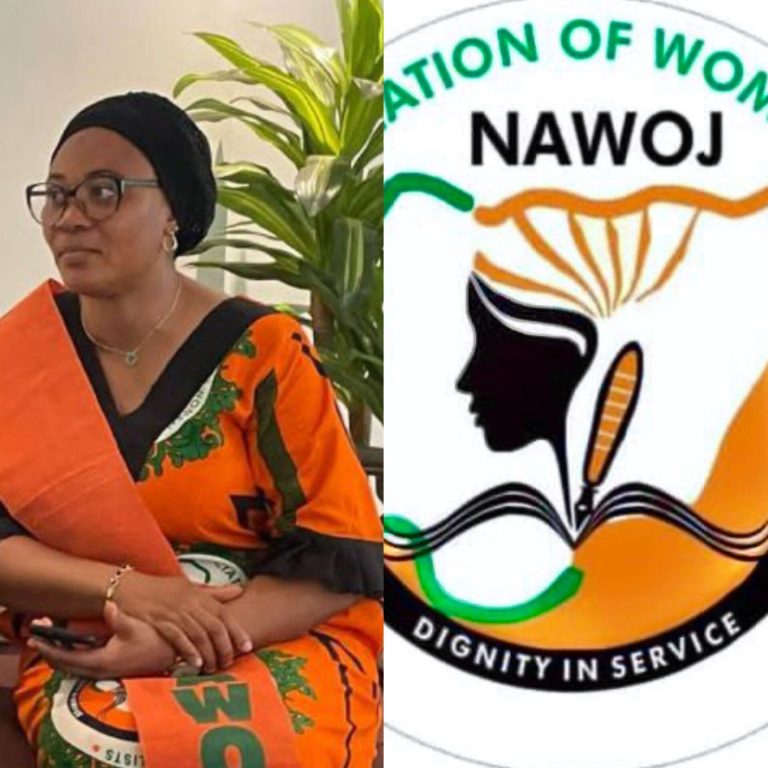
NAWOJ: SEKINAT, CHARITY GETS VOTE OF CONFIDENCE
The Nigeria Association of Women Journalists,(NAWOJ), Ogun State Chapter Executives has unanimously passed a vote of confidence on Chairman NAWOJ SEKINAT Salam and the Financial Secretary, Charity James, saying that, their leadership reflect the ideal and objectives of NAWOJ.
This was revealed in a communique issued at an Emergency meeting of the Executive held at the NUJ State Council, Iwe-Iroyin in Abeokuta.
The vote of confidence on the Leadership of NAWOJ was unanimously signed by all the five executive members that attended the meeting with the vice chairperson taking apology for official engagement outside the state capital.
According to the communique ” Consequently, NAWOJ Ogun State Chapter, reaffirms it’s unwavering support and confidence in the Chairperson and the Financial Secretary, Sekinat Salam and Charity James respectively, Urge them to continue in their commitment to purposeful leadership in the best interest of the association and the society at large”.
Speaking briefly with Journalists after the emergency Executive meeting, the Chairperson, Nigeria Association of Woman Journalists (NAWOJ), Com. Sekinat Salam, said the meeting was necessary as the news of her suspension was laughable and insulting because it is like a pot calling a kettle black in this case, saying that the Leadership of the State Council, Com. Wale Olanrewaju has no local standing to suspend her or any executive member, even he cannot be a judge in his own case.
According to her” The Leadership of the Nigeria Union of Journalists, Ogun State led by Wale Olanrewaju has always been misusing power without recourse to the constitution of this noble Union, hence has no local standing to suspend me or any executive member “.
She said only the Central Working Committee (CWC) has the constitutional rights to sanction or suspend any members found wanting after due process has been followed.
While calling on members to stay calm, Com. Sekinat Salam assured members of positive representation of NAWOJ at both the State and National level, adding the success recorded under her administration cannot be overemphasized.
She therefore called on the National leadership of NUJ to critically look into the matter, either by setting up independent committee to investigate the issues and resolve the matter as quickly as possible.
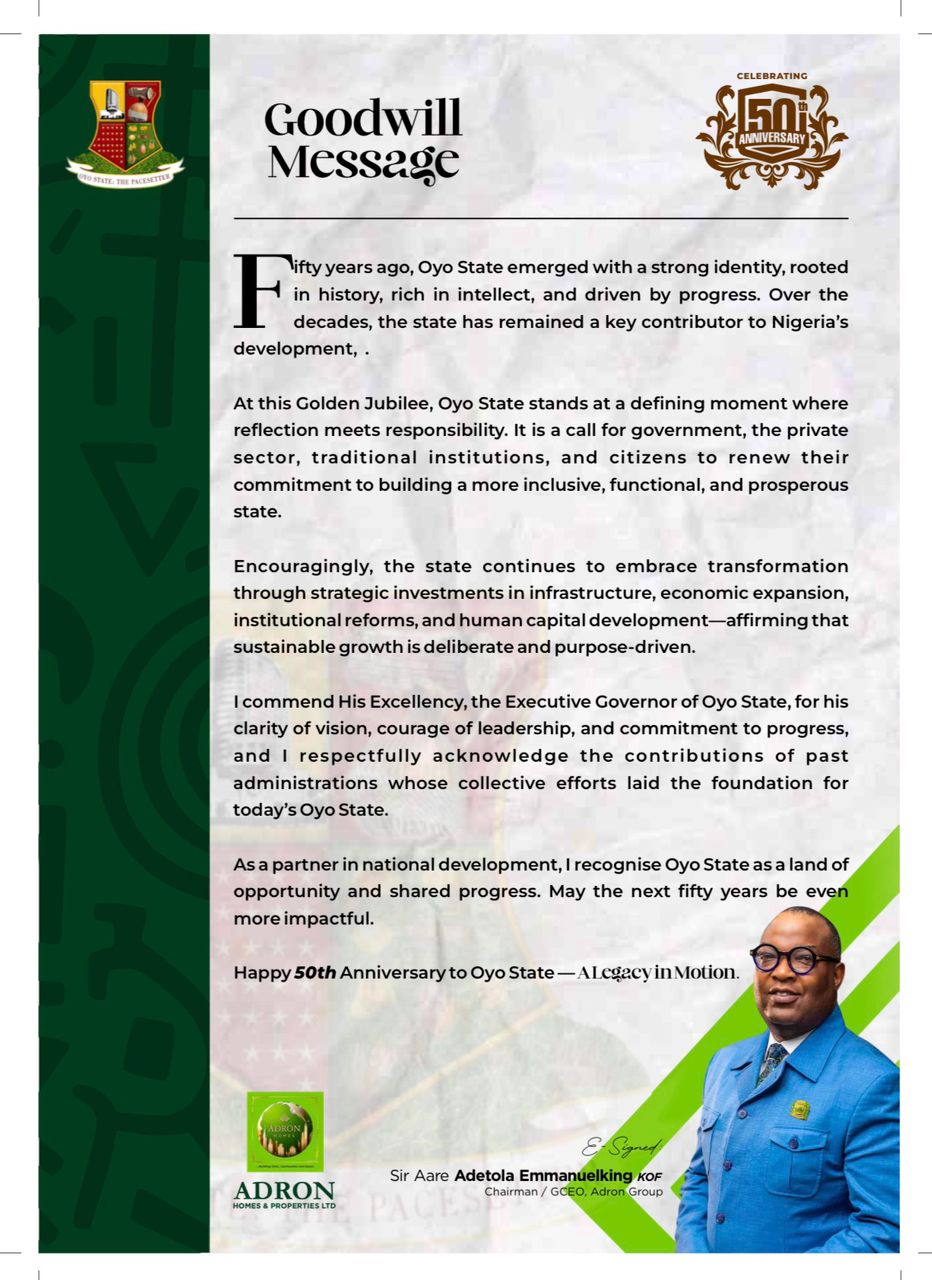
Adron Homes Chairman Congratulates Oyo State on 50 Years of Progress
The Chairman and Chief Executive Officer of Adron Homes and Properties Limited, Aare Adetola Emmanuelking, has congratulated the Government and people of Oyo State as the state marks its 50th anniversary, describing the occasion as a celebration of resilience, cultural pride, and sustained progress.
He noted that since its creation, Oyo State has remained a strong contributor to Nigeria’s socio-economic and cultural development, emerging as a hub of commerce, education, and innovation.
According to him, the Golden Jubilee offers a moment for reflection and renewed commitment by government, private sector players, traditional institutions, and citizens toward building a more inclusive and prosperous state.
Aare Emmanuelking commended the state’s ongoing transformation through investments in infrastructure, economic expansion, and human capital development, adding that sustainable growth is deliberate and must remain purpose-driven.
He also praised the leadership of the current administration while acknowledging the contributions of past leaders whose efforts laid the foundation for today’s Oyo State.
Reaffirming Adron Homes’ commitment to national development, he described Oyo State as a land of opportunity. He wished the state continued peace and prosperity, expressing confidence that the next fifty years will bring even greater achievements for the Pace Setter State and its people.
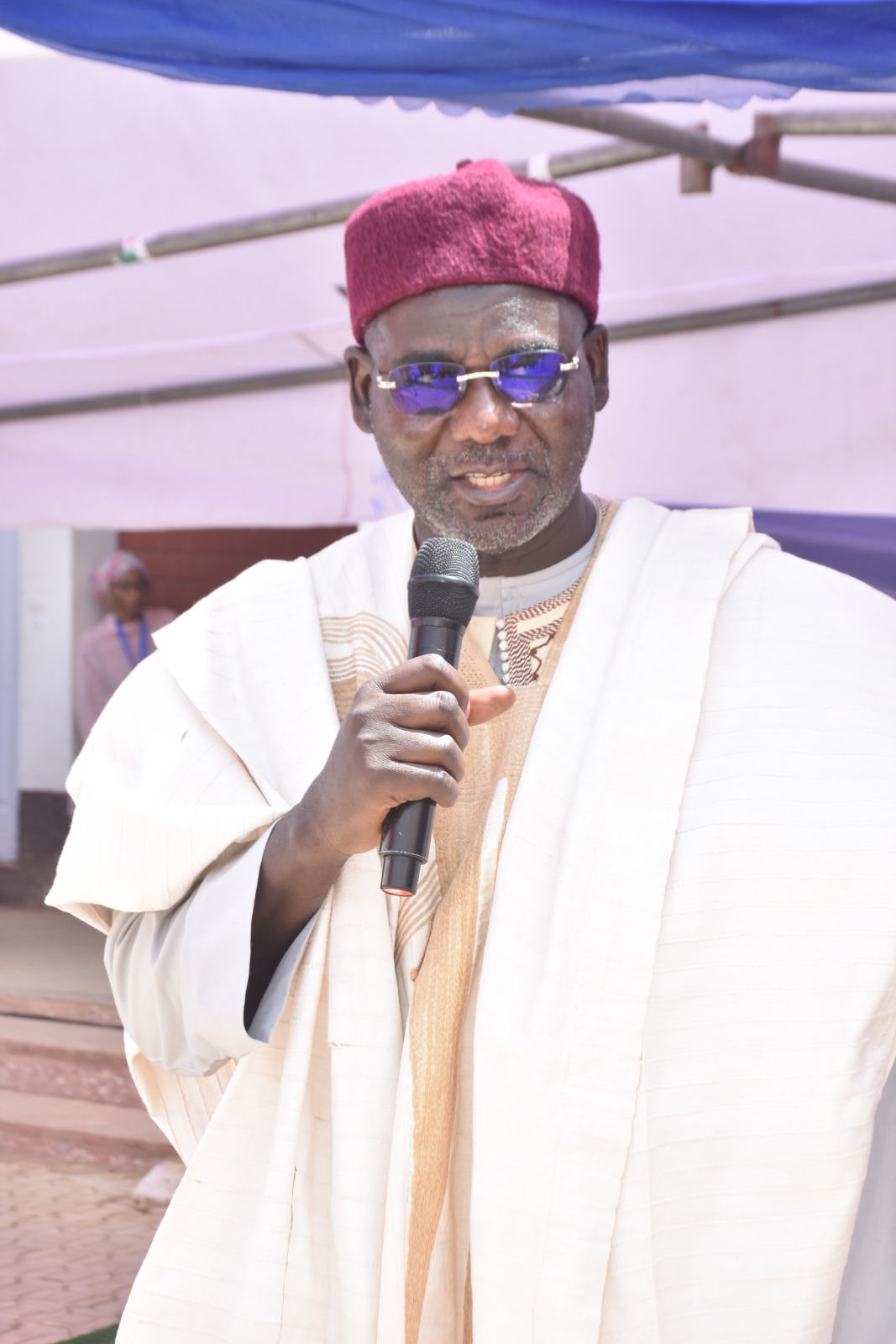
TY BURATAI HUMANITY CARE FOUNDATION CONDOLES WITH BIU EMIRATE OVER TRAGIC ATTACK
In a profound expression of sorrow, the TY Buratai Humanity Care Foundation has extended its heartfelt condolences to the families of the victims and the entire people of Biu Emirate, Borno State, following the recent tragic attack attributed to Boko Haram. This devastating assault, which occurred at a work site in northeastern Nigeria, claimed the lives of dozens, including brave soldiers committed to protecting the nation.
In a statement released to the press and signed by the Chairman of the foundation, Ibrahim Dahiru Danfulani Sadaukin Garkuwan Keffi/Betara Biu, the Grand Patron of the Foundation, His Excellency Amb. Lt. Gen. Tukur Yusufu Buratai CFR (Rtd), former Chief of Army Staff, described the incident as “one too many senseless, barbaric, and ruthless displays of inhumanity.” His Excellency emphasized the heartbreaking impact of such attacks on innocent, hardworking citizens striving to make a positive difference in their communities.
The Grand Patron praised the swift and decisive response of military personnel during this critical time, underscoring their brave commitment to safeguarding the nation. He called upon them to maintain this momentum, commending their courage and sacrifice in the face of adversity. “May Almighty Allah forgive their souls and grant them Aljannah Firdouse,” he remarked, encouraging the nation to honor their spirit of sacrifice as they rally together to rebuild and restore hope across the region.
In his statement, Gen. Buratai highlighted the importance of collective action in overcoming the challenges posed by insecurity, urging concerned citizens to increase their efforts in fostering a virile community that future generations can cherish. “Together, we can surmount these troubles,” he asserted, calling on all patriotic leaders and citizens to unite in the fight against violence and insecurity.

The TY Buratai Humanity Care Foundation remains committed to supporting initiatives that promote peace, security, unity, and prosperity. As the foundation extends its condolences to the bereaved, it also calls upon all segments of society to collaborate in creating a better and safer future. May Allah guide and protect the nation and lead it toward enduring peace. Amen.


-

 celebrity radar - gossips6 months ago
Why Babangida’s Hilltop Home Became Nigeria’s Political “Mecca”
-

 society6 months ago
Power is a Loan, Not a Possession: The Sacred Duty of Planting People
-

 Business6 months ago
Batsumi Travel CEO Lisa Sebogodi Wins Prestigious Africa Travel 100 Women Award
-

 news6 months ago
THE APPOINTMENT OF WASIU AYINDE BY THE FEDERAL GOVERNMENT AS AN AMBASSADOR SOUNDS EMBARRASSING