
Bank
How Nigerian Banks Built a N219 Trillion Asset Empire on Depositors’ Funds


How Nigerian Banks Built a N219 Trillion Asset Empire on Depositors’ Funds
BY BLAISE UDUNZE
In the first quarter of 2025, Nigeria’s 10 largest banks proudly reported a combined total asset base of N218.99 trillion, up from N212.75 trillion at the end of 2024, according to a report by Nairametrics published on May 19, 2025.
On paper, it looked like a victory as evidence that the sector remains robust despite inflationary headwinds, exchange rate volatility, and a struggling real economy. But beneath that glossy narrative lies a deeper, more uncomfortable truth that reveals Nigeria’s asset boom is not driven by innovation, real-sector productivity, or capital efficiency; rather, it is fueled largely by customer deposits and balance-sheet inflation.
According to data from the banks’ own filings, about N164.7 trillion, representing roughly 75.2 percent of the N218.99 trillion total asset base, came directly from customers’ deposits. In plain terms, three-quarters of the industry’s celebrated “assets” are actually liabilities owed to the public, which are deposits that banks temporarily hold, not capital they generated or invested productively.
Bank Customer Deposits (N Trillion)
Access Holdings / Access Bank 38.8655
Ecobank (Group) 33.2080
Zenith Bank 22.6818
United Bank for Africa (UBA) 25.6500
FBN Holdings / FirstBank Group 17.2699
GTCO (Guaranty Trust) 10.8923
Fidelity Bank 6.5990
FCMB Group 4.1254
Stanbic IBTC 3.0456
Wema Bank 2.4096
Total N164.75 trillion
This dependency on depositors’ funds reveals a system that looks rich in assets but is, in essence, shallow in innovation and weak in capital depth. At first glance, the growth appears dramatic, with the sector’s total assets jumping from N170.02 trillion in 2024, representing a 39.6 percent year-on-year rise, to nearly N219 trillion by Q1 2025. Yet, this “growth” is misleading. Much of it stems not from new value creation but from naira devaluation adjustments, inflationary expansion, and paper gains on government securities.
Banks are becoming bigger on paper, not stronger in impact. The so-called asset expansion has not translated into more affordable credit for manufacturers, small and medium enterprises (SMEs), or agribusinesses. Instead, it reflects a financial system more comfortable with passive wealth storage than active economic stimulation.
In simpler terms, Nigeria’s banks are becoming richer without making the economy stronger. Their balance sheets have ballooned, but their capital efficiency, which represents the ability to convert deposits into productive loans, remains weak.
The false appearance of size becomes even more striking when placed in a continental context. As of June 30, 2025, Standard Bank Group of South Africa, Africa’s largest financial institution, reported total assets of R3.4 trillion, equivalent to $191.8 billion. At Nigeria’s prevailing exchange rate of N1,484.50 to $1, that translates to approximately $191.8 billion × N1,484.50 = N284,983 trillion, or roughly N285 trillion. That means a single South African bank now outvalues the entire Nigerian banking industry, whose 10 largest lenders collectively hold N218.99 trillion in assets.
The comparison is humbling. It highlights how Nigeria’s asset numbers, while massive in naira terms, shrink dramatically when viewed through a global lens. While Standard Bank’s strength stems from robust capitalization, efficient risk management, diversified income streams, and strong regional investments, Nigerian banks remain largely driven by deposit inflows, short-term instruments, and FX revaluation surges.
Moreover, the disconnect between banking prosperity and economic stagnation is becoming impossible to ignore. Despite N219 trillion sitting on bank balance sheets, access to credit for manufacturers, small businesses, and startups remains prohibitively difficult. Lending rates are high, collateral demands are steep, and real-sector credit continues to shrink as a share of GDP. Manufacturing’s contribution to GDP remains in low single digits, private sector credit lags behind African peers, and inflation continues to erode the value of naira-denominated deposits. The banks’ “assets” may rise, but they are paper assets, not productive capital, rather figures that comfort shareholders but fail to transform society.
A banking system overly reliant on deposits is inherently fragile. Deposits are short-term and confidence-sensitive and can flee quickly during periods of policy uncertainty. Unlike equity or long-term capital, they offer little cushion against shocks. This overdependence creates an illusion of liquidity but hides structural weakness. Nigeria’s banks may look stable, but their foundations are vulnerable, just like a tower built on shifting sands of depositor confidence rather than the rock of sustainable capital formation.
For Nigeria’s regulators, analysts, and policymakers, the question is no longer how large the banks’ assets appear, but what those assets are doing for the economy. True strength must come from innovation in financial intermediation, capital efficiency, and credit diversification; support for real-sector growth; and regional competitiveness on the African and global stage.
Until Nigerian banks start to convert deposits into genuine development by funding infrastructure, technology, and enterprise, the industry’s trillion-naira balance sheets will remain a false hope of progress without prosperity. Nigeria’s N219 trillion banking booms may glitter, but it is a reflection of financial inflation, not economic transformation. When one South African bank commands more assets than the entire Nigerian industry combined, it is not just a comparison; it is a revelation.
It reveals how far Nigeria must go to move from deposit dependency to capital creation, from paper prosperity to real productivity, and from illusory balance sheet growth to genuine economic strength. Until that shift happens, Nigeria’s banking system will remain what it is today as a trillion-naira illusion shimmering over a weak economic base.
Blaise, a journalist and PR professional writes from Lagos, can be reached via: [email protected]








FirstBank Introduces Exclusive 500-Seater Bleacher at Carnival Calabar & Festival 2025
Lagos, 26 December 2025 – FirstBank, West Africa’s premier financial institution and financial inclusion services provider, has officially announced its sponsorship of the Carnival Calabar & Festival 2025, unveiling a landmark addition set to redefine the carnival experience — the first-ever private premium seating area at the event.
The highlight of FirstBank’s participation is the construction of a 500-seater premium bleacher, designed to provide comfort, safety, and an elevated viewing experience for carnival enthusiasts.
Speaking on the sponsorship, the Acting Group Head Marketing and Corporate Communications, FirstBank, Olayinka Ijabiyi, noted that the carnival aligns with the Bank’s First@Arts initiative, a platform dedicated to supporting the creative arts value chain across Nigeria. He said, “We recognise the transformative power of the arts, including carnivals, in inspiring people and strengthening national unity. For more than 131 years, we have supported platforms that promote self-expression, social reflection and cultural exchange. Our investment in the Carnival Calabar & Festival demonstrates our commitment to preserving the nation’s rich cultural heritage through First@Arts.”
“As part of our sponsorship this year, we are introducing the first-ever private 500-seater premium bleacher to further elevate the carnival experience. This exclusive seating is designed to provide exceptional comfort and an unforgettable viewing experience for attendees,” Ijabiyi added.
The Chairman of the Cross River State Carnival Calabar Commission, Gabe Onah, also commented on FirstBank’s sponsorship. “FirstBank’s involvement is a strong demonstration of private-sector support for culture and tourism. This partnership not only enhances the overall quality of the carnival but also strengthens its global appeal,” he said.
The Carnival Calabar & Festival 2025 is officially marketed by Okhma Global Limited, the appointed Official Marketer responsible for brand partnerships, promotional engagements, and ticket sales. Okhma Global Limited has partnered with the Cross River State government in delivering Carnival Calabar & Festival for over ten years, playing a key role in strengthening the carnival’s commercial growth and global visibility.
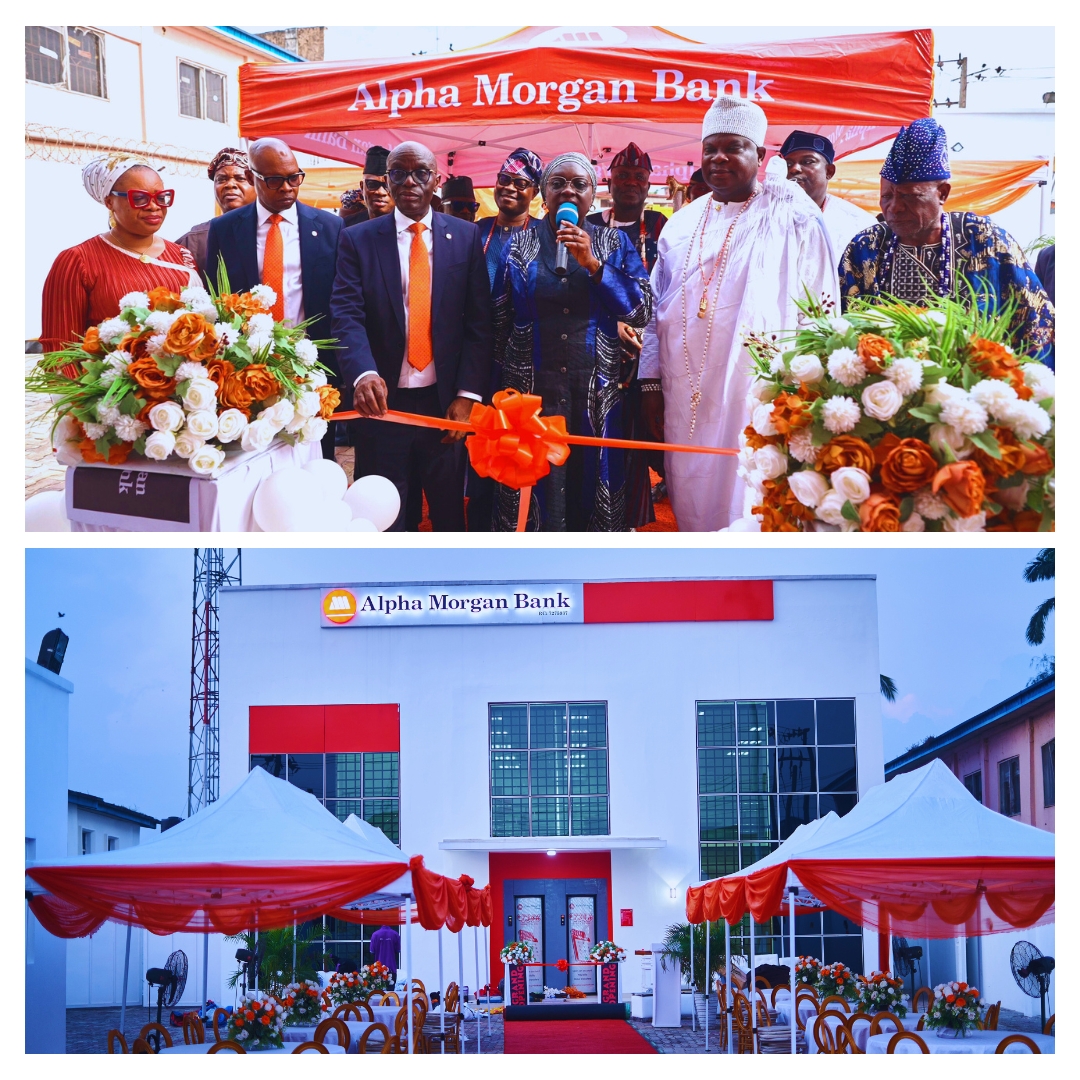
Alpha Morgan Bank Backs Cultural Preservation at the 2025 Iganmode Festival
Alpha Morgan Bank has reaffirmed its commitment to cultural preservation and community development as one of the major sponsors of the recently concluded Iganmode Cultural Festival (Odun Omo Iganmode) held in Sango-Ota, Ogun State.

The annual festival, a landmark cultural celebration in the ancient town of Ota, showcased the rich heritage, history, and identity of the Awori people. The event came alive with vibrant displays of traditional music, dance, colourful regalia, and performances that reflected the deep-rooted customs and values of the community.
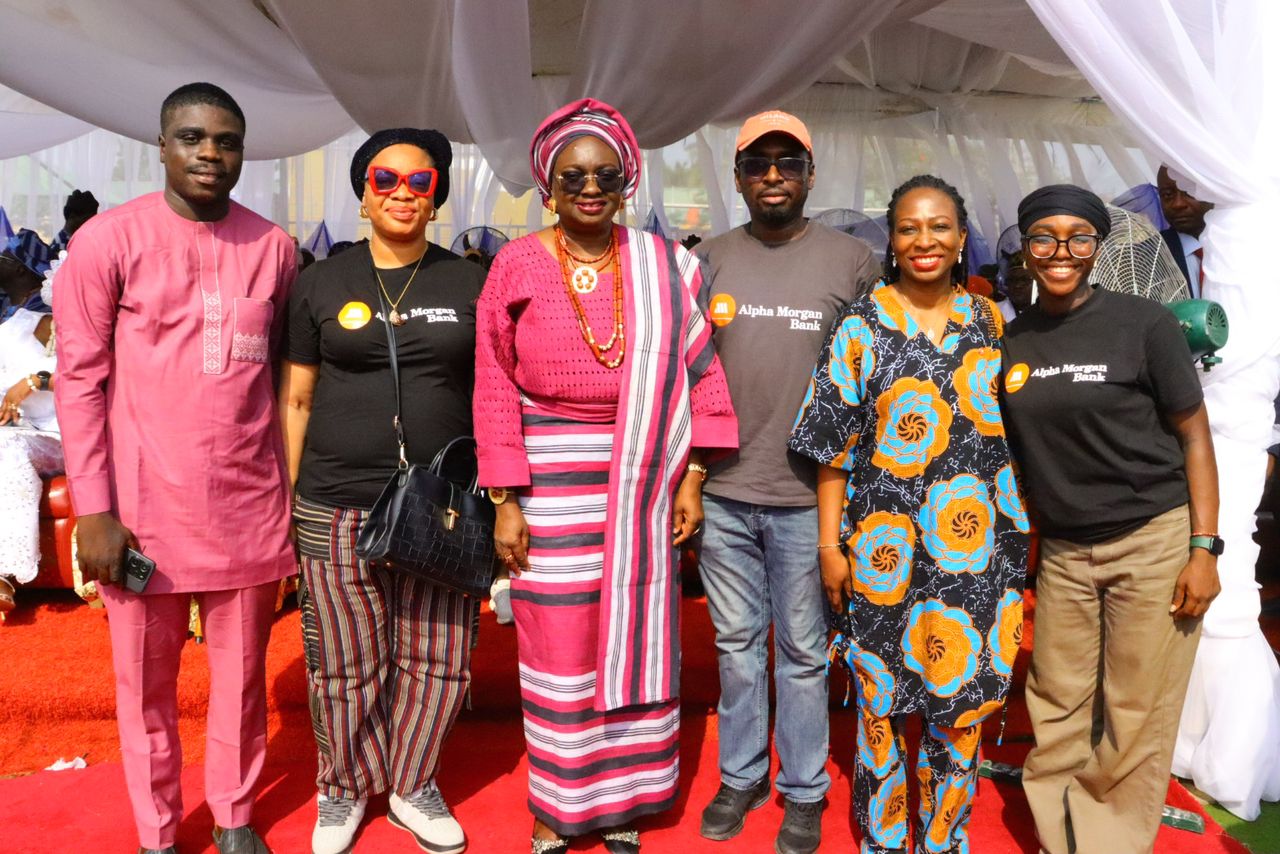
Alpha Morgan Bank’s sponsorship followed closely on the heels of the recent launch of its Sango-Ota branch, further underscoring the Bank’s dedication to supporting local initiatives, promoting indigenous culture, and fostering sustainable community development in Ota and its environs.
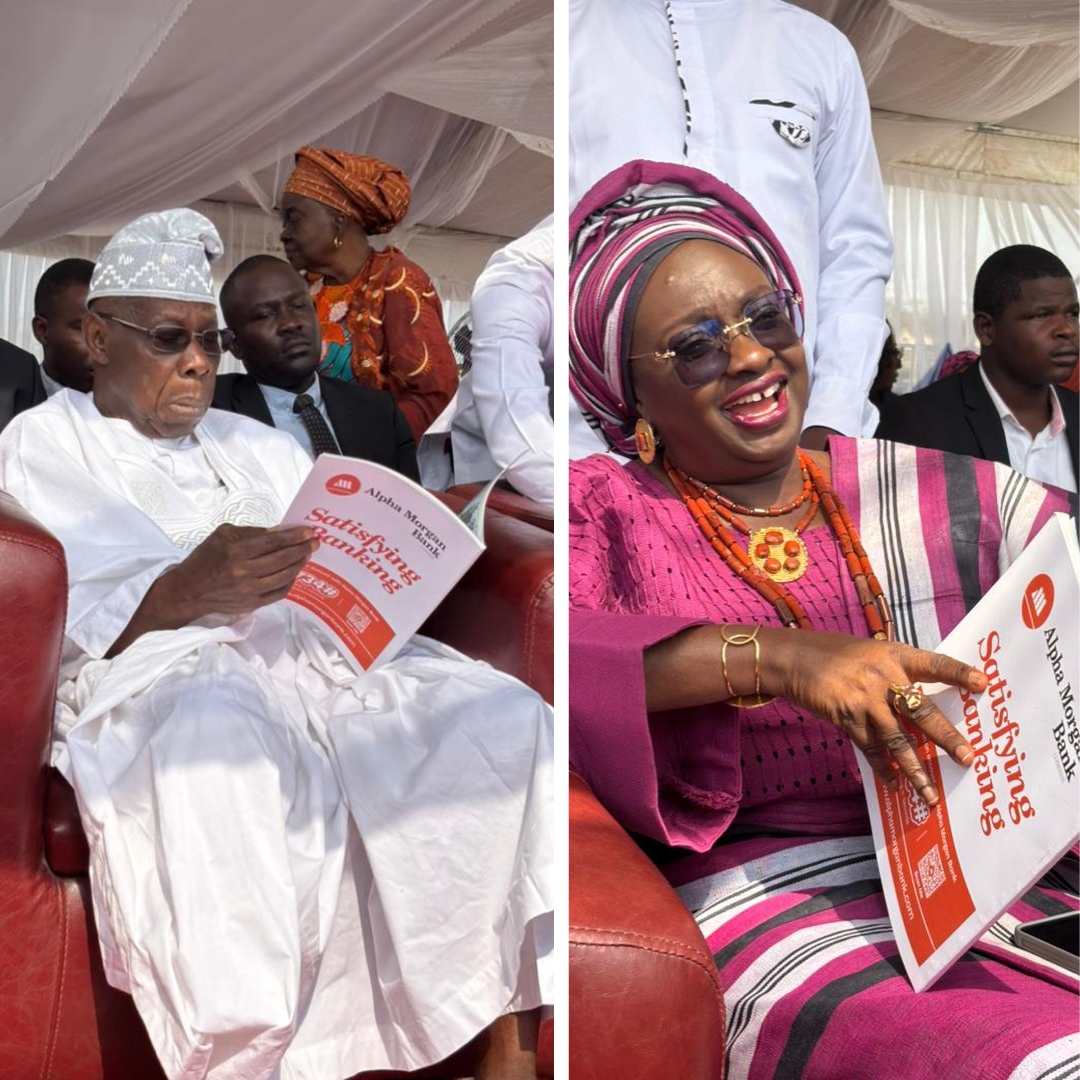
The ceremony attracted an impressive array of dignitaries, including former President of Nigeria, His Excellency Chief Olusegun Obasanjo; Deputy Governor of Ogun State, Engr. (Mrs.) Noimot Salako-Oyedele; and the Olota of Ota, His Majesty, Prof. Adeyemi Obalanlege, alongside several other traditional rulers and members of royal households from across the state. Their presence highlighted the cultural and historical significance of the festival to Ogun State and the wider Yoruba nation.
Alpha Morgan Bank’s participation as a major sponsor reflects its broader corporate vision of strengthening community values and supporting initiatives that promote Nigeria’s rich cultural heritage. The Bank joined thousands of attendees in celebrating a festival that continues to serve as a symbol of unity, pride, and cultural continuity for the people of Ota.
The 2025 edition of the Iganmode Festival was widely acclaimed as a success, leaving guests and participants with lasting impressions of a colourful, well-coordinated celebration that honoured tradition while fostering communal harmony.

*12 Days of Christmas with 5 for 5 Rewards: Celebrating the Season the Wema Way*
December is a season built on gratitude, reflection, and giving. It is a time when small gestures carry deeper meaning and everyday moments turn into shared joy. At Wema Bank, this spirit of the season has inspired the launch of 12 Days of Christmas with 5 for 5 Rewards, a festive campaign created to celebrate customers who continue to make the Bank part of their daily lives.
Running from December 14 to December 25, 2025, the campaign is designed to reward simple, everyday banking while spreading cheer across homes and communities. For twelve days, 33 customers will be rewarded daily with five thousand naira each when they fund their accounts with five thousand naira.
The idea behind the campaign is simple in action but thoughtful in intent. It recognises that during the festive period, every extra support counts. Whether it is preparing for family gatherings, running errands, or planning end-of-year activities, Wema Bank is turning routine transactions into moments of delight.
To take part in the 12 Days of Christmas with 5 for 5 Rewards, customers only need to fund their accounts with five thousand naira through any of the following channels:
ALAT app
*945#
Debit cards
Once the account is funded with five thousand naira, they get an additional five thousand naira as a reward.
Beyond the rewards, the 12 Days of Christmas with 5 for 5 Rewards reflects Wema Bank’s broader commitment to customer-centric banking. It reinforces the Bank’s focus on creating experiences that go beyond transactions, especially during moments that matter most to customers.
As the year draws to a close, Wema Bank is inviting customers to enjoy the festive season knowing that their loyalty is valued and celebrated. With every transaction, the Bank continues to find new ways to connect, appreciate, and give back during a season defined by generosity.


-

 celebrity radar - gossips5 months ago
Why Babangida’s Hilltop Home Became Nigeria’s Political “Mecca”
-

 society5 months ago
Power is a Loan, Not a Possession: The Sacred Duty of Planting People
-

 Business6 months ago
Batsumi Travel CEO Lisa Sebogodi Wins Prestigious Africa Travel 100 Women Award
-

 news6 months ago
THE APPOINTMENT OF WASIU AYINDE BY THE FEDERAL GOVERNMENT AS AN AMBASSADOR SOUNDS EMBARRASSING