
society
YAZID DANFULANI: THE NEW SHERIFF AT NAIC By Joseph Onwe


*YAZID DANFULANI: THE NEW SHERIFF AT NAIC
By Joseph Onwe
A seasoned corporate administrator and banker, with high proficiency in computing and banking operations, Yazid Danfulani came fully to the limelight of public service as the Commissioner for Commerce and Industry in Zamfara State, under Governor Bello Matawalle, but not before serving in 2013 at the Central Bank of Nigeria (CBN), therefrom gaining profound experiences in banking operations.
Born on 15th April 1986, in Gusau, Zamfara State, Danfulani attended Dan Turai Primary School and Therbow Secondary School, from where he later obtained a degree in Business Administration and a Master’s degree in Arts and Management from the University of Hertfordshire, UK.
On May 21, 2025, Danfulani was appointed as Managing Director and Chief Executive Officer of the Nigerian Agricultural Insurance Corporation (NAIC) for an initial term of four years by President Bola Ahmed Tinubu.
Before this prestigious and well-deserved appointment, Danfulani founded and served as president of the Arewa Development and Empowerment Foundation (ADEF), an organization that caters to and supports orphans and less privileged individuals in society.
Over the years, the expectations of Nigerians have been very high for the Nigerian Agricultural Insurance Company (NAIC), deriving benefits from the development of robust insurance products that will cater to the needs of Nigerian farmers, particularly smallholder farmers, women-led agribusinesses, and youth cooperatives on a sustainable basis.
Nigerians also expect an agricultural insurance agency that is efficient and that will make prompt payments of claims to farmers affected by natural disasters, pests, and diseases, and that can expand coverage to deserving but neglected farming communities.
However, part of the identified constraints that had affected the agency and limited its operational efficiency are: irregular interactions with stakeholders, associations, and other farmers so as to understand their needs and develop tailored solutions, and sustained efforts at collaborating with the Federal Government to develop policies and allocate resources that support the growth and development of the agricultural sector.
Others include a sustained developmental innovative framework that will enhance the growth of various insurance products and services aimed at addressing the unique challenges faced by Nigerian farmers, such as climate change and pest infestations, and strategically designed insurance packages that are affordable and accessible to smallholder and medium-scale farmers, while effectively embarking on grassroots mobilization of farmers and communities for enhanced awareness and uptake of agricultural insurance.
Upon assumption of office, Danfulani did not fail Nigerians, as he geared towards ensuring he delivers on their expectations, prioritizing the digitization and streamlining of NAIC’s services, including policy enrolment, claims processing, and farmer outreach, through digital platforms aimed at improving efficiency and transparency, and the strengthening of effective and efficient governance structures, and human capacity development through enhanced institutional reforms, accountability measures, and targeted staff training, which has brought about effective systematic positivity and positive changes into the internal workings of the agency.
Danfulani’s fresh perspective, strong leadership, and absolute commitment to driving positive change in the organization, enhanced by his diverse experiences, has brought new vigor and strategic direction to NAIC, focusing on strengthening agricultural insurance frameworks, expanding access to insurance for farmers, and ensuring the agency plays a key role in Nigeria’s food security strategy.
An objective administrator with immense track records of established metrics and benchmarks of measured progressive and regular assessment, Danfulani adopted strategies of formidable and time-proven results.
His intentional willingness to pivot and adjust course when circumstances change or new opportunities arise has also led to the prioritization of workers’ welfare, taking a holistic view of the physical, emotional, and mental well-being of employees, and recognizing that a happy and healthy workforce is more productive and engaged.
By implementing these strategies, Danfulani has been able to bring in fresh perspectives, strong leadership, and a commitment to driving positive change, ultimately achieving the goals of the renewed hope agenda and making a meaningful impact.
Danfulani’s turnkey multidisciplinary approach to the development of NAIC includes the reengineering of access to agricultural insurance, particularly in rural and underserved communities, to protect farmers against natural disasters, pests, and diseases, and the introduction of up-to-date insurance products and services tailored to the needs of Nigerian farmers, promoting agricultural growth and food security.
Within a very short time of assumption, he has fostered partnerships with government agencies, private entities, and international development bodies to enhance NAIC’s impact and effectiveness, enabling reforms to improve NAIC’s efficiency and customer satisfaction, ensuring the agency plays critical roles in Nigeria’s agricultural transformation agenda, focused on rural development and agricultural growth, and aligning with President Bola Tinubu’s Renewed Hope agenda and the nation’s food security strategy.
Indeed, Danfulani’s appointment has been widely applauded, with stakeholders, such as the Nigeria Youth for Good Governance Forum and other bodies, expressing confidence in his leadership qualities, technical expertise, and commitment to national development and describing it as timely and strategic.
An administrator with demonstrable insight into the workings of the agency, Danfulani brought in individuals with diverse backgrounds, experiences, and perspectives to foster innovation and creativity, making up a multidisciplinary workforce of employees with the autonomy to make decisions and take ownership of their work, promoting a sense of accountability and motivation, and fostering a consistent culture of continuous training, mentorship, and knowledge-sharing to stay ahead of the curve and adapt to changing circumstances, with a clear vision, mission, and set of objectives, ensuring everyone is aligned and working towards the same outcomes in an ambience of shared value.
As part of the prompt reforms, Danfulani has established strong collaboration and partnerships with government agencies, private entities, and international development bodies to enhance NAIC’s impact and effectiveness, driving and establishing reforms aimed at improving NAIC’s efficiency and customer satisfaction, thereby fostering stronger national cohesion and alignment with the national policy framework for a synergistic effect.
Indeed, his deliberate focus on rural development and agricultural growth, aligning with the various reforms of the federal government, has started yielding results, positively affecting food production, food security, and national security.
Indeed, as Danfulani embarks on this critical mission and crucial national assignment, we wish him success in his endeavors to transform NAIC and contribute to the growth and development of Nigeria’s agricultural sector.
We are confident that with his tested and proven transformational leadership style, we can expect rapid change, a brighter future for farmers in Nigeria, and more specifically a more innovative and digitally driven agricultural industry with a holistic positive impact.
Danfulani is the new sheriff in town and has come with assurance and compelling track records of performance, engineering radical reforms.
Yazid Danfulani is the undertaker who has refused to take the agency to the grave, proving rather that Lazarus is having a date with destiny; coming back alive with a positive Midas touch, and certainly the agency is coming back to life again.
*Onwe is an investment banker writing from Abuja








Ajadi, Peter Obi, Adeleke, Others Join Makinde at Oyo@50 Thanksgiving Service
The leading gubernatorial aspirant of the Peoples Democratic Party (PDP) in Oyo State, Ambassador Olufemi Ajadi Oguntoyinbo, on Sunday joined Governor Seyi Makinde, former Anambra State Governor and 2023 Labour Party presidential candidate, Mr Peter Obi, the wife of the Osun State Governor, Chief (Mrs) Titilola Adeleke, and other eminent dignitaries at a Thanksgiving Service marking the seventh day of activities commemorating the 50th anniversary of Oyo State.
The service, held at the Cathedral of St. Peter’s, Aremo, Ibadan, drew a large congregation of worshippers, political leaders, traditional rulers, and stakeholders across the state and beyond, underscoring the significance of the golden jubilee celebration.
Speaking with journalists on the sidelines of the event, Ambassador Ajadi congratulated Governor Makinde, former Governor and Olubadan of Ibadanland, Oba Rashidi Adewolu Ladoja, and other stakeholders for steering the state to its historic milestone, describing the anniversary as a moment for reflection, gratitude, and renewed commitment to progress.
Oyo State at 50 is not just a celebration of years; it is a celebration of the strength, resilience and enduring spirit of our people,” Ajadi said. “I congratulate His Excellency, Engineer Seyi Makinde, Oba Rashidi Adewolu Ladoja and all stakeholders for sustaining the legacy of excellence, unity and progress that the Pacesetter State represents.”
He praised the people of the state for their resilience over the decades. He acknowledged the collective efforts of past and present leaders who have contributed to Oyo State’s political stability, economic growth and rich cultural heritage since its creation in 1976.
Ajadi, an entrepreneur and philanthropist, noted that the golden jubilee provides an opportunity for both leaders and citizens to critically assess the journey so far and recommit themselves to building a more inclusive and prosperous future.
“As we celebrate this golden anniversary, we must reflect on where we are coming from, where we are today and where we want to be,” he said. “Oyo State has produced great leaders, intellectuals, professionals and cultural icons.
He also commended the state government for designing a commemorative programme that blends intellectual engagement with the celebration of excellence, stressing that such initiatives help preserve history while inspiring younger generations.
Earlier, Governor Makinde, while addressing the congregation, said that although his tenure would end in May 2027, the team with which he has delivered good governance remains intact and prepared to continue the state’s development trajectory in different capacities.
The governor, who read the second Bible lesson from Matthew 5:1–12, attributed his emergence as governor in 2019 after eight years of political contest to divine grace, describing his administration as a “new beginning” for Oyo State.
“I was the eighth civilian governor of Oyo State, and in the Bible, the number eight signifies a new beginning,” Makinde said. “God has been merciful to us, and we will continue to govern in accordance with His will and guidance for the people of Oyo State.”
He assured residents of continuity in governance, emphasising that while he would exit office at the end of his tenure, members of his team would remain committed to serving the state.
“We have a team that is still intact. It is only Seyi Makinde that will go out; the members of the team are there to continue the work for the people of Oyo State,” he stated.
In a goodwill message, former Anambra State Governor and Labour Party presidential candidate in the 2023 general elections, Mr Peter Obi, lauded Makinde’s leadership style and the transformation witnessed in the state under his administration.
Oyo State is a city of knowledge and a city of hope,” Obi said. “I thank Governor Makinde for faithfully serving the people. Nigeria is not a poor country, but a poorly governed one, and what we are seeing in Oyo State is an example of using public resources for public good.”
Dignitaries at the event included the wife of the governor, Her Excellency Engr Tamunominini Olufunke Makinde; wife of the Osun State Governor, Chief (Mrs) Titilola Adeleke; former First Lady of Oyo State, Chief (Mrs) Mutiat Ladoja; Chief Judge of Oyo State, Hon. Justice Iyabo Yerima; Secretary to the State Government, Prof. Musibau Babatunde; and several other government officials, traditional rulers and political leaders.
society
UKA Announces Appointment of Hon AMB Asari St-Hill Bahamas/atlantian as Chief of Staff to Reigning Monarch Emperor Solomon Winning*
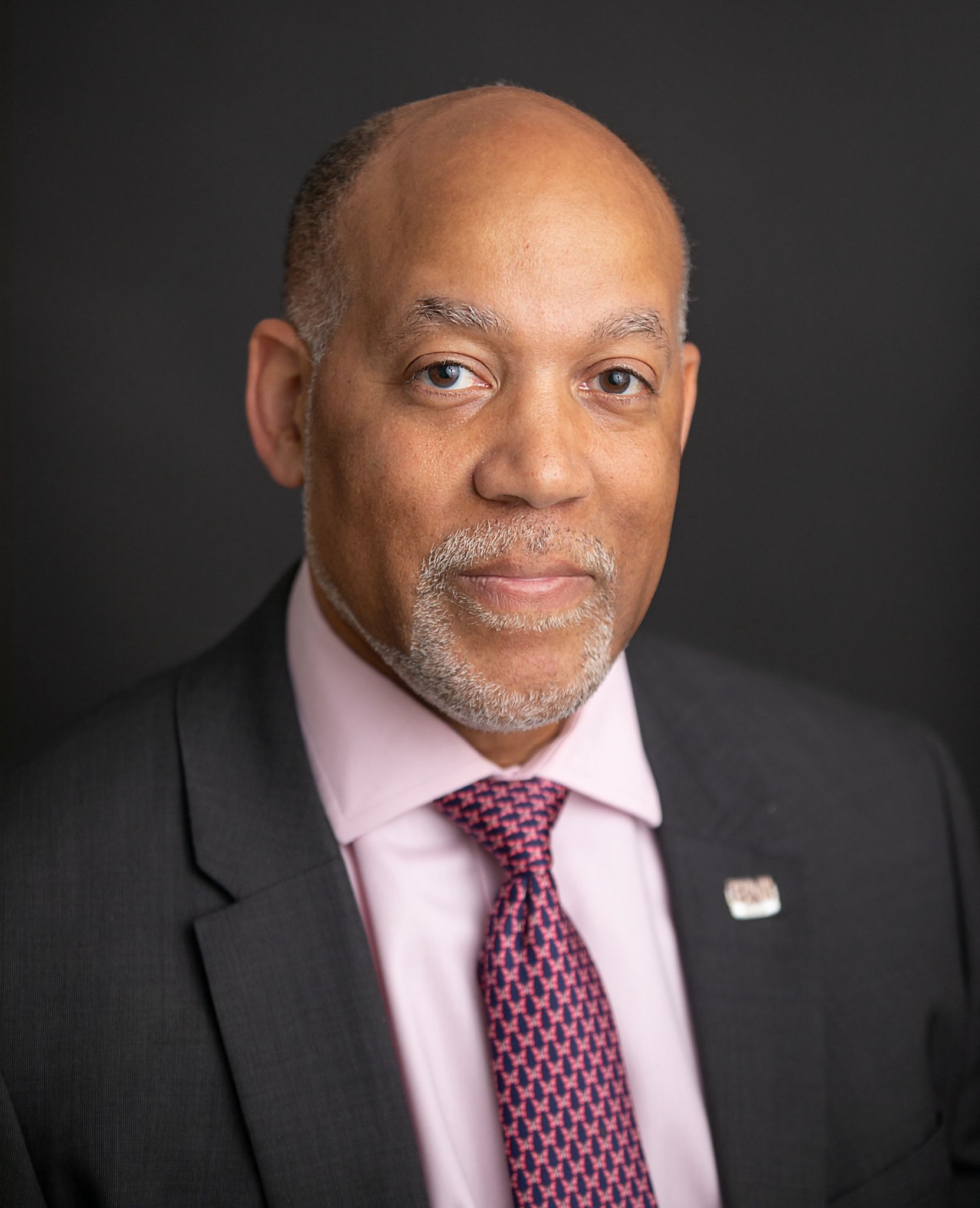
*UKA Announces Appointment of Hon AMB Asari St-Hill Bahamas/atlantian as Chief of Staff to Reigning Monarch Emperor Solomon Winning*
The United Kingdom of Atlantis (UKA) proudly announces the appointment of *Honorable Ambassador Asari St-Hill, A Bahamas/atlantian* as *Chief of Staff* to the Reigning Monarch, *Emperor Solomon Winning*. The official appointment ceremony was conducted on February 1st, 2026, and marked with the presentation of an Appointment Certificate (UKA 001 -1/2026).
Key Details of the Appointment 👇
– *Hon AMB Asari St-Hill, A Bahamas/Atlantian* has been entrusted with the prestigious role of Chief of Staff, serving directly under Emperor Solomon Winning, the sovereign of the United Kingdom of Atlantis.
– The appointment signifies a strategic enhancement of the monarch’s administrative and operational capabilities, aligning with the empire’s vision of efficient governance and global humanitarian leadership.
– The certificate of appointment bears the *Royal Seal of the Empire* and the endorsement of *EMP Noblis Solomon Winning*, affirming the legitimacy and authority of the designation.
Role of the Chief of Staff…👇
The Chief of Staff will be responsible for:
1. Managing the day-to-day operations of the monarch’s office.
2. Coordinating diplomatic and strategic initiatives aligned with the empire’s humanitarian and financial objectives.
3. Facilitating communication between the reigning monarch and governmental bodies within the United Kingdom of Atlantis.
Emperor Nobiliis Solomon Winning is the transformative leader of the United Kingdom of Atlantis, driving innovative projects in finance, humanitarian efforts, and global development. His reign focuses on merging traditional monarchical values with modern technological advancements, exemplified by initiatives like the ATC digital currency.
The United Kingdom of Atlantis (UKA) is a sovereign entity dedicated to fostering global unity, humanitarian progress, and financial innovation. It operates under a regal framework that blends imperial tradition with futuristic economic strategies, including asset-backed digital currencies and sustainable development programs.
_”The appointment of Hon AMB Asari St-Hill as Chief of Staff strengthens our administrative excellence and underscores our commitment to visionary leadership.”_
— *Emperor Solomon Winning*
The United Kingdom of Atlantis looks forward to achieving new milestones in governance and global impact under the stewardship of Emperor Solomon Winning and his esteemed Chief of Staff, Hon AMB Asari St-Hill.

Gen CG Musa Support Group Celebrates Grand Patron as 2025 Man of the Year
The Gen CG Musa Support Group has extended its warmest congratulations to its Grand Patron, His Excellency Gen. Christopher Gwabin Musa OFR (Rtd), the Honourable Minister of Defence, following his prestigious designation as the 2025 Man of the Year by OurNigeria News Magazine.
In a statement released to the press and signed by the Director General of the Support Group, Ibrahim Dahiru Danfulani, the Sadaukin Garkuwan Keffi/Betara Biu, the group hailed the recognition as a fitting tribute to a leader of exceptional character and accomplishment.

The statement illuminated the distinction of the award, emphasizing that it transcends the formal titles of “General” and “Minister.” It celebrated the core of the man himself—a leader renowned for his profound humility, incredible kindness, and genuine respect for all individuals. “People see the legacy and the title,” the statement noted, “but some of us are lucky to know the man behind it.”
The Support Group underscored that this accolade is a direct acknowledgment of the Minister’s exemplary personal conduct. It is an award not merely for the office he holds, but for the consistent humility he carries into every room and every interaction, a quality that has defined his leadership both in and out of uniform.
The honour also serves as a powerful validation of General Musa’s distinguished and unblemished track record of service to the nation. His decades of dedicated service within the military, which culminated in his ascension to the pinnacle as the Chief of Defence Staff prior to his retirement, are cited as the foundational pillars of his esteemed reputation.
The Gen CG Musa Support Group expressed profound gratitude to OurNigeria News Magazine for its discerning choice, noting that the award serves as a significant source of encouragement for the Honourable Minister. It reaffirms the nation’s appreciation for leadership that blends strength with compassion, strategic vision with unwavering integrity, and lofty achievement with grounded humanity.

This recognition solidifies General Christopher Gwabin Musa’s status not only as a defender of the nation but as a paragon of virtuous leadership, whose influence and example continue to inspire confidence and respect across Nigeria.
About the Gen CG Musa Support Group:
The Gen CG Musa Support Group is a collective dedicated to promoting the ideals and supporting the leadership of His Excellency Asiwaju Bola Ahmed Tinubu GCFR and His Excellency Gen. Christopher Gwabin Musa, celebrating their service and contributions to national peace, security, and unity.


-

 celebrity radar - gossips6 months ago
Why Babangida’s Hilltop Home Became Nigeria’s Political “Mecca”
-

 society6 months ago
Power is a Loan, Not a Possession: The Sacred Duty of Planting People
-

 Business6 months ago
Batsumi Travel CEO Lisa Sebogodi Wins Prestigious Africa Travel 100 Women Award
-

 news6 months ago
THE APPOINTMENT OF WASIU AYINDE BY THE FEDERAL GOVERNMENT AS AN AMBASSADOR SOUNDS EMBARRASSING