
society
Stand Together, Not Apart: Solidarity for MNK October 20, 2025

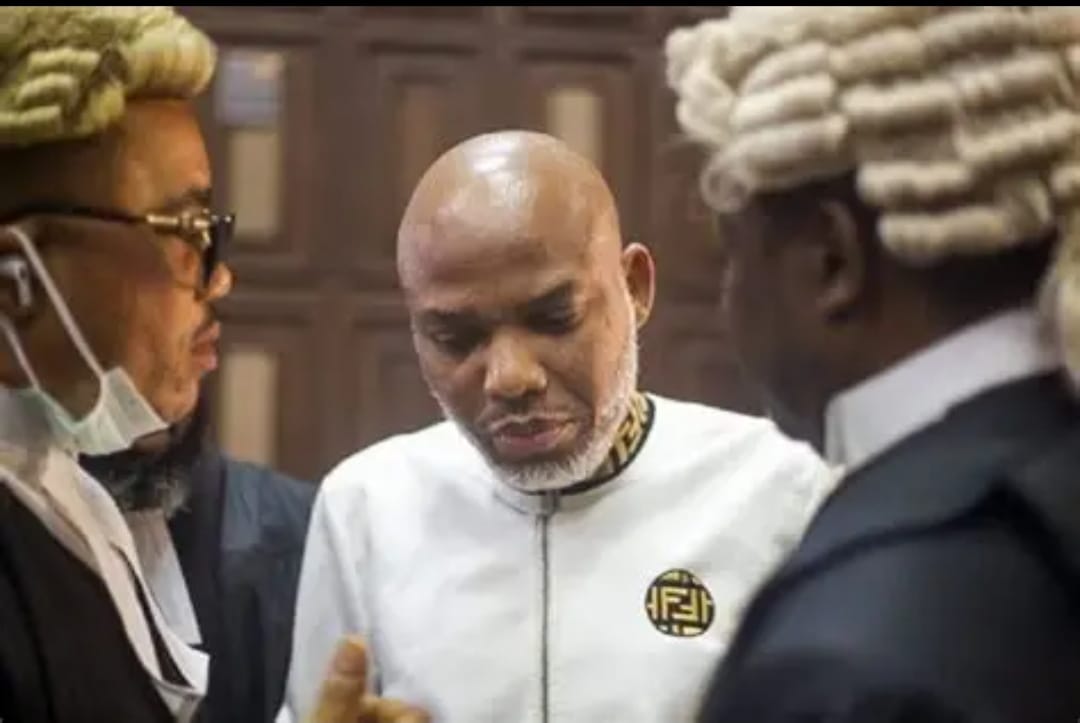
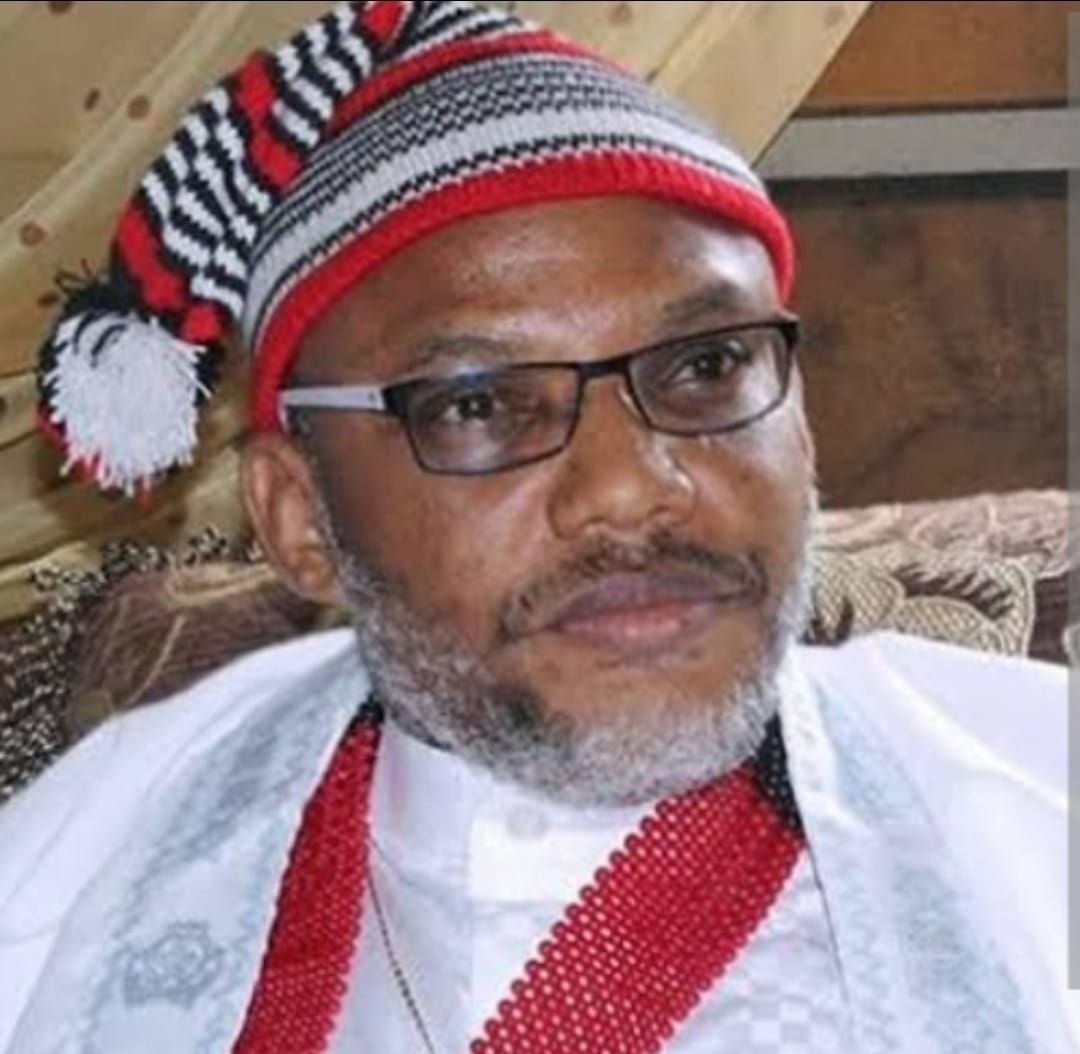
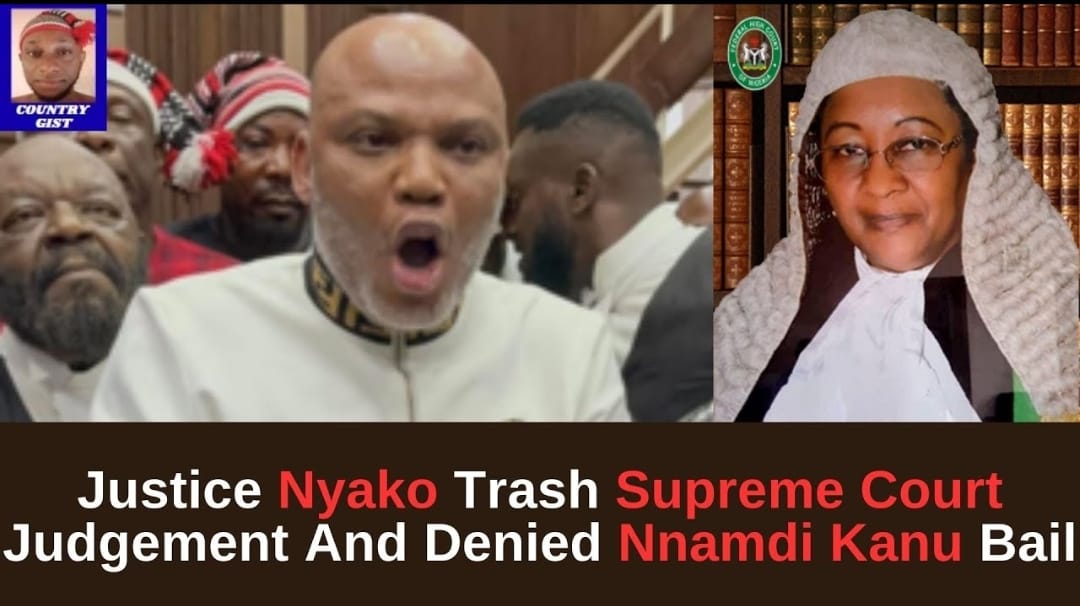
Stand Together, Not Apart: Solidarity for MNK October 20, 2025.
By George Omagbemi Sylvester | saharaweeklyng.com
“One Day. One Demand. Free MNK, Justice Now.”
On Monday, October 20, 2025, Nigerians and friends of justice the world over will again test the promise of democratic life in our country, the promise that the right to assemble, to petition and to demand accountability will not be shrugged aside by injunctions, intimidation or the heavy hand of the state. The #FreeMaziNnamdiKanuNow (MNK) mobilisations (organised by civil society activists, diaspora groups and political figures) present a simple, unavoidable demand, that a man who has become the symbol of a larger grievance be afforded due process, humane treatment and a transparent justice system. The stakes are bigger than one man; they are about whether Nigeria honours the rule of law and the dignity of dissent.
This piece argues, plainly and insistently, that solidarity for MNK’s peaceful protest is not an act of tribalism or lawlessness. It is an affirmation of democratic principle; one that citizens and international partners should support, monitor and protect. It also explains why peaceful solidarity is needed now, what the legal and security context is and how Nigerians and the global community should respond to ensure the exercise of legitimate rights without violence.
The legal and security reality: official warnings, court orders and real risk.
In the run-up to October 20, authorities and external actors have signalled caution. A High Court ruling and subsequent court orders have sought to restrict protests in sensitive locations around Aso Rock, the National Assembly complex and other government precincts, creating a legal fence that organisers and lawyers are actively contesting. The fact of that court action is not in dispute and must be acknowledged by anyone calling for or supporting public demonstrations.
Foreign missions have taken the prospect of large demonstrations seriously, the United States Embassy issued a security alert to its citizens about potential demonstrations on October 20, warning of possible roadblocks, disruptions and confrontation risks. That is a sober reminder that mass protests in Nigeria (as in many countries) can attract opportunists, security countermeasures and flashpoints where peace can be lost.
Though caution is not a licence for suppression. The Nigeria Police Force has publicly affirmed that the right to peaceful protest is inalienable while also urging that assemblies remain within the bounds of court orders and law. This dual message underscores the difficult tightrope, authorities must protect public order without weaponising the law to choke civic space.
Why solidarity matters – beyond headlines and hashtags.
Solidarity for MNK on October 20 is not merely performative. It is an essential democratic corrective for at least three reasons.
First, it centres due process and transparency. Calls for MNK’s release are also calls for a legal process free from clouded procedures, secret detention or politicised prosecutions. When civil society (inside and outside Nigeria) mobilises, it forces scrutiny and sunlight onto legal proceedings that might otherwise proceed behind closed doors. Prominent Nigerians and civic organisations have argued that the manner of his detention and treatment should raise questions about the fairness of our system.
Second, solidarity is a check on the use of force. International human-rights organisations and past reporting have documented instances where security forces used lethal force against protesters in Nigeria; a grim memory that must inform how authorities and protesters conduct themselves now. Amnesty International’s recent investigations into excessive force during Nigeria’s protests in 2024 and earlier incidents in the southeast are a clarion call: both citizens and the state must prevent a replay of violence. If Nigerians are to trust the system, the state must demonstrate restraint and accountability.
Third, unity in dissent breaks the toxic narrative that activism is regional or ethnic. Organisers including mainstream activists have intentionally framed October 20 as a peaceful, national campaign for justice; an invitation for citizens across ethnic and political lines to stand for the rule of law. That is a powerful antidote to deliberate attempts to paint protest as sectarian agitation.
What solidarity should look like; principled, legal, and strategic.
Solidarity must be disciplined. Here are practical, non-negotiable rules for those who will stand with MNK:
Non-violence first. Any legitimate protest that turns violent hands the state an excuse to crush civic space. Organisers and participants must unequivocally commit to peaceful methods: marches, silent vigils, legal petitions and sit-ins not property damage or attacks on people.
Legal preparedness. Support legal teams that can rapidly challenge unlawful injunctions, provide bail funds and document any rights violations. Use professional lawyers; do not rely solely on social-media lawyers.
Documentation and monitoring. Independent monitors, press and human-rights groups should document events in real time. If arrests or use of force occur, filmed evidence and credible eyewitness accounts are the oxygen of accountability.
Clear messaging. Keep the demands specific: humane treatment, transparent legal process, respect for court rulings unless overturned by due process and investigations into any extrajudicial conduct. Avoid incendiary language that can be exploited by those seeking to delegitimise the cause.
International pressure, not intervention. Engage international human-rights bodies and foreign missions to pressure for transparent judicial process and protection of protest rights, while rejecting outside military or clandestine interference.
Voices that matter.
Human-rights advocates and UN special rapporteurs have warned against criminalising dissent and delegitimising protest movements globally; a warning that resonates in Nigeria today. Mary Lawlor, the UN Special Rapporteur on human-rights defenders, has documented a worrying trend of state repression of peaceful activists in recent months, noting the grave dangers when governments treat dissent as a security threat rather than a democratic right. Such expert analysis should guide both authorities and citizens toward restraint and respect.
At home, elder statesmen and civic leaders who have called for due process stress that the health of our republic depends on the ability to hold power to account without descending into anarchy. The police themselves have said the right to peaceful protest is recognised; a statement whose credibility must be matched by action.
The test for our institutions and for Nigerians.
October 20 is a test. It will reveal how robust our institutions are, how committed our security services are to the constitutional order and how mature our civil society can be in the face of provocation. If the state responds with restraint and the organisers maintain discipline, Nigeria will have demonstrated a maturing democratic temperament. If the reverse occurs, the consequences will be ugly; erosion of trust, cycles of recrimination and deeper polarisation.
For those of us writing from the press, civil society and the academy: our duty is to report accurately, to demand accountability and to platform credible voices. For the international community: support monitoring and documentation; press for adherence to international human-rights standards. For ordinary Nigerians: stand in principled solidarity; in the markets that close quietly, in vigils and on the line when lawful mobilisation occurs.
Closing: justice is indivisible.
Solidarity for MNK is not an endorsement of everything he has said or done. It is not a tribal signal. It is a moral posture: that justice must be visible, that trials must be fair, that detention must follow the law and that peaceful calls for redress deserve protection, not pulverisation. If Nigeria is to be proud of its democracy, it must protect the weakest expression of dissent as fervently as it protects the comforts of power.
On October 20, raise your voice; but raise it within the law, with witnesses, with lawyers present and with the unshakable conviction that the cause of justice is indivisible. Stand for due process. Stand for humane treatment. Stand for the principle that no state is strengthened by silencing the people it is meant to serve.
George Omagbemi Sylvester is a journalist and commentator. He can be reached via saharaweeklyng.com







Ajadi, Peter Obi, Adeleke, Others Join Makinde at Oyo@50 Thanksgiving Service
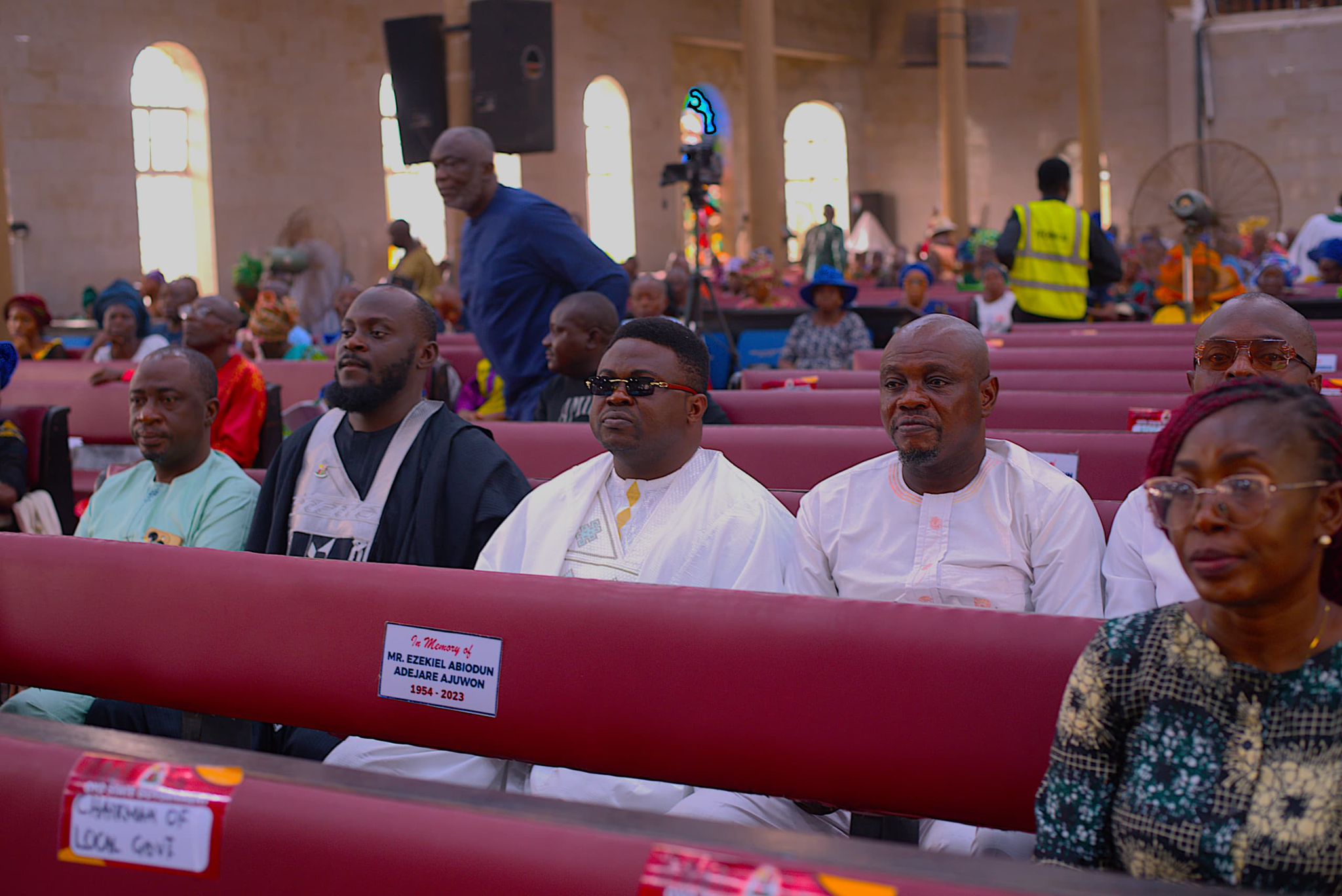
The leading gubernatorial aspirant of the Peoples Democratic Party (PDP) in Oyo State, Ambassador Olufemi Ajadi Oguntoyinbo, on Sunday joined Governor Seyi Makinde, former Anambra State Governor and 2023 Labour Party presidential candidate, Mr Peter Obi, the wife of the Osun State Governor, Chief (Mrs) Titilola Adeleke, and other eminent dignitaries at a Thanksgiving Service marking the seventh day of activities commemorating the 50th anniversary of Oyo State.
The service, held at the Cathedral of St. Peter’s, Aremo, Ibadan, drew a large congregation of worshippers, political leaders, traditional rulers, and stakeholders across the state and beyond, underscoring the significance of the golden jubilee celebration.
Speaking with journalists on the sidelines of the event, Ambassador Ajadi congratulated Governor Makinde, former Governor and Olubadan of Ibadanland, Oba Rashidi Adewolu Ladoja, and other stakeholders for steering the state to its historic milestone, describing the anniversary as a moment for reflection, gratitude, and renewed commitment to progress.
Oyo State at 50 is not just a celebration of years; it is a celebration of the strength, resilience and enduring spirit of our people,” Ajadi said. “I congratulate His Excellency, Engineer Seyi Makinde, Oba Rashidi Adewolu Ladoja and all stakeholders for sustaining the legacy of excellence, unity and progress that the Pacesetter State represents.”
He praised the people of the state for their resilience over the decades. He acknowledged the collective efforts of past and present leaders who have contributed to Oyo State’s political stability, economic growth and rich cultural heritage since its creation in 1976.
Ajadi, an entrepreneur and philanthropist, noted that the golden jubilee provides an opportunity for both leaders and citizens to critically assess the journey so far and recommit themselves to building a more inclusive and prosperous future.
“As we celebrate this golden anniversary, we must reflect on where we are coming from, where we are today and where we want to be,” he said. “Oyo State has produced great leaders, intellectuals, professionals and cultural icons.
He also commended the state government for designing a commemorative programme that blends intellectual engagement with the celebration of excellence, stressing that such initiatives help preserve history while inspiring younger generations.
Earlier, Governor Makinde, while addressing the congregation, said that although his tenure would end in May 2027, the team with which he has delivered good governance remains intact and prepared to continue the state’s development trajectory in different capacities.
The governor, who read the second Bible lesson from Matthew 5:1–12, attributed his emergence as governor in 2019 after eight years of political contest to divine grace, describing his administration as a “new beginning” for Oyo State.
“I was the eighth civilian governor of Oyo State, and in the Bible, the number eight signifies a new beginning,” Makinde said. “God has been merciful to us, and we will continue to govern in accordance with His will and guidance for the people of Oyo State.”
He assured residents of continuity in governance, emphasising that while he would exit office at the end of his tenure, members of his team would remain committed to serving the state.
“We have a team that is still intact. It is only Seyi Makinde that will go out; the members of the team are there to continue the work for the people of Oyo State,” he stated.
In a goodwill message, former Anambra State Governor and Labour Party presidential candidate in the 2023 general elections, Mr Peter Obi, lauded Makinde’s leadership style and the transformation witnessed in the state under his administration.
Oyo State is a city of knowledge and a city of hope,” Obi said. “I thank Governor Makinde for faithfully serving the people. Nigeria is not a poor country, but a poorly governed one, and what we are seeing in Oyo State is an example of using public resources for public good.”
Dignitaries at the event included the wife of the governor, Her Excellency Engr Tamunominini Olufunke Makinde; wife of the Osun State Governor, Chief (Mrs) Titilola Adeleke; former First Lady of Oyo State, Chief (Mrs) Mutiat Ladoja; Chief Judge of Oyo State, Hon. Justice Iyabo Yerima; Secretary to the State Government, Prof. Musibau Babatunde; and several other government officials, traditional rulers and political leaders.
society
UKA Announces Appointment of Hon AMB Asari St-Hill Bahamas/atlantian as Chief of Staff to Reigning Monarch Emperor Solomon Winning*
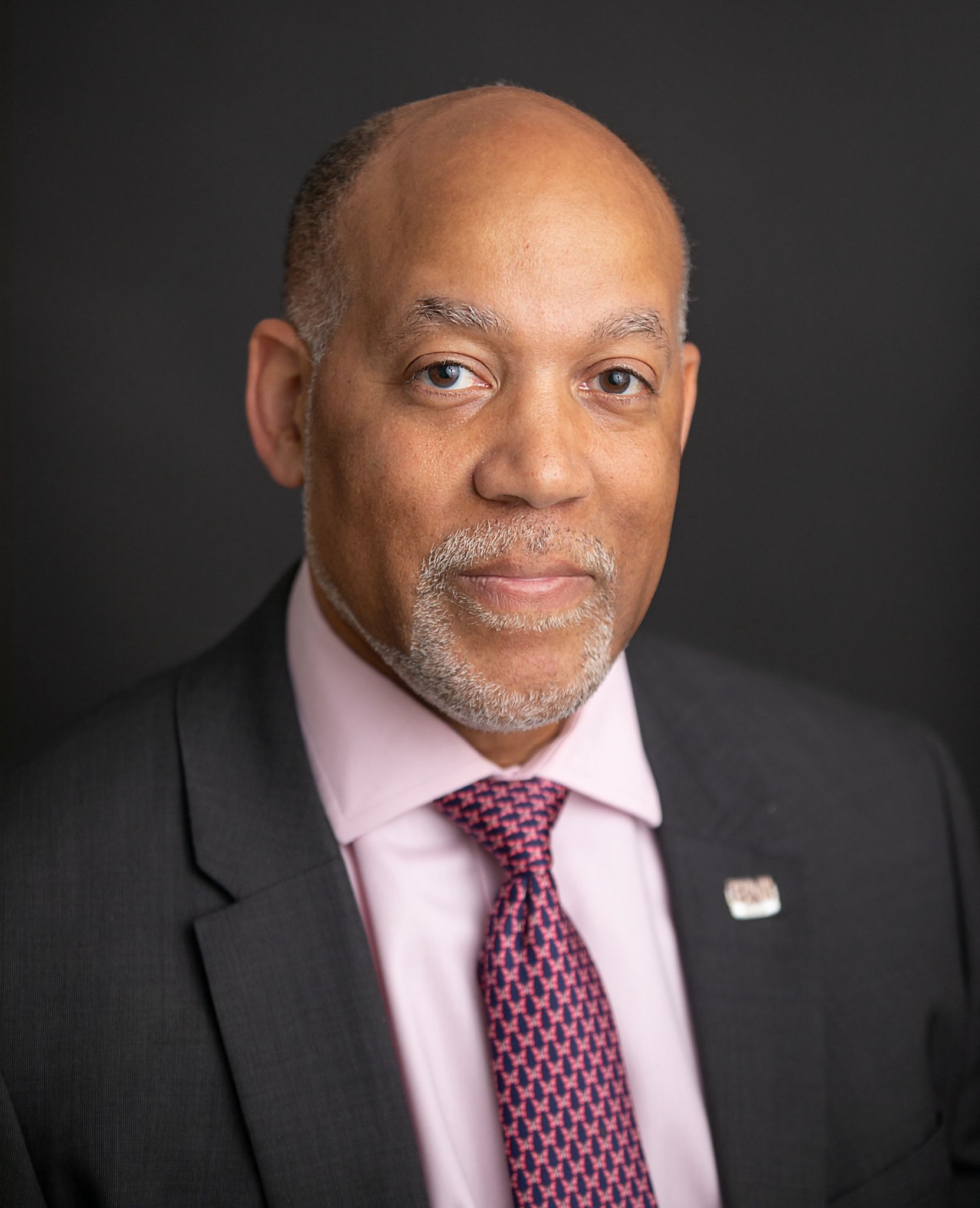
*UKA Announces Appointment of Hon AMB Asari St-Hill Bahamas/atlantian as Chief of Staff to Reigning Monarch Emperor Solomon Winning*
The United Kingdom of Atlantis (UKA) proudly announces the appointment of *Honorable Ambassador Asari St-Hill, A Bahamas/atlantian* as *Chief of Staff* to the Reigning Monarch, *Emperor Solomon Winning*. The official appointment ceremony was conducted on February 1st, 2026, and marked with the presentation of an Appointment Certificate (UKA 001 -1/2026).
Key Details of the Appointment 👇
– *Hon AMB Asari St-Hill, A Bahamas/Atlantian* has been entrusted with the prestigious role of Chief of Staff, serving directly under Emperor Solomon Winning, the sovereign of the United Kingdom of Atlantis.
– The appointment signifies a strategic enhancement of the monarch’s administrative and operational capabilities, aligning with the empire’s vision of efficient governance and global humanitarian leadership.
– The certificate of appointment bears the *Royal Seal of the Empire* and the endorsement of *EMP Noblis Solomon Winning*, affirming the legitimacy and authority of the designation.
Role of the Chief of Staff…👇
The Chief of Staff will be responsible for:
1. Managing the day-to-day operations of the monarch’s office.
2. Coordinating diplomatic and strategic initiatives aligned with the empire’s humanitarian and financial objectives.
3. Facilitating communication between the reigning monarch and governmental bodies within the United Kingdom of Atlantis.
Emperor Nobiliis Solomon Winning is the transformative leader of the United Kingdom of Atlantis, driving innovative projects in finance, humanitarian efforts, and global development. His reign focuses on merging traditional monarchical values with modern technological advancements, exemplified by initiatives like the ATC digital currency.
The United Kingdom of Atlantis (UKA) is a sovereign entity dedicated to fostering global unity, humanitarian progress, and financial innovation. It operates under a regal framework that blends imperial tradition with futuristic economic strategies, including asset-backed digital currencies and sustainable development programs.
_”The appointment of Hon AMB Asari St-Hill as Chief of Staff strengthens our administrative excellence and underscores our commitment to visionary leadership.”_
— *Emperor Solomon Winning*
The United Kingdom of Atlantis looks forward to achieving new milestones in governance and global impact under the stewardship of Emperor Solomon Winning and his esteemed Chief of Staff, Hon AMB Asari St-Hill.
Gen CG Musa Support Group Celebrates Grand Patron as 2025 Man of the Year
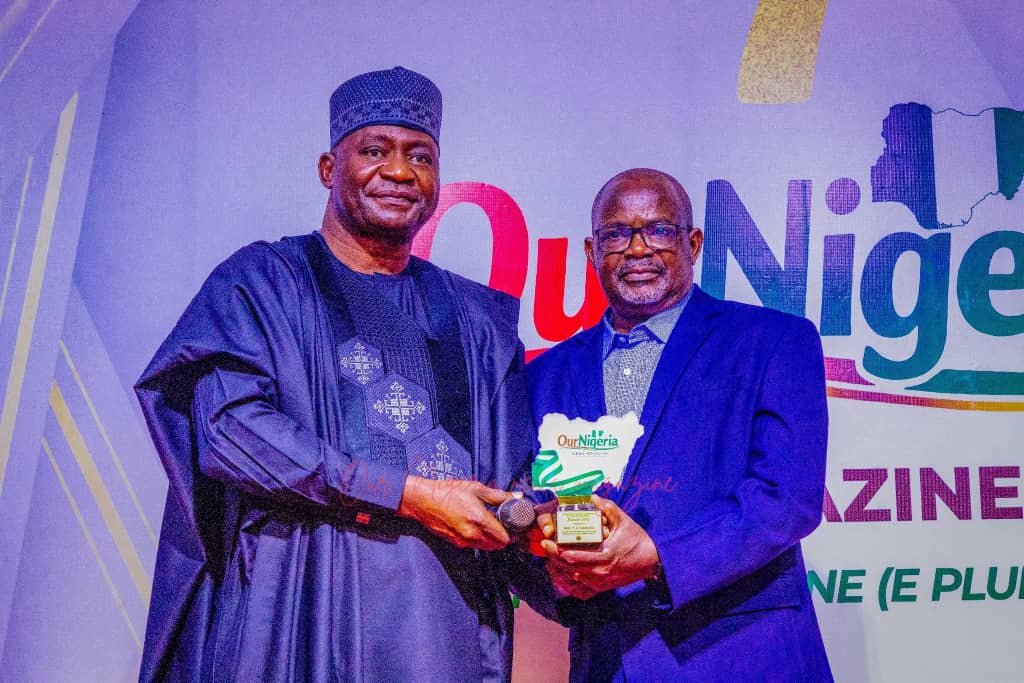
The Gen CG Musa Support Group has extended its warmest congratulations to its Grand Patron, His Excellency Gen. Christopher Gwabin Musa OFR (Rtd), the Honourable Minister of Defence, following his prestigious designation as the 2025 Man of the Year by OurNigeria News Magazine.
In a statement released to the press and signed by the Director General of the Support Group, Ibrahim Dahiru Danfulani, the Sadaukin Garkuwan Keffi/Betara Biu, the group hailed the recognition as a fitting tribute to a leader of exceptional character and accomplishment.
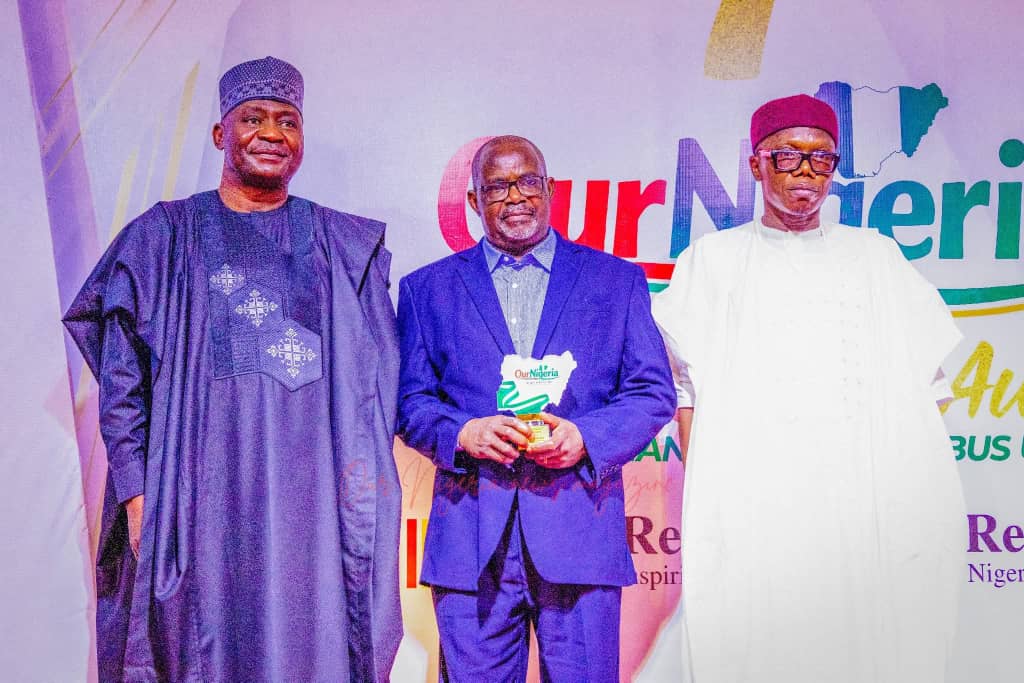
The statement illuminated the distinction of the award, emphasizing that it transcends the formal titles of “General” and “Minister.” It celebrated the core of the man himself—a leader renowned for his profound humility, incredible kindness, and genuine respect for all individuals. “People see the legacy and the title,” the statement noted, “but some of us are lucky to know the man behind it.”
The Support Group underscored that this accolade is a direct acknowledgment of the Minister’s exemplary personal conduct. It is an award not merely for the office he holds, but for the consistent humility he carries into every room and every interaction, a quality that has defined his leadership both in and out of uniform.
The honour also serves as a powerful validation of General Musa’s distinguished and unblemished track record of service to the nation. His decades of dedicated service within the military, which culminated in his ascension to the pinnacle as the Chief of Defence Staff prior to his retirement, are cited as the foundational pillars of his esteemed reputation.
The Gen CG Musa Support Group expressed profound gratitude to OurNigeria News Magazine for its discerning choice, noting that the award serves as a significant source of encouragement for the Honourable Minister. It reaffirms the nation’s appreciation for leadership that blends strength with compassion, strategic vision with unwavering integrity, and lofty achievement with grounded humanity.

This recognition solidifies General Christopher Gwabin Musa’s status not only as a defender of the nation but as a paragon of virtuous leadership, whose influence and example continue to inspire confidence and respect across Nigeria.
About the Gen CG Musa Support Group:
The Gen CG Musa Support Group is a collective dedicated to promoting the ideals and supporting the leadership of His Excellency Asiwaju Bola Ahmed Tinubu GCFR and His Excellency Gen. Christopher Gwabin Musa, celebrating their service and contributions to national peace, security, and unity.


-

 celebrity radar - gossips6 months ago
Why Babangida’s Hilltop Home Became Nigeria’s Political “Mecca”
-

 society6 months ago
Power is a Loan, Not a Possession: The Sacred Duty of Planting People
-

 Business6 months ago
Batsumi Travel CEO Lisa Sebogodi Wins Prestigious Africa Travel 100 Women Award
-

 news6 months ago
THE APPOINTMENT OF WASIU AYINDE BY THE FEDERAL GOVERNMENT AS AN AMBASSADOR SOUNDS EMBARRASSING