
celebrity radar - gossips
A TITAN DEPARTS: SALUTING THE BEDROCK OF INTERGRITY WHO REMADE THE ARMED FORCES


A TITAN DEPARTS: SALUTING THE BEDROCK OF INTERGRITY WHO REMADE THE ARMED FORCES
By Ibrahim Dahiru Danfulani, Sadaukin Garkuwan Keffi,
In the annals of Nigeria’s military history, certain names are etched not merely in ink, but in the collective memory of valour, integrity, and transformative leadership. As General Christopher Gwabin Musa, Officer of the Order of the Federal Republic (OFR), prepares for a well deserved pullout ceremony, marking the end of an illustrious career, the nation pauses to pay tribute to a titan. He is, in the truest sense, a “Soldier’s Soldier,” an “Officer and a Gentleman,” whose distinguished service has left an indelible mark on the armed forces and the nation he so passionately served.
His tenure, particularly as the Chief of Defence Staff (CDS), stands as a masterclass in leadership, a period defined by a radical re-invigoration of morale, a unifying spirit, and an unflinching commitment to the constitutional duty of securing the nation.
THE UNIFIER: FORGING A SINGLE, INDOMITABLE FORCE
Upon assuming the role of CDS, General Musa inherited a defence architecture that, while competent, often operated in silos. The Nigerian Army, the Nigerian Navy, and the Nigerian Air Force each possessed distinct cultures and operational doctrines. General Musa’s strategic genius lay in his understanding that modern asymmetric warfare demanded not just cooperation, but seamless integration. He championed the mantra of “Jointness,” not as a bureaucratic slogan, but as a lived reality in every theatre of operation.
Under his watch, the concept of joint operations was elevated to an unprecedented level. He broke down inter-service rivalries and fostered an environment of mutual respect and shared purpose. The successful operations across the nation, from the thick forests of the South-East to the vast deserts of the North, became testaments to this new synergy. The Air Force provided decisive air cover and intelligence, surveillance, and reconnaissance (ISR); the Navy secured the nation’s waterways and oil assets with renewed vigour; and the Army, empowered and supported, took the fight directly to the adversaries on the ground. General Musa did not just command the armed forces, he united them into a single, cohesive, and indomitable fist that struck with precision and overwhelming force. He made the armed forces truly a team, where the success of one was the success of all.
THE BEDROCK OF INTEGRITY: A BEACON OF MORAL CLARITY
In a nation where public trust is a prized commodity, General Christopher Gwabin Musa stood as a pillar of integrity. His leadership was rooted in an unwavering moral compass that guided every decision and action. He understood that the fight against insurgency and criminality was not only physical but also a battle for the trust and hearts of the citizenry.
He was transparent in his dealings, accountable to the nation, and led by the power of personal example. There was no gap between his words and his actions. This integrity resonated deeply with the troops in the front lines. When a soldier saw that his CDS was a man of principle, who would not compromise on ethics or the welfare of his men, it instilled a profound sense of confidence and loyalty. He tackled corruption and indiscipline with courage, sending a clear message that the armed forces were a noble institution that would uphold the highest standards of conduct. For the Nigerian people, his transparent briefings and candid assessments fostered a renewed sense of trust and partnership between the military and the civilian population.
UNWAVERING COMMITMENT: A HEART FOR THE TROOPS AND THE NATION
General Musa’s commitment was twofold: an unyielding dedication to the territorial integrity of Nigeria and a profound, fatherly devotion to the welfare of the men and women under his command. He was a commander who did not lead from the comfort of an air conditioned office in Abuja. He was a constant presence in the theatres of war, sharing the harsh conditions with his troops, boosting their morale, and personally assessing the realities on the ground. This earned him the revered title of a “Soldier’s Soldier.”
His commitment to troops’ welfare was legendary. He fought for and ensured the timely provision of the right equipment, improved allowances, and better medical facilities for the wounded. He recognized that the soldier’s spirit is as important as his weapon. He was known to personally visit injured soldiers in hospital, offering comfort and ensuring they received the best care possible. This act alone, more than any speech, cemented his place in the hearts of the rank and file. They knew that their CDS saw them not as mere statistics, but as his own children, his comrades, for whom he bore ultimate responsibility.
Furthermore, his commitment extended to the broader national security architecture. He was a key advocate for the whole of society approach to security, fostering robust collaboration with other security agencies and engaging with local communities to build trust and gather vital intelligence.
A LEGACY ETCHED IN VALOUR AND PROGRESS
As General Christopher Gwabin Musa, OFR, pulls out from active service, he leaves behind a legacy that will inspire generations of military officers to come. He has redefined the essence of military leadership in the 21st century. He leaves a more unified, more professional, and more effective armed forces. The gains made in the fight against terrorism and insurgency under his watch, the restored pride of the Nigerian soldier, and the strengthened bond between the military and the citizenry are testaments to his exceptional leadership.
He is indeed an Officer and a Gentleman a man of impeccable character, courage, and compassion. The nation owes him a debt of gratitude that can never be fully repaid. I join millions of Nigerians in saying: Thank you, General. Thank you for your service. Thank you for your sacrifice. Thank you for your integrity. Your distinguished service to our nation will never be forgotten.
Enjoy your retirement, Sir. You have earned it
By Ibrahim Dahiru Danfulani, Sadaukin Garkuwan Keffi,






celebrity radar - gossips
BUA Chairman Abdul Samad Rabiu Records Africa’s Biggest Wealth Surge, Net Worth Hits $11.2bn
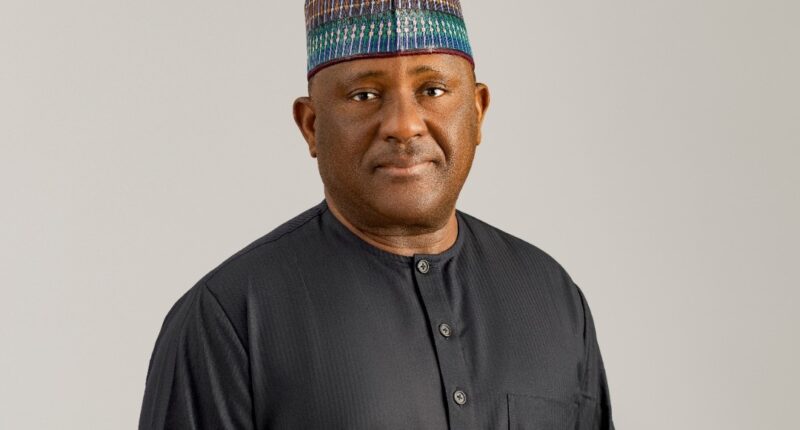
BUA Chairman Abdul Samad Rabiu Tops Africa’s Wealth Gains in the 2026 Forbes Rankings as His Fortune Jumps 120% to $11.2 Billion, Rising to 3rd Place; Aliko Dangote Remains No.1
Billionaire Industrialist, Philantropist, and Chairman of BUA Group, Abdul Samad Rabiu, has emerged as Africa’s biggest wealth gainer in the 2026 Africa’s Richest People ranking published by Forbes, after his net worth rose sharply over the past year.
According to the latest Forbes list, Rabiu’s wealth surged 120 percent to $11.2 billion, representing the largest increase recorded among the continent’s billionaires in the latest ranking. The jump moves Rabiu, who is Nigerian, to third place among Africa’s richest individuals, up from sixth position a year ago.
The rise in Rabiu’s fortune was driven largely by the strong performance of BUA Cement, his flagship publicly listed company, whose shares surged by 135 percent over the past year. The rally significantly outpaced gains in the broader Nigerian Exchange, which has itself recorded strong growth amid improving investor confidence.
Forbes estimates Rabiu’s net worth at $11.2 billion, placing him behind luxury goods tycoon Johann Rupert, whose fortune is estimated at $16.1 billion, and Africa’s richest man Aliko Dangote, who retains the top position with an estimated $28.5 billion.
Rabiu’s rise underscores the growing influence of Nigeria’s industrial sector and the expanding footprint of BUA Group, which has built major operations across cement manufacturing, food processing, sugar refining, infrastructure, mining and energy.
The latest Forbes ranking also highlights a broader surge in wealth across Africa’s billionaire class. The continent’s 23 billionaires now hold a combined net worth of $126.7 billion, representing a 21 percent increase from the previous year, as major equity markets rallied and regional currencies stabilised.
Nigeria remains one of the continent’s leading centres of billionaire wealth, accounting for four individuals on the list, including Dangote, Rabiu, telecommunications magnate Mike Adenuga, and energy investor Femi Otedola.
Forbes said the 2026 ranking was calculated using stock prices and exchange rates as of March 1, 2026, with privately held companies valued using comparable industry benchmarks.
Rabiu’s leap in the ranking reflects not only the strong performance of BUA Cement but also the broader momentum of Nigeria’s capital markets and the continued expansion of large scale industrial enterprises across Africa’s largest economy.
Analysts say the development signals growing investor confidence in African manufacturing and infrastructure driven businesses, sectors that are increasingly central to the continent’s economic transformation.
celebrity radar - gossips
COAS Ties Battlefield Success to Constitutional Allegiance and Civil Authority
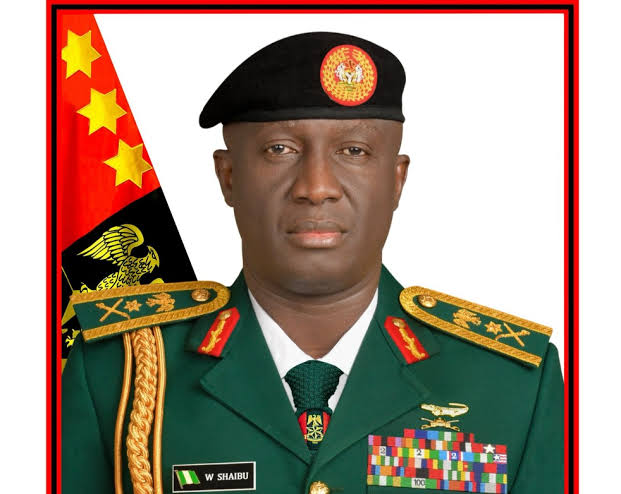
COAS Ties Battlefield Success to Constitutional Allegiance and Civil Authority
During his operational visit to the 4 Special Forces Command in Doma, the Chief of Army Staff, Lieutenant General Waidi Shaibu, delivered a stark message, intertwining the elite unit’s combat effectiveness with an unshakeable pledge of allegiance to President Bola Ahmed Tinubu and the Nigerian Constitution.
While directing troops to intensify high-impact operations, the COAS made it clear that their mission is a direct expression of their constitutional oath. He reaffirmed that the Nigerian Army’s primary role is to defend the nation against external aggression and provide aid to civil authority, all in strict adherence to the supreme law of the land and under the leadership of the Commander-in-Chief.
This emphasis on loyalty served as a powerful backdrop to his operational directives. By linking the “decisive defeat” of terrorists to the Army’s constitutional mandate and loyalty to the President, Lt. Gen. Shaibu sought to galvanise the Special Forces, framing their upcoming engagements not just as military objectives but as a sacred duty to the democratically elected government and the nation’s founding charter. The message was clear: their fight is a fight for the Constitution and the president it empowers.
celebrity radar - gossips
Mercy Johnson Okojie, Purity Okojie Lead Campaign for Girls Tag’s All-in-One Period Care Kit

*Mercy Johnson Okojie, Purity Okojie Lead Campaign for Girls Tag’s All-in-One Period Care Kit
iBlend Services, appointed Regional Agency for Girls Tag alongside its PR and marketing firm, Eddie MPR, has officially launched Girls Tag, described as Nigeria’s first all-in-one period care pack designed for girls aged nine and above.
The initiative seeks to tackle persistent gaps in menstrual health education and access to sanitary products in Nigeria, where many girls experience their first period with little preparation or guidance. According to the promoters, Girls Tag was created to eliminate the fear, confusion, and stigma often associated with puberty, replacing them with confidence, comfort, and dignity.
Beyond hygiene, the brand positions itself as a supportive care system for both girls and parents, offering tools and language to guide families through early puberty conversations.
To strengthen its reach, Girls Tag announced a strategic ambassadorial partnership with Nollywood actress and philanthropist Mercy Johnson Okojie and her daughter, Purity Okojie. The mother-daughter collaboration is intended to reflect authenticity and relatability for Nigerian families navigating similar experiences.
Speaking on the partnership, the leadership of iBlend Services expressed confidence that the ambassadors’ real-life connection would resonate deeply with mothers and daughters nationwide.
Mercy Johnson Okojie, in her remarks, described the initiative as a natural fit, noting that puberty can be an anxious period for both parents and children. She also revealed that her newly authored puberty guide, Youberty, will be included in every Girls Tag kit. The book is designed to help boys and girls aged 10 to 13 better understand the physical and emotional changes that come with growing up.
Each Girls Tag care pack contains premium sanitary pads in various sizes, overnight period pants, panty liners, disposable sanitary bags, a discreet sanitary purse, and a copy of Youberty. The kit is tailored to support first-time and early period experiences while promoting proper hygiene and self-care.
The company disclosed that the product will be available nationwide in Q2 2026 at select retail stores, pharmacies, and malls, with direct delivery options through its website and social media handle, @girlstag.ng.
With its combined focus on education, dignity, and accessibility, Girls Tag aims to reshape menstrual health support for young girls across Nigeria.


-

 society6 months ago
Religion: Africa’s Oldest Weapon of Enslavement and the Forgotten Truth
-

 news3 months ago
WHO REALLY OWNS MONIEPOINT? The $290 Million Deal That Sold Nigeria’s Top Fintech to Foreign Interests
-

 society6 months ago
“You Are Never Without Help” – Pastor Gebhardt Berndt Inspires Hope Through Empower Church (Video)
-

 Business6 months ago
GTCO increases GTBank’s Paid-Up Capital to ₦504 Billion