Connect with us

society

Primus Charity Foundation Offers Free Medical Outreach To 650 Widows In Lagos, Ogun

Published

on

Primus Charity Foundation Offers Free Medical Outreach To 650 Widows In Lagos, Ogun ...Distributes Foodstuffs, Trains Beneficiaries In Vocational Skill Acquisition
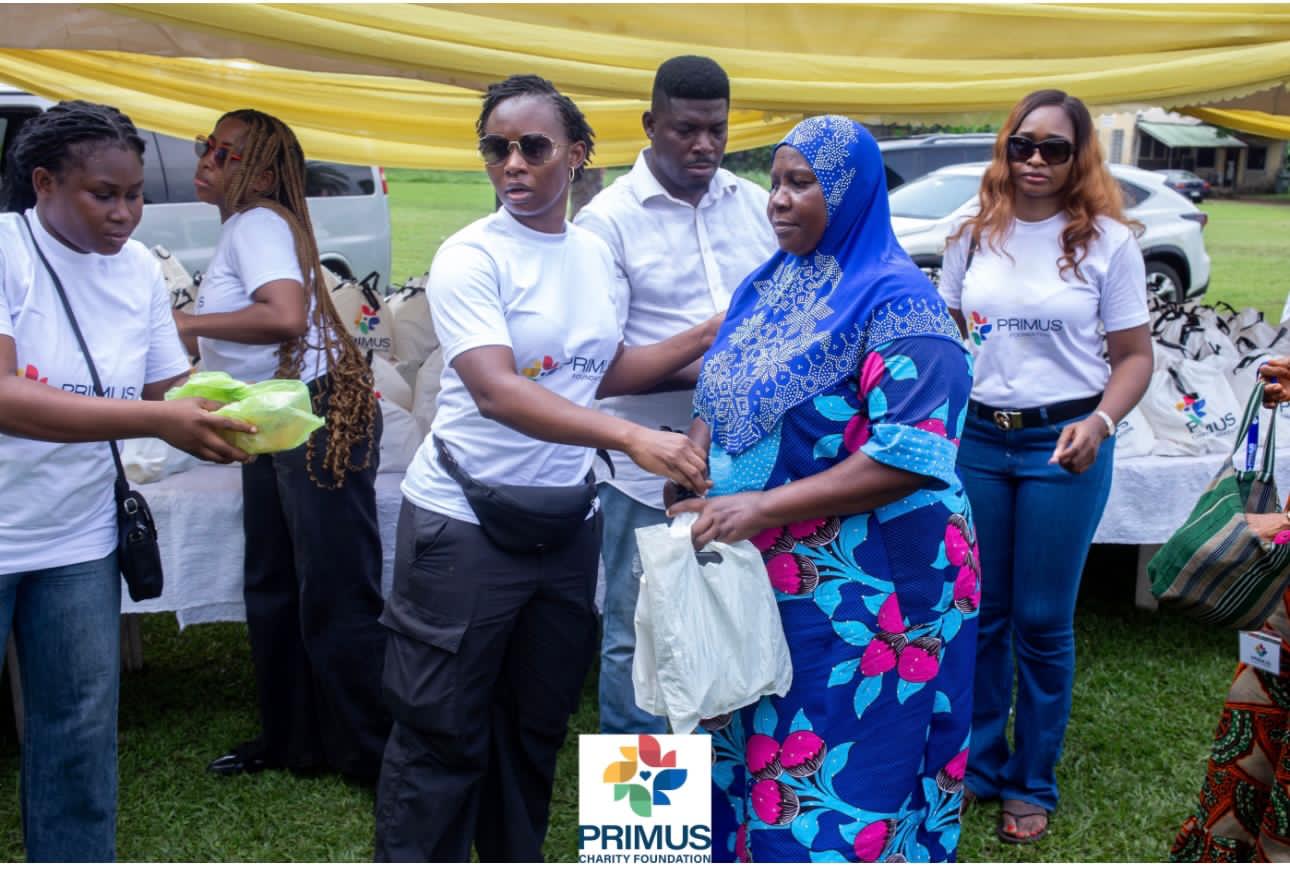
 

Primus Charity Foundation Offers Free Medical Outreach To 650 Widows In Lagos, Ogun

…Distributes Foodstuffs, Trains Beneficiaries In Vocational Skill Acquisition

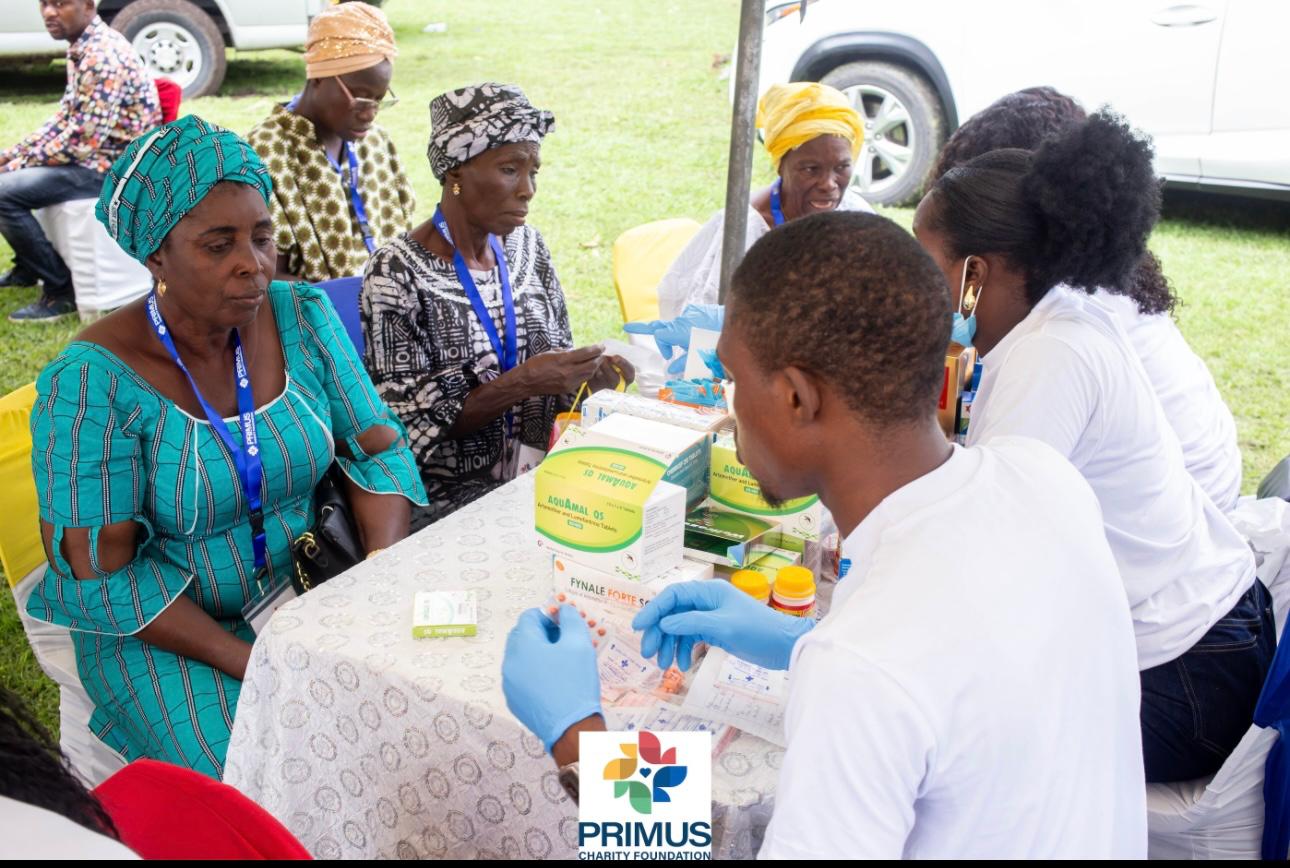
A non-governmental organisation, Primus Charity Foundation as part of its commitment to the alleviation of poverty and reduction of unemployment in Nigeria days back empowered no less than 650 widows in both Lagos and Ogun state.


According to the Convener of the foundation, Mrs Tomi Tomori, the empowerment initiative was designed to create a platform that create economic independence, health awareness and personal development.

The beneficiaries of the empowerment scheme were drawn from Bariga and Somolu communities in Lagos, as well as Abeokuta, the Ogun state capital.

Apart from the medical consultation and skill acquisition in heathy drinks and soap making, the lucky widows who were full of praises also smiled home with several foodstuffs ranging from rice, vegetable oil, garri and many others.


Below is the full text of the Convener’s Speech at the event:

It’s an honor and a privilege to be with you today, surrounded by such compassionate hearts, all gathered for a cause that means so much to us at Primus Charity Foundation, and I believe, to all of us.


To the women from the Bariga and Shomulu community, thank you for joining us today. To the medical team, officers and officials, we appreciate your presence today. Today, we are here not just as individuals, but as a community united by love, faith, and a shared purpose.


Our mission today is simple: we are here to give back. To give back to the women who have given so much—whether in raising children, caring for their families, or being steadfast in the face of the hardest of trials. We’re here to offer you access to medical care and supplies that may assist your daily needs. We want to show you the love and dignity you deserve, and to remind you that you are not forgotten.


I want to take a moment to speak directly to any widows who may be here today: I want you to know that your journey, your grief, your healing is seen. You are not invisible. You are not forgotten. And you are loved—by this community and by a God who holds every tear, every pain, and every memory in His hands. In your grief, He promises to be near. In your weakness, He promises to be strong. You are not walking this road alone.


Thank you for being here, thank you for taking the time out of your day to come. May God bless each and every one of you, and may He continue to guide us as we serve others in His name.
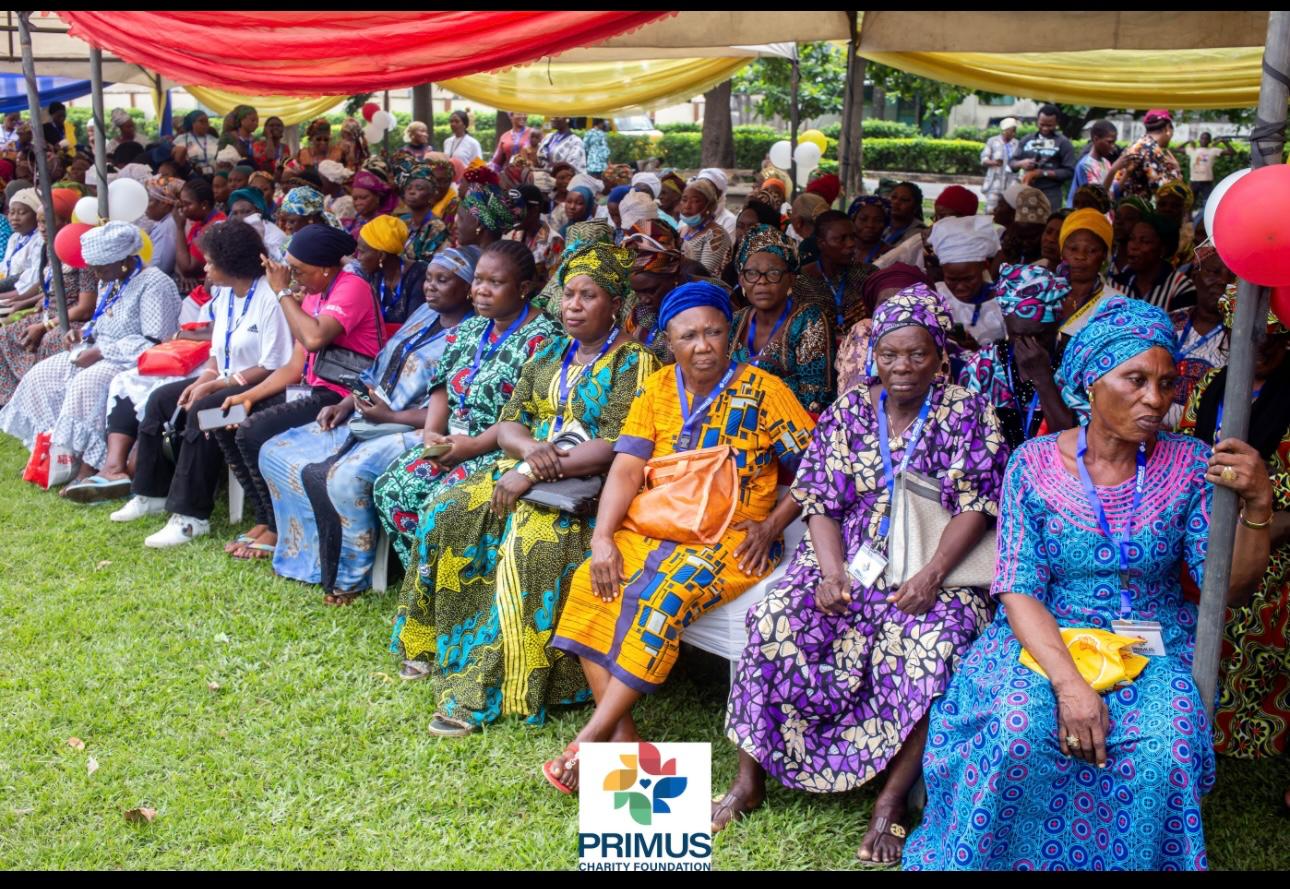
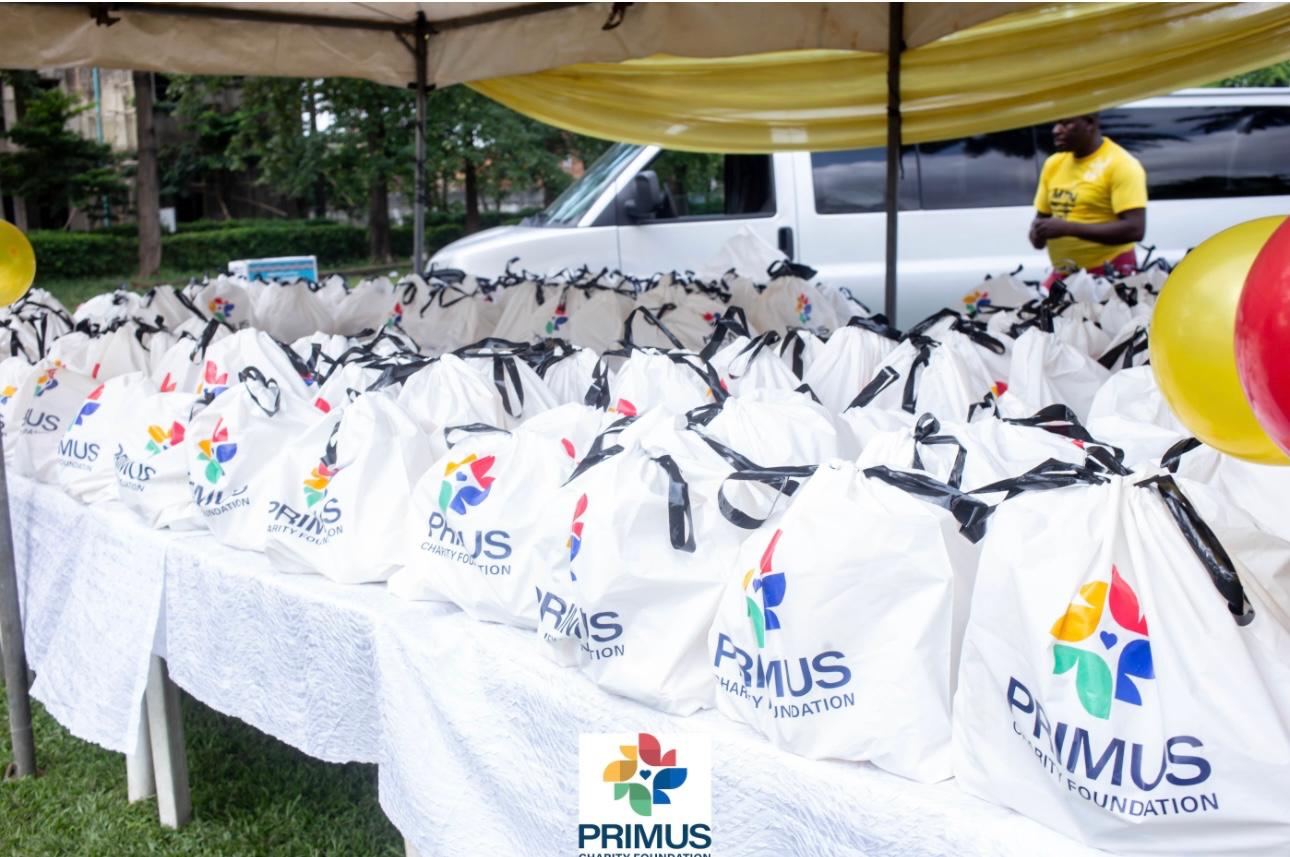
 

Primus Charity Foundation Offers Free Medical Outreach To 650 Widows In Lagos, Ogun
...Distributes Foodstuffs, Trains Beneficiaries In Vocational Skill Acquisition

society

BREAKING: Ambassador Ajadi Resigns from NNPP, Joins PDP, Says Move Is ‘Strategic, Patriotic’

Published

on

BREAKING: Ambassador Ajadi Resigns from NNPP, Joins PDP, Says Move Is ‘Strategic, Patriotic’


Nigerian politician, businessman, and social reform advocate, Ambassador Olufemi Ajadi Oguntoyinbo, has officially resigned from the New Nigeria People’s Party (NNPP) and joined the Peoples Democratic Party (PDP), describing the move as “a strategic and patriotic step toward rebuilding Nigeria’s unity and hope.”


The announcement came on Monday, November 10, 2025, during a press briefing where Ajadi formally presented copies of his resignation letter to journalists, signaling his official withdrawal from the NNPP and alignment with the Peoples Democratic Party.

In the letter, which was formally addressed to the Ward Chairman, NNPP Chairman of Obafemi Owode Local Government, the Ogun State NNPP Chairman, the NNPP Southwest Chairman, and the National Chairman of the party, Ajadi stated that his decision came after deep reflection on Nigeria’s political direction and the need to work within a broader platform capable of driving genuine national transformation.


“My decision to join the Peoples Democratic Party is both strategic and patriotic,” Ajadi declared. “I have great respect for the NNPP and what it stands for, but at this point in Nigeria’s history, I believe the PDP offers a wider and stronger platform for national reconciliation, youth empowerment, and true federalism.”


Ajadi, who was the NNPP governorship candidate in Ogun State during the 2023 general elections after stepping down as a presidential aspirant in solidarity with Senator Rabiu Musa Kwankwaso, who later became the party’s presidential candidate, clarified that his exit from the NNPP was not borne out of animosity but guided by conviction and renewed purpose.


“There is no bad blood between me and my former party,” he said. “I remain grateful for the opportunity to have served under its banner. However, as Nigeria continues to grapple with economic hardship, unemployment, and leadership challenges, it is time for like-minded patriots to close ranks and rebuild trust in governance.”

Political observers have described Ajadi’s defection as one of the most strategic realignments in the lead-up to the 2027 general elections, a period expected to reshape Nigeria’s political alliances and ideological coalitions.


Beyond politics, Ambassador Ajadi is renowned for his humanitarian and youth development efforts. Through the Olufemi Ajadi Foundation, he has provided training, micro-grants, and support to widows, artisans, and small-scale farmers across several states in the South-West, Northern, and Southern regions. His social campaigns and media engagements have long promoted youth inclusion in governance, entrepreneurship, and peaceful coexistence among Nigeria’s diverse ethnic and religious communities.


He has also been a consistent voice for press freedom, security reform, and good governance, often emphasizing the need for responsive leadership and civic accountability.


“Nigeria is at a crossroads,” Ajadi noted. “We need leaders who can listen to the people and act selflessly. I am confident that my entry into the PDP will strengthen the party’s grassroots base and reawaken hope among ordinary Nigerians.”


Party officials in South-west described Ajadi’s defection as a “boost to the PDP’s democratic family,” praising his record of integrity, youth mobilization, and social impact as assets that will enrich the party’s vision.

Reaffirming his commitment to national service, Ambassador Ajadi pledged to work closely with PDP leaders at all levels to promote transparency, peace-building, and inclusive governance.

This is not just about party politics,” he reiterated. “It is about rekindling the faith of Nigerians in democracy and ensuring that our people begin to feel the real dividends of good governance.”

Continue Reading

society

KOMOLAFE’S ENDURING LEGACIES IN GLOBAL OIL REFORMS

Published

on

*KOMOLAFE’S ENDURING LEGACIES IN GLOBAL OIL REFORMS

By Charles Matthew


The name Engineer Gbenga Komolafe keeps resonating with technical precision, depth of influence, and administrative innovation in the growing narrative of Africa’s quest for sustainable development and global relevance within the petroleum ecosystem. As the Chief Executive of the Nigerian Upstream Petroleum Regulatory Commission (NUPRC), his emergence as a central figure in today’s global energy reforms stems from dedicated years of institutional knowledge, regulatory rectitude, and unassailable patriotism.

It is no surprise that the Nigeria of today has repositioned itself prominently on the global energy map under the Renewed Hope Agenda of President Tinubu.
The recognition the Pan-African Parliament bestowed upon him in a recent session was not an act of vain appraisal, but the formal acknowledgment of a man who has become an intellectual lighthouse guiding the continent through a complex energy transition era.

When AFRIPERF identified him as a competent individual sufficiently equipped both in moral stature and technical acumen to pilot Africa’s unified policy direction for sustainable energy frameworks, it was a welcoming announcement greeted by ovation in consensus across academic and diplomatic circles.

When he strode through the grand halls of the House of Lords in London, within the Palace of Westminster in the United Kingdom, to receive the Global Sustainable Leadership Award at the 2025 Global Sustainable Education and Leadership (G-SEL) Conference and a professional doctorate in Leadership (Energy Law) from the International Business School of Scandinavia, the ovation of his recognition was for Nigeria as a whole.

The world was recognizing a reform-driven and technically grounded confident Nigerian voice.
This is happening at a time when some voices in the international space attempt to distort Nigeria’s true narrative by amplifying negative perceptions while ignoring the quiet but powerful work of reformers who are reconstructing governance institutions.

While the media is flooded with President Trump’s broad and dismissive remarks about Nigeria, Komolafe’s strides and those of several distinguished Nigerians demonstrate a different reality that speaks volumes of economic recalibration, international cooperation, and building investor confidence.

This emerging truth is evident: Nigeria is not defined by how loud the voice of criticism is, but by the constructive labour of its united visionaries. In this regard, Komolafe’s leadership in NUPRC stands as the clearest manifestation of true leadership.

The appreciation of Komolafe’s legacy can be drawn from his magnanimous contributions in the broader context of Nigeria’s tumultuous history with the petroleum sector. To better understand this, it is important to note that Nigeria’s oil sector has been marred by decades of community conflicts, vandalism, rent-seeking behavior, and regulatory ambiguity.

Both local and multinational operators were handicapped by bureaucratic contradictions. Despite the bulk contributions of communities in oil-producing regions to the nation’s primary revenue, they lived in anger and deprivation, and Nigeria suffered numerous policy reversals that created an unpredictable atmosphere stunting investments for decades.

To address all these, the Petroleum Industry Act (PIA) of 2021 came to the rescue, marking a legislative watershed moment. The need for a competent hand to translate such a profound law into a functioning system brought the appointment of Engineer Gbenga Komolafe, one that came at a critical inflection point.

His task was monumental and clearly defined: rebuild confidence, restore order, deepen transparency, and reinvigorate Nigeria’s upstream sector in line with global best practices. On this note, he went to work immediately with a structured strategy anchored on three priorities—transparency, competitiveness, and sustainability—with an emphasis on maximising the value of Nigeria’s hydrocarbon resources while advancing the energy transition.

The results: an empirical reality. Under Komolafe’s leadership, Nigeria’s active rig counts increased from 8 in 2021 to over 40 rigs, and presently stand at a total of 69 rigs as of October 2025. This shows that the petroleum sector is active, undergoing a healing phase, and now reviving investor confidence.

In addition, the revenue figures are verified. The NUPRC did not just meet government targets in revenue performance; it surpassed them consistently, with the Commission achieving surpluses of 18.3 per cent in 2022, 14.6 per cent in 2023, and an unprecedented milestone of 84.2 per cent in 2024.

The PIA introduced the Host Community Development Trust (HCDT) as a framework for restoring peace to the oil-producing communities of Nigeria that have historically experienced consistent cycles of exploitation, environmental neglect, and conflict. It further served as a mechanism for structured development funding and local empowerment.

Today, it is on record that the Host Community Development Trust has risen to over ₦350 billion, part of which has been used in implementing lofty projects like funding schools, healthcare facilities, road rehabilitation, water supply systems, security patrols, and youth empowerment schemes, which have contributed to the restoration of peace in hitherto volatile communities.

The most profound legacy here is “restored dignity.” Where previously, oil-bearing communities negotiated development as charity, now they operate within a codified framework of statutory entitlement.

Right now, the world is shifting away from hydrocarbons and gradually transitioning to renewable energy sources. Even though this global movement is uneven at the moment, it calls for nations to balance environmental obligations with economic realities. Komolafe’s leadership has also proven indispensable in this aspect.

At international forums, he has emphasized a rational transition, but not abrupt abandonment. He argues for energy justice, which insists that African nations, still developing, must not be coerced into sacrificing development in the name of a transition engineered and financed by countries whose own industrialization was built on fossil fuels.

This clarity has elevated Nigeria’s voice from the periphery of global climate conversations to the negotiating table of strategic policy formulation. The philosophy of President Tinubu’s administration is often summarized in one governance phrase: “A Practical Reform for Sustainable National Revival.”

Komolafe has translated this meaningful philosophy from mere vision into real outcomes in the petroleum sector. Undoubtedly, the NUPRC under Komolafe has delivered a powerful governance success with remarkable clarity.

This is why his recent international recognition is not merely a personal milestone but a validation of the Renewed Hope Agenda as a functional governance blueprint.
It is clear that Komolafe has not only managed the upstream sector; he has reforged its professional work ethics and economic yield.

As the world continues to celebrate him for his redefined integrity, reinforced national dignity, and championed continental voice, the applause that echoed from London to Addis Ababa, from Abuja to Johannesburg, and across multilateral energy circles are results that were well deserved, sustained, and justified.

His legacy is not frozen in plaques, certificates, and award speeches. It is active, dynamic, and continually expanding. At a time when some would define Nigeria by pessimism, Komolafe stands as living testimony that Nigeria is rising structurally, methodically, and irreversibly. Engineer Gbenga Komolafe is building legacies and shaping history.

Matthew writes from Abuja

Continue Reading

society

Nigeria’s Silent Conquest: The Fulani Invasion That Outsmarted the State. By George Omagbemi Sylvester

Published

on

Nigeria’s Silent Conquest: The Fulani Invasion That Outsmarted the State.

By George Omagbemi Sylvester | Published by SaharaWeeklyNG.com

“Why America may not need to INVADE; because Nigeria has already been CONQUERED from within.”

For years, Nigerians have debated the hypothetical scenario of a United States invasion and how it would unfold, what it would mean for our sovereignty and how we would resist it. While we argue about imaginary wars, we ignore the cold truth before our eyes, Nigeria has already been invaded and conquered in SLOW MOTION.
This conquest did not arrive in fighter jets or tanks; it crept through our forests and farmlands, disguised as “HERDERS,” protected by POLITICAL POWER and empowered by GOVERNMENT SILENCE. The invaders are not American soldiers, they are foreign Fulani terrorists, many from NIGER, MALI, CHAD and SENEGAL, who have established enclaves within Nigerian territory and now operate like an occupying force.

Move Fast or Face the Consequence: A Call to Stop Terror, Not Muslims. By George Omagbemi Sylvester | Published by saharaweeklyNG.com

The Slow-Motion Conquest of Nigeria. For more than a decade, these armed Fulani militias have seized farmlands, destroyed villages, imposed local rule, collected illegal taxes and even hoisted their own flags. In Zamfara state, gold and other precious minerals are mined and smuggled daily under the nose of the state. In Benue, Plateau and Nasarawa state, entire communities have been wiped out in coordinated attacks. From Southern Kaduna to parts of Kwara and Kogi state, the march continues; METHODICAL, SILENT and STRATEGIC.

A 2024 report by the Global Terrorism Index listed Nigeria among the world’s most terrorized nations, largely due to Fulani militant attacks, which now outnumber Boko Haram’s operations. The International Crisis Group has confirmed that many of these fighters are foreign elements, recruited and armed across the Sahel.


Shockingly, no administration has confronted them with the seriousness required. Why? Because many of their sponsors allegedly sit within the corridors of power. Even former Kaduna governor Nasir El-Rufai admitted in 2012 that “foreign Fulani fighters were brought in” before the 2015 elections, an admission that should have SPARKED OUTRAGE and ACCOUNTABILITY. Instead, SILENCE FOLLOWED.

Nigerians Paid Over N2.23tn in Ransoms Amid Rising Kidnapping Crisis – NBS Report

Government Complicity and Northern Elite Silence. Every rational Nigerian should ask: Why have successive governments, both led by Muslim presidents, refused to act decisively against Fulani terrorism?
The answer is painfully clear: what began as a pastoral conflict has evolved into a grand political and religious agenda. As far back as 1804, Usman dan Fodio’s Jihad sought to Islamize the entire region, with the symbolic goal of “DIPPING THE Qur’an INTO THE ATLANTIC OCEAN.” That mission was halted only by British colonization. Today, the same ideology is being advanced through terror, land grabs and political control and this time, with government complicity.
The late historian Prof. Ali Mazrui once warned that “when a state chooses ethnic loyalty over national interest, it ceases to be a government and becomes a tribe with an army.” Nigeria today fits that description perfectly.
Our leaders have treated FULANI TERRORISM as “FARMER-HERDER CLASHES,” downplaying massacres as mere communal disputes. What do you call it when killers impose taxes, occupy villages, and establish their own laws? That is not a clash; it is occupation.

The Price of Fulani Political Domination. History has already delivered its verdict. Wherever Fulani political domination thrives, poverty, illiteracy and stagnation follow like a curse. According to the National Bureau of Statistics (NBS, 2023), the 10 poorest states in Nigeria are predominantly in the north, where the Fulani elite have governed for decades. Despite controlling political power, the region remains the least educated and most impoverished.
Compare that to the southern regions that experienced greater exposure to Western education and governance under British rule. Despite the injustices of colonialism, the South developed faster in LITERACY, COMMERCE and INDUSTRY. The South-East and South-West became engines of innovation, producing thinkers like Chinua Achebe, Chike Obi, Philip Emeagwali, Wole Soyinka and political icons like Obafemi Awolowo.
Now imagine if the Fulani Jihad of the 1800s had succeeded. Achebe might never have written Things Fall Apart. Chimamanda Adichie could have been married off as a child. Lagos, the commercial heartbeat of Africa, might have been a dusty emirate ruled by a district head. The vibrant cities of Aba and Onitsha might have been replaced by almajiri colonies.
As Prof. Wole Soyinka once said, “When you silence education, you amplify poverty.” The Fulani-dominated north has done exactly that and weaponized ignorance as a political tool to preserve domination.


Defend Yourselves With Arms Against Bandits, Zamfara Govt Tells Residents

Between Two Invaders: A Brutal Comparison. It may sound controversial, but Nigeria’s reality demands honesty. Between British colonialism and Fulani domination, the former produced far better results. While the British built schools, roads and systems of administration (ALBEIT FOR THEIR BENEFIT) the Fulani system has entrenched FEUDALISM, ILLITERACY and UNDERDEVELOPMENT.
Even Dr. Nnamdi Azikiwe, Nigeria’s first president, acknowledged in 1943 that “colonialism brought a paradox; it enslaved our bodies but freed our minds.” The same cannot be said of the internal Fulani invasion, which enslaves both body and mind.
Thus, before dismissing the idea of a U.S. intervention, Nigerians must reflect. America, for all its imperial flaws, could not possibly inflict a deeper wound than the silent genocide already consuming us from within. If Trump’s alleged warning to capture Tinubu within 24 hours sounds threatening, ask yourself: what threat is greater—the possibility of U.S. intervention or the certainty of internal annihilation?

The Real Question: Which Future Do You Choose?
Would you rather have the chance to be educated, empowered and capable of resisting oppression?
Or would you prefer to live as an illiterate almajiri, begging for scraps in your own land?
Nigeria must decide whether it wants sovereignty without safety or foreign help that restores peace. History shows that, painful as interventions can be, they have sometimes prevented far worse outcomes. If foreign involvement can halt the genocide of innocent farmers and reclaim stolen lands, is it truly worse than the Fulani conquest we live under?
As George Orwell once wrote, “The most effective way to destroy a people is to deny and obliterate their own understanding of their history.” Nigeria is already halfway there.

Final Reflection: This argument is not against ISLAM or the FULANI ETHNICITY; it is against TYRANNY and HYPOCRISY. The Fulani are as human as every other group, but the POLITICAL MACHINERY that uses their name to dominate Nigeria must be dismantled.
Our nation is bleeding. Villages are burning. Citizens are dying. While we debate imaginary invasions, our REAL INVADERS dine with those in power.
Foreign intervention may be undesirable, but sometimes a BITTER MEDICINE is NEEDED to CURE a FATAL DISEASE. The truth is simple: Nigeria does not need an American invasion; it needs liberation from its own internal conquerors.

Continue Reading

Cover Of The Week

Trending