
society
Lagos Assembly confirms receipt of Governor Sanwo-Olu’s request to present 2026 budget

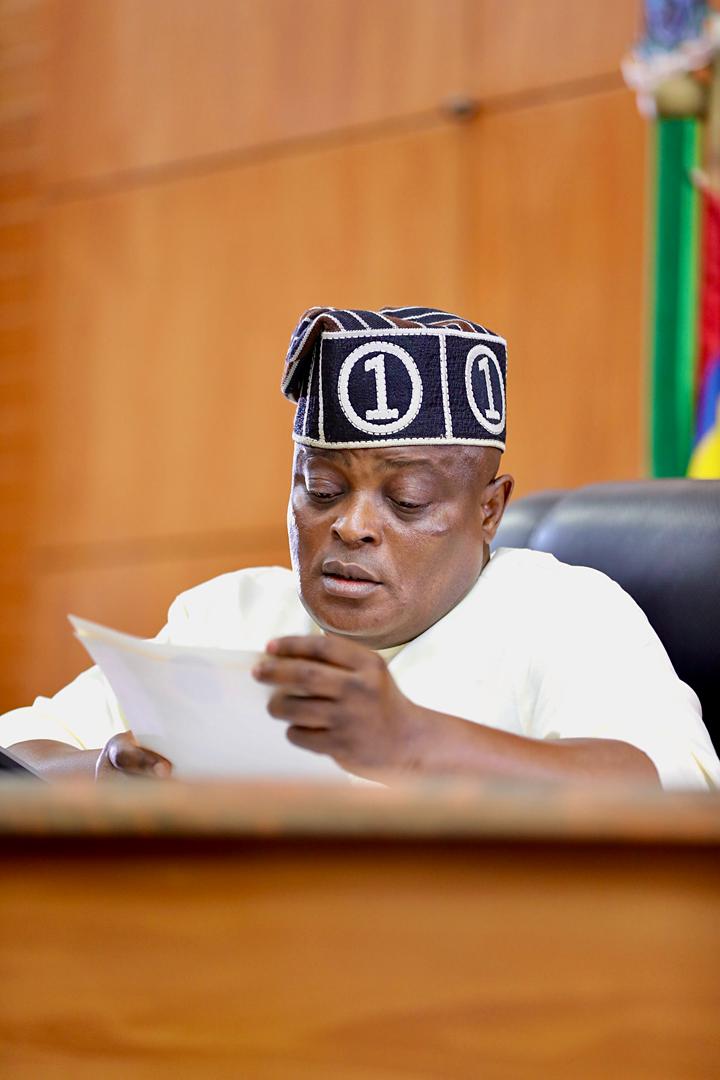
Lagos Assembly confirms receipt of Governor Sanwo-Olu’s request to present 2026 budget
…nullifies LASPAA GM nominee’s appointment
The Lagos State House of Assembly has confirmed receipt of the request from Governor Babajide Sanwo-Olu to schedule a substantive date for the presentation of the 2026 Appropriation Bill.
During the plenary session on Monday, November 17, presided over by the Speaker, Rt. Hon. Mudashiru Obasa, Governor Sanwo-Olu’s letter, which outlines a proposed total budget estimate of ₦4.237 trillion for the 2026 fiscal year, was read on the floor of the House by the Clerk, Barr. Olalekan Onafeko,
In his letter, Governor Sanwo-Olu expressed his appreciation for the sustained collaboration and constructive engagement between the executive and the Obasa-led assembly, adding, “The unwavering support of this House has been instrumental in driving our development agenda and delivering key initiatives that continue to improve the quality of life across Lagos State.”
Governor Sanwo-Olu added that these collective efforts have strengthened governance, enhanced public trust, and ensured steady progress in fulfilling their shared mandate to the people of Lagos. The governor has proposed a total budget estimate of ₦4.237 trillion for the 2026 fiscal year, with Internally Generated Revenue expected to contribute N3. 119trillion while federal transfers of N874billion are expected. The recurrent expenditure is pegged at N2. 048trillion while capital expenditure is N2. 188trillion.
According to the governor, “This represents a 25% increase over the Y2025 Revised Budget and reflects our confidence in the capacity of the state to achieve its developmental ambitions.” Thereafter, he asked that the House fix a favourable date for the formal presentation of the 2026 Appropriation Bill.
Responding, Speaker Obasa welcomed the governor’s communication and highlighted the responsibility of the Assembly to engage in thorough deliberations.
“As we prepare to discuss this substantial budget proposal, it is imperative that we consider the aspirations of our constituents and ensure that our decisions align with their needs,” he remarked.
Meanwhile, during the plenary, the House also nullified the nomination of Mrs. Adebisi Adelabu as the General Manager of the Lagos State Parking Authority (LASPAA).
Presenting the report of the 12-Man Ad hoc Committee on Screening of the Nominees, the Committee Chairman, Hon. Mojeed Fatai, explained that Mrs. Adebisi had been functioning in the capacity of General Manager since 2021 without ever appearing before the House for the constitutionally required confirmation. He stressed that this breach of legislative procedure was a key factor in the committee’s recommendation for the nullification of her appointment.
Following deliberations, and in accordance with Section 92 of the Lagos State Transport Reform Law, the House adopted the committee’s recommendation and formally nullified her nomination.
However, the Assembly confirmed the nominations of Mrs. Adeyemo Khadijat as the Executive Secretary, Lagos State Water Regulatory Commission, and Mrs. Adepoju Adebajo as the chairman, Lagos State Employment Trust Fund (LSETF).
Speaker Obasa commended the Ad Hoc Committee for its diligence and reaffirmed the Assembly’s commitment to due process, accountability, and the appointment of only qualified and properly screened individuals to positions of public trust for the benefit of all Lagosians.






GENERAL BULAMA BIU MOURNS BOKO HARAM VICTIMS, CALLS FOR UNITY AND RENEWED EFFORTS FOR PEACE
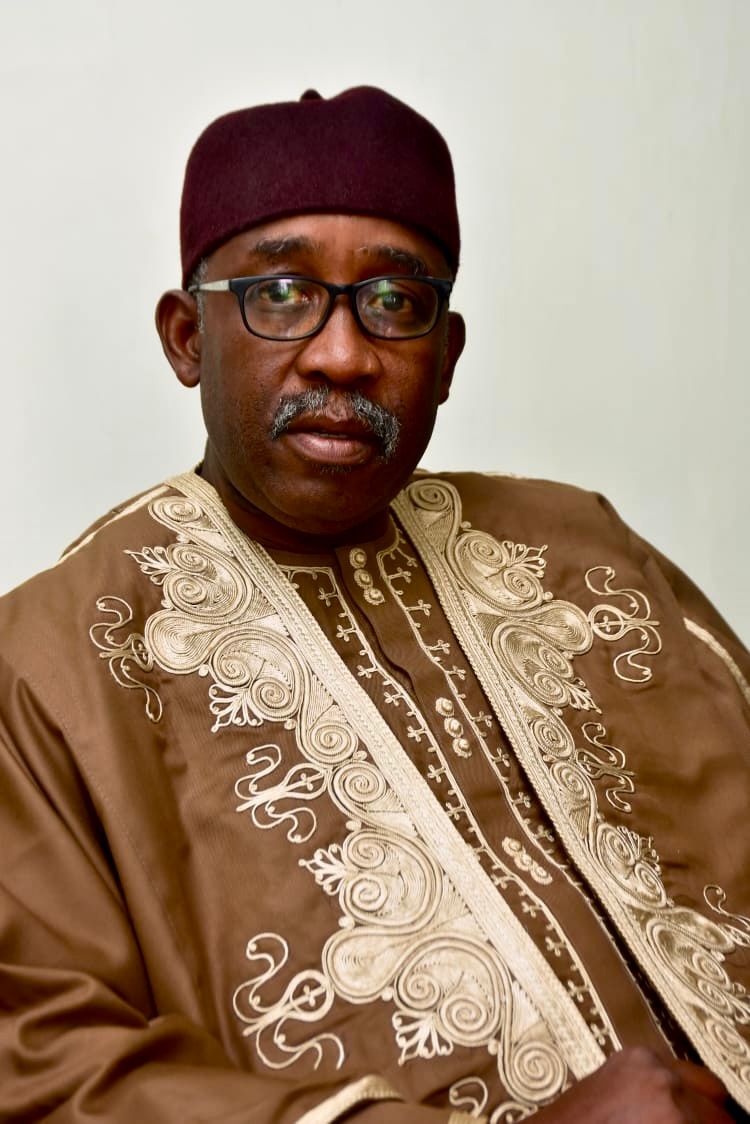
In a solemn message of condolence and resolve, Major General Abdulmalik Bulama Biu mni (Rtd), the Sarkin Yakin of Biu Emirate, has expressed profound grief over a recent deadly attack by Boko Haram insurgents on citizens at a work site. The attack, which resulted in the loss of innocent lives, has been condemned as a senseless and barbaric act of inhumanity.
The revered traditional and military leader extended his heartfelt sympathies to the bereaved families, the entire people of Biu Emirate, Borno State, and all patriotic Nigerians affected by the tragedy. He described the victims as “innocent, peaceful, hardworking and committed citizens,” whose lives were tragically cut short.
General Biu lamented that the assault represents “one too many” such ruthless attacks, occurring at a time when communities are already engaged in immense personal and collective sacrifices to support government efforts in rebuilding devastated infrastructure and restoring hope.
In his statement, he offered prayers for the departed, saying, “May Almighty Allah forgive their souls and grant them Aljannan Firdaus.” He further urged the living to be encouraged by and uphold the spirit of sacrifice demonstrated by the victims.
Emphasizing the need for collective action, the retired Major General called on all citizens to redouble their efforts in building a virile community that future generations can be proud of. He specifically commended the “silent efforts” of some patriotic leaders working behind the scenes to end the security menace and encouraged all well-meaning Nigerians to join the cause for a better society.
“Together we can surmount the troubles,” he asserted, concluding with a prayer for divine intervention: “May Allah guide and protect us, free us from this terrible situation and restore an enduring peace, security, unity and prosperity. Amin.”
The statement serves as both a poignant tribute to the fallen and a clarion call for national solidarity in the face of persistent security challenges.

When a Nation Outgrows Its Care.
By George Omagbemi Sylvester | Published by SaharaWeeklyNG.com
“Population Pressure, Poverty and the Politics of Responsibility.”
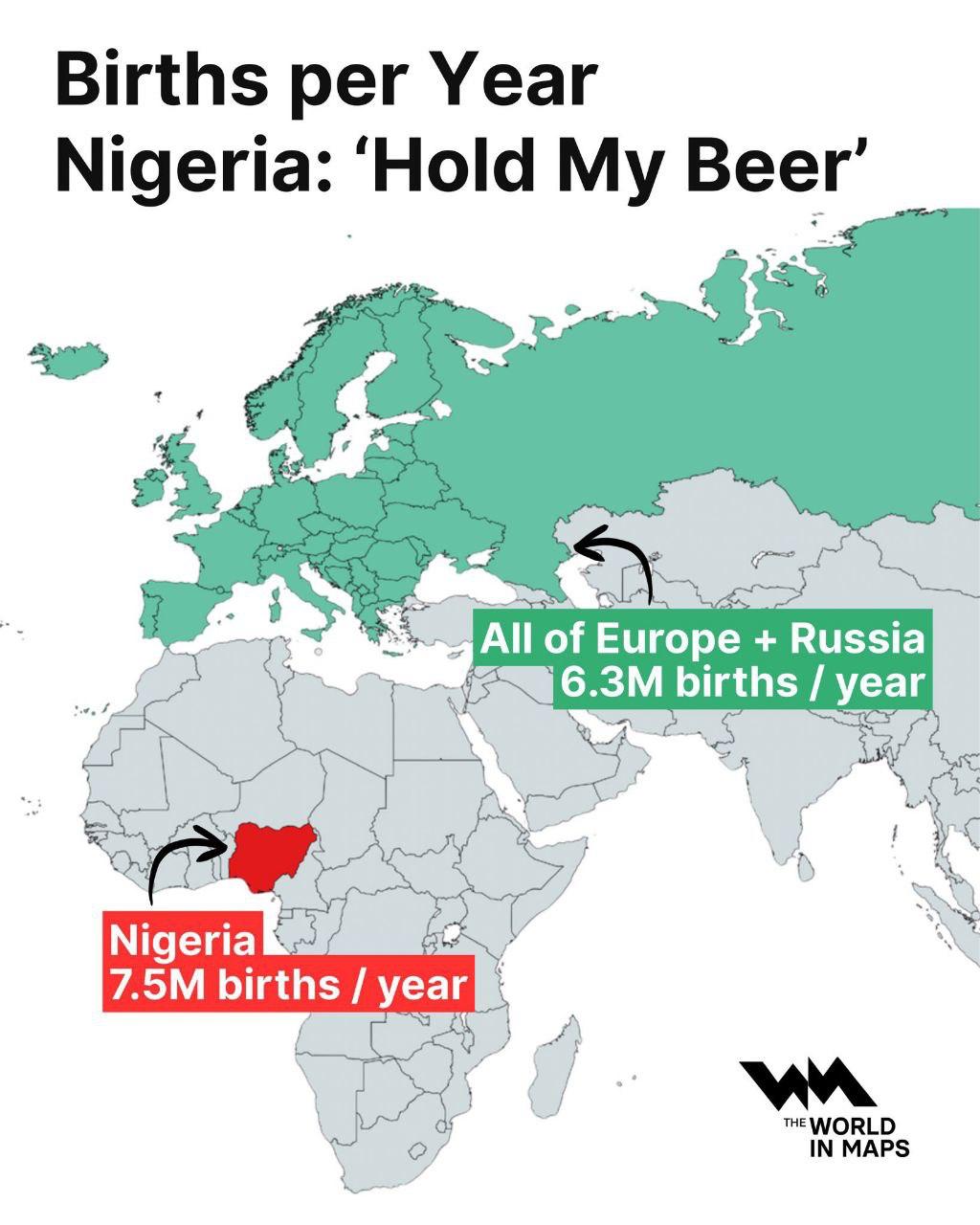
Nigeria is not merely growing. It is swelling and faster than its institutions, faster than its conscience and far faster than its capacity to care for those it produces. In a world already straining under inequality, climate stress and fragile governance, Nigeria has become a living paradox: immense human potential multiplied without the social, economic or political scaffolding required to sustain it.
This is not a demographic miracle. It is a governance failure colliding with cultural denial.
Across the globe, societies facing economic hardship typically respond by slowing population growth through education, access to healthcare and deliberate family planning. Nigeria, by contrast, expands relentlessly, even as schools decay, hospitals collapse, power grids fail and public trust erodes. The contradiction is jarring: a country that struggles to FEED, EDUCATE and EMPLOY its people continues to produce more lives than it can dignify.
And when the inevitable consequences arrive (unemployment, crime, desperation, migration) the blame is conveniently outsourced to government alone, as though citizens bear no agency, no RESPONSIBILITY, no ROLE in shaping their collective destiny.
This evasion is at the heart of Nigeria’s crisis.
The political economist Amartya Sen has long said that development is not merely about economic growth but about expanding human capabilities. Nigeria does the opposite. It multiplies human beings while shrinking the space in which they can thrive. The result is a society where life is abundant but opportunity is scarce, where children are born into structural neglect rather than possibility.
Governments matter. Bad governments destroy nations. Though no government, however competent, can sustainably provide for a population expanding without restraint in an environment devoid of planning, infrastructure and accountability.
This is where the conversation becomes uncomfortable and therefore necessary.
For decades, Nigerian leaders have failed spectacularly. Public education has been HOLLOWED out. Healthcare has become a LUXURY. Electricity remains UNRELIABLE. Social safety nets are virtually NONEXISTENT. Public funds vanish into PRIVATE POCKETS with brazen regularity. These are not disputed facts; they are lived realities acknowledged by development agencies, scholars and ordinary citizens alike.
Yet amid this collapse, REPRODUCTION continues unchecked, often CELEBRATED rather than QUESTIONED. Large families persist not as a strategy of hope but as a cultural reflex, untouched by economic logic or future consequence. Children are brought into circumstances where hunger is normalized, schooling is uncertain and survival is a daily contest.
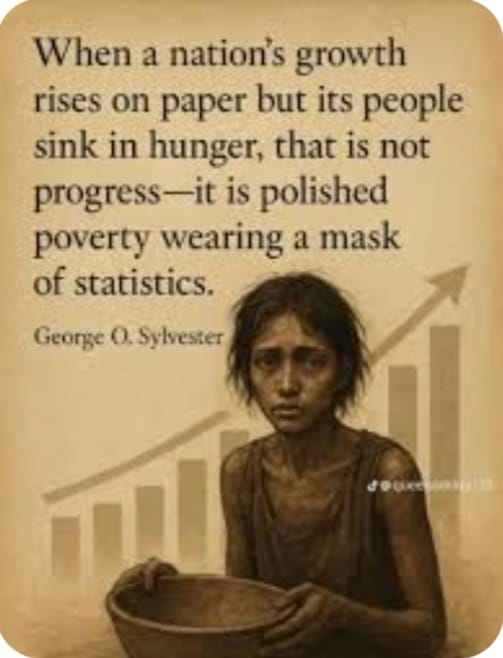
The philosopher Hannah Arendt warned that irresponsibility flourishes where accountability is diffused. In Nigeria, responsibility has become a political orphan. The state blames history, colonialism or global systems. Citizens blame the state. Meanwhile, children inherit the cost of this mutual abdication.
International development scholars consistently emphasize that education (especially of girls) correlates strongly with smaller, healthier families and better economic outcomes. Nigeria has ignored this lesson at scale. Where education is weak, fertility remains high. Where healthcare is absent, birth becomes both risk and ritual. Where women lack autonomy, choice disappears.
This is not destiny. It is policy failure reinforced by social silence.
Religious and cultural institutions, which wield enormous influence, have largely avoided confronting the economic implications of unchecked population growth. Instead, they often frame reproduction as a moral absolute divorced from material reality. The result is a dangerous romanticism that sanctifies birth while neglecting life after birth.
The Kenyan scholar Ali Mazrui once observed that Africa’s tragedy is not lack of resources but lack of responsibility in managing abundance. Nigeria exemplifies this truth painfully. Rich in land, talent and natural wealth, the country behaves as though human life is an infinite resource requiring no investment beyond conception.
This mindset is unsustainable.
Around the world, nations that escaped mass poverty did so by aligning population growth with state capacity. They invested in people before multiplying them. They built systems before expanding demand. They treated citizens not as numbers but as future contributors whose welfare was essential to national survival.
Nigeria has inverted this logic. It produces demand without supply, citizens without systems, lives without ladders.
To say this is not to absolve government. It is to indict both leadership and followership in equal measure. Governance is not a one-way transaction. A society that demands accountability must also practice responsibility. Family planning is not a foreign conspiracy. It is a survival strategy. Reproductive choice is not moral decay. It is economic realism.
The Nigerian sociologist Adebayo Olukoshi has argued that development fails where political elites and social norms reinforce each other’s worst tendencies. In Nigeria, elite corruption meets popular denial, and the outcome is demographic pressure without developmental intent.
This pressure manifests everywhere: overcrowded classrooms, collapsing cities, rising youth unemployment and a mass exodus of talent seeking dignity elsewhere. Migration is not a dream; it is an indictment. People leave not because they hate their country, but because their country has failed to imagine a future with them in it.
And still, the cycle continues.
At some point, honesty must replace sentiment. A nation cannot endlessly reproduce its way out of poverty. Children are not economic policy. Birth is not development. Hope without planning is cruelty.
True patriotism requires difficult conversations. It demands confronting cultural habits that no longer serve collective survival. It insists on shared responsibility between state and citizen. It recognizes that bringing life into the world carries obligations that extend far beyond celebration.
Nigeria does not lack people. It lacks care, coordination and courage. The courage to align birth with dignity, growth with governance and culture with reality.
Until that reckoning occurs, complaints will continue, governments will rotate and generations will be born into a system that apologizes for its failures while reproducing them.
A nation that refuses to plan its future cannot complain when the future overwhelms it.

society
Diplomacy Under Fire: South Africa’s Anti-Apartheid Vanguard Challenges U.S. Ambassador Nomination

Diplomacy Under Fire: South Africa’s Anti-Apartheid Vanguard Challenges U.S. Ambassador Nomination
By George Omagbemi Sylvester
Published by saharaweeklyng.com
“How history, sovereignty and global justice are colliding in Pretoria’s political theatre.”
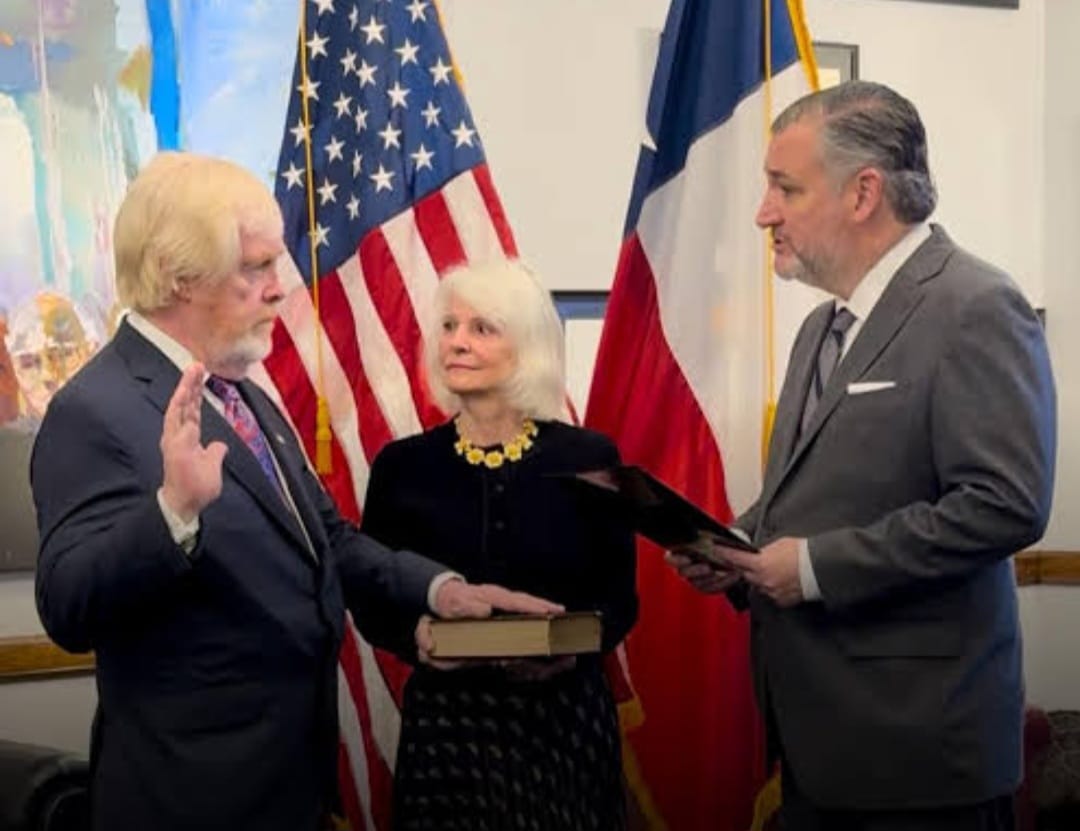
South Africa stands at the intersection of memory, morality and contemporary geopolitics. In a dramatic and deeply symbolic challenge to international diplomatic norms, the South African chapter of the Anti-Apartheid Movement (AAM) has publicly urged President Cyril Ramaphosa to exercise his constitutional right to reject the credentials of Leo Brent Bozell III, the United States’ ambassador-designate to South Africa. This demand is not merely about one diplomat’s qualifications but it represents a broader contest over historical interpretation, national sovereignty, human rights and the ethical responsibilities of global partnerships.
The statement issued by the AAM, drawing on its legacy rooted in the nation’s hard-won liberation from racial oppression, argues that Bozell’s track record and ideological orientation raise “serious questions” about his fitness to serve in South Africa. The movement insists that his appointment threatens to undermine the country’s independent foreign policy, particularly in the context of Pretoria’s pursuit of justice at the International Court of Justice (ICJ) in The Hague, where South Africa has taken the rare step of challenging alleged atrocities in Gaza.

The Roots of the Dispute.
At the heart of the controversy is the claim by activists that Bozell’s public remarks over time have been disparaging toward the African National Congress (ANC) and the broader anti-apartheid struggle that shaped modern South Africa’s democratic identity. These statements, which critics describe as reflective of a worldview at odds with the principles of liberation and equity, have animated calls for his credentials to be rejected.
South Africa’s constitution empowers the head of state to accept or refuse the credentials of foreign envoys, a power rarely exercised in recent diplomatic practice but one that acquires urgency in moments of intense bilateral tension. As the AAM’s leadership frames it, this is not about personal animus but about safeguarding the nation’s right to determine its own moral and geopolitical compass.
Historical Memory Meets Contemporary Politics.
South Africa’s anti-apartheid legacy holds deep cultural, political and moral resonance across the globe. The nation’s liberation struggle (led by giants such as Nelson Mandela, Desmond Tutu and Oliver Tambo) was rooted in the universal principles of human dignity, equality and resistance to systemic oppression. It transformed South Africa from a pariah state into a moral beacon in global affairs.
As the AAM statement put it, “We know too well that our freedom is incomplete without the freedom of others.” This invocation of history is not ceremonial. It frames South Africa’s foreign policy not just as a function of national interest but as a commitment to a universal ethos born of struggle.
Renowned scholars of post-colonial studies, including the late Mahmood Mamdani, have argued that anti-colonial movements inherently shape post-independence foreign policy through moral imperatives rooted in historical experience. In this view, South African diplomacy often reflects an ethical dimension absent in purely strategic calculations.
The Broader Diplomatic Context.
The dispute over ambassadorial credentials cannot be separated from broader tensions in South African foreign policy. Pretoria’s decision to take Israel before the ICJ on allegations of violating the Genocide Convention has triggered significant diplomatic friction with the United States. Official U.S. channels have expressed concern over South Africa’s stance, particularly amid the conflict in the Middle East. This has coincided with sharp rhetoric from certain U.S. political figures questioning South Africa’s approach.
For instance, critics in the United States have at times framed South Africa’s foreign policy as both confrontational and inconsistent with traditional Western alliances, especially on issues relating to the Middle East. These tensions have underscored how global power dynamics interact (and sometimes collide) with post-apartheid South Africa’s conception of justice.
Within South Africa, political parties have responded in kind. The Economic Freedom Fighters (EFF) have condemned Bozell’s nomination as reflective of an agenda hostile to South Africa’s principles, even labelling his ideological lineage as fundamentally at odds with emancipation and equality. Whether or not one agrees with such characterisations, the intensity of these critiques reveals the deep anxiety amongst some sectors of South African civil society about external interference in the nation’s policymaking.
Sovereignty, International Law and National Identity.
Scholars of international law emphasise that the acceptance of diplomatic credentials is not merely ceremonial; it signals a nation’s readiness to engage with a foreign representative as a legitimate interlocutor. Legal theorist Martti Koskenniemi has written that diplomatic practice functions at the intersection of law, power and morality, shaping how states perceive each other and interact on the world stage.
In this light, the AAM’s appeal to Ramaphosa reflects a profound anxiety: that South Africa’s sovereignty (and its moral authority on the world stage) is being tested. To refuse credentials would be to affirm the nation’s agency; to accept them without scrutiny could be interpreted, in some quarters, as a concession to external pressure.
President Ramaphosa himself has, in recent speeches, stressed the importance of upholding constitutional integrity and South Africa’s role as a constructive actor in global affairs. His leadership, shaped by decades as a negotiator and statesman, walks a fine line between defending national interests and maintaining diplomatic engagement.
Moral Certainties and Strategic Ambiguities.
What makes this situation especially complex is the blending of moral conviction with strategic diplomacy. South Africa, like any sovereign state, depends on a web of international relationships (economic, security, political) that require engagement with powers whose policies and values do not always align with its own.
Yet for many South Africans, drawing a line on diplomatic appointments is not just about personalities but about reaffirming the values fought for during decades of struggle. As anti-apartheid veteran and academic Professor Pumla Gobodo-Madikezela once observed, “Our history is not a relic; it is the compass by which we navigate present injustices.” This idea captures why historical memory acquires such force in debates over current foreign policy.
Towards a Resolution.
Whether President Ramaphosa will act on the AAM’s call remains uncertain. Diplomatic norms usually favour acceptance of appointed envoys to maintain continuity in bilateral relations. However, exceptional moments call for exceptional scrutiny. This situation compels a national debate on what it means to balance sovereignty with engagement, history with pragmatism, values with realpolitik.
Experts on international relations stress the need for South Africa to carefully assess not just the semantics of credential acceptance but the broader implications for its foreign policy goals and relationships. Former diplomat Dr. Naledi Pandor has argued that “diplomacy is not merely about representation, but about conveying what a nation stands for and will not compromise.” Whether this moment will redefine South Africa’s diplomatic posture or be absorbed into the standard rhythms of international practice remains to be seen.
Summation: History and the Future.
The AAM’s call to reject a U.S. ambassadorial nominee is more than an isolated political manoeuvre, it is a reflection of South Africa’s evolving self-understanding as a nation shaped by legacy, committed to justice and unwilling to dilute its moral voice in global affairs. The controversy casts a spotlight on the tensions facing post-colonial states that strive to be both sovereign and globally engaged.
At its core, this debate is about who writes the rules of international engagement when history has taught a nation never to forget what it fought to achieve. It is a reminder that in a world of shifting alliances and competing narratives, moral clarity, historical awareness and strategic foresight are indispensable.
South Africa’s decision in this matter will not only shape its diplomatic engagement with the United States but will reverberate across continents where questions of justice, human rights and national dignity remain at the forefront of global discourse.


-

 celebrity radar - gossips6 months ago
Why Babangida’s Hilltop Home Became Nigeria’s Political “Mecca”
-

 society5 months ago
Power is a Loan, Not a Possession: The Sacred Duty of Planting People
-

 Business6 months ago
Batsumi Travel CEO Lisa Sebogodi Wins Prestigious Africa Travel 100 Women Award
-

 news6 months ago
THE APPOINTMENT OF WASIU AYINDE BY THE FEDERAL GOVERNMENT AS AN AMBASSADOR SOUNDS EMBARRASSING