
society
Diplomacy Under Fire: South Africa’s Anti-Apartheid Vanguard Challenges U.S. Ambassador Nomination

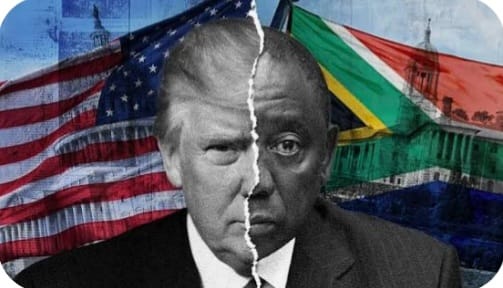
Diplomacy Under Fire: South Africa’s Anti-Apartheid Vanguard Challenges U.S. Ambassador Nomination
By George Omagbemi Sylvester
Published by saharaweeklyng.com
“How history, sovereignty and global justice are colliding in Pretoria’s political theatre.”
South Africa stands at the intersection of memory, morality and contemporary geopolitics. In a dramatic and deeply symbolic challenge to international diplomatic norms, the South African chapter of the Anti-Apartheid Movement (AAM) has publicly urged President Cyril Ramaphosa to exercise his constitutional right to reject the credentials of Leo Brent Bozell III, the United States’ ambassador-designate to South Africa. This demand is not merely about one diplomat’s qualifications but it represents a broader contest over historical interpretation, national sovereignty, human rights and the ethical responsibilities of global partnerships.
The statement issued by the AAM, drawing on its legacy rooted in the nation’s hard-won liberation from racial oppression, argues that Bozell’s track record and ideological orientation raise “serious questions” about his fitness to serve in South Africa. The movement insists that his appointment threatens to undermine the country’s independent foreign policy, particularly in the context of Pretoria’s pursuit of justice at the International Court of Justice (ICJ) in The Hague, where South Africa has taken the rare step of challenging alleged atrocities in Gaza.

The Roots of the Dispute.
At the heart of the controversy is the claim by activists that Bozell’s public remarks over time have been disparaging toward the African National Congress (ANC) and the broader anti-apartheid struggle that shaped modern South Africa’s democratic identity. These statements, which critics describe as reflective of a worldview at odds with the principles of liberation and equity, have animated calls for his credentials to be rejected.
South Africa’s constitution empowers the head of state to accept or refuse the credentials of foreign envoys, a power rarely exercised in recent diplomatic practice but one that acquires urgency in moments of intense bilateral tension. As the AAM’s leadership frames it, this is not about personal animus but about safeguarding the nation’s right to determine its own moral and geopolitical compass.
Historical Memory Meets Contemporary Politics.
South Africa’s anti-apartheid legacy holds deep cultural, political and moral resonance across the globe. The nation’s liberation struggle (led by giants such as Nelson Mandela, Desmond Tutu and Oliver Tambo) was rooted in the universal principles of human dignity, equality and resistance to systemic oppression. It transformed South Africa from a pariah state into a moral beacon in global affairs.
As the AAM statement put it, “We know too well that our freedom is incomplete without the freedom of others.” This invocation of history is not ceremonial. It frames South Africa’s foreign policy not just as a function of national interest but as a commitment to a universal ethos born of struggle.
Renowned scholars of post-colonial studies, including the late Mahmood Mamdani, have argued that anti-colonial movements inherently shape post-independence foreign policy through moral imperatives rooted in historical experience. In this view, South African diplomacy often reflects an ethical dimension absent in purely strategic calculations.
The Broader Diplomatic Context.
The dispute over ambassadorial credentials cannot be separated from broader tensions in South African foreign policy. Pretoria’s decision to take Israel before the ICJ on allegations of violating the Genocide Convention has triggered significant diplomatic friction with the United States. Official U.S. channels have expressed concern over South Africa’s stance, particularly amid the conflict in the Middle East. This has coincided with sharp rhetoric from certain U.S. political figures questioning South Africa’s approach.

For instance, critics in the United States have at times framed South Africa’s foreign policy as both confrontational and inconsistent with traditional Western alliances, especially on issues relating to the Middle East. These tensions have underscored how global power dynamics interact (and sometimes collide) with post-apartheid South Africa’s conception of justice.
Within South Africa, political parties have responded in kind. The Economic Freedom Fighters (EFF) have condemned Bozell’s nomination as reflective of an agenda hostile to South Africa’s principles, even labelling his ideological lineage as fundamentally at odds with emancipation and equality. Whether or not one agrees with such characterisations, the intensity of these critiques reveals the deep anxiety amongst some sectors of South African civil society about external interference in the nation’s policymaking.
Sovereignty, International Law and National Identity.
Scholars of international law emphasise that the acceptance of diplomatic credentials is not merely ceremonial; it signals a nation’s readiness to engage with a foreign representative as a legitimate interlocutor. Legal theorist Martti Koskenniemi has written that diplomatic practice functions at the intersection of law, power and morality, shaping how states perceive each other and interact on the world stage.
In this light, the AAM’s appeal to Ramaphosa reflects a profound anxiety: that South Africa’s sovereignty (and its moral authority on the world stage) is being tested. To refuse credentials would be to affirm the nation’s agency; to accept them without scrutiny could be interpreted, in some quarters, as a concession to external pressure.
President Ramaphosa himself has, in recent speeches, stressed the importance of upholding constitutional integrity and South Africa’s role as a constructive actor in global affairs. His leadership, shaped by decades as a negotiator and statesman, walks a fine line between defending national interests and maintaining diplomatic engagement.
Moral Certainties and Strategic Ambiguities.
What makes this situation especially complex is the blending of moral conviction with strategic diplomacy. South Africa, like any sovereign state, depends on a web of international relationships (economic, security, political) that require engagement with powers whose policies and values do not always align with its own.
Yet for many South Africans, drawing a line on diplomatic appointments is not just about personalities but about reaffirming the values fought for during decades of struggle. As anti-apartheid veteran and academic Professor Pumla Gobodo-Madikezela once observed, “Our history is not a relic; it is the compass by which we navigate present injustices.” This idea captures why historical memory acquires such force in debates over current foreign policy.
Towards a Resolution.
Whether President Ramaphosa will act on the AAM’s call remains uncertain. Diplomatic norms usually favour acceptance of appointed envoys to maintain continuity in bilateral relations. However, exceptional moments call for exceptional scrutiny. This situation compels a national debate on what it means to balance sovereignty with engagement, history with pragmatism, values with realpolitik.
Experts on international relations stress the need for South Africa to carefully assess not just the semantics of credential acceptance but the broader implications for its foreign policy goals and relationships. Former diplomat Dr. Naledi Pandor has argued that “diplomacy is not merely about representation, but about conveying what a nation stands for and will not compromise.” Whether this moment will redefine South Africa’s diplomatic posture or be absorbed into the standard rhythms of international practice remains to be seen.
Summation: History and the Future.
The AAM’s call to reject a U.S. ambassadorial nominee is more than an isolated political manoeuvre, it is a reflection of South Africa’s evolving self-understanding as a nation shaped by legacy, committed to justice and unwilling to dilute its moral voice in global affairs. The controversy casts a spotlight on the tensions facing post-colonial states that strive to be both sovereign and globally engaged.
At its core, this debate is about who writes the rules of international engagement when history has taught a nation never to forget what it fought to achieve. It is a reminder that in a world of shifting alliances and competing narratives, moral clarity, historical awareness and strategic foresight are indispensable.
South Africa’s decision in this matter will not only shape its diplomatic engagement with the United States but will reverberate across continents where questions of justice, human rights and national dignity remain at the forefront of global discourse.





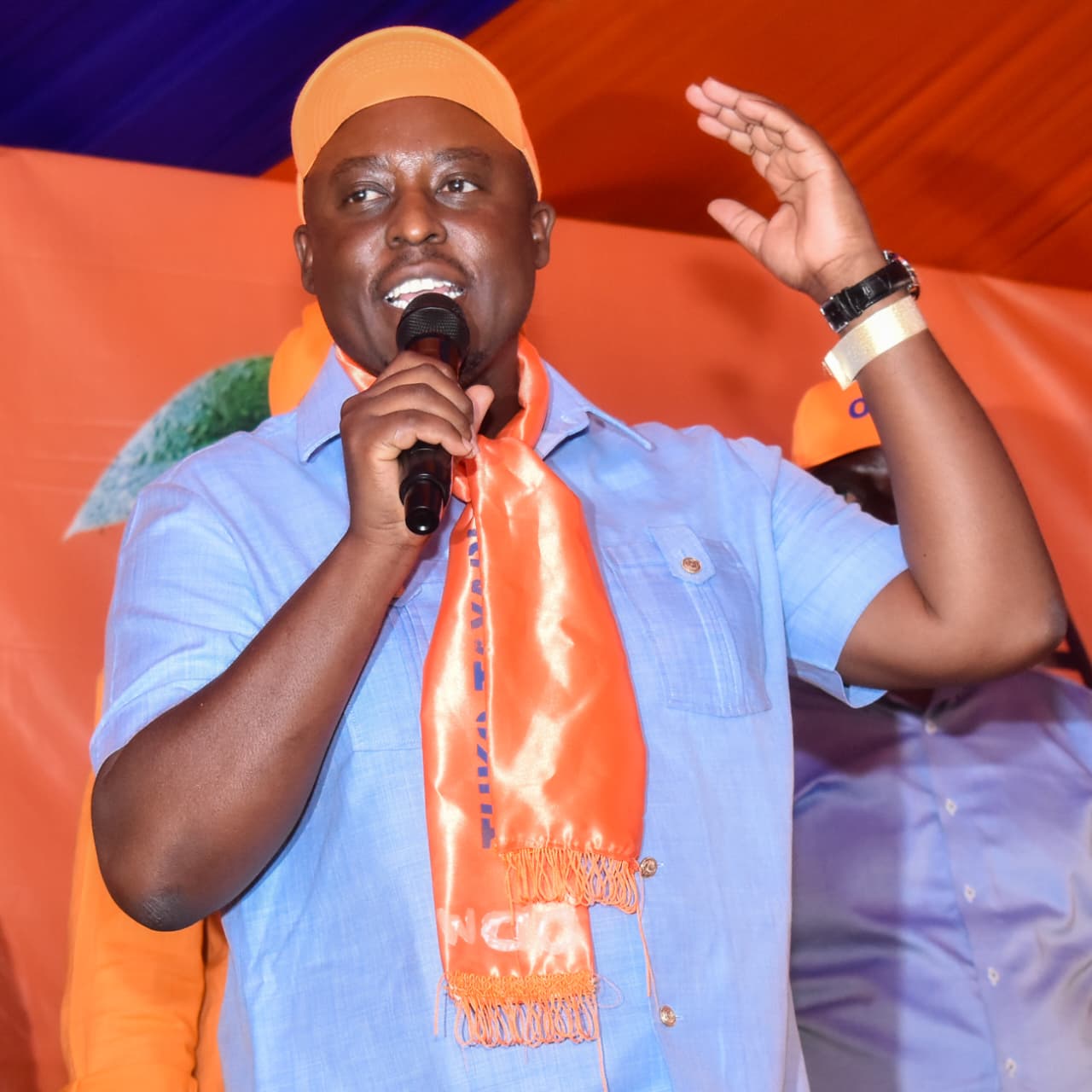
Dr. Bernard Shiaunda Eete Mobilizes Loyalists Ahead of Kenya’s General Election
Ahead of Kenya’s 2027 general election, Nyanza ODM aspirant Dr. Bernard Shiaunda Eete, popularly known as Dumex3, has intensified grassroots mobilization by holding a strategic meeting with his loyalists across the region. The gathering was aimed at aligning his team, refining campaign strategies, and positioning the movement for a decisive outcome at the polls.
The meeting provided an important platform for open consultation, idea exchange, and consensus building. Dr. Eete emphasized the need for unity, discipline, and clear communication as the campaign enters a critical phase. According to attendees, the discussions focused on strengthening the political structure on the ground, addressing community concerns, and ensuring that the movement remains responsive to the aspirations of the people.
A key focus was Dr. Eete’s developmental agenda for Nyanza. He outlined his commitments to education, youth empowerment, healthcare access, and infrastructure development, noting that these areas remain central to transforming lives in the region. He urged his loyalists to carry the message to the grassroots, explaining both what has been achieved so far and what the region stands to gain if they rally behind his candidacy.
“This is not just about winning an election. It’s about building a stronger, united political movement that delivers real change for our people,” Dr. Eete told the gathering. He called on his supporters to remain focused, avoid divisive rhetoric, and engage voters with facts about his track record and plans.
The meeting ended with a renewed commitment from the loyalists to expand outreach, coordinate ward-level activities, and mobilize voters ahead of party primaries and the general election. Organizers described the session as productive, noting that it sharpened the team’s resolve and clarified immediate next steps.
As political activity heats up in Nyanza, Dr. Eete’s camp says the strategy is clear: consolidate support, communicate consistently, and deliver a campaign anchored on service and results.


Live update from Kenya by Hon. Babatunde Seidu, Youths Ambassador._
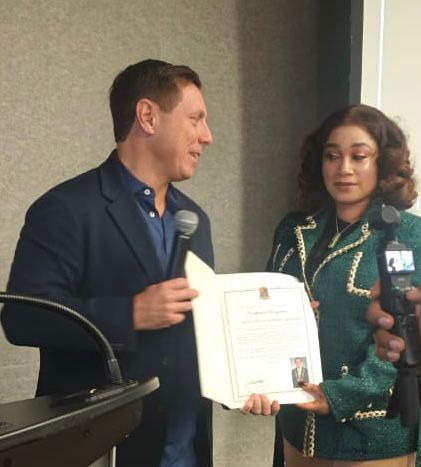
Mayor of Brampton Honours Olajumoke Abegunde For Charitable Works
…Foundation Touches Over 8,000 Women, Widows, and Youth in Ondo State…..
…Collaborates with International Partners for Free Skill Acquisition in Canada…
For Chief Mrs. Olajumoke Abegunde, the act of touching lives positively and contributing meaningfully to societal development is not merely a pastime but a deeply ingrained existential mandate. With unwavering gusto, she has remained faithful to this noble vision, championing the esoteric principle that cheerful giving and advocacy for the downtrodden are responsibilities too sacred to be left exclusively in the hands of the government.
This resolute philosophy has not only engendered transformative impact within her immediate locality but has also catapulted her onto the global stage. Recently, her passionate charitable exertions—executed both within and outside the shores of Nigeria—earned her prestigious international recognition.
A Legacy of Grassroots Transformation
As the visionary founder of the Jummy I Care Foundation, Chief Mrs. Abegunde has systematically dismantled barriers of vulnerability across Ondo State. Through sustained philanthropic gestures, she has disbursed extensive humanitarian relief and social assistance to over 3,000 indigent widows and elderly persons. In parallel, her foundation has galvanized robust support for orphaned and vulnerable children while orchestrating an ambitious women’s empowerment programme. To date, over 5,000 women have benefited from skills acquisition and income-generating activities designed to cultivate self-reliance and entrepreneurial audacity. Many of these beneficiaries have also received start-up seed capital to establish their own enterprises.
A proud alumna of Criminology and Security Studies from the National Open University of Nigeria, Chief Mrs. Abegunde has also distinguished herself as a patron of youth development. She has sponsored numerous essay writing and entrepreneurship competitions across Ondo State, in addition to funding medical outreaches, orphanage interventions, Iftar and Easter entrepreneurship programmes, and sustained feeding initiatives for the less privileged.
Her core philosophy remains immutable: when those who are well-to-do invest strategically in their immediate society, the collective becomes safer, more stable, and poised for greater heights.
International Collaboration and Brampton Honour
In a decisive move to intensify her developmental footprint, the Jummy I Care Foundation recently entered into a strategic tripartite collaboration with the Habeeb Okunola Foundation and the MakeMee Elegant Foundation. Together, they delivered a gratuitous, high-impact skill acquisition training programme to residents of Brampton, Canada.
Participants were immersed in an array of artisan crafts, including the production of resin bags, photo books, picture otters, resin key holders and frame holders, ornamental flower vases, rhinestone embellishment, and the advanced technique of printing images on fabrics.
In a ceremonial recognition of her sustained benevolence, the Mayor of Brampton formally hosted Chief Mrs. Abegunde and her delegation at the mayor’s office. The mayor personally expressed profound gratitude for her unwavering support of community development and entrepreneurship. As a tangible emblem of this appreciation, she was presented with a personally signed certificate of appreciation and commendation.
Unwavering Commitment to the Future
While accepting the honour, Chief Mrs. Olajumoke Abegunde reaffirmed her immutable resolve. She declared that her commitment to touching lives remains absolute and non-negotiable. According to her, she will not relent in ensuring that more lives are touched, more support is channeled to the people, and greater stability is secured for communities. She further emphasized her dedication to cultivating the spirit of entrepreneurship among women and youths as a cornerstone for sustainable development.
With over 8,000 direct beneficiaries in Nigeria alone and an expanding international footprint, Chief Mrs. Abegunde stands as a formidable testament to the profound change one determined philanthropist can effectuate when passion meets purpose.


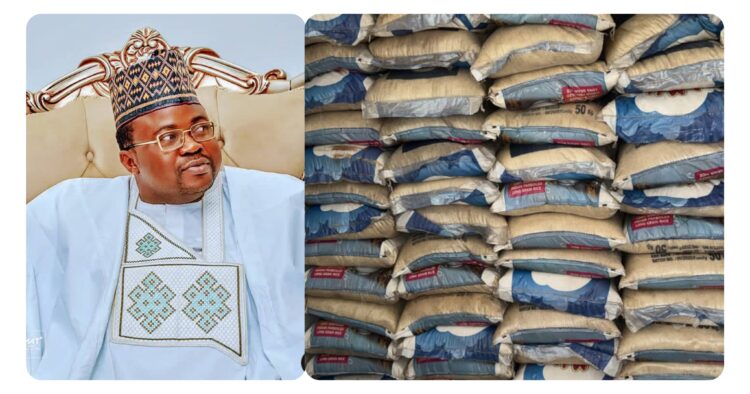
APM Senatorial Candidate Ajadi Distributes Over 500 Bags of Rice
The Senatorial candidate of Oyo Central Senatorial District under the Allied Peoples Movement (APM), Ambassador Olufemi Ajadi Oguntoyinbo, has distributed over 500 bags of rice to residents, party members, state executives, and key stakeholders across Oyo State ahead of the forthcoming Eid al-Adha celebration.
The gesture, which forms part of his annual humanitarian outreach, was aimed at easing economic hardship and strengthening unity among party executives, party members, and residents within the senatorial district during the festive period.
Ajadi said the distribution was a continuation of his commitment to supporting vulnerable households and fostering community solidarity, especially at a time when many families are facing rising food prices and economic pressure.
He explained that Eid al-Adha is rooted in sacrifice, sharing, and compassion, adding that political leadership must consistently reflect empathy for the people, regardless of political affiliation or election cycles.
According to him, the intervention was extended to party executives, grassroots mobilizers, youth groups, and key stakeholders across the senatorial district to ensure equitable distribution across different segments of the political structure in Oyo State.
Ajadi further noted that the initiative was designed to complement household food needs during the festive season, stressing that small acts of support can significantly ease the burden on families affected by economic challenges.
He urged political leaders at all levels to prioritize welfare-driven initiatives that have direct impact on citizens, emphasizing that leadership should go beyond campaigns to sustained service delivery and humanitarian engagement.
Beneficiaries of the rice distribution expressed appreciation for the gesture, describing it as timely and thoughtful amid rising food costs across the country.
They commended Ajadi for maintaining close contact with grassroots members and consistently demonstrating what they described as people-oriented leadership.
The distribution exercise was carried out across selected locations within Oyo Central Senatorial District and coordinated through local party structures to ensure fairness and orderly sharing.
Political observers in the state noted that such interventions have become a key feature of political engagement in Nigeria, particularly during festive seasons, as politicians seek to connect with constituents beyond electoral promises.
As the Eid al-Adha celebration approaches, Ajadi reaffirmed his commitment to continuing similar initiatives aimed at supporting families and promoting unity among residents of Oyo State.


- Venezuela Under Rodriguez: Turning Back Toward Stability and Opportunity (By NJ Ayuk) May 25, 2026
- Dubai Chamber of Commerce concludes trade mission in Addis Ababa with series of bilateral business meetings between companies from Dubai and Ethiopia May 25, 2026
- How Congo’s Offshore Legacy Fields Are Powering a New Production Upswing May 25, 2026
- Rugby Africa Appoints Former National Basketball Association (NBA) Africa Executive Aïcha Diop as Chief of Staff to the President May 25, 2026
- Global Africa Business Initiative shifts Digital and Health Action Pathways into higher gear to accelerate continent’s economic transformation May 25, 2026
- The Board of Trustees of the Al-Sumait Prize for African Development announces the award winner for the year 2025; It has been awarded to an African institution and researcher in the field of food security May 25, 2026
- Statement of the International Contact Group for the Great Lakes (ICG) on the situation in the eastern Democratic Republic of the Congo (DRC) May 24, 2026
- Eritrea: Messages of Congratulations May 24, 2026
- African Development Bank (AfDB) – 2026 Annual Meeting: Full live coverage on Africa 24 May 24, 2026
- Countries in the Horn of Africa and Yemen recommit to ending variant poliovirus May 23, 2026
- Venezuela Under Rodriguez: Turning Back Toward Stability and Opportunity (By NJ Ayuk) May 25, 2026
- Dubai Chamber of Commerce concludes trade mission in Addis Ababa with series of bilateral business meetings between companies from Dubai and Ethiopia May 25, 2026
- How Congo’s Offshore Legacy Fields Are Powering a New Production Upswing May 25, 2026
- Rugby Africa Appoints Former National Basketball Association (NBA) Africa Executive Aïcha Diop as Chief of Staff to the President May 25, 2026
- Global Africa Business Initiative shifts Digital and Health Action Pathways into higher gear to accelerate continent’s economic transformation May 25, 2026
- The Board of Trustees of the Al-Sumait Prize for African Development announces the award winner for the year 2025; It has been awarded to an African institution and researcher in the field of food security May 25, 2026
- Statement of the International Contact Group for the Great Lakes (ICG) on the situation in the eastern Democratic Republic of the Congo (DRC) May 24, 2026
-

 news5 months ago
WHO REALLY OWNS MONIEPOINT? The $290 Million Deal That Sold Nigeria’s Top Fintech to Foreign Interests
-

 society3 weeks ago
SOCIAL MEDIA IS NOT A BATTLEFIELD COMMAND – WHY THE NIGERIAN ARMY’S ACTION AGAINST JUSTICE CRACK IS A NATIONAL SECURITY IMPERATIVE
-

 celebrity radar - gossips4 months ago
Dr. Chris Okafor Returns with Power and Fire of the Spirit -Mounts Grace Nation Altar with Fresh Anointing and Restoration Grace on February 1, 2026
-

 celebrity radar - gossips5 months ago
Prophet Kingsley Aitafo Releases 2026 Prophecy: ‘Nigeria Will Rise, but the World Must Prepare for Turbulence’