society
“A Strong Voice for Ogun West”: High Chief Abiodun Olalekan Ilo Applauds LOYAMP’s Rising Influence and Advocacy
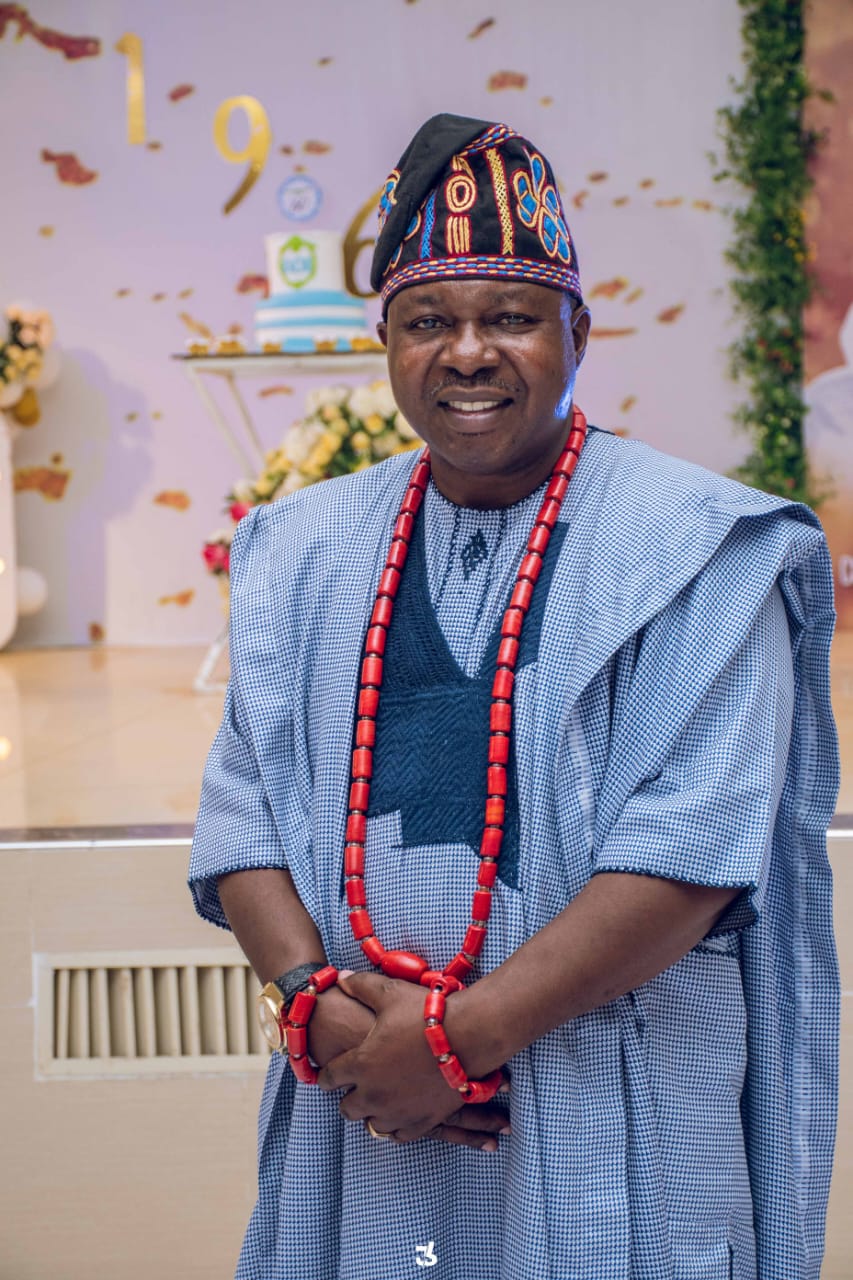
The Adele Olu of Ilaro, High Chief Abiodun Olalekan Ilo, has commended the revitalized League of Yewa-Awori Media Practitioners (LOYAMP) for stepping up at a defining moment to champion the interests of Ogun West.
Speaking from the United States during an online interview with Abu-Satar Hamed of StarTrend International Magazine, High Chief Ilo expressed delight at the impressive volume and quality of publications emerging from LOYAMP’s various media platforms—especially stories spotlighting the developmental strides of Senator Adeola Yayi.
He urged the association to maintain its momentum by giving fair and robust coverage not only to Senator Yayi’s ambitions but also to those of other notable sons and daughters of Ogun West, saying such balanced advocacy is essential to advancing the region’s collective aspirations.
High Chief Ilo encouraged LOYAMP to safeguard its integrity, advising members to steer clear of reports that could compromise their credibility or the trust reposed in them.
Expressing confidence in the group’s leadership and professionalism, he highlighted the influence of its National Coordinator, Otunba Abu-Satar Idowu Hamed—describing him as a seasoned and highly respected journalist whose presence strengthens LOYAMP’s standing.
According to him, Ogun West is now well-positioned with a dedicated and influential Fourth Estate of the Realm committed to the region’s progress.
He further called on the sons and daughters of Ogun West, as well as residents across Ogun State and the nation, to support LOYAMP so the organization can continue to serve both the region and Nigeria with excellence.
society
Multilateralism’s Moment: The Johannesburg Declaration and the Case That Cooperation Can (and Must) Deliver
Multilateralism’s Moment: The Johannesburg Declaration and the Case That Cooperation Can (and Must) Deliver.
By George Omagbemi Sylvester | Published by saharaweeklyng.com
“The adoption of the G20 Leaders Declaration in Johannesburg is more than ceremony; it is a practical rebuke to cynicism; a binding message that well-crafted, inclusive multilateralism remains humanity’s best instrument for solving shared crises.”
When leaders gathered in Johannesburg on 22–23 November 2025 for the first G20 summit ever held on African soil, something very plain and very consequential happened: they adopted a Leaders Declaration that speaks to the core question of our time; can the world still govern itself cooperatively when so many forces push it toward fragmentation? The short answer, emphatically, is YES. The Johannesburg declaration sends a clear signal that multilateralism can and must deliver, and that signal matters because the alternatives (unilateralism, great-power rivalry, and competitive isolation) are already proving ruinous for ordinary people everywhere.
Why does a declaration matter? Because multilateralism is not a SLOGAN; it is a set of instruments (institutions, financial arrangements, commitments and follow-through) that, when working, translate global consensus into local gains. The Johannesburg text does not pretend to solve every problem in a single paragraph. It does, however, marshal consensus on immediate, measurable priorities: accelerating renewable energy and a just energy transition, catalysing finance for developing economies, strengthening disaster resilience and post-disaster reconstruction, and re-energising efforts to tackle inequality and food insecurity. Those are not abstract goals; they are policy blueprints that require joint financing, coordinated regulation and institutional reform; the very machinery that only multilateral cooperation can provide at scale.
The politics around the summit illustrate the stakes. Washington’s absence (a high-profile boycott of the leaders sessions) made headlines and revealed the limits and frictions of global diplomacy. But the fact that a broadly representative group of G20 members nonetheless adopted a joint declaration underscores the resilience of collective action even when one major power steps back. The adoption by consensus; and the willingness of participants to anchor the declaration to concrete financing and reform proposals — demonstrates that multilateral outcomes can be both pragmatic and principled. It is the practical capacity to deliver that gives multilateralism its moral force.
South Africa’s Presidency framed the summit with a theme that was more than rhetorical: “SOLIDARITY, EQUALITY and SUSTAINABILITY.” In his opening address, President Cyril Ramaphosa put it bluntly: “The adoption of the declaration from the summit sends an important signal to the world that multilateralism can and does deliver.” That line matters not as flattery but as a public affirmation; a promise that the commitments on the page will be turned into funding, institutional changes and measurable outcomes for countries that have too often been left on the margins.
Nor is this moment detached from long-standing calls for reform. The United Nations recent “PACT FOR THE FUTURE” and the Summit of the Future discussions have argued for a multilateral system that is “FIT FOR THE PRESENT AND THE FUTURE” more representative, more democratic and more capable of rapid collective action. António Guterres has repeatedly warned that “we are here to bring multilateralism back from the brink,” a refrain echoed across policy platforms and echoed in Johannesburg by leaders and experts who see reform and delivery as two sides of the same coin. If institutions are to be strengthened, they must also show deliverables; climate finance disbursed, debt vulnerabilities addressed, supply chains stabilized, and social protections scaled.
Economic justice is central to credibility. The Johannesburg Declaration does more than nod to inequality; it foregrounds the necessity of mobilising trillions in finance (concessional lending, catalytic private finance and innovative instruments) to help developing countries invest in both DECARBONISATION and INDUSTRIALISATION. The G20’s own advisory workstreams, including an Extraordinary Committee on Global Inequality chaired by Nobel laureate Joseph Stiglitz, have produced evidence that inequality corrodes growth and that coordinated global policy can make redistribution and sustainable growth mutually reinforcing. Multilateralism’s delivery, in practice, will be measured by whether these financial pledges translate into affordable capital for infrastructure, energy access for isolated communities, and fiscal space for social investment.
Sceptics will say declarations are cheap; what matters is implementation. They are right to demand results. That is why the Johannesburg outcome matters: it links declaratory politics to institutional mechanisms and to an agenda for reform of the international financial architecture. The leaders did not simply declare a wish; they pointed toward the Sevilla Commitment and a set of G20 workstreams intended to create pipelines of bankable projects, reform multilateral development bank practices, and coordinate post-disaster reconstruction financing. In short, the declaration is a roadmap (heavy on specifics) for turning CONSENSUS into CAPITAL and CAPITAL into CAPACITY.
Although delivery will require more than good intentions. It will require political will at home and patience abroad. It will require democratic legitimacy for multilateral institutions (which means involving civil society, parliaments and subnational governments in oversight) and it will require INNOVATIVE ACCOUNTABILITY: CLEAR MILESTONES, TRANSPARENT MONITORING and INDEPENDENT EVALUATION. As IMF analysts and leading economists have argued, the multilateral system needs to become “INCENTIVE COMPATIBLE” so that every participant sees visible, near-term benefits alongside longer-term structural gains. That blend of incentives and oversight is how the system will survive the fractures of our multipolar age.
The Johannesburg declaration is also political theatre with policy teeth. It shows that when countries are willing to compromise and to prioritise collective gain over zero-sum signalling, they can put in place a common platform to tackle shared threats: climate shocks, food insecurity, pandemics, technology risks and violent conflict. These are not problems a single state can solve alone. They require interoperable rules, pooled financing, and coordinated action. The Johannesburg leaders’ document is an admission that the old adage remains true: sovereignty is protected, not weakened, when nations cooperate to reduce risks that respect no borders.
So what should we expect next? First, rigorous follow-up: project pipelines must be created, funded and monitored. Second, reform: the G20 and other institutions must accelerate the hard work of reforming governance structures (including representation and voice) so that developing countries have meaningful agency in decisions that affect their futures. Third, accountability: civil society, academia and parliamentary institutions must be empowered to hold leaders to the commitments they signed in Johannesburg. And finally, results: more renewable capacity deployed in Africa, debt relief and restructuring where necessary, and tangible reductions in vulnerability for the poorest communities.
If Johannesburg teaches us anything, it is that multilateralism’s moral claim rests on its practical performance. As Joseph Stiglitz and other leading scholars emphasize, multilateral action is both economically sensible and politically necessary; without it, inequity and instability will deepen. António Guterres’ plea to “bring multilateralism back from the brink” is not a rhetorical flourish; it is an agenda that demands both reform and delivery. The Johannesburg Declaration is a constructive step along that path. Now the real test begins: turning WORDS into WORK, and COMMITMENTS into CHANGE.
History will judge Johannesburg not simply by the eloquence of its statements but by whether the summit’s promises are lived out in schools with power, hospitals with supplies, farms with drought resilience, and economies with inclusive jobs. That is the only defensible yardstick for multilateralism: performance that improves lives. The declaration says it can be done. The world must now prove it — quickly, transparently and with fierce resolve. The future of cooperative global governance depends on nothing less.
society
OBOKUN/ORIADE TOUR: Aregbesola Charges ADC Members On Commitment To Party, Mission To Reclaim Osun
– Says People’s Resolve To Restore Good Governance Unshaken
– As Party Leaders Rally Members On Aggressive Mobilisation
– Commissions ADC party secretariat at Oriade Local Government, Ijebu-Jesa
It was yet again another atmosphere filled with an outpouring of love, solidarity, support and restatement of the belief of the people in a political movement they trust, as members, loyalists and supporters of the African Democratic Congress (ADC) trooped out massively to welcome their leaders led by the party’s National Secretary, Ogbeni Rauf Aregbesola, to Obokun/Oriade federal constituency, on Monday.
Addressing stakeholders at the Ijebu-Jesa Town Hall, the ADC National Secretary admonished them to continue mobilising aggressively for the success of the party.
He said judging by the warm reception accorded the ADC trail across the state, it is evident that Nigerians are committed to restore the country to good governance.
Aregbesola also called on the people not to resort to apathy with the current state of play in the polity, stressing that only their collective decision can move the country from its present state of bad governance to a realm of responsible leadership.
“It is evidently clear that the people no longer have confidence in the present government whose policies have raised the bar of hunger, poverty and insecurity in the land.
“While the people are unhappy with the situation, they must not be displeased into abandoning their civic rights, by joining a political party and tendency that is progressively minded, visionary and dedicated to returning their country to the era of good governance.
“I also urge you not to listen to the naysayers. One sure thing is that they know that they have been defeated. Majority of those who continue to malign us are people who have been rejected by the masses.
“So, I appeal to you, continue to mobilise for ADC. Work tirelessly to install a government of your own that will take care of the poor, pay attention to the welfare of the elderly, liberate the downtrodden and banish hunger,” Aregbesola reiterated.
Speaking separately, Osun ADC Chairman, Dr. Charles Omidiji, Chairman, Omoluabi Progressives, Alhaji Azeez Adesiji, former Speaker, Osun Assembly, Dr. Najeem Salaam, former SSG, Alhaji Moshood Adeoti, among others commented the resilience of members to driving the course of change in the state and country at large.
They called on them not to relent, stressing that ADC remains the party to beat, as the people are ready to support their own in the 2026 and 2027 elections.
The party leaders had earlier paid a royal homage to the Elegboro of Ijebu-Jesa, Oba Moses Oluwafemi Agunloye, at his palace.
Oba Agunloye, who recalled his relationship with Ogbeni Aregbesola, dating over six decades, prayed for ADC’s success.
In attendance at today’s event were Alhaji Rasaq Salinsile, Engr. Jide Adeniji, Revd. Adelowo Adebiyi, Hon. M.B.O Ibrahim, among others.
The tour also witnessed the official commissioning of ADC party secretariat at Oriade Local Government, Ijebu-Jesa.
society
WISE Teacher, Sarah Yusuf Wins Maltina Best Teacher In Nigeria
*WISE Teacher, Sarah Yusuf Wins Maltina Best Teacher In Nigeria
Miss Sarah Yusuf of the Wisdom International School of Excellence (WISE), Abuja, has been declared as winner of the Maltina Teacher of the year award.
She is an English Language teacher with a passion for transforming students’ lives, evident in her initiatives like VOISIN and Confident Girls Healthy Choices and her work has placed WISE among the Top 10 World’s Best Schools in 2024.
In his remarks, the Technical Monitor of Wisdom International School of Excellence (WISE), Kabiru Abass said, “How many years will you work in WISE to earn ten million naira or one million dollars but there are many activities we do here that can earn you such. Please participate in the SDGs and skill building activities for the learners”
Yusuf’s achievements are a testament to her dedication, creativity, and leadership in education. She has been recognised for her contributions to STEM education, community development, and promoting gender equity.
Her awards, also include the Phenomenon Edupreneur Challenge 2025 and the IDEE National Teachers Prize 2025.
Meanwhile, the Maltina Teacher of the Year award is a prestigious recognition of outstanding teachers in Nigeria, supported by the Federal Ministry of Education and otherwise stakeholders, and it also celebrates teachers who demonstrate creativity, innovation, empathy, and leadership in their practice.
WISE is a vibrant laboratory and workshop where teachers and learners converge to co-create knowledge, innovate, and solve problems. Our school is a beacon of excellence, where the pursuit of academic rigor is seamlessly integrated with skills-based education, problem-solving activities, and the Sustainable Development Goals (SDGs).
At WISE, we believe that teachers are the driving force behind every successful education system. Our Teachers Development Programme (TDP) is designed to empower educators with the skills, knowledge, and best practices to inspire and motivate learners. The programme focuses on:
– Integrating SDGs into the curriculum
– Innovative teaching methodologies
– Technology-enhanced learning
– Assessment and evaluation techniques
– Leadership and mentorship
WISE is a hub of creativity, innovation, and experimentation. Our learning products includes; Read Aloud, Creative Writing, Fish Farm Enterprise, Tuck shop, Financial literacy, Climate education, digital literacy and 21st century skills development
WISE is committed to contributing to the domestication and implementation of the newly revised National Teachers Policy, ensuring that our teachers are equipped to deliver quality education that prepares learners for the challenges of the 21st century.
Mrs Adesuwa Ogwu- the Head of Academics at WISE testified to the innovative and 21st skill based teaching approaches employed by Miss Serah Yusuf. To other teachers, I say, “Keep shining! Your dedication, passion, and commitment to excellence are the foundation upon which WISE is built.” I encourage you all to continue innovating, experimenting, and pushing the boundaries of what is possible.
To our students, I say, “You are the future leaders, innovators, and change-makers. Stay curious, stay inspired, and keep striving for excellence.”
At WISE, we are proud to be on the road to a Brighter Future, where every learner is empowered to achieve their full potential and become a force for positive change in the world.
-
Politics5 months agoNigeria Is Not His Estate: Wike’s 2,000‑Hectare Scandal Must Shake Us Awake
-
society7 months agoOGUN INVESTS OVER ₦2.25 BILLION TO BOOST AQUACULTURE
-
celebrity radar - gossips6 months agoFrom ₦200 to ₦2 Million: Davido’s Barber Reveals Jaw-Dropping Haircut Fee
-
society5 months agoJUSTICE DENIED: HOW JESAM MICHAEL’S KINDNESS WAS TURNED AGAINST HIM