
society
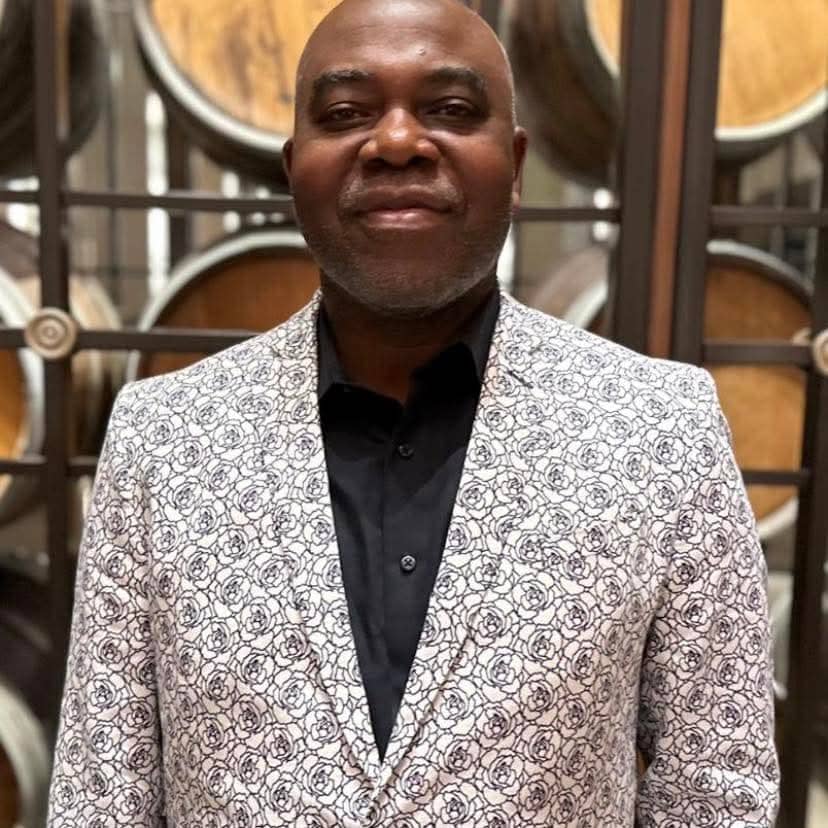
THE CITY OF ERUKU ON THE WORLD MAP ~BY JIDE J. OMOTINUGBON

THE CITY OF ERUKU ON THE WORLD MAP
~BY JIDE J. OMOTINUGBON
Growing up in the City of Eruku in the sixties, (well, we call our town Eruku City) we knew of no other world beyond what life bestowed on us. We went to the stream to fetch waters and to swim. We went to the farm to cultivate the farmland. We hunted for rodents and crickets. We rolled the bicycle tires around. We rode the rented bikes. We participated in the local wrestling competition. And as times went by, we started going to school. I, as with most of my mates, did not start elementary (primary) school until the age of eight. We knew of no other world. As time passed, we began to realize that there were other worlds beyond the city of Eruku as evidenced by the commercial lorries bringing strangers in on market days to sell and buy things. The market days back then were held nine days interval. We saw new faces and new things. We began to realize that there were other things around the world beyond our town. While still in elementary school, we travelled to Koro and Oke-Opin for inter-house sports competitions including games of soccer and athletics. Those were the worlds we knew. The first time I had the “luxury” of going beyond the vicinity was my final year in elementary school when I travelled to Zaria en route Ilorin.
During the major festivals, we saw the whole town filled up with indigenes based outside the town. We heard stories of towns where they were, to make money. We heard of Ilorin, Zaria, Kaduna, Lagos, Ibadan and some other places. We heard stories of tapped water, electricity, tarred roads and other exotic things. We learned in social studies and later, in geography, the names and location of places on the map. Big towns within and outside the country but Eruku was never placed on any of those maps. We began to dream. We were wondering when and if ever our town would develop and be renowned. Just dreaming. No sooner, we had a secondary school built through communal efforts. That was in 1969. Students came from all over even people who did not speak Yoruba – all the way from Ebira-land and Igala-land which used to be part of the then Kwara State.
Dreams. Our dreams remained on what could we do to place the name of our town on the map. We read and studied some books. We listened to radio. Heard the names of some political leaders (mainly military.) We dreamt of joining the military when we grow up. Dreamt of reading law. Or become engineers. Do whatever it takes to get the name of our town on the map. It was slow. Painfully slow. Until now, it was like the town did not exist. Everything we have in the town was mainly through communal and church efforts: elementary schools, secondary schools, cottage hospitals etc. Whenever the government decides to intervene, it would put up some structures with no human to man them. We were, for example, once promised tapped water and a dam was to be built and before we knew what was happening, the bridge connecting our town to the next one, Koro, was blown off the river that was to be dammed! That created some enmity between us and our next-door township neighbor who thought the Eruku people did them bad.
We did not do really bad in terms of efforts at growing and developing our town. We are educated. We had scholars and professionals in every field of life. A few of them found their ways into government and governance which raised our hopes that, finally, our dreams were coming through. Not exactly. Because they still did not put the name of our town on the world map.
The most common trait of anyone born or raised at Eruku is resilience. The cognomen and clarion call of every Eruku born and bread is as follow:
Eruku Nain o! Eh O! (All true born of Eruku! Yes! We’re here!) Aru bain boo? (Are you scared?) Aru e b’eiye oko! (The bird is not scared of the wilderness!) Omo Eruku Mesi – (The true son of (Oyo) Mesi) Yi kee s’aru l’Oyo (Who is not a slave in Oyo) Omo Eruku ba ti woo ko l’are, ija mon rii da! (When anyone from Eruku tells you that an issue is no longer a joking matter, then the next step is to fight!)
Fast forward to the 21st century when street names and names of towns and individuals can be easily located through google and artificial intelligence. Every once in a while, when we type in the name of our town, a thing or two pops up. Now, it is more than that!
Tuesday, November 18, 2025 finally was the day that the name of Eruku made it to the world map. Not in the best way we have been hoping. If not for an innocuous livestreaming of the church program, showing people being herded including Mama Emiola, (Iye Ade whose residence is directly in front of our family house) the event of that day would have passed like any other and just adding to the statistics of the rampant kidnappings going on in the country. But not when Eruku was about to be put on the world map. It touched everyone’s nerves, nationally and internationally more so those of us who have family members among those that were kidnapped.
First, it was my spouse’s home church, the Christ Apostolic Church (CAC Oke Isegun) where her late mother was the choir’s matron. Everyone calls her Iye Akorin (choir’s matron.) Then her aunt (the one following Iye Akorin) was at the church service but released by the bandits after a short walk apparently due to old age. Then my niece, Titilayo Balogun (Nee Omotinugbon.) Then another niece’s son, Ebenezer Aina. Then Grace Moyeni Balogun, my spouse’s classmate in high school. Then, two Iyabo’s related to my spouse through marriage. Then ‘Molola my brother-In-law’s niece and her son. ‘Molola’s older sister was killed in an earlier attempt at abduction while coming from a wedding. At that time, ‘Molola was shot in the arm and was still recuperating from that dastardly event when she was kidnapped with the others right inside the church. There were two high school teachers among those that were kidnapped. I did not know all the thirty-eight now free abductees but I do know someone who knows someone who knows someone. Not to forget that three of the church attendees were killed and among those that were killed was the spouse to one of the abducted women who would only be learning of her spouse’s death on her release.
I am a psychotherapist listening almost on a daily basis to the traumatic experience of individuals. I have had patients whose stories cannot be retold anywhere because they were not believable. They are better imagined. And one of the freed abductees said as much in a TV interview when he said that their experiences were unimaginable. What gave me sleepless nights were how these victims would deal with the trauma. Is it the fear of going to church? The fear of hearing sounds that remotely sounds like a gun? Fear of being in a crowd or being alone and isolating? And we have not even heard their stories. The experience a seven-year old or a sixty-four-year-old went through. (The age-range of the abductees was seven to sixty-four.) And we are not even used to being in therapy in our environment. Sad.
I tried not to dwell into the politics but taking politics out of governance is like (as someone once remarked) taking mathematics out of physics. The only representative we have in government is the ward councilor! No board member of any parastatal. No commissioner. No adviser. No member of the state or federal assembly. In other words, we do not have anyone close enough to talk to those governing us. And yet, every election cycle, they seek for votes and the community is always divided about which of the major parties to support. Not until the incident, I have never heard of any visit made to the community by any top government official including the governor. Now, those of us not living in the community are advised not to come home due to “security reasons.”
And talking of security, why has it been difficult for the Nigerian government to devolve the security apparatus? How can someone from the Northern or Eastern part of the country be made the Divisional Police Officer (DPO) of a remote town in Kwara State? How much is the remuneration of a police officer that would require him being transferred from Adamawa to Enugu? It does not make any sense. None whatsoever. What we know of in normal clime is county (local) police where those recruited into the force are from or reside in the areas where they are policing. They know the terrain. They know the people. Intelligence gathering would be easier. I have never heard of the Inspector General of Police in United States of America! Not even in Britain, our colonial lord. There are other security arms that could be federalized like the department of state security (DSS.)
I am really veering off. I hope the Kwara state government would be kind enough to give us, the people of Eruku, some hearing by putting one or two members of our community close enough to the process of governance so we will have the opportunity to whisper our demands to the government. At the expense of repeating ourselves, we have professionals across the board. We also have political gladiators that would fit in anywhere. Now that our beloved Eruku is now nostalgically on the world map, we are appealing that we be given the opportunity to have a sense of belonging.






society
Stakeholders Seek Urgent Reforms to Tackle Youth Unemployment at disrupTED EduKate Africa Summit
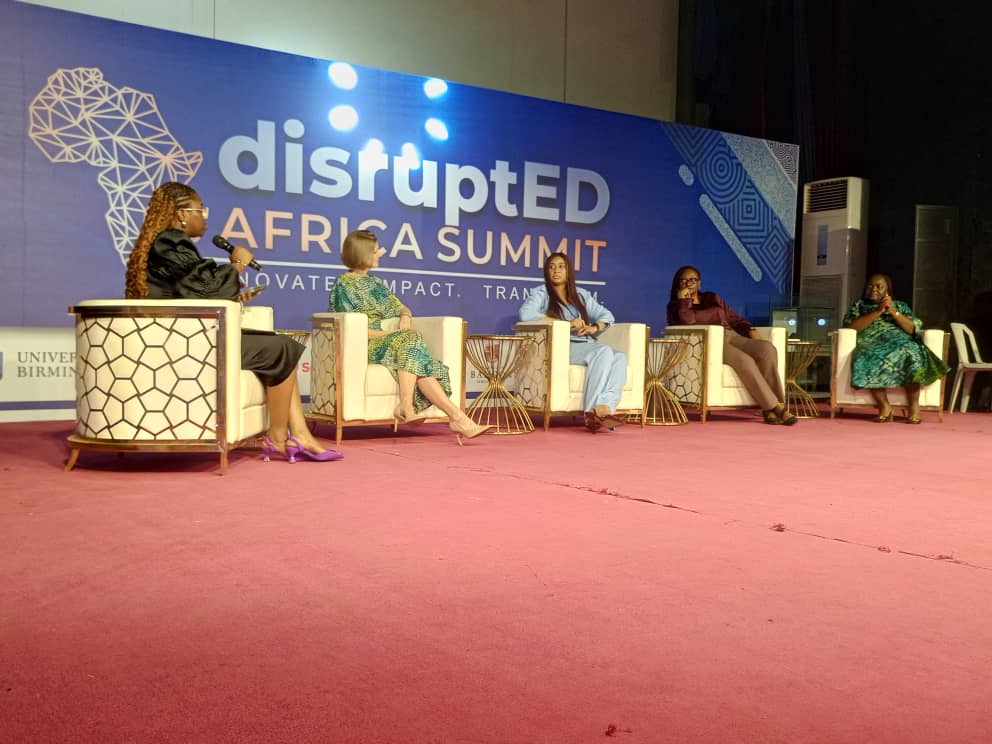
Stakeholders Seek Urgent Reforms to Tackle Youth Unemployment at disrupTED EduKate Africa Summit
By Ifeoma Ikem
Stakeholders in Nigeria’s education sector have called for urgent and scalable solutions to address the rising rate of youth unemployment, stressing the need for strengthened technical education and increased collaboration with the private sector to bridge existing skills gaps.
The call was made at the disrupTED EduKate Africa Summit 2026, a one-day leadership forum held at the University of Lagos, where participants examined the growing disconnect between education outcomes and labour market demands.
The summit brought together education leaders, private sector operators and development advocates to promote adaptive learning, practical skills acquisition and innovative financing models for Africa’s education sector.
Experts at the summit strongly advocated increased investment in technical and vocational education, noting that training programmes must reflect current industry realities and evolving labour market needs.
Speakers emphasised that Nigeria’s education system, particularly at the tertiary level, must urgently shift from certificate-driven learning to skills-based and experiential education aligned with global best practices.
Among the speakers were Deby Okoh, Regional Manager at Brunel University of London; Ashley Immanuel, Chief Operating Officer of Semicolon; Olapeju Ibekwe, Chief Executive Officer of Sterling One Foundation; and education advocate, Adetomi Soyinka.
The speakers highlighted the importance of continuous learning, teacher retraining and comprehensive curriculum reform to meet the demands of an increasingly technology-driven global economy.
They stressed that apprenticeship programmes, internships and hands-on training should be fully integrated into academic curricula, noting that over-reliance on theoretical qualifications has widened the employability gap among graduates.
In his remarks, Mr Tosin Adebisi, Director of EduKate Africa and convener of the summit, said the event was designed to challenge what he described as the education sector’s rigid attachment to outdated methods.
Adebisi said innovation must remain central to education reform, adding that stakeholders must rethink teaching methods, learning processes and approaches to solving challenges such as access to education, financing and employability.
He expressed confidence that sustainable solutions could be achieved through strong collaboration across education, private sector and development institutions.
Adebisi, alongside co-Director Mr Francis Omorojie, said the summit aimed at connecting stakeholders working across sectors to close existing skills and opportunity gaps for young people.
The summit also urged parents and educators to promote lifelong learning, critical thinking and adaptability among young people, stressing that education systems must evolve in line with global economic trends.
No fewer than 200 students from the University of Lagos, Lagos State University, Ojo, and other institutions participated in the summit, which was initially expected to host the Minister of Education, Dr Tunji Alausa.
In a welcome address, Prof. Olufemi Oloyede of the University of Lagos emphasised the need to shape young minds through innovation and positive thinking, noting that Africa’s development depends on the strategic use of its human and natural resources, as well as a shift towards creativity and innovation among youths.

Turning Point: Dr. Chris Okafor Resumes with Fresh Fire of the Spirit
-Steps onto the Grace Nation Pulpit After a Month-Long Honeymoon Retreat with Renewed Supernatural Power
By Sunday Adeyemi
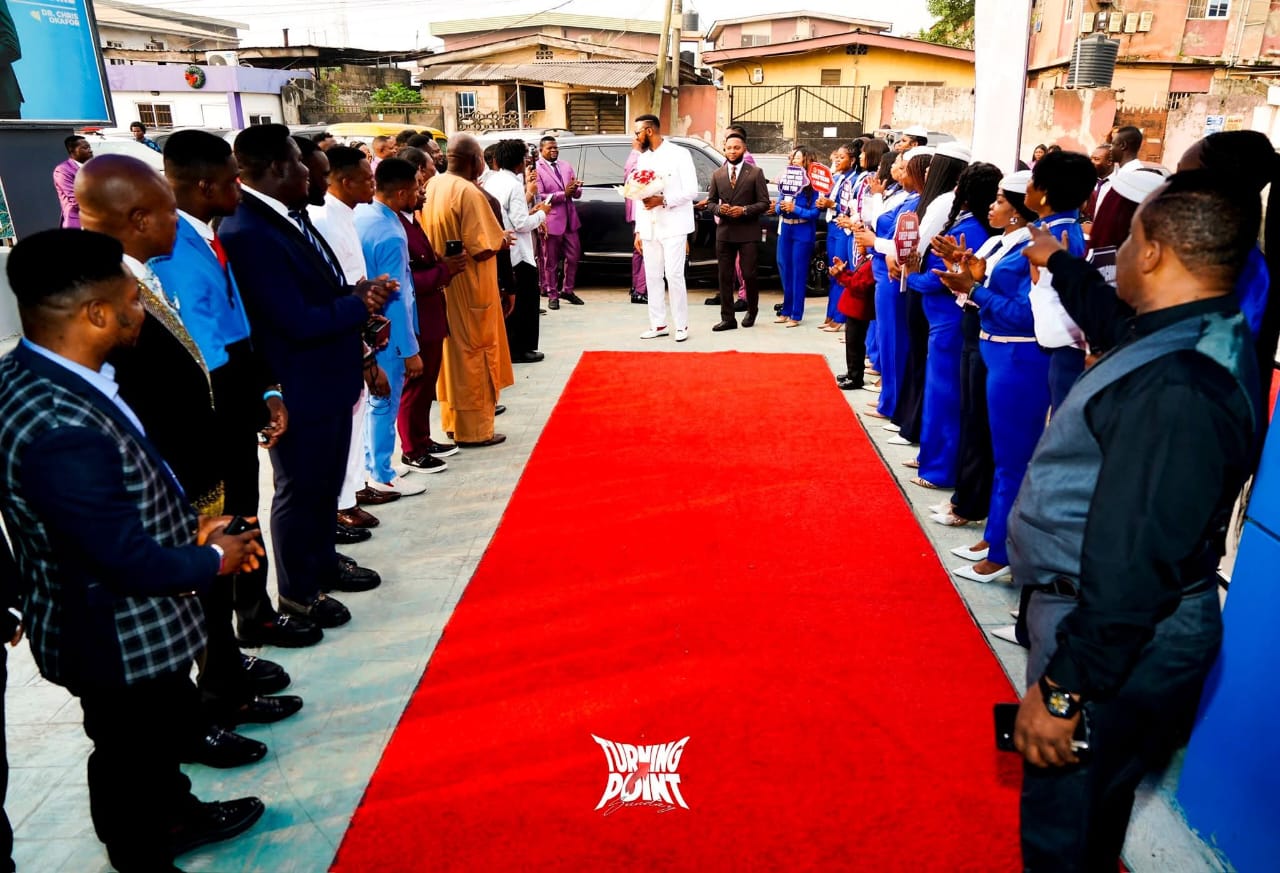
The much-anticipated February 1, 2026 “Turning Point” service of Grace Nation has come and gone, but its impact remains deeply etched in the hearts of Grace Nation citizens across the world. The significance of the day was unmistakable—it marked the official return of the Generational Prophet of God and Senior Pastor of Grace Nation Global, Dr. Chris Okafor, to active ministerial duty as the Set Man of the commission.
The date was particularly symbolic, as Dr. Okafor had taken close to one month away from the pulpit following his wedding late last year. The period served not only as a honeymoon but also as a season of rest, reflection, and intimate fellowship with God in preparation for a greater spiritual assignment ahead.
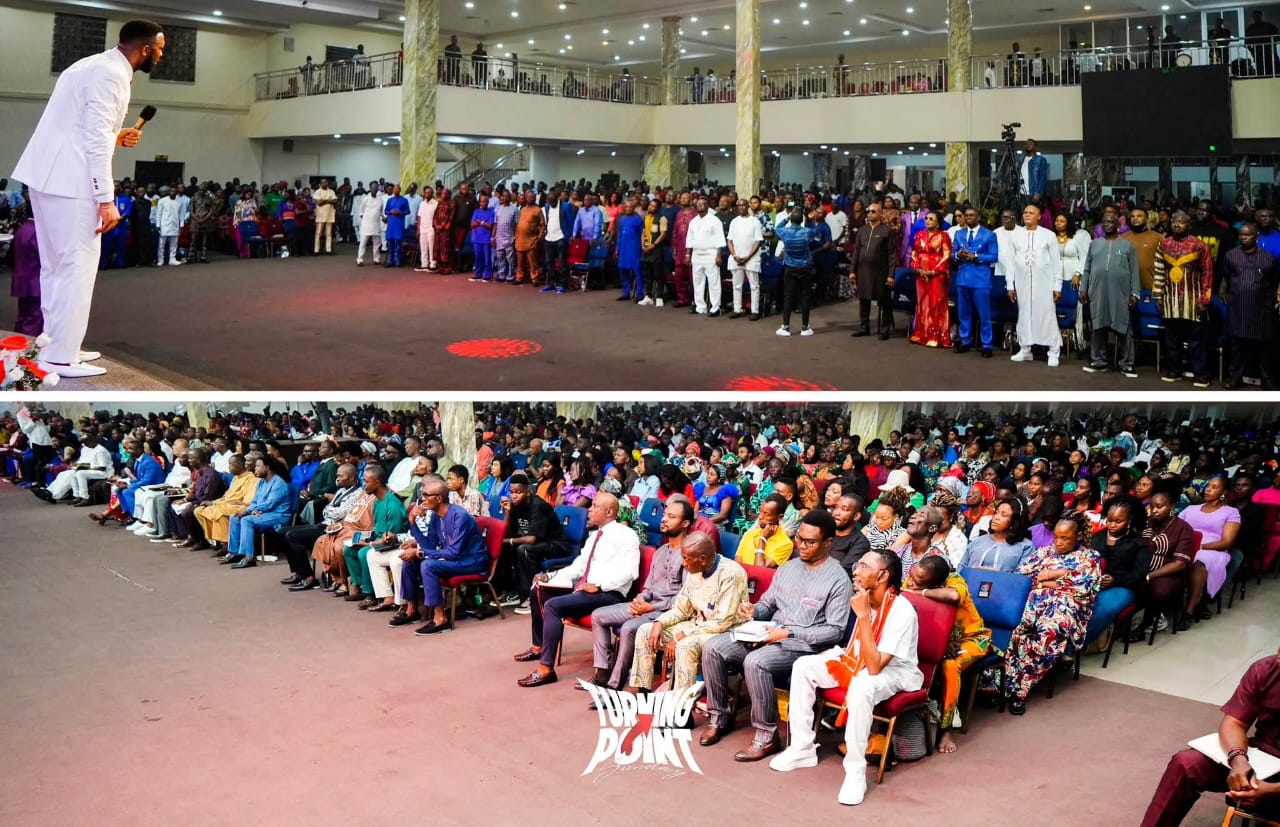
The atmosphere at Grace Nation was electric as the Generational Prophet and his wife were received with a heroic welcome, accompanied by prophetic praise, joyful dancing, and fervent prayers. It was a celebration of return, renewal, and readiness.
In his opening remarks, Dr. Chris Okafor declared that he had returned to fully pursue the mandate God entrusted to him—winning souls for the Kingdom of God. He issued a strong warning to the kingdom of darkness, stating that light and darkness cannot coexist. According to him, the season ahead would witness intensified spiritual engagement, as the Kingdom of God advances and the forces of darkness lose ground.
“This time,” the Generational Prophet affirmed, “it will be total displacement of darkness, as the light of God shines brighter than ever.”
The Message: Turning Point
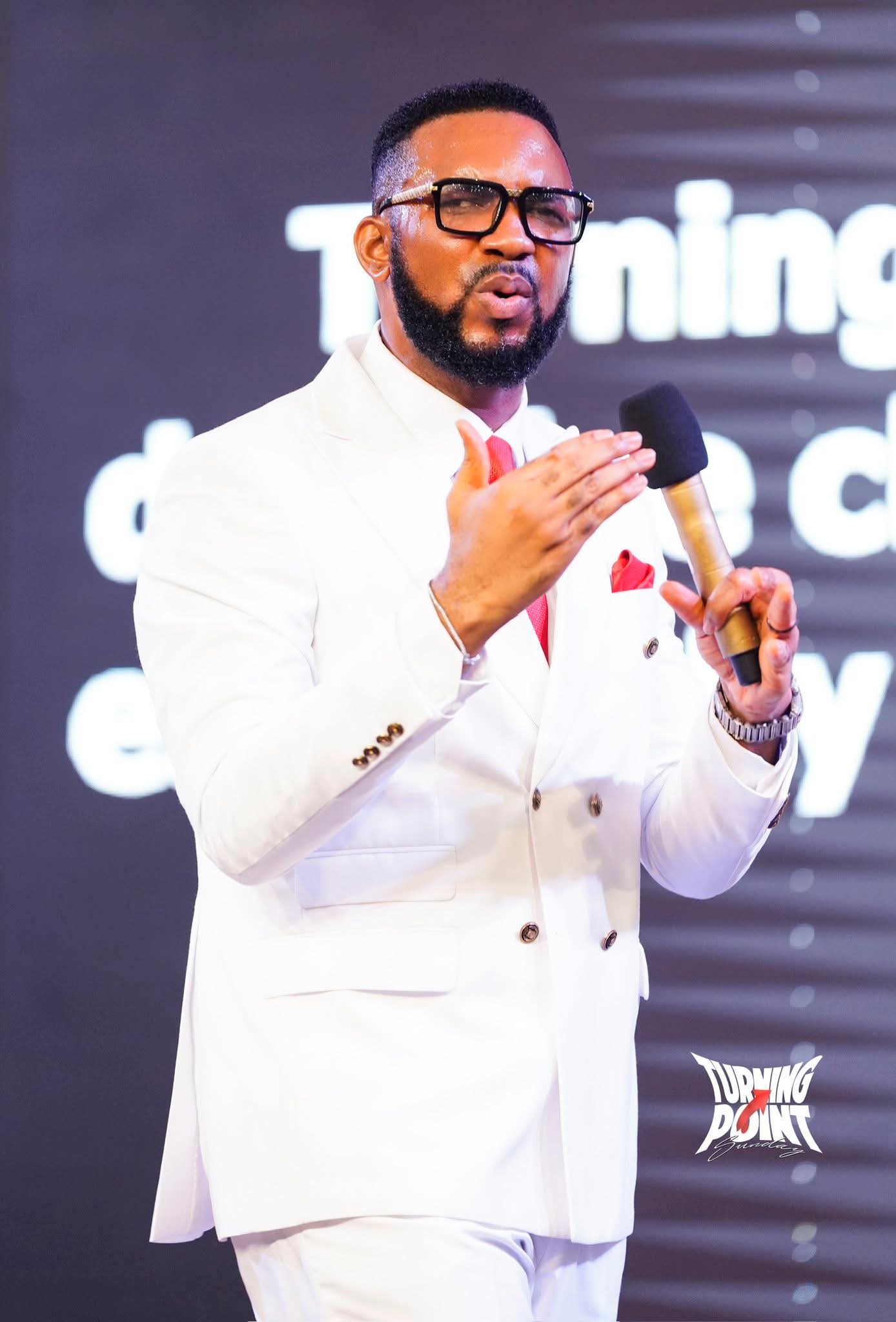
Delivering a powerful sermon titled “Turning Point,” Dr. Okafor explained that a turning point is defined as a moment when a decisive and beneficial change occurs in a situation. He emphasized that such moments are often preceded by battles.
According to him, battles do not necessarily arise because one is doing wrong, but because God desires to reveal His power and teach vital lessons through them. Every genuine battle, he noted, carries divine involvement and purpose.
Addressing the question “Why must I fight a battle?” Dr. Okafor explained that individuals who carry extraordinary grace often encounter greater challenges. “When you carry what others do not carry,” he said, “the battles that come your way are usually bigger.”
Characteristics of a Turning Point
The Generational Prophet highlighted that when a person is firmly rooted in God, no storm can uproot them. A strong spiritual foundation ensures that no battle can shake one’s destiny. He explained that prayer does not eliminate battles, but preparation through prayer guarantees victory on the evil day.
“Battles push you into your turning point when you are rooted in the Spirit,” he stated, adding that a prayerful life is essential for sustained victory and elevation.
A Supernatural Service
The Turning Point service witnessed an extraordinary move of the Holy Spirit in a fresh dimension. Deliverance, healings, miracles, restoration, and diverse testimonies filled the atmosphere as worshippers encountered the power of God during the Sunday service.
In a related development, Dr. Chris Okafor officially commissioned the ultra-modern church restaurant, Fourthman Foodies, dedicating it to God for the benefit and use of Grace Nation citizens worldwide.
The February 1 service has since been described by many as a defining moment—one that signals a new spiritual season for Grace Nation Global. https://www.facebook.com/share/v/1B2Eh6B6wo/
Sunday Adeyemi is a Lagos-based journalist and society writer. He writes from Lagos.
Adron Homes Hails Ondo State at 50, Celebrates Legacy of Excellence
The Chairman, Board of Directors, Management, and staff of Adron Group have congratulated the Government and people of Ondo State on the celebration of its 50th anniversary, describing the milestone as a significant chapter in Nigeria’s federal history and a testament to visionary leadership, resilience, and purposeful development.
In a goodwill message issued to commemorate the Golden Jubilee, Adron Group noted that since its creation in 1976, Ondo State has consistently distinguished itself as a centre of honour, intellect, and enterprise. Fondly referred to as The Sunshine State, the state has produced generations of outstanding professionals, administrators, and national leaders whose contributions continue to shape Nigeria’s socio-economic and political development.
According to the company, the strength of Ondo State lies not only in its rich cultural heritage and intellectual depth, but also in the values of integrity, diligence, and excellence that define its people. These qualities, Adron noted, have remained the bedrock of the state’s enduring relevance and national impact over the past five decades.
Adron Group further commended the state’s renewed drive in recent years towards infrastructure development, economic diversification, industrial growth, and youth empowerment, describing these initiatives as indicators of a forward-looking, inclusive development agenda anchored in sustainability and long-term prosperity.
“As a corporate organisation committed to nation-building and sustainable development, Adron Group recognises Ondo State as a strategic partner in progress,” the statement read. “We commend His Excellency, Lucky Orimisan Aiyedatiwa, Executive Governor of Ondo State, and the leadership of the state at all levels for their dedication to public service and their commitment to the advancement of the people.”
As Ondo State marks its Golden Jubilee, Adron Group joined millions of well-wishers in celebrating a legacy of excellence, strength of character, and promise, while expressing optimism that the next fifty years will usher in greater milestones in economic vitality, social advancement, innovation, and enduring peace.
The company concluded by wishing the Government and people of Ondo State continued progress and prosperity, adding that the Sunshine State remains well-positioned to shine even brighter in the years ahead.


-

 celebrity radar - gossips6 months ago
Why Babangida’s Hilltop Home Became Nigeria’s Political “Mecca”
-

 society6 months ago
Power is a Loan, Not a Possession: The Sacred Duty of Planting People
-

 Business6 months ago
Batsumi Travel CEO Lisa Sebogodi Wins Prestigious Africa Travel 100 Women Award
-

 news6 months ago
THE APPOINTMENT OF WASIU AYINDE BY THE FEDERAL GOVERNMENT AS AN AMBASSADOR SOUNDS EMBARRASSING