
society
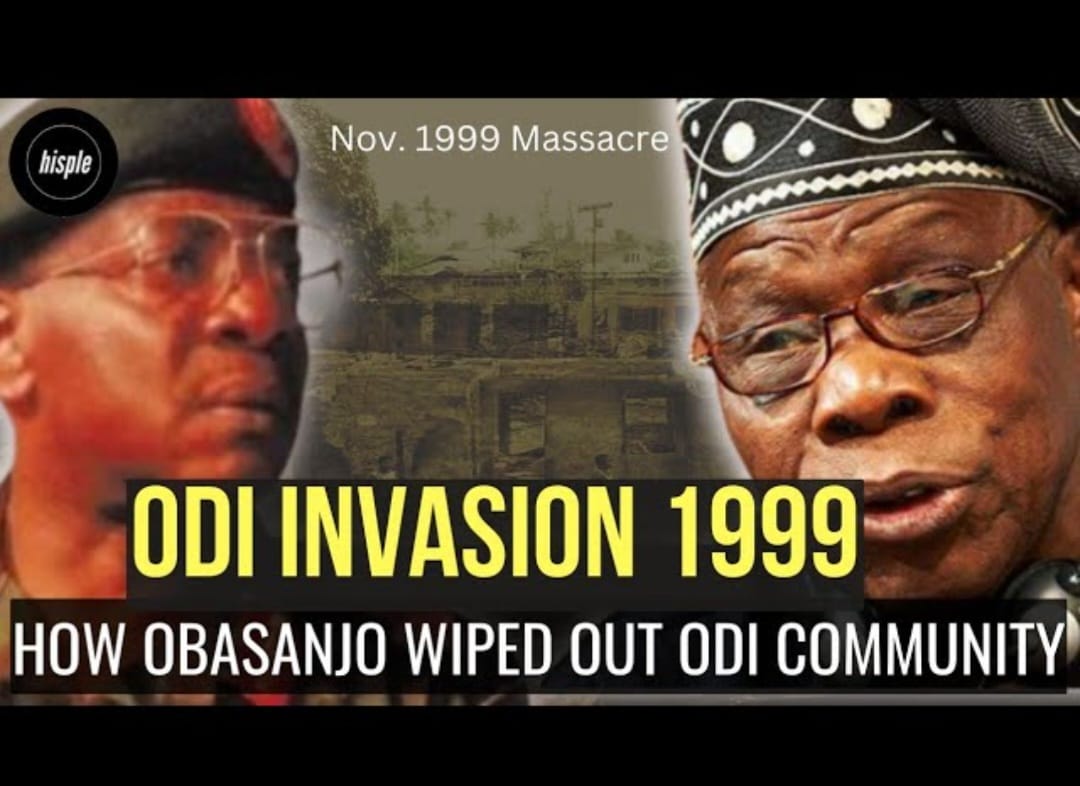
Odi: Anatomy of a Massacre.

Odi: Anatomy of a Massacre.
By George Omagbemi Sylvester | Published by saharaweeklyng.com
How a Town Was Razed, Lives Erased and Justice Delayed.
On 20 November 1999 the Nigerian state executed a punishment that resembled collective vengeance more than lawful policing. The small Ijaw town of Odi, in Kolokuma/Opokuma Local Government Area of Bayelsa State, was invaded by elements of the Nigerian Armed Forces after the killing of policemen in the area. In a matter of hours soldiers razed whole neighbourhoods, drove survivors from homes and (WITNESSES, HUMAN-RIGHTS INVESTIGATORS and CIVIL SOCIETY WOULD LATER CONCLUDE) killed scores, perhaps hundreds, of unarmed civilians. What happened in Odi was not the chaotic excess of a firefight but a punitive operation with consequences that still HEMORRHAGE through the Niger Delta’s memory and politics.

The immediate provocation was gruesome: in early November 1999 an armed group killed a number of policemen (INITIAL ACCOUNTS MOST COMMONLY RECORD 12). The federal government, under President Olusegun Obasanjo, demanded swift action and publicly warned state authorities to apprehend the perpetrators. Within weeks, soldiers were deployed to Odi. According to a meticulous Human Rights Watch investigation, troops engaged in a brief exchange of fire with young men alleged to have killed police officers and then proceeded to raze the town—burning houses and markets, destroying property and, according to multiple eyewitness accounts, shooting civilians.
Human-rights organisations that visited Odi in the weeks that followed produced chilling findings. Human Rights Watch concluded that “the soldiers must certainly have killed tens of unarmed civilians and that figures of several hundred dead are entirely possible.” Amnesty International described large-scale killings in Odi as part of a pattern of reprisal operations by security forces across the Niger Delta and warned that such actions “CAN ONLY BE DESCRIBED AS A KILLING SPREE.” Those words matter: they move the event from a contested battlefield incident into the territory of extrajudicial atrocity.

Estimates of the death toll remain contested and politically charged. Official figures released in the aftermath were tiny (reportedly in the dozens) while local leaders, activists and some environmental and human-rights campaigners have given far higher numbers. Veteran environmental activist Nnimmo Bassey has claimed that nearly 2,500 civilians died; Human Rights Watch considered “SEVERAL HUNDRED” a plausible range based on interviews and ON-THE-GROUND OBSERVATION. The divergence of these figures is not a trivial statistical quarrel: it is a symptom of the opacity that cloaked state action, the absence of credible independent inquiry at the time and the subsequent failure to account publicly for the scale of violence inflicted on a civilian population.

Beyond deaths, the qualitative testimony from survivors is devastating and consistent: entire compounds were set ablaze, shops and boats destroyed and families plunged into sudden, permanent displacement. The Human Rights Watch report also documented allegations of sexual violence in nearby locations and recounted how access for journalists and human-rights observers was restricted; an obstruction that compounded the difficulty of independent verification and allowed impunity to calcify. The imagery of Odi (smouldering roofs, gutted houses, children made homeless) became for many a symbol of the Nigerian state’s willingness to use overwhelming force against its own citizens rather than pursue accountable law enforcement.
Years later the Nigerian courts provided a measure of juridical recognition of the harm done. In February 2013 a Federal High Court in Port Harcourt ordered the Federal Government to pay N37.6 billion in compensation to the people of Odi for the destruction of lives and property during the 1999 invasion. The judgment condemned the government for brazen violations of the victims rights to life, movement and property. That ruling was a formal acknowledgement that something grievously wrong had occurred and that the state bore responsibility. Yet even that legal breakthrough was followed by delay, partial payment and controversy: the government later negotiated an OUT-OF-COURT SETTLEMENT and paid N15 billion, a figure the community and observers regarded as inadequate relative to the court award and to the scale of loss.
Why Odi matters today is not only a matter of historical memory. The massacre sits at the intersection of three abiding pathologies in the Niger Delta and in Nigerian governance: RESOURCE PREDATION, MILITARIZED responses to social unrest, and the ritual of impunity. The Delta’s oil wealth has created both ENORMOUS NATIONAL REVENUE and LOCAL EXCLUSION; when communities demand accountability or protest environmental ruin, the response too often has been securitisation rather than DIALOGUE. Where policing fails or is seen to fail, the military’s intervention (ostensibly to restore order) has been used in ways that punish whole communities for the crimes of a few. Odi is an emblem of that pattern.
Scholars and activists have framed Odi not as an aberration but as a flashpoint in a broader crisis. Human-rights groups warned at the time that unchecked military reprisals would deepen grievances, spur cycles of revenge and radicalise parts of a region already suffering environmental collapse and economic marginalisation. That prediction proved accurate: the years after Odi saw the escalation of militant, criminal and protest activity in the Delta, including attacks on pipelines, kidnapping for ransom and the rise of organised militant groups; responses that have cost lives, damaged Nigeria’s oil economy and made a stable political settlement more remote.
What, then, is justice in the Odi story? A court order and a monetary settlement address part of the harm, but they do not RESTORE LOST LIVES, return the DEAD or compensate the LONG TAIL of social and psychological damage. Justice would also require transparent criminal investigations and prosecutions of those who gave and carried out unlawful orders, full reparations that are community-led and accountable, memorialisation that affirms the victims dignity, and institutional reforms to prevent recurrence. Human-rights organisations in 1999 urged such reforms; fourteen years later the court’s verdict validated the claim that the state had violated rights and owed redress. Yet the state’s partial payment and the absence of robust accountability for perpetrators have left a scar that official rhetoric cannot heal.

Odi’s lesson is blunt and uncomfortable: a democratic government that tolerates or obscures large-scale abuses by its security forces weakens the moral and legal foundations of democracy itself. If citizens (especially the poorest and most marginalised) are treated as dispensable, the social contract frays. The Niger Delta’s continued restiveness is a reminder that neither oil nor court rulings alone will buy peace; political inclusion, genuine development and institutions that answer to law are indispensable. As Human Rights Watch warned at the turn of the century: unchecked reprisals encourage further abuses and radical responses.
The memory of Odi persists in SONG, POETRY and TESTIMONY; it is invoked by activists demanding accountability and by families who still live with the aftermath. True closure requires more than commemoration: it requires a commitment from the Nigerian state to truth, accountability and systemic reform. The court’s 2013 judgment was a step—but steps without direction are merely gestures. The people of Odi deserve the full measure of justice: reckoning with what happened, prosecutions where warranted, truthful public record and reparations that rebuild the physical and moral fabric of the community. Anything less would be a betrayal of democracy and a testament to a brutality we pretended to have outgrown.
As we remember Odi, we must demand that the state confront its past. It is not enough to pay a portion of a judgment or to tuck atrocity into legalese and move on. If Nigeria is to be a nation that protects its citizens, it must be willing to investigate the crimes committed in its name—and punish them without favour. Only then will Odi’s burned houses and silenced families be honoured by more than memory: they will be honoured by the knowledge that the state learned, changed and guarded the sanctity of every civilian life.





society
Buratai Highlights Leadership, Community Support In Defeating Insurgency As Shettima, Defence Chiefs Rally Support For Counterterrorism Documentation At Book Launch
Buratai Highlights Leadership, Community Support In Defeating Insurgency As Shettima, Defence Chiefs Rally Support For Counterterrorism Documentation At Book Launch
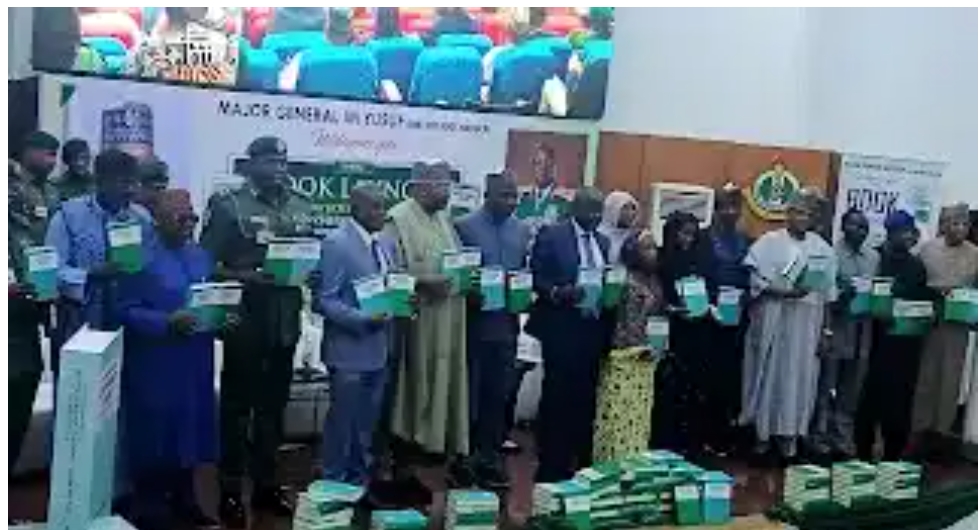
Prominent Nigerians including Vice President Kashim Shettima, Defence Minister Christopher Musa, senior military officers, and political leaders on Thursday underscored the importance of documentation, collective national responsibility, and sustained military professionalism in the fight against terrorism during the unveiling of a new book titled “Counterterrorism and Counterinsurgency Operations in North East Nigeria (Volumes 1 & 2)” authored by retired Major-General Ibrahim Yusuf.

Representing Vice President Kashim Shettima, the Special Adviser on General Duties, Dr. Aliyu Modibbo, described the publication as a timely and strategic contribution to Nigeria’s national security discourse.
According to him, Nigeria’s experience with terrorism and insurgency in the North-East reflects not a nation defeated by insecurity, but the resilience and courage of citizens and security forces defending the country’s shared destiny.
He noted that the conflict in the North-East remained a deep human tragedy affecting communities with rich historical and cultural heritage, stressing that terrorism requires sustained vigilance, intelligence gathering, diplomacy, technology, and strong civil-military cooperation.
The Vice President further commended the author for documenting operational experiences and strategic lessons from the theatre of operations, saying such insights would prove invaluable to policymakers, scholars, and future military leaders.
He also reaffirmed the commitment of President Bola Ahmed Tinubu’s administration to strengthening the operational readiness, welfare, and dignity of members of the Armed Forces.
In his goodwill message, the Minister of Defence, Christopher Musa, praised the author as a respected mentor whose professionalism and leadership continued to inspire younger officers even after retirement.
“The lion may be retired, but he is certainly not tired,” he remarked.
Musa described the insurgency in the North-East as one of Nigeria’s most complex security challenges, noting that the asymmetric nature of the conflict means it cannot be won by military force alone.
According to him, victory against terrorism depends on collective national responsibility involving the Armed Forces, civil authorities, and citizens working together to deny insurgents support and legitimacy.
He also urged serving military officers to study the publication carefully, noting that it contains valuable operational lessons from years of counterinsurgency operations.
The Chief of Defence Staff, Olufemi Oluyede, described the two-volume publication as a major intellectual contribution bridging theory and practice in counterterrorism and counterinsurgency operations.
Oluyede commended the author for preserving decades of operational knowledge gained from commanding the 21 Brigade, 7 Division, and the Multinational Joint Task Force.
He stressed that modern security threats demand continuous learning, adaptation, and proper documentation of operational experiences, adding that the publication would serve as a useful resource for military practitioners, researchers, and policymakers.
Former Chief of Army Staff, Lt. Gen. Tukur Buratai, also applauded the author for documenting operational experiences from the counterinsurgency campaign in the North-East.
Buratai stated that operational success in counterinsurgency warfare depends largely on the quality of commanders in the field and the ability of military leaders to adapt to complex realities.
He recalled the significance of operations such as Deep Punch I and Deep Punch II, as well as the critical role played by the Nigerian Air Force in degrading terrorist capabilities between 2015 and 2017.
According to him, resilient leadership and community support remain crucial elements in defeating insurgency.
Earlier, retired Major-General Ibrahim Yusuf said the publication represented the fulfilment of an eight-year intellectual ambition aimed at contributing to military scholarship and national security discourse.
He explained that the book was inspired by a desire to provide younger military officers and policymakers with first-hand insights into the successes and challenges of counterterrorism operations in Nigeria.
The retired general added that the publication drew from over a decade of operational experience in the North-East and the Lake Chad Basin while deliberately avoiding sensitive information capable of compromising ongoing operations.
He also urged retired military officers to document their operational experiences for future generations, stressing that such efforts are essential for institutional memory and national development.
Reviewing the publication, renowned scholar Eghosa Osaghae described the work as a landmark contribution to military scholarship.
Osaghae noted that the two volumes combine academic depth with practical operational experience, offering insights into intelligence-led operations, joint force coordination, psychological warfare, and post-conflict management.
He added that the publication effectively situates Nigeria’s counterinsurgency experience within the broader realities of modern asymmetric warfare and evolving global security threats.
The event attracted senior serving and retired military officers, heads of security agencies, members of the diplomatic corps, academics, and policymakers from across the country.
society
Oduduwa Integrity Association Announces Adoption of Governor Ademola Adeleke as “Performing Governor” in the Southwest*

Oduduwa Integrity Association Announces Adoption of Governor Ademola Adeleke as “Performing Governor” in the Southwest*
*Osun State, Nigeria* – The Oduduwa Integrity Association, one of the prominent socio-cultural and advocacy groups in the Southwest region, has announced its decision to adopt and publicly recognize Governor Ademola Adeleke of Osun State as a performing governor in the Southwest.
According to the Association, the adoption is based on its independent monitoring of governance and project delivery across the region. The group stated that Governor Adeleke’s administration has demonstrated measurable progress in areas including infrastructure, workers’ welfare, education, and youth empowerment, which aligns with the association’s mandate to promote accountability and good governance.
“This adoption is our way of encouraging performance and responsible leadership,” Evang /Hon Omotoso Banji, the President and Founder of Oduduwa Integrity Association said. “We believe that recognizing leaders who are delivering on their mandate helps strengthen democratic values and motivates others to prioritize the people.”
The Association noted that its adoption does not imply political affiliation but is a non-partisan endorsement of what it describes as visible and verifiable governance outcomes within Osun State. It added that the move is part of its broader initiative to highlight and support public officials across the Southwest who meet its standards for transparency, service delivery, and integrity.
Governor Adeleke’s administration has been marked by policy focus on infrastructural renewal, payment of salary arrears, and investment in grassroots development since assuming office. The Oduduwa Integrity Association said it will continue to monitor and document these efforts as part of its civic oversight role.
The formal adoption ceremony and presentation of recognition materials are expected to be announced in the coming weeks.
The Oduduwa Integrity Association is a Southwest-based civil society and advocacy group committed to promoting good governance, transparency, and accountability across Yoruba-speaking states presided by Evang / Hon Omotoso Banji.The Association conducts independent assessments of public service delivery and engages in community enlightenment programs.
AjilalaOso Day 2026: Women Union Make Donations To Hospital
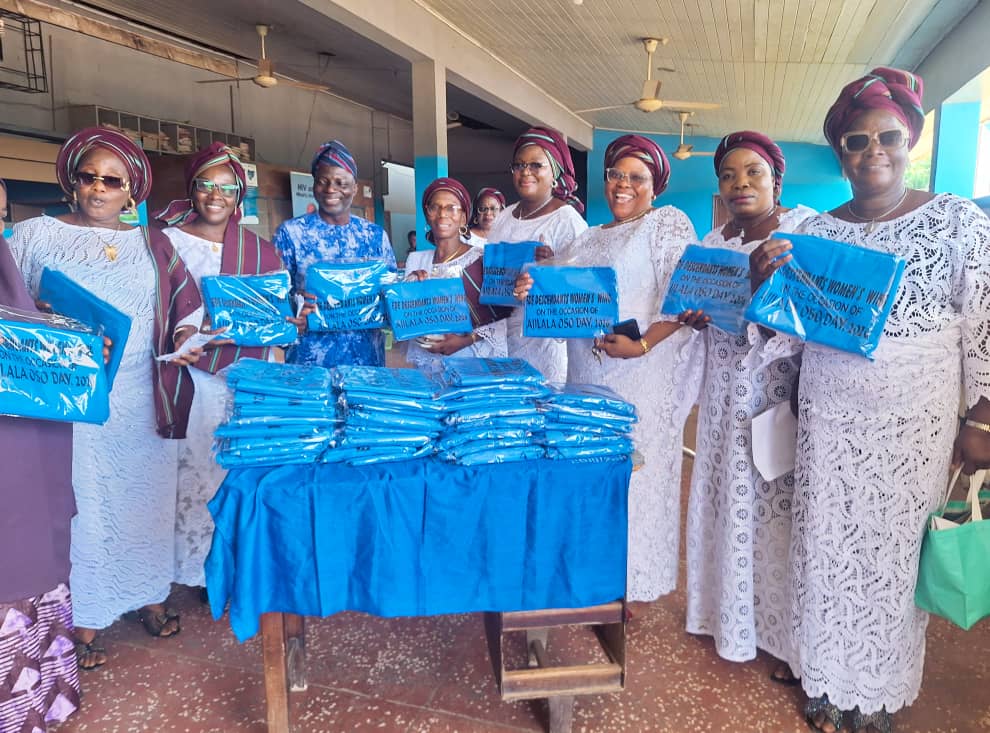
The women wing of the Ede Descendants Union has donated 42 bedsheets and 44 pillow cases to Cottage Hospital, Ede, in Osun State, as part of activities marking preparations for AjilalaOso Day 2026.
The donation was aimed at supporting healthcare services at the hospital while also demonstrating the union’s commitment to community development and humanitarian service.
Members of the union said the gesture formed part of efforts to give back to society and contribute meaningfully to the wellbeing of patients receiving treatment at the health facility.
Speaking during the presentation, the leader of the women wing, Mrs Silifat Shittu, described the initiative as a reflection of the values of compassion, unity and service which AjilalaOso Day represents.
She noted that the annual cultural celebration is not only about showcasing the rich heritage of Ede but also about promoting development-oriented projects capable of impacting lives positively.
The group further urged individuals, organisations and stakeholders in Edeland to continue supporting community-based initiatives aimed at improving the welfare of residents.
Speaking on behalf of the hospital management, the Chief Medical Officer, Dr Isiaka Alade, appreciated the women group for the donation, describing the items as timely and beneficial to patients and the hospital environment.
Chairman of the AjilalaOso Day 2026 Planning Committee, Prince Adewale Laoye while addressing the gathering appealed to other well-meaning individuals and organisations to extend similar gestures to the hospital, noting that some roofing sections of the facility require urgent repairs.
He also commended the women wing of the union for the initiative and support shown to Cottage Hospital.
Prince Laoye, who spoke extensively on the objectives of the AjilalaOso festival, explained that the annual celebration would not only be about funfair and merriment but would also focus on touching the lives of the needy through impactful community projects.
According to him,“We also want associations to have a project executed in Ede every year, such as what the women wing of EDU has done today.”


- Strengthening Zambia’s Readiness for Health Emergencies: From Surveillance to Pandemic Preparedness May 21, 2026
- Economic Community of West African States (ECOWAS) Strengthens Regional Integration Through Cross-Border Cooperation Stakeholders’ Meeting in Abuja, Nigeria May 21, 2026
- Senegal Retains Title as Overall Champion at ECOWAS African Wrestling Tournament (TOLAC 14) May 21, 2026
- Eritrea: Diaspora Nationals Celebrate Independence Day Anniversary May 21, 2026
- Seychelles: President Herminie Visits District Administration Office and Library on La Digue May 21, 2026
- Egypt: President El-Sisi Meets Tunisian Minister Mohamed Ali Nafti May 21, 2026
- Joint statement welcoming the Republic of Togo’s announcement on Visa facilitation for African nationals May 21, 2026
- Advancing Regional Political Commitment and Cross Border Coordination for Ebola Preparedness and Response May 21, 2026
- Morocco: African Development Bank commits €200 Million to boost employability and develop future skills May 21, 2026
- Société Nationale des Pétroles du Congo (SNPC) Targets Global Operator Status as African Energy Chamber (AEC) Engagement Reinforces Congo’s Energy Ambitions May 21, 2026
- Strengthening Zambia’s Readiness for Health Emergencies: From Surveillance to Pandemic Preparedness May 21, 2026
- Economic Community of West African States (ECOWAS) Strengthens Regional Integration Through Cross-Border Cooperation Stakeholders’ Meeting in Abuja, Nigeria May 21, 2026
- Senegal Retains Title as Overall Champion at ECOWAS African Wrestling Tournament (TOLAC 14) May 21, 2026
- Eritrea: Diaspora Nationals Celebrate Independence Day Anniversary May 21, 2026
- Seychelles: President Herminie Visits District Administration Office and Library on La Digue May 21, 2026
- Egypt: President El-Sisi Meets Tunisian Minister Mohamed Ali Nafti May 21, 2026
- Joint statement welcoming the Republic of Togo’s announcement on Visa facilitation for African nationals May 21, 2026
-

 news5 months ago
WHO REALLY OWNS MONIEPOINT? The $290 Million Deal That Sold Nigeria’s Top Fintech to Foreign Interests
-

 society3 weeks ago
SOCIAL MEDIA IS NOT A BATTLEFIELD COMMAND – WHY THE NIGERIAN ARMY’S ACTION AGAINST JUSTICE CRACK IS A NATIONAL SECURITY IMPERATIVE
-

 celebrity radar - gossips4 months ago
Dr. Chris Okafor Returns with Power and Fire of the Spirit -Mounts Grace Nation Altar with Fresh Anointing and Restoration Grace on February 1, 2026
-

 celebrity radar - gossips5 months ago
Prophet Kingsley Aitafo Releases 2026 Prophecy: ‘Nigeria Will Rise, but the World Must Prepare for Turbulence’