
society
Appraising Regulatory Excellence through Komolafe’s Lens

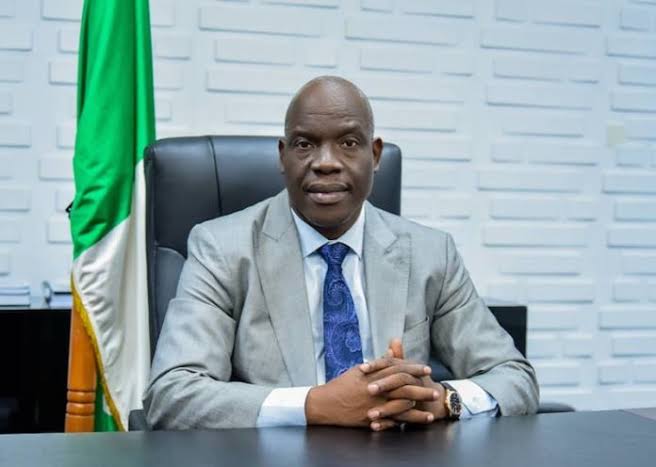
*Appraising Regulatory Excellence through Komolafe’s Lens*
By Ibrahim Idris
When the momentous task of leading a constituted regulatory edifice like NUPRC is entrusted to a single person, the world expects two things: fidelity to statutory duty and demonstrable outcomes. In Nigeria’s upstream petroleum sector, it is no surprising that those expectations have been largely met, and have been exceeded on many occasions by Engineer Gbenga Komolafe. Being the Chief Executive of the Nigerian Upstream Petroleum Regulatory Commission (NUPRC), Komolafe is a living metonym for “Regulatory Excellence”, one who is meticulous in method, and relentless in his delivery.
Komolafe’s regulatory excellence is a precis of performance. His ability to expressly use technological modernity to reorient the upstream governance from an era of opaque process to one that’s characterized by clearer rules, timelier approvals, and an insistence on environmental and fiscal accountability, speaks a lot about the valuable experiences he has gotten over decades of commitment.
Trained as an engineer and a lawyer, and steeped in decades of hands-on experience at the Nigerian National Petroleum Corporation and its subsidiaries, Komolafe is a practitioner-turned-regulator who understands the idiosyncrasies of Nigeria’s oil industry from the pumpjack to the policy memo. His appointment as the inaugural CEO of the NUPRC in 2021 placed him at the fulcrum of the Petroleum Industry Act’s (PIA) ambitious reordering of upstream governance.
Is arrival at the NUPRC with credentials that signal both technical proficiency and institutional knowledge, present him as the perfect leader who could translate the PIA text from just abstract into implementable regulations, and pragmatic decision that would uplift investor confidence while protecting the national patrimony. Komolafe as proven himself capable.
In a capital-intensive industry such as upstream oil and gas, it is well-known that one of the strongest indicators of regulatory is the predictability and timeliness of approvals. Under Komolafe’s leadership, the NUPRC proven this efficiency rationalizing transactional approvals while insisting on enforceable conditions that protect communities and the environment. A salient example is the commission’s approvals of onshore asset sales in 2024 which saw a sign-offs on transactions involving major operators.
However, this action created a new willingness to clear transactions that has been long affected by regulatory uncertainty, on the condition that buyers accept responsibility for remediation and community compensation. This accelerated market orderliness while ensuring that liabilities linked to environmental damage are not abdicated. It further enabled market continuity and protected public interest. This posture which is neither reflexively permissive nor immovably obstructionist, has produced a healthier investment rhythm. By setting clear conditions and timelines, Komolafe and his team have sent a market signal: Nigeria’s upstream sector can transact with greater legal certainty, and the regulator will enforce compliance without needlessly obstructing legitimate commercial pathways.
Komolafe’s NUPRC understood that regulatory excellence in the contemporary petroleum sector is inseparable from environmental stewardship, and a regulator that fails to harmonize extractive activity with climate commitments, will over time, undermine both national credibility and long-term resource value. Therefore on this note, the commission foregrounded decarbonization as an operational requirement rather than a rhetorical afterthought that is hardly being implemented.
Moreover, the launching and enforcement of the Upstream Petroleum Decarbonisation Template (UPDT), and the insistence that licence applicants demonstrate low-carbon credentials and evidence of renewable-energy integration, constitute an important normative shift. The NUPRC, on the 1st of January 2025, stipulated a regulatory condition that aligns Nigeria’s upstream licensing with expectations of global nations’ governance and investor desire for lower-carbon portfolios. These administrative structuring operationalize decarbonization by embedding measurable mitigation commitments into the licence lifecycle. This has become a blueprint for good governance whereby, applicants must present verifiable plans, timelines to work with, and monitoring structure.
Komolafe has made his policy more persuasive by proving it with real data. Under his leadership, the NUPRC reported a notable growth in national oil reserves and a substantial uptick in production between April 2023 and November 2024, accompanied by a marked reduction in theft and deferments. This was made possible due to the good relationship the commission fostered with security agencies and its deployment of monitoring systems contributed to these improvements. These outcomes are mot accidental; they are results from all elements of a regulatory strategy that prizes accountability.
Regulation often plays a catalytic role in attracting and preserving investment. Metrics like, rig count, capital commitments, and licensing round outcomes that investors watch out for, has shown progressive movement under Komolafe’s watch. It is reported that active rig count has increased geometrically from eight in 2021 to 69 as of October 2025, revealing a 763% increase, and substantial investments flowing into exploration and production activities indicate a renewed operational momentum. These shifts are consistent with a regulatory environment that has become less volatile and more adjudicatively certain.
In practical terms, this is consequential because, higher rig counts mean more acreage is being tested and developed; new investments translate into jobs, forward and backward linkages, and enhanced fiscal inflows for the state. The regulator’s role here has been to create an enabling framework, one that clarifies title transfers, streamlines licencing, and enforces compliance, thereby lowering perceived sovereign risk and unlocking capital that had hitherto been reticent.
Under Komolafe, the NUPRC has been proactive in institutionalizing technical and procedural tools that make oversight more effective and less discretionary: the promulgation of measurement regulations, the introduction of the Advanced Cargo Declaration Mechanism, and the modernization of the licensing apparatus are illustrative. This action of his aligns with the popular saying that, “Great regulators are not only arbiters; they are architects of process. “
There is an often observed strain among public figures where they substitute verbosity for efficacy. If you are looking for a talkative then you may seek salvation elsewhere, because unlike most, Komolafe’s modus operandi, by contrast, privileges “speaking with action.” To be clear, Komolafe’s leadership has been accompanied by tangible communication of policy direction, stakeholder consultations, and public reporting. The difference is tone: where many an official indulges in florid programmes of rhetorical self-congratulation, Komolafe’s communications tend to be utilitarian, one that is aimed at clarity and compliance rather than propaganda.
The validations from local and international bodies are innumerable. Under Komolafe, the commission has garnered multiple awards and recognition for service delivery and regulatory ingenuity. These accolades are not end-goals; they are signposts that the industry and peer institutions acknowledge the seriousness of the reform trajectory. Awards and commendations, when paired with measurable results, strengthen the claim that the NUPRC is not merely performing administratively but is effecting legitimate sectoral transformation.
Komolafe’s NUPRC has been an early adopter of the emergent architecture of next generation: one that integrated digital tracking, balance measurements, and embeds climate-related frameworks within licencing. This is a blueprint that is instructive, making regulators synthesizing being business-friendly and being accountable together, rather than choosing one when it’s possible t have both through rule-making and consistent enforcement.
Komolafe leadership style is a deliberate one which is result oriented, and synonymous with outcomes. He is the procedural craftsman who gets things done. Believe me, if you are interested in an administrator who gives priority to Law and demonstrable gains, Komolafe is the perfect exemplary figure: the “Sure Plug” for a sector that needs a good blend of legalism and pragmatism.
There is no doubt that Nigeria’s upstream sector remains complex and evolving. But the successes under Komolafe are credible progress markers that ensure sustenance. They have proven that when a leader combines transparency with technological tools and strategic partnerships, the result is governance that produces both public value and investor confidence. For that reason, Gbenga Komolafe is not merely a regulator among many, he is a case study in how regulatory institutions can be rebuilt, not by rhetoric, but by disciplined action.
Idris is an oil and gas expert contributed this piece NNPC Quarters, KAduna.







Ajadi, Peter Obi, Adeleke, Others Join Makinde at Oyo@50 Thanksgiving Service
The leading gubernatorial aspirant of the Peoples Democratic Party (PDP) in Oyo State, Ambassador Olufemi Ajadi Oguntoyinbo, on Sunday joined Governor Seyi Makinde, former Anambra State Governor and 2023 Labour Party presidential candidate, Mr Peter Obi, the wife of the Osun State Governor, Chief (Mrs) Titilola Adeleke, and other eminent dignitaries at a Thanksgiving Service marking the seventh day of activities commemorating the 50th anniversary of Oyo State.
The service, held at the Cathedral of St. Peter’s, Aremo, Ibadan, drew a large congregation of worshippers, political leaders, traditional rulers, and stakeholders across the state and beyond, underscoring the significance of the golden jubilee celebration.
Speaking with journalists on the sidelines of the event, Ambassador Ajadi congratulated Governor Makinde, former Governor and Olubadan of Ibadanland, Oba Rashidi Adewolu Ladoja, and other stakeholders for steering the state to its historic milestone, describing the anniversary as a moment for reflection, gratitude, and renewed commitment to progress.
Oyo State at 50 is not just a celebration of years; it is a celebration of the strength, resilience and enduring spirit of our people,” Ajadi said. “I congratulate His Excellency, Engineer Seyi Makinde, Oba Rashidi Adewolu Ladoja and all stakeholders for sustaining the legacy of excellence, unity and progress that the Pacesetter State represents.”
He praised the people of the state for their resilience over the decades. He acknowledged the collective efforts of past and present leaders who have contributed to Oyo State’s political stability, economic growth and rich cultural heritage since its creation in 1976.
Ajadi, an entrepreneur and philanthropist, noted that the golden jubilee provides an opportunity for both leaders and citizens to critically assess the journey so far and recommit themselves to building a more inclusive and prosperous future.
“As we celebrate this golden anniversary, we must reflect on where we are coming from, where we are today and where we want to be,” he said. “Oyo State has produced great leaders, intellectuals, professionals and cultural icons.
He also commended the state government for designing a commemorative programme that blends intellectual engagement with the celebration of excellence, stressing that such initiatives help preserve history while inspiring younger generations.
Earlier, Governor Makinde, while addressing the congregation, said that although his tenure would end in May 2027, the team with which he has delivered good governance remains intact and prepared to continue the state’s development trajectory in different capacities.
The governor, who read the second Bible lesson from Matthew 5:1–12, attributed his emergence as governor in 2019 after eight years of political contest to divine grace, describing his administration as a “new beginning” for Oyo State.
“I was the eighth civilian governor of Oyo State, and in the Bible, the number eight signifies a new beginning,” Makinde said. “God has been merciful to us, and we will continue to govern in accordance with His will and guidance for the people of Oyo State.”
He assured residents of continuity in governance, emphasising that while he would exit office at the end of his tenure, members of his team would remain committed to serving the state.
“We have a team that is still intact. It is only Seyi Makinde that will go out; the members of the team are there to continue the work for the people of Oyo State,” he stated.
In a goodwill message, former Anambra State Governor and Labour Party presidential candidate in the 2023 general elections, Mr Peter Obi, lauded Makinde’s leadership style and the transformation witnessed in the state under his administration.
Oyo State is a city of knowledge and a city of hope,” Obi said. “I thank Governor Makinde for faithfully serving the people. Nigeria is not a poor country, but a poorly governed one, and what we are seeing in Oyo State is an example of using public resources for public good.”
Dignitaries at the event included the wife of the governor, Her Excellency Engr Tamunominini Olufunke Makinde; wife of the Osun State Governor, Chief (Mrs) Titilola Adeleke; former First Lady of Oyo State, Chief (Mrs) Mutiat Ladoja; Chief Judge of Oyo State, Hon. Justice Iyabo Yerima; Secretary to the State Government, Prof. Musibau Babatunde; and several other government officials, traditional rulers and political leaders.
society
UKA Announces Appointment of Hon AMB Asari St-Hill Bahamas/atlantian as Chief of Staff to Reigning Monarch Emperor Solomon Winning
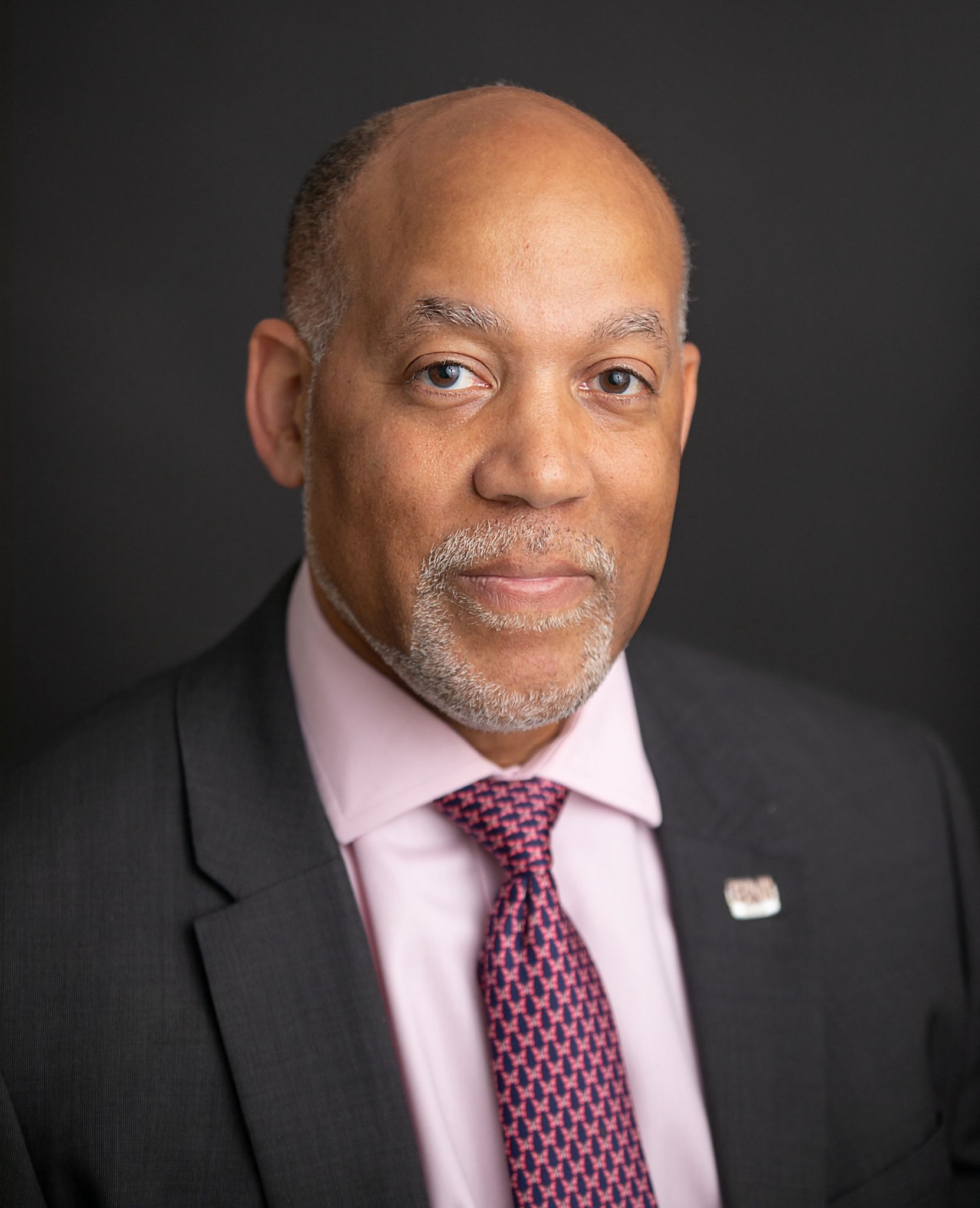
UKA Announces Appointment of Hon AMB Asari St-Hill Bahamas/atlantian as Chief of Staff to Reigning Monarch Emperor Solomon Winning
The United Kingdom of Atlantis (UKA) proudly announces the appointment of *Honorable Ambassador Asari St-Hill, A Bahamas/atlantian* as *Chief of Staff* to the Reigning Monarch, *Emperor Solomon Winning*. The official appointment ceremony was conducted on February 1st, 2026, and marked with the presentation of an Appointment Certificate (UKA 001 -1/2026).
Key Details of the Appointment
– *Hon AMB Asari St-Hill, A Bahamas/Atlantian* has been entrusted with the prestigious role of Chief of Staff, to serve the Reigning Monarch under the UKA GLOBAL ADMINISTRATOR TO UKA ROYAL THRONE of Emperor Solomon Winning, the sovereign of the United Kingdom of Atlantis.
– The appointment signifies a strategic enhancement of the monarch’s administrative and operational capabilities, aligning with the empire’s vision of efficient governance and global humanitarian leadership.
– The certificate of appointment bears the *Royal Seal of the Empire* and the endorsement of *EMP Noblis Solomon Winning*, affirming the legitimacy and authority of the designation.
Role of the Chief of Staff…👇
The Chief of Staff will be responsible for:
1. Managing the day-to-day operations of the monarch’s office.
.2. Act as Principal Aid to the Reigning Monarch and coordinates activities of staff.
3. Serves as one of the confidence to the Reigning Monarch.
4. Organised Reigning monarch appointment, meetings and engagement.
5. Review, vet documents, speaches, correspondence intended for The Reghning Monarch.
6. The Chief of Staff shall work and take instructions from the Global Administrator to the Throne in order to strengthen the entire administration of the Reigning Monarch in order to position UKA as the largest Empire in modern history.
Emperor Nobiliis Solomon Winning is the transformative leader of the United Kingdom of Atlantis, driving innovative projects in finance, humanitarian efforts, and global development. His reign focuses on merging traditional monarchical values with modern technological advancements, exemplified by initiatives like the ATC digital currency.
The United Kingdom of Atlantis (UKA) is a sovereign entity dedicated to fostering global unity, humanitarian progress, and financial innovation. It operates under a regal framework that blends imperial tradition with futuristic economic strategies, including asset-backed digital currencies and sustainable development programs.
_”The appointment of Hon AMB Asari St-Hill as Chief of Staff strengthens our administrative excellence and underscores our commitment to visionary leadership.”_
— *Emperor Solomon Winning*
The United Kingdom of Atlantis looks forward to achieving new milestones in governance and global impact under the stewardship of Emperor Solomon Winning and his esteemed Chief of Staff, Hon AMB Asari St-Hill.
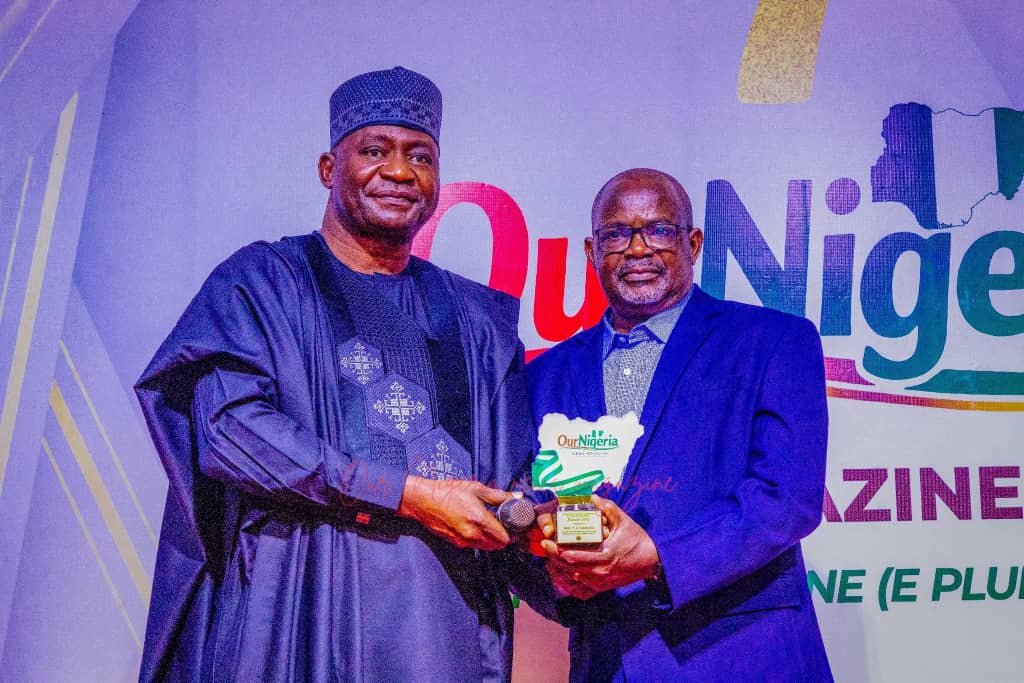
Gen CG Musa Support Group Celebrates Grand Patron as 2025 Man of the Year
The Gen CG Musa Support Group has extended its warmest congratulations to its Grand Patron, His Excellency Gen. Christopher Gwabin Musa OFR (Rtd), the Honourable Minister of Defence, following his prestigious designation as the 2025 Man of the Year by OurNigeria News Magazine.
In a statement released to the press and signed by the Director General of the Support Group, Ibrahim Dahiru Danfulani, the Sadaukin Garkuwan Keffi/Betara Biu, the group hailed the recognition as a fitting tribute to a leader of exceptional character and accomplishment.
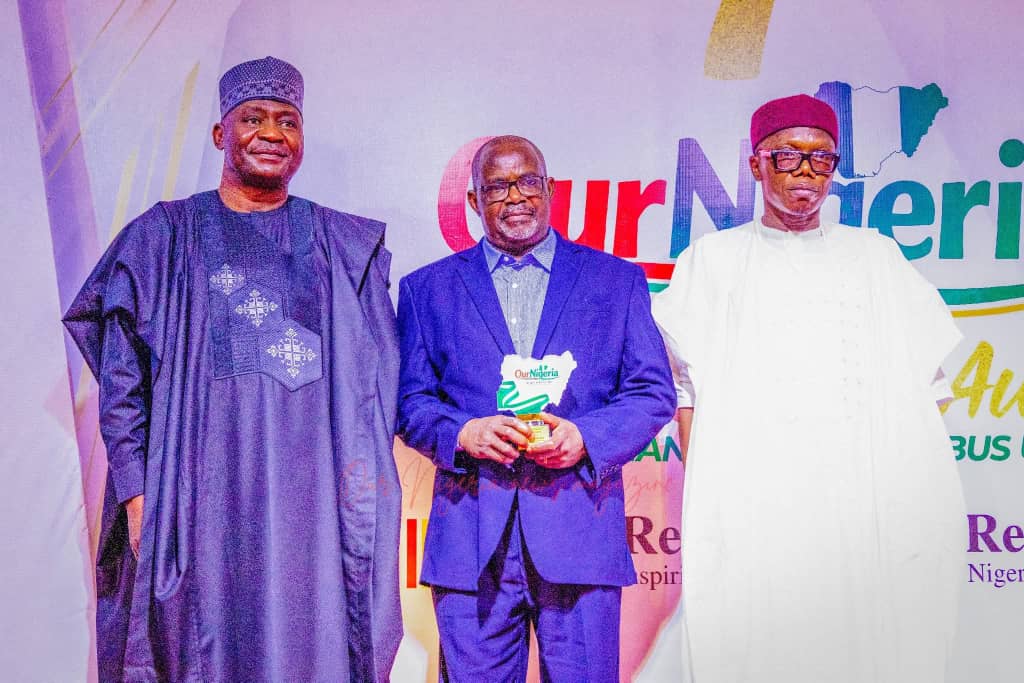
The statement illuminated the distinction of the award, emphasizing that it transcends the formal titles of “General” and “Minister.” It celebrated the core of the man himself—a leader renowned for his profound humility, incredible kindness, and genuine respect for all individuals. “People see the legacy and the title,” the statement noted, “but some of us are lucky to know the man behind it.”
The Support Group underscored that this accolade is a direct acknowledgment of the Minister’s exemplary personal conduct. It is an award not merely for the office he holds, but for the consistent humility he carries into every room and every interaction, a quality that has defined his leadership both in and out of uniform.
The honour also serves as a powerful validation of General Musa’s distinguished and unblemished track record of service to the nation. His decades of dedicated service within the military, which culminated in his ascension to the pinnacle as the Chief of Defence Staff prior to his retirement, are cited as the foundational pillars of his esteemed reputation.
The Gen CG Musa Support Group expressed profound gratitude to OurNigeria News Magazine for its discerning choice, noting that the award serves as a significant source of encouragement for the Honourable Minister. It reaffirms the nation’s appreciation for leadership that blends strength with compassion, strategic vision with unwavering integrity, and lofty achievement with grounded humanity.

This recognition solidifies General Christopher Gwabin Musa’s status not only as a defender of the nation but as a paragon of virtuous leadership, whose influence and example continue to inspire confidence and respect across Nigeria.
About the Gen CG Musa Support Group:
The Gen CG Musa Support Group is a collective dedicated to promoting the ideals and supporting the leadership of His Excellency Asiwaju Bola Ahmed Tinubu GCFR and His Excellency Gen. Christopher Gwabin Musa, celebrating their service and contributions to national peace, security, and unity.


-

 celebrity radar - gossips6 months ago
Why Babangida’s Hilltop Home Became Nigeria’s Political “Mecca”
-

 society6 months ago
Power is a Loan, Not a Possession: The Sacred Duty of Planting People
-

 Business6 months ago
Batsumi Travel CEO Lisa Sebogodi Wins Prestigious Africa Travel 100 Women Award
-

 news6 months ago
THE APPOINTMENT OF WASIU AYINDE BY THE FEDERAL GOVERNMENT AS AN AMBASSADOR SOUNDS EMBARRASSING