
society
THE PRICE OF FREEDOM: When Governments Talk to Bandits — The Confusing, Dangerous Rescue of 38 Worshippers in Kwara

THE PRICE OF FREEDOM: When Governments Talk to Bandits — The Confusing, Dangerous Rescue of 38 Worshippers in Kwara.
By George Omagbemi Sylvester | Published by saharaweeklyng.com
“DSS and the military say they “CONTACTED” kidnappers and secured the release — critics ask whether the state paid a hidden ransom and whether any deal will deepen Nigeria’s kidnapping economy.”
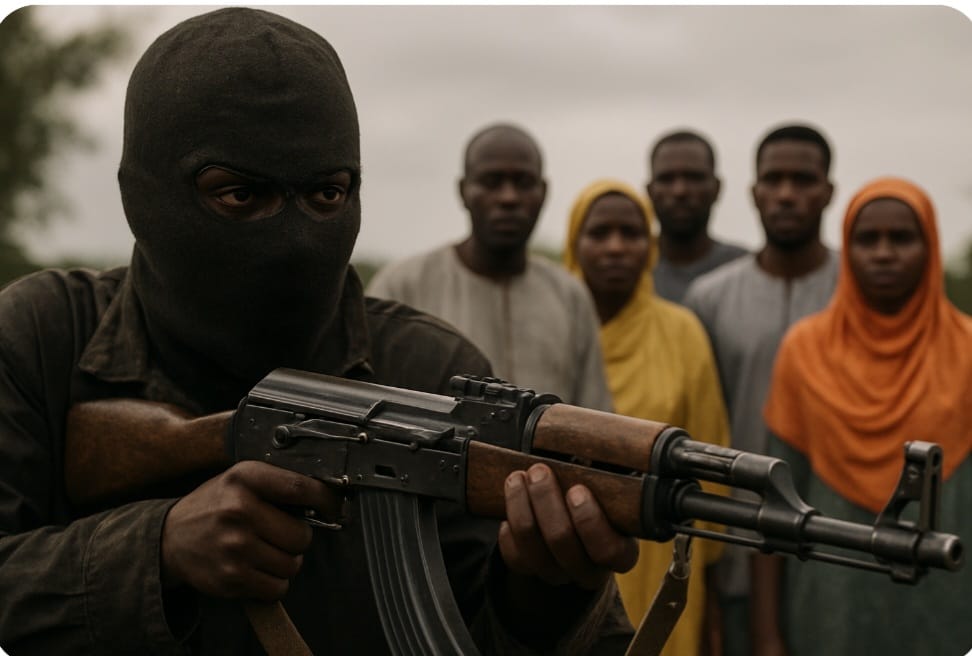
On November 18, 2025, gunmen stormed the Christ Apostolic Church in Eruku, Kwara State, killing two congregants and abducting 38 worshippers. The kidnappers immediately slapped an extraordinary demand (₦100 million per captive) a sum that made headlines and sickened relatives. The nation watched in horror as the familiar script of mass abduction and ransom negotiation ran again across our airwaves.
By November 24 the worshippers were free. But the sequence that led to their release has produced more questions than comfort. The Presidency’s information aide, Bayo Onanuga, told reporters that the Department of State Services (DSS) and the military had “CONTACTED the BANDITS” and, through real-time tracking and pressure, secured the release without paying ransom. “THEY REACHED OUT TO THE KIDNAPPERS AND DEMANDED THE RELEASE OF THE VICTIMS AND THE BANDITS COMPLIED,” Mr. Onanuga said. The Presidency insisted no ransom was paid.
That official narrative (CONTACT, MONITORING, PRESSURE, RELEASE) sounds tidy. It is also deeply unsettling. For decades families, communities and sometimes local governments have paid to get loved ones back. Analysts and international observers have documented millions of dollars exchanged in secret transactions between captors and the captive’s handlers; such payments become part of the criminal ecosystem, emboldening more abductions. “The motivation of these groups appears purely economic,” SBM Intelligence’s head of research once told Sahara when discussing the KIDNAP-FOR-RANSOM boom. History shows payments (whether explicit or concealed) can have perverse consequences.
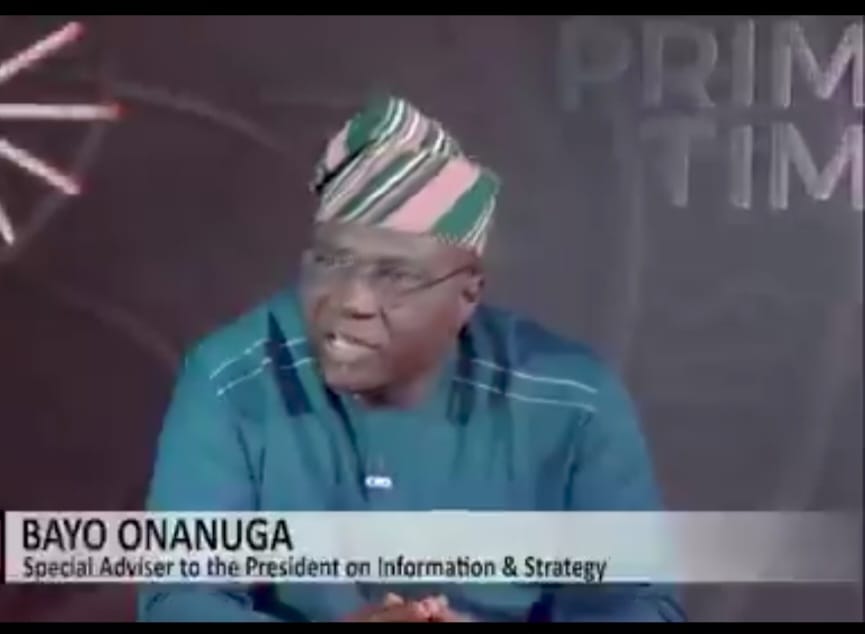
So which is it in Eruku? The Presidency’s line is that security agencies negotiated and that the bandits, confronted by surveillance and the prospect of force, “COMPLIED.” Critics ask whether the state’s words conceal a quieter transaction: a back-channel transfer of funds, local payments by community leaders, or a tacit bargain that leaves the bandits enriched and empowered. Nigerian reporting after the releases has been mixed: some outlets relay Onanuga’s position that no ransom was paid, while others note continued local reports of community-level payments or murky negotiations.
There are three hard, non-negotiable truths we must hold in mind.
First: in a country where kidnapping for ransom has metastasized into a criminal economy, any release that lacks transparent forensic explanation will breed suspicion. Between 2011 and 2020, some firms estimated that tens of millions were paid to kidnappers across Nigeria (largely by families and intermediaries) a fact that demonstrates both the scale and the secretive cash flows sustaining the crime. When governments insist “NO RANSOM WAS PAID” without opening records or allowing independent verification, cynicism grows.
Second: the ethical and strategic dilemma is real. Security experts, criminologists and ethicists describe an agonizing choice: refuse to negotiate and risk lives, or negotiate/pay and save people now while encouraging more abductions later. A growing body of research argues that ransom payments produce a perverse feedback loop: immediate human relief at the cost of long-term national insecurity. “Paying the ransom may save a life immediately, but it causes more harm in the long run by encouraging further kidnappings,” a recent ethical review summarized. Policymakers must reckon honestly with that calculus.
Third: secrecy is the enemy of accountability. If security agencies can secure releases by non-lethal means (surveillance, pressure, targeted operations) the public should be presented with credible, verifiable steps explaining how danger was neutralized and how captors were prevented from using the same methods again. If, instead, releases depend on opaque deals or payments through intermediaries, then the state is, in effect, subsidizing criminality with impunity.
Voices from the field amplify these concerns. Ikemesit Effiong of SBM Intelligence described the kidnap economy as mostly financially motivated, fed by poverty and the breakdown of social controls; each successful payout is a business case for the next abduction. Academics who study the phenomenon have similarly warned that ransom markets create perverse incentives and institutional corruption that erode state capacity. In other words: when the state or its proxies pay to free today’s victims, it often pays tomorrow, through renewed crime and weakened trust.
This is not an argument for cold-hearted refusal to save lives. It is a demand for honesty and strategy. If the DSS and the military really relied on real-time tracking, coordinated intelligence and pressure to force a surrender without money changing hands, the Presidency should publicize a clear after-action account: what assets were used, what intelligence nodes tracked the gang, whether arrests were made, and what follow-up operations will prevent recurrence. That would be a template for accountability and learning.
If, on the other hand, a payment (direct or indirect) secured the release, Nigerians deserve to know that too. Concealing payments achieves two dangerous ends: it normalizes secret deals between the state and criminals, and it institutionalizes a shadow market where bandits calculate the expected payout for every attack. Either outcome corrodes the rule of law.
There are practical reforms the federal government must pursue, simultaneously and without further delay. First: transparency and publish factual, declassified after-action reports of rescue operations that explain who did what, and how outcomes were achieved. Second: a national policy on ransom negotiations, designed with input from security services, legal scholars, community leaders and international partners, that specifies when and how officials may engage with captors and under what safeguards. Third: invest aggressively in community resilience such as rural patrols, credible policing, emergency funds for forensic investigations, while prosecuting collaborators and vigilantes who profit from abduction markets. Fourth: strengthen prosecutions and asset-forfeiture regimes that clamp down on the financial networks banking ransom payments. Evidence-based suppression of the economics of crime is as crucial as boots on the ground.
Finally, we must have a public conversation about responsibility. Families and communities pay because they lack confidence in their state. Governments that want to break kidnapping’s business model must first restore trust: by showing that the state can protect citizens, secure rescues lawfully, and deny bandits the currency they crave. Anything less is appeasement dressed as rescue.
The Eruku case should be a moment of clarity for Nigeria. If the DSS and military achieved a no-cash rescue through skillful intelligence and pressure, the agencies should make that model public and replicable. If they relied on payments (however camouflaged) the country must confront the cost of that choice and act to end the market those payments prop up. Either way, secrecy benefits only the criminals and deprives Nigerians of the truth.
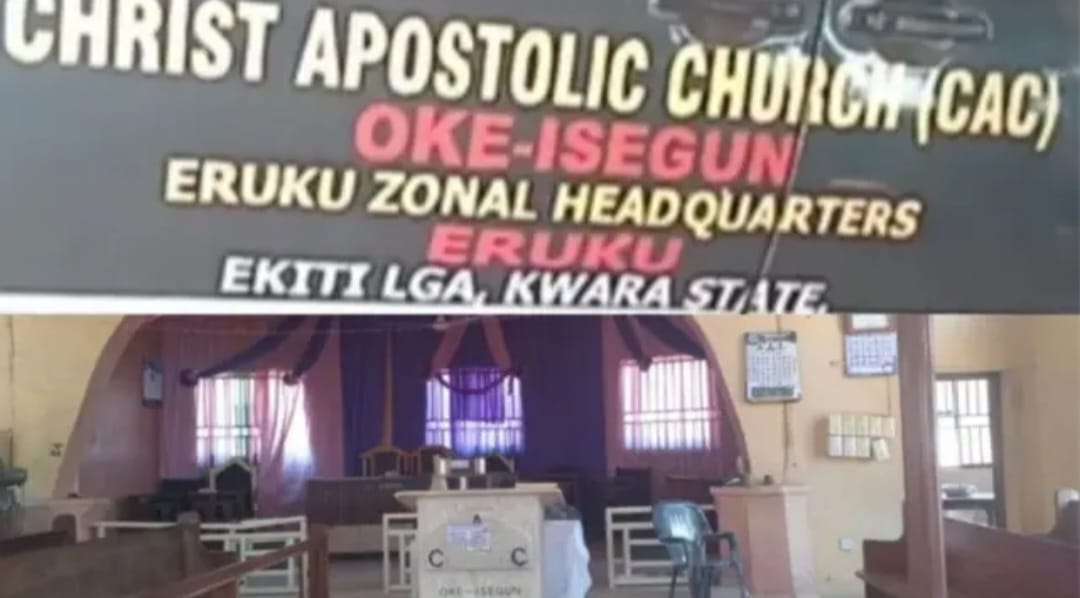
The 38 worshippers are home and for that we give thanks; but GRATITUDE must not silence ACCOUNTABILITY. The state’s job is not only to recover victims; it is to ensure the recovery does not fuel the next crime. Until the full facts of the Eruku release are laid on the table and scrutinized, the “MIRACLE” of a mass release will always carry the sour aftertaste of suspicion; and Nigeria will remain trapped in a vicious cycle where rescue equals reward and reward equals repeat.







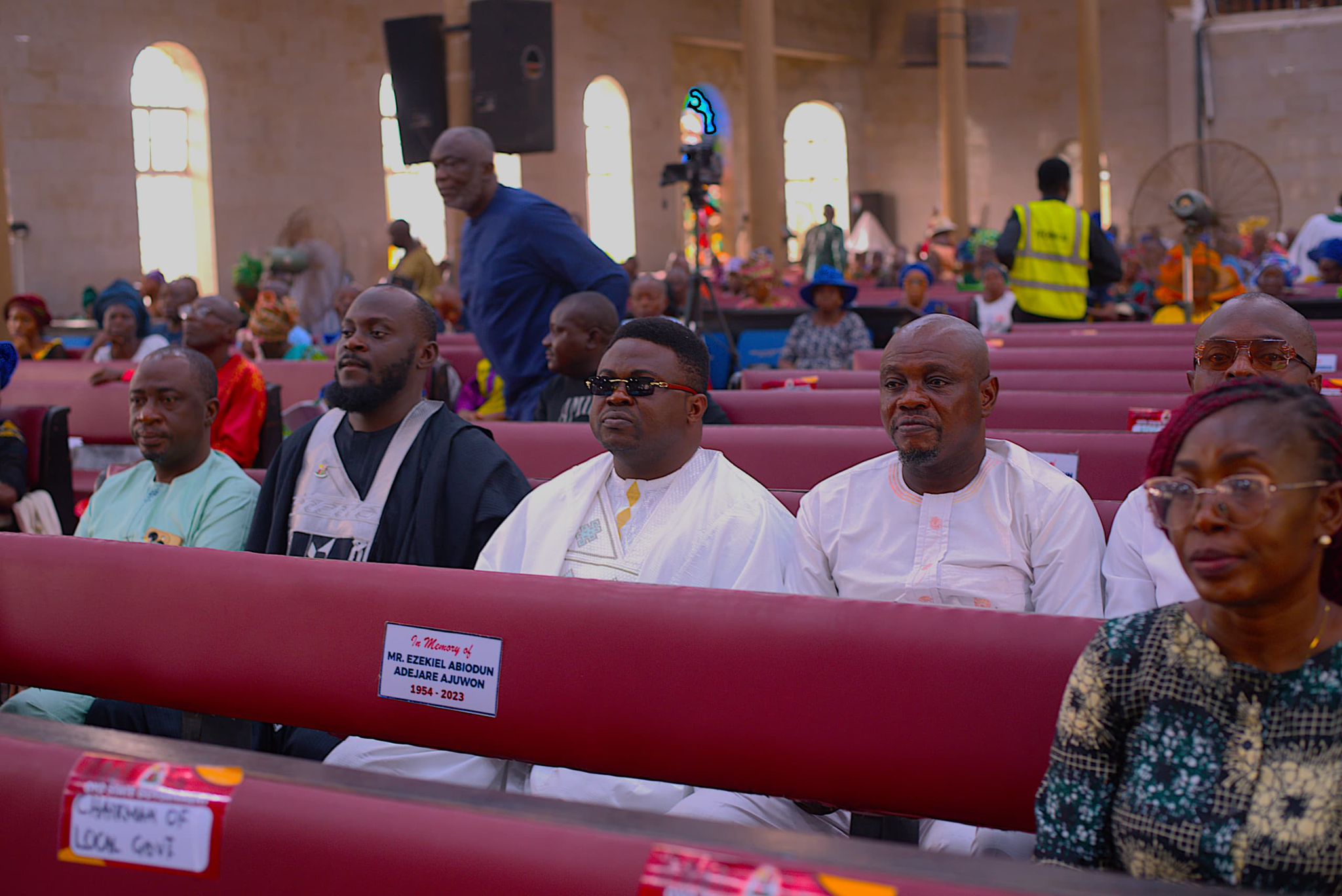
Ajadi, Peter Obi, Adeleke, Others Join Makinde at Oyo@50 Thanksgiving Service
The leading gubernatorial aspirant of the Peoples Democratic Party (PDP) in Oyo State, Ambassador Olufemi Ajadi Oguntoyinbo, on Sunday joined Governor Seyi Makinde, former Anambra State Governor and 2023 Labour Party presidential candidate, Mr Peter Obi, the wife of the Osun State Governor, Chief (Mrs) Titilola Adeleke, and other eminent dignitaries at a Thanksgiving Service marking the seventh day of activities commemorating the 50th anniversary of Oyo State.
The service, held at the Cathedral of St. Peter’s, Aremo, Ibadan, drew a large congregation of worshippers, political leaders, traditional rulers, and stakeholders across the state and beyond, underscoring the significance of the golden jubilee celebration.
Speaking with journalists on the sidelines of the event, Ambassador Ajadi congratulated Governor Makinde, former Governor and Olubadan of Ibadanland, Oba Rashidi Adewolu Ladoja, and other stakeholders for steering the state to its historic milestone, describing the anniversary as a moment for reflection, gratitude, and renewed commitment to progress.
Oyo State at 50 is not just a celebration of years; it is a celebration of the strength, resilience and enduring spirit of our people,” Ajadi said. “I congratulate His Excellency, Engineer Seyi Makinde, Oba Rashidi Adewolu Ladoja and all stakeholders for sustaining the legacy of excellence, unity and progress that the Pacesetter State represents.”
He praised the people of the state for their resilience over the decades. He acknowledged the collective efforts of past and present leaders who have contributed to Oyo State’s political stability, economic growth and rich cultural heritage since its creation in 1976.
Ajadi, an entrepreneur and philanthropist, noted that the golden jubilee provides an opportunity for both leaders and citizens to critically assess the journey so far and recommit themselves to building a more inclusive and prosperous future.
“As we celebrate this golden anniversary, we must reflect on where we are coming from, where we are today and where we want to be,” he said. “Oyo State has produced great leaders, intellectuals, professionals and cultural icons.
He also commended the state government for designing a commemorative programme that blends intellectual engagement with the celebration of excellence, stressing that such initiatives help preserve history while inspiring younger generations.
Earlier, Governor Makinde, while addressing the congregation, said that although his tenure would end in May 2027, the team with which he has delivered good governance remains intact and prepared to continue the state’s development trajectory in different capacities.
The governor, who read the second Bible lesson from Matthew 5:1–12, attributed his emergence as governor in 2019 after eight years of political contest to divine grace, describing his administration as a “new beginning” for Oyo State.
“I was the eighth civilian governor of Oyo State, and in the Bible, the number eight signifies a new beginning,” Makinde said. “God has been merciful to us, and we will continue to govern in accordance with His will and guidance for the people of Oyo State.”
He assured residents of continuity in governance, emphasising that while he would exit office at the end of his tenure, members of his team would remain committed to serving the state.
“We have a team that is still intact. It is only Seyi Makinde that will go out; the members of the team are there to continue the work for the people of Oyo State,” he stated.
In a goodwill message, former Anambra State Governor and Labour Party presidential candidate in the 2023 general elections, Mr Peter Obi, lauded Makinde’s leadership style and the transformation witnessed in the state under his administration.
Oyo State is a city of knowledge and a city of hope,” Obi said. “I thank Governor Makinde for faithfully serving the people. Nigeria is not a poor country, but a poorly governed one, and what we are seeing in Oyo State is an example of using public resources for public good.”
Dignitaries at the event included the wife of the governor, Her Excellency Engr Tamunominini Olufunke Makinde; wife of the Osun State Governor, Chief (Mrs) Titilola Adeleke; former First Lady of Oyo State, Chief (Mrs) Mutiat Ladoja; Chief Judge of Oyo State, Hon. Justice Iyabo Yerima; Secretary to the State Government, Prof. Musibau Babatunde; and several other government officials, traditional rulers and political leaders.
society
UKA Announces Appointment of Hon AMB Asari St-Hill Bahamas/atlantian as Chief of Staff to Reigning Monarch Emperor Solomon Winning
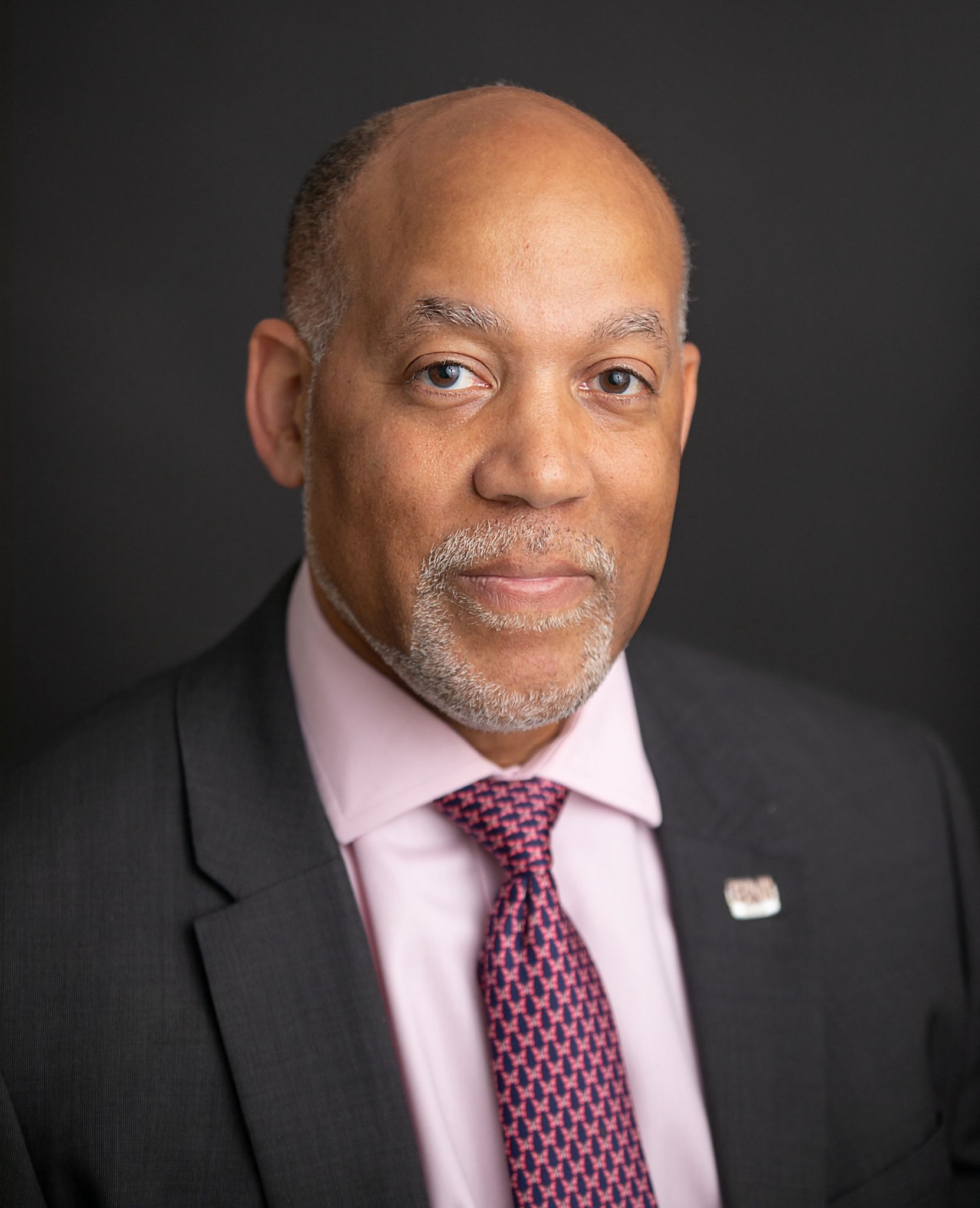
UKA Announces Appointment of Hon AMB Asari St-Hill Bahamas/atlantian as Chief of Staff to Reigning Monarch Emperor Solomon Winning
The United Kingdom of Atlantis (UKA) proudly announces the appointment of *Honorable Ambassador Asari St-Hill, A Bahamas/atlantian* as *Chief of Staff* to the Reigning Monarch, *Emperor Solomon Winning*. The official appointment ceremony was conducted on February 1st, 2026, and marked with the presentation of an Appointment Certificate (UKA 001 -1/2026).
Key Details of the Appointment
– *Hon AMB Asari St-Hill, A Bahamas/Atlantian* has been entrusted with the prestigious role of Chief of Staff, to serve the Reigning Monarch under the UKA GLOBAL ADMINISTRATOR TO UKA ROYAL THRONE of Emperor Solomon Winning, the sovereign of the United Kingdom of Atlantis.
– The appointment signifies a strategic enhancement of the monarch’s administrative and operational capabilities, aligning with the empire’s vision of efficient governance and global humanitarian leadership.
– The certificate of appointment bears the *Royal Seal of the Empire* and the endorsement of *EMP Noblis Solomon Winning*, affirming the legitimacy and authority of the designation.
Role of the Chief of Staff…👇
The Chief of Staff will be responsible for:
1. Managing the day-to-day operations of the monarch’s office.
.2. Act as Principal Aid to the Reigning Monarch and coordinates activities of staff.
3. Serves as one of the confidence to the Reigning Monarch.
4. Organised Reigning monarch appointment, meetings and engagement.
5. Review, vet documents, speaches, correspondence intended for The Reghning Monarch.
6. The Chief of Staff shall work and take instructions from the Global Administrator to the Throne in order to strengthen the entire administration of the Reigning Monarch in order to position UKA as the largest Empire in modern history.
Emperor Nobiliis Solomon Winning is the transformative leader of the United Kingdom of Atlantis, driving innovative projects in finance, humanitarian efforts, and global development. His reign focuses on merging traditional monarchical values with modern technological advancements, exemplified by initiatives like the ATC digital currency.
The United Kingdom of Atlantis (UKA) is a sovereign entity dedicated to fostering global unity, humanitarian progress, and financial innovation. It operates under a regal framework that blends imperial tradition with futuristic economic strategies, including asset-backed digital currencies and sustainable development programs.
_”The appointment of Hon AMB Asari St-Hill as Chief of Staff strengthens our administrative excellence and underscores our commitment to visionary leadership.”_
— *Emperor Solomon Winning*
The United Kingdom of Atlantis looks forward to achieving new milestones in governance and global impact under the stewardship of Emperor Solomon Winning and his esteemed Chief of Staff, Hon AMB Asari St-Hill.
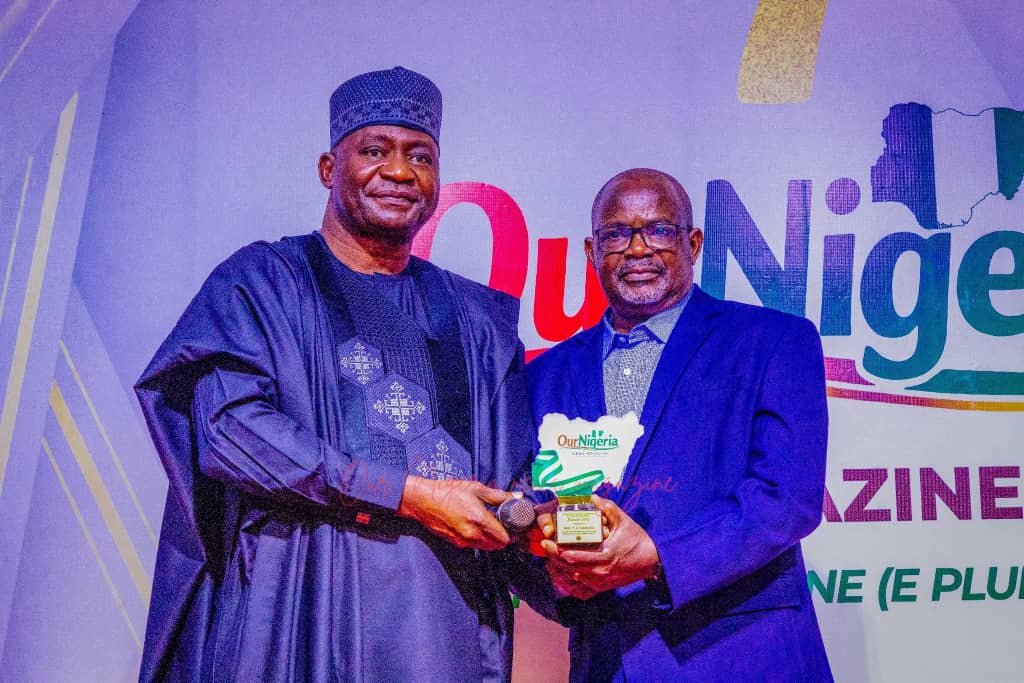
Gen CG Musa Support Group Celebrates Grand Patron as 2025 Man of the Year
The Gen CG Musa Support Group has extended its warmest congratulations to its Grand Patron, His Excellency Gen. Christopher Gwabin Musa OFR (Rtd), the Honourable Minister of Defence, following his prestigious designation as the 2025 Man of the Year by OurNigeria News Magazine.
In a statement released to the press and signed by the Director General of the Support Group, Ibrahim Dahiru Danfulani, the Sadaukin Garkuwan Keffi/Betara Biu, the group hailed the recognition as a fitting tribute to a leader of exceptional character and accomplishment.
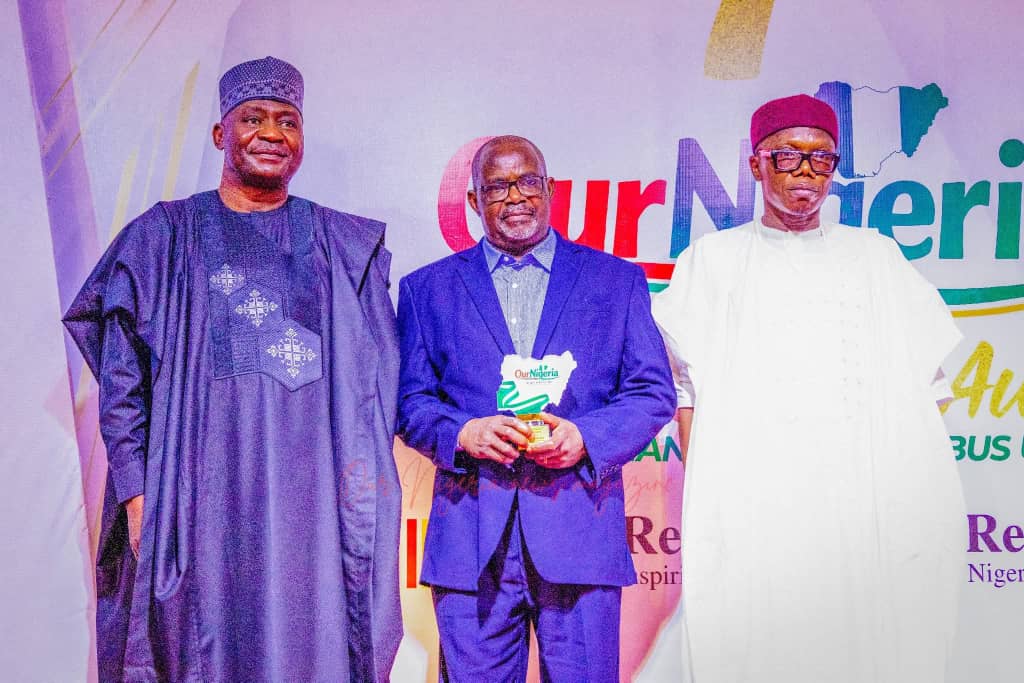
The statement illuminated the distinction of the award, emphasizing that it transcends the formal titles of “General” and “Minister.” It celebrated the core of the man himself—a leader renowned for his profound humility, incredible kindness, and genuine respect for all individuals. “People see the legacy and the title,” the statement noted, “but some of us are lucky to know the man behind it.”
The Support Group underscored that this accolade is a direct acknowledgment of the Minister’s exemplary personal conduct. It is an award not merely for the office he holds, but for the consistent humility he carries into every room and every interaction, a quality that has defined his leadership both in and out of uniform.
The honour also serves as a powerful validation of General Musa’s distinguished and unblemished track record of service to the nation. His decades of dedicated service within the military, which culminated in his ascension to the pinnacle as the Chief of Defence Staff prior to his retirement, are cited as the foundational pillars of his esteemed reputation.
The Gen CG Musa Support Group expressed profound gratitude to OurNigeria News Magazine for its discerning choice, noting that the award serves as a significant source of encouragement for the Honourable Minister. It reaffirms the nation’s appreciation for leadership that blends strength with compassion, strategic vision with unwavering integrity, and lofty achievement with grounded humanity.

This recognition solidifies General Christopher Gwabin Musa’s status not only as a defender of the nation but as a paragon of virtuous leadership, whose influence and example continue to inspire confidence and respect across Nigeria.
About the Gen CG Musa Support Group:
The Gen CG Musa Support Group is a collective dedicated to promoting the ideals and supporting the leadership of His Excellency Asiwaju Bola Ahmed Tinubu GCFR and His Excellency Gen. Christopher Gwabin Musa, celebrating their service and contributions to national peace, security, and unity.


-

 celebrity radar - gossips6 months ago
Why Babangida’s Hilltop Home Became Nigeria’s Political “Mecca”
-

 society6 months ago
Power is a Loan, Not a Possession: The Sacred Duty of Planting People
-

 Business6 months ago
Batsumi Travel CEO Lisa Sebogodi Wins Prestigious Africa Travel 100 Women Award
-

 news6 months ago
THE APPOINTMENT OF WASIU AYINDE BY THE FEDERAL GOVERNMENT AS AN AMBASSADOR SOUNDS EMBARRASSING