
celebrity radar - gossips
Peter Obi’s Defection to ADC: A Defining Moment in Nigeria’s Struggle Against Poverty, Disunity, and Democratic Decay


Peter Obi’s Defection to ADC: A Defining Moment in Nigeria’s Struggle Against Poverty, Disunity, and Democratic Decay.
By George Omagbemi Sylvester | Published by saharaweeklyng.com
“Why Nigeria’s Former Presidential Candidate Chose a New Political Path, What It Means for National Unity, and the Battle for 2027.”
On December 31, 2025, Nigeria witnessed a politically seismic shift: Peter Obi, the former Labour Party (LP) presidential candidate in the 2023 general elections and former Governor of Anambra State, formally defected to the African Democratic Congress (ADC). In a stirring declaration made in Enugu, Obi not only changed his political affiliation but also articulated a powerful moral indictment of Nigeria’s leadership class, accusing it of economic mismanagement, corrosive division, and democratic erosion. His move calls for national unity, transcending ethnic and party boundaries, to confront what he described as the forces that have looted Nigeria into poverty and undermined its democratic promise.

Nigeria’s Existential Crisis: Poverty, Disunity and Democratic Decline
At the heart of Obi’s defection is a sobering diagnosis of Nigeria’s current socio-economic predicament. In his address, Obi described Nigeria as a nation “in deep distress,” where over 130 million Nigerians live in multidimensional poverty and more than 80 million youths remain unemployed—a human catastrophe that has cast a pall over the hopes of an entire generation.
These statistics, while staggering, reflect a deeper systemic failure. According to the World Bank, Nigeria has persistently battled high poverty rates and youth unemployment, even as it remains one of Africa’s most resource-rich nations. Structural challenges such as weak governance, corruption, and institutional paralysis have contributed to a reality where economic growth has not translated into broad-based prosperity. Obi’s critique resonates with leading development scholars like Professor Paul Collier, who has argued that poverty in Africa today is often rooted not in resource scarcity but in governance failures that stifle human potential.
Obi’s assessment aligns with this scholarship: “Nigeria is not poor; we are looted into poverty.” It is a deliberate moral indictment, asserting that Nigeria’s wealth has been systematically siphoned away by elites who prioritise self-enrichment over public service.
The Political Realignment: Beyond Party Loyalty to National Rescue. What makes Obi’s defection particularly significant is the context of his political journey. After his strong and unprecedented showing in the 2023 presidential election (where he galvanized millions of Nigerians, especially youths and urban professionals) Obi remained a symbolic figure in the country’s political landscape. Initially, he stayed within the Labour Party, even as defections and internal crises weakened its structure.
However, Obi’s engagement with the African Democratic Congress (ADC) began long before the formal defection. For months, he was part of a broader coalition of opposition forces that chose the ADC as their political platform for the 2027 general election. Political analysts noted that Obi’s approach was not conventional party-switching but a strategic alliance-building effort aimed at uniting disparate opposition voices against the ruling All Progressives Congress (APC).

In Enugu, Obi emphasised that this move is guided “solely by patriotism and national interest.” He called on his supporters, the Obidient Movement, and opposition leaders from across Nigeria to embrace a “broad national coalition” under ADC. This message is not simply electoral and it is ideological: that Nigeria must repair its broken political culture through unity rather than tribalism or tokenism.
Unity as a Strategic and Moral Imperative. Obi’s speech resonated with deep moral urgency. He did not frame his decision merely as a tactical manoeuvre but as a moral imperative. “ Nigeria is not collapsed, but severely betrayed,” he declared, emphasising that the nation’s problems are not intractable but stem from poor leadership and lack of consensus on national priorities.
His use of language (calling on Nigerians to dismantle entrenched systems of greed and division) reflects the broader intellectual traditions of African leaders who have championed unity against fragmentation. For instance, Kwame Nkrumah once stated, “We face neither East nor West; we face forward,” urging Africans to pursue unity in the face of external and internal pressures. Obi’s invocation of unity evokes this enduring legacy, challenging Nigerians to see beyond ethnic politics and short-term gain.
Moreover, Obi’s focus on electoral integrity as non-negotiable underscores the growing concern that Nigeria’s democratic process must be reformed to truly reflect the will of its people. His warning to those plotting to manipulate the 2027 elections aligns with global democratic norms emphasised by scholars like Larry Diamond, who identifies free and fair elections as essential to legitimate governance.
Reactions and Political Ripples. The implications of Obi’s defection have reverberated across Nigeria’s political terrain. The Labour Party, while publicly characterising Obi’s departure as a “blessing” and an opportunity for internal renewal, also apologised to Nigerians for its perceived failures after the 2023 election. The party’s statement suggests both introspection and a desire to rebuild its identity separate from Obi’s political magnetism.
On the other hand, critics from the ruling party view Obi’s move with scepticism. For example, the Lagos APC described the defection to ADC as “political promiscuity masquerading as principle,” implying that such alliances lack ideological coherence. Such pushback highlights the entrenched resistance within Nigeria’s political class to any realignment perceived as threatening to the status quo.
The Stakes for 2027 and Beyond. As Nigeria heads toward the 2027 general elections, Obi’s defection sets the stage for a dramatically reconfigured opposition landscape. The ADC, long a minor party, now finds itself at the centre of a coalition that could redefine political contestation in Nigeria. Scholars of African politics like Herbert Ekwe-Ekwe have argued that new political coalitions (when rooted in shared national purpose rather than personality cults) can serve as catalysts for democratic renewal.
Obi’s road ahead is not without challenges. Questions remain about the internal dynamics of the coalition, the balance between ideological cohesion and electoral pragmatism, and the capacity of the alliance to win over Nigeria’s diverse electorate.
Nevertheless, Obi’s message is clear: Nigeria’s salvation lies in unity, accountability, and visionary leadership. His defection to the ADC is not merely a change of party, it is an invitation to Nigerians to reclaim their nation from mediocrity and fragmentation.
In Summary: A New Chapter or Historic Turning Point? Peter Obi’s defection to the African Democratic Congress represents more than a personal political move—it is a declaration of national purpose. At a time when poverty, insecurity, and civic disillusionment threaten to erode Nigeria’s democratic fabric, Obi’s call for unity is a rallying cry with moral clarity and political urgency.
Whether this moment will mark the true beginning of a new national consensus or simply another chapter in Nigeria’s turbulent political saga remains to be seen. However, Obi’s defection undeniably reframes the discourse: Nigeria’s struggle is no longer just about elections, but it is about the soul of the nation. This is a story worth watching, worth engaging with, and worth defining the future of Nigeria itself.






celebrity radar - gossips
Anthony Joshua Survives What Thousands Do Not: Inside Nigeria’s Silent Roadside War

Metal, Speed and Neglect: How a Tragic Crash Nearly Claimed boxing’s Biggest Name
By George Omagbemi Sylvester | Published by saharaweeklyng.com
“A Nation Mourns, a Champion Survives. The Tragedy on the Lagos-Ibadan Expressway and a Call to Action on Road Safety.”
In a harrowing and deeply sorrowful episode that has gripped both the sporting world and the Nigerian public, British-Nigerian boxing titan Anthony Oluwafemi Joshua has been discharged from hospital in Lagos following a devastating road accident that claimed the lives of two of his closest team members and friends. The incident, which occurred on December 29, 2025, on the notoriously perilous Lagos-Ibadan Expressway, has ignited not only global sympathy but also a renewed and urgent conversation about road safety, infrastructure deficits, and human vulnerability even among the world’s strongest athletes.

Joshua, 36, whose glorious career has seen him rise from Watford streets to the pinnacle of heavyweight boxing, survived the crash with minor injuries and was under medical care at Lagoon Hospital, Ikoyi, Lagos, before being declared clinically fit to recuperate at home. The governments of Lagos and Ogun States, in a joint statement, expressed profound sorrow over the loss sustained and commended medical personnel for their professionalism.
Yet behind the factual recounting of events lies a narrative of grief, resilience, and sobering reflection with a narrative that compels us to look beyond headlines and statistics and ask deeper questions about safety, responsibility, and the frailty of life itself.
The Tragedy: What Happened on That Fateful Morning. According to official statements and investigations by the Federal Road Safety Corps (FRSC) and the Traffic Compliance and Enforcement Agency (TRACE) of Ogun State, the accident occurred shortly after 11:00 a.m. when the luxury SUV conveying Joshua and three others collided with a stationary red commercial truck parked along the roadside.
Initial findings suggest that a burst tyre on the passenger side of the SUV (possibly aggravated by excessive speed) caused the driver to lose control, resulting in the catastrophic collision.
Tragically, two men in the vehicle died instantly at the scene:
Lateef “Latz” Ayodele, a respected trainer and close confidant of Joshua;
Sina Ghami, his strength & conditioning coach and a vital part of his athletic journey.
Both men were not only skilled professionals but also pillars of Joshua’s inner circle, personalities who contributed significantly to his preparation, mental fortitude, and physical conditioning. Their deaths have left a void in the boxing community and among all who knew them.
Joshua’s Condition and Hospital Discharge.
Following the collision, Joshua was promptly rescued by FRSC operatives and transported to hospital. Medical teams confirmed that despite the severity of the crash, the boxer suffered only minor injuries, such as bruising and soft-tissue trauma, with no fractures or life-threatening damage detected.
After several days under observation, health professionals at Lagoon Hospital deemed him well enough to continue his recovery at home, noting that he was “clinically fit” and could safely recuperate in familiar surroundings.

Upon his release, a visibly shaken Joshua and his mother visited a funeral home in Lagos to pay final respect to Ayodele and Ghami, a moment captured by local sahara media team that underscored the raw emotional toll of the incident.
A Champion’s Tribute and the Grief of a Nation. The aftermath of the crash has unleashed an outpouring of condolences from corners of the globe. Eddie Hearn, chairman of Matchroom Boxing and Joshua’s long-time promoter, described the loss of Ayodele and Ghami as “with the heaviest of hearts,” noting that both men were “great men” whose absence will be profoundly felt.
Similarly, internationally renowned boxer Oleksandr Usyk, once a fierce rival and now a respected colleague, took to social media to express his heartfelt sympathies, calling the event “unbelievable” and praising the two victims as “incredible individuals.”
These tributes highlight not only the tight bonds that form between athletes and their teams but also the broader respect and admiration Joshua commands worldwide and respect not just for his prowess in the ring, but for his humanity outside it.
The Broader Issue: Road Safety and Public Infrastructure in Nigeria. While the focus naturally centers on Joshua and his companions, this tragic event reignites a painful national concern: road safety in Nigeria.
In 2024 alone, Nigeria recorded over 9,500 road accidents, resulting in 5,421 fatalities, a grim reminder that the country’s roads, regulatory systems, and emergency response infrastructure struggle to safeguard human life.
A respected transportation expert, Dr. Olufemi Balogun, Senior Lecturer in Urban Planning and Road Safety, asserts:
“Road fatalities in Nigeria are not merely statistics they are preventable tragedies. Every life lost represents systemic failures in enforcement, infrastructure maintenance, and emergency response.”
Indeed, observers point out that the practice of parking heavy trucks on expressway shoulders without adequate signage or safety measures itself contributes to a hazard environment. When speed, tyre integrity, and poor roadside management converge, the result can be catastrophic and as this incident has shown.
Accountability: Questions That Must Be Answered. With the driver of Joshua’s vehicle now released from the hospital and potentially facing prosecution for reckless driving, law enforcement agencies have emphasized a thorough investigation into the crash’s causes and culpability.
Nigeria’s Minister of Transportation, Senator Adeola Johnson, commented:

“This tragic incident must push us beyond condolences to accountability and reform. We owe it to our citizens and visitors alike to ensure safer roads, stricter enforcement, and better protection for every road user.”
Such calls align with global road safety frameworks like the United Nations’ Decade of Action for Road Safety, which emphasizes engineering, enforcement, and education as pillars of systemic improvement.
The Emotional Aftermath: Beyond Bruises and Headlines. Perhaps what resonates most deeply in this story is the emotional weight carried by Joshua and all who knew Ayodele and Ghami. Their deaths underscore the fragility of life — even for those whose physical strength defies ordinary measures. Joshua’s journey from hospital bed to funeral home is a stark reminder that victory in sport does not inoculate one from life’s tragedies.
Reflecting on the incident, sports psychologist Professor Amina Suleiman notes:
“Traumatic loss, especially of close colleagues, can have a profound psychological impact that outlasts physical injuries. Recovery isn’t simply about healing the body, it is about repairing the spirit.”
A Call to Action: Honour Through Change. In remembering Lateef Ayodele and Sina Ghami (and in celebrating Anthony Joshua’s survival) this incident must serve as a catalyst for meaningful change:
Stronger enforcement of road safety laws;
Improved roadside infrastructure to prevent collisions with stationary vehicles;
Enhanced emergency response systems to support victims immediately.
As Dr. Balogun stresses, “We must transform mourning into motivation, and grief into governance reforms that save lives.”
Last Words: Life, Loss, and Legacy. Anthony Joshua’s discharge from hospital marks the end of one chapter in this tragedy — but the work to prevent such occurrences must only begin. In a nation where road accidents steal thousands of lives yearly, this incident (involving a global icon) shines a glaring spotlight on systemic deficiencies that can no longer be ignored.
We honor Lateef Ayodele and Sina Ghami not just by mourning their loss, but by demanding better roads, better enforcement, and better safety for every Nigerian and visitor who traverses our highways.
Anthony Joshua may walk away today. But hundreds of others cannot, unless we act collectively to turn this tragedy into a turning point.
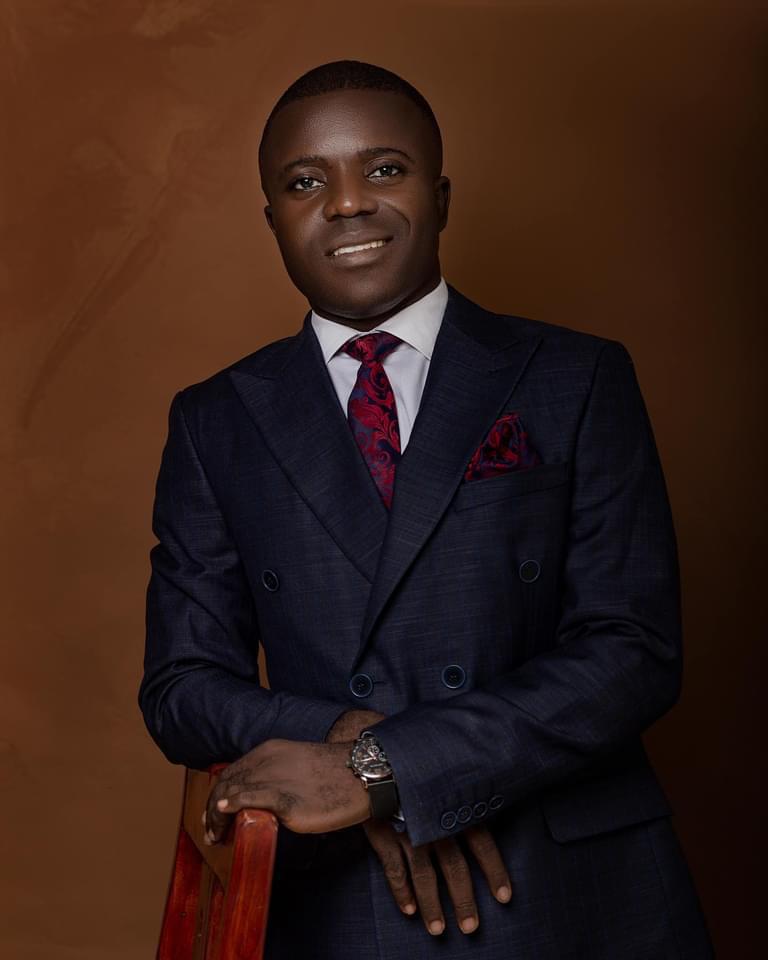
2026 Will Be a Year of Divine Shaking and National Rebirth – Prophet Omotosho Tope Joseph
CALABAR, CROSSRIVER STATE— As Nigeria prepares to enter 2026, Prophet Omotosho Tope Joseph has released a series of prophetic declarations that he says will shape the nation’s political, economic, and spiritual landscape in the coming year.
Describing 2026 as a season of “divine shaking,” the cleric said the year will witness a collision between spiritual forces and national governance, resulting in major transformations as well as grave warnings.
Security Concerns and Calls for Prayer
Prophet Joseph began with what he described as a “prophecy alert,” urging Nigerians to pray fervently against fire outbreaks, kidnappings—particularly in schools—and other security threats. According to him, destructive fire incidents have been spiritually orchestrated and must be resisted through prayer.
He also warned of a potential aviation disaster, stating that only divine intervention would avert a major plane crash, which he said could otherwise trigger political instability for the current administration.
Political Shifts and National Identity
On governance, the Prophet predicted significant policy reversals in favor of the masses, attributing the expected changes to divine intervention rather than political pressure.
He further revealed that some government institutions may undergo name changes, while conversations around Nigeria’s national identity—including its name and flag—could intensify. However, he cautioned that cosmetic changes alone would not resolve the nation’s foundational problems.
“Nigeria is a deeply spiritual nation,” he said, adding that true transformation must go beyond symbols.
Economic Outlook and Investment
Despite global economic uncertainty, Prophet Joseph projected a positive outlook for Nigeria’s economy in 2026. He predicted increased foreign investment, with several powerful nations showing renewed interest in the country.
In the oil sector, he claimed a hidden network of interests would be exposed and dismantled, leading to improved production outcomes. He also described 2026 as a promising year for cryptocurrency investors, though he warned of fluctuations and urged calm during market volatility.
On food security, the Prophet said Nigeria could emerge as a regional solution hub amid shortages elsewhere, provided farmers are adequately protected through advanced security measures.
Warnings for Political and Financial Elites
Prophet Joseph issued a stern warning to high-ranking officials, including governors, ministers, and banking executives, claiming some would seek medical treatment abroad but would not return alive.
He singled out Senate President Godswill Akpabio for special prayer, describing him as divinely favored but spiritually vulnerable. In the South-South region, he cautioned Rivers State Governor Siminalayi Fubara against undermining former Governor Nyesom Wike, whom he described as politically strategic and enduring.
Global Conflict and Spiritual Revival
Internationally, the Prophet foresaw a large-scale conflict involving five powerful nations against the United States and Israel. However, he maintained that both countries would emerge stronger despite the opposition.
Spiritually, he predicted a massive revival in Nigeria and Zambia, marked by what he described as angelic visitations and a surge of conversions to Christianity.
Looking Ahead
Concluding his prophecy, Prophet Joseph expressed optimism for national peace, stating that the security challenges experienced in 2025 would not carry over into 2026.
“The Holy Ghost will invite peace into our security sector,” he said, urging Nigerians to seek God rather than political personalities as the new year unfolds.
celebrity radar - gossips
United Kingdom of Atlantis Appoints H.E Amb Dr Benjamin as Deputy Prime Minister
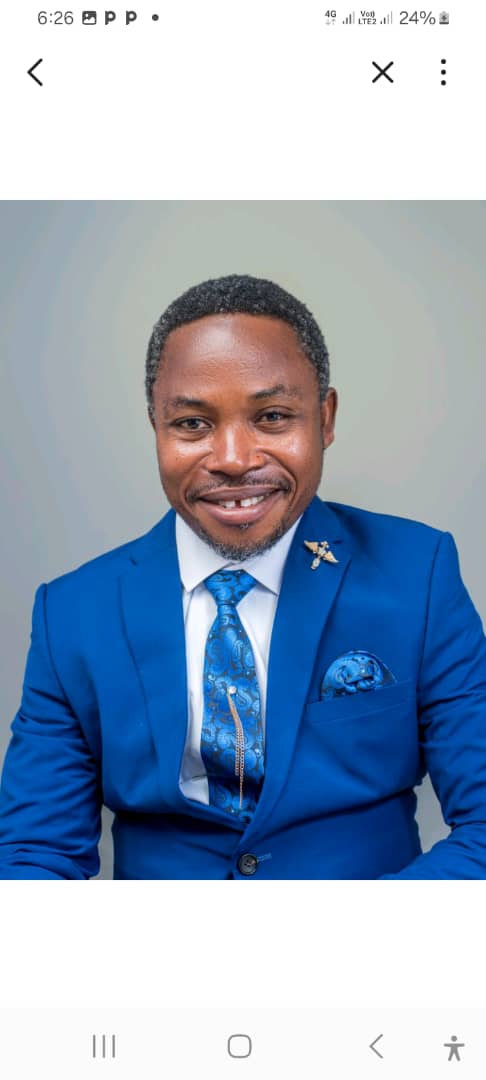
United Kingdom of Atlantis Appoints H.E Amb Dr Benjamin as Deputy Prime Minister
The United Kingdom of Atlantis (UKA), a certified “Decentralized Sovereign Nation,” has officially appointed H.E Amb Dr. Benjamin U.W Amadi as Deputy Prime Minister. This appointment was conferred through an executive order signed by His Imperial Majesty (HIM) Emperor Dr. Solomon Uchenna Winning, the reigning monarch of the United Kingdom of Atlantis.
As Deputy Prime Minister, H.E Amb Dr Benjamin will support UKA in promoting global unity, peace, and sustainable development. The UKA has been actively seeking diplomatic ties and bilateral treaties with nations worldwide, including Bangladesh, Malaysia, South Africa, and Nigeria
The UKA’s diplomatic efforts are led by Emperor Winning, who has been instrumental in establishing the kingdom as a recognized sovereign entity. With diplomatic offices in several continents, including Africa, Asia, Europe, and the Americas, the UKA is expanding its global presence ¹.
*About the United Kingdom of Atlantis:*
The UKA is a decentralized sovereign nation committed to promoting global unity, peace, and sustainable development. Led by Emperor Winning, the kingdom has achieved recognition from renowned institutions and is making strides as a key participant in international forums ².


-
 Politics6 months ago
Nigeria Is Not His Estate: Wike’s 2,000‑Hectare Scandal Must Shake Us Awake
-

 society6 months ago
JUSTICE DENIED: HOW JESAM MICHAEL’S KINDNESS WAS TURNED AGAINST HIM
-

 celebrity radar - gossips5 months ago
Why Babangida’s Hilltop Home Became Nigeria’s Political “Mecca”
-

 society5 months ago
Power is a Loan, Not a Possession: The Sacred Duty of Planting People