
celebrity radar - gossips
Legacy Is Not a Meme: Why Comparing Wizkid to Fela Kuti Is a Cultural Disservice

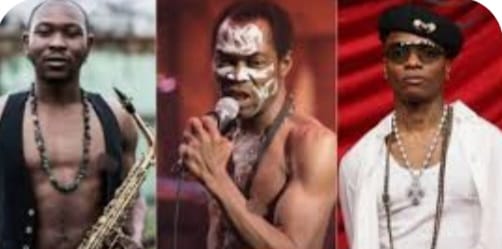
Legacy Is Not a Meme: Why Comparing Wizkid to Fela Kuti Is a Cultural Disservice.
By George Omagbemi Sylvester | For saharaweeklyng.com
“Seun Kuti’s Fiery Rebuttal and What It Reveals About Nigerian Music, History and Respect for Cultural Icons.”
In a moment that ignited fervent debate across social media, Grammy-nominated musician Seun Kuti delivered a blunt and unapologetic rebuke to fans who have taken to comparing contemporary Afrobeats star Wizkid to his father, legendary Afrobeat pioneer Fela Anikulapo-Kuti. In a viral Instagram livestream, Seun Kuti described the comparison not merely as inaccurate, but as “DISRESPECTFUL”, rooted in “IGNORANCE,” and symptomatic of a cultural trend that conflates popularity with historical relevance, a trend that risks trivialising one of Nigeria’s most revolutionary artistic legacies.
Seun’s remarks, passionate and raw, were not a simple defence of family honour. They were a clarion call to cultural literacy, a demand that Nigerians, especially music lovers and artists, distinguish between sound and substance; fame and legacy.
Roots of the Controversy.
The debate stems from persistent online claims (largely emanating from segments of Wizkid’s fanbase (“Wizkid FC”) that the singer represents a modern incarnation of Fela Kuti, or even that he has “SURPASSED” the Afrobeat legend in global influence. Seun Kuti responded emphatically:
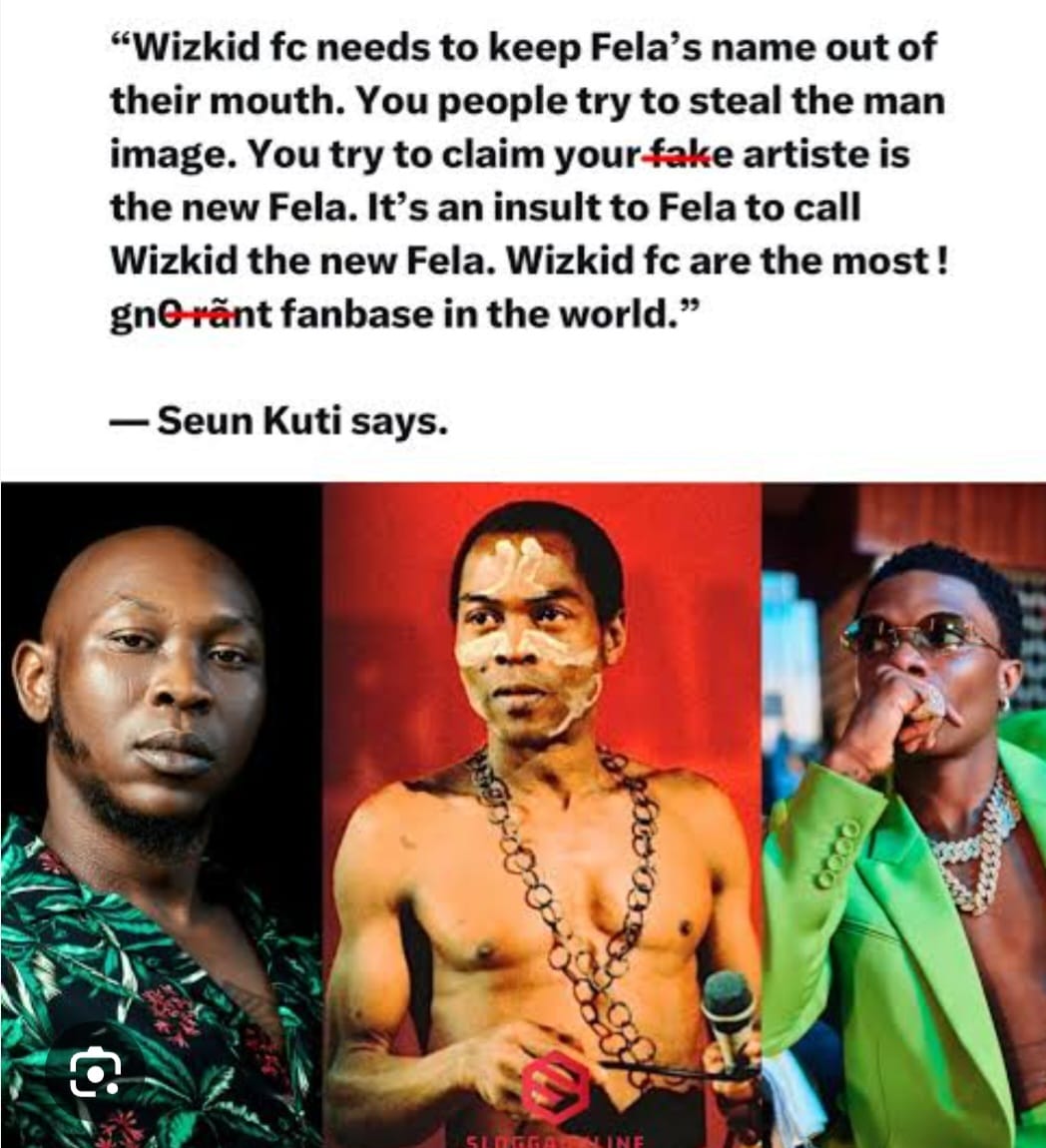
“Wizkid FC, keep Fela’s name out of your mouths. You try to claim that your fake artiste is the new Fela, It’s an insult to Fela to call Wizkid the new Fela.”
These words, incendiary as they are, underscore a deeper debate: What does it mean to carry a legacy? And can commercial success ever be equated with revolutionary cultural impact?
Fela Kuti: More Than Music — A Movement.
To understand why Seun’s outburst resonates with many cultural historians and music scholars, we must revisit the magnitude of Fela Anikulapo-Kuti’s contributions.
Fela was not just a musician; he was the founder of Afrobeat, a genre combining jazz, funk, highlife, traditional Yoruba rhythms, and potent political commentary. His compositions were long, hypnotic, socially charged, and unapologetically defiant — songs like Zombie, Expensive Shit, and Water No Get Enemy were soundtracks of resistance against military dictatorship, corruption, and social injustice in Nigeria.
More than that, Fela’s music became a social movement; inspiring consciousness, unity, and defiance. The late scholar and critic Robert Farris Thompson once noted that Afrobeat was “a creative revolution that fused music with social transformation,” something few genres in world history have achieved with such potency. This was not merely performance art and it was performance protest.
His life was a campaign against oppression, resulting in repeated arrests, the notorious military attack on his Kalakuta Republic commune, and relentless persecution and yet he persisted, turning every struggle into artistic fuel. This context is crucial: Fela’s legacy is not measured by chart positions; it is inscribed in the political memory of a nation.
Wizkid: A Global Star, But in a Different Arena.
There is no denying Wizkid’s achievements. Emerging from Ojuelegba to global prominence, Wizkid has performed on legendary stages, collaborated with international icons, and brought Nigerian music to unprecedented commercial heights. He is a brand, a cultural ambassador, and a global export of Nigerian artistry.
Yet, there is a critical distinction: Wizkid’s influence is predominantly commercial and cultural, not overtly political or revolutionary in the mould of Fela Kuti’s mission.
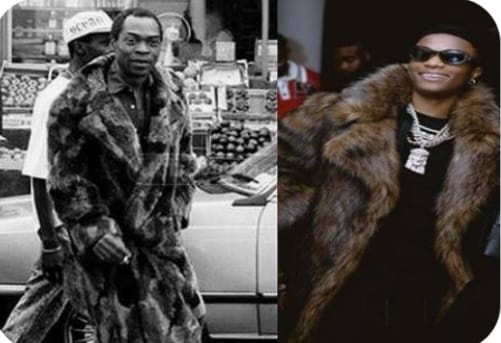
Many of Wizkid’s songs (energetic, melodic, and deeply appealing) serve celebration more than revolution. They resonate with love, lifestyle, and Afrocentric swagger, but do not directly confront the systemic failings or power structures that shaped Fela’s oeuvre. This is not a diminishment of Wizkid’s craft, but a categorical difference, not hierarchy.
Wizkid himself acknowledged this nuance years ago, stating in an interview that “You cannot compare me with Fela, Fela is an inspiration.” He emphasised respect for Fela’s influence without equating their artistic identities.
Why the Comparison Is Misguided; And Harmful.
Seun Kuti’s criticism points to several key issues:
1. Ignorance of Historical Context
Seun labelled the ongoing comparisons as stemming from a lack of understanding of Fela’s historical struggle. Fela’s work was deeply embedded in political activism — something modern pop stardom rarely demands of artists today.
2. Erasure of Cultural Complexity
Reducing Fela to a brand name for hype disregards the layers of resistance and African identity he championed. As cultural theorist Paul Gilroy once said: “The politics of music cannot be separated from the politics of power.” By flattening Fela into a buzzword, we lose that textured insight.
3. Fueling Toxic Fan Culture
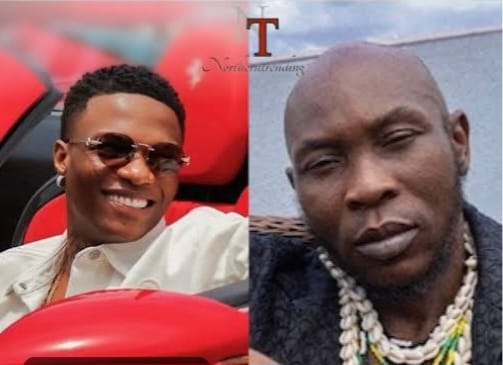
Seun also pointed to how fan rivalries (particularly online) can stifle genuine artistic collaboration. He cautioned that comparing one artist to another in combative terms leads to division rather than celebration of diverse musical contributions.
4. Conflating Commercial Success with Revolutionary Impact
This is perhaps the most salient point: global streaming numbers and sold-out shows are not the same as challenging oppressive systems. Fela’s legacy is measured not just in acclaim, but in societal change. Online popularity cannot mirror that.
Voices from Scholars and Cultural Critics.
Renowned ethnomusicologist Dr. E. Taylor Atkins once argued that “Afrobeat was fundamentally an intellectual and political project before it was a musical genre.” It was a language of dissent. In contrast, modern Afrobeats (while sonically rich) thrives within global pop structures and commercial ecosystems, rather than outside them.
Similarly, music historian Ingrid Monson has observed that “legends are not born from applause alone; they are forged in resistance and resonance with the people’s struggles.” In this light, Fela becomes a figure not easily paralleled.
A Cultural Reckoning : Honour Without Diminishment.
The debate ignited by Seun Kuti is more than a social media sensation. It is a cultural reckoning and a reminder that Nigerian music history is rich, layered, and deserves nuanced appreciation.
This is not to say that Wizkid’s achievements are irrelevant. They are monumental in their own right. But to elevate a contemporary pop star into the lineage of a revolutionary icon without context is, as Seun Kuti correctly pointed out, a disservice to history, to artistry, and to cultural memory.
In the words of acclaimed philosopher Kwame Anthony Appiah: “A culture that forgets its foundations forfeits its future.” Let us celebrate Wizkid for what he has achieved, and honour Fela Kuti for what he fought for, without conflating the two into a false equivalence.
For genuine cultural growth, Nigerian music must embrace its past, honour its icons, and encourage artistic excellence across all fronts; commercial, cultural, and political.



celebrity radar - gossips
DSS Invites Ogun LG Chairman, Alebiosu and others Over Attack At APC Stakeholders Meeting
*DSS Invites Ogun LG Chairman, Alebiosu and others Over Attack At APC Stakeholders Meeting*
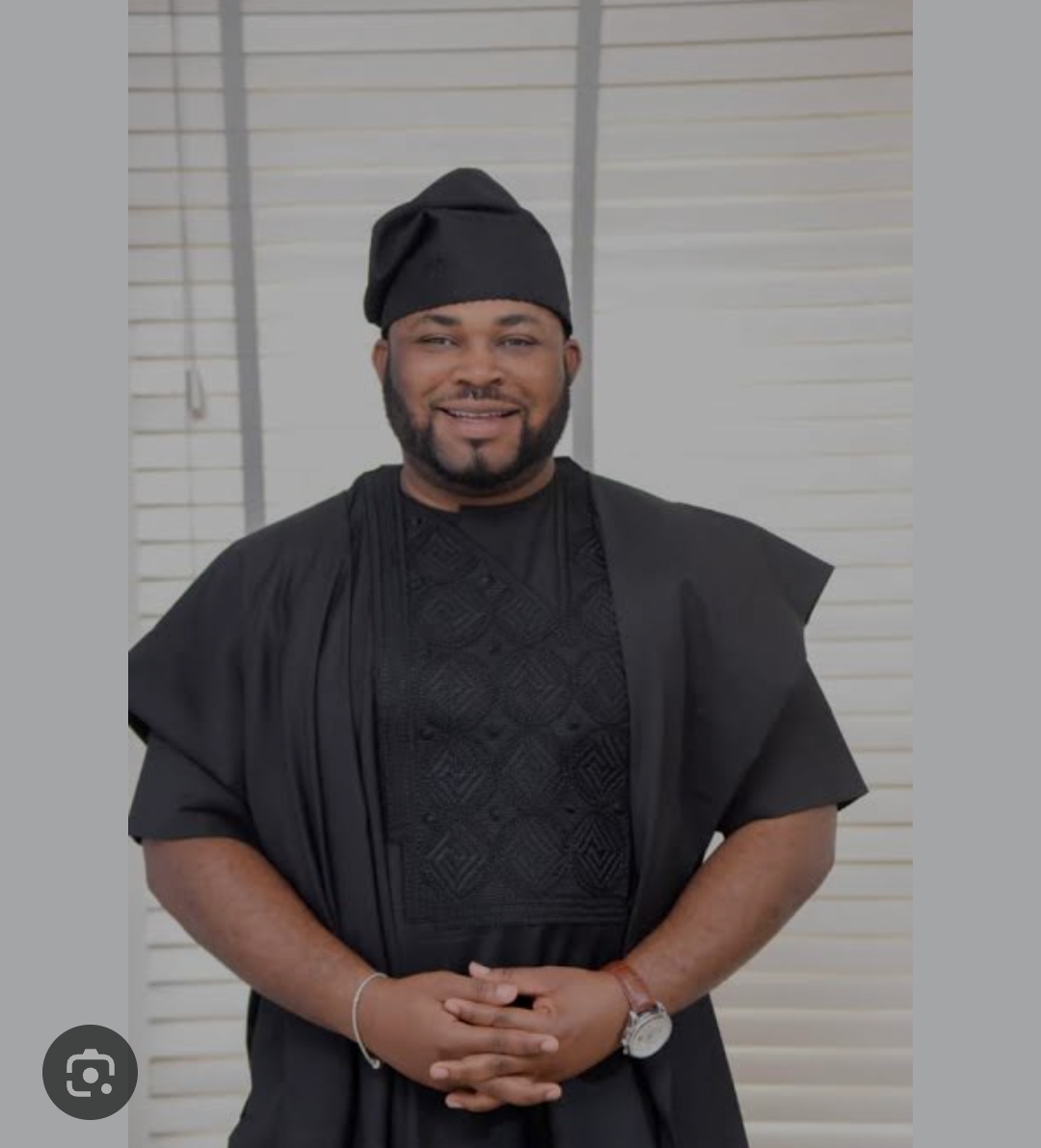
The Department of State Services (DSS) Abeokuta on Monday invited Ijebu Ode local government Chairman, Hon Dare Alebiosu, and some political thugs alleged to have caused disturbance, incitement and physical attack during an APC stakeholders meeting few days to Ward Congress in the area.
A reliable security source disclosed that an aide of the Governor who was reportedly attacked during the stakeholders meeting was said to have petitioned the DSS.
According to the source, there have been growing concerns over the activities of the LG Chairman, who was alleged to be backing cultists and using them as a tool for harassment and intimidation in the community.
As it was reported, the LG boss was accused to have openly confronted and accused the Governor’s aide for identifying some of the cultists to DSS officials, while one of the cultist was said to have hit their target in the face and removing his medicated glasses. The swift and professional intervention of the Men of DSS quickly deescalated the matter and the meeting went on to a conclusive end.
The meeting which held at the residence of Chief Okuboyejo, the Governor’s Advisory Council Chairman at GRA Ijebu ode became tensed, after the LG chairman invaded the private premises of the old man with a large number of cultists which some of them were allegedly believed to be armed.
The source added that the case is presently with the DSS, while the petitioner has also submitted various evidence against the LG Chairman.
In another turn of event, Commisoner for Urban and regional planning was harassed and robbed, so also the former SLG to the Local govt also almost lost his life as he was attacked with cutlass by thugs who were allegedly said to be led by Dapo Adebajo, he was hospitalized. The case has also been reported to the DSS and Police as at the time of filling this report.
celebrity radar - gossips
Laffmattazz with Gbenga Adeyinka & Friends Returns In 2026, As Canada Joins Tour
Laffmattazz with Gbenga Adeyinka & Friends Returns In 2026, As Canada Joins Tour
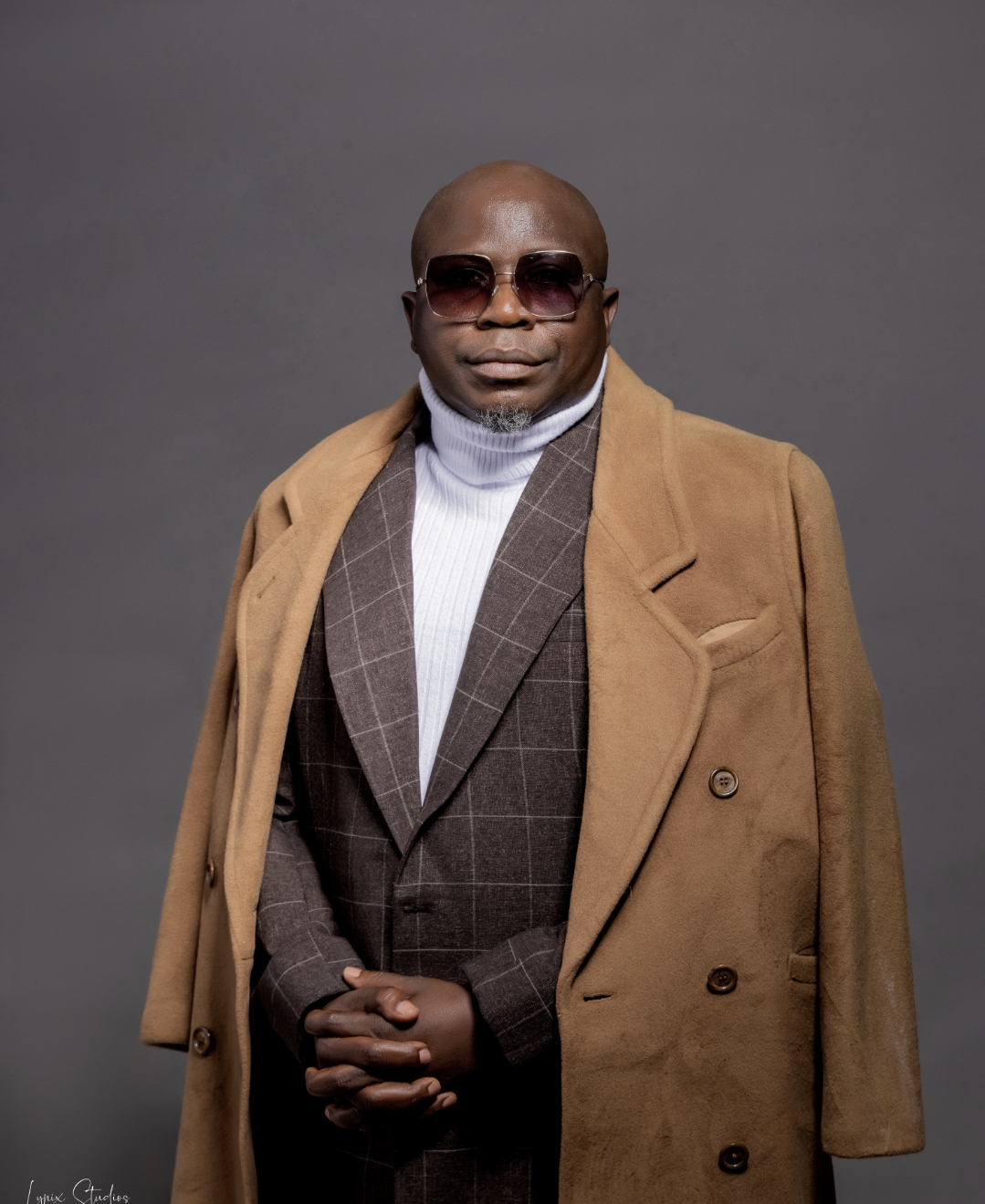
Nigeria’s longest-running and most consistent comedy tour, LaffMattazz with Gbenga Adeyinka & Friends, has officially announced its 2026 tour themed “Next Chapter.” The upcoming edition marks a major milestone as the brand celebrates its 15th edition with a bold expansion that includes Canada for the first time.
The Next Chapter edition represents a clear evolution from previous years — signaling growth, global reach, and a renewed creative vision. While past editions focused on taking premium comedy experiences across Nigerian cities, the 2026 tour elevates the brand with international exposure, upgraded production, and stronger engagement with audiences at home and in the diaspora.
Speaking on the significance of the new theme, organizers describe the 15th edition as more than a celebration of longevity, but a statement of intent — positioning LaffMattazz as a global Nigerian entertainment export.
CONFIRMED TOUR CITIES & VENUES
•Ibadan – Jogor Center (Easter Sunday, April 5th, 2026)
•Akure – The Dome International Culture & Event Center
•Abeokuta – OOPL Marquee
•Lagos – Balmoral Convention Center
•Canada – Multi-city tour (dates to be announced)
Audiences can expect a rich blend of comedy, music, and surprise guest appearances — delivered with the signature “& Friends” experience that has defined the tour for over a decade.
With the Next Chapter, LaffMattazz reinforces its legacy while opening new doors for African comedy on the global stage.

Kevin David Kaydee Releases Inspiring Single “Oluwa Settle Me”
Rising music artist Kevin David Kaydee has released a powerful new single titled Oluwa Settle Me, a soulful Afro-inspired anthem that blends heartfelt prayer with modern rhythm.
“Oluwa Settle Me” captures the everyday cry of many believers seeking breakthrough, peace, and divine favour. With emotionally rich melodies and uplifting instrumentation, the song expresses a sincere plea to God for complete answers to life’s pressing questions—career, destiny, relationships, and spiritual fulfilment.
Drawing from Afrocentric sounds and contemporary gospel influences, the track stands out for its simplicity, sincerity, and spiritual depth. Kevin David Kaydee delivers the message with passion, creating a worshipful atmosphere that resonates across age groups and cultures.
The song’s message of hope and dependence on God positions it as more than just music,it is a prayer set to melody. By fusing spirituality with modern lifestyle rhythms, “Oluwa Settle Me” reflects the growing wave of gospel music that speaks directly to real-life struggles while pointing listeners back to faith.
As gospel music continues to evolve across Africa and beyond, Kevin David Kaydee’s latest release reinforces music as a powerful tool for encouragement, reflection, and spiritual connection.
“Oluwa Settle Me” is now gaining attention among gospel music lovers for its relatable message and soulful sound, marking another significant step in the artist’s growing musical journey.


-

 celebrity radar - gossips7 months ago
Why Babangida’s Hilltop Home Became Nigeria’s Political “Mecca”
-
 society5 months ago
Religion: Africa’s Oldest Weapon of Enslavement and the Forgotten Truth
-

 society6 months ago
Power is a Loan, Not a Possession: The Sacred Duty of Planting People
-
 news7 months ago
THE APPOINTMENT OF WASIU AYINDE BY THE FEDERAL GOVERNMENT AS AN AMBASSADOR SOUNDS EMBARRASSING