
society
AI Filmmaking Breakthrough as Aiflix360 Claims Four Wins at India Film Festival

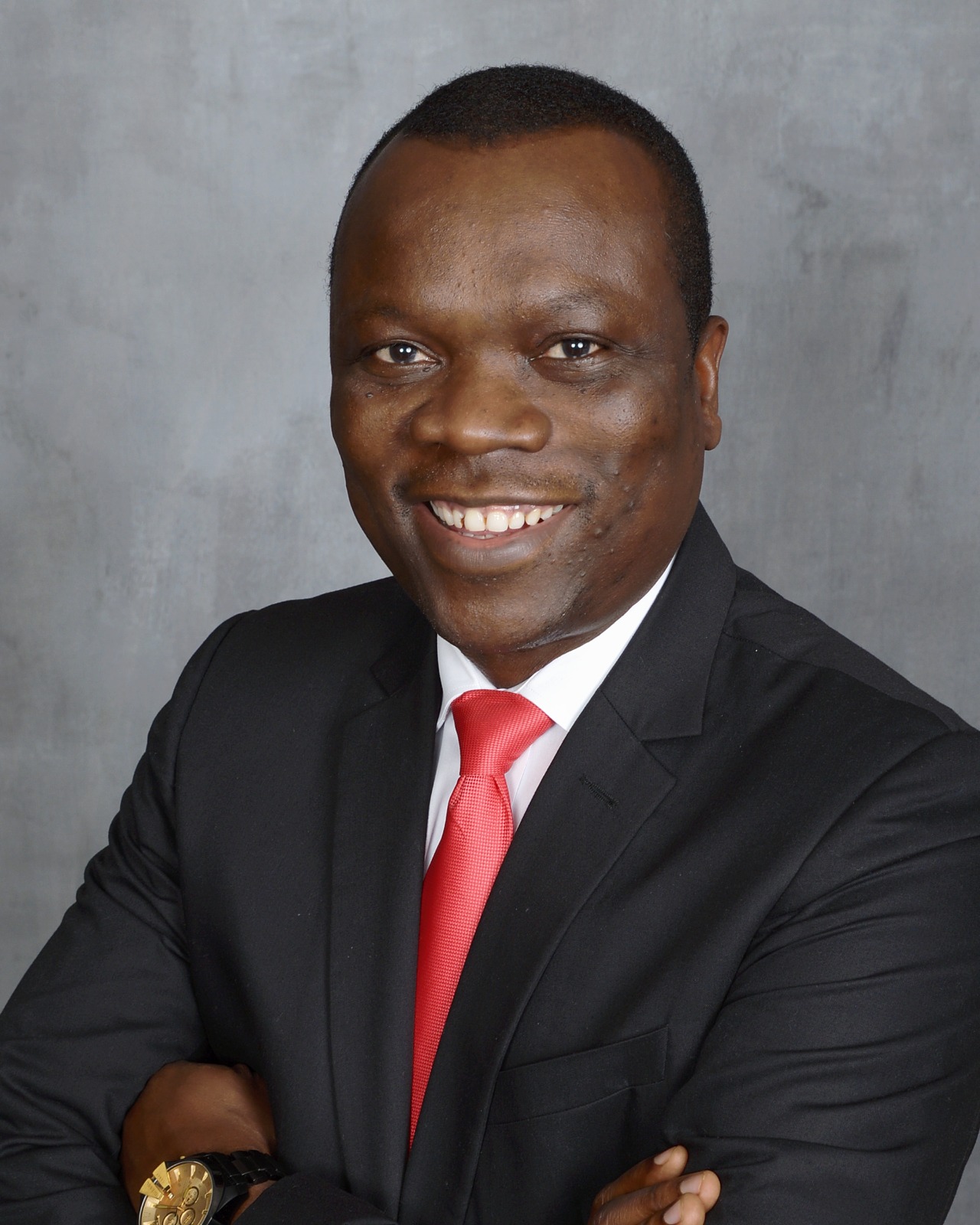
AI Filmmaking Breakthrough as Aiflix360 Claims Four Wins at India Film Festival
Nigeria’s presence in the global film space has received a significant boost as AiFlix360 Films, an artificial intelligence–driven film studio founded by entrepreneur and filmmaker Dr. Ope Banwo, secured four major honours at the 2026 Nawada International Film Festival Awards (NIFFA) in India.
The awards were presented at the sixth edition of the festival held on January 4, 2026, in Nawada, Bihar, where AiFlix360 Films emerged as one of the most celebrated studios, winning across Documentary, Animation, Foreign Film, and Feature Film categories.
Among the winning titles, ‘Wakanda Is Real’ earned the “Best Documentary Film” award, while ‘Detty December’ was named “Best Animation Film”. ‘Guardians of Naija’ clinched the “Best Foreign Film” prize, and ‘Talent Hunt’ completed the impressive outing by winning “Best Feature Film”.
The Nawada International Film Festival attracted strong global participation, with over 2,300 films submitted by producers from more than 80 countries, underscoring the competitiveness of the awards and the growing acceptance of emerging filmmaking models.
Reacting to the recognition, Dr. Banwo described the achievement as a defining moment for AI-powered storytelling.
“Our wins at NIFFA show that artificial intelligence can expand creative possibilities rather than replace artistic intent,” he said. “We are building a filmmaking process where technology supports strong narratives, efficient production, and bold ideas that can compete on any international stage.”
AiFlix360 Films operates as an AI-first studio, integrating story development, cinematic direction, voice performance design, AI-assisted animation, and advanced post-production workflows to deliver premium film content for African and global audiences.
The four-award success positions the studio as a notable force in the rapidly evolving world of AI-powered cinema and reinforces its long-term vision of creating a scalable, African-led film production model driven by innovation without compromising storytelling quality.
About Aiflix360 Films
Aiflix360 Films is an AI-first film studio dedicated to producing next-generation movies using advanced artificial intelligence tools. The company develops original content across documentary, animation, feature films, and experimental cinema, tailored for modern digital audiences and global distribution platforms











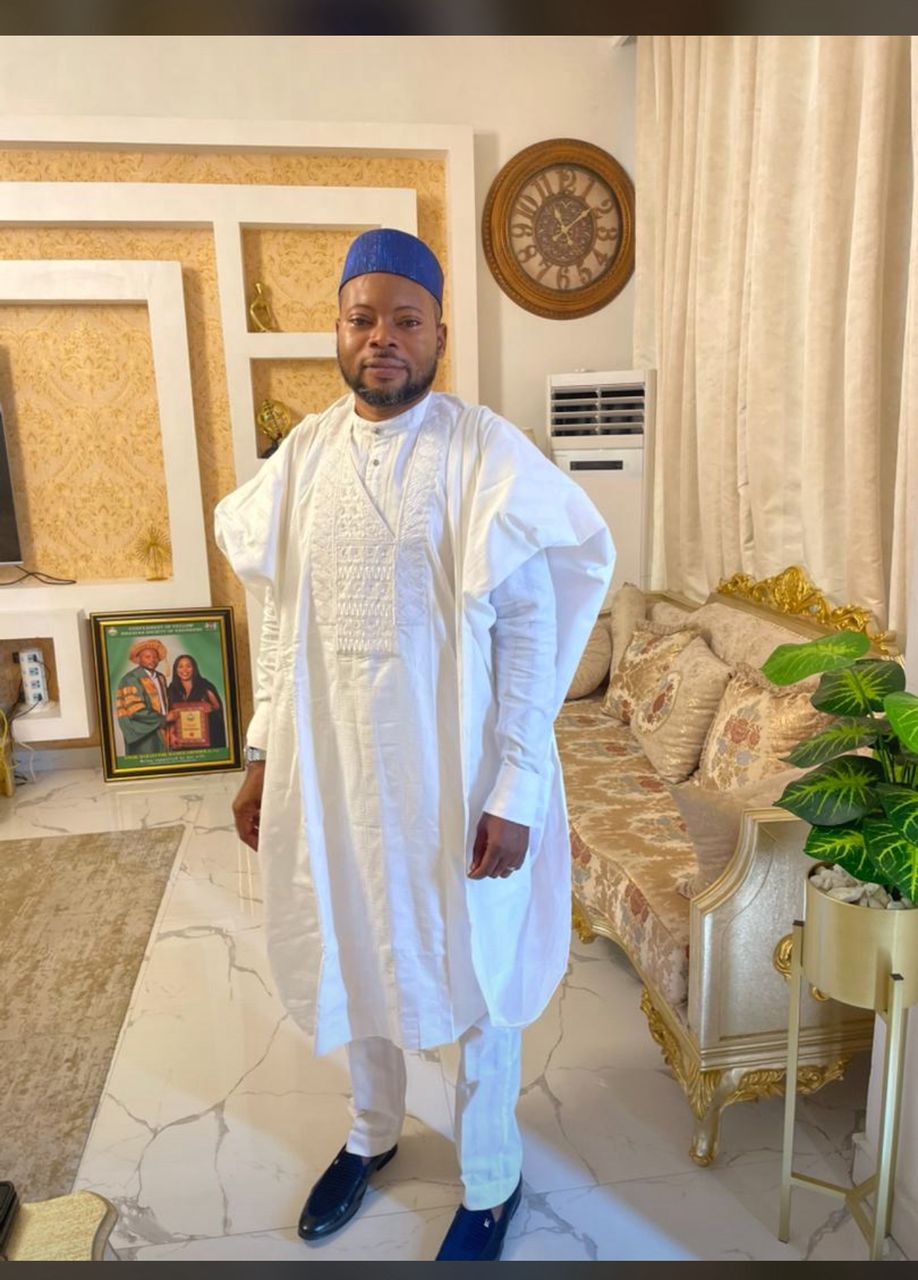
Awujale Succession: The Rising Profile of Omooba Babatunde Hamed Adewunmi Abimbola
Omooba Engr. Abimbola Babatunde Adewunmi Hamed (FNSE) is an illustrious son
of Ijebu Land with over two and half decades of industrious and vast experience in
various engineering sectors such as telecom infrastructure, structural design,
construction, mining, oil & gas, and project engineering management.
Born to the family of Late Omooba Rasheed Olatunde Abimbola (the first son of
Late Omooba Saliu Olowookere Abimbola of the Oshinuga-Oshiyokun Lineage of
the Funshegbuwa Ruling House) and Late Alhaja Nimotallahi Oyindamola Abimbola
(nee Belo).
He holds a bachelor’s degree in civil engineering from the prestigious University of
Lagos. He also holds a post graduate diploma in engineering management, and a
master’s in project management (construction & infrastructure) from University of
Liverpool through Laureate Online Education (The Netherlands).
.
Other educational qualifications include executive diploma in International
Business Management from Pearson UK, and master’s degree in business
administration from the University of Wolverhampton UK.
Prince Abimbola professional career has spanned building construction, structural
design consultancy, telecom infrastructure development, mining and oil and gas
working across multidisciplinary fields handling complex projects along his career
path.
Prince Abimbola spent over two decades at Biswal Limited, rising through the ranks
to the pinnacle as operations general manager & chief enterprise support officer
providing engineering leadership and guidance towards efficient enterprise support
services at Biswal Limited, a leading and innovative telecom infrastructure and
energy service company.
His dedication, expertise and competency earned him an engineering management
position at R28 Holding (the parent group of Biswal Limited) a consolidated and
diversified private investment company with strategic business interest in various
industries such as construction, real estate, telecom, aviation, mining, energy,
among others.
A highly qualified and astute professional, he is a COREN registered engineer as
well as distinguished Fellow of Nigerian Society of Engineers and member of
reputable associations and societies such as:
• Project Management Institute (PMI)
• American Society of Engineering Management (ASEM)
• Society of Maintenance & Reliability Professional (SMRP)
• Fellow, The Institute of Management Consultants of Nigeria (FIMC)
• Fellow, MSME Institute of Management & Professional Studies
Some of his reputable certifications are:
• Project Management Professional (PMP)
• Certified Professional in Engineering Management (CPEM)
• Certified Management Consultant (CMC)
• Honorary Doctorate degree in Engineering Management from Prowess
University Delaware USA.
Over the years, he has attended various local and international trainings and
capacity building programs such as:
• Massachusetts Institute of Technology (MIT) USA Engineering Leadership
Course
• Symbiosis Institute of Digital and Telecom Management India Business
Analytics Course
• Starwisr by Pairview BI Developer Program
• 6-Sigma Green Belt Training
As a thoroughbred professional, Engr. Hamed upholds the principles of professional
engineering ethics in all his endeavors. He is a strong believer in giving back to
society, he volunteers in various charities, alma maters efforts and mentors young
professionals.
Prince Abimbola belongs to an undiluted bloodline of Ijebu land descendants. Both
his parents are sons and daughters of prominent families in Ijebu land. Both his
paternal and maternal grandparents are sons and daughters of prominent families
in Ijebu land, and he is equally married to a daughter of a prominent family of Ijebu
land
He participates in various societal and religious activities, building strong family and
social ties for the general benefit and uplift of humanity.
He is happily married with kids.
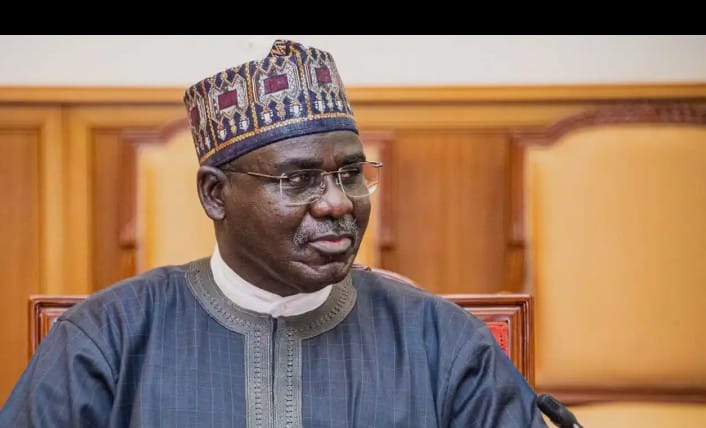
*A TRIBUTE TO A LEGACY OF SERVICE AND SACRIFICE
By Comrade Oladimeji Odeyemi.
*Ambassador Lt General Tukur Yusufu Buratai (rtd) CFR: Selflessness, Modernization and Transformative Leadership of the Nigerian Army.
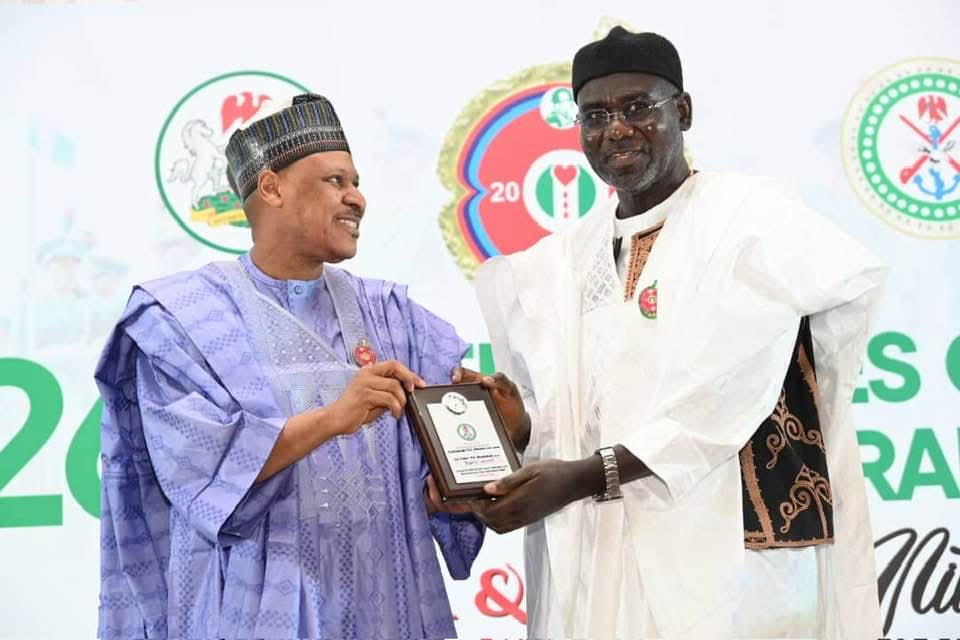
The conferment of the *Legacy (Service and Sacrifice) Award* on His Excellency, * Ambassador Lt General Tukur Yusufu Buratai (rtd) CFR,* by the Federal Government of Nigeria during the *Armed Forces Celebration and Remembrance Day 2026,* stands as a profound national acknowledgment of an extraordinary era in Nigeria’s military history. It is not merely an award—it is a formal recognition of a covenant fulfilled, a testament to leadership anchored in duty, sacrifice, and visionary institutional transformation.
Lieutenant General Buratai’s tenure as the *20th Chief of Army Staff (July 2015 – January 2021)* marked a defining chapter in the evolution of the Nigerian Army. At a time when the nation faced grave and complex security challenges, he assumed command with clarity of purpose and an unambiguous resolve: not only to confront immediate threats, but to rebuild, modernize, and reposition the Nigerian Army for the future. What followed was a deliberate, holistic, and enduring transformation whose impact continues to shape the force today.
*The Vision of a Builder and Reformer*
From the outset, General Buratai demonstrated that sustainable security rests on strong institutions, intellectual depth, and empowered personnel. This philosophy found expression in landmark initiatives that redefined military education and strategic thinking. The establishment of the *Nigerian Army University, Biu,* stands as a bold investment in knowledge, innovation, and indigenous capacity—designed to prepare the Army for the demands of a technology-driven and knowledge-intensive battlefield.
Complementing this was the creation of the *Army War College Nigeria*, a premier institution tasked with cultivating strategic and operational depth among senior commanders, equipping them to navigate complex, multi-theatre security environments with foresight and competence.
*Operational Excellence and Modern Combat Readiness*
In response to asymmetric warfare and evolving threats, General Buratai championed the establishment of the *4 Special Forces Command, Doma (Nasarawa State)*, along with the *Nigerian Army Special Forces School*. These institutions professionalized elite operations, institutionalized rigorous pre-deployment training, and significantly enhanced counter-terrorism, deep reconnaissance, and precision strike capabilities across all theatres of operation.
With rare foresight, he also recognized cyberspace as a critical domain of modern warfare, leading to the establishment of the *Nigerian Army Cyber Warfare Command,* thereby safeguarding digital infrastructure and strengthening information warfare capabilities.
Equally transformative was the revitalization of the *Nigerian Army Aviation Corps,* which provided ground troops with vital close air support, surveillance, and aerial intelligence—fundamentally reshaping battlefield coordination and effectiveness.
*Sustainable Logistics, Welfare, and Human-Centered Leadership*
General Buratai’s leadership understood that morale, welfare, and logistics are inseparable from combat effectiveness. The establishment of *Nigerian Army Farms and Ranches* and *ST Foods* represented innovative, self-sustaining solutions to food security for troops, enhancing operational independence and resilience.
The *Barracks Investment Initiative Programme* further reflected his deep concern for the welfare of soldiers and their families, empowering them through micro-credit schemes and entrepreneurship opportunities, reducing financial anxiety, and facilitating dignified post-service reintegration.
*Strategic Thought and Training Innovation*
Two institutions stand out as pillars of intellectual and doctrinal renewal:
– The *Nigerian Army Resource Centre*, conceived as a strategic think-tank for doctrine development, policy analysis, and future-oriented research.
– The *Land Forces Simulation Centre,* which revolutionized training through immersive, technology-driven simulations, enabling commanders to sharpen tactical and operational skills in a controlled, risk-free environment.
These initiatives ensured that intellectual readiness advanced in step with operational capability.
*A Legacy Rooted in Humanity and Care*
Beyond strategy and combat, General Buratai’s legacy is profoundly human. The comprehensive rehabilitation and modernization of the *68 Nigerian Army Reference Hospital, Yaba,* the *44 Nigerian Army Reference Hospital, Kaduna*, and the establishment of the *NAOWA Command Hospital, Asokoro, Abuja*, remain among the most enduring symbols of his moral leadership. These investments affirmed the sanctity of the soldier’s life and institutionalized world-class medical care as a core obligation of command.
*Total Institutional Rejuvenation*
Under his leadership, the Nigerian Army witnessed unprecedented infrastructural development, enhanced intelligence capabilities, and successful large-scale exercises that stabilized multiple regions of the country.
*Service Beyond Uniform*
Born on *24 November 1960 in Buratai, Biu, Borno State*, Lieutenant General Buratai’s journey—from the *29th Regular Combatant Course of the Nigerian Defence Academy*, through decades of command, staff, instructional, and multinational leadership roles, to the pinnacle of military service—epitomizes disciplined progression and selfless dedication. His post-retirement service as *Nigeria’s Ambassador to the Republic of Benin* further underscores a life devoted wholly to national service.
Decorated with numerous honors, including *FSS, MSS, DSS, GSS,* and the national honor of *Commander of the Federal Republic (CFR)*, his career is matched by impressive academic and professional credentials, as well as an unwavering commitment to professionalism and democratic civil authority.
*The Meaning of the Legacy Award*
The *Legacy (Service and Sacrifice) Award* is therefore a fitting tribute to an era defined by building rather than mere command. General Buratai preserved the apolitical ethos of the Nigerian Army, subordinated military power to democratic authority, and left behind a force that is more professional, resilient, intellectually grounded, and operationally capable.
His legacy resides not only in the institutions he built, but in the rekindled spirit of a Nigerian Army repositioned to defend the sovereignty and unity of the nation—today and for generations to come.
*A Salute to a Life of Purpose*
Lieutenant General Tukur Yusufu Buratai (rtd) CFR stands as a symbol of disciplined leadership, strategic foresight, and selfless service. The nation honors him not merely for what he achieved, but for what he restored: confidence, capacity, and continuity within the Nigerian Army.
Nigeria is grateful. History will remember.
Comrade Oladimeji Odeyemi is a security analyst and a counter terrorism expert, he’s an entrepreneur and a great supporter of the Armed Forces of Nigeria, especially the Nigerian Army.
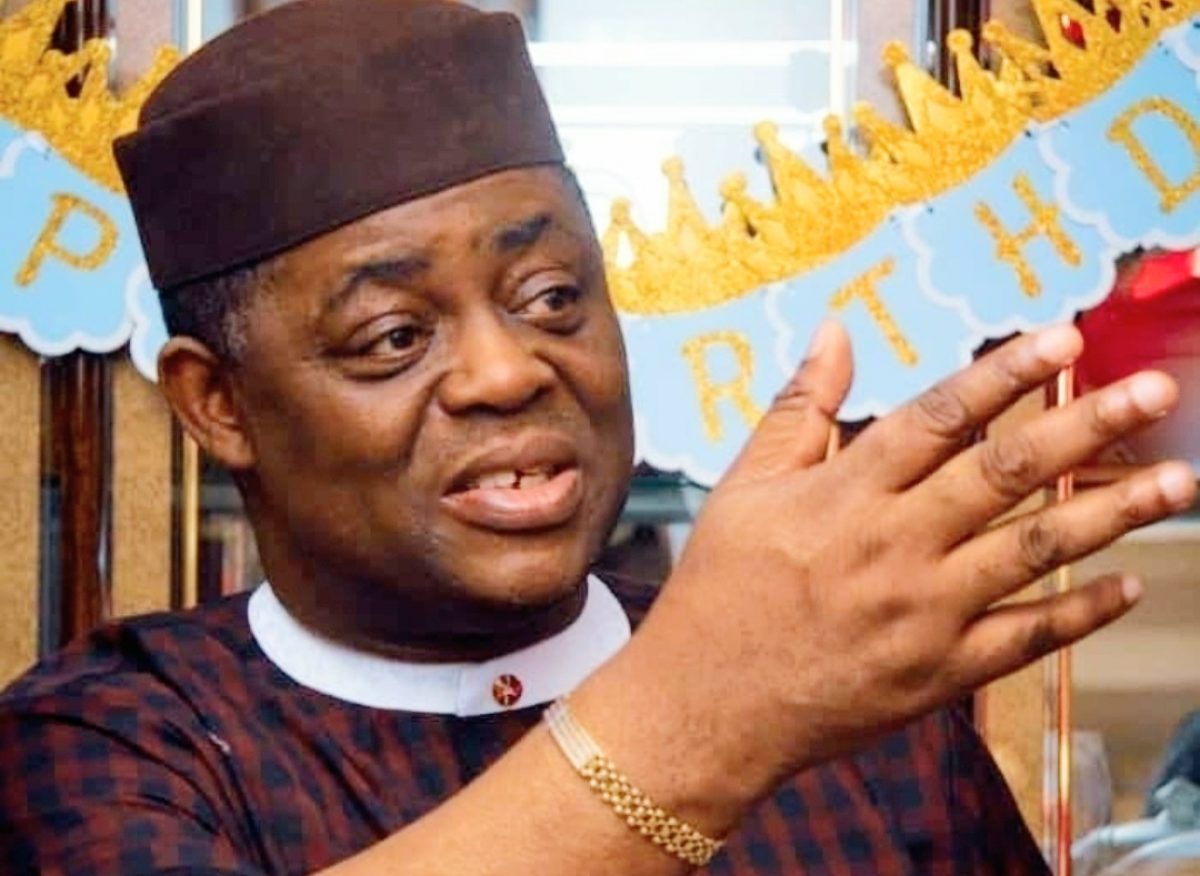
A MORNING OF CARNAGE by Chief Femi Fani-Kayode
Sixty years ago, in the early hours of the morning of January 15th 1966, a coup d’etat took place in Nigeria which resulted in the murder of a number of leading political figures and senior army officers.
This was the first coup in the history of our country and 98 per cent of the officers that planned and led it were from a particular ethnic nationality in the country.
According to Max Siollun, a notable and respected historian whose primary source of information was the Police report compiled by the Police’s Special Branch after the failure of the coup, during the course of the investigation and after the mutineers had been arrested and detained, names of the leaders of the mutiny were as follows:
Major Emmanuel Arinze Ifeajuna,
Major Chukwuemeka Kaduna Nzeogwu,
Major Chris Anuforo,
Major Tim Onwutuegwu,
Major Chudi Sokei,
Major Adewale Ademoyega,
Major Don Okafor,
Major John Obieno,
Captain Ben Gbuli,
Captain Emmanuel Nwobosi,
Captain Chukwuka,
and Lt. Oguchi.
It is important to point out that I saw the Special Branch report myself and I can confirm Siollun’s findings.
These were indeed the names of ALL the leaders of the January 15th 1966 mutiny and all other lists are FAKE.
The names of those that they murdered in cold blood or abducted were as follows.
Sir Abubakar Tafawa Balewa, the Prime Minister of Nigeria (murdered),
Sir Ahmadu Bello, the Sardauna of Sokoto and the Premier of the Old Northern Region (murdered),
Sir Kashim Ibrahim, the Shettima of Borno and the Governor of the Old Northern Region (abducted),
Chief Samuel Ladoke Akintola, the Aare Ana Kakanfo of Yorubaland and the Premier of the Old Western Region (murdered),
Chief Remilekun Adetokunboh Fani-Kayode SAN, Q.C. CON, the Balogun of Ife, the Deputy Premier of the Old Western Region, the Regional Minister for Local Government and Chieftaincy Affairs and my beloved father (abducted),
Chief Festus Samuel Okotie-Eboh, the Oguwa of the Itsekiris and the Minister of Finance of Nigeria (murdered),
Brigadier Samuel Adesujo Ademulegun, Commander of the 1st Brigade, Nigerian Army (murdered),
Brigadier Zakariya Maimalari, Commander of the 2nd Brigade, Nigerian Army (murdered),
Colonel James Pam (murdered),
Colonel Ralph Sodeinde (murdered),
Colonel Arthur Unegbe (murdered),
Colonel Kur Mohammed (murdered),
Lt. Colonel Abogo Largema (murdered),
Alhaja Hafsatu Bello, the wife of the Sardauna of Sokoto (murdered),
Alhaji Zarumi, traditional bodyguard of the Sardauna of Sokoto (murdered),
Mrs. Lateefat Ademulegun, the wife of Brigadier Ademulegun who was 8 months pregnant at the time (murdered),
Ahmed B. Musa (murdered),
Ahmed Pategi (murdered),
Sgt. Daramola Oyegoke (murdered),
Police Constable Yohana Garkawa (murdered),
Police Constable Musa Nimzo (murdered),
Police Constable Akpan Anduka (murdered),
Police Constable Hagai Lai (murdered),
and Police Constable Philip Lewande (murdered).
In order to reflect the callousness of the mutineers permit me to share under what circumstances some of their victims were murdered and abducted.
Sir Abubakar Tafawa Balewa was abducted from his home, beaten, mocked, tortured, forced to drink alcohol, humiliated and murdered after which his body was dumped in a bush along the Lagos-Abeokuta road.
Sir Ahmadu Bello was killed in the sanctity of his own home with his wife Hafsatu and his loyal security assistant Zurumi.
Zurumi drew his sword to defend his principal whilst Hafsatu threw her body over her dear husband in an attempt to protect him from the bullets.
Chief S. L. Akintola was gunned down as he stepped out of his house in the presence of his family and Chief Festus Okotie-Eboh was beaten, brutalised, abducted from his home, maimed and murdered and his body was dumped in a bush.
Brigadier Zakariya Maimalari had held a cocktail party in his home the evening before which was attended by some of the young officers that went back to his house early the following morning and murdered him.
Brigadier Samuel Ademulegun was shot to death at home, in his bedroom and in his matrimonial bed along with his eight-month pregnant wife Lateefat.
Colonel Shodeinde was murdered in Ikoyi hotel whilst Col. Pam was abducted from his home and murdered in a bush.
Most of the individuals that were killed that morning were subjected to a degree of humiliation, shame and torture that was so horrendous that I am constrained to decline from sharing them in this contribution.
The mutineers came to our home as well which at that time was the official residence of the Deputy Premier of the Old Western Region and which remains there till today.
After storming our house and almost killing my brother, sister and me, they beat, brutalised and abducted my father Chief Remi Fani-Kayode.
What I witnessed that morning was traumatic and devastating and, of course, what the entire nation witnessed was horrific.
It was a morning of carnage, barbarity and terror.
Those events set in motion a cycle of carnage which changed our entire history and the consequences remain with us till this day.
It was a sad and terrible morning and one of blood and slaughter.
My recollection of the events in our home is as follows.
At around 2.00 a.m. my mother, Chief (Mrs.) Adia Aduni Fani-Kayode, came into the bedroom which I shared with my older brother, Rotimi and my younger sister Toyin. I was six years old at the time.
My other older brother, Akinola, whom we fondly reffered to as Akins, was not with us that night because he was a border at Kings College, Lagos whilst my other younger sister Tolulope Fani-Kayode was not born until one year later!
The lights had been cut off by the mutineers so we were in complete darkness and all we could see and hear were the headlights from three or four large and heavy trucks with big loud engines.
The official residence of the Deputy Premier had a very long drive so it took the vehicles a while to reach us.
We saw four sets of headlights and heard the engines of four lorries drive up the drive-way.
The occupants of the lorries, who were uniformed men who carried torches, positioned themselves and prepared to storm our home whilst calling my fathers name and ordering him to come out.
My father courageously went out to meet them after he had called us together, prayed for us and explained to us that since it was him they wanted he must go out there.
He explained that he would rather go out to meet them and, if necessary, meet his death than let them come into the house to shoot or harm us all.
The minute he stepped out they brutalised him. I witnessed this. They beat him, tied him up and threw him into one of the lorries.
The first thing they said to him as he stepped out was “where are your thugs now Fani-Power?”
My father’s response was typical of him, sharp and to the point. He said, “I don’t have thugs, only gentlemen.”
I think this annoyed them and made them brutalise him even more. They tied him up, threw him in the back of the lorry and then stormed the house.
When they got into the house they ransacked every nook and cranny, shooting into the ceiling and wardrobes.
They were very brutal and frightful and we were terrified.
My mother was screaming and crying from the balcony because all she could do was focus on her husband who was in the back of the truck downstairs. There is little doubt that she loved him more than life itself.
“Don’t kill him, don’t kill him!!” she kept screaming at them. I can still visualise this and hear her voice pleading, screaming and crying.
I didn’t know where my brother or sister were at this point because the house was in total chaos.
I was just six years old and I was standing there in the middle of the passage upstairs in the house by my parents bedroom, surrounded by uniformed men who were ransacking the whole place and terrorising my family.
Then out of the blue something extraordinary happened. All of a sudden one of the soldiers came up to me, put his hand on my head and said: “don’t worry, we won’t kill your father, stop crying.”
He said this to me three times. After he said it the third time I looked in his eyes and I stopped crying.
This was because he gave me hope and he spoke with kindness and compassion. At that point all the fear and trepidation left me.
With new-found confidence I went rushing to my mother who was still screaming on the balcony and told her to stop crying because the soldier had promised that they would not kill my father and that everything would be okay.
I held on to the words of that soldier and that morning, despite all that was going on around me, I never cried again.
Four years ago when he was still alive I made contact with and spoke to Captain Nwobosi, the mutineer who led the team to our house and that led the Ibadan operation that night about these events.
He confirmed my recollection of what happened in our house saying that he remembered listening to my mother screaming and watching me cry.
He claimed that he was the officer that had comforted me and assured me that my father would not be killed.
I have no way of confirming if it was really him but I have no reason to doubt his words.
He later asked me to write the foreword of his book which sadly he never launched or released because he passed away a few months later.
The mutineers took my father away and as the lorry drove off my mother kept on wailing and crying and so was everyone else in the house except for me.
From there they went to the home of Chief S.L. Akintola a great statesman and nationalist and a very dear uncle of mine.
My mother had phoned Akintola to inform him of what had happened in our home.
She was sceaming down the phone asking where her husband had been taken and by this time she was quite hysterical.
Chief Akintola tried to calm her down assuring her that all would be well.
When they got to Akintola’s house he already knew that they were coming and he was prepared for them.
Instead of coming out to meet them, he had stationed some of his policemen inside the house and they started shooting.
A gun battle ensued and consequently the mutineers were delayed by at least one hour.
According to the Special Branch reports and the official statements of the mutineers that survived that night and that were involved in the operation their plan had been to pick up my father and Chief Akintola from their homes in Ibadan, take them to Lagos, gather them together with the other political leaders that had been abducted and then execute them all together.
The difficulty they had was that Akintola resisted them and he and his policemen ended up wounding two of the soldiers that came to his home.
One of the soldiers, whose name was apparently James, had his fingers blown off and the other had his ear blown off.
After some time Akintola’s ammunition ran out and the shooting stopped.
His policemen stood down and they surrendered. He came out waving a white handkerchief and the minute he stepped out they just slaughtered him.
My father witnessed Akintola’s cold-blooded murder in utter shock, disbelief and horror because he was tied up in the back of the lorry from where he could see everything that transpired.
The soldiers were apparently enraged by the fact that two of their men had been wounded and that Akintola resisted and delayed them.
After they killed him they moved on to Lagos with my father.
When they got there they drove to the Officer’s Mess at Dodan Barracks in Ikoyi where they tied him up, sat him on the floor of a room, and placed him under close arrest by surrounding him with six very hostile and abusive soldiers.
Thankfully about two hours later he was rescued, after a dramatic gun battle, by loyalist troops led by one Lt. Tokida who stormed the room with his men and who was under the command of Captain Paul Tarfa (as he then was).
They had been ordered to free my father by Lt. Col. Yakubu Gowon who was still in control of the majority of troops in Dodan Barracks and who remained loyal to the Federal Government.
Bullets flew everywhere in the room during the gunfight that ensued whilst my father was tied up in the middle of the floor with no cover. All that yet not one bullet touched him!
This was clearly the Finger of God and once again divine providence as under normal circumstances few could have escaped or survived such an encounter without being killed either by direct fire or a stray bullet. For this I give God the glory.
Meanwhile three of the soldiers that had tied my father up and placed him under guard in that room were killed right before his eyes and two of Takoda’s troops that stormed the room to save him lost their lives in the encounter.
At this point permit me to mention the fact that outside of my father, providence also smiled favourably upon and delivered Sir Kashim Ibrahim, the Shettima of Borno and the Governor of the Old Northern Region from death that morning.
He was abducted from his home in Kaduna by the mutineers but was later rescued by loyalist troops.
When the mutineers took my father away everyone in our home thought he had been killed.
The next morning a handful of policemen came and took us to the house of my mother’s first cousin, Justice Atanda Fatai-Williams, who was a judge of the Western Region at the time. He later became the Chief Justice of Nigeria.
From there we were taken to the home of Justice Adenekan Ademola, another High Court judge at the time, who was a very close friend of my father, who later became a Judge of the Court of Appeal and whose father, Sir Adetokunboh Ademola, was to later become the first Nigerian Chief Justice of the Federation.
At this point the whole country had been thrown into confusion and no one knew what was going on.
We heard lots of stories and did not know what to make of what anymore. There was chaos and confusion and the entire nation was gripped by fear.
Two days later my father finally called us on the telephone and he told us that he was okay.
When we heard his voice, I kept telling my mother “I told you, I told you.”
Justice Ademola and his dear wife who was my mother’s best friend, a Ghanaian lady by the name of Mrs. Frances Ademola (nee Quarshie-Idun) whom we fondly called Aunty Frances and whose father was Justice Samuel Okai Quarshie-Idun, the Chief Justice of the High Court of Western Nigeria and later President of the East African Court of Appeal, wept with joy.
My mother was also weeping as were my brother and sister and I just kept rejoicing because I knew that he would not be killed and I had told them all.
I believe that whoever that soldier was that promised me that my father would not be killed was used by God to convey a message to me that morning even in the midst of the mayhem and fear. I believe that God spoke through him that night.
Whoever he was the man spoke with confidence and authority and this constrains me to believe that he was a commissioned officer or a man in authority.
What happened on the night of January 15th 1966 was indefensible, unjustifiable, unacceptable, unnecessary, unprovoked and utterly barbaric.
It set off a cycle of events which had cataclysmic consequences for our country and which we are still reeling from today.
It arrested our development as a people and our political evolution as a country.
Had it not happened our history would have been very different. May we never see such a thing again.
(Chief Femi Fani-Kayode is the Sadaukin Shinkafi, the Wakilin Doka Potiskum, the Otunba Joga Orile, the Aare Ajagunla of Otun Ekiti, a lawyer, a former Senior Special Assistant on Public Affairs to President Olusegun Obasanjo, a former Minister of Culture and Tourism of Nigeria, a former Minister of Aviation of Nigeria and an Ambassador-Designate of the Federal Republic of Nigeria)


-
 celebrity radar - gossips5 months ago
Why Babangida’s Hilltop Home Became Nigeria’s Political “Mecca”
-

 society5 months ago
Power is a Loan, Not a Possession: The Sacred Duty of Planting People
-

 Business5 months ago
Batsumi Travel CEO Lisa Sebogodi Wins Prestigious Africa Travel 100 Women Award
-
 society7 months ago
CP LAWAL ADEBOWALE ASSUMES DUTY AS 46TH COMMISSIONER OF POLICE, ONDO STATE COMMAND