
society
A MORNING OF CARNAGE by Chief Femi Fani-Kayode

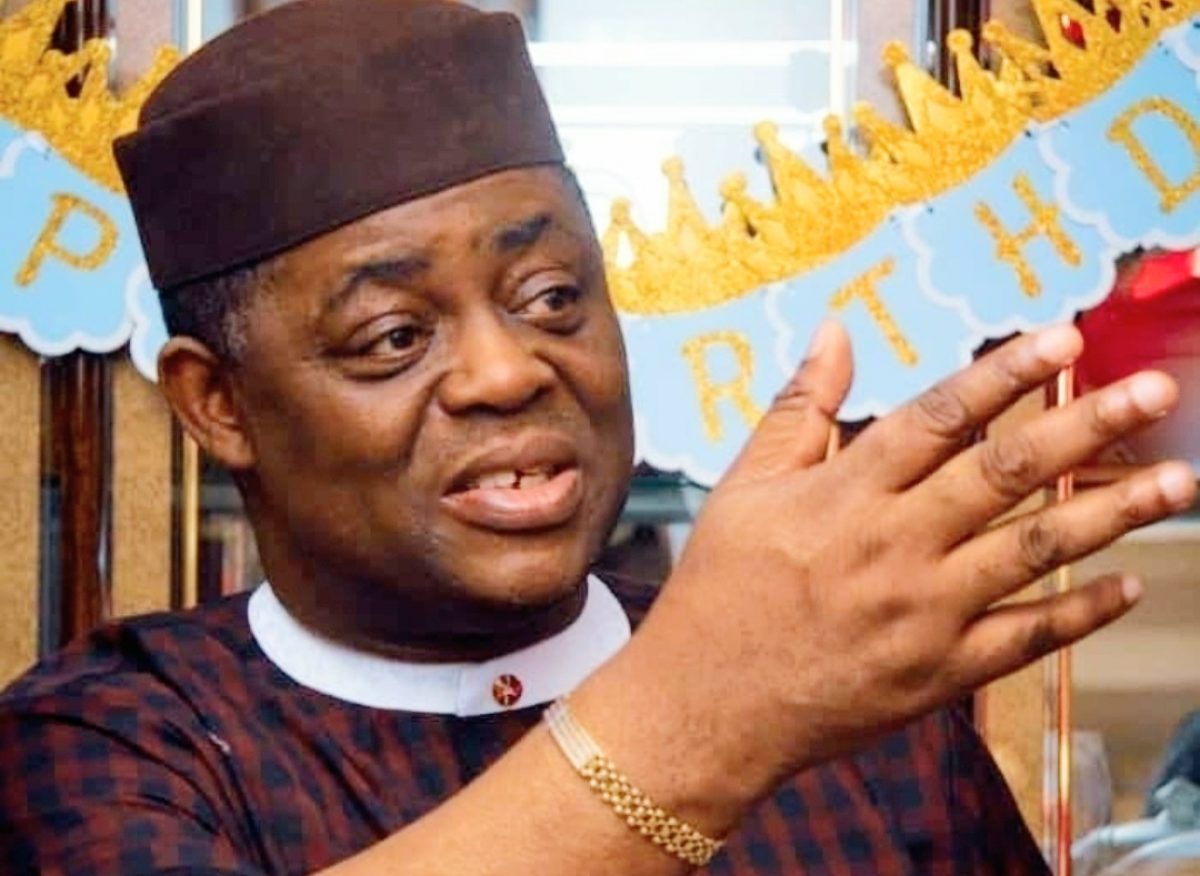
A MORNING OF CARNAGE by Chief Femi Fani-Kayode
Sixty years ago, in the early hours of the morning of January 15th 1966, a coup d’etat took place in Nigeria which resulted in the murder of a number of leading political figures and senior army officers.
This was the first coup in the history of our country and 98 per cent of the officers that planned and led it were from a particular ethnic nationality in the country.
According to Max Siollun, a notable and respected historian whose primary source of information was the Police report compiled by the Police’s Special Branch after the failure of the coup, during the course of the investigation and after the mutineers had been arrested and detained, names of the leaders of the mutiny were as follows:
Major Emmanuel Arinze Ifeajuna,
Major Chukwuemeka Kaduna Nzeogwu,
Major Chris Anuforo,
Major Tim Onwutuegwu,
Major Chudi Sokei,
Major Adewale Ademoyega,
Major Don Okafor,
Major John Obieno,
Captain Ben Gbuli,
Captain Emmanuel Nwobosi,
Captain Chukwuka,
and Lt. Oguchi.
It is important to point out that I saw the Special Branch report myself and I can confirm Siollun’s findings.
These were indeed the names of ALL the leaders of the January 15th 1966 mutiny and all other lists are FAKE.
The names of those that they murdered in cold blood or abducted were as follows.
Sir Abubakar Tafawa Balewa, the Prime Minister of Nigeria (murdered),
Sir Ahmadu Bello, the Sardauna of Sokoto and the Premier of the Old Northern Region (murdered),
Sir Kashim Ibrahim, the Shettima of Borno and the Governor of the Old Northern Region (abducted),
Chief Samuel Ladoke Akintola, the Aare Ana Kakanfo of Yorubaland and the Premier of the Old Western Region (murdered),
Chief Remilekun Adetokunboh Fani-Kayode SAN, Q.C. CON, the Balogun of Ife, the Deputy Premier of the Old Western Region, the Regional Minister for Local Government and Chieftaincy Affairs and my beloved father (abducted),
Chief Festus Samuel Okotie-Eboh, the Oguwa of the Itsekiris and the Minister of Finance of Nigeria (murdered),
Brigadier Samuel Adesujo Ademulegun, Commander of the 1st Brigade, Nigerian Army (murdered),
Brigadier Zakariya Maimalari, Commander of the 2nd Brigade, Nigerian Army (murdered),
Colonel James Pam (murdered),
Colonel Ralph Sodeinde (murdered),
Colonel Arthur Unegbe (murdered),
Colonel Kur Mohammed (murdered),
Lt. Colonel Abogo Largema (murdered),
Alhaja Hafsatu Bello, the wife of the Sardauna of Sokoto (murdered),
Alhaji Zarumi, traditional bodyguard of the Sardauna of Sokoto (murdered),
Mrs. Lateefat Ademulegun, the wife of Brigadier Ademulegun who was 8 months pregnant at the time (murdered),
Ahmed B. Musa (murdered),
Ahmed Pategi (murdered),
Sgt. Daramola Oyegoke (murdered),
Police Constable Yohana Garkawa (murdered),
Police Constable Musa Nimzo (murdered),
Police Constable Akpan Anduka (murdered),
Police Constable Hagai Lai (murdered),
and Police Constable Philip Lewande (murdered).
In order to reflect the callousness of the mutineers permit me to share under what circumstances some of their victims were murdered and abducted.
Sir Abubakar Tafawa Balewa was abducted from his home, beaten, mocked, tortured, forced to drink alcohol, humiliated and murdered after which his body was dumped in a bush along the Lagos-Abeokuta road.
Sir Ahmadu Bello was killed in the sanctity of his own home with his wife Hafsatu and his loyal security assistant Zurumi.
Zurumi drew his sword to defend his principal whilst Hafsatu threw her body over her dear husband in an attempt to protect him from the bullets.
Chief S. L. Akintola was gunned down as he stepped out of his house in the presence of his family and Chief Festus Okotie-Eboh was beaten, brutalised, abducted from his home, maimed and murdered and his body was dumped in a bush.
Brigadier Zakariya Maimalari had held a cocktail party in his home the evening before which was attended by some of the young officers that went back to his house early the following morning and murdered him.
Brigadier Samuel Ademulegun was shot to death at home, in his bedroom and in his matrimonial bed along with his eight-month pregnant wife Lateefat.
Colonel Shodeinde was murdered in Ikoyi hotel whilst Col. Pam was abducted from his home and murdered in a bush.
Most of the individuals that were killed that morning were subjected to a degree of humiliation, shame and torture that was so horrendous that I am constrained to decline from sharing them in this contribution.
The mutineers came to our home as well which at that time was the official residence of the Deputy Premier of the Old Western Region and which remains there till today.
After storming our house and almost killing my brother, sister and me, they beat, brutalised and abducted my father Chief Remi Fani-Kayode.
What I witnessed that morning was traumatic and devastating and, of course, what the entire nation witnessed was horrific.
It was a morning of carnage, barbarity and terror.
Those events set in motion a cycle of carnage which changed our entire history and the consequences remain with us till this day.
It was a sad and terrible morning and one of blood and slaughter.
My recollection of the events in our home is as follows.
At around 2.00 a.m. my mother, Chief (Mrs.) Adia Aduni Fani-Kayode, came into the bedroom which I shared with my older brother, Rotimi and my younger sister Toyin. I was six years old at the time.
My other older brother, Akinola, whom we fondly reffered to as Akins, was not with us that night because he was a border at Kings College, Lagos whilst my other younger sister Tolulope Fani-Kayode was not born until one year later!
The lights had been cut off by the mutineers so we were in complete darkness and all we could see and hear were the headlights from three or four large and heavy trucks with big loud engines.
The official residence of the Deputy Premier had a very long drive so it took the vehicles a while to reach us.
We saw four sets of headlights and heard the engines of four lorries drive up the drive-way.
The occupants of the lorries, who were uniformed men who carried torches, positioned themselves and prepared to storm our home whilst calling my fathers name and ordering him to come out.
My father courageously went out to meet them after he had called us together, prayed for us and explained to us that since it was him they wanted he must go out there.
He explained that he would rather go out to meet them and, if necessary, meet his death than let them come into the house to shoot or harm us all.
The minute he stepped out they brutalised him. I witnessed this. They beat him, tied him up and threw him into one of the lorries.
The first thing they said to him as he stepped out was “where are your thugs now Fani-Power?”
My father’s response was typical of him, sharp and to the point. He said, “I don’t have thugs, only gentlemen.”
I think this annoyed them and made them brutalise him even more. They tied him up, threw him in the back of the lorry and then stormed the house.
When they got into the house they ransacked every nook and cranny, shooting into the ceiling and wardrobes.
They were very brutal and frightful and we were terrified.
My mother was screaming and crying from the balcony because all she could do was focus on her husband who was in the back of the truck downstairs. There is little doubt that she loved him more than life itself.
“Don’t kill him, don’t kill him!!” she kept screaming at them. I can still visualise this and hear her voice pleading, screaming and crying.
I didn’t know where my brother or sister were at this point because the house was in total chaos.
I was just six years old and I was standing there in the middle of the passage upstairs in the house by my parents bedroom, surrounded by uniformed men who were ransacking the whole place and terrorising my family.
Then out of the blue something extraordinary happened. All of a sudden one of the soldiers came up to me, put his hand on my head and said: “don’t worry, we won’t kill your father, stop crying.”
He said this to me three times. After he said it the third time I looked in his eyes and I stopped crying.
This was because he gave me hope and he spoke with kindness and compassion. At that point all the fear and trepidation left me.
With new-found confidence I went rushing to my mother who was still screaming on the balcony and told her to stop crying because the soldier had promised that they would not kill my father and that everything would be okay.
I held on to the words of that soldier and that morning, despite all that was going on around me, I never cried again.
Four years ago when he was still alive I made contact with and spoke to Captain Nwobosi, the mutineer who led the team to our house and that led the Ibadan operation that night about these events.
He confirmed my recollection of what happened in our house saying that he remembered listening to my mother screaming and watching me cry.
He claimed that he was the officer that had comforted me and assured me that my father would not be killed.
I have no way of confirming if it was really him but I have no reason to doubt his words.
He later asked me to write the foreword of his book which sadly he never launched or released because he passed away a few months later.
The mutineers took my father away and as the lorry drove off my mother kept on wailing and crying and so was everyone else in the house except for me.
From there they went to the home of Chief S.L. Akintola a great statesman and nationalist and a very dear uncle of mine.
My mother had phoned Akintola to inform him of what had happened in our home.
She was sceaming down the phone asking where her husband had been taken and by this time she was quite hysterical.
Chief Akintola tried to calm her down assuring her that all would be well.
When they got to Akintola’s house he already knew that they were coming and he was prepared for them.
Instead of coming out to meet them, he had stationed some of his policemen inside the house and they started shooting.
A gun battle ensued and consequently the mutineers were delayed by at least one hour.
According to the Special Branch reports and the official statements of the mutineers that survived that night and that were involved in the operation their plan had been to pick up my father and Chief Akintola from their homes in Ibadan, take them to Lagos, gather them together with the other political leaders that had been abducted and then execute them all together.
The difficulty they had was that Akintola resisted them and he and his policemen ended up wounding two of the soldiers that came to his home.
One of the soldiers, whose name was apparently James, had his fingers blown off and the other had his ear blown off.
After some time Akintola’s ammunition ran out and the shooting stopped.
His policemen stood down and they surrendered. He came out waving a white handkerchief and the minute he stepped out they just slaughtered him.
My father witnessed Akintola’s cold-blooded murder in utter shock, disbelief and horror because he was tied up in the back of the lorry from where he could see everything that transpired.
The soldiers were apparently enraged by the fact that two of their men had been wounded and that Akintola resisted and delayed them.
After they killed him they moved on to Lagos with my father.
When they got there they drove to the Officer’s Mess at Dodan Barracks in Ikoyi where they tied him up, sat him on the floor of a room, and placed him under close arrest by surrounding him with six very hostile and abusive soldiers.
Thankfully about two hours later he was rescued, after a dramatic gun battle, by loyalist troops led by one Lt. Tokida who stormed the room with his men and who was under the command of Captain Paul Tarfa (as he then was).
They had been ordered to free my father by Lt. Col. Yakubu Gowon who was still in control of the majority of troops in Dodan Barracks and who remained loyal to the Federal Government.
Bullets flew everywhere in the room during the gunfight that ensued whilst my father was tied up in the middle of the floor with no cover. All that yet not one bullet touched him!
This was clearly the Finger of God and once again divine providence as under normal circumstances few could have escaped or survived such an encounter without being killed either by direct fire or a stray bullet. For this I give God the glory.
Meanwhile three of the soldiers that had tied my father up and placed him under guard in that room were killed right before his eyes and two of Takoda’s troops that stormed the room to save him lost their lives in the encounter.
At this point permit me to mention the fact that outside of my father, providence also smiled favourably upon and delivered Sir Kashim Ibrahim, the Shettima of Borno and the Governor of the Old Northern Region from death that morning.
He was abducted from his home in Kaduna by the mutineers but was later rescued by loyalist troops.
When the mutineers took my father away everyone in our home thought he had been killed.
The next morning a handful of policemen came and took us to the house of my mother’s first cousin, Justice Atanda Fatai-Williams, who was a judge of the Western Region at the time. He later became the Chief Justice of Nigeria.
From there we were taken to the home of Justice Adenekan Ademola, another High Court judge at the time, who was a very close friend of my father, who later became a Judge of the Court of Appeal and whose father, Sir Adetokunboh Ademola, was to later become the first Nigerian Chief Justice of the Federation.
At this point the whole country had been thrown into confusion and no one knew what was going on.
We heard lots of stories and did not know what to make of what anymore. There was chaos and confusion and the entire nation was gripped by fear.
Two days later my father finally called us on the telephone and he told us that he was okay.
When we heard his voice, I kept telling my mother “I told you, I told you.”
Justice Ademola and his dear wife who was my mother’s best friend, a Ghanaian lady by the name of Mrs. Frances Ademola (nee Quarshie-Idun) whom we fondly called Aunty Frances and whose father was Justice Samuel Okai Quarshie-Idun, the Chief Justice of the High Court of Western Nigeria and later President of the East African Court of Appeal, wept with joy.
My mother was also weeping as were my brother and sister and I just kept rejoicing because I knew that he would not be killed and I had told them all.
I believe that whoever that soldier was that promised me that my father would not be killed was used by God to convey a message to me that morning even in the midst of the mayhem and fear. I believe that God spoke through him that night.
Whoever he was the man spoke with confidence and authority and this constrains me to believe that he was a commissioned officer or a man in authority.
What happened on the night of January 15th 1966 was indefensible, unjustifiable, unacceptable, unnecessary, unprovoked and utterly barbaric.
It set off a cycle of events which had cataclysmic consequences for our country and which we are still reeling from today.
It arrested our development as a people and our political evolution as a country.
Had it not happened our history would have been very different. May we never see such a thing again.
(Chief Femi Fani-Kayode is the Sadaukin Shinkafi, the Wakilin Doka Potiskum, the Otunba Joga Orile, the Aare Ajagunla of Otun Ekiti, a lawyer, a former Senior Special Assistant on Public Affairs to President Olusegun Obasanjo, a former Minister of Culture and Tourism of Nigeria, a former Minister of Aviation of Nigeria and an Ambassador-Designate of the Federal Republic of Nigeria)




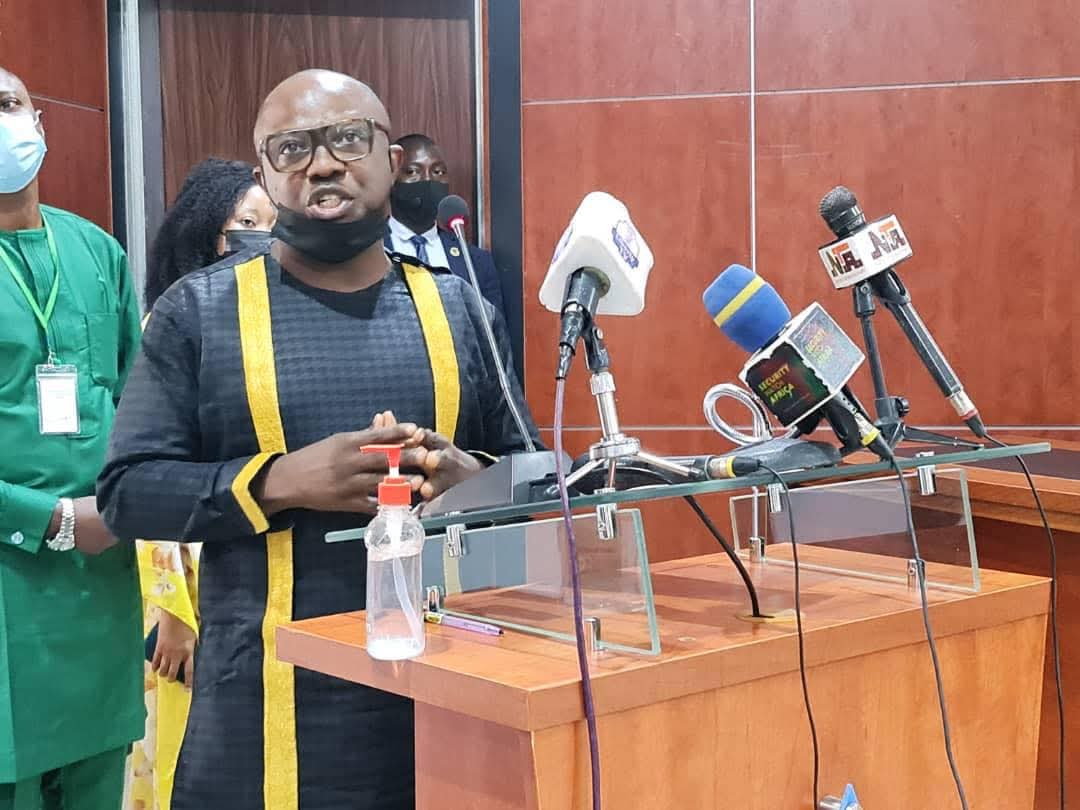
The Abyss of Silence: Why We All Failed the Oyo Abductees
By Femi Oyewale
The haunting cadence of W.B. Yeats’ The Second Coming, quoted so often by the late Chinua Achebe, has ceased to be mere poetry. It has become a grim, real-time mirror reflecting our national existence: “Things fall apart; the centre cannot hold; / Mere anarchy is loosed upon the world.”

In a nation that boasts some of the brightest minds globally, a land steeped in the communal sanctity of “it takes a village to raise a child,” we have descended into an unthinkable abyss. Daredevil criminals have reached into the heart of Oyo State, snatched our children—the very architects of our future—and vanished. Yet, as the sun rises and sets, from the gilded halls of the Presidency to the dusty corners of the local street, we remain paralyzed, tethered to a collective ignorance that is as chilling as it is shameful.
The Theatre of Performative Outrage
We have become a nation of “noises.” We trade blame with surgical precision—the Presidency points to the state, the state points to the security architecture, and the populace directs its vitriol toward the political elite. We have seen the press releases, the hashtags, the fleeting television appearances, and the hollow promises of “concerted efforts.”
But let us be painfully honest: these are not efforts; they are performances. There is not even a whisper of a “near-success syndrome.” While we debate and defend our preferred political affiliations, our children are sleeping under the cold, unforgiving stars of a forest floor. They are subjected to the kind of trauma that shatters souls long before it breaks bodies. They are waiting for a rescue that we are too divided to coordinate.
The Mirror of Empathy
Let us strip away the facade of civic detachment. I challenge every father in this country: if that abducted child were your only son, would you be content with a tweet? To every mother: if that child were the fruit of your old age, would you accept a press statement as enough?
To our governors, our senators, and our political titans: if these children were the heirs to your empires, would the current pace of “investigation” satisfy you? To our billionaires, our security chiefs, and our local traditional warriors, those who claim the mantle of protectors, what if these children were born of your own loins?
The silence that would follow that personal connection is the same silence currently haunting the homes of these victims. We have allowed the abstraction of “national crisis” to desensitize us to the visceral reality of a child’s terror.
Beyond the “One-Man” Savior Complex
We have developed a dangerous habit of outsourcing our conscience. We wait for the radical activist, the viral influencer, or the singular loud voice to carry the burden of the nation. We expect a solitary figure like VDM or a lone firebrand like Sowore to move mountains that require the combined weight of a movement.
But no singular individual can replace the collective pulse of a people. Their rescue is not a one-man job; it is a fundamental test of our humanity.
The Path to Reclamation
We are currently a house divided by party lines, religious silos, and ethnic prejudices. Yet, we have seen that we possess a dormant capacity for unity. When the Super Eagles take to the pitch, our differences vanish. We become one heartbeat, one voice, one nation. Why is it that a game can unify us, but the abduction of our children leaves us fractured?
We do not need more talk. We do not need more inquiries that lead to no arrests. We need to acknowledge a hard truth: we have failed. We have failed the children, we have failed their teachers, and we have failed ourselves.
No stranger knows our terrain better than we do. No satellite imagery can replace the intelligence of a community that refuses to be silent. It is our land. These are our children.
The systemic rot has metastasized to the point where “efforts” no longer count. Only results matter. The time for performative sorrow is over; the time for a unified, uncompromising demand for their return is now. If we do not rise, if we do not act with the singular intensity of a people reclaiming their future, then let the history books record that when our children were taken, Nigeria chose its politics over its people.
We must rescue them. Not tomorrow. Not after the next meeting. Now.
Femi Oyewale is the publisher of Sahara Online and President of NASRE who
writes on national affairs, security, and social development.
Police Officers Detained as Family Property Dispute Sparks Demolition Controversy in Lagos
By Ifeoma Ikem
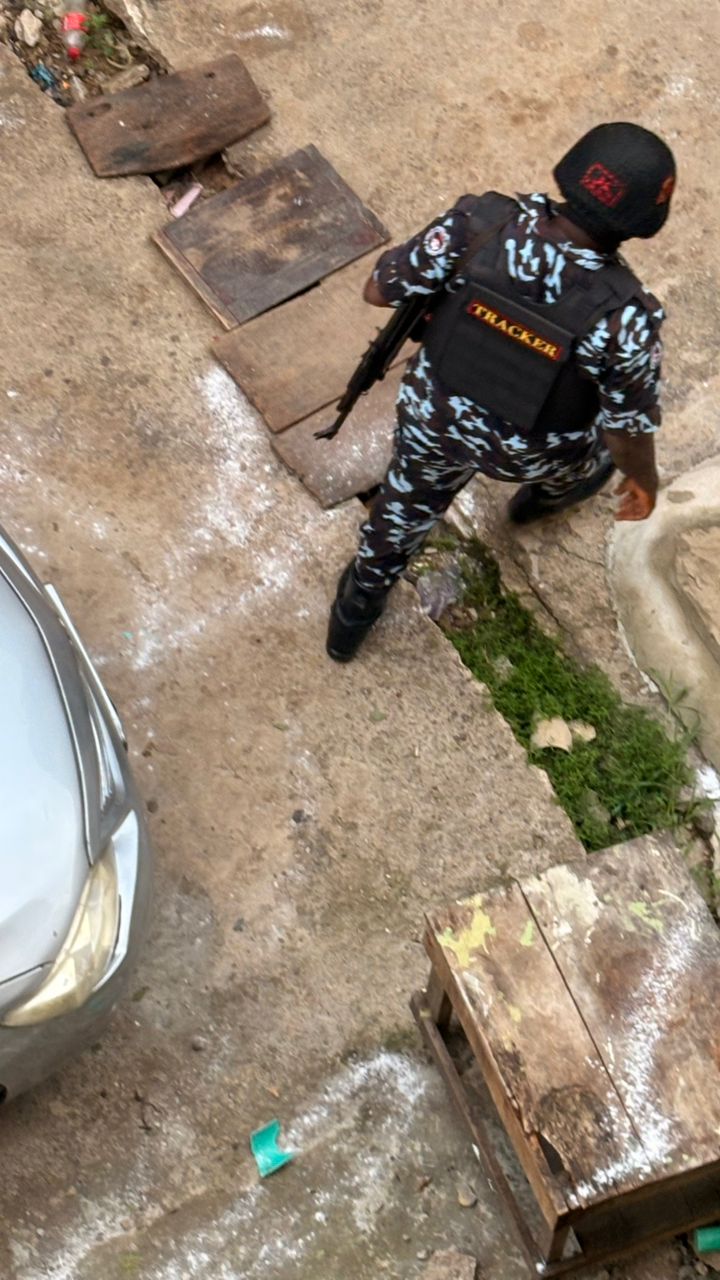
A property dispute within the Omotayo-Ojo family has taken a dramatic turn following a controversial demolition exercise at a residential building in Ikosi-Ketu, Lagos State, which reportedly left tenants displaced and led to the detention of some police officers allegedly involved in the operation.

The property, located at 23B Loveall Street, Ikosi-Ketu, has been the subject of a prolonged ownership tussle since the death of its owner, Chief Oludola Omotayo Ojo, the Babaalaje of Imesi-Ile, Osun State, in 2019.
Residents said tension erupted when a group of individuals, accompanied by security operatives, stormed the premises and commenced demolition activities.
According to eyewitnesses, portions of the building were pulled down while tenants rushed to salvage their belongings from affected apartments.
The residents alleged that windows, doors and roofing sheets were damaged during the exercise, exposing parts of the building to the elements and causing significant losses to occupants.
At the centre of the dispute is Mrs Mojisola Omotayo Ojo Alolagbe, who claimed that the property was allocated to her by her late father during his lifetime as a source of financial support.
She alleged that some family members had persistently challenged her ownership claim despite ongoing legal proceedings relating to the administration of the deceased’s estate.
Alolagbe further claimed that the latest incident was part of a series of attempts to wrest control of the property, citing previous cases of alleged vandalism and partial demolition in November 2025, January 2026 and February 2026.
The situation escalated further when reports emerged that police officers allegedly involved in the demolition were later apprehended and conveyed in a Black Maria vehicle over questions surrounding the legality of their participation in the operation.
Sources familiar with the matter said those behind the demolition had initially claimed to be acting on approval from the Lagos State Ministry of Lands. However, the authenticity and extent of such approval could not be independently verified as of the time of filing this report.
The development has generated concern among residents and community members, who questioned the involvement of security personnel in what they described as a civil matter.
Some tenants, who said they had recently renewed their tenancy agreements, lamented the destruction of their property and appealed to the authorities for protection and possible compensation.

They also called for a thorough investigation into the circumstances surrounding the demolition, insisting that the rights of all parties involved should be protected.
Stakeholders have urged the Lagos State Government, security agencies and the judiciary to intervene and ensure that the dispute is resolved through lawful means to prevent further escalation.
The controversy has continued to draw public attention, raising concerns over property rights, estate administration and the role of law enforcement agencies in civil disputes.

UKA Gears Up for Final ATC Exchangeability Test Run as June Preparations Begin.
May 30, 2026 – As the month of June gathers momentum, the *United Kingdom of Atlantis, UKA*, a sovereign nation has unveiled a series of vital guidelines and preparatory packages to ensure citizens and stakeholders run the *ATC Exchangeability* process effectively.
In an official update, the *President of Atlantic Crown Limited, Empress of Attica Empire UKA*, confirmed that the *Final Test Run of ATC Exchangeability* is scheduled for the month of June 2026. The exercise marks a key phase ahead of the *Official Exchangeability Window, set to run from July 2026 to February 2027*.
### Key Highlights from the Presidential Briefing
1. *Final Test Run – June 2026*
The test run is designed to validate systems, procedures, and user readiness before full activation. Citizens, partners, and designated participants are urged to follow all official advisories released by UKA authorities during this period.
2. *Official Exchangeability Period*
Following the successful completion of the June test run, the Official Exchangeability will commence in july 2026 and we are Expecting Full Exchange ability between July Ending, 2026 to February 2026.
UKA stated that detailed schedules, eligibility requirements, and step-by-step instructions will be communicated progressively through verified UKA channels.
3. *Benefiting Packages for June*
In line with UKA’s commitment to citizen empowerment, the month of June will feature “benefiting packages” aimed at education, preparation, and seamless onboarding. These packages are intended to equip the people of UKA with the knowledge and tools needed for effective participation.
4. *Commitment to Transparency*
Addressing the nation, the Empress of Attica Empire UKA emphasized:
_“Final Test Run of ATC Comes up in The Month of June, As We Prepare For The Official Exchangeability, Between July 2026 To Feb 2027. All Information Will Be Communicated.”_
UKA reaffirmed that only information released through official UKA platforms should be regarded as authoritative.
The United Kingdom of Atlantis is encouraging all citizens, representatives, and interested parties to remain alert to official communications, attend designated orientation sessions, and avoid unofficial sources. UKA’s dedication to order, clarity, and the collective benefit of its people as the nation moves into this significant phase.
For updates, advisories, and participation guidelines, citizens are advised to monitor official UKA communication channels.
United Kingdom of Atlantis, UKA, is a sovereign nation, committed to national development, citizen welfare, and structured economic participation through initiatives such as ATC Exchangeability.


- President Isaias Afwerki Departs for Egypt June 7, 2026
- Eritrea: Athlete Nahom Ermias Champion of Asmara Marathon 2026 June 7, 2026
- World Health Organization (WHO) Hands Over Ebola Preparedness Supplies to Strengthen Zambia’s Readiness June 7, 2026
- Joint Statement by the World Health Organization (WHO) and Food and Agriculture Organization of the United Nations (FAO) in South Africa on World Food Safety Day 2026: From burden to solutions – safe food everywhere June 7, 2026
- Liberia: President Boakai Oversees Signing of US$125 Million in World Bank Financing Agreements for Digital Connectivity, Renewable Energy, and Road Infrastructure June 7, 2026
- President Mahama explores Belarus’ agro-industrial hub; seeks partnerships to boost Ghana’s food security June 7, 2026
- National Insurance Corporation of Eritrea (NICE): Shareholders’ Annual Regular Meeting June 6, 2026
- World Cup accredited journalists raise concerns over unfair United States (US) visa restrictions, International Sports Press Association (AIPS) calls on FIFA to intervene June 6, 2026
- Ghana: President Mahama arrives in Belarus, lays wreath at Victory Monument June 6, 2026
- Liberia: President Boakai Advances Clean Energy Agenda; Dedicates 20-Megawatt Solar Power Plant at Mount Coffee June 6, 2026
- President Isaias Afwerki Departs for Egypt June 7, 2026
- Eritrea: Athlete Nahom Ermias Champion of Asmara Marathon 2026 June 7, 2026
- World Health Organization (WHO) Hands Over Ebola Preparedness Supplies to Strengthen Zambia’s Readiness June 7, 2026
- Joint Statement by the World Health Organization (WHO) and Food and Agriculture Organization of the United Nations (FAO) in South Africa on World Food Safety Day 2026: From burden to solutions – safe food everywhere June 7, 2026
- Liberia: President Boakai Oversees Signing of US$125 Million in World Bank Financing Agreements for Digital Connectivity, Renewable Energy, and Road Infrastructure June 7, 2026
- President Mahama explores Belarus’ agro-industrial hub; seeks partnerships to boost Ghana’s food security June 7, 2026
- National Insurance Corporation of Eritrea (NICE): Shareholders’ Annual Regular Meeting June 6, 2026
-

 news6 months ago
WHO REALLY OWNS MONIEPOINT? The $290 Million Deal That Sold Nigeria’s Top Fintech to Foreign Interests
-

 society1 month ago
SOCIAL MEDIA IS NOT A BATTLEFIELD COMMAND – WHY THE NIGERIAN ARMY’S ACTION AGAINST JUSTICE CRACK IS A NATIONAL SECURITY IMPERATIVE
-

 celebrity radar - gossips4 months ago
Dr. Chris Okafor Returns with Power and Fire of the Spirit -Mounts Grace Nation Altar with Fresh Anointing and Restoration Grace on February 1, 2026
-

 celebrity radar - gossips6 months ago
Prophet Kingsley Aitafo Releases 2026 Prophecy: ‘Nigeria Will Rise, but the World Must Prepare for Turbulence’