celebrity radar - gossips
LT GEN (DR) FARUK YAHAYA (RTD) FILES N1.5BN DEFAMATION SUIT AGAINST ALI-KEFFI, ARISE NEWS AND SAHARA REPORTERS
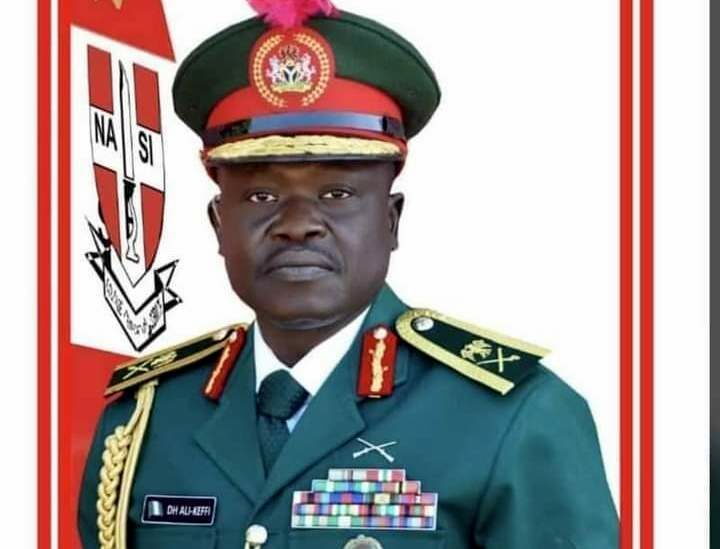
Lieutenant General (Dr) Faruk Yahaya (rtd) CFR, Zarumman Sokoto and former Chief of Army Staff, Nigerian Army, has on Wednesday, 14 January 2026, instituted a defamation suit at the Federal Capital Territory High Court, Abuja, against Major General Danjuma Hamisu Ali-Keffi (rtd), Arise Broadcasting Limited and Sahara Reporters Media Group Inc. following the expiration of a demand notice.
In the suit, Lt Gen Yahaya is seeking, among other reliefs, formal retractions and public apologies from the defendants over alleged defamatory publications, as well as monetary damages of N1.5 billion and N600 million respectively.
The action arises from publications and broadcasts which the claimant contends were false, malicious and injurious to his reputation, character and integrity, linking him to allegations of terrorism financing, illegal mining and banditry.
Court processes show that the matter has been duly filed before the High Court of the Federal Capital Territory, Abuja, and the defendants have been served to enter appearance in accordance with the rules of court.
Brigadier General Sani Kukasheka Usman (rtd) mni fnipr
For and on behalf of
Lt Gen (Dr) Faruk Yahaya (rtd) CFR
Zarumman Sokoto
Abuja
15 January 2026
celebrity radar - gossips
RECLAIMER: RESTORING CONTEXT, TRADITION, AND TRUTH …CLARIFIED ACCOUNT OF THE UNEME-OSU VILLAGE HEADSHIP AND THE LEGITIMACY OF HRH FREDERICK LUCKY IYOGUN. IYOGU II OF UNEME-AKIOSU
RECLAIMER: RESTORING CONTEXT, TRADITION, AND TRUTH
…CLARIFIED ACCOUNT OF THE UNEME-OSU VILLAGE HEADSHIP AND THE LEGITIMACY OF HRH FREDERICK LUCKY IYOGUN. IYOGU II OF UNEME-AKIOSU
In every society governed by ancestral norms and collective memory, truth is not preserved by noise but by careful recollection, balance, and fidelity to established custom. Recent narratives circulating in the public domain concerning the Uneme-Osu village headship have generated anxiety, misinterpretation, and an unfortunate distortion of facts. While public discourse is welcome in a democratic environment, it becomes imperative to respond when such discourse risks undermining communal cohesion, delegitimising lawful authority, and misrepresenting tradition.
This reclaimer is not written to inflame passions, malign individuals, or dismiss genuine concerns. Rather, it is offered as a measured corrective, rooted in historical continuity, cultural procedure, and the lived reality of Uneme-Osu. Its purpose is to reaffirm, with clarity and depth, that His Royal Highness, Frederick Lucky Iyogun, IYOGU II emerged as Village Head through processes consistent with Uneme-Osu tradition, validated by customary stakeholders and recognised within the appropriate administrative framework.
*Understanding Uneme-Osu Tradition Beyond Simplistic Narratives*
Uneme-Osu’s traditional governance structure is neither static nor simplistic. Like many indigenous systems, it has evolved through generations, adapting to demographic changes, lineage expansion, and administrative intersections with the modern state. To suggest that tradition operates only through a single rigid pathway is to misunderstand its organic nature.
While matrilineal considerations form an important aspect of Uneme customary governance, they do not exist in isolation from patrilineal identity, kindred consensus, ancestral legitimacy, and community acceptance. The village headship is not merely the product of ritual sequence but the culmination of lineage right, moral standing, communal trust, and capacity for leadership.
Historical practice in Uneme-Osu demonstrates that variation in procedural emphasis has occurred across generations, particularly during periods of transition or vacancy. What remains constant, however, is the recognition of eligible lineage, ancestral entitlement, and community affirmation. HRH Iyogu II emergence must therefore be examined within this broader customary framework rather than through a selective interpretation designed to support a predetermined conclusion.
*Lineage Legitimacy and Ancestral Right*
At the core of village headship legitimacy lies lineage. HRH Frederick Lucky Iyogun belongs to a recognised ancestral line within Uneme-Osu, historically associated with leadership responsibility, land stewardship, and communal representation. His family history is neither fabricated nor recently invented, as some narratives insinuate, but well-known within the community’s genealogical memory.
The attempt to cast doubt on his kindred identity by questioning nomenclature or historical terminology reflects a misunderstanding of how Uneme lineages have evolved over time. Kindred names, sub-lineages, and household identifiers have shifted, merged, or been colloquially referenced differently across generations, particularly in response to migration, intermarriage, and administrative record-keeping.
What matters in customary law is not semantic rigidity but ancestral traceability and communal recognition. On this basis, HRH Iyogu II lineage stands firmly within the accepted structure of Uneme-Osu society.
*On the Role of King Makers and Traditional Authorities*
Contrary to claims that king makers were “bypassed” or “excluded,” the process leading to HRH Iyogu II emergence involved consultations, acknowledgements, and tacit endorsements consistent with prevailing realities. It is important to state that traditional authority is not exercised solely through public ceremony. In many Uneme communities, deliberations occur privately, guided by senior custodians of custom who prioritise peace over spectacle.
Furthermore, the suggestion that the absence of a particular ritual at a specific moment invalidates the entire process ignores precedent. There are historical instances in Uneme land where coronation rites were staggered, deferred, or symbolically fulfilled due to disputes, mourning periods, or external pressures. Such adjustments have never nullified legitimate authority when lineage right and community acceptance were present.
*Administrative Recognition as Affirmation, Not Imposition*
Administrative acknowledgment by government authorities did not create HRH Iyogu II legitimacy; rather, it affirmed an existing traditional reality. The state does not appoint village heads in Uneme-Osu; it recognises outcomes produced by customary processes. To imply that recognition was “quietly obtained” under questionable circumstances is to underestimate the scrutiny involved in such procedures.
Government recognition requires documentation, verification, and engagement with multiple stakeholders. These processes are neither arbitrary nor informal. HRH Iyogu II recognition followed established administrative channels, reflecting the understanding that he represents the lawful traditional authority of Uneme-Osu.
*Addressing the Question of Rotational Principle*
The rotational principle referenced in public discussions is often misunderstood. While rotation exists in certain Uneme communities, it is not universally binding nor mechanically applied. Rotation operates where there is a standing, consensual agreement among kindreds, clearly defined and continuously upheld.
In Uneme-Osu, historical attempts to formalise strict rotation encountered unresolved disagreements, conditional proposals, and subsequent abandonment. Customary law is clear: a rejected or inconclusive arrangement cannot later be resurrected as binding tradition. Leadership succession therefore reverted to lineage eligibility and community consensus, under which HRH Iyogun validly emerged.
*On the Status of Previous Office Holders*
Respect for former village heads remains sacrosanct in Uneme culture. However, respect does not equate to perpetual incumbency beyond active service. Where circumstances change, whether through incapacity, prolonged absence, or communal realignment, tradition allows for reassessment to ensure effective leadership.
The recognition of HRH Iyogun does not erase history; it represents continuity through renewal, ensuring that Uneme-Osu is guided by an active, accessible, and forward-looking custodian of tradition.
HRH Frederick Lucky Iyogun’s claim to traditional authority is reinforced by the fact that his grandfather served as the Village Head of Uneme-Osu until his death in 1958. This is not folklore or conjecture but a well-known historical reality acknowledged within the community. His grandfather’s tenure established a lineage of leadership, responsibility, and custodianship that remains part of Uneme-Osu’s collective memory.
The death of his grandfather in 1958 did not extinguish the family’s ancestral standing or leadership eligibility. Traditional authority is not erased by time; it is preserved through lineage continuity. The suggestion that HRH Iyogu II emerged without historical grounding therefore collapses under factual scrutiny. His ancestry situates him firmly within the stream of legitimate traditional leadership, rather than outside it.
It is also essential to distinguish between respect for previous office holders and the misconception of perpetual incumbency. While Uneme-Osu tradition honours those who once held office, such honour does not freeze leadership succession indefinitely. Communities evolve, leadership transitions occur, and new custodians emerge in accordance with custom, circumstance, and necessity.
The emergence of HRH Iyogu II does not negate or dishonour any previous village head. Instead, it reflects continuity through lineage and adaptation through time. His authority is therefore not an aberration but a restoration of ancestral stewardship, grounded in history and validated by contemporary legal processes.
*THE COURT CASE DELIBERATELY AVOIDED*
Judicial Determination Is Not Optional
The most intellectually dishonest aspect of the publication is its total silence on the court case and judgment.
Let this be stated clearly and unequivocally:
The dispute over the Uneme-Osu village headship was presented before a competent court of law. Evidence was tendered.
Arguments were heard. Tradition was examined. And judgment was delivered in favour of HRH Frederick Lucky Iyogun lineage.
This is not an opinion. It is a matter of judicial record.
In any civilised society, once a court has pronounced on a matter within its jurisdiction, that pronouncement supersedes conjecture, petition-writing, and media speculation. Customary disputes, when escalated to the judiciary, are resolved through evidence, precedent, and legal interpretation of tradition.
The article’s failure to mention this judgment is not a minor oversight. It is a deliberate suppression of truth, designed to keep readers unaware that the issue it presents as “unresolved” has, in fact, been resolved.
*Responding to Allegations of Intimidation and Fear*
Claims of harassment, coercion, and intimidation attributed to HRH Iyogu II remain unsubstantiated assertions, amplified through repetition rather than evidence. No credible judicial or security finding has established wrongdoing on his part. On the contrary, his leadership has emphasised order, accountability, and respect for communal obligations, which some may misconstrue as authoritarian when longstanding informal practices are challenged.
The enforcement of community levies and norms, when carried out within traditional authority, does not constitute oppression. It reflects the responsibility of leadership to maintain collective welfare, infrastructure, and cultural obligations.
*Security Concerns and the Need for Calm*
The portrayal of Uneme-Osu as a community on the brink of violence is deeply unfortunate and risks becoming a self-fulfilling prophecy. Peace in Uneme-Osu has not been threatened by HRH Iyogu II leadership but by persistent attempts to delegitimise constituted authority, sowing doubt and encouraging resistance.
True security lies not in suspending legitimate leadership but in reinforcing lawful authority, discouraging parallel claims, and promoting dialogue rooted in respect for tradition.
*Clarification on Political Neutrality and Public Service Record of HRH Frederick Lucky Iyogun*
It has become necessary to address, with clarity and factual precision, the insinuations and speculative undertones suggesting that His Royal Highness, Frederick Lucky Iyogun, either held political office or enjoyed partisan political affiliation that may have influenced his emergence as Village Head of Uneme-Osu.
Such suggestions are not only inaccurate but also laughable and misleading, as they attempt to import a political narrative into what is fundamentally a traditional and judicially resolved matter.
HRH Frederick Lucky Iyogun has never held any elective or appointive political office at any level of government, nor has he been a card-carrying member of any political party.
At no time in his career did he function as a political actor, power broker, or partisan figure. Assertions linking him to political structures are therefore conjectural, unsupported by evidence, and designed to provoke suspicion rather than illuminate truth.
What is verifiable, documented, and beyond dispute is that HRH Iyogun served the Nigerian state as a career Federal Civil Servant.
His professional life was defined by bureaucratic discipline, institutional neutrality, and adherence to public service ethics. Until his statutory retirement in late 2023, he remained within the confines of civil service regulations, which expressly prohibit partisan political involvement. His service trajectory reflects administrative competence, restraint, and loyalty to national institutions rather than political ambition.
It is instructive to note that civil service, by its very nature, is non-partisan. Officers are trained to operate independently of political interests, executing policy rather than crafting or campaigning for it. HRH Frederick Iyogun’s thirty five ’35’ long years within this structure reinforce the fact that his orientation has always been toward order, due process, and institutional respect—qualities that naturally align with traditional leadership but do not equate to political manipulation.
The attempt to associate HRH Frederick Iyogun with political figures or administrations therefore represents a deliberate narrative distortion, aimed at creating an impression of undue influence where none exists. Such framing distracts from the substantive issues of lineage, tradition, and judicial affirmation, and instead seeks to delegitimise lawful authority through insinuation.
*December 26 and the Path Forward*
Community meetings should be spaces for dialogue, not fear. With HRH Iyogun recognised as Village Head, such gatherings offer an opportunity to heal divisions, clarify misunderstandings, and reaffirm shared values. Calls for restraint should apply equally to all parties, particularly those seeking to undermine established authority through alarmist narratives.
*Conclusion: Authority, Tradition, and the Future of Uneme-Osu*
Uneme-Osu stands not at the edge of disorder, but at a moment of reaffirmation. The legitimacy of His Royal Highness, Frederick Lucky Iyogun, rests on lineage right, customary evolution, community recognition, and administrative affirmation. To deny this legitimacy is to deny the community’s capacity to govern itself according to its own living tradition.
This reclaimer therefore calls on all stakeholders—elders, youths, commentators, and authorities—to embrace truth over speculation, unity over division, and tradition over distortion. Peace in Uneme-Osu will be sustained not by dismantling rightful leadership, but by respecting it.
celebrity radar - gossips
AFCRD 2026: FG Recognises Buratai’s Reforms, Sacrifice and National Service
The Federal Government has placed former Chief of Army Staff, Lieutenant General Tukur Yusuf Buratai (rtd), at the heart of the 2026 Armed Forces Celebration and Remembrance Day (AFCRD) honours, recognising his enduring legacy of service, sacrifice and institutional reforms within the Nigerian Army.
Buratai was conferred with the Legacy (Service and Sacrifice) Award at the AFCRD Gala Night held on Tuesday, 13 January 2026, at the Banquet Hall of the State House, Abuja. The award acknowledges his far-reaching reforms between 2015 and 2021, which expanded the Army’s operational capacity, strengthened counter-insurgency architecture, and repositioned the force for modern asymmetric warfare. It also recognises his post-service contribution as Nigeria’s Ambassador to the Republic of Benin.
Alongside Buratai, the Chief of Army Staff, Lieutenant General Waidi Shaibu, received the Service and Sacrifice Award for decisive leadership and selfless service in counter-insurgency and internal security operations across multiple theatres.
Other recipients in the same category include Major General Abdulsalami Enesi Abubakar, Theatre Commander, Operation HADIN KAI, and Major General Faruk Mijinyawa, former General Officer Commanding, 81 Division, Lagos, for exceptional operational leadership and commitment to duty.
The Gallantry Award was presented to Brigadier General Misa Uba for leading troops from the front during counter-insurgency operations in Borno State. Brigadier General Usman Ahmad received the Mission Success Award for repelling repeated terrorist attacks and sustaining operational effectiveness under intense pressure.
In the area of innovation, Colonel Ibrahim Mohammed Gero was honoured with the Innovation Award for designing and deploying a redesigned ballistic gunboat that significantly enhanced operations under Operation DELTA SAFE.
The late Colonel B. Umaru was posthumously awarded the Intelligence, Surveillance and Reconnaissance (ISR) Excellence Award for outstanding intelligence leadership during Operation HADIN KAI. The late Lieutenant Colonel Thomas Ebisingha Alari received the Fallen Heroes Award for gallantry and pivotal roles in major counter-terrorism operations in the North-East
.
Beyond Buratai, several retired senior officers were honoured for sustained national contributions. Brigadier General Sani Kukasheka Usman (rtd) received the Sentinel of Freedom Award for strategic military communication, peacekeeping and advocacy for veterans’ welfare and national security.
Major General Mohammed Sadiq Aliyu (rtd) was presented with the Phoenix Award for resilience and continued service despite being wounded in action during counter-insurgency operations.
Colonel Olubunmi Oyekola (rtd) received the Entrepreneurial Spirit Award for successfully transitioning military discipline into a thriving hospitality enterprise, while Colonel Bartholomew Chukwuemeka Ogbonna (rtd) was honoured with the Community Champion Award for grassroots development, healthcare support and youth mobilisation.
Master Warrant Officer Manu Garba was awarded the Distinguished Citizen Service Medal for 35 years of meritorious service and sustained post-retirement community development initiatives.
Remembering Sacrifice, Celebrating Legacy
The Armed Forces Celebration and Remembrance Day remains Nigeria’s annual platform for honouring fallen heroes, celebrating serving personnel and recognising veterans whose courage and professionalism continue to safeguard the nation’s sovereignty, with Buratai’s recognition standing as a defining symbol of long-term military leadership and national service.
celebrity radar - gossips
When Power Plays Collide with Process: Lessons from Lagos’ Speakership Saga of 2025
By Dave Agboola
Lagos politics has never been short of spectacle, but the drama that unfolded on January 13, 2025, transcended mere headlines. It became a profound stress test for democratic norms and institutional discipline in Nigeria’s most influential state.
On that day, while Rt. Hon. Mudashiru Ajayi Obasa, Speaker of the Lagos State House of Assembly, was reportedly returning from the United States, the Assembly triggered a political earthquake: his removal as Speaker after nearly a decade in office. The allegations were sweeping—financial impropriety, abuse of office, and autocratic leadership. In his absence, the House installed Deputy Speaker Mojisola Lasbat Meranda, making history as the first female Speaker of the Lagos Assembly. Yet, history, it soon became clear, was not prepared to be rewritten so abruptly.
The impeachment was hailed by its architects as a triumph of accountability. However, the manner of its execution raised unsettling questions. Reports of a “fake mace,” combined with heavy police presence within the Assembly complex, gave the episode the unsettling air of a coup rather than a constitutionally grounded legislative action. Obasa would later allege that the chamber was forcibly accessed and that his loyalists were intimidated. Beneath the surface, murmurs of deep-seated party intrigue grew louder. His rumored gubernatorial ambitions for 2027 had reportedly unsettled power blocs within the ruling All Progressives Congress (APC), casting the impeachment as a pre-emptive move in a broader succession chess game.
For weeks, Lagos politics hovered dangerously close to paralysis. Meranda’s speakership lasted just 49 days before she resigned, citing the need to restore peace and unity within the House. Her exit cleared the path for Obasa’s return, but the decisive intervention came from the judiciary. On April 16, 2025, the Lagos High Court declared the January 13 proceedings unconstitutional, null, and void. Justice Yetunde Pinheiro’s ruling was unambiguous: the Assembly had violated its own Standing Orders and the Constitution. Crucially, the court did not adjudicate on the substance of the allegations; it focused squarely on procedure. In a constitutional democracy, the means are as consequential as the ends.
Obasa’s reinstatement was therefore more than a personal vindication—it was an institutional reaffirmation. It underscored the judiciary’s role as a vital check on legislative excess and reinforced the principle that numerical strength cannot override procedural legality. The episode also highlighted the stabilising power of political mediation, as party elders intervened to prevent a prolonged institutional crisis, reminding all stakeholders that dialogue remains indispensable even amid constitutional confrontation.
Perhaps the most striking element of this saga is Obasa’s resilience. Few political figures could endure removal in absentia, relentless public scrutiny, and a barrage of allegations without resorting to inflammatory rhetoric or extra-institutional tactics. Obasa did neither. Instead, he chose the courts over chaos, patience over provocation. That decision alone speaks volumes about his mental strength and strategic discipline.
Beyond legal vindication, his ability to reclaim leadership after such a bruising episode reflects uncommon psychological stamina. For nearly three months, he operated under intense pressure, with his reputation and political future hanging in the balance. Many would have buckled under such weight. Obasa did not. He absorbed the pressure, trusted the system, and ultimately emerged strengthened—sending a powerful message that resilience, not reaction, is the true currency of political survival.
Whatever one’s view of Obasa, his endurance through this storm is undeniable. To be removed in absentia, navigate a fractured legislature, and emerge vindicated by the courts requires not only political capital but composure and faith in democratic institutions. Lagos, in the end, learned a lesson that should resonate far beyond its borders: power is transient, but process is permanent. When the gavel falls, it must fall within the bounds of law—because that is the only assurance that democracy will outlive its actors.
Agboola is the Chief Press Secretary to the Speaker, Lagos State House of Assembly.
-
celebrity radar - gossips5 months agoWhy Babangida’s Hilltop Home Became Nigeria’s Political “Mecca”
-
society5 months agoPower is a Loan, Not a Possession: The Sacred Duty of Planting People
-
Business5 months agoBatsumi Travel CEO Lisa Sebogodi Wins Prestigious Africa Travel 100 Women Award
-
society7 months agoCP LAWAL ADEBOWALE ASSUMES DUTY AS 46TH COMMISSIONER OF POLICE, ONDO STATE COMMAND