
society
WHEN FAITH BECOMES COMMERCE: HOW PENTECOSTAL EXCESS AND RELIGIOUS EXPLOITATION ARE DEEPENING POVERTY IN NIGERIA

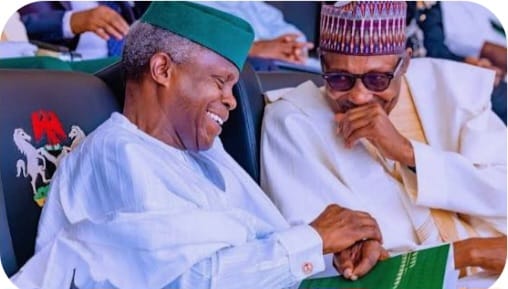
WHEN FAITH BECOMES COMMERCE: HOW PENTECOSTAL EXCESS AND RELIGIOUS EXPLOITATION ARE DEEPENING POVERTY IN NIGERIA.
By George Omagbemi Sylvester
“From SPIRITUAL LIBERATION to ECONOMIC ENSLAVEMENT.”
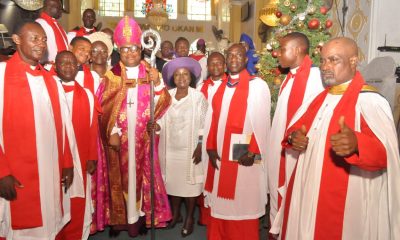
There was a time when Christianity in Nigeria represented hope, moral restraint, communal responsibility and resistance against injustice. Today, however, a disturbing transformation has taken place. What was once a faith rooted in service has, in many quarters, degenerated into an industry of extraction, the one that feeds on poverty, desperation and blind belief. Nowhere is this more visible than in the excesses of modern Pentecostalism.
Nigeria, Africa’s most religious nation by self-identification, is also one of its poorest. This contradiction is neither accidental nor mysterious. According to the World Bank, over 63% of Nigerians live in multidimensional poverty, yet Nigeria simultaneously hosts some of the wealthiest pastors in the world, many with private jets, sprawling estates and luxury motorcades. This is not merely irony; it is indictment.
From Pulpit to Marketplace. The Nigerian Pentecostal movement, which expanded rapidly from the 1980s amid economic decline and military dictatorship, initially offered emotional relief and spiritual reassurance. Over time, however, FAITH was MONETIZED. Prosperity theology (popularly summarized as “SOW A SEED TO REAP A HARVEST”) became the dominant message. Poverty was reframed not as a structural failure but as a personal spiritual deficiency.
The late German sociologist Max Weber warned that when religion becomes fused with material reward, it risks turning faith into an economic transaction rather than a moral compass. In Nigeria today, this warning has materialized. Congregants are told to ignore hunger, unemployment and failing healthcare systems while being encouraged to give tithes, offerings, “first fruits” and special donations to often at great personal cost/or encounter with the “MAN OF GOD.”.
The result is tragic: families go hungry while pastors grow richer.
Commercialized Miracles and the Sale of Hope. Perhaps the most grotesque feature of this transformation is the commercialization of spiritual symbols. HOLY WATER, ANOINTING OIL, STICKERS, CALENDARS, HANDKERCHIEFS, SALT, SUGAR (even so-called “MANTLES”) are sold in the name of Jesus Christ, who famously overturned the tables of money changers in the temple.
Theologian Reinhold Niebuhr once observed that “religion can become the most cruel illusion when it is detached from justice.” In Nigeria, miracles are marketed as commodities, while critical thinking is discouraged. Fake prophecies flourish, fear is weaponized and skepticism is framed as rebellion against God.
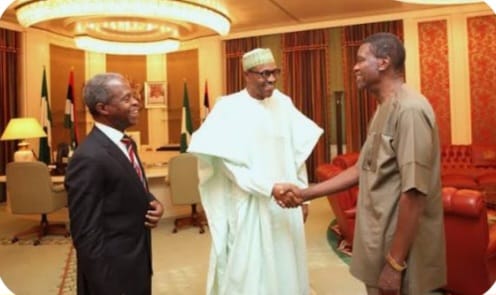
This is not faith. It is psychological manipulation.
Pastors as Political Power Brokers. Equally troubling is the deep entanglement between Pentecostal leaders and political elites. Many pastors now serve as spiritual LEGITIMIZERS of CORRUPTION, offering prayers instead of accountability and prophecies instead of policies. Politicians accused of looting public funds are celebrated on altars, where stolen wealth is rebranded as divine favor.
Political scientist Claude Ake once noted that African elites often rely on ideology (religious or ethnic) to mask material exploitation. In Nigeria, the church has become one of the most effective tools for this purpose. Instead of mobilizing citizens to demand good governance, many churches preach submission, patience and supernatural waiting.
The message is clear: PRAY, DO NOT PROTEST.
Church Proliferation, Poverty Expansion. Nigeria has one of the highest concentrations of churches per square kilometer in the world. In many streets, especially in urban centers, eight to eleven churches may operate within a single neighborhood. Yet the same communities suffer worsening unemployment, crime and infrastructural decay with NO electricity.
This disproves the simplistic claim that more churches automatically produce moral or economic progress. As economist Amartya Sen argues, development requires institutions that expand human freedom and not those that normalize deprivation while promising rewards in the afterlife.
Religion that discourages social responsibility, civic engagement and critical inquiry ultimately weakens society.
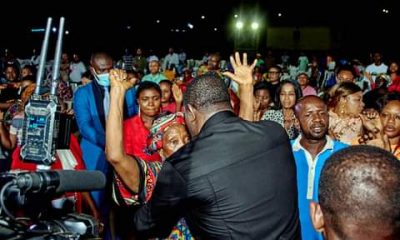
The Psychological Cost of Gullibility. The greatest damage done by exploitative religion is not financial; it is mental. Millions of Nigerians have been conditioned to externalize responsibility for systemic failure. Instead of DEMANDING HEALTHCARE, they pray for HEALING. Instead of ORGANIZING for JOBS, they FAST for BREAKTHROUGHS. Instead of CONFRONTING INJUSTICE, they wait for DIVINE INTERVENTION.
This learned helplessness sustains poverty.
As philosopher Karl Marx famously argued (not to mock faith, but to diagnose suffering) “Religion is the sigh of the oppressed creature, the opium of the people.” In Nigeria, religion has increasingly become a sedative that numbs political consciousness while enriching a powerful clerical elite.
Christianity Was Never Meant to Dehumanize. It is important to state clearly: this CRITIQUE is not an ATTACK on CHRISTIANITY. It is a DEFENSE of it.
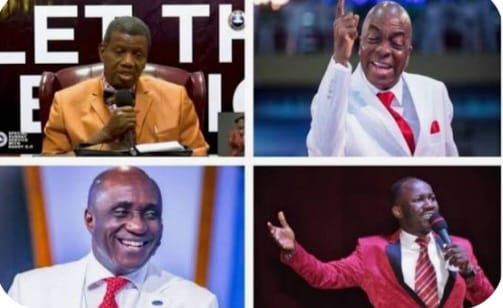
Jesus Christ preached humility, service, justice and sacrifice. He lived among the poor and condemned religious leaders who exploited them. The EARLY CHURCH SHARED RESOURCES AND CARED FOR WIDOWS, ORPHANS AND THE SICK. Today’s celebrity pastors, guarded by armed security and insulated by luxury, resemble corporate executives more than servants of God.
As Dietrich Bonhoeffer, the German theologian executed by the Nazis, warned: “Cheap grace is the deadly enemy of our church.” Nigeria today is drowning in cheap grace and abundant promises with no moral cost to those in power.
Where Are We Headed? If this trajectory continues, Nigeria risks producing generations conditioned to believe that salvation lies not in education, innovation, accountability or civic duty, but in prophetic declarations and financial offerings to religious strongmen.
NO SOCIETY CAN DEVELOP THIS WAY.
Faith must return to its moral foundation. Churches must be places of conscience NOT consumption. Pastors must be servants, not gods. And citizens must reclaim their agency from politicians and from pulpits alike.
A Final Reflection.
Nigeria is not poor because God abandoned it. Nigeria is poor because responsibility has been outsourced to heaven while earthly injustice thrives unchecked. Until religion stops anesthetizing the masses and starts empowering them, the cycle of poverty will persist.
True faith should awaken the mind, strengthen the conscience and demand justice not silence hunger with promises of miracles.
The question is no longer “WHERE IS GOD?”
The real question is: WHEN WILL NIGERIANS/AFRICANS STOP ALLOWING GOD’S NAME TO BE USED AGAINST THEM?
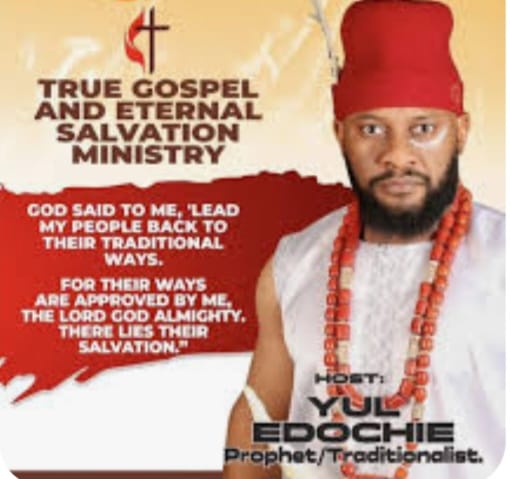







Governing Through Hardship: How Tinubu’s Policies Targets the Poor.
By George Omagbemi Sylvester | Published by SaharaWeeklyNG.com
“Economic reform without justice is no reform at all. In Nigeria, millions are paying the price of mismanaged policy, rising inequality and administrative recklessness. The Poor Under Siege: Tinubu’s Policy Failure.”
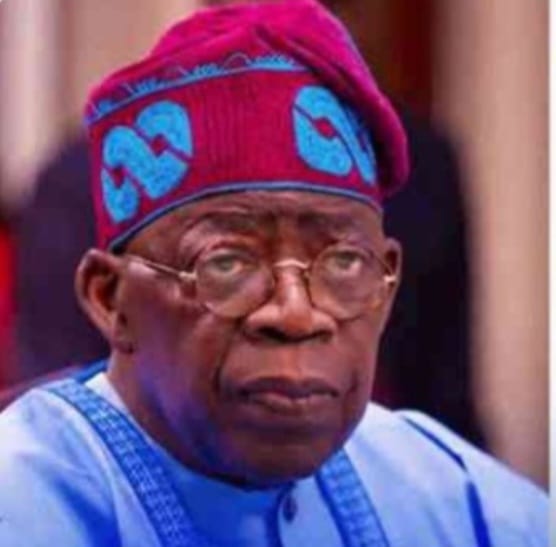
There are moments in a nation’s life when governance ceases to be measured by competence and begins to be measured by suffering. Nigeria has reached such a moment. Under President Bola Ahmed Tinubu, what was once marketed as “RENEWED HOPE” has mutated into structural hardship, widespread insecurity and the quiet erosion of dignity. Policies intended to stabilise the economy (subsidy removals, rising tariffs, new levies) have instead become instruments of pressure on ordinary citizens. The poor are no longer incidental victims; they are the frontline in a state-driven campaign of economic attrition. As W. E. B. Du Bois warned, “the cost of liberty is less than the price of repression.” In Nigeria, citizens are paying that higher price; not with chains, but with hunger, confusion and shrinking opportunity.
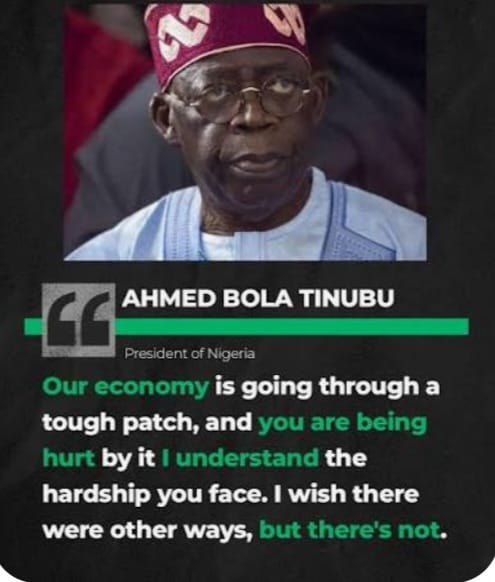
From the administration of Muhammadu Buhari’s lethargic governance to Tinubu’s frenetic improvisation, the APC era reads as a study in systemic failure. Buhari governed by inaction; Tinubu governs by motion. Both approaches, however different in style, have produced similar consequences: RISING INEQUALITY, POLICY INCOHERENCE and DWINDLING TRUST in PUBLIC INSTITUTIONS. Announcements precede implementation; reforms arrive without preparation; consequences are dealt with only after citizens suffer. Confusion, in practice, has become a governing strategy.
Tinubu entered office branding himself a “MASTER STRATEGIST.” What has emerged is a politics of approximation: ALMOST stabilising the naira, ALMOST attracting foreign investment, ALMOST governing effectively. Each “ALMOST ” has hardened into policy orthodoxy, each delay reframed as courage and each failure recast as sacrifice. Though societies do not subsist on intention. Citizens cannot eat forecasts, commute on promises, or survive on speeches.
From Reform to Extraction. Where strategic reform was required, Nigerians encountered extraction. Rather than phased restructuring, the government unleashed a wave of taxes, levies, tariffs and fees that transformed survival itself into a fiscal offence. The removal of the fuel subsidy, for instance, immediately escalated transport costs, which cascaded into food inflation. Electricity tariffs rose sharply, while power supply remained inconsistent. Customs duties and exchange-rate volatility squeezed manufacturers, eroding local production capacity.
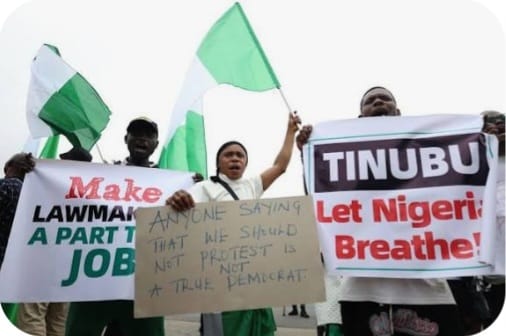
Even the informal sector (historically Nigeria’s economic buffer) was quickly incorporated into the tax net without credit access, social protection, or supportive infrastructure. Economist Joseph Stiglitz has consistently argued that reforms that withdraw protection before providing alternatives inevitably harm the poor. Nigeria’s trajectory confirms that principle in stark, human terms.
At the heart of this approach lies a profound ethical contradiction. The state expanded its revenue appetite while shrinking its social responsibility. Taxation ceased to operate as a social contract; it became punishment. Families, workers and small businesses bear the cost, while politically connected elites navigate policies largely untouched. John Rawls, the philosopher of justice, reminds us that societies should evaluate policies based on their effect on the least advantaged. By that standard, Nigeria’s reforms are failing catastrophically.
Shock Therapy Without Cushion. The administration’s approach to fuel subsidy removal exemplifies this pattern. Implemented abruptly, it imposed pain without relief: no transport buffers, no food price stabilisation, no timely wage adjustments. This was not reform bravery, but it was shock therapy without diagnosis. Countries such as Brazil and Indonesia have shown that subsidy reforms succeed only when gradual, paired with targeted social safety nets. Nobel laureate Amartya Sen has long argued that economic reform divorced from social protection is not reform at all; it is regression disguised as necessity.
Insecurity, Inflation and Policy Contradictions. Economic stress has been compounded by worsening insecurity. Farmers abandon fields due to violence and kidnapping, exacerbating food scarcity. Small traders are punished by currency volatility they neither caused nor understand. Exchange-rate fluctuations have transformed daily business operations into a gamble. Interventions frequently contradict each other: one day a policy promises relief, the next it imposes further cost. ACT FIRST, EXPLAIN LATER, APOLOGIZE NEVER and this has become standard practice.
The interaction of insecurity, inflation and policy incoherence creates a feedback loop. Violence limits production, driving up food prices. Inflation reduces purchasing power, increasing vulnerability to crime. Poverty deepens instability and instability deepens poverty. This is neither accidental nor temporary; it is the predictable outcome of fragmented governance.
Upward Redistribution, Downward Pressure. The human consequences are now visible in daily life. Parents ration meals. Graduates accept low-wage or precarious work for survival. Small businesses collapse under regulatory and tax pressure, while politically connected conglomerates thrive. Nigeria’s new system operates as a perverse redistribution mechanism: upward mobility for the elite, downward pressure for the majority. Poverty is no longer INCIDENTAL, but it has become STRUCTURAL.
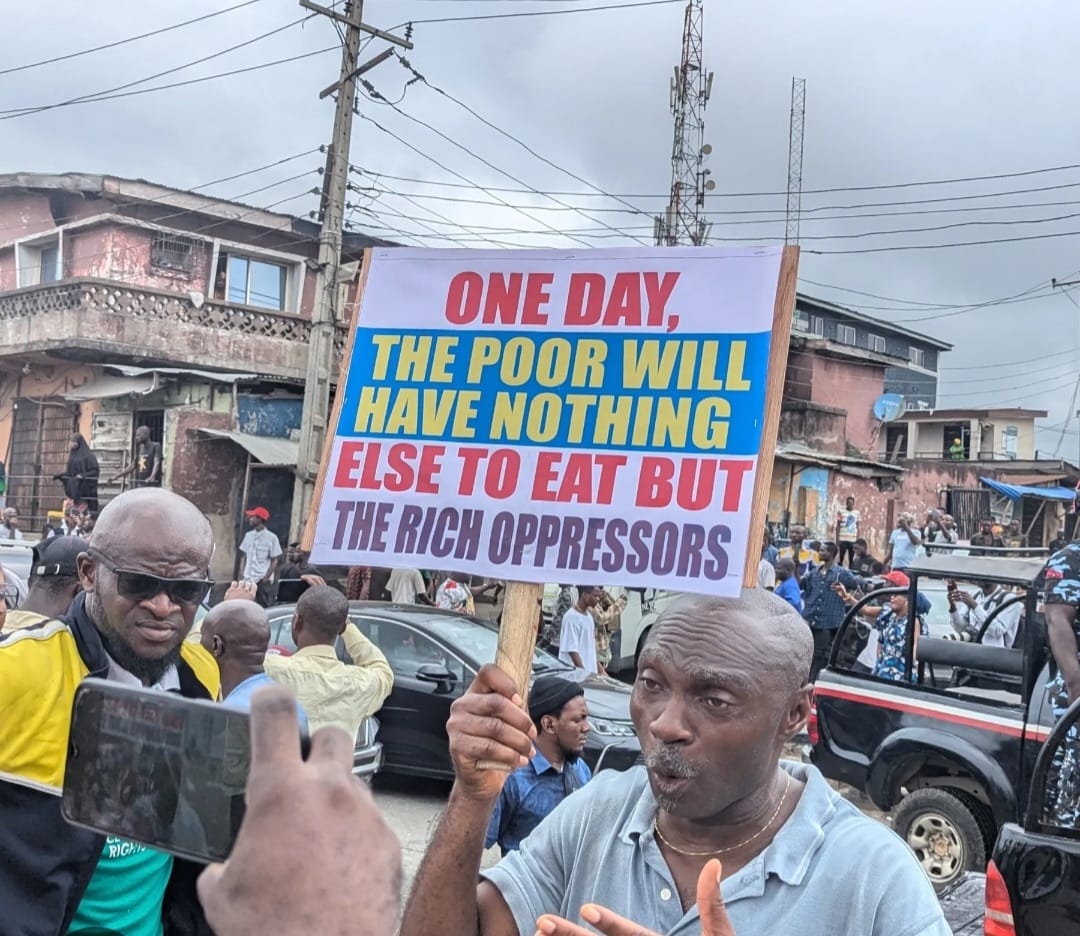
Economist Thomas Piketty warns that when policy consistently favors capital over labour, inequality stops being accidental and becomes engineered. Nigeria has crossed that threshold. Economic reform without justice is no reform at all; it is a mechanism for reinforcing power hierarchies.
A Crisis of Ethics, Not Capacity. This is not reform fatigue. It is moral exhaustion. Nigeria is governed as though society were an abstract spreadsheet rather than a living community. Grace Paley once observed that politicians often speak obsessively about the future to avoid responsibility for the present. Tinubu’s presidency embodies this tendency. Citizens are drowning in the present while being instructed to endure for a promised tomorrow indefinitely deferred.
Du Bois reminds us that systems collapse not because they lack intelligence, but because they lack justice. Tinubu’s administration is not failing for lack of technical capacity; it is failing due to a deficit of conscience.
Denouement: Governance Is Not Performance. When governments wage economic war, the poor inevitably become the frontline casualties. Reform without justice is indistinguishable from cruelty. Policy without empathy corrodes legitimacy. Growth that excludes dignity is not progress.
Nigeria today is not suffering from a lack of ideas, but from a deficit of conscience. Governance has been reduced to performance, endurance to patriotism and suffering to proof of seriousness. But hunger is not a developmental strategy. Suffering is not a measure of progress. No nation can sustainably reform its economy by exhausting its citizens.
Legitimacy, once depleted, cannot be monetized. A state that asks its people to bleed indefinitely for an abstract future will ultimately find that endurance has limits. In Nigeria, the poor are not STATISTICS; they are SENTINELS of policy failure. A hungry nation cannot be governed on applause, nor can reform survive without justice.
celebrity radar - gossips
RECLAIMER: RESTORING CONTEXT, TRADITION, AND TRUTH …CLARIFIED ACCOUNT OF THE UNEME-OSU VILLAGE HEADSHIP AND THE LEGITIMACY OF HRH FREDERICK LUCKY IYOGUN. IYOGU II OF UNEME-AKIOSU

RECLAIMER: RESTORING CONTEXT, TRADITION, AND TRUTH
…CLARIFIED ACCOUNT OF THE UNEME-OSU VILLAGE HEADSHIP AND THE LEGITIMACY OF HRH FREDERICK LUCKY IYOGUN. IYOGU II OF UNEME-AKIOSU
In every society governed by ancestral norms and collective memory, truth is not preserved by noise but by careful recollection, balance, and fidelity to established custom. Recent narratives circulating in the public domain concerning the Uneme-Osu village headship have generated anxiety, misinterpretation, and an unfortunate distortion of facts. While public discourse is welcome in a democratic environment, it becomes imperative to respond when such discourse risks undermining communal cohesion, delegitimising lawful authority, and misrepresenting tradition.
This reclaimer is not written to inflame passions, malign individuals, or dismiss genuine concerns. Rather, it is offered as a measured corrective, rooted in historical continuity, cultural procedure, and the lived reality of Uneme-Osu. Its purpose is to reaffirm, with clarity and depth, that His Royal Highness, Frederick Lucky Iyogun, IYOGU II emerged as Village Head through processes consistent with Uneme-Osu tradition, validated by customary stakeholders and recognised within the appropriate administrative framework.
*Understanding Uneme-Osu Tradition Beyond Simplistic Narratives*
Uneme-Osu’s traditional governance structure is neither static nor simplistic. Like many indigenous systems, it has evolved through generations, adapting to demographic changes, lineage expansion, and administrative intersections with the modern state. To suggest that tradition operates only through a single rigid pathway is to misunderstand its organic nature.
While matrilineal considerations form an important aspect of Uneme customary governance, they do not exist in isolation from patrilineal identity, kindred consensus, ancestral legitimacy, and community acceptance. The village headship is not merely the product of ritual sequence but the culmination of lineage right, moral standing, communal trust, and capacity for leadership.
Historical practice in Uneme-Osu demonstrates that variation in procedural emphasis has occurred across generations, particularly during periods of transition or vacancy. What remains constant, however, is the recognition of eligible lineage, ancestral entitlement, and community affirmation. HRH Iyogu II emergence must therefore be examined within this broader customary framework rather than through a selective interpretation designed to support a predetermined conclusion.
*Lineage Legitimacy and Ancestral Right*
At the core of village headship legitimacy lies lineage. HRH Frederick Lucky Iyogun belongs to a recognised ancestral line within Uneme-Osu, historically associated with leadership responsibility, land stewardship, and communal representation. His family history is neither fabricated nor recently invented, as some narratives insinuate, but well-known within the community’s genealogical memory.
The attempt to cast doubt on his kindred identity by questioning nomenclature or historical terminology reflects a misunderstanding of how Uneme lineages have evolved over time. Kindred names, sub-lineages, and household identifiers have shifted, merged, or been colloquially referenced differently across generations, particularly in response to migration, intermarriage, and administrative record-keeping.
What matters in customary law is not semantic rigidity but ancestral traceability and communal recognition. On this basis, HRH Iyogu II lineage stands firmly within the accepted structure of Uneme-Osu society.
*On the Role of King Makers and Traditional Authorities*
Contrary to claims that king makers were “bypassed” or “excluded,” the process leading to HRH Iyogu II emergence involved consultations, acknowledgements, and tacit endorsements consistent with prevailing realities. It is important to state that traditional authority is not exercised solely through public ceremony. In many Uneme communities, deliberations occur privately, guided by senior custodians of custom who prioritise peace over spectacle.
Furthermore, the suggestion that the absence of a particular ritual at a specific moment invalidates the entire process ignores precedent. There are historical instances in Uneme land where coronation rites were staggered, deferred, or symbolically fulfilled due to disputes, mourning periods, or external pressures. Such adjustments have never nullified legitimate authority when lineage right and community acceptance were present.
*Administrative Recognition as Affirmation, Not Imposition*
Administrative acknowledgment by government authorities did not create HRH Iyogu II legitimacy; rather, it affirmed an existing traditional reality. The state does not appoint village heads in Uneme-Osu; it recognises outcomes produced by customary processes. To imply that recognition was “quietly obtained” under questionable circumstances is to underestimate the scrutiny involved in such procedures.
Government recognition requires documentation, verification, and engagement with multiple stakeholders. These processes are neither arbitrary nor informal. HRH Iyogu II recognition followed established administrative channels, reflecting the understanding that he represents the lawful traditional authority of Uneme-Osu.
*Addressing the Question of Rotational Principle*
The rotational principle referenced in public discussions is often misunderstood. While rotation exists in certain Uneme communities, it is not universally binding nor mechanically applied. Rotation operates where there is a standing, consensual agreement among kindreds, clearly defined and continuously upheld.
In Uneme-Osu, historical attempts to formalise strict rotation encountered unresolved disagreements, conditional proposals, and subsequent abandonment. Customary law is clear: a rejected or inconclusive arrangement cannot later be resurrected as binding tradition. Leadership succession therefore reverted to lineage eligibility and community consensus, under which HRH Iyogun validly emerged.
*On the Status of Previous Office Holders*
Respect for former village heads remains sacrosanct in Uneme culture. However, respect does not equate to perpetual incumbency beyond active service. Where circumstances change, whether through incapacity, prolonged absence, or communal realignment, tradition allows for reassessment to ensure effective leadership.
The recognition of HRH Iyogun does not erase history; it represents continuity through renewal, ensuring that Uneme-Osu is guided by an active, accessible, and forward-looking custodian of tradition.
HRH Frederick Lucky Iyogun’s claim to traditional authority is reinforced by the fact that his grandfather served as the Village Head of Uneme-Osu until his death in 1958. This is not folklore or conjecture but a well-known historical reality acknowledged within the community. His grandfather’s tenure established a lineage of leadership, responsibility, and custodianship that remains part of Uneme-Osu’s collective memory.
The death of his grandfather in 1958 did not extinguish the family’s ancestral standing or leadership eligibility. Traditional authority is not erased by time; it is preserved through lineage continuity. The suggestion that HRH Iyogu II emerged without historical grounding therefore collapses under factual scrutiny. His ancestry situates him firmly within the stream of legitimate traditional leadership, rather than outside it.
It is also essential to distinguish between respect for previous office holders and the misconception of perpetual incumbency. While Uneme-Osu tradition honours those who once held office, such honour does not freeze leadership succession indefinitely. Communities evolve, leadership transitions occur, and new custodians emerge in accordance with custom, circumstance, and necessity.
The emergence of HRH Iyogu II does not negate or dishonour any previous village head. Instead, it reflects continuity through lineage and adaptation through time. His authority is therefore not an aberration but a restoration of ancestral stewardship, grounded in history and validated by contemporary legal processes.
*THE COURT CASE DELIBERATELY AVOIDED*
Judicial Determination Is Not Optional
The most intellectually dishonest aspect of the publication is its total silence on the court case and judgment.
Let this be stated clearly and unequivocally:
The dispute over the Uneme-Osu village headship was presented before a competent court of law. Evidence was tendered.
Arguments were heard. Tradition was examined. And judgment was delivered in favour of HRH Frederick Lucky Iyogun lineage.
This is not an opinion. It is a matter of judicial record.
In any civilised society, once a court has pronounced on a matter within its jurisdiction, that pronouncement supersedes conjecture, petition-writing, and media speculation. Customary disputes, when escalated to the judiciary, are resolved through evidence, precedent, and legal interpretation of tradition.
The article’s failure to mention this judgment is not a minor oversight. It is a deliberate suppression of truth, designed to keep readers unaware that the issue it presents as “unresolved” has, in fact, been resolved.
*Responding to Allegations of Intimidation and Fear*
Claims of harassment, coercion, and intimidation attributed to HRH Iyogu II remain unsubstantiated assertions, amplified through repetition rather than evidence. No credible judicial or security finding has established wrongdoing on his part. On the contrary, his leadership has emphasised order, accountability, and respect for communal obligations, which some may misconstrue as authoritarian when longstanding informal practices are challenged.
The enforcement of community levies and norms, when carried out within traditional authority, does not constitute oppression. It reflects the responsibility of leadership to maintain collective welfare, infrastructure, and cultural obligations.
*Security Concerns and the Need for Calm*
The portrayal of Uneme-Osu as a community on the brink of violence is deeply unfortunate and risks becoming a self-fulfilling prophecy. Peace in Uneme-Osu has not been threatened by HRH Iyogu II leadership but by persistent attempts to delegitimise constituted authority, sowing doubt and encouraging resistance.
True security lies not in suspending legitimate leadership but in reinforcing lawful authority, discouraging parallel claims, and promoting dialogue rooted in respect for tradition.
*Clarification on Political Neutrality and Public Service Record of HRH Frederick Lucky Iyogun*
It has become necessary to address, with clarity and factual precision, the insinuations and speculative undertones suggesting that His Royal Highness, Frederick Lucky Iyogun, either held political office or enjoyed partisan political affiliation that may have influenced his emergence as Village Head of Uneme-Osu.
Such suggestions are not only inaccurate but also laughable and misleading, as they attempt to import a political narrative into what is fundamentally a traditional and judicially resolved matter.
HRH Frederick Lucky Iyogun has never held any elective or appointive political office at any level of government, nor has he been a card-carrying member of any political party.
At no time in his career did he function as a political actor, power broker, or partisan figure. Assertions linking him to political structures are therefore conjectural, unsupported by evidence, and designed to provoke suspicion rather than illuminate truth.
What is verifiable, documented, and beyond dispute is that HRH Iyogun served the Nigerian state as a career Federal Civil Servant.
His professional life was defined by bureaucratic discipline, institutional neutrality, and adherence to public service ethics. Until his statutory retirement in late 2023, he remained within the confines of civil service regulations, which expressly prohibit partisan political involvement. His service trajectory reflects administrative competence, restraint, and loyalty to national institutions rather than political ambition.
It is instructive to note that civil service, by its very nature, is non-partisan. Officers are trained to operate independently of political interests, executing policy rather than crafting or campaigning for it. HRH Frederick Iyogun’s thirty five ’35’ long years within this structure reinforce the fact that his orientation has always been toward order, due process, and institutional respect—qualities that naturally align with traditional leadership but do not equate to political manipulation.
The attempt to associate HRH Frederick Iyogun with political figures or administrations therefore represents a deliberate narrative distortion, aimed at creating an impression of undue influence where none exists. Such framing distracts from the substantive issues of lineage, tradition, and judicial affirmation, and instead seeks to delegitimise lawful authority through insinuation.
*December 26 and the Path Forward*
Community meetings should be spaces for dialogue, not fear. With HRH Iyogun recognised as Village Head, such gatherings offer an opportunity to heal divisions, clarify misunderstandings, and reaffirm shared values. Calls for restraint should apply equally to all parties, particularly those seeking to undermine established authority through alarmist narratives.
*Conclusion: Authority, Tradition, and the Future of Uneme-Osu*
Uneme-Osu stands not at the edge of disorder, but at a moment of reaffirmation. The legitimacy of His Royal Highness, Frederick Lucky Iyogun, rests on lineage right, customary evolution, community recognition, and administrative affirmation. To deny this legitimacy is to deny the community’s capacity to govern itself according to its own living tradition.
This reclaimer therefore calls on all stakeholders—elders, youths, commentators, and authorities—to embrace truth over speculation, unity over division, and tradition over distortion. Peace in Uneme-Osu will be sustained not by dismantling rightful leadership, but by respecting it.
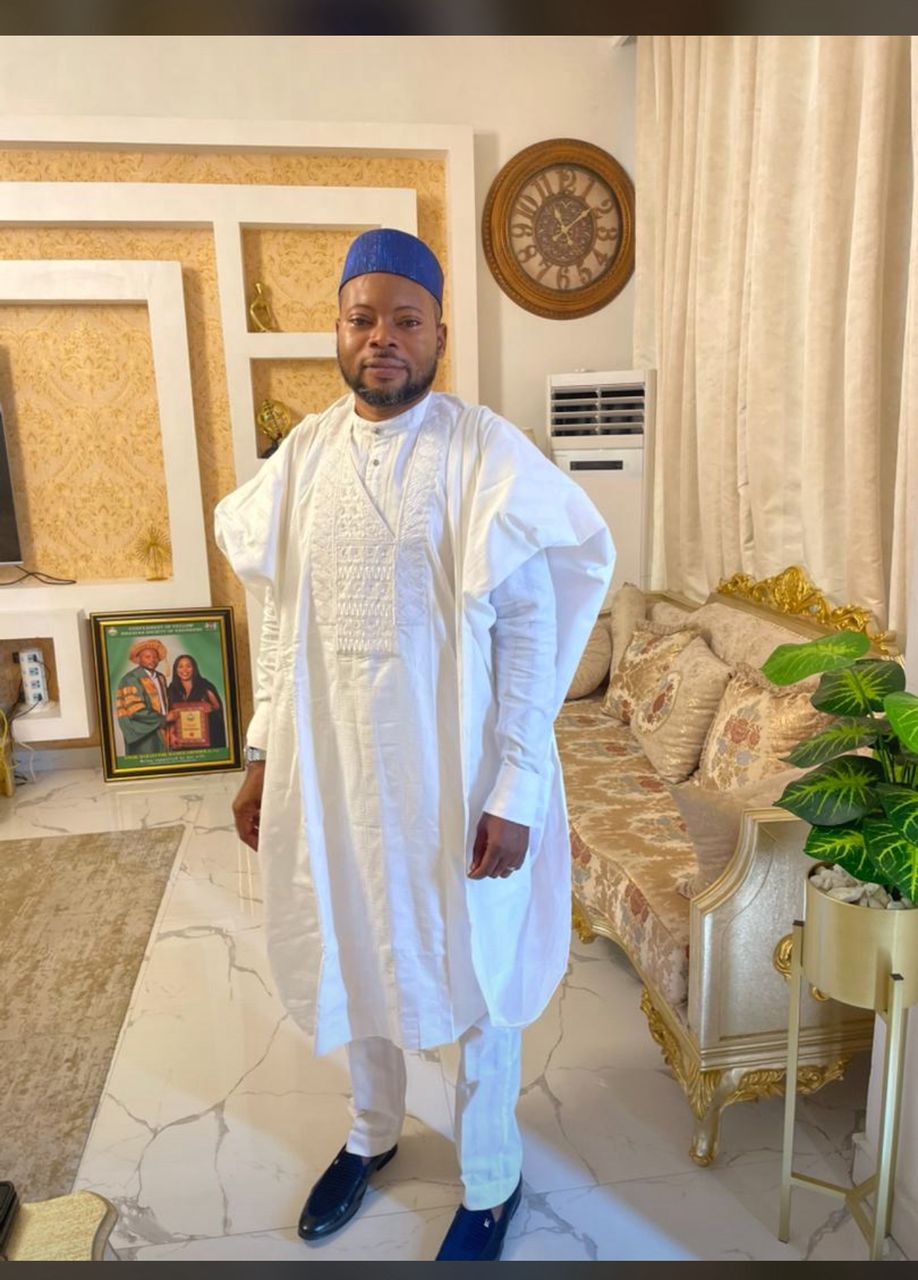
Awujale Succession: The Rising Profile of Omooba Babatunde Hamed Adewunmi Abimbola
Omooba Engr. Abimbola Babatunde Adewunmi Hamed (FNSE) is an illustrious son
of Ijebu Land with over two and half decades of industrious and vast experience in
various engineering sectors such as telecom infrastructure, structural design,
construction, mining, oil & gas, and project engineering management.
Born to the family of Late Omooba Rasheed Olatunde Abimbola (the first son of
Late Omooba Saliu Olowookere Abimbola of the Oshinuga-Oshiyokun Lineage of
the Funshegbuwa Ruling House) and Late Alhaja Nimotallahi Oyindamola Abimbola
(nee Belo).
He holds a bachelor’s degree in civil engineering from the prestigious University of
Lagos. He also holds a post graduate diploma in engineering management, and a
master’s in project management (construction & infrastructure) from University of
Liverpool through Laureate Online Education (The Netherlands).
.
Other educational qualifications include executive diploma in International
Business Management from Pearson UK, and master’s degree in business
administration from the University of Wolverhampton UK.
Prince Abimbola professional career has spanned building construction, structural
design consultancy, telecom infrastructure development, mining and oil and gas
working across multidisciplinary fields handling complex projects along his career
path.
Prince Abimbola spent over two decades at Biswal Limited, rising through the ranks
to the pinnacle as operations general manager & chief enterprise support officer
providing engineering leadership and guidance towards efficient enterprise support
services at Biswal Limited, a leading and innovative telecom infrastructure and
energy service company.
His dedication, expertise and competency earned him an engineering management
position at R28 Holding (the parent group of Biswal Limited) a consolidated and
diversified private investment company with strategic business interest in various
industries such as construction, real estate, telecom, aviation, mining, energy,
among others.
A highly qualified and astute professional, he is a COREN registered engineer as
well as distinguished Fellow of Nigerian Society of Engineers and member of
reputable associations and societies such as:
• Project Management Institute (PMI)
• American Society of Engineering Management (ASEM)
• Society of Maintenance & Reliability Professional (SMRP)
• Fellow, The Institute of Management Consultants of Nigeria (FIMC)
• Fellow, MSME Institute of Management & Professional Studies
Some of his reputable certifications are:
• Project Management Professional (PMP)
• Certified Professional in Engineering Management (CPEM)
• Certified Management Consultant (CMC)
• Honorary Doctorate degree in Engineering Management from Prowess
University Delaware USA.
Over the years, he has attended various local and international trainings and
capacity building programs such as:
• Massachusetts Institute of Technology (MIT) USA Engineering Leadership
Course
• Symbiosis Institute of Digital and Telecom Management India Business
Analytics Course
• Starwisr by Pairview BI Developer Program
• 6-Sigma Green Belt Training
As a thoroughbred professional, Engr. Hamed upholds the principles of professional
engineering ethics in all his endeavors. He is a strong believer in giving back to
society, he volunteers in various charities, alma maters efforts and mentors young
professionals.
Prince Abimbola belongs to an undiluted bloodline of Ijebu land descendants. Both
his parents are sons and daughters of prominent families in Ijebu land. Both his
paternal and maternal grandparents are sons and daughters of prominent families
in Ijebu land, and he is equally married to a daughter of a prominent family of Ijebu
land
He participates in various societal and religious activities, building strong family and
social ties for the general benefit and uplift of humanity.
He is happily married with kids.


-

 celebrity radar - gossips5 months ago
Why Babangida’s Hilltop Home Became Nigeria’s Political “Mecca”
-

 society5 months ago
Power is a Loan, Not a Possession: The Sacred Duty of Planting People
-

 Business5 months ago
Batsumi Travel CEO Lisa Sebogodi Wins Prestigious Africa Travel 100 Women Award
-

 society7 months ago
CP LAWAL ADEBOWALE ASSUMES DUTY AS 46TH COMMISSIONER OF POLICE, ONDO STATE COMMAND