
society
Governing Through Hardship: How Tinubu’s Policies Targets the Poor

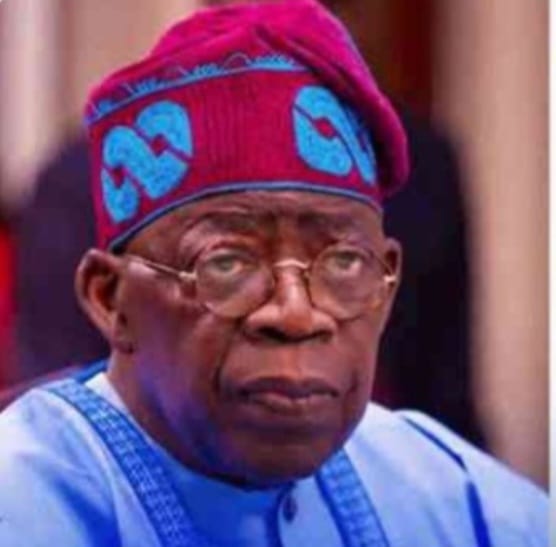
Governing Through Hardship: How Tinubu’s Policies Targets the Poor.
By George Omagbemi Sylvester | Published by SaharaWeeklyNG.com
“Economic reform without justice is no reform at all. In Nigeria, millions are paying the price of mismanaged policy, rising inequality and administrative recklessness. The Poor Under Siege: Tinubu’s Policy Failure.”
There are moments in a nation’s life when governance ceases to be measured by competence and begins to be measured by suffering. Nigeria has reached such a moment. Under President Bola Ahmed Tinubu, what was once marketed as “RENEWED HOPE” has mutated into structural hardship, widespread insecurity and the quiet erosion of dignity. Policies intended to stabilise the economy (subsidy removals, rising tariffs, new levies) have instead become instruments of pressure on ordinary citizens. The poor are no longer incidental victims; they are the frontline in a state-driven campaign of economic attrition. As W. E. B. Du Bois warned, “the cost of liberty is less than the price of repression.” In Nigeria, citizens are paying that higher price; not with chains, but with hunger, confusion and shrinking opportunity.

From the administration of Muhammadu Buhari’s lethargic governance to Tinubu’s frenetic improvisation, the APC era reads as a study in systemic failure. Buhari governed by inaction; Tinubu governs by motion. Both approaches, however different in style, have produced similar consequences: RISING INEQUALITY, POLICY INCOHERENCE and DWINDLING TRUST in PUBLIC INSTITUTIONS. Announcements precede implementation; reforms arrive without preparation; consequences are dealt with only after citizens suffer. Confusion, in practice, has become a governing strategy.
Tinubu entered office branding himself a “MASTER STRATEGIST.” What has emerged is a politics of approximation: ALMOST stabilising the naira, ALMOST attracting foreign investment, ALMOST governing effectively. Each “ALMOST ” has hardened into policy orthodoxy, each delay reframed as courage and each failure recast as sacrifice. Though societies do not subsist on intention. Citizens cannot eat forecasts, commute on promises, or survive on speeches.
From Reform to Extraction. Where strategic reform was required, Nigerians encountered extraction. Rather than phased restructuring, the government unleashed a wave of taxes, levies, tariffs and fees that transformed survival itself into a fiscal offence. The removal of the fuel subsidy, for instance, immediately escalated transport costs, which cascaded into food inflation. Electricity tariffs rose sharply, while power supply remained inconsistent. Customs duties and exchange-rate volatility squeezed manufacturers, eroding local production capacity.

Even the informal sector (historically Nigeria’s economic buffer) was quickly incorporated into the tax net without credit access, social protection, or supportive infrastructure. Economist Joseph Stiglitz has consistently argued that reforms that withdraw protection before providing alternatives inevitably harm the poor. Nigeria’s trajectory confirms that principle in stark, human terms.
At the heart of this approach lies a profound ethical contradiction. The state expanded its revenue appetite while shrinking its social responsibility. Taxation ceased to operate as a social contract; it became punishment. Families, workers and small businesses bear the cost, while politically connected elites navigate policies largely untouched. John Rawls, the philosopher of justice, reminds us that societies should evaluate policies based on their effect on the least advantaged. By that standard, Nigeria’s reforms are failing catastrophically.
Shock Therapy Without Cushion. The administration’s approach to fuel subsidy removal exemplifies this pattern. Implemented abruptly, it imposed pain without relief: no transport buffers, no food price stabilisation, no timely wage adjustments. This was not reform bravery, but it was shock therapy without diagnosis. Countries such as Brazil and Indonesia have shown that subsidy reforms succeed only when gradual, paired with targeted social safety nets. Nobel laureate Amartya Sen has long argued that economic reform divorced from social protection is not reform at all; it is regression disguised as necessity.
Insecurity, Inflation and Policy Contradictions. Economic stress has been compounded by worsening insecurity. Farmers abandon fields due to violence and kidnapping, exacerbating food scarcity. Small traders are punished by currency volatility they neither caused nor understand. Exchange-rate fluctuations have transformed daily business operations into a gamble. Interventions frequently contradict each other: one day a policy promises relief, the next it imposes further cost. ACT FIRST, EXPLAIN LATER, APOLOGIZE NEVER and this has become standard practice.
The interaction of insecurity, inflation and policy incoherence creates a feedback loop. Violence limits production, driving up food prices. Inflation reduces purchasing power, increasing vulnerability to crime. Poverty deepens instability and instability deepens poverty. This is neither accidental nor temporary; it is the predictable outcome of fragmented governance.
Upward Redistribution, Downward Pressure. The human consequences are now visible in daily life. Parents ration meals. Graduates accept low-wage or precarious work for survival. Small businesses collapse under regulatory and tax pressure, while politically connected conglomerates thrive. Nigeria’s new system operates as a perverse redistribution mechanism: upward mobility for the elite, downward pressure for the majority. Poverty is no longer INCIDENTAL, but it has become STRUCTURAL.

Economist Thomas Piketty warns that when policy consistently favors capital over labour, inequality stops being accidental and becomes engineered. Nigeria has crossed that threshold. Economic reform without justice is no reform at all; it is a mechanism for reinforcing power hierarchies.
A Crisis of Ethics, Not Capacity. This is not reform fatigue. It is moral exhaustion. Nigeria is governed as though society were an abstract spreadsheet rather than a living community. Grace Paley once observed that politicians often speak obsessively about the future to avoid responsibility for the present. Tinubu’s presidency embodies this tendency. Citizens are drowning in the present while being instructed to endure for a promised tomorrow indefinitely deferred.
Du Bois reminds us that systems collapse not because they lack intelligence, but because they lack justice. Tinubu’s administration is not failing for lack of technical capacity; it is failing due to a deficit of conscience.
Denouement: Governance Is Not Performance. When governments wage economic war, the poor inevitably become the frontline casualties. Reform without justice is indistinguishable from cruelty. Policy without empathy corrodes legitimacy. Growth that excludes dignity is not progress.
Nigeria today is not suffering from a lack of ideas, but from a deficit of conscience. Governance has been reduced to performance, endurance to patriotism and suffering to proof of seriousness. But hunger is not a developmental strategy. Suffering is not a measure of progress. No nation can sustainably reform its economy by exhausting its citizens.
Legitimacy, once depleted, cannot be monetized. A state that asks its people to bleed indefinitely for an abstract future will ultimately find that endurance has limits. In Nigeria, the poor are not STATISTICS; they are SENTINELS of policy failure. A hungry nation cannot be governed on applause, nor can reform survive without justice.





society
ONDO STATE GOVERNMENT MOBILIZES ON #UniteAgainstTerror CAMPAIGN, CALLS FOR NATIONAL UNITY AGAINST TERRORISM
ONDO STATE GOVERNMENT MOBILIZES ON #UniteAgainstTerror CAMPAIGN, CALLS FOR NATIONAL UNITY AGAINST TERRORISM
The Ondo State Government has announced its support for the nationwide #UniteAgainstTerror campaign, calling on all Nigerians to rise above political, ethnic, and religious differences in a collective effort to combat terrorism and other forms of violent crimes threatening the nation’s peace and stability.
2. The campaign mobilization comes in the wake of the recent conviction and sentencing of individuals linked to the horrific Owo church massacre of June 2022, a tragedy that claimed innocent lives and left lasting scars on families, communities, and the nation. While welcoming the judicial outcome as a significant step toward justice, the Government emphasized that the fight against terrorism requires sustained vigilance and the active participation of all citizens.
3. Speaking on Channels Television’s Politics Today, Governor Lucky Orimisan Aiyedatiwa stated that this is a defining moment for Nigerians to come together with one voice against terrorism, stressing that national security must transcend partisan interests. According to the Governor, “when we see something, we must say something,” urging citizens to promptly report suspicious activities and security concerns to the appropriate authorities.
4. The Government commends the Armed Forces of Nigeria, the Nigeria Police Force, the Department of State Services, the Nigeria Security and Civil Defence Corps, Amotekun Corps, and other security agencies for their courage, sacrifice, and unwavering commitment to protecting lives and defending the nation’s territorial integrity.
5. Ondo State Government therefore calls on traditional rulers, religious leaders, community associations, youth groups, civil society organizations, media practitioners, and all well-meaning Nigerians to embrace the #UniteAgainstTerror campaign as a patriotic movement aimed at strengthening intelligence gathering, promoting public awareness, and denying criminal elements the space to operate within our communities.
6. The Government reaffirms its commitment to supporting all lawful measures that enhance national security and urges every citizen to remain alert, responsible, and actively involved in the collective task of safeguarding Nigeria. Together, united in purpose and action, we can defeat terrorism and build a safer and more secure nation for present and future generations.
Hon. Idowu Ajanaku,
Commissioner for Information and Orientation
June 5, 2026
society
WAZOBIA: Nigeria’s Hardly Separable Tripod Stand Since 1914; It’s Time To Rotate Presidency Among 6 Geo-Political Zones In 2027
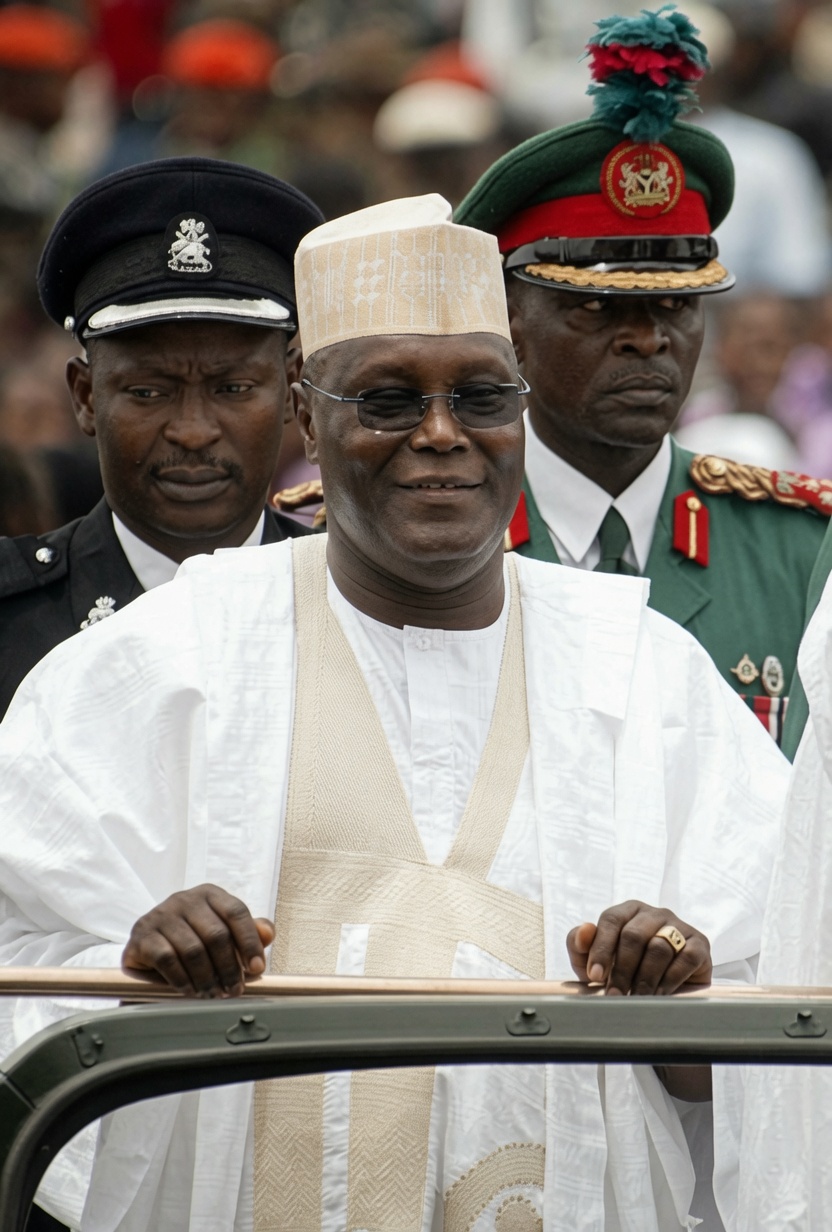
WAZOBIA: Nigeria’s Hardly Separable Tripod Stand Since 1914; It’s Time To Rotate Presidency Among 6 Geo-Political Zones In 2027
Dear High Chief Jibrin Okutepa (SAN), I bring you calvary greetings from the land of Lincoln. I want to first of all commend your continued sincerity of purpose for a united, peaceful, and prosperous Nigeria.
But with all due respect sir, let me reaffirm that since 1914, when the British colonialists led by Lord Frederick Lugard, amalgamated the Northern and Southern Protectorates, Nigeria has always stood on a Tripod called WAZOBIA (Yoruba, Hausa/Fulani, and Igbo). In fact, it is the alleged domination of these three major ethnic nationalities that brought about the doctrine of necessity called the Six Geo-political Zones proposed by Chief Alex Ekwueme, et al., at the 1994/1995 Constitutional Conference chaired by the late Justice Adolphus Karibi-Whyte and empaneled by General Sanni Abacha.
Prior to, and during this period under review, there were legitimate claims and concerns from ethnic minorities across the old Eastern region, the old Northern region, as well as the old Western region that they were being dominated, marginalized, oppressed, and strangulated by the abovementioned three major ethnic nationalities in Nigeria.
So, to solve this hydra-headed problem capable of imploding Nigeria, via a doctrine of necessity, General Sanni Abacha in 1996, partitioned Nigeria into six geo-political zones, namely: North Central, North East, North West, South East, South South, and South West.
The minorities in the old Northern region were majorly zoned into the North Central. This is even as the minorities in the old Eastern region and old Western region were respectively zoned into the South South (a cardinal point unknown to history).
As one of the ardent students of contemporary Nigerian history and politics, permit me to affirm that pertitioning Nigeria into six geo-political zones is the best bet at guaranteeing justice, equity, fairness, national unity, national cohesion, national peace, and commandeering national loyalty in a country like Nigeria with over 385 ethnic nationalities and over 500 languages.
Going forward into 2027, to make Nigeria work, all that is needed has been proferred by Chief Alex Ekwueme during the 1994/1995 Constitutional Conference. Let’s rotate the presidency among the six geo-political zones for a single term of five or six years. This is in line with the spirit and letters of Section 14(3) of Nigeria’s 1999 Constitution (as amended).
Of all the frontline Presidential candidates for the 2027 all-important elections, only His Excellency Atiku Abubakar- @atiku espouses and religiously supports this equitable zoning arrangement. The North/South zoning arrangement has been a scam all along. It has not been able to restore national unity, national peace, and commandeer national loyalty among Nigerians from across the six geo-political zones for their beloved country.
It is therefore, self-evident and conspicuous like the North Star that when power goes North, the more populated North West hijacks it and runs away with it. And when power comes South, the more populated South West using its mainstream media and propaganda prowess, hijacks it and runs away with it. This malady has continued unabated since 1999 to the chagrin of the marginalized North East, South East, and North Central.
As an emerging political scientist and investigative journalist, I affirm that at this auspicious moment in Nigeria’s chequered history, the country now urgently needs an experienced reformer with the political will and balls of steel like Waziri Adamawa; the Zege Mule u Tiv; and the Ogo wu chi onye 1 of Igboland, to get the failing country out of the woods.
Your (Okutepa’s) proposition to downplay the fact that Nigeria is standing on a Tripod called WAZOBIA can be described as an academic exercise tantamount to futility. Nigeria will always stand on a Tripod. All that is needed is for the 1999 Constitution to be amended to make it an impeachable offence for the Nigerian President to abuse his powers and going contrary against the spirit and letters of Section 14(3) of the 1999 Constitution of the Federal Republic of Nigeria (as amended).
Muhammadu Buhari did it and was not punished with impeachment proceedings from the rubber-stamp Senate Presidency of Ahmed Lawan. Bola Tinubu continued from where Buhari stopped and has not been punished with impeachment proceedings from the rubber-stamp Senate Presidency of Godswill Akpabio.
By and large, I reckon with you in toto, that Nigeria’s problem is not in the 1999 Constitution nor in the law, but in the blatant disregard and disrespect for law and order. Gift the American Constitution to these current crop of rogue politicians in Nigeria, they will still plunge Nigeria into the unfathomable chaos like they have done today.
Going into 2027 all-important presidential election billed for Saturday, January 16, 2027, let me conclude by saying that since 2015, having tried and tested two successive regimes of the ruling All Progressives Congress, APC, it’s time to try and test the main opposition African Democratic Congress, ADC, whose charge is led by His Excellency Atiku Abubakar.
May the Nigerian State and the Nigerian people succeed in 2027!
Ikenna Asomba is a political scientist and journalist. He writes from the State of Illinois, United States.
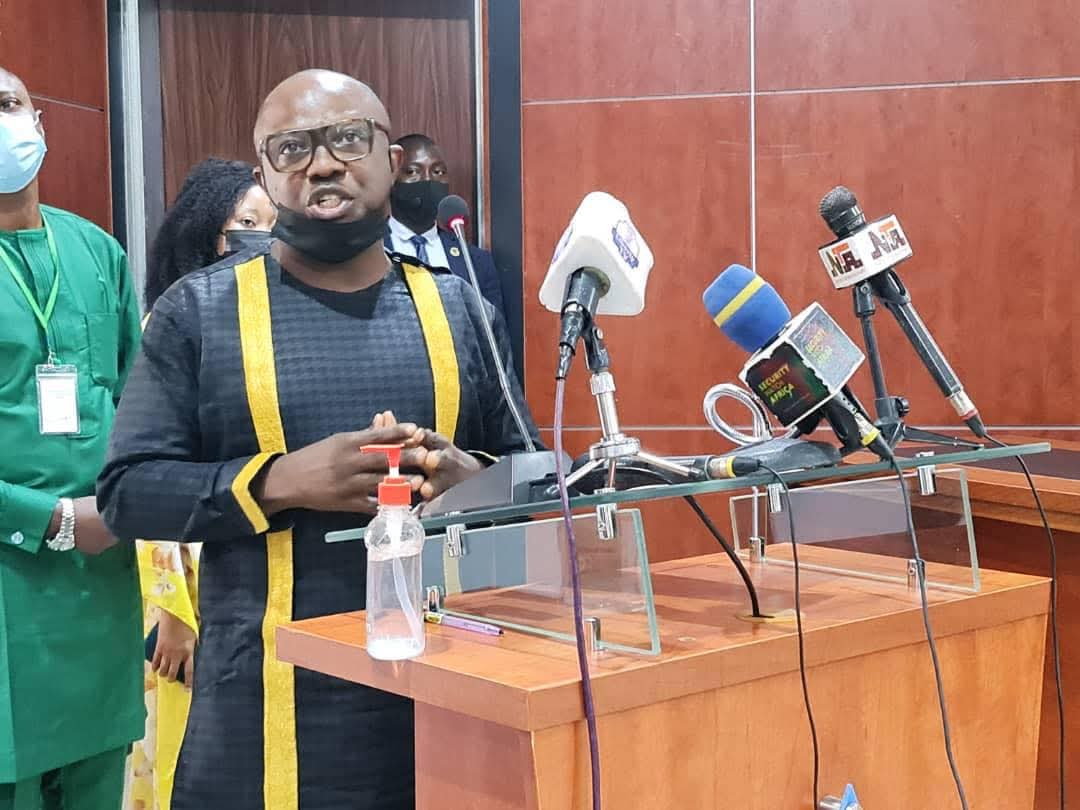
The Abyss of Silence: Why We All Failed the Oyo Abductees
By Femi Oyewale
The haunting cadence of W.B. Yeats’ The Second Coming, quoted so often by the late Chinua Achebe, has ceased to be mere poetry. It has become a grim, real-time mirror reflecting our national existence: “Things fall apart; the centre cannot hold; / Mere anarchy is loosed upon the world.”

In a nation that boasts some of the brightest minds globally, a land steeped in the communal sanctity of “it takes a village to raise a child,” we have descended into an unthinkable abyss. Daredevil criminals have reached into the heart of Oyo State, snatched our children—the very architects of our future—and vanished. Yet, as the sun rises and sets, from the gilded halls of the Presidency to the dusty corners of the local street, we remain paralyzed, tethered to a collective ignorance that is as chilling as it is shameful.
The Theatre of Performative Outrage
We have become a nation of “noises.” We trade blame with surgical precision—the Presidency points to the state, the state points to the security architecture, and the populace directs its vitriol toward the political elite. We have seen the press releases, the hashtags, the fleeting television appearances, and the hollow promises of “concerted efforts.”
But let us be painfully honest: these are not efforts; they are performances. There is not even a whisper of a “near-success syndrome.” While we debate and defend our preferred political affiliations, our children are sleeping under the cold, unforgiving stars of a forest floor. They are subjected to the kind of trauma that shatters souls long before it breaks bodies. They are waiting for a rescue that we are too divided to coordinate.
The Mirror of Empathy
Let us strip away the facade of civic detachment. I challenge every father in this country: if that abducted child were your only son, would you be content with a tweet? To every mother: if that child were the fruit of your old age, would you accept a press statement as enough?
To our governors, our senators, and our political titans: if these children were the heirs to your empires, would the current pace of “investigation” satisfy you? To our billionaires, our security chiefs, and our local traditional warriors, those who claim the mantle of protectors, what if these children were born of your own loins?
The silence that would follow that personal connection is the same silence currently haunting the homes of these victims. We have allowed the abstraction of “national crisis” to desensitize us to the visceral reality of a child’s terror.
Beyond the “One-Man” Savior Complex
We have developed a dangerous habit of outsourcing our conscience. We wait for the radical activist, the viral influencer, or the singular loud voice to carry the burden of the nation. We expect a solitary figure like VDM or a lone firebrand like Sowore to move mountains that require the combined weight of a movement.
But no singular individual can replace the collective pulse of a people. Their rescue is not a one-man job; it is a fundamental test of our humanity.
The Path to Reclamation
We are currently a house divided by party lines, religious silos, and ethnic prejudices. Yet, we have seen that we possess a dormant capacity for unity. When the Super Eagles take to the pitch, our differences vanish. We become one heartbeat, one voice, one nation. Why is it that a game can unify us, but the abduction of our children leaves us fractured?
We do not need more talk. We do not need more inquiries that lead to no arrests. We need to acknowledge a hard truth: we have failed. We have failed the children, we have failed their teachers, and we have failed ourselves.
No stranger knows our terrain better than we do. No satellite imagery can replace the intelligence of a community that refuses to be silent. It is our land. These are our children.
The systemic rot has metastasized to the point where “efforts” no longer count. Only results matter. The time for performative sorrow is over; the time for a unified, uncompromising demand for their return is now. If we do not rise, if we do not act with the singular intensity of a people reclaiming their future, then let the history books record that when our children were taken, Nigeria chose its politics over its people.
We must rescue them. Not tomorrow. Not after the next meeting. Now.
Femi Oyewale is the publisher of Sahara Online and President of NASRE who
writes on national affairs, security, and social development.


- President Isaias Afwerki Departs for Egypt June 7, 2026
- Eritrea: Athlete Nahom Ermias Champion of Asmara Marathon 2026 June 7, 2026
- World Health Organization (WHO) Hands Over Ebola Preparedness Supplies to Strengthen Zambia’s Readiness June 7, 2026
- Joint Statement by the World Health Organization (WHO) and Food and Agriculture Organization of the United Nations (FAO) in South Africa on World Food Safety Day 2026: From burden to solutions – safe food everywhere June 7, 2026
- Liberia: President Boakai Oversees Signing of US$125 Million in World Bank Financing Agreements for Digital Connectivity, Renewable Energy, and Road Infrastructure June 7, 2026
- President Mahama explores Belarus’ agro-industrial hub; seeks partnerships to boost Ghana’s food security June 7, 2026
- National Insurance Corporation of Eritrea (NICE): Shareholders’ Annual Regular Meeting June 6, 2026
- World Cup accredited journalists raise concerns over unfair United States (US) visa restrictions, International Sports Press Association (AIPS) calls on FIFA to intervene June 6, 2026
- Ghana: President Mahama arrives in Belarus, lays wreath at Victory Monument June 6, 2026
- Liberia: President Boakai Advances Clean Energy Agenda; Dedicates 20-Megawatt Solar Power Plant at Mount Coffee June 6, 2026
- President Isaias Afwerki Departs for Egypt June 7, 2026
- Eritrea: Athlete Nahom Ermias Champion of Asmara Marathon 2026 June 7, 2026
- World Health Organization (WHO) Hands Over Ebola Preparedness Supplies to Strengthen Zambia’s Readiness June 7, 2026
- Joint Statement by the World Health Organization (WHO) and Food and Agriculture Organization of the United Nations (FAO) in South Africa on World Food Safety Day 2026: From burden to solutions – safe food everywhere June 7, 2026
- Liberia: President Boakai Oversees Signing of US$125 Million in World Bank Financing Agreements for Digital Connectivity, Renewable Energy, and Road Infrastructure June 7, 2026
- President Mahama explores Belarus’ agro-industrial hub; seeks partnerships to boost Ghana’s food security June 7, 2026
- National Insurance Corporation of Eritrea (NICE): Shareholders’ Annual Regular Meeting June 6, 2026
-

 news6 months ago
WHO REALLY OWNS MONIEPOINT? The $290 Million Deal That Sold Nigeria’s Top Fintech to Foreign Interests
-

 society1 month ago
SOCIAL MEDIA IS NOT A BATTLEFIELD COMMAND – WHY THE NIGERIAN ARMY’S ACTION AGAINST JUSTICE CRACK IS A NATIONAL SECURITY IMPERATIVE
-

 celebrity radar - gossips4 months ago
Dr. Chris Okafor Returns with Power and Fire of the Spirit -Mounts Grace Nation Altar with Fresh Anointing and Restoration Grace on February 1, 2026
-

 celebrity radar - gossips6 months ago
Prophet Kingsley Aitafo Releases 2026 Prophecy: ‘Nigeria Will Rise, but the World Must Prepare for Turbulence’