
society
Sponsored Narratives and International Impact: Who Backed the Screwdriver Trader’s Genocide Petition and What It Actually Means


Sponsored Narratives and International Impact: Who Backed the Screwdriver Trader’s Genocide Petition and What It Actually Means.
By George Omagbemi Sylvester | Published by saharaweeklyng.com — for global audiences
“Beyond the Screwdriver, How Unverified Claims from Onitsha Shocked Global Policy and What It Says About Information, Influence and Accountability.”
In January 2026, a New York Times investigation revealed how Emeka Umeagbalasi, a modest screwdriver and tool trader operating from a market stall in Onitsha, Anambra State, somehow became a key source for United States policymakers alleging an ongoing “CHRISTIAN GENOCIDE” in Nigeria this narratives strong enough to influence air strikes carried out by the U.S. military on Nigerian soil.
That alone was shocking; but an even more important question has rarely been asked by domestic or international media: WHO SPONSORED HIM? WHO AMPLIFIED HIS PETITION TO THE UNITED NATIONS, UNITED STATES CONSULATE and INTERNATIONAL MISSIONS AROUND the WORLD? And what does this say about the dangerous intersection of unverified claims, global geopolitics and real consequences?
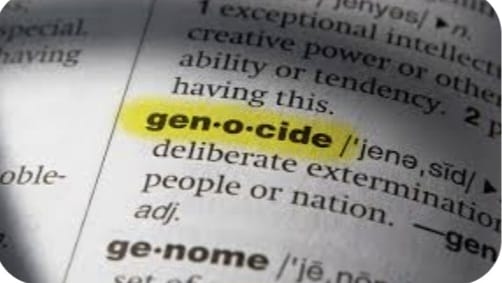
This article unpacks that complex story, tests Umeagbalasi’s claims against available evidence and explains why this moment is far more than a quirky human-interest tale of a screw-site vendor turned “EXPERT.”
The Screwdriver Trader and the Trump Air Strikes. In late 2025, the U.S. government under President Donald Trump redesignated Nigeria as a “COUNTRY of PARTICULAR CONCERN” a label reserved for nations where religious freedom is believed to be under systematic attack. Soon after, the U.S. launched air strikes on Islamist militants in Nigeria’s northwest on December 26, citing Nigeria’s failure to protect Christians.
The New York Times reported that Umeagbalasi’s advocacy organisation which is the International Society for Civil Liberties and Rule of Law (Intersociety) was cited repeatedly by congressmen and senators who pressed the Trump administration to treat the issue as an existential threat to Christianity.

Key U.S. lawmakers including Senator Ted Cruz and Representatives Riley Moore and Chris Smith have used his figures and narratives, despite the fact that Umeagbalasi openly admitted his data is often unverified and based largely on internet searches, secondary media reports and assumptions about victims religion based on location rather than on thorough field investigation.
In one revealing moment, he told reporters he had documented 125,000 “Christian deaths” since 2009, a number experts and data trackers say is inaccurate, unverified and based on flawed methods.
For a man whose primary business is selling screwdrivers, this leap to the center of global religious geopolitics raises urgent questions about who elevated him and why.
The Sponsorship and Network Behind the Petition. While the New York Times coverage highlights Umeagbalasi’s surprising influence, it does not fully explain who organized, funded or amplified his petitions to international bodies like the United Nations, the U.S. Embassy and missions across Europe.

However, independent reporting and background documents show that the International Society for Civil Liberties and Rule of Law (Intersociety) has a history of crafting and disseminating activism letters and petitions to foreign missions and human-rights bodies and often with the support of allied coalitions, external advocacy groups and diaspora networks. For instance:
In earlier campaigns in 2021 and prior years, Intersociety coordinated letters signed by coalitions of rights groups and intellectuals to African diplomatic corps and foreign missions with demanding accountability for alleged atrocities and urging foreign protection of Nigerian rights. Documents from these campaigns show how coalitions of NGOs can amplify letters by having them co-signed, translated and submitted simultaneously to multiple missions and global institutions.
This pattern of coordinated petitions shows a network of allied groups (not just Umeagbalasi acting in isolation) that has sought to elevate their narratives to international audiences.
Yet there is little evidence that traditional humanitarian monitoring organisations (like the United Nations Office of the High Commissioner for Human Rights, Amnesty International, Human Rights Watch, or established data projects) are backing these genocide figures or methodology. Instead, what we see are activist networks which lean into emotionally charged interpretations of insecurity in Nigeria, often without robust verification.
The Peter Obi Petition: A Pattern of Unverified Alarms. Adding another layer to this puzzle is Umeagbalasi’s past activism. In 2022 and 2023, the same organisation issued an alert alleging an assassination plot against Peter Obi, former Governor of Anambra State and 2023 presidential candidate.
In those statements, Intersociety claimed without verifiable evidence that Boko Haram-linked fighters intended to assassinate Obi and called on foreign governments and the UN to protect him, alarmist language that critics said was politically charged and lacking independent verification.
These earlier petitions were circulated widely to foreign missions, human-rights organisations and international observers and not just within Nigeria but across embassies globally. Coupled with Umeagbalasi’s later Christianity genocide narrative, this repetition shows a pattern of activism that amplifies crisis claims without the methodological rigor required for sound international policy decisions.
It is worth noting that political actors and observers dismissed the assassination claims at the time as unsubstantiated and potentially inflaming tensions without evidence. But the pattern of producing and circulating alarming claims is now part of the public record.
Experts Weigh In: Why Methodology Matters. Nigeria’s security situation is complex. Experts agree that violence (from Boko Haram, Islamic State West Africa Province, ethnic herders and communal conflicts) has caused significant loss of life. But multiple monitoring projects caution against simplistic attributions or religious genocide framing.
ACLED (Armed Conflict Location & Event Data Project) regularly tracks conflict and notes that while Christians have been killed, violence affects all communities (including Muslims and other civilians) and that data does not support a claim of systematic, religion-targeted genocide.
Analysts at the Council on Foreign Relations have emphasised that jihadist groups in Nigeria attack both Christians and Muslims and that framing the violence as exclusively anti-Christian can obscure the broader structural security failures.
Bishop Matthew Hassan Kukah, a senior Catholic cleric, has warned that focusing too narrowly on casualty figures among Christians can misdiagnose the crisis. He argues that Nigeria’s weak institutions fail to protect all citizens and that religion is just one dimension among many in conflict.
These expert voices matter because policy decisions (especially those involving military action) must be grounded in verified evidence and independent data, not individual claims amplified without scrutiny.
The Risks of Narratives Without Verification. There are real consequences when unverified claims gain international traction:
Military Action Based on Flawed Inputs – If policymakers rely on inaccurate narratives, the result can be misguided interventions with unintended consequences for civilians and national sovereignty.
Political Polarisation – Amplifying claims that feed into ethnic or religious narratives can deepen divisions within societies already strained by insecurity.
Delegitimising Genuine Grievances – When exaggerated or poorly supported claims dominate discourse, it can drown out legitimate concerns about human rights abuses that deserve attention and rigorous investigation.
Where This Leaves Nigeria: Accountability, Evidence and Responsible Advocacy. The story of the screwdriver trader whose petitions influenced international discourse (and possibly military actions) is a cautionary tale. It shows how networks of advocacy organisations, amplified through powerful political channels, can escalate unverified narratives into global policy discussions.
It also raises an urgent call for stronger standards of evidence, transparent methodologies and independent verification in human rights advocacy and especially when such claims have the potential to reshape foreign policy and impact the lives of millions.
As global intelligence, advocacy networks and media platforms intersect more than ever, the world must demand accountability not just for atrocities, but for how claims about atrocities are generated, sponsored, circulated and acted upon.
Only through rigorous evidence and balanced reporting can justice be served, though not sensationalism. And only by grounding narratives in verified truth can the international community help build peace not profit from panic.










How OPay Is Turning Product Architecture Into a Customer Service Advantage
In high-volume fintech markets like Nigeria, customer service can no longer sit at the end of the business process. When a platform serves tens of millions of users and processes millions of transactions every day, the old model of customer service, call centres, long queues, and manual complaint handling quickly becomes too slow, too costly, and challenging to scale.
The future of customer service in fintech is not just about answering calls faster. It is about preventing problems before they happen. This is where product design, technology, and risk systems begin to play a bigger role. Instead of reacting to customer complaints, modern fintech platforms are now building customer protection and support directly into the app experience itself.
OPay is one of the platforms showing how this shift works in practice.
Over the past few years, OPay’s product development has followed a clear pattern. New features are not only designed to make payments easier, but also to reduce errors, prevent fraud, and lower the number of issues that customers need to complain about. In simple terms, many customer service problems are stopped before users even notice them.
One of the strongest examples of this approach is OPay’s real-time fraud and scam alerts. Traditionally, customers only contact support after money has already left their account. At that point, the damage is done, emotions are high, and recovery becomes more complex. OPay’s system works differently. When a transaction looks unusual, based on amount, timing, behaviour, or pattern, the system raises a warning before the transfer is completed. This gives users a chance to pause, review, and confirm. In many cases, this stops fraud before it happens.
For users, this feels like protection built into the app, not an emergency response after a loss. For the business, it means fewer fraud cases, fewer complaints, and less pressure on customer support teams. This proactive model aligns with global fintech best practices, which prioritise prevention over recovery.
Another important layer is step-up security for high-risk or high-value transactions. As users move more money and rely more heavily on digital wallets, security cannot be one-size-fits-all. Adding too many checks to every transaction creates frustration. Adding too few creates risk. OPay balances this by applying stronger security only when it is needed. For example, biometric verification and additional authentication steps are triggered in sensitive situations. This keeps everyday transactions smooth, while adding extra protection when the risk is higher. This approach builds trust quietly. Users may not always notice the security working in the background, but they feel the result: fewer unauthorised transfers and fewer urgent problems that require support intervention.
Beyond visible features, OPay also runs behaviour-based risk systems in the background. These systems monitor patterns such as sudden device changes, unusual login behaviour, or transaction activity that does not match a user’s normal habits. When something looks off, the system responds automatically. Most users never see these checks. But their impact shows up in fewer failed transactions, fewer reversals, and fewer cases where customers need to chase resolutions. As a result, customer service interactions shift away from crisis handling toward simple guidance and assistance.
Together, these layers form what can be called an invisible customer service system. Many issues are intercepted early, long before they become formal complaints. User sentiment on social media provides real-world signals of how this system is being experienced. On X (formerly Twitter), some users have publicly shared their experiences with OPay’s responsiveness and reliability.
One user, @ifedayo_johnson, wrote, “Opay has refunded it almost immediately. Before I even made this tweet but I didn’t notice. logged it as transfer made in error on the Opay app and they acted almost immediately. Commendable. Thank you @OPay_NG. I’m very impressed with this!”
Another user, @EgbonAduugbo, shared “The reason I love opay so much is that you hardly ever have to worry, wait or call their customer service for anything cuz everything just works!”
While social media comments are not formal performance metrics, they matter. They reflect how real users feel when systems work smoothly and issues are resolved quickly, often without friction. This product-led customer service model becomes even more important when viewed in the context of OPay’s scale. At this scale, even minor improvements in fraud prevention or transaction success rates can prevent thousands of potential complaints every day. In this context, customer service is no longer driven mainly by headcount. It is driven by engineering choices, risk models, and system design.
OPay’s journey suggests what the future of fintech in Africa may look like. The next generation of leaders will not only be those with the most users, but those whose systems are designed to protect users, resolve issues quickly, and reduce friction at scale.
society
Phillips Esther Omolara : Answering The Call To Worship And Transforming Lives Through Gospel Music

Phillips Esther Omolara : Answering The Call To Worship And Transforming Lives Through Gospel Music
Introduction : Phillips Esther Omolara (Apple Of God’s Eye) is an Inspirational and passionate Nigerian gospel music minister, singer, and songwriter dedicated to spreading the message of Christ through her songs.
Background : I was born and brought up in Lagos State. I am a devoted gospel minister and a worship leader who began her musical journey in the children choir later graduated to adult church choir at a young age, leading praises and also a vocalist in the choir.
Early Life : I was born on April 8th 1990 in Lagos, Phillips Esther Omolara is a native of Oyo state in Ogbomosho.
Family : Got married to Phillips Oluwatomisin Omobolaji from Ogun State and our union was blessed with children.
Education : I went to Duro-oyedoyin nursery and primary school Ijeshatedo, Lagos, where I laid the foundation for my academic pursuits. For my secondary education, I attended Sanya Grammer school in Ijeshatedo, Lagos.
During my high school years, I was already deeply involved in church activities. After completing my secondary education, Phillips Esther pursed higher education at Lagos State Polytechnic (LASPOTECH).
Musical Style : Known for [e.g., Inspirational songs, Contemporary Worship, Highlife, Reggae, Traditional Yoruba], and my music blends spiritual depth with creative musicality.
INSPIRATIONS AND INFLUENCES : I have no specific role model in the gospel music industry. However, I have expressed my love for songs from several Veteran gospel artists who have influenced my musical journey.
Some of the gospel artists whose music i admires include:
* Mama Bola Are
* Tope Alabi
* Omije Ojumi
* Baba Ara
* Bulky Beks
Mission : My ministry focuses on leading people to the presence of God and creating an atmosphere for miracles.

CHETACHI NWOGA-ECTON EMPOWERS 300 WIDOWS IN IMO
A renowned humanitarian and proud daughter of Mbaise in Imo State, High Chief (Dr.) Princess Chetachi Nwoga-Ecton, has empowered over 300 widows and vulnerable women across the Owerri Zone, in a remarkable demonstration of compassion and service to humanity.

The empowerment programme, which took place at the Palace of the Eze of Ngor Okpala, HRH Eze Engr. Fredrick Nwachukwu, brought together community leaders, traditional rulers, women groups and beneficiaries from different communities within the zone.
During the event, the widows received food materials and cash support, aimed at helping them meet basic needs and strengthen their small-scale businesses.

The initiative was widely applauded as a timely intervention to support women who often face severe economic hardship after losing their spouses.
Many of the beneficiaries expressed heartfelt appreciation to High Chief (Dr.) Nwoga-Ecton, describing the empowerment as a lifeline that would help them take better care of their families.
Some widows, while offering prayers for the philanthropist, noted that the gesture had restored hope and dignity in their lives.
Fondly known as Ada Imo and Adaure, High Chief (Dr.) Princess Chetachi Nwoga-Ecton has earned widespread admiration for her consistent humanitarian efforts both within Nigeria and internationally.
Through her philanthropic activities and foundations, she has continued to support widows, children, and vulnerable communities with interventions in healthcare, welfare and economic empowerment.
Community stakeholders who attended the programme commended the Mbaise-born philanthropist for her generosity and dedication to uplifting the less privileged, noting that her actions reflect true leadership and compassion.
Observers say the initiative further reinforces her growing reputation as one of the most impactful humanitarians of this generation, whose commitment to humanity continues to inspire hope across Imo State and beyond.


-
 society6 months ago
Religion: Africa’s Oldest Weapon of Enslavement and the Forgotten Truth
-

 news3 months ago
WHO REALLY OWNS MONIEPOINT? The $290 Million Deal That Sold Nigeria’s Top Fintech to Foreign Interests
-

 Business6 months ago
GTCO increases GTBank’s Paid-Up Capital to ₦504 Billion
-

 society6 months ago
“You Are Never Without Help” – Pastor Gebhardt Berndt Inspires Hope Through Empower Church (Video)