
society
Education Without Borders: How Johannesburg’s Inner-City “Back to School” Giveaway Is Redefining Grassroots Leadership

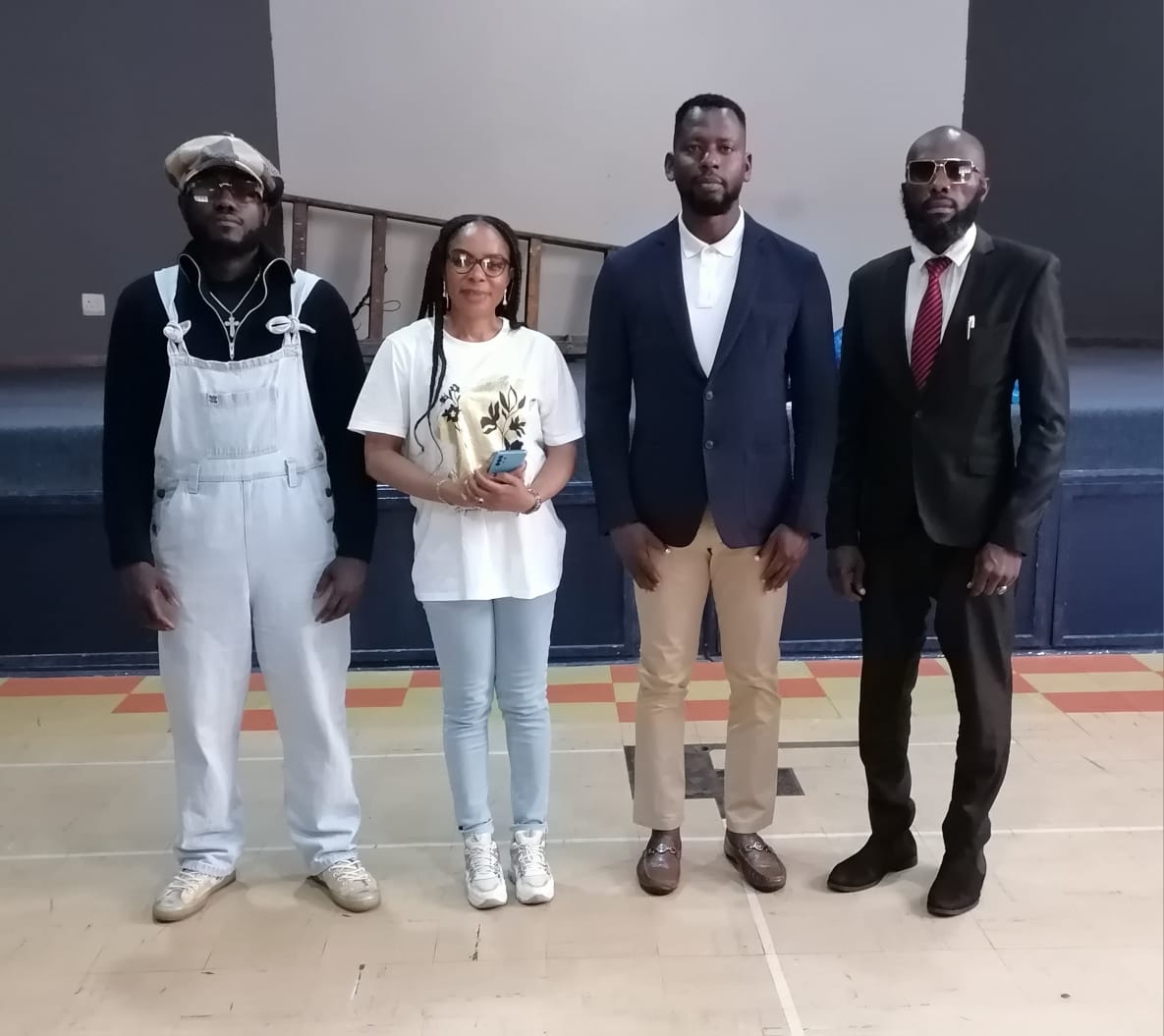
Education Without Borders: How Johannesburg’s Inner-City “Back to School” Giveaway Is Redefining Grassroots Leadership.
By George Omagbemi Sylvester
Published by SaharaWeeklyNG.com
“A Four-Year Tradition of Service, Inclusion and Pan-African Solidarity in Yeoville, Berea and Hillbrow.”
In many parts of the world, the beginning of a new school year is marked by excitement, fresh notebooks, new uniforms and renewed hope. In Johannesburg’s inner-city communities of Yeoville, Berea, Hillbrow and their surrounding areas, however, the same period often exposes a harsh reality: poverty, unemployment and migration-related vulnerability frequently stand between children and access to basic education tools. It is against this backdrop that the annual “Back to School” Giveaway, initiated by Hon. Ekos Akpokabayen, has once again returned, this time stronger, broader and more impactful than ever.
Now in its fourth consecutive year, the initiative has grown from a modest act of charity into a respected community institution. Its purpose remains clear and consistent: to ease the financial burden on struggling families and ensure that children, regardless of nationality or background, begin the academic year with dignity, confidence and the essential materials required for learning. In communities where daily survival competes with long-term planning, this intervention is not symbolic, it is practical, timely and transformative.
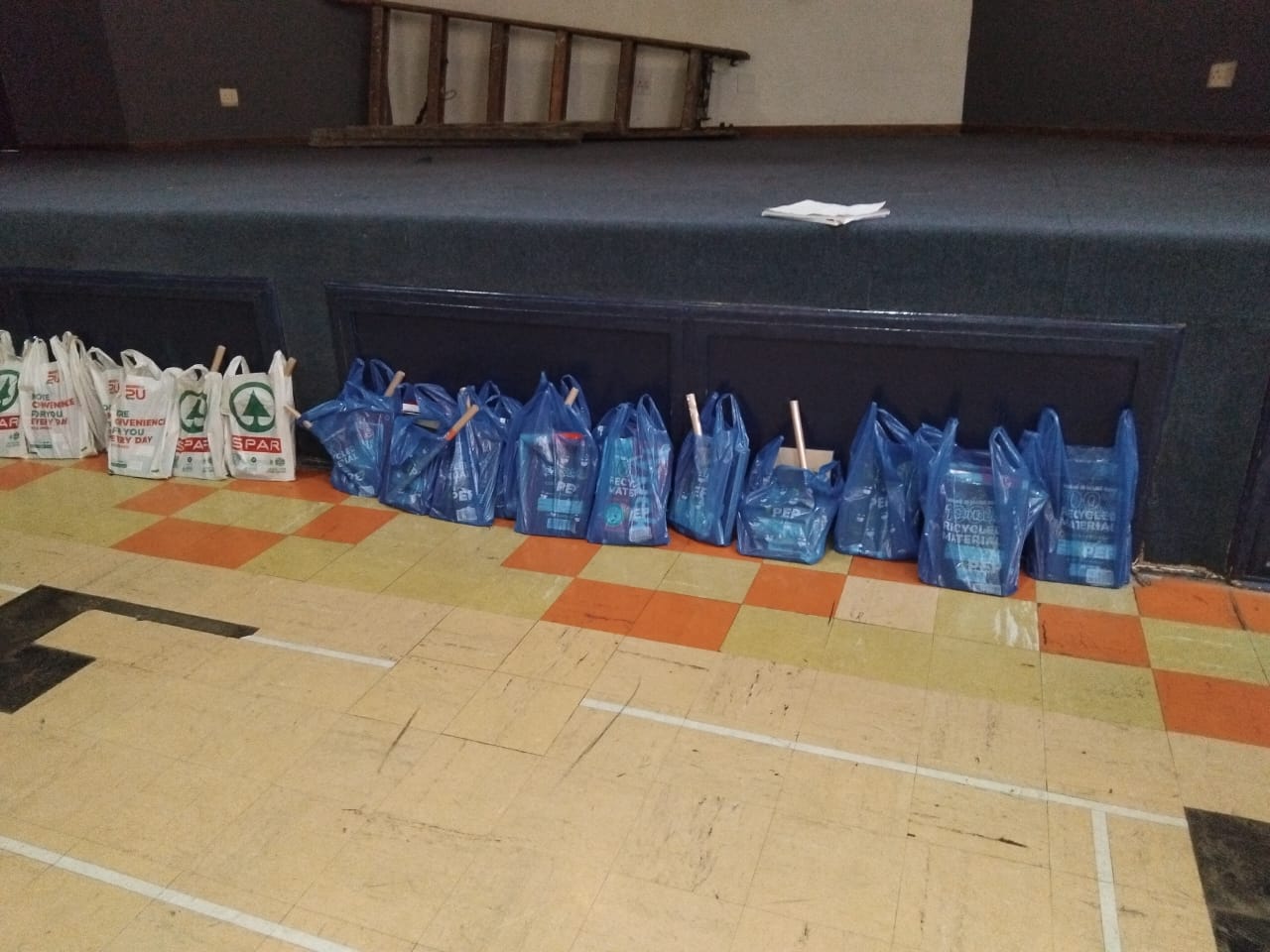
Education as a Social Equaliser. Globally, education is widely recognised as the most powerful equaliser in society. UNESCO and other international bodies consistently affirm that access to basic education materials (books, writing tools and uniforms) has a direct impact on school attendance, learner confidence and academic performance. For low-income households, the inability to afford these basic items often leads to delayed enrolment, absenteeism or dropout, particularly in urban informal settings where living costs are high and social safety nets are weak.
Johannesburg’s inner city is home to one of the most diverse migrant populations on the African continent. Families from across Southern, Central and East Africa live side by side, drawn by economic opportunity but often trapped in cycles of precarious work and inadequate housing. Children growing up in these environments face layered disadvantages: economic hardship, social exclusion and, in some cases, xenophobia. The “Back to School” Giveaway directly confronts these challenges by focusing on the child first, before nationality, language or legal status.
As renowned Brazilian educator Paulo Freire argued, “Education does not change the world. Education changes people, and people change the world.” By equipping children with the tools to learn, the initiative invests not only in individual futures but in the long-term stability and cohesion of the community itself.
Leadership Rooted in Consistency. What distinguishes this program is not only its intent but its consistency. Many community interventions flare briefly and disappear. Four consecutive years of uninterrupted delivery, however, signal discipline, planning and genuine commitment. Hon. Ekos Akpokabayen’s sustained leadership reflects a deeper understanding of servic and one that views development not as a one-off event, but as a continuous process.
This year’s edition was further strengthened by the presence of Hon. Angel Monalisa, Hon. George O. Sylvester and Hon. Otono Osiaima, whose participation underscored a shared belief in collective responsibility. Their involvement sent a powerful message: meaningful leadership is collaborative, visible and accountable at the grassroots.
Political theorist Hannah Arendt once noted that “Power corresponds to the human ability not just to act, but to act in concert.” The unified front presented by the organisers reinforces the idea that sustainable community impact is achieved when leaders work together rather than in isolation.
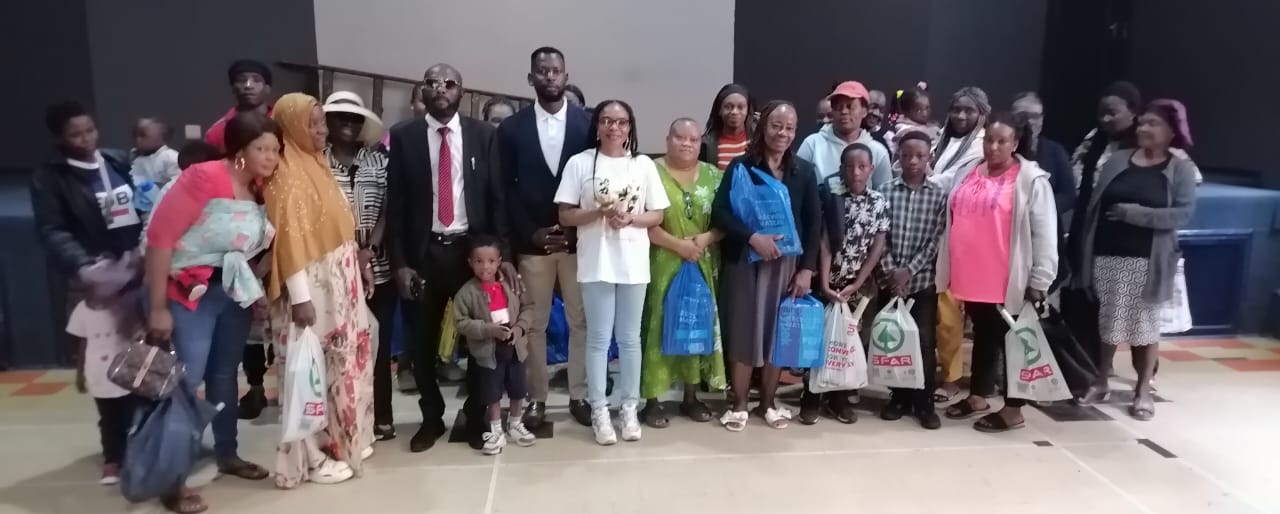
A Truly Pan-African Initiative. One of the most compelling aspects of the 2026 “Back to School” Giveaway is its pan-African character. Beneficiaries were not limited to Nigerians, despite the organisers’ Nigerian heritage. Children from Burundi, the Democratic Republic of Congo, Zimbabwe, South Africa, Mozambique and other African countries all benefited equally.
In a global climate where migration is often politicised and African migrants are frequently portrayed as burdens rather than contributors, this initiative offers a powerful counter-narrative. It affirms a simple but radical truth: children should never be punished for borders they did not draw.
Ghanaian scholar Kwame Nkrumah famously declared, “We face neither East nor West; we face forward.” The spirit of this program reflects that philosophy, embracing a future-oriented African solidarity grounded in shared humanity rather than fragmented identities.
The Inner City as a Site of Possibility. Yeoville, Berea and Hillbrow are often discussed in the media through the lenses of crime, decay and urban neglect. While these challenges are real, they do not tell the whole story. These neighbourhoods are also spaces of resilience, cultural exchange and informal economies that sustain thousands of families.
By situating the “Back to School” Giveaway within these communities, the organisers implicitly challenge narratives of hopelessness. They recognise that development does not always begin in boardrooms or government offices and it often starts on the streets, in churches, community halls and open spaces where trust already exists.
Development economist Amartya Sen has long argued that poverty should be understood not merely as low income, but as a deprivation of capabilities. Education, in this sense, is not charity; it is capability expansion. Providing school supplies may appear modest, but its ripple effects (improved attendance, enhanced self-esteem and parental relief) are profound.
Beyond Charity: A Model of Social Responsibility. Over four years, the “Back to School” initiative has evolved into more than a giveaway. It has become a symbol of inclusion, unity and social responsibility. It demonstrates that effective community intervention does not require excessive bureaucracy, but it does require empathy, planning and accountability.
Importantly, the program complements, rather than replaces, state responsibility. While governments have a duty to ensure access to education, civil society and community leaders play a crucial role in filling gaps and more especially in migrant-dense urban spaces where policy often lags behind reality.
As Kenyan scholar Ali Mazrui observed, “Africa’s problem is not that it is traditional, but that it has been denied the chance to modernise on its own terms.” Grassroots initiatives like this one represent Africans addressing African challenges with locally grounded solutions.
Final Take-Away: Education, Dignity and the Future We Share. The 2026 “Back to School” Giveaway stands as a compelling example of what principled, people-centred leadership looks like in practice. In an era marked by political noise and short-term gestures, this four-year tradition offers something rare: consistency with conscience.
By placing children at the centre, transcending nationality, and returning year after year to the same communities, Hon. Ekos Akpokabayen and his team remind us that the true measure of leadership lies not in titles, but in tangible impact. They demonstrate that education, compassion and hope are not finite resources; and that when shared, they multiply.
For Johannesburg’s inner city, this initiative is more than an annual event. It is a statement: that dignity matters, that every child deserves a fair start and that Africa’s future will be built not by exclusion, but by solidarity.
In a world increasingly defined by division, the lesson from Yeoville, Berea and Hillbrow is clear and universal: when we invest in children, across borders and backgrounds, we invest in a future that belongs to us all.









How OPay Is Turning Product Architecture Into a Customer Service Advantage
In high-volume fintech markets like Nigeria, customer service can no longer sit at the end of the business process. When a platform serves tens of millions of users and processes millions of transactions every day, the old model of customer service, call centres, long queues, and manual complaint handling quickly becomes too slow, too costly, and challenging to scale.
The future of customer service in fintech is not just about answering calls faster. It is about preventing problems before they happen. This is where product design, technology, and risk systems begin to play a bigger role. Instead of reacting to customer complaints, modern fintech platforms are now building customer protection and support directly into the app experience itself.
OPay is one of the platforms showing how this shift works in practice.
Over the past few years, OPay’s product development has followed a clear pattern. New features are not only designed to make payments easier, but also to reduce errors, prevent fraud, and lower the number of issues that customers need to complain about. In simple terms, many customer service problems are stopped before users even notice them.
One of the strongest examples of this approach is OPay’s real-time fraud and scam alerts. Traditionally, customers only contact support after money has already left their account. At that point, the damage is done, emotions are high, and recovery becomes more complex. OPay’s system works differently. When a transaction looks unusual, based on amount, timing, behaviour, or pattern, the system raises a warning before the transfer is completed. This gives users a chance to pause, review, and confirm. In many cases, this stops fraud before it happens.
For users, this feels like protection built into the app, not an emergency response after a loss. For the business, it means fewer fraud cases, fewer complaints, and less pressure on customer support teams. This proactive model aligns with global fintech best practices, which prioritise prevention over recovery.
Another important layer is step-up security for high-risk or high-value transactions. As users move more money and rely more heavily on digital wallets, security cannot be one-size-fits-all. Adding too many checks to every transaction creates frustration. Adding too few creates risk. OPay balances this by applying stronger security only when it is needed. For example, biometric verification and additional authentication steps are triggered in sensitive situations. This keeps everyday transactions smooth, while adding extra protection when the risk is higher. This approach builds trust quietly. Users may not always notice the security working in the background, but they feel the result: fewer unauthorised transfers and fewer urgent problems that require support intervention.
Beyond visible features, OPay also runs behaviour-based risk systems in the background. These systems monitor patterns such as sudden device changes, unusual login behaviour, or transaction activity that does not match a user’s normal habits. When something looks off, the system responds automatically. Most users never see these checks. But their impact shows up in fewer failed transactions, fewer reversals, and fewer cases where customers need to chase resolutions. As a result, customer service interactions shift away from crisis handling toward simple guidance and assistance.
Together, these layers form what can be called an invisible customer service system. Many issues are intercepted early, long before they become formal complaints. User sentiment on social media provides real-world signals of how this system is being experienced. On X (formerly Twitter), some users have publicly shared their experiences with OPay’s responsiveness and reliability.
One user, @ifedayo_johnson, wrote, “Opay has refunded it almost immediately. Before I even made this tweet but I didn’t notice. logged it as transfer made in error on the Opay app and they acted almost immediately. Commendable. Thank you @OPay_NG. I’m very impressed with this!”
Another user, @EgbonAduugbo, shared “The reason I love opay so much is that you hardly ever have to worry, wait or call their customer service for anything cuz everything just works!”
While social media comments are not formal performance metrics, they matter. They reflect how real users feel when systems work smoothly and issues are resolved quickly, often without friction. This product-led customer service model becomes even more important when viewed in the context of OPay’s scale. At this scale, even minor improvements in fraud prevention or transaction success rates can prevent thousands of potential complaints every day. In this context, customer service is no longer driven mainly by headcount. It is driven by engineering choices, risk models, and system design.
OPay’s journey suggests what the future of fintech in Africa may look like. The next generation of leaders will not only be those with the most users, but those whose systems are designed to protect users, resolve issues quickly, and reduce friction at scale.
society
Phillips Esther Omolara : Answering The Call To Worship And Transforming Lives Through Gospel Music

Phillips Esther Omolara : Answering The Call To Worship And Transforming Lives Through Gospel Music
Introduction : Phillips Esther Omolara (Apple Of God’s Eye) is an Inspirational and passionate Nigerian gospel music minister, singer, and songwriter dedicated to spreading the message of Christ through her songs.
Background : I was born and brought up in Lagos State. I am a devoted gospel minister and a worship leader who began her musical journey in the children choir later graduated to adult church choir at a young age, leading praises and also a vocalist in the choir.
Early Life : I was born on April 8th 1990 in Lagos, Phillips Esther Omolara is a native of Oyo state in Ogbomosho.
Family : Got married to Phillips Oluwatomisin Omobolaji from Ogun State and our union was blessed with children.
Education : I went to Duro-oyedoyin nursery and primary school Ijeshatedo, Lagos, where I laid the foundation for my academic pursuits. For my secondary education, I attended Sanya Grammer school in Ijeshatedo, Lagos.
During my high school years, I was already deeply involved in church activities. After completing my secondary education, Phillips Esther pursed higher education at Lagos State Polytechnic (LASPOTECH).
Musical Style : Known for [e.g., Inspirational songs, Contemporary Worship, Highlife, Reggae, Traditional Yoruba], and my music blends spiritual depth with creative musicality.
INSPIRATIONS AND INFLUENCES : I have no specific role model in the gospel music industry. However, I have expressed my love for songs from several Veteran gospel artists who have influenced my musical journey.
Some of the gospel artists whose music i admires include:
* Mama Bola Are
* Tope Alabi
* Omije Ojumi
* Baba Ara
* Bulky Beks
Mission : My ministry focuses on leading people to the presence of God and creating an atmosphere for miracles.

CHETACHI NWOGA-ECTON EMPOWERS 300 WIDOWS IN IMO
A renowned humanitarian and proud daughter of Mbaise in Imo State, High Chief (Dr.) Princess Chetachi Nwoga-Ecton, has empowered over 300 widows and vulnerable women across the Owerri Zone, in a remarkable demonstration of compassion and service to humanity.

The empowerment programme, which took place at the Palace of the Eze of Ngor Okpala, HRH Eze Engr. Fredrick Nwachukwu, brought together community leaders, traditional rulers, women groups and beneficiaries from different communities within the zone.
During the event, the widows received food materials and cash support, aimed at helping them meet basic needs and strengthen their small-scale businesses.

The initiative was widely applauded as a timely intervention to support women who often face severe economic hardship after losing their spouses.
Many of the beneficiaries expressed heartfelt appreciation to High Chief (Dr.) Nwoga-Ecton, describing the empowerment as a lifeline that would help them take better care of their families.
Some widows, while offering prayers for the philanthropist, noted that the gesture had restored hope and dignity in their lives.
Fondly known as Ada Imo and Adaure, High Chief (Dr.) Princess Chetachi Nwoga-Ecton has earned widespread admiration for her consistent humanitarian efforts both within Nigeria and internationally.
Through her philanthropic activities and foundations, she has continued to support widows, children, and vulnerable communities with interventions in healthcare, welfare and economic empowerment.
Community stakeholders who attended the programme commended the Mbaise-born philanthropist for her generosity and dedication to uplifting the less privileged, noting that her actions reflect true leadership and compassion.
Observers say the initiative further reinforces her growing reputation as one of the most impactful humanitarians of this generation, whose commitment to humanity continues to inspire hope across Imo State and beyond.


-
 society6 months ago
Religion: Africa’s Oldest Weapon of Enslavement and the Forgotten Truth
-

 news3 months ago
WHO REALLY OWNS MONIEPOINT? The $290 Million Deal That Sold Nigeria’s Top Fintech to Foreign Interests
-

 Business6 months ago
GTCO increases GTBank’s Paid-Up Capital to ₦504 Billion
-

 society6 months ago
“You Are Never Without Help” – Pastor Gebhardt Berndt Inspires Hope Through Empower Church (Video)