
Business
The Dollar in Peril: How Trump’s Greenland Gambit Shook Global Markets and Rolled Back Confidence in U.S. Financial Leadership

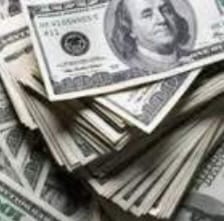
The Dollar in Peril: How Trump’s Greenland Gambit Shook Global Markets and Rolled Back Confidence in U.S. Financial Leadership.
By George Omagbemi Sylvester
“From Tariff Threats to Currency Turmoil. What the U.S. Dollar Slump Reveals About Geopolitical Risk, Investor Sentiment and the Future of Global Economic Order.”
In a rare and stark demonstration of how geopolitics can fracture markets, the U.S. dollar (the bedrock of international finance) suffered a pronounced downturn as investors fled American assets in the wake of President Donald Trump’s controversial push to assert U.S. control over Greenland. The ensuing volatility saw stocks, bonds and foreign exchange markets convulse, with the U.S. Dollar Index posting its steepest daily fall in months as participants reassessed long-held assumptions about the dollar’s safe-haven status, risk appetite and the macroeconomic direction of the world’s largest economy.

Trump’s Greenland policy (including threats of tariffs on several European allies if they do not acquiesce to his bid to “OWN” the Arctic territory) has jarred global investors. This shock has reignited what some market strategists now dub the “Sell America Trade”: a broad rotation out of U.S. stocks, bonds and the dollar into alternative assets such as gold, the Swiss franc and the Japanese yen.
A Sudden Market Reckoning. On Tuesday, the Dow Jones Industrial Average plunged more than 850 points, while the S&P 500 and Nasdaq Composite tumbled over 2%, a serious sell-off not seen since previous periods of tariff escalation triggered by Washington.
Simultaneously, the U.S. Dollar Index (which measures the greenback against a basket of major currencies) slid roughly 0.8%, marking its worst showing in a single session since last August. The euro, British pound and other major currencies strengthened against the dollar as a consequence.
This decline is more than a technical move: it signals eroding confidence among global reserve managers who have long treated U.S. government bonds and the dollar as the core safe-haven assets during geopolitical stress. Previously, traders might have expected the dollar to rally in times of uncertainty, but this episode flipped that norm, with foreign holders of dollar assets instead trimming their exposure.
Geopolitical Risk Meets Financial Fragility. The trigger for this zone of instability was President Trump’s renewed ambition to acquire Greenland, which is a vast Arctic territory rich in strategic value and natural resources. While Greenland is an autonomous constituent of the Kingdom of Denmark, Trump has described it as essential to U.S. security interests in the face of rising Russian and Chinese influence in the Arctic.
What cemented market nerves was not merely the land grab itself, but the tariff ultimatum attached to it. The White House signaled that a 10% tariff on imports from Denmark, Norway, Sweden, France, Germany, the Netherlands, Finland and Britain would be forthcoming from 1 February unless a Greenland deal was achieved, escalating to 25% later in the year.
Many European leaders condemned these moves as excessive economic coercion. France, in particular, explored unconventional countermeasures, a rare suggestion pointing to deep irritation in Paris.

Why the Dollar Fell: Risk, Uncertainty and the Sell-Off. For most of the post-World War II era, the U.S. dollar’s position as the pre-eminent reserve currency has undergirded American economic dominance and global financial stability. About 88% of world foreign exchange turnover involves the dollar and Treasuries are widely viewed as a bedrock safe investment.
Though markets are forward-looking. When policy uncertainty spikes (especially when it arises from political brinkmanship rather than economic fundamentals) investors reassess risk models and flight patterns. This time, traders interpreted Trump’s tariff threats as a signal that the global economic order might become more unpredictable, undermining the logic of sheltering in dollar-denominated assets.
The result? A broad sell-off not just in currency markets, but across U.S. government bonds and equities, a rare simultaneous weakness that reflects genuine systemic nervousness rather than technical adjustments.
A Reversal of Safe-Haven Logic. Under normal geopolitical stress, investors lean into assets viewed as stores of value: the dollar, U.S. Treasuries, gold. Yet during this period:
THE DOLLAR WEAKENED AGAINST MAJOR CURRENCIES.
Treasury prices fell, pushing yields higher – inverting the expected safe-haven demand dynamics.
Gold surged above $4,700 an ounce – a sign that market participants sought alternatives beyond traditional instruments.
One senior portfolio manager told Reuters: “This isn’t about growth expectations – it is about policy risk. Investors are concluding that trade volatility may persist, prompting portfolio rotation away from traditional U.S. anchors.”
Economic Impact Beyond Markets. The dollar’s slump has real world implications:
Commodity Pricing: Many global commodities are priced in dollars. A weaker greenback can inflate prices for importers, particularly oil and food-related products.
Emerging Markets: Countries with dollar-denominated debt may see servicing costs rise relative to their own currencies.

Trade Flows: A softer dollar can theoretically help exporters but also reflects deeper trust issues with U.S. economic stewardship.
Professor Nouriel Roubini (a respected economist known for acute crisis warnings) commented: “When geopolitical risk becomes intertwined with unpredictable trade policy, it erodes trust in established financial hierarchies. The dollar’s weakness here is a symptom, not just a market movement.”
Though not directly tied to the Greenland situation, Nobel laureate Robert Shiller has long argued that markets overvalue political certainty as much as economic fundamentals and when that certainty breaks, the effects can be reflexive and severe.
Transatlantic Relations at Risk. The Greenland dispute has broader diplomatic repercussions. Denmark and Greenland reiterated that the island is not for sale, emphasizing sovereignty and self-determination. The crisis triggered protests in Copenhagen and Nuuk under slogans like “Greenland is not for sale,” reflecting public resistance to political pressure.
The European Union’s leadership has also weighed in, calling for greater strategic independence from the United States and an unprecedented stance reflecting strain in what was once a steadfast alliance.
Markets do not operate in a vacuum. Trade wars and geopolitical friction have historically reduced cross-border investment, choked supply chains and heightened economic uncertainty. The Greenland tariff threat has revived the very specter of a broader transatlantic trade war that investors feared in past tariff cycles.
Looking Ahead. Structural Implications. Analysts now caution that the current gyrations could mark a turning point in global finance:
The era of uninterrupted U.S. dominance may be giving way to multipolar currency dynamics.
Investors are exploring alternative reserve assets and diversifying holdings.
Persistent political risk in the U.S. policy landscape could weaken the dollar’s benchmark role over time.
As one currency strategist put it: “The greenback’s reflexive strength has been tested. If political policy becomes an increasingly volatile input, market confidence might not return to previous levels without clear policy stabilization.”
This view, while sobering, reflects deeper structural shifts in capital allocation and risk assessment.
A Defining Moment: A Moment of Reckoning for Global Finance. The recent plunge in the U.S. dollar and the broader market turmoil triggered by Trump’s Greenland gambit are not mere anomalies, they are warning signals. They highlight how geopolitical uncertainty, when coupled with aggressive economic policy, can disrupt established financial paradigms that have underpinned global growth for decades.
For governments, central banks and investors alike, this episode underscores the need for greater transparency, diplomatic engagement and multilateral risk management. The dollar’s weakened position is not just a market statistic, but a reflection of fragility in economic confidence, trust in policy predictability and the enduring influence of geopolitical narratives on financial stability.
In an interconnected global economy, no currency (not even the mighty U.S. dollar) is immune to the ripples of political tumult. How policymakers respond in the coming months will determine whether this shock is a temporary tremor or part of a deeper restructuring of the international monetary order.





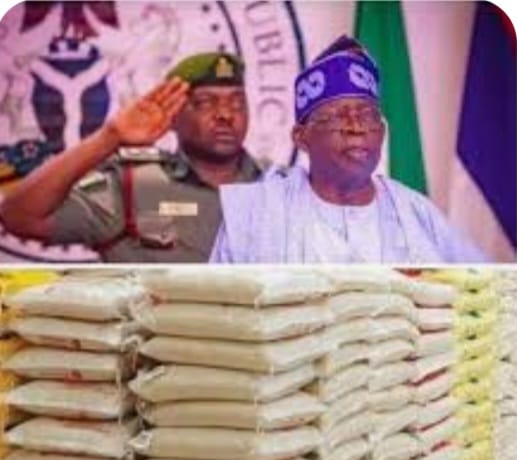
Riceocracy: When Tinubu and the APC Government Substitutes Governance with Handouts
By George Omagbemi Sylvester
“Tinubu’s administration faces mounting criticism as rice palliatives replace real solutions to Nigeria’s deepening crisis.”
ABUJA, Nigeria — March 17, 2026
A growing wave of public frustration is sweeping across Nigeria as citizens decry what has now been dubbed “Riceocracy” a governance pattern where the government of President Bola Ahmed Tinubu and the ruling All Progressives Congress (APC) respond to systemic failures with the distribution of rice rather than meaningful reforms.
Across the country, from major cities like Lagos and Abuja to underserved rural communities, Nigerians are voicing anger over persistent issues: no stable electricity, deteriorating road networks, unaffordable fuel and cooking gas, and a struggling education system. Yet, in response to these structural problems, the government’s most visible intervention has been the distribution of food palliatives; particularly rice.
The central figures in this unfolding crisis are President Tinubu and the APC-led federal and state governments, who have overseen the rollout of these relief measures. On the other side are millions of Nigerians battling rising inflation, joblessness, and declining living standards.
The trend gained momentum following the removal of fuel subsidies in May 2023, a policy decision by the Tinubu administration that triggered a surge in transportation and commodity prices. By 2024 and into 2025, the government intensified the distribution of rice and other palliatives as a stopgap measure to quell public discontent. Now, in 2026, the approach has become a defining feature of the administration’s response to economic hardship.
The “Riceocracy” phenomenon is nationwide. Reports from states such as Kano, Rivers, and Borno show large crowds gathering for rice distribution exercises, even as basic infrastructure continues to decay. Urban centers are not exempt; in cities like Lagos, residents still grapple with erratic power supply and high living costs despite periodic palliative programs.
Analysts point to political convenience and immediate optics. Distributing rice is quick, visible, and politically advantageous, especially in a climate of widespread hardship. However, critics argue that it reflects a deeper governance failure; an inability or unwillingness to implement long-term solutions.
Nobel laureate Wole Soyinka has long warned against superficial governance, describing such approaches as “a betrayal of democratic responsibility.” In the same vein, global economist Ngozi Okonjo-Iweala has stressed that “palliatives may provide temporary relief, but they cannot replace sound economic management and structural reform.”
Political economist Pat Utomi offers a sharper critique: “A state that reduces its responsibility to food sharing risks institutionalizing poverty rather than eliminating it.” His statement captures the growing concern that Nigeria’s leadership is addressing symptoms rather than causes.
The implications are severe. Nigeria’s power sector remains unreliable, forcing businesses to depend on costly alternatives. Road infrastructure continues to hinder economic activity, while the education sector suffers from underfunding and frequent disruptions. Despite these challenges, rice distribution has become the most consistent government response.
Critics further argue that this strategy fosters dependency and weakens civic engagement. Instead of demanding accountability, citizens may feel compelled to accept handouts as substitutes for rights and services. Allegations of mismanagement and politicization of palliative distribution also persist, raising questions about transparency and fairness.
The term “Riceocracy” may sound satirical, but it reflects a sobering reality. It highlights a governance model where survival replaces development, and where public policy is reduced to emergency relief rather than strategic planning.
As Nigeria marks this moment on March 17, 2026, the message from scholars, civil society, and frustrated citizens is unmistakable: rice cannot fix a broken system. Only deliberate investments in infrastructure, education, energy, and economic productivity can restore confidence and chart a sustainable path forward.
Until then, the image of Nigerians queuing for bags of rice will remain a stark symbol of a nation still searching for leadership that goes beyond palliatives to deliver real progress.



ZENITH BANK OPENS MANCHESTER BRANCH TO SUPPORT CROSS-BORDER TRADE AND INVESTMENT
Zenith Bank Plc has announced the opening of a new branch in Manchester, United Kingdom, marking another significant milestone in the bank’s international growth and its commitment to strengthening financial connections between Africa and global markets.
The official opening ceremony, scheduled to hold on Tuesday, March 17, 2026, is expected to attract government officials from Nigeria and the United Kingdom, regulators, investors, customers, and business leaders from both countries, underscoring the growing economic ties and investment opportunities between the two markets.
The new Manchester branch will complement Zenith Bank’s existing operations in the United Kingdom and serve as a strategic hub for supporting businesses engaged in international trade and investment. Through the branch, the bank will provide corporate banking, trade finance, treasury and related financial services to clients operating across the United Kingdom, Europe and Africa.Speaking ahead of the launch, the Group Managing Director/Chief Executive Officer of Zenith Bank Plc, Dame Dr. Adaora Umeoji, OON, said: “The opening of our Manchester branch represents another important step in Zenith Bank’s growth as a leading African financial institution connecting businesses and markets across continents. Manchester is one of the United Kingdom’s most dynamic commercial centres, and our presence here will further strengthen financial connections between businesses in the UK and opportunities across Africa’s rapidly expanding markets.
”Founded in 1990 by its Founder and Chairman, Jim Ovia, CFR, Zenith Bank has grown into one of Africa’s most respected banking institutions, boasting a robust capital base and a remarkable history of year-on-year profitability. Built on a strong foundation of people, technology and service, the Bank has consistently delivered innovative financial solutions while maintaining a disciplined approach to growth and risk management. The impressive performance of the Bank has consistently earned it excellent ratings, recognition and endorsement from local and international agencies and institutions.Headquartered in Lagos, Nigeria, Zenith Bank operates over 500 branches and business offices across the 36 States of the Federation and the Federal Capital Territory (FCT). The Bank currently operates subsidiaries in several African countries including Ghana, Sierra Leone, Gambia, and Cote d’Ivoire, while maintaining a presence in major international financial centres including the United Kingdom, France, UAE and China.
In recent years, Zenith Bank has continued to expand its international network as part of its strategy to support global trade and investment flows involving Africa.Manchester, widely regarded as one of the United Kingdom’s most vibrant economic centres, hosts a diverse base of businesses across sectors such as manufacturing, engineering, logistics, technology and consumer goods. The city’s strong commercial ecosystem and international outlook align closely with Zenith Bank’s expertise in corporate banking, structured finance and trade finance.The Manchester branch will work closely with the Bank’s London operations and its broader international network to support clients seeking to expand across markets and unlock new opportunities in both the United Kingdom and Africa.
With the opening of the Manchester branch, Zenith Bank continues to advance its vision of building a truly global African banking institution that connects businesses, facilitates trade and investment, and creates stronger economic bridges between Africa and the world.
Business
New Petrol Import Permits May Reverse Nigeria’s Push for Domestic Refining and Increase Pressure on Foreign Reserve” — Energy Policy Group Tells President Tinubu
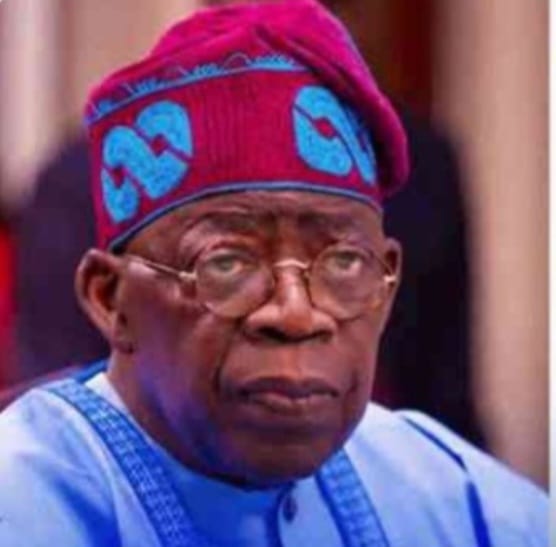
*“New Petrol Import Permits May Reverse Nigeria’s Push for Domestic Refining and Increase Pressure on Foreign Reserve” — Energy Policy Group Tells President Tinubu*
An energy policy group has advised President Bola Ahmed Tinubu to reconsider the wider economic consequences of newly issued permits allowing marketers to import petrol into the country, warning that the move could undermine Nigeria’s efforts to strengthen domestic refining and stabilise the economy.
In a statement released on Sunday in Abuja, the Energy Transparency and Market Justice Initiative (ETMJI) said the approvals granted by the Nigerian Midstream and Downstream Petroleum Regulatory Authority (NMDPRA) could produce unintended consequences if not carefully managed.
The group’s president, Dr. Salako Kareem, said Nigeria was at a delicate moment in its energy transition and that policy choices made now would determine whether the country finally escapes its decades-long dependence on imported refined petroleum products.
Kareem said while the regulator’s responsibility to guarantee adequate fuel supply is understood, expanding import permissions at this stage could weaken the policy direction required to encourage local production and long-term sector stability.
“Our respectful appeal to President Bola Ahmed Tinubu is that decisions concerning petrol importation must be carefully weighed against their long-term economic consequences,” Kareem said.
“Nigeria has spent decades trying to overcome the paradox of being a major crude oil producer while relying heavily on imported refined products. Any policy action that appears to reopen the floodgates of importation may slow down the progress that has been made toward strengthening domestic refining capacity.”
He warned that increasing petrol imports could place additional pressure on the country’s foreign exchange reserves, especially at a time when the government is pursuing difficult economic reforms aimed at stabilising the naira and improving fiscal discipline.
“For many years, the country has lost enormous volumes of foreign exchange importing petroleum products that could ideally be refined locally,” Kareem said.
“If import volumes begin to rise again, the demand for foreign currency will inevitably grow. This could place renewed strain on the naira and undermine the broader economic stabilisation programme that the government is currently pursuing.”
The group also warned that excessive reliance on imported petrol could create opportunities for product dumping and the entry of substandard fuel into the Nigerian market, a challenge that has troubled regulators and consumers in the past.
According to Kareem, Nigeria’s downstream sector has historically struggled with quality control issues whenever importation becomes widespread, because imported fuel often travels through multiple intermediaries before reaching domestic depots.
“One of the lessons from the past is that when imports dominate the supply chain, the market sometimes becomes vulnerable to the dumping of inferior petroleum products,” he said.
“This not only creates regulatory complications but also exposes Nigerian consumers to fuels that may damage vehicles, affect industrial machinery and ultimately impose hidden economic costs on the country.”
He added that encouraging domestic refining and strengthening local supply chains would provide better product traceability and improve overall market transparency.
Kareem stressed that the group’s intervention was not intended as criticism of the NMDPRA, noting that regulators must often make complex decisions to prevent supply disruptions in a volatile energy market.
However, he urged the federal government to ensure that short-term supply management does not weaken long-term national objectives in the petroleum sector.
“We recognise that the regulator has the responsibility to ensure that Nigerians do not experience fuel shortages, and that duty is extremely important,” he said.
“But at the same time, policy coherence is essential. The country must avoid sending signals that could discourage investment in local refining or create uncertainty about Nigeria’s commitment to energy self-sufficiency.”
Kareem said Nigeria now has a rare opportunity to restructure its downstream petroleum industry in a way that strengthens domestic production, protects foreign exchange reserves and builds long-term industrial capacity.
He urged the president to ensure that the country’s regulatory framework reflects that strategic vision.
“Our appeal is simply for policy alignment. If Nigeria truly wants to build a resilient energy economy, then every major decision in the downstream sector must reinforce the goal of reducing import dependence, strengthening domestic production and protecting the country’s economic stability,” Kareem noted.
The group added that careful policy coordination between regulators and the presidency would help ensure that Nigeria avoids repeating the costly fuel import cycles that have historically drained public resources and weakened the national economy.


-

 society6 months ago
Religion: Africa’s Oldest Weapon of Enslavement and the Forgotten Truth
-

 news3 months ago
WHO REALLY OWNS MONIEPOINT? The $290 Million Deal That Sold Nigeria’s Top Fintech to Foreign Interests
-

 society6 months ago
“You Are Never Without Help” – Pastor Gebhardt Berndt Inspires Hope Through Empower Church (Video)
-

 society7 months ago
Who is Chief Kestin Pondi? Niger Delta’s “People’s Chief” Winning Hearts With Hundreds of Millions in Generosity