
Uncategorized
Nigeria’s Problem Is Indiscipline, Not Corruption

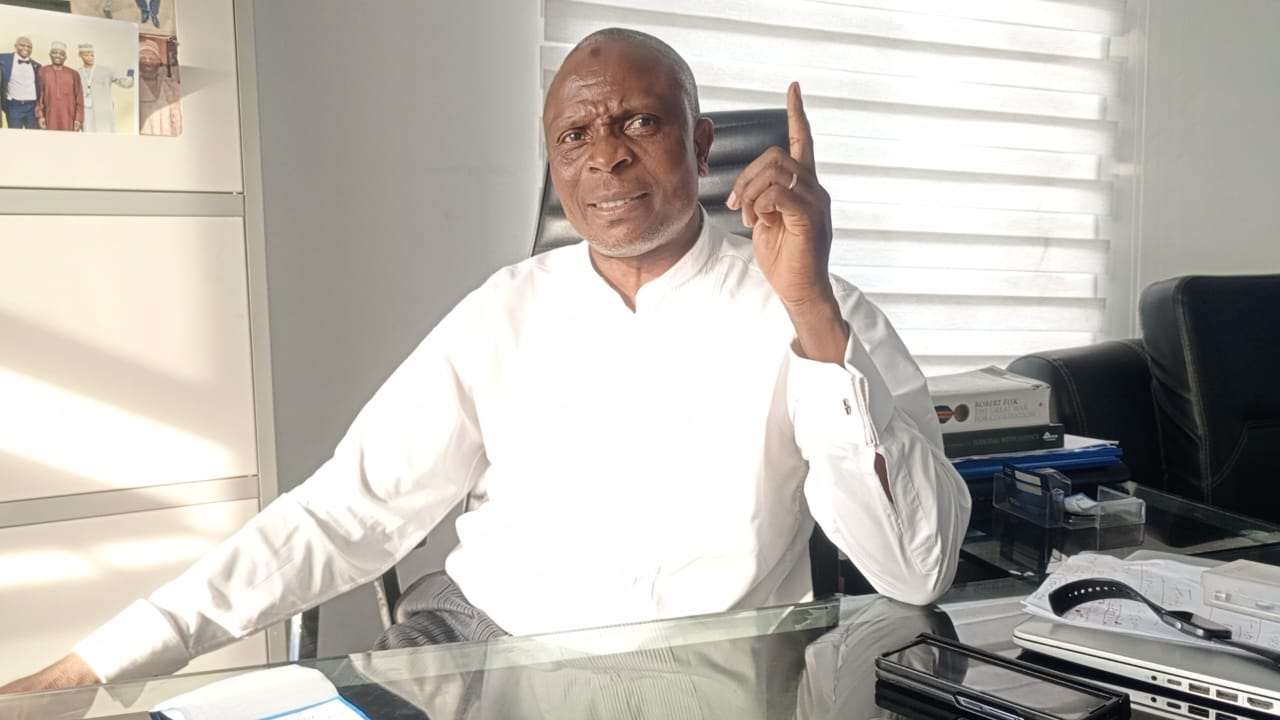
Nigeria’s Problem Is Indiscipline, Not Corruption — Dr. S.O. Jimoh
Dr. S.O. Jimoh, Chairman of the Nigerian Bar Association (NBA), Epe Branch, has argued that corruption is not Nigeria’s real problem, but merely a manifestation of deeper systemic failures rooted in indiscipline.
Dr. Jimoh made the assertion in a recently released statement, where he maintained that the fundamental challenge confronting Nigeria is the absence of discipline across governance, institutions, and society at large.
According to him, Nigerians are often described as ungovernable, a perception he said is contradicted by their conduct in environments where discipline is enforced. He noted that no fewer than four or five flights depart Nigeria for the United Kingdom daily, each carrying between 300 and 500 passengers, about 85 to 90 per cent of whom are Nigerians.
He observed that while these passengers are often rowdy and unruly while still on Nigerian soil, their behaviour changes immediately once their flights land at Heathrow or Gatwick airports.
“You suddenly see another set of Nigerians—composed, disciplined, and governable,” he said.
The Acting Dean of the Faculty of Law at Crescent University explained that the change in attitude is driven by the strong emphasis placed on discipline in the United Kingdom. According to him, there is a minimum standard of behaviour expected of anyone entering the country, unlike Nigeria, where he lamented that discipline is largely absent and people are free to act without consequences.
“When the government is not disciplined, how do you expect the citizens to be disciplined?” Dr. Jimoh asked. “When the father in the home is not disciplined, how do you expect the children raised in that home to be disciplined? If the school system is full of indiscipline, what do you expect from the products of that school?”
Reflecting on the Babangida–Idiagbon regime and the introduction of the War Against Indiscipline (WAI), Dr. Jimoh recalled that during that period, people queued at bus stops and no one dared to litter the environment.
He argued that a government that cannot effectively manage waste disposal would struggle to govern a population with diverse opinions, describing the situation as a serious national challenge. He added that the solution lies in instituting a minimum standard of discipline across all sectors of society.
Dr. Jimoh also commended former Lagos State Governor, Babatunde Raji Fashola, for what he described as a 360-degree turnaround in Lagos State, particularly in restoring discipline and order.
Furthermore, he stated that corruption can never be completely eradicated in Nigeria, stressing that the only sustainable solution is the enforcement of discipline.
“Corruption is a fruit, not the seed and not the tree,” he said. “Indiscipline is what fuels corruption. Fighting corruption alone is like cutting the leaves of a tree. If you want to uproot corruption, then you must fight indiscipline.”
Dr. Jimoh further clarified that corruption is not a specific offence under Nigerian law.
“There is no crime called corruption,” he noted. “Corruption is a generic term for various acts of indiscipline that have been criminalised.”
He explained that many forms of indiscipline—such as lobbying, favouritism, and nepotism—have not been criminalised in Nigeria and are therefore legally permitted, even though they qualify as corruption in the broader sense.
“These practices are fruits of indiscipline,” he said. “Because Nigeria has not criminalised them, people are free to engage in them without consequences.”
2







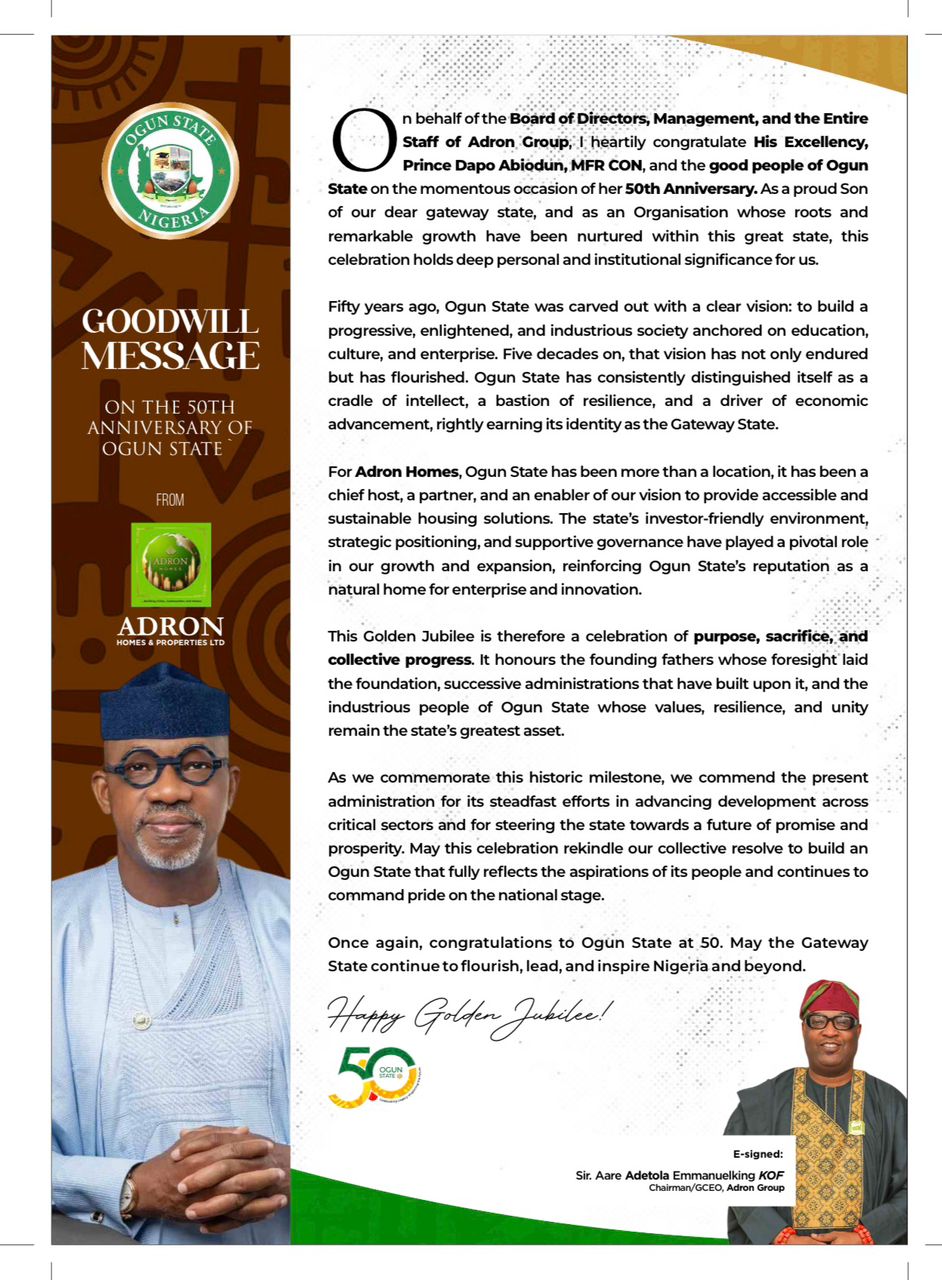
Adron Group Congratulates Ogun State At 50, Salutes Legacy of Progress
The Board of Directors, Management, and staff of Adron Group heartily congratulate His Excellency, Prince Dapo Abiodun, MFR, CON, and the good people of Ogun State as the State marks its Golden Jubilee, celebrating 50 years of progress, resilience, and development.
Since its creation five decades ago, Ogun State has remained a beacon of progress, intellectual excellence, and enterprise. Founded on a vision of education, industry, and cultural pride, the Gateway State has consistently distinguished itself as a major contributor to Nigeria’s socio-economic development.
As an organisation whose roots and remarkable growth are deeply intertwined with Ogun State, Adron Group acknowledges the state as more than a host—it has been a strategic partner and enabler. The investor-friendly climate, strategic location, and supportive governance of Ogun State have played a significant role in our journey to providing accessible and sustainable housing solutions for Nigerians.
This Golden Jubilee is a celebration of foresight, sacrifice, and collective achievement. It honours the founding fathers, successive administrations, and the resilient, hardworking people of Ogun State whose unity and values remain the bedrock of the state’s continued progress.
As Ogun State marks this important milestone, we commend the present administration for its commitment to infrastructure development, economic growth, and inclusive governance. We are confident that the years ahead will usher in even greater prosperity and opportunities for the people of the Gateway State.
Once again, congratulations to Ogun State at 50. May the Gateway State continue to flourish, lead, and inspire Nigeria and beyond.

Sowemimo David’s Visionary Approach to Youth Empowerment in Nigeria.
Abuja, Nigeria – As Nigerian youths face numerous challenges, including limited mentorship, unclear career pathways, and a widening gap between education and real-world success, one man is stepping up to provide the guidance they need. Sowemimo David, a visionary and transformative leader, is taking a bold step to bridge the gap with his inspirational and enlightened programs, aimed at equipping young people with practical leadership and growth tools.
“The Government alone can’t develop the youths. It’s a collective responsibility,” Sowemimo David emphasizes, highlighting the need for collaborative efforts to empower the next generation. His initiative is designed to provide young Nigerians with the skills, knowledge, and mindset needed to succeed in today’s fast-paced world.
At the heart of the initiative is a clear message: Nigerian youths do not lack potential – they lack access to the right guidance. Sowemimo David reiterates, “You don’t need to leave your country to build a great future. What you need is vision, discipline, and the courage to scale your ideas smartly.”
Leadership is not about position. It is about responsibility,” David states, emphasizing the importance of taking ownership and accountability.
Sowemimo David’s vision is rooted in the belief that when young people are properly equipped, they become catalysts for social and economic development. “Empowered students build empowered nations,” he says, highlighting the transformative power of youth empowerment.
Through his tireless efforts, Sowemimo David is making a significant impact in the lives of young Nigerians, providing them with the tools and resources needed to succeed. His commitment to youth empowerment is unwavering, and his dedication to creating positive change is inspiring.

Join Sowemimo David and be part of a movement that will shape the future of Nigeria. Together, let’s empower the next generation of leaders and create a brighter future for all.
Uncategorized
When Faith Becomes Fury: The Arrest That Exposed a Deadly Rift in Spiritual Leadership
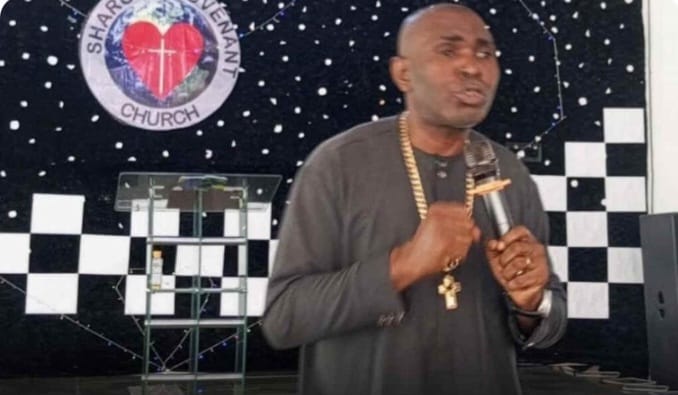
When Faith Becomes Fury: The Arrest That Exposed a Deadly Rift in Spiritual Leadership
— A Report by George Omagbemi Sylvester
“How a Cleric’s Alleged Plot to Hire Cult Killers for a Rival Prophet Reveals Deeper Cracks in Religious Authority and Social Order.”
In a nation where faith can elevate leaders to positions of profound influence, a disturbing law enforcement action has exposed the darkest potential of spiritual rivalry. Recently in Bayelsa State, security operatives intervened to prevent an assassination rooted not in political ambition, but in the toxic collision between religious authority and violent underground networks. What unfolded is more than a sensational crime story. It is a stark indictment of leadership devoid of moral compass, a chilling warning about the weaponisation of faith for personal gain and a societal challenge that demands sober reflection and decisive action.

Operatives from the Special Weapons and Tactics Unit of the Bayelsa State Police Command arrested Pastor Elijah Oro, a clergyman originally from Delta State. Authorities allege that Oro contracted a young man embedded in a notorious criminal brotherhood. (known as the Greenlanders confraternity) to carry out a deadly mission against a rival prophet. The pastor and the alleged hitman were taken into custody after credible intelligence led police to foil what they believe was an imminent assassination attempt.
According to official statements, the clandestine plan stemmed from a dispute over church membership and property, a conflict that escalated beyond factional disagreement into a plot to extinguish a human life. Police spokespersons revealed that the suspect recruited to carry out the attack confessed membership in the Greenlanders confraternity upon arrest at the intended victim’s premises.
The very idea that a man of God could be accused of orchestrating murder to settle a spiritual rivalry is jarring. It challenges the fundamental expectation that religious leadership embodies peace, justice, and selfless service. As Dr. Mercy Adediran, a scholar of theology and ethics, explains, “Religious leadership carries with it an obligation to model higher moral character. Faith communities thrive when leaders prioritize reconciliation, not retribution. When those leaders abdicate moral responsibility, the entire fabric of trust unravels.” Adediran’s observation resonates far beyond the immediate case; it points to a systemic vulnerability where spiritual authority meets raw human ambition.
In many societies, faith leaders are entrusted with the spiritual wellbeing of entire communities. They are expected to counsel parishioners in matters of conscience, to guide the vulnerable toward ethical choices, and to wield influence responsibly. When leaders violate that trust (particularly through violence) the consequences ripple far beyond the courtroom. “Leadership is not merely a platform for personal influence,” notes Professor Kunle Oladipo, a sociologist specialising in religious movements. “It is a public trust. When that trust is weaponised for personal disputes, the damage to societal cohesion can be profound and long-lasting.”
This latest arrest is not an isolated anomaly. Across regions where criminal cults and confraternities have taken root, authorities continue to grapple with the unpredictable intersections of underground violence and mainstream society. In Bayelsa, recent history has included episodes of cult-related violence that left communities shaken. These clashes underline how easily organised criminal networks can entangle with broader community life, especially where economic hardship and youth unemployment leave gaps that illicit groups exploit.
Experts emphasise that the problem is not inherent to religious institutions, but arises when the moral authority invested in those institutions is misused. “The tragic irony,” states Dr. Adediran, “is that religious communities have the potential to be powerful agents for conflict resolution. Though when leaders themselves become embroiled in violence, it erodes the very foundation upon which faith stands.”
Law enforcement officials have underscored their commitment to protecting lives and preventing further escalation. Following the arrests, they urged the public to continue providing credible information that can aid in preserving peace and thwarting threats to public safety. The ongoing investigation seeks to clarify whether the alleged plot was an isolated attempt or part of a wider pattern involving third parties.
Beyond law enforcement, this incident raises vital questions about accountability within religious communities. How do congregations hold their leaders responsible when allegations of misconduct surface? What structures exist to ensure transparency in church governance and in the resolution of conflicts that arise within and between congregations? Since violence and criminality contradict the core teachings of mercy, compassion and stewardship that undergird most religious traditions, addressing such questions is not merely administrative; it is essential to preserving the moral legitimacy of spiritual leadership.
Prominent commentators in religious ethics remind us that power without accountability is a breeding ground for corruption. As Professor Oladipo points out, “Whenever influence is concentrated without appropriate checks, the risk of abuse escalates. Faith leaders are no exception. If anything, they require stronger ethical scrutiny precisely because of the profound impact they have on individuals’ lives and societal values.”

For everyday citizens (especially those who dedicate their lives to worship and community service) this story can be deeply unsettling. It forces a reckoning with uncomfortable truths about human nature, organisational structures, and the seductive lure of power. Yet it also offers an opportunity for collective reflection and reform. Civil society organisations, interfaith coalitions, and religious councils play indispensable roles in championing ethical standards and condemning violence unequivocally, regardless of the social status of those accused.
Religious institutions capable of self-critique and internal accountability can turn even this dark moment into a catalyst for renewal. “Reformation begins where there is courage to acknowledge faults,” says Dr. Adediran. “Communities must demand integrity from their leaders. Silence in the face of wrongdoing, especially by those claiming spiritual authority, only enables further harm.”
As the legal process unfolds, the accused remain subjects of ongoing police investigation. In the court of public opinion and within the court of conscience, the allegations have already sparked intense debate about the moral responsibilities of those who claim to speak for the divine.
This case stands as a sobering reminder: when spiritual leadership is co-opted for personal vendettas or political influence, the consequences can tear at the core of communal trust. When faith is misused to cloak violent intent, the very foundations of moral authority are undermined. Yet, in confronting these failings head-on, society affirms a deeper commitment to justice, compassion and the right to life, values that transcend the boundaries of creed and culture.
In a world rife with conflict and competition, religious leaders must be held to the highest ethical standards precisely because their influence shapes the hearts and minds of many. When that influence turns violent, it diminishes all of us. The arrest in Bayelsa should provoke not only legal scrutiny but also profound introspection on how communities select, empower and hold accountable those who claim to lead them spiritually.
What happened here is more than a crime story. It is a mirror reflecting the stakes of moral leadership in any society claiming to value the sanctity of life, the rule of law and the dignity of every human being.


-

 celebrity radar - gossips6 months ago
Why Babangida’s Hilltop Home Became Nigeria’s Political “Mecca”
-

 society6 months ago
Power is a Loan, Not a Possession: The Sacred Duty of Planting People
-

 Business6 months ago
Batsumi Travel CEO Lisa Sebogodi Wins Prestigious Africa Travel 100 Women Award
-

 news6 months ago
THE APPOINTMENT OF WASIU AYINDE BY THE FEDERAL GOVERNMENT AS AN AMBASSADOR SOUNDS EMBARRASSING