
Uncategorized
Makinde Lashes Out at Wike: “A Vagabond Unfit for PDP” — Reckoning Within Nigeria’s Oldest Opposition Party

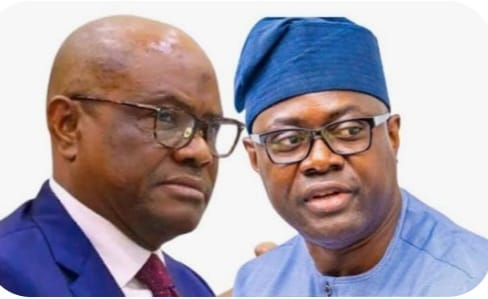
Makinde Lashes Out at Wike: “A Vagabond Unfit for PDP” — Reckoning Within Nigeria’s Oldest Opposition Party
By George Omagbemi Sylvester | SaharaWeeklyNG.com
“Governor Seyi Makinde’s explosive rebuke of Nyesom Wike exposes deep fractures within the PDP and signals a defining moment for the future of Nigeria’s opposition politics.”
In the sun-baked political theatre of Ibadan, Oyo State, a seismic rupture has opened within the Peoples Democratic Party (PDP), Nigeria’s once-dominant opposition force. Oyo State Governor Seyi Makinde delivered a blistering public indictment of Federal Capital Territory Minister Nyesom Wike; one that goes far beyond intra-party friction, piercing into the soul of Nigerian party politics itself. Makinde unapologetically branded Wike a “vagabond,” openly regretted his past alignment with him during the tumultuous 2023 general elections, and rejected any lingering influence that Wike and his faction might attempt to wield within the PDP’s structure.

Addressing a gathering at the commissioning of the PDP Secretariat in Oke-Ado, Makinde’s remarks cut across polite political disagreement and veered into stark moral condemnation. He spoke not as a factional leader but as a self-declared reformer seeking to reclaim the party from forces he believes have undermined its principles and prospects.
This confrontation is not trivial. It reflects a broader and enduring crisis within the PDP, a party still grappling with the aftershocks of losing federal power over a decade ago and struggling to define its identity ahead of future elections.
The Anatomy of a Rift.
Makinde’s core accusation was two-fold. First, he asserted that elements within the PDP (whom he repeatedly labeled vagabonds) used internal party mechanisms not to strengthen the PDP but to serve interests outside the party’s mandate. Second, Makinde publicly distanced himself from those figures, including Wike, whose conduct he says betrayed the party during the 2023 elections.
Makinde’s account is unambiguous: “When I came into government in 2019, and even up to 2023, I found myself aligned with some of these forces. But I have reflected, repented and resolved never to allow that again.”
His choice of words carries biblical weight (repentance) suggesting not mere political disagreement, but moral recalibration.
For context, many analysts point to the 2015 loss of federal power by the PDP as the genesis of deep internal fractures. That defeat created a leadership vacuum, which subsequent factions sought to fill, sometimes through means that rankled party loyalists. Makinde invoked a traditional Yoruba proverb to illustrate his point: where there is peace in a household, it is not because all is well, but because the disorderly elements have not yet grown up. He applied this proverb directly to PDP’s internal disruption, asserting that those elements had, at one time, “practised their vagabondry” within the party until formally expelled in late 2025.
This “expulsion” refers to actions taken during the PDP’s controversial national convention in Ibadan in late 2025, where several leading figures (including Wike) were voted out of key leadership roles amid factional legal battles. That convention itself was mired in legal challenges and internal strife, reflecting a party deeply fragmented.
Makinde’s words were deliberately provocative. To brand a senior party member and cabinet minister as a vagabond in political parlance is to label him unreliable, unprincipled, and opportunistic, traits that go to the heart of public trust.

Wike: A Political Trajectory Under Scrutiny.
Nyesom Wike is no ordinary foot soldier in Nigerian politics. A seasoned operative and former governor of Rivers State, Wike has cultivated a reputation for bold, sometimes abrasive, political maneuvers. His intervention in party affairs, especially beyond his home state, has drawn admiration from some quarters and ire from others. Yet what Makinde’s critique suggests is that Wike’s conduct has become a flashpoint for deeper questions about loyalty, ideology and the purpose of party politics itself.
Wike’s defenders argue that he has consistently asserted that his actions, including positions taken during the 2023 elections, were guided by principles of fairness and justice which though not without controversy. Earlier reports show that in 2024 he claimed he had “no apologies” for his role in opposing the PDP’s presidential bid, insisting he acted not out of disloyalty but conviction.
To them, Wike represents a school of Nigerian politics that privileges tactical calculations over consensus building, a style that resonates in Nigeria’s often fractious political environment but also deepens fault lines within parties like the PDP.
Expert Analysis: What This Means for Nigerian Politics.
To understand the implications of this confrontation, we must consider scholarly perspectives on party fragmentation and political behavior in Nigeria.
Political analyst Dr. Habeeb Lawal, Lecturer in African Political Studies at the University of Lagos, argues that “the PDP’s identity crisis stems from a broader crisis of political institutionalisation in Nigeria. When politicians prioritise personal ambition over party principles, it weakens not only party cohesion but democratic governance itself.”
Lawal’s analysis underscores a pattern endemic to Nigerian politics: parties often serve as platforms for personal advancement rather than vehicles for ideological consistency or policy advocacy. In that sense, Makinde’s denunciation of Wike is not merely personal, but symptomatic of a larger systemic tension.
Similarly, Professor Modupe Akinola, an expert in political ethics at Ibadan University, suggests that public leaders must be held to standards that transcend mere tactical disagreements. “A party cannot rebuild itself on the foundation of individual power struggles,” she said. “If you cannot articulate a vision for the common good beyond your own political survival, you risk hollowing out the very institution you claim to defend.”
Her insight points to a central dilemma: the PDP’s relevance depends on its ability to project unity without quashing legitimate disagreement, and to tolerate diversity of thought without descending into factional warfare.
Beyond the Words: What Comes Next?
Makinde’s remarks did more than shock; they reframed the conversation around party culture and accountability. He reaffirmed confidence in the Nigerian judiciary as a neutral arbiter, a notable stance considering the party’s history of litigating internal disputes. “Truth will always prevail,” Makinde said, asserting that legal remedies remain central to resolving the PDP’s internal conflicts.

Yet the deeper impact of his declarations will be measured in the weeks and months to come. Will the PDP rally behind a renewed emphasis on discipline and unity? Or will this rupture deepen, inviting further splintering and loss of coherence?
International observers, particularly those who monitor democratic transitions in multi-ethnic societies, will watch closely. Political cohesion in major parties is often a bellwether for democratic resilience. Nigeria’s fragile democracy, still navigating its third decade of uninterrupted civilian rule, cannot afford weakened opposition at a time when accountability and political alternatives are essential.
Parting Thoughts: A Reckoning That Cannot Be Ignored.
What Governor Makinde articulated in Ibadan is more than intra-party quarrel; it is a clarion call for introspection within Nigerian opposition politics. By calling out what he describes as vagabondry, he has invited the PDP (and the broader political class) to confront uncomfortable truths about ambition, loyalty, principle and reform.
Whether this confrontation leads to renewal or further fracture remains to be seen. But one thing is clear: Nigeria’s political story in this era will not be written by those who refuse to address the deep contradictions within their own ranks.





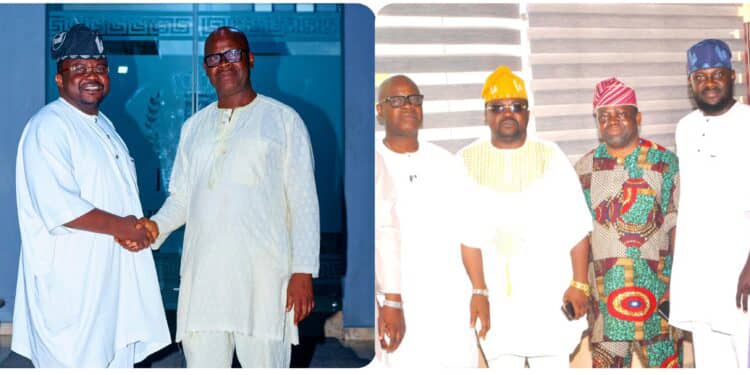
Ajadi Visits Ilaji Resort, Commends Sanusi’s Vision for Oyo’s Economic Growth
The leading gubernatorial aspirant in Oyo State under the Peoples Democratic Party (PDP), Olufemi Ajadi Oguntoyinbo, has lauded the transformative impact of private-sector investment on the state’s economy, following a courtesy visit to Ilaji Hotels and Sports Resort in Akanran, Ibadan.
Ajadi, who was warmly received on Sunday by the resort’s founder, Chief Dr Dotun Sanusi, described the facility as a symbol of what visionary leadership and indigenous enterprise can achieve in driving rural development, job creation, and tourism growth.
Speaking during the visit, Ajadi commended Sanusi’s commitment to Oyo State’s economic advancement, noting that Ilaji Resort stands as a model for sustainable development outside urban centres.
“What I have seen here today is not just a business venture, but a bold statement of belief in Oyo State’s potential,” Ajadi said. “Chief Sanusi has demonstrated that with vision, dedication, and strategic investment, we can transform our rural communities into thriving economic hubs. This aligns perfectly with my agenda to expand opportunities, empower our people, and sustain development across the state.”
[4/13, 6:34 PM] johnsonakinpelu: The PDP gubernatorial aspirant emphasised that his governorship ambition is rooted in supporting initiatives that promote local enterprise, tourism, and youth employment, adding that partnerships between government and private investors would be a priority if elected.
In his remarks, Sanusi, popularly known as Ilaji, expressed delight at hosting Ajadi and his entourage, describing the visit as encouraging for investors in the state.
“I am honoured to receive Ambassador Ajadi here at Ilaji Resort,” Sanusi said. “This project was born out of a desire to give back to society, create jobs for our youths, and showcase the rich cultural and tourism potential of Oyo State. When leaders recognise and support such efforts, it strengthens our resolve to do more.”
Sanusi further stressed the importance of continuity in governance and policies that encourage investment, noting that consistent support from government actors is crucial for long-term economic growth.
The visit also attracted notable political stakeholders, including the former Ona-Ara Local Government Chairman, Hon. Taiwo Oke, Hon. Bass Oloko, and Ajadi’s personal assistant, Kilamuwaye Badmus, among others.
Observers at the event described the meeting as a convergence of political leadership and entrepreneurial vision, highlighting the growing importance of collaboration in addressing developmental challenges in Oyo State.
Analysts see Ajadi’s visit to Ilaji Resort as part of his broader engagement with key stakeholders across sectors, as he continues to build momentum ahead of the 2027 governorship race.

FOPCHEN Calls for Dialogue as Court Fixes May 28 for Continuation
OTA, OGUN STATE — Proceedings in a widely followed legal case resumed on March 24, 2026, at the High Court of Ogun State, Ota Division, ending with a fresh adjournment as the court fixed May 28, 2026, for continuation.
During the session, legal representatives for all parties restated their positions and addressed preliminary matters, laying the groundwork for more substantive arguments at the next hearing. Observers noted that the case continues to attract significant public attention due to its perceived implications for law, culture, and societal values.
The Foundation for the Protection of Cultural Heritage in Nigeria (FOPCHEN) used the occasion to reiterate its call for constructive national dialogue. The group emphasized that while the judicial process must be respected, broader societal engagement remains essential.
According to the organization, issues relating to values, responsibility, and cultural identity should not be confined solely to courtroom deliberations but should involve active participation from various sectors of society.
Legal analysts present at the proceedings described the matter as one with far-reaching implications, noting that arguments advanced in court could shape future interpretations surrounding sensitive cultural and moral questions.
The presiding judge subsequently adjourned the case to May 28, granting all parties time to refine their submissions and respond to issues raised during the hearing.
As anticipation builds ahead of the next court date, Nigerians across different sectors continue to monitor developments closely, keen to see how the judiciary navigates the delicate balance between constitutional rights and cultural expectations.
Uncategorized
CRG: Politicians Must Stop Witch-Hunting, Focus on Nation Building — Says NYSC Cleared Deputy Speaker Since 2023
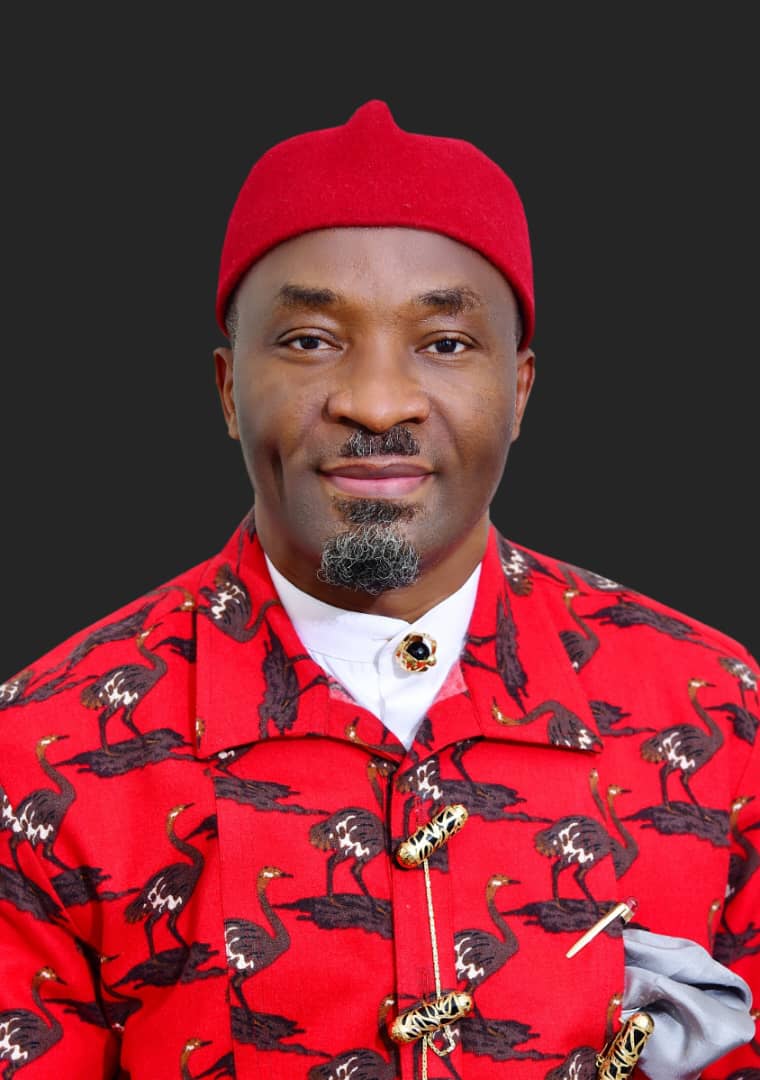
CRG: Politicians Must Stop Witch-Hunting, Focus on Nation Building — Says NYSC Cleared Deputy Speaker Since 2023
By: Boye Ola
The Centre for Responsible Governance (CRG) has called on political actors and interest groups to desist from what it described as needless witch-hunting of the Deputy Speaker of the House of Representatives, Benjamin Okezie Kalu, following renewed controversies surrounding his National Youth Service Corps records.
The organisation noted that the clarification by the National Youth Service Corps (NYSC) regarding the matter is not a recent development, as a formal verification letter had already been issued as far back as May 23, 2023.
The letter, referenced NYSC/CCD/VER/10/5.1/VOL1/02, had already addressed and cleared the questions surrounding the Deputy Speaker’s NYSC records.
Reacting to the renewed debate, the spokesman of the Centre,
Obande George, said it was troubling that issues which had already been clarified by a competent national institution were being resurrected for political purposes.
According to him, the time has come for political actors to move away from destructive engagements and concentrate on building the nation.
“It is important to note that the NYSC had already issued a verification letter dated May 23, 2023 addressing the matter.
Reopening issues that have already been clarified by a competent authority suggests that some individuals are more interested in political witch-hunting than in national progress,” George said.
The CRG stressed that democracy thrives when institutions are respected and their determinations are accepted in good faith rather than constantly questioned for political advantage.

George also commended the Deputy Speaker for demonstrating maturity and composure throughout the controversy, despite what he described as sustained provocations.
“Honourable Benjamin Kalu has shown remarkable calm and maturity in the face of intense public scrutiny and political provocation.
Instead of engaging in unnecessary public confrontation, he allowed institutions to speak through their records.”
The Centre warned that Nigeria’s political culture must evolve beyond constant character attacks and sensational allegations, which often distract public officials from their responsibilities.
According to the organisation, the country’s development requires constructive engagement among political actors rather than continuous attempts to discredit opponents.
“Nigeria cannot move forward if political energy is constantly spent on digging up allegations and amplifying rumours. Our leaders and political actors must redirect their focus to governance, policy and nation building.”
CRG therefore urged Nigerians to rely on verified information from credible institutions and avoid spreading speculative claims that could damage reputations or destabilise public discourse.
The organisation reiterated that respect for due process and institutional integrity remains essential for strengthening Nigeria’s democracy.

@The Centre for Responsible Governance, Email: [email protected], Instagram: crgngo6, Twitter: crgng06, Threads: crgngo6


- Merck Foundation marks ‘World Art Day’ through their Film, Song, Media and Fashion Awards 2026 in partnership with Africa’s First Ladies to raise awareness about social & health issues April 15, 2026
- Gabon’s Offshore Comeback: International Oil Companies (IOCs) Return as Exploration Heats Up Ahead of Paris Forum April 15, 2026
- Shell’s Eugene Okpere to Speak at Angola Oil & Gas (AOG) 2026 Amid $1B Angolan Deepwater Drive April 15, 2026
- Oando Joins African Energy Week (AEW) 2026 as Emerald Sponsor as Firm Reports 10% Profit Rise April 15, 2026
- Africa Finance Corporation (AFC) Invests in Dhamana Guarantee Company to Catalyse Local Currency Infrastructure Financing in East Africa April 15, 2026
- WESGRO and Enlit Africa 2026 unite to spotlight the Western Cape’s energy investment opportunity April 15, 2026
- Gianni Merlo re-elected as International Sports Press Association (AIPS) President for sixth and final term in landslide victory April 15, 2026
- African Development Fund approves 1.7 billion CFA francs to boost private sector competitiveness across West African Economic and Monetary Union (WAEMU) countries April 15, 2026
- Knowledge Katti: The Architect Behind Namibia’s Energy Breakthrough April 15, 2026
- African Mining Week to Highlight Africa’s Artisanal and Small-Scale Mining (ASM) Transformation Amidst $8.5T Resource Potential April 15, 2026
- Merck Foundation marks ‘World Art Day’ through their Film, Song, Media and Fashion Awards 2026 in partnership with Africa’s First Ladies to raise awareness about social & health issues April 15, 2026
- Gabon’s Offshore Comeback: International Oil Companies (IOCs) Return as Exploration Heats Up Ahead of Paris Forum April 15, 2026
- Shell’s Eugene Okpere to Speak at Angola Oil & Gas (AOG) 2026 Amid $1B Angolan Deepwater Drive April 15, 2026
- Oando Joins African Energy Week (AEW) 2026 as Emerald Sponsor as Firm Reports 10% Profit Rise April 15, 2026
- Africa Finance Corporation (AFC) Invests in Dhamana Guarantee Company to Catalyse Local Currency Infrastructure Financing in East Africa April 15, 2026
- WESGRO and Enlit Africa 2026 unite to spotlight the Western Cape’s energy investment opportunity April 15, 2026
- Gianni Merlo re-elected as International Sports Press Association (AIPS) President for sixth and final term in landslide victory April 15, 2026
-

 news4 months ago
WHO REALLY OWNS MONIEPOINT? The $290 Million Deal That Sold Nigeria’s Top Fintech to Foreign Interests
-

 celebrity radar - gossips3 months ago
Dr. Chris Okafor Returns with Power and Fire of the Spirit -Mounts Grace Nation Altar with Fresh Anointing and Restoration Grace on February 1, 2026
-

 celebrity radar - gossips4 months ago
Prophet Kingsley Aitafo Releases 2026 Prophecy: ‘Nigeria Will Rise, but the World Must Prepare for Turbulence’
-

 celebrity radar - gossips6 months ago
End of an Era: Nigeria Mourns Evangelist Dr. Uma Ukpai, 80